
These 10 Stunning Natural Wonders Prove Wisconsin Is Full Of Surprises
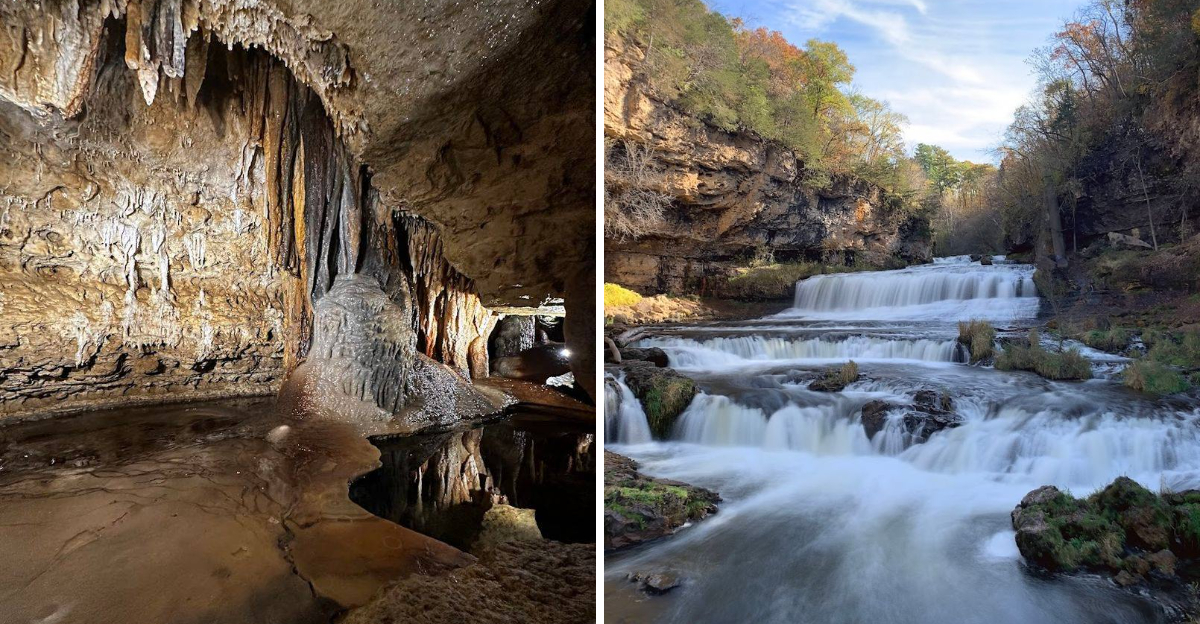
When you think of natural beauty, your mind might jump to the Grand Canyon or Yellowstone, but Wisconsin holds its own collection of jaw-dropping landscapes that rival anything you’ll find out west. From frozen sea caves that shimmer like cathedrals to waterfalls that thunder through ancient rock formations, the Badger State is packed with geological marvels that’ll make you wonder why you ever looked elsewhere for adventure.
Most people drive right through Wisconsin without realizing they’re missing some of the most spectacular scenery in the entire country. Get ready to discover ten places that’ll completely change how you see this underrated Midwestern gem.
1. Apostle Islands Sea Caves
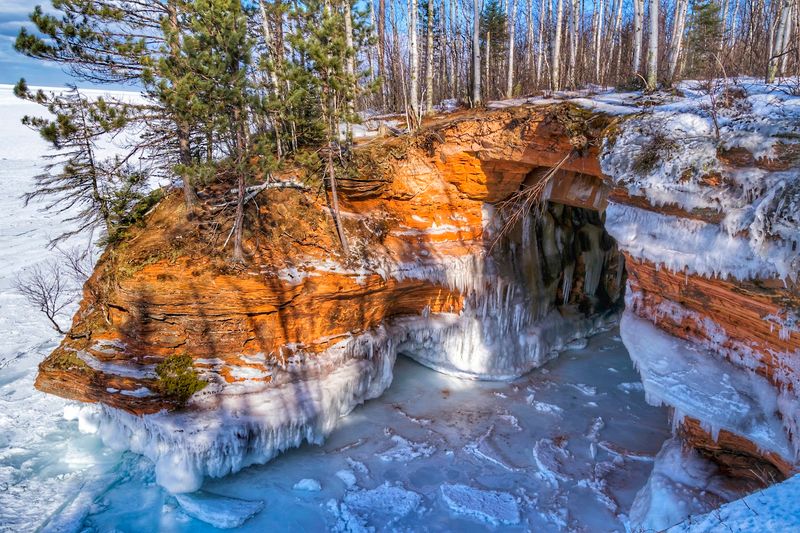
Ice transforms the Apostle Islands into something otherworldly every winter. When Lake Superior freezes solid enough, you can walk right out onto the surface and step inside caves that look like they belong in a fantasy novel.
The walls glow blue and amber where sunlight filters through layers of ice, creating colors so vivid they almost don’t seem real.
Timing your visit requires patience and a little luck. The lake needs to freeze thick enough for safe passage, which doesn’t happen every year.
When conditions align, usually between late January and early March, thousands of people make the pilgrimage to witness this temporary masterpiece before it melts away.
Summer offers a completely different experience when you can kayak through these same caves. The sandstone walls tower above you, carved smooth by centuries of waves.
Arches and chambers reveal themselves around every bend, each one shaped by the relentless power of Lake Superior.
Mainland sea caves near Meyers Beach provide easier access than the islands themselves. You’ll still get that sense of wonder as you explore passageways and alcoves that change with every season.
Pack your camera because every angle offers something worth capturing in this geological playground.
2. Devil’s Lake State Park
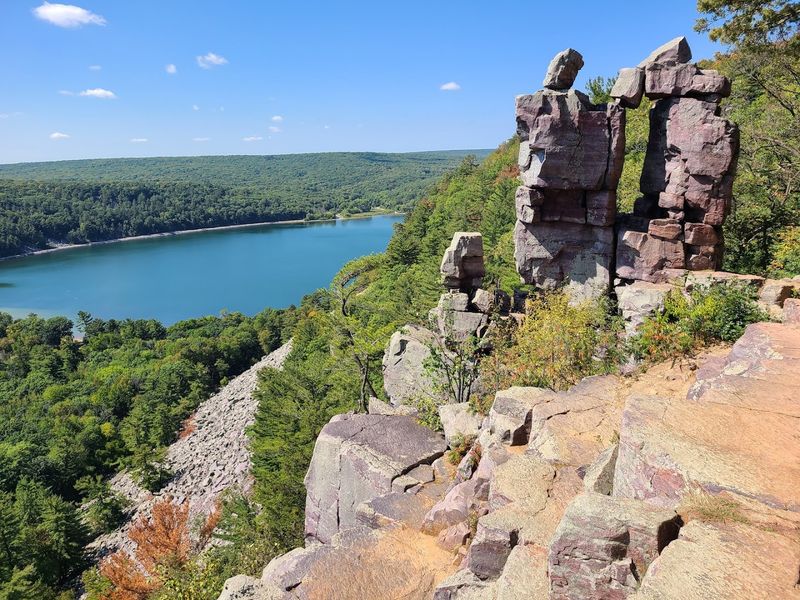
Purple quartzite bluffs rise 500 feet straight up from the water at Devil’s Lake, creating one of Wisconsin’s most dramatic landscapes. This ancient lake sits in a gap carved by glaciers, surrounded by cliffs that glow pink and purple in the right light.
Rock climbers love these walls, but you don’t need ropes to enjoy the view from the top.
Two main trails take you up to the bluffs, and both deliver stunning panoramas. The East Bluff Trail is slightly easier, while the West Bluff Trail gets your heart pumping a bit more.
Either way, you’ll earn sweeping views of the lake below and the rolling farmland stretching toward the horizon.
Swimming in Devil’s Lake feels like jumping into a giant natural pool. The water stays refreshingly cold even in summer, and the beach areas get packed on hot weekends.
Families spread out on the sand while kids splash in the shallows, making it Wisconsin’s most visited state park for good reason.
Rock formations called the Devil’s Doorway and Balanced Rock add quirky photo opportunities to your hike. These geological oddities formed over millions of years, and they’re perched so precariously you’ll wonder how they haven’t tumbled down yet.
3. Big Manitou Falls
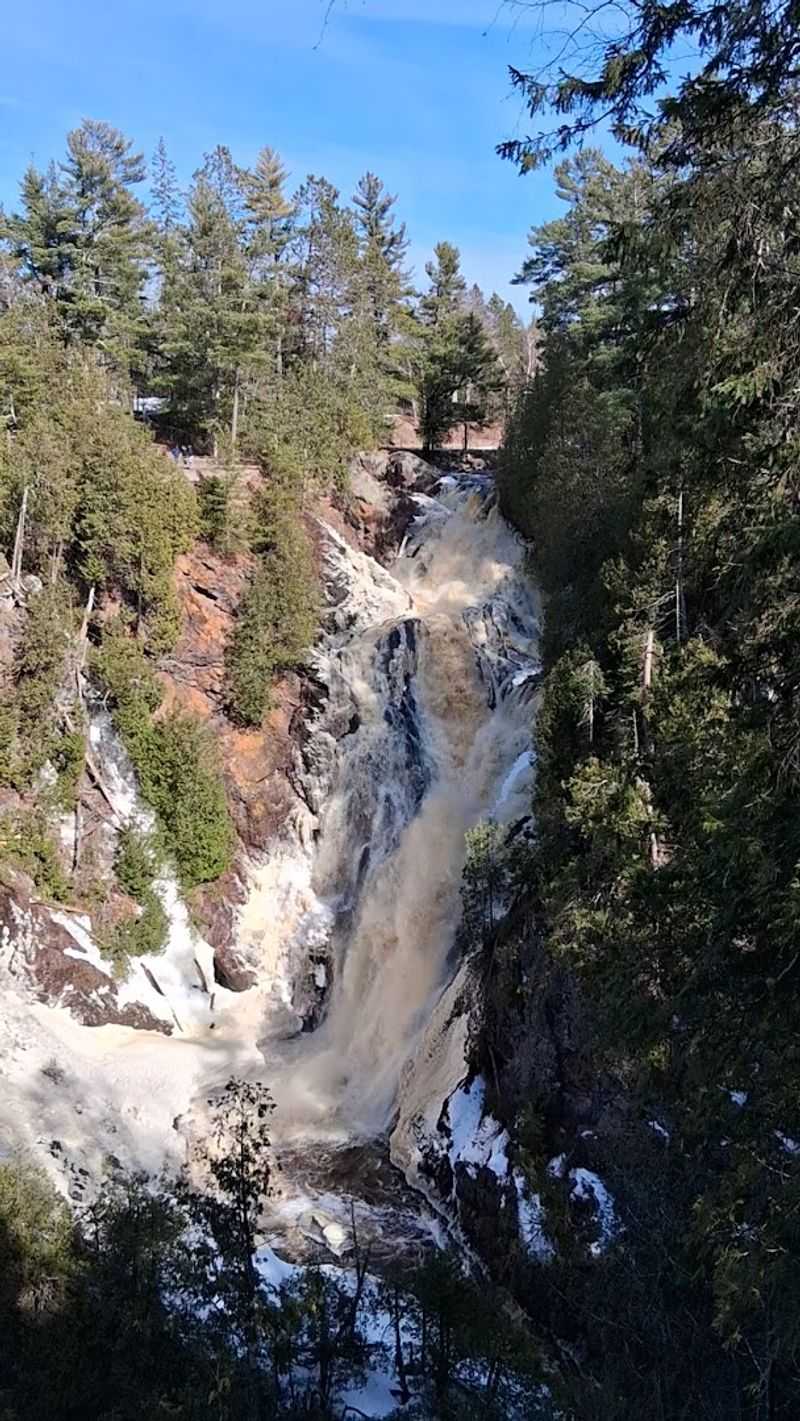
At 165 feet, Big Manitou Falls claims the title of Wisconsin’s tallest waterfall. The Black River takes a dramatic plunge here, creating a thundering spectacle that you can hear long before you see it.
Mist rises from the pool below, catching sunlight and creating rainbows on sunny afternoons.
A viewing platform puts you right at eye level with the upper portion of the falls. The sheer volume of water pouring over the edge is mesmerizing, especially during spring runoff when the river swells with snowmelt.
You could stand there for hours watching the endless cascade without getting bored.
The surrounding gorge adds to the drama with steep walls covered in moss and ferns. Ancient rock layers tell a billion-year-old story in the cliff faces.
Geologists get excited about the exposed Precambrian formations, but you don’t need a geology degree to appreciate how impressive they look.
Trails around the falls let you explore different vantage points and get a sense of the river’s power. Pattison State Park protects this natural wonder, keeping it accessible while preserving its wild character.
Visit in autumn when the surrounding forest explodes in color, and you’ll understand why photographers consider this spot pure gold for capturing Wisconsin’s beauty.
4. Cave Of The Mounds
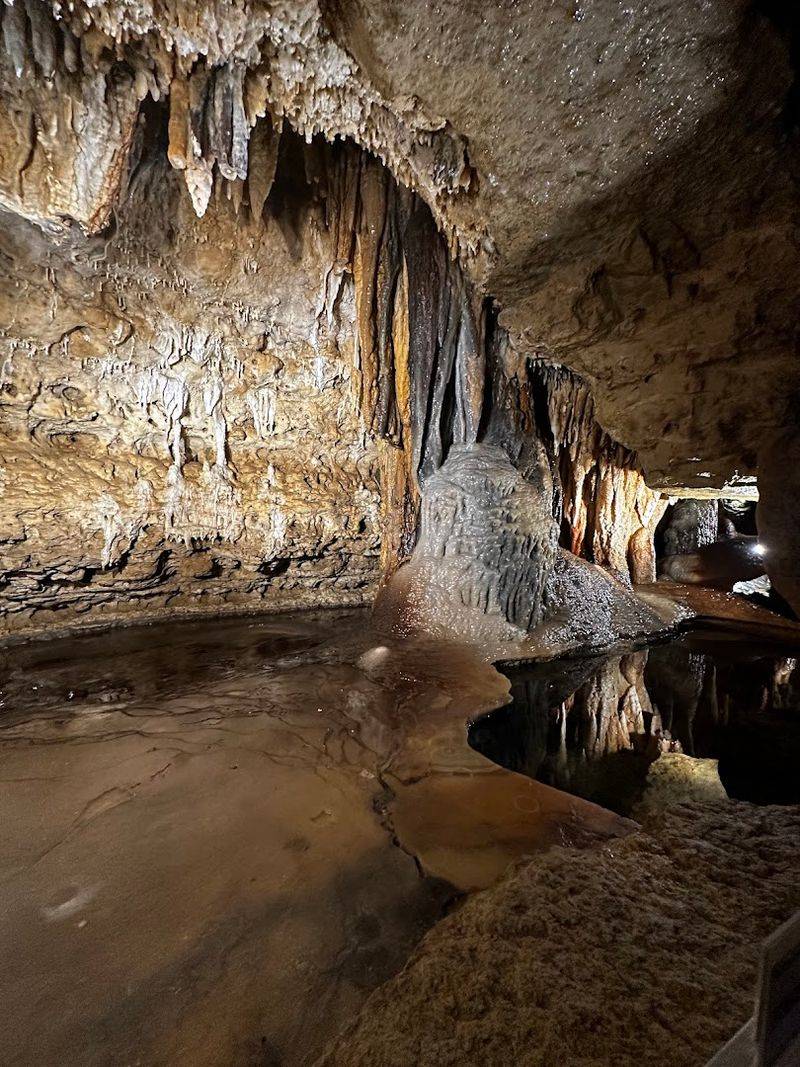
Beneath the rolling farmland near Blue Mounds, a hidden wonderland of limestone formations waits underground. Cave of the Mounds opened by accident in 1939 when workers blasting a quarry broke through into chambers that had been sealed for millions of years.
What they found inside looked like nature’s own jewelry box, glittering with crystals and draped in delicate formations.
Guided tours take you through rooms filled with stalactites, stalagmites, and flowstone formations in every color imaginable. Some are pure white, others stained orange and brown by minerals.
The cave maintains a constant 50 degrees year-round, making it a cool escape in summer and a warm refuge in winter.
Formations here grow incredibly slowly, sometimes just an inch every hundred years. That means the columns reaching from floor to ceiling took thousands of years to form.
Your guide will point out shapes that look like frozen waterfalls, organ pipes, and even strips of bacon hanging from the ceiling.
Scientists designated this as a National Natural Landmark, recognizing its geological significance. But you don’t need to understand the chemistry of calcium carbonate to be amazed by rooms that sparkle like treasure caves.
Kids especially love the adventure of descending underground and discovering this secret world beneath their feet.
5. Pewit’s Nest Gorge
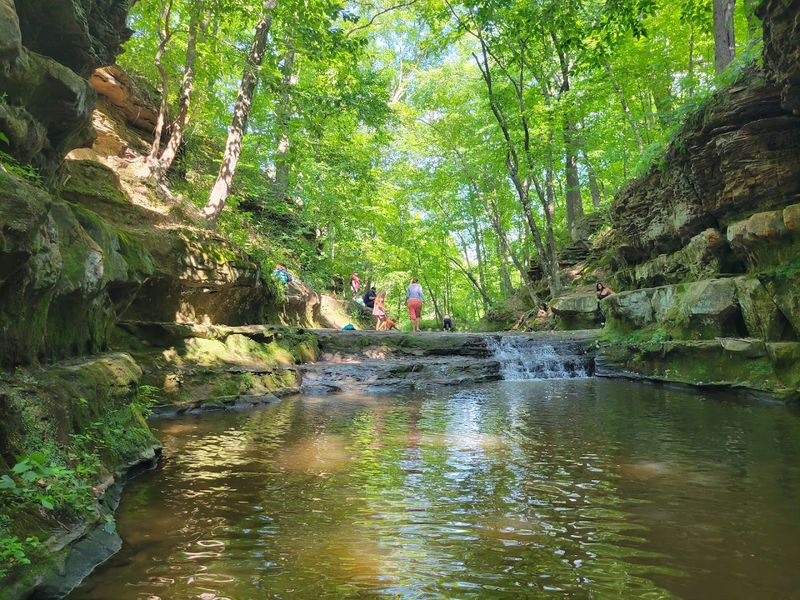
Skunk Creek carved a narrow slot through sandstone over thousands of years, creating Pewit’s Nest Gorge. The walls tower 40 feet overhead in some spots, close enough that you could almost touch both sides if you stretched.
Sunlight filters down into the gorge at certain angles, illuminating the golden sandstone and the clear water flowing over smooth rocks below.
This hidden gem sits on private land, but the owners generously allow public access. A short trail leads you into the gorge where you can walk along the creek bed when water levels are low.
Moss and ferns cling to the damp walls, adding splashes of green to the warm-toned rock.
Photographers flock here because the narrow passages and filtered light create dramatic compositions. The scale feels intimate compared to massive canyons out west, but that makes it more magical somehow.
You can reach out and touch the sculpted walls, feeling the smooth curves water carved into the stone.
Spring brings higher water levels that turn the gentle creek into a rushing stream. Summer offers easier exploration when you can wade through shallow pools.
Each season transforms the gorge, but it always maintains that sense of discovering a secret passage through solid rock that few people know exists.
6. Parfrey’s Glen
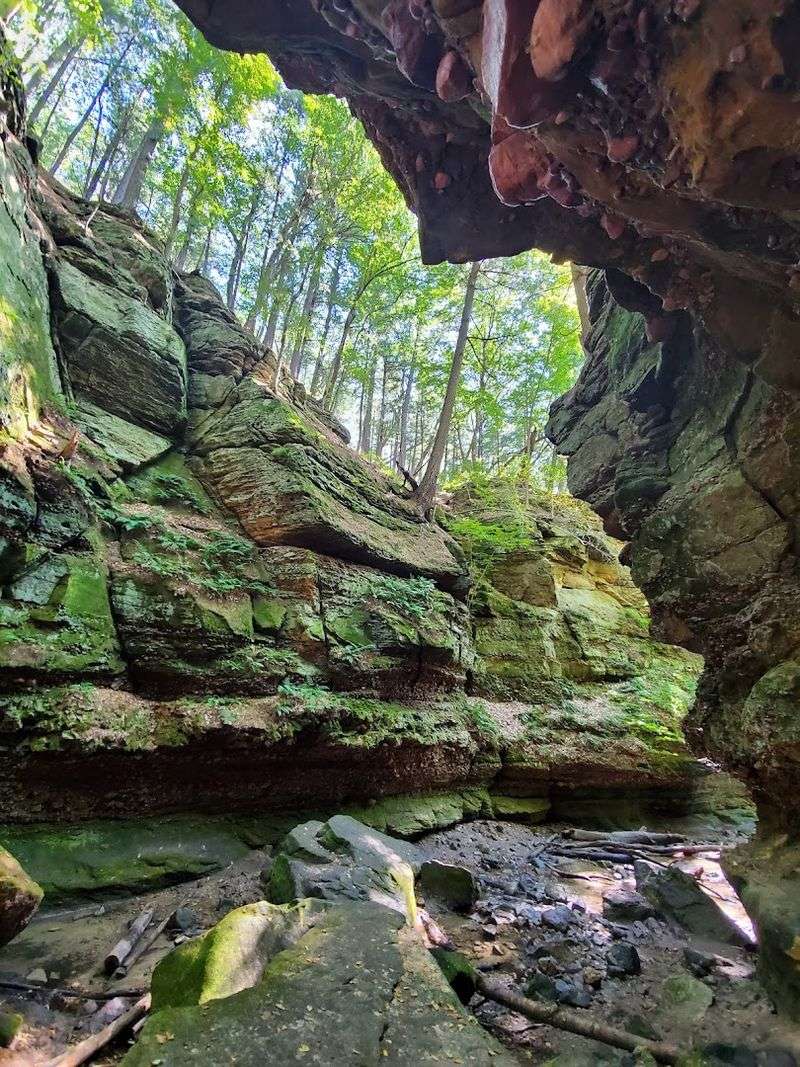
Wisconsin’s first State Natural Area protects a gorge so beautiful it needed special designation back in 1952. Parfrey’s Glen cuts deep into the earth, creating a cool, shaded passage where rare plants thrive in the humid microclimate.
Walking through feels like entering a different world where ferns grow as tall as your waist and water trickles over rocks worn smooth by centuries of flow.
The trail follows the creek bed upstream into progressively narrower sections of the gorge. Walls rise higher as you go deeper, eventually towering overhead and blocking out most of the sky.
A small waterfall at the end serves as your turnaround point, though getting there requires some careful rock hopping.
Geologists love this place because the exposed rock layers reveal millions of years of Earth’s history. You can see where ancient seas deposited sediments that eventually became the sandstone and quartzite forming the gorge walls.
Each stripe and color tells part of the story.
Summer temperatures inside the gorge stay noticeably cooler than the surrounding area. That makes it a perfect destination when heat waves hit.
The dampness and shade create ideal conditions for mosses and lichens that coat the rocks in shades of green and gray, adding to the primeval atmosphere of this special place.
7. Copper Falls State Park
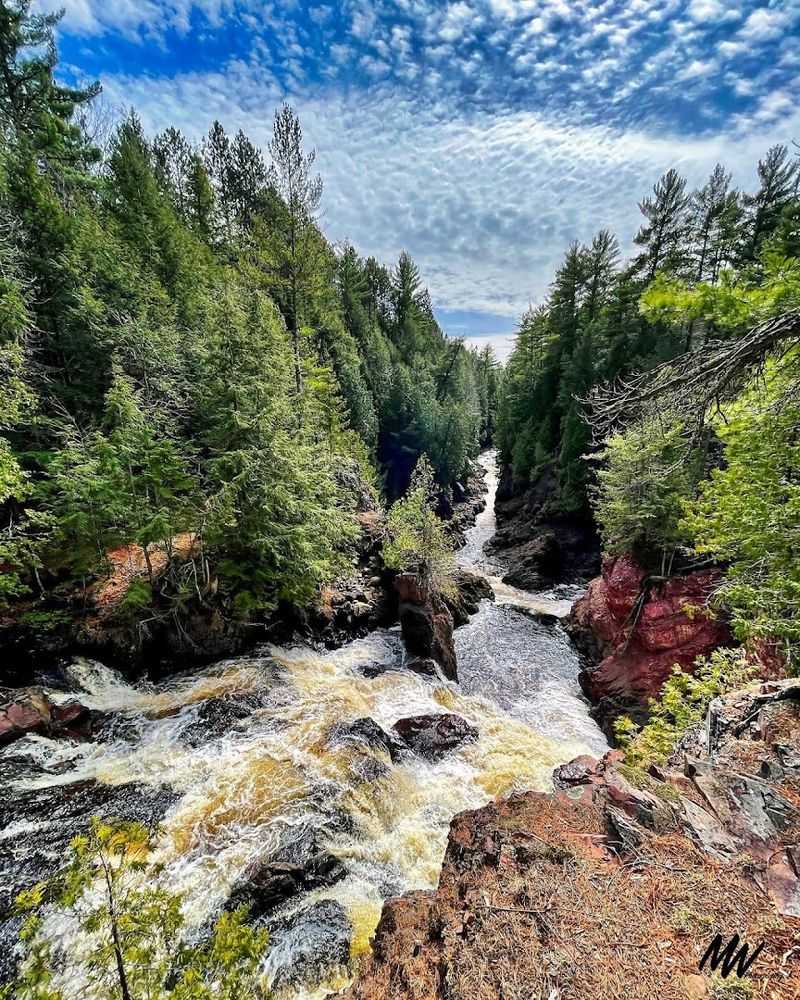
Two major waterfalls thunder through Copper Falls State Park, each one impressive enough to be the main attraction. Copper Falls drops about 30 feet over ancient lava flows, creating a curtain of water that crashes into a gorge below.
The rock here really does have a copper tint, stained by minerals that give the falls their name.
Brownstone Falls sits just downstream, adding a second spectacular cascade to your visit. A trail system connects both waterfalls and takes you along the rim of the gorge where you can peer down at the Bad River churning through the narrow channel.
Observation platforms provide safe viewing spots with perfect angles for photography.
The geological story here goes back over a billion years to when volcanic activity shaped this landscape. Lava flows cooled into the dark basalt rock you see today.
Later, the river cut down through these ancient formations, exposing layers that geologists study to understand Wisconsin’s volcanic past.
Fall colors transform the park into an absolute showstopper when maples and birches turn brilliant shades of red, orange, and yellow. The contrast between autumn foliage and dark rock makes every view worthy of a postcard.
Winter brings a different kind of beauty when ice builds up around the falls, creating frozen sculptures that change daily.
8. Dells Of The Wisconsin River
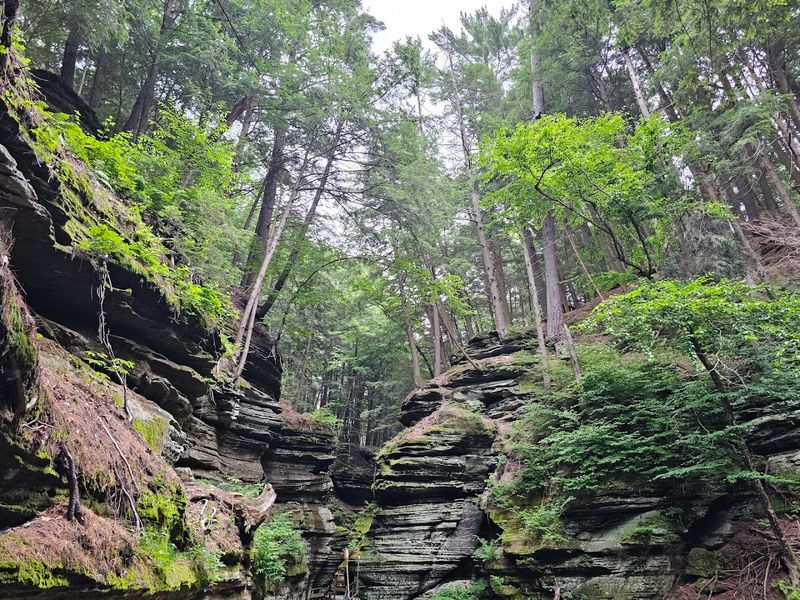
Glacial floods sculpted the Wisconsin Dells into one of the most unique riverscapes in America. Massive torrents of water rushed through here when ice age glaciers melted, carving deep channels through soft sandstone.
The result is a maze of narrow gorges, towering cliffs, and rock formations that look like something from the American Southwest transplanted to the Midwest.
Boat tours have been running through the Dells since the 1850s, making this one of America’s oldest tourist attractions. Modern tours use jet boats that zip through narrow passages where cliff walls rise straight up on both sides.
You’ll see formations with names like Devil’s Elbow, Witches Gulch, and Stand Rock that early explorers named for their dramatic shapes.
The Upper Dells offer the most spectacular scenery with deeper gorges and taller cliffs. Lower Dells are wider and more relaxed but still beautiful.
Both sections reward exploration, and you can spend days discovering hidden coves and unusual rock formations.
Early photographer H.H. Bennett made these cliffs famous in the 1800s with images that drew visitors from around the country.
His photos captured the magical quality of light filtering into the gorges and reflecting off the water.
That same magic still exists today when you glide through passages carved by ancient floods and marvel at nature’s sculpting abilities.
9. Schoolhouse Beach
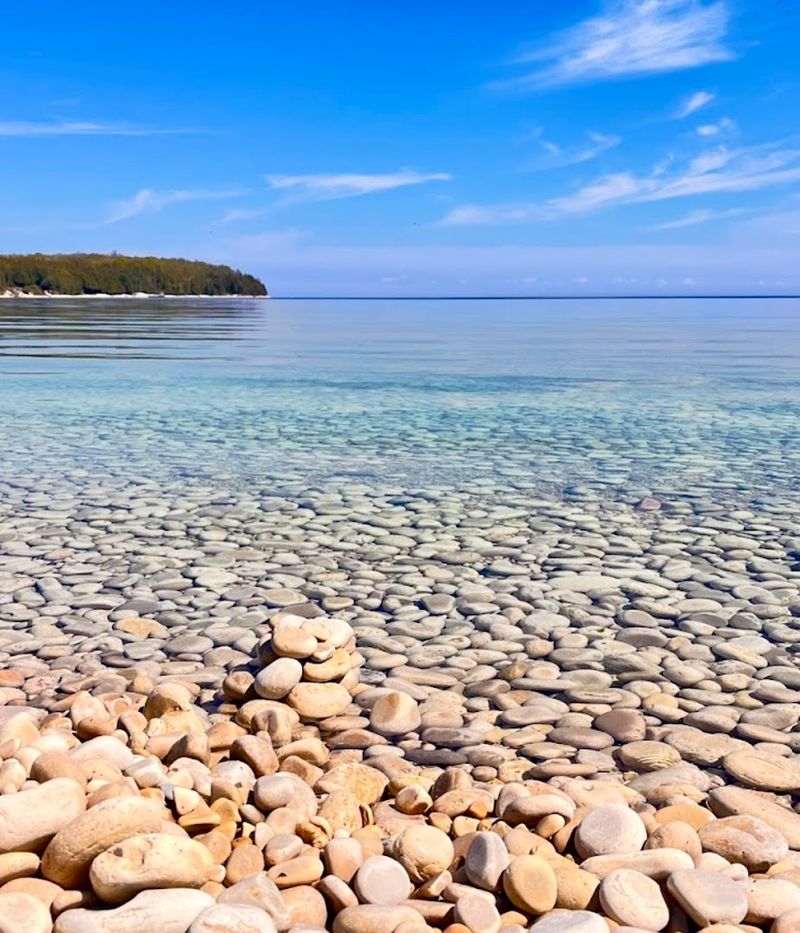
Only five beaches in the entire world are completely covered in smooth limestone pebbles instead of sand, and Schoolhouse Beach on Washington Island is one of them. Millions of white stones create a shoreline that clicks and clacks when waves roll in.
The water here glows an impossible shade of turquoise that looks more Caribbean than Midwestern.
Glaciers deposited these limestone rocks thousands of years ago, and Lake Michigan’s waves have been polishing them ever since. Each stone is smooth and rounded, comfortable to walk on once you get used to the uneven surface.
Locals are fiercely protective of their beach and ask visitors not to take stones as souvenirs so future generations can enjoy this rare natural phenomenon.
Swimming here feels different from any other beach experience. The limestone bottom stays visible even in deeper water because there’s no sand to cloud things up.
Fish dart between the rocks, and the clarity lets you watch them from above. Water temperatures stay chilly even in summer, but that doesn’t stop people from taking a dip.
Getting to Washington Island requires a ferry ride from the tip of Door County’s peninsula. That journey adds to the adventure and keeps the beach from getting too crowded.
Pack a picnic and spend the afternoon listening to stones rattle in the surf while soaking up views across Lake Michigan.
10. Willow Falls At Willow River State Park
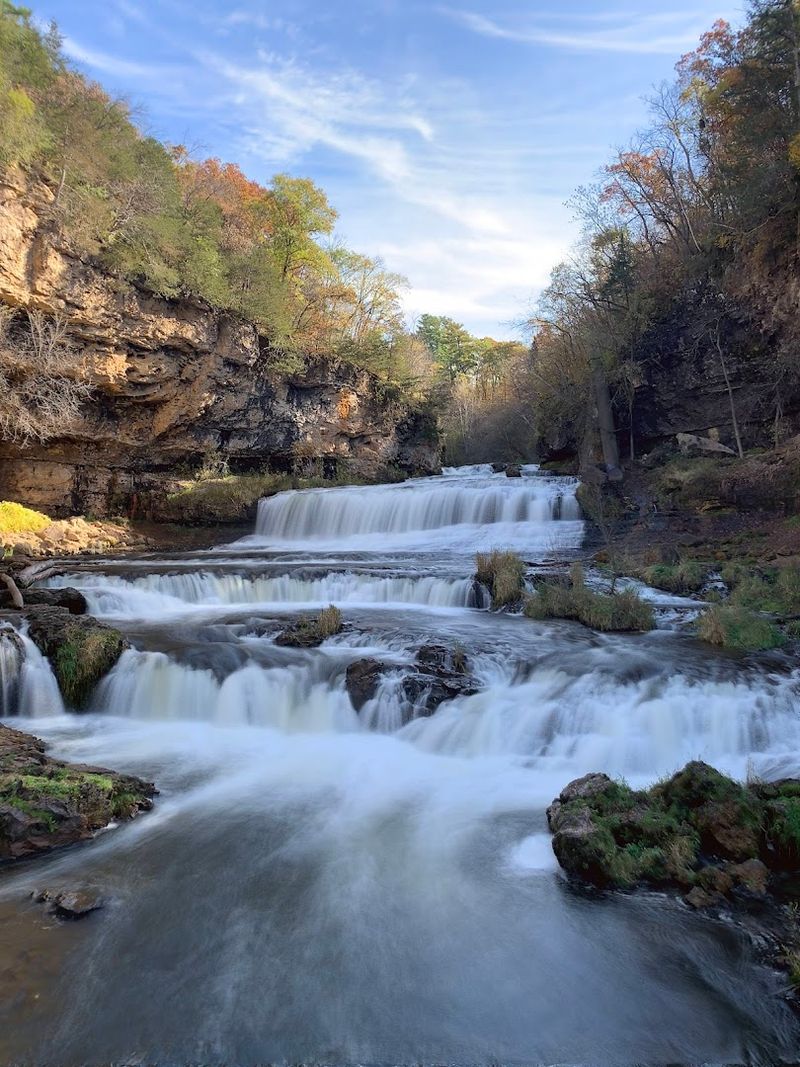
Willow Falls drops 200 feet through a series of cascades that create one of Wisconsin’s most photogenic waterfalls. Water tumbles over multiple tiers, creating pools and smaller falls at each level.
The main drop is impressive, but the whole sequence of cascades makes this spot special as the river descends through layers of ancient rock.
A viewing platform near the base puts you close enough to feel the spray on your face. The sound of rushing water fills the air, and rainbows appear in the mist on sunny days.
Trails on both sides of the gorge offer different perspectives, and adventurous visitors can scramble over rocks for unique angles.
Spring runoff transforms Willow Falls into a raging torrent when snowmelt swells the river. Summer brings lower flows that reveal more of the underlying rock structure.
Each season offers something different, from ice formations in winter to autumn colors reflecting in the pools below the falls.
The geology here tells a story of volcanic activity and glacial sculpting. Basalt flows from ancient eruptions form the layers over which the water cascades.
Glaciers later carved the valley and deposited the boulders scattered around the falls.
Scientists study this site to understand how Wisconsin’s landscape evolved, but most visitors just come to enjoy the beauty and power of water reshaping rock one drop at a time.