
This Iconic Nevada Landmark Lets You Stand In Two States At Once
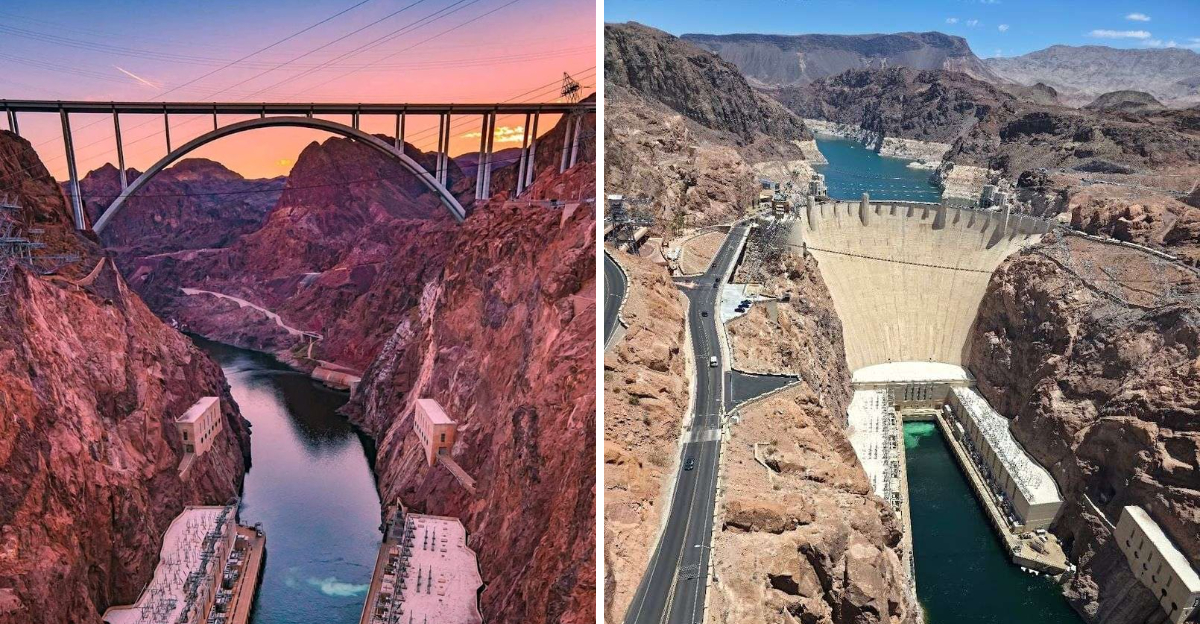
Some places make you stop, stare, and wonder how anyone managed to build them. This Nevada landmark does exactly that.
It rises between rugged desert cliffs, holds back a vast blue reservoir, and turns a simple roadside visit into something much bigger. One minute you are admiring the views.
The next, you are standing on a border with one foot in Nevada and the other in Arizona. Add in Great Depression history, bold engineering, and a setting that feels almost cinematic, and it becomes easy to see why this stop keeps pulling people off the highway.
It is not just a photo op. It is a larger-than-life piece of the American Southwest.
You Can Stand Between Nevada And Arizona
Straddling the border between two states creates a peculiar thrill that never gets old. The state line runs directly through the center of Hoover Dam, marked clearly on the walkway that crosses the top of this concrete giant.
Visitors gather at this spot throughout the day, taking turns posing with one foot planted in Nevada and the other in Arizona. The bronze markers embedded in the pavement make it easy to find the exact dividing line.
Beyond the novelty of the photo opportunity, standing at this boundary offers a moment to appreciate the cooperation required to build such a structure. Two states, the federal government, and countless workers came together during one of America’s darkest economic periods.
The location at 36.0160655, -114.7377325 marks more than just a geographic division.
Families enjoy explaining time zones to confused children at this very spot, adding another layer of complexity to an already fascinating location.
The Dam Sits Directly On The Colorado River
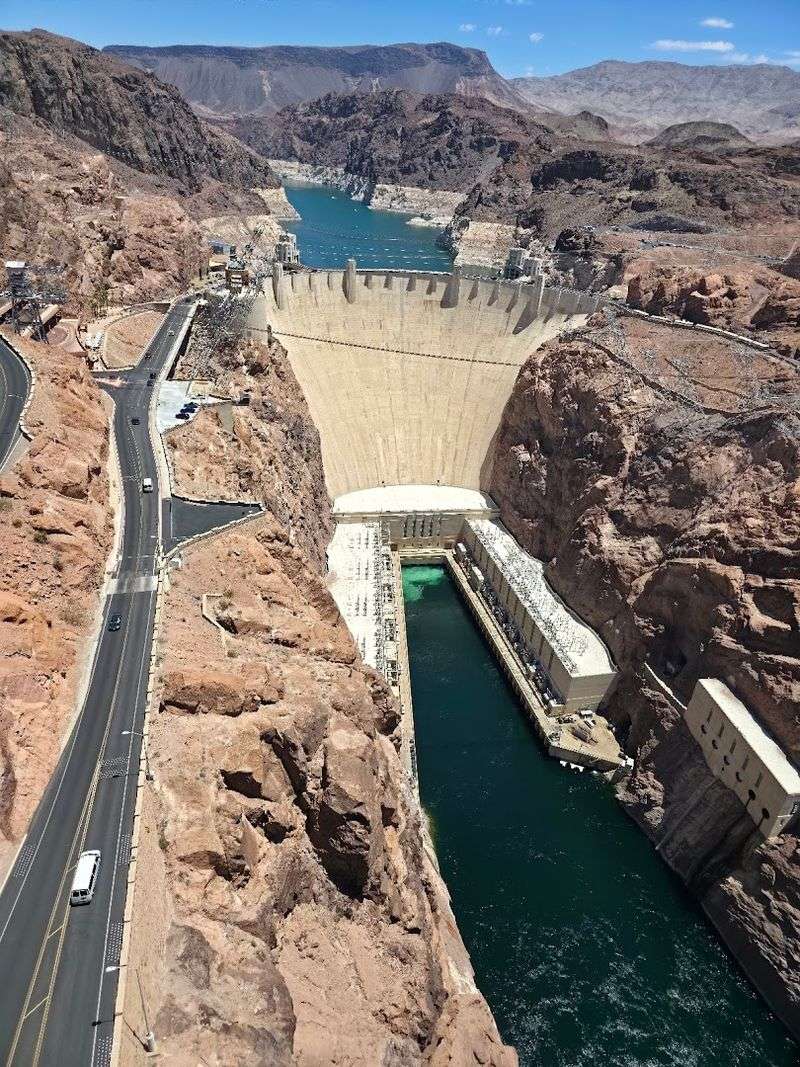
Black Canyon provided the perfect location for controlling one of the West’s most powerful waterways. Engineers selected this narrow gorge after extensive surveys determined it could support the weight and pressure of a dam tall enough to tame the Colorado River.
The river once raged through this canyon with unpredictable force, flooding farmland downstream and running dry during droughts. Hoover Dam transformed this wild waterway into a managed resource that serves seven states.
Looking down from the top reveals the transformation clearly. Upstream, Lake Mead spreads across the desert like a massive blue mirror.
Downstream, the Colorado flows in a controlled manner, its power harnessed by seventeen enormous turbines buried deep inside the dam.
The contrast between the calm reservoir and the channeled river below demonstrates the dramatic impact of human engineering on natural systems, a change that continues to shape the Southwest decades after construction ended.
It Created The Massive Lake Mead
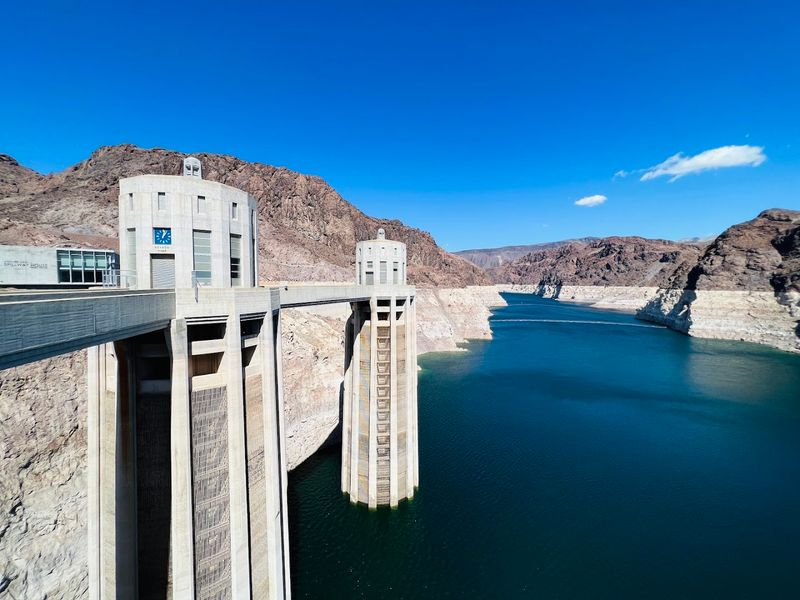
Lake Mead stretches for 112 miles behind Hoover Dam, creating the largest reservoir in the United States by volume when full. The lake began filling in 1935 as workers completed the final sections of the dam, eventually taking six years to reach capacity.
Recreation opportunities abound across this desert oasis. Boaters, swimmers, and anglers flock to the shoreline throughout the year, taking advantage of facilities that include marinas, beaches, and campgrounds.
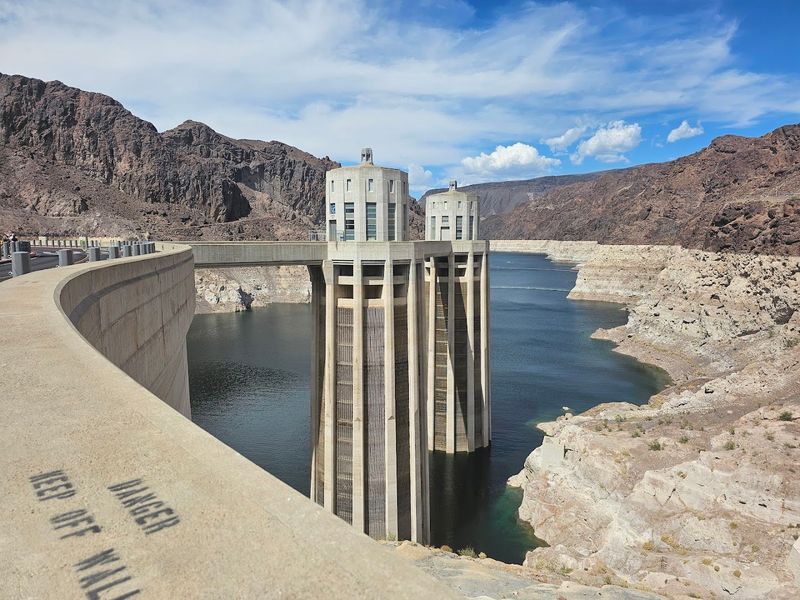
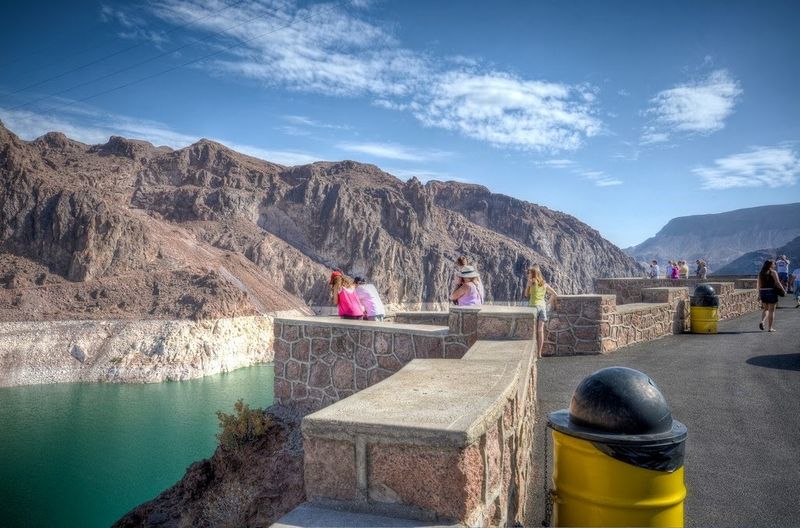
The white ring visible along the rocky shoreline tells a sobering story about drought in the modern West. This mineral deposit marks the historical high water level, now dozens of feet above the current surface.
Climate change and increased demand have dramatically reduced the reservoir’s capacity.
Despite these challenges, Lake Mead remains a vital water source for millions of people across Nevada, Arizona, and California, storing precious resources in a region where every drop counts for survival and growth.
The Views From The Top Are Huge
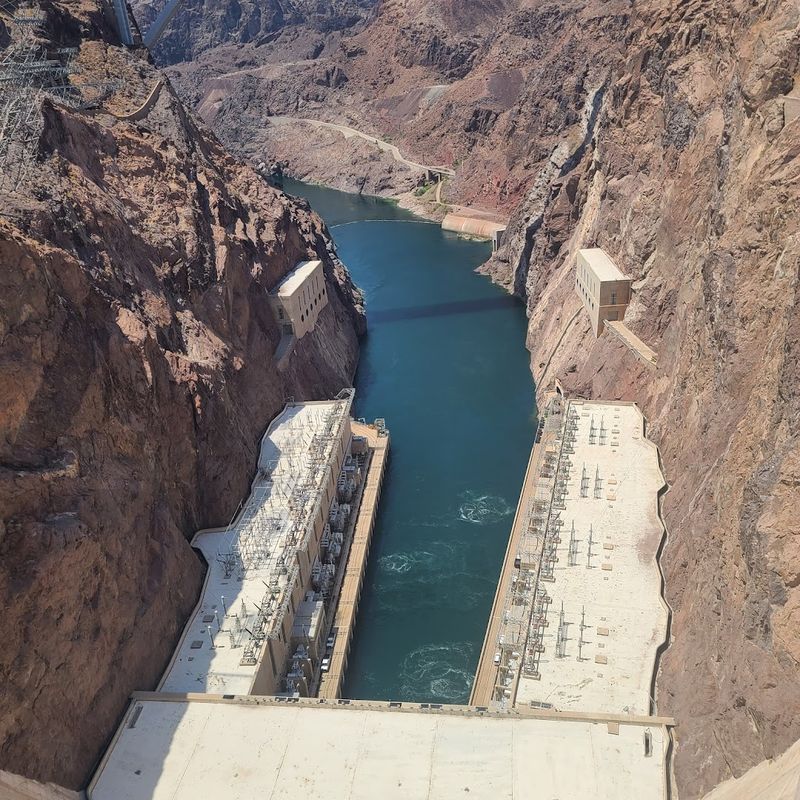
Standing 726 feet above the Colorado River provides perspectives that photographs struggle to capture accurately. The sheer drop from the dam’s crest to the riverbed below creates a dizzying sensation that reminds visitors of the structure’s incredible scale.
Looking north toward Lake Mead reveals water spreading across the desert basin, framed by rugged mountains that change color throughout the day. The southern view follows the Colorado River as it winds through Black Canyon, eventually disappearing around a bend.
The Mike O’Callaghan-Pat Tillman Memorial Bridge arches overhead, adding another layer to the scene. Visitors who walk across the dam experience constantly changing vantage points, each offering fresh appreciation for the landscape.
Early morning and late afternoon provide the best lighting for photography, though the midday sun reveals details that softer light conceals. Wind whips across the open expanse, so holding onto hats and securing loose items becomes necessary while soaking in these remarkable views.
Its Art Deco Details Make It More Than An Engineering Wonder
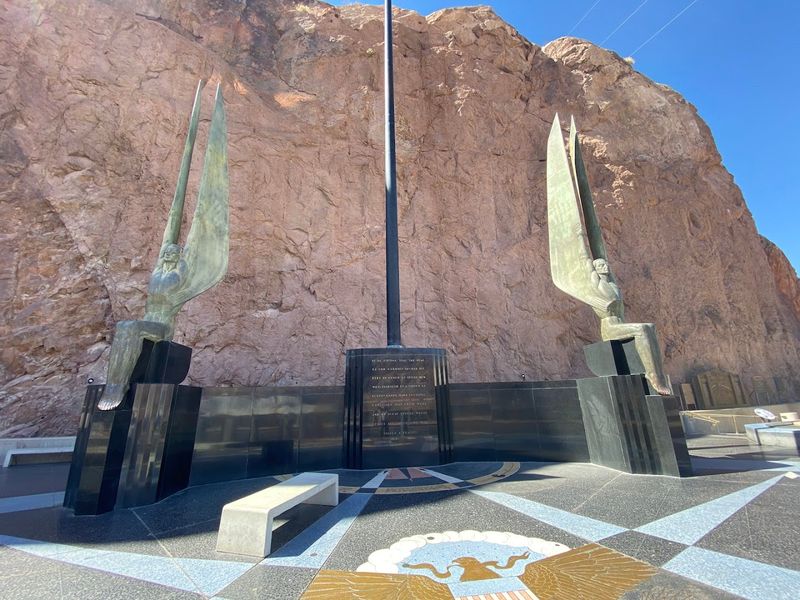
Architect Gordon Kaufmann ensured that function did not overshadow form during the dam’s design phase. Art Deco styling transforms what could have been purely utilitarian infrastructure into a monument that reflects the optimism and ambition of its era.
Bronze sculptures flank the dam, including the famous Winged Figures of the Republic. These 30-foot-tall statues sit on terrazzo bases inlaid with star charts, adding astronomical significance to artistic beauty.
The polished surfaces catch sunlight throughout the day, creating dramatic shadows.
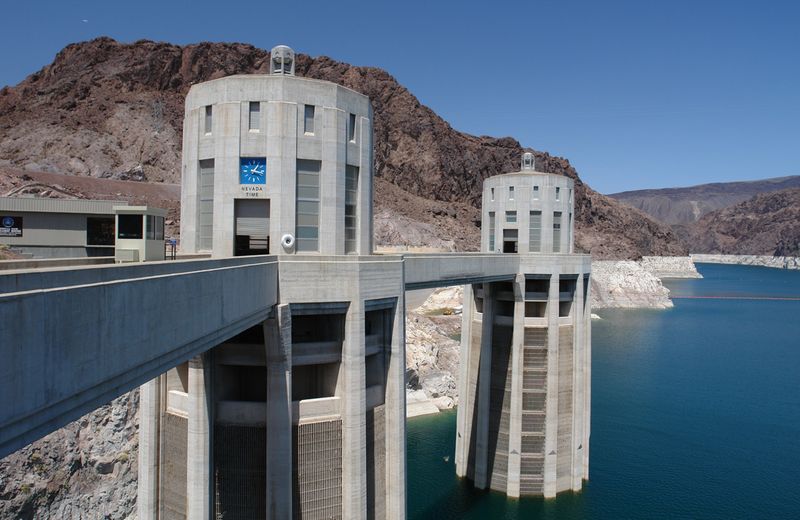
Geometric patterns appear throughout the complex, from the intake towers rising above Lake Mead to the decorative elements adorning the visitor center. Even practical features like railings and light fixtures received careful design attention.
This commitment to aesthetics distinguished Hoover Dam from other public works projects of the Depression era. The builders created something meant to inspire future generations, not just serve immediate needs, a goal they achieved through thoughtful integration of art and engineering.
The Mike O’Callaghan-Pat Tillman Memorial Bridge Gives The Best View
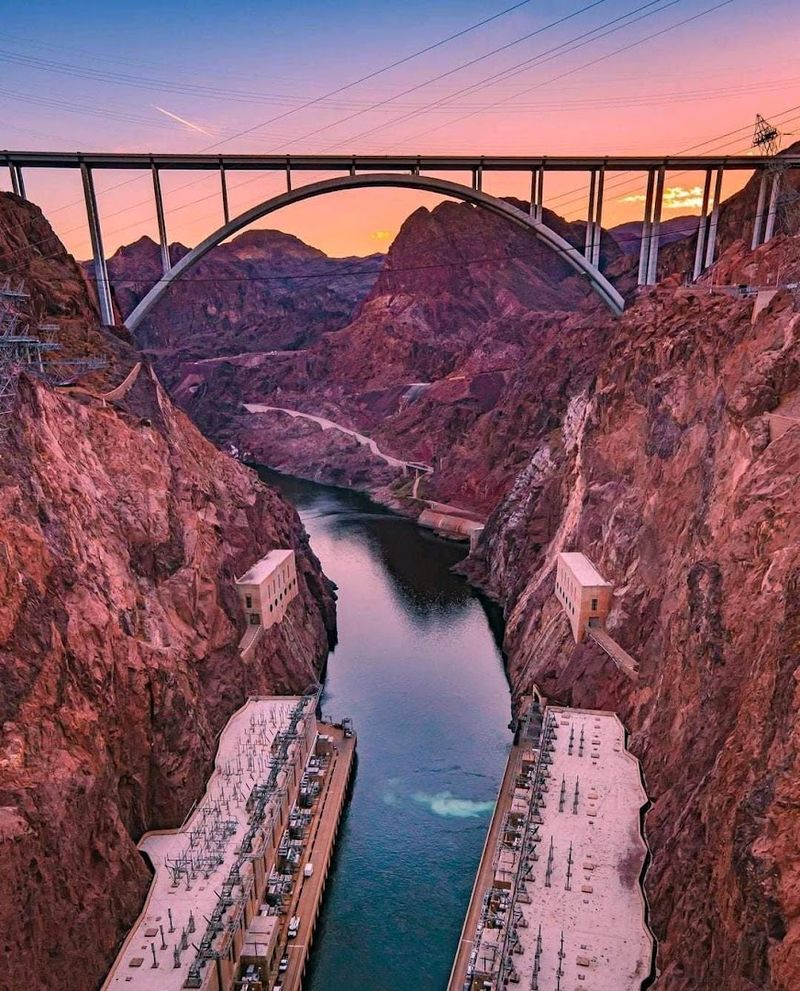
Completed in 2010, this concrete arch bridge soars 890 feet above the Colorado River, offering unobstructed views of Hoover Dam from a perspective impossible to achieve anywhere else. The pedestrian walkway allows visitors to stop and photograph the entire structure without traffic concerns.
Named for a Nevada governor and an Arizona football player turned Army Ranger, the bridge serves practical and memorial purposes. It rerouted Highway 93 traffic away from the dam’s narrow two-lane roadway, improving safety and security.
Walking out to the center of the bridge requires a short hike from parking areas on either side. The effort pays off with views that capture the dam, the river, and the surrounding canyon in a single frame.
Wind conditions can be intense at this elevation.
Photographers favor sunrise and sunset hours for capturing the dam bathed in golden light. The bridge itself becomes part of the composition, its graceful arch framing the Depression-era engineering marvel below in a study of contrasts between different eras of American infrastructure.
It Was One Of The Biggest Projects Of The Great Depression
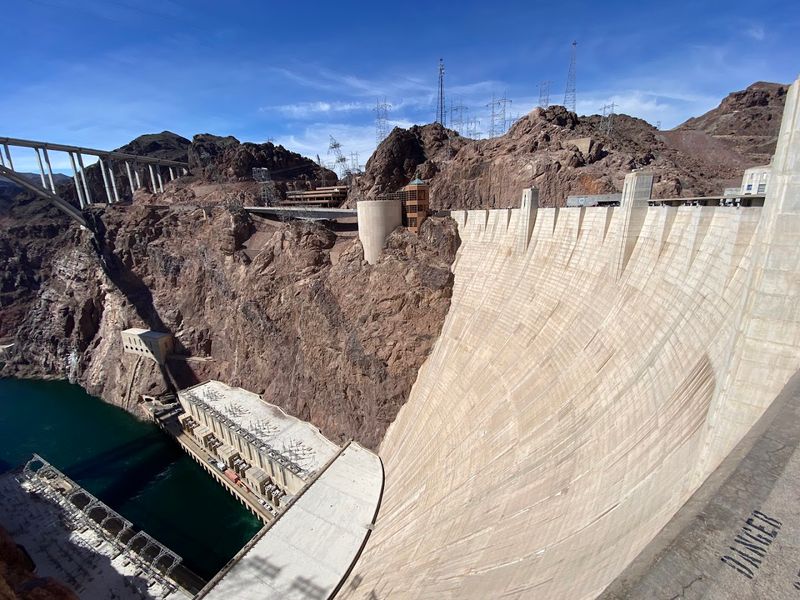
Construction began in 1931 when unemployment plagued the nation and hope seemed scarce. President Herbert Hoover authorized the project to provide jobs and infrastructure, creating work for thousands of desperate men who flocked to the Nevada desert seeking wages.
Workers faced brutal conditions building this monument to American determination. Summer temperatures regularly exceeded 120 degrees inside Black Canyon.
Men died from heat stroke, falls, and accidents involving heavy equipment.
The project employed innovative techniques that advanced engineering knowledge significantly. Workers poured concrete in interlocking blocks rather than one massive pour, allowing the structure to cure properly.
Refrigerated water ran through pipes embedded in the concrete to speed cooling.
Completion came in 1935, two years ahead of schedule and under budget, a remarkable achievement for such an ambitious undertaking. The dam provided immediate benefits through flood control and power generation, justifying the investment and sacrifice required to build it during America’s darkest economic period.
The Dam Still Generates Hydroelectric Power
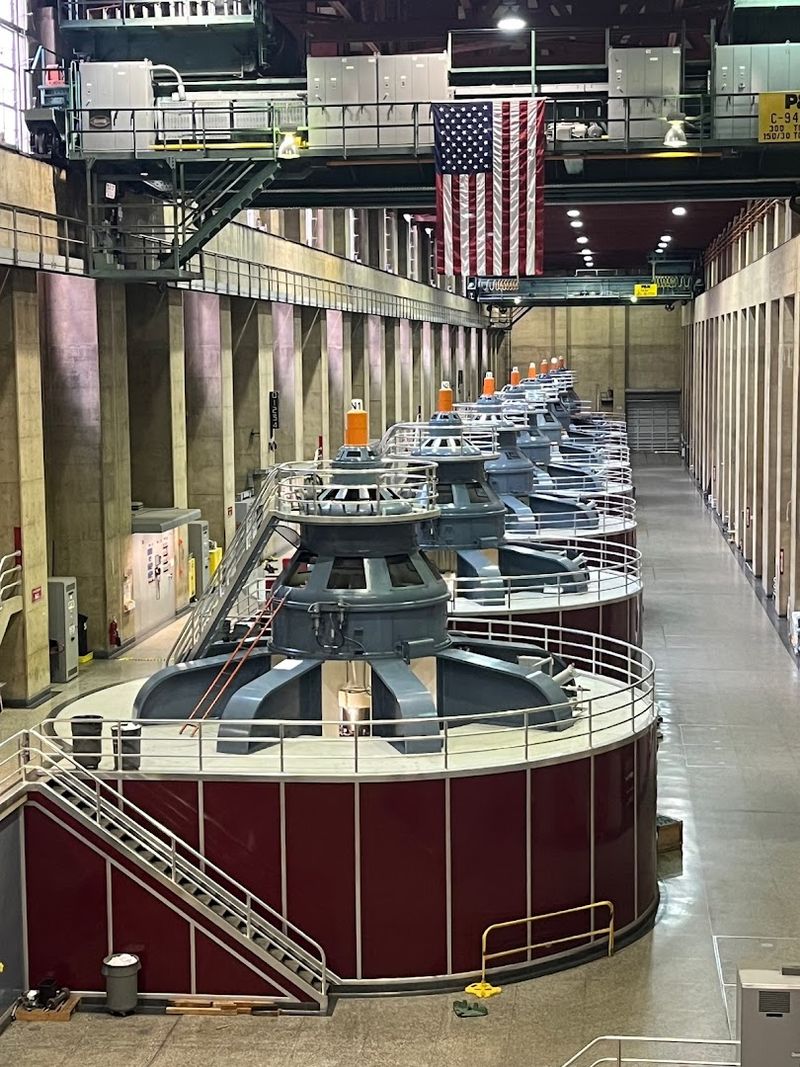
Seventeen enormous turbines continue converting the Colorado River’s flow into electricity for Nevada, Arizona, and California. The powerplant operates around the clock, generating enough energy to serve approximately 1.3 million people annually.
Each generator weighs millions of pounds and stands several stories tall. Water pressure from Lake Mead drives these machines with tremendous force, spinning them at speeds that transform mechanical energy into electrical current.
The hum of operating equipment fills the powerplant chambers.
Tours allow visitors to descend into the heart of this industrial cathedral and witness the turbines firsthand. The scale becomes apparent only when standing beside these massive machines, understanding the engineering required to harness such power.
Modern upgrades have improved efficiency since the original installation. New turbines replace older models periodically, incorporating technological advances while maintaining the basic system designed nine decades ago.
This ongoing production proves the enduring value of infrastructure built to last generations rather than decades.
Guided Tours Take Visitors Inside The Landmark
The Bureau of Reclamation offers several tour options for visitors wanting to explore beyond the surface. The Powerplant Tour provides access to the generator floor and original construction tunnels, revealing the dam’s inner workings through informative presentations.
More extensive options include the Dam Tour, which ventures deeper into restricted areas. Guides share stories about construction challenges, worker experiences, and technical innovations that made the project possible.
These narratives bring history alive in ways that plaques and exhibits cannot match.
Tours operate daily from 5 AM to 9 PM according to current schedules, though advance reservations help guarantee preferred times. Tickets can be purchased at the visitor center, located at the Nevada side of the dam.
Prices vary depending on tour length and access level.
Comfortable walking shoes become essential as tours involve stairs, uneven surfaces, and considerable distances. The interior temperature remains cool year-round, offering relief from desert heat while providing education about one of America’s greatest engineering achievements and its continuing importance.
The Time Zone Line Adds A Fun Travel Twist
Crossing Hoover Dam means traveling through time in the most literal sense possible. Nevada operates on Pacific Time while Arizona observes Mountain Standard Time year-round, creating a one-hour difference for most of the year.
This quirk confuses many first-time visitors who check their phones and notice the time suddenly jumping forward or backward. The phenomenon becomes particularly amusing during spring and fall when daylight saving time changes affect Nevada but not Arizona, temporarily eliminating the time difference.
Families enjoy the novelty of having members stand on opposite sides of the line, calling each other from different time zones while standing mere feet apart. The experience provides a tangible lesson in geography and timekeeping that children remember long after leaving.
Practical implications affect meal planning and schedule coordination for those continuing travels into either state. Smart travelers account for this shift when making reservations or planning arrivals, though the confusion generally creates more entertainment than actual problems for tourists enjoying this unique border crossing.