
Most Mississippi Locals Don’t Know This Jaw-Dropping Cave Even Exists
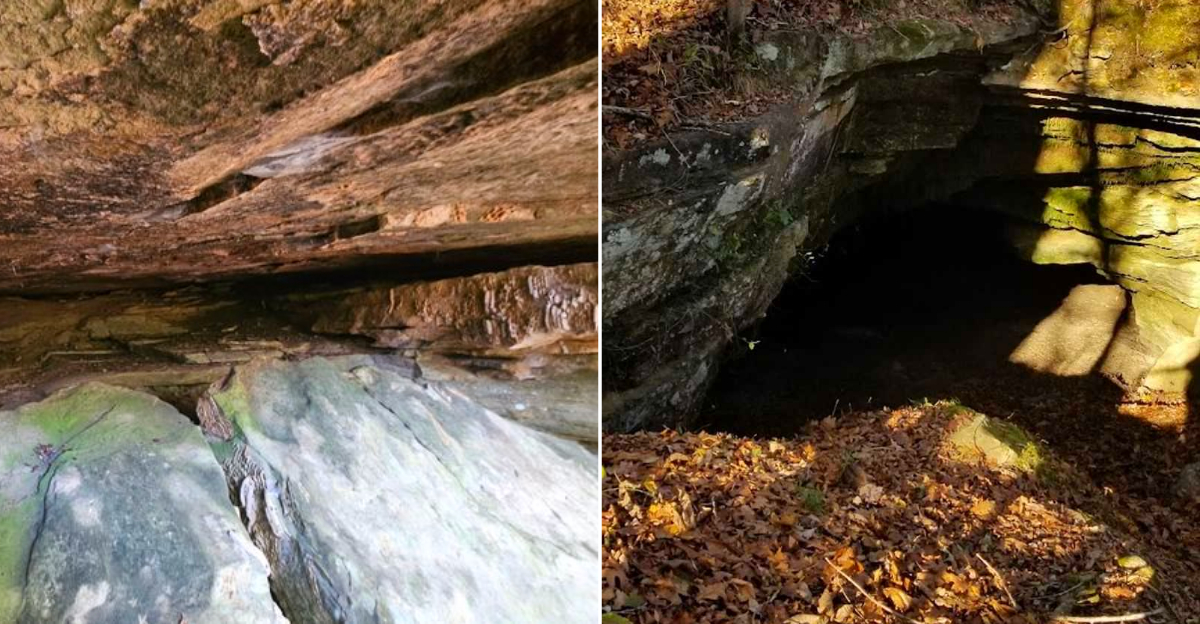
Most people do not picture Mississippi as cave country. The flat delta land and the coastline take up most of the mental image.
But underneath certain parts of the state’s interior, something slow and spectacular has been happening for a very long time. Undisturbed.
Unhurried. Completely unbothered by the attention that more famous caves elsewhere have had to manage for decades.
The formations inside this cave are the kind of thing that makes a person go quiet without deciding to. The scale catches you off guard and then immediately blows past whatever you expected.
Limestone structures that took longer to form than any human word for time can properly describe hang overhead with a stillness that makes ancient feel like a real thing rather than just a big number.
Mississippi locals have driven past this area their whole lives without knowing any of it exists below their feet.
The cave has been waiting patiently for the right people to find it. Consider this the introduction it never had to make for itself.
A Geological Wonder Unlike Anything You Have Seen
Rainwater has a secret talent. Over millions of years, it seeps into the ground, picks up acidity from soil and decaying organic matter, and quietly dissolves the limestone bedrock beneath.
The result, given enough time, is a hollow underground room that eventually has nowhere left to go but down.
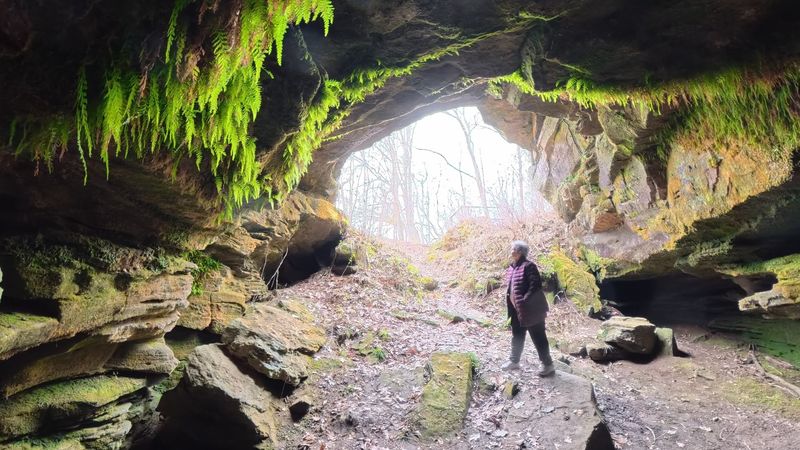
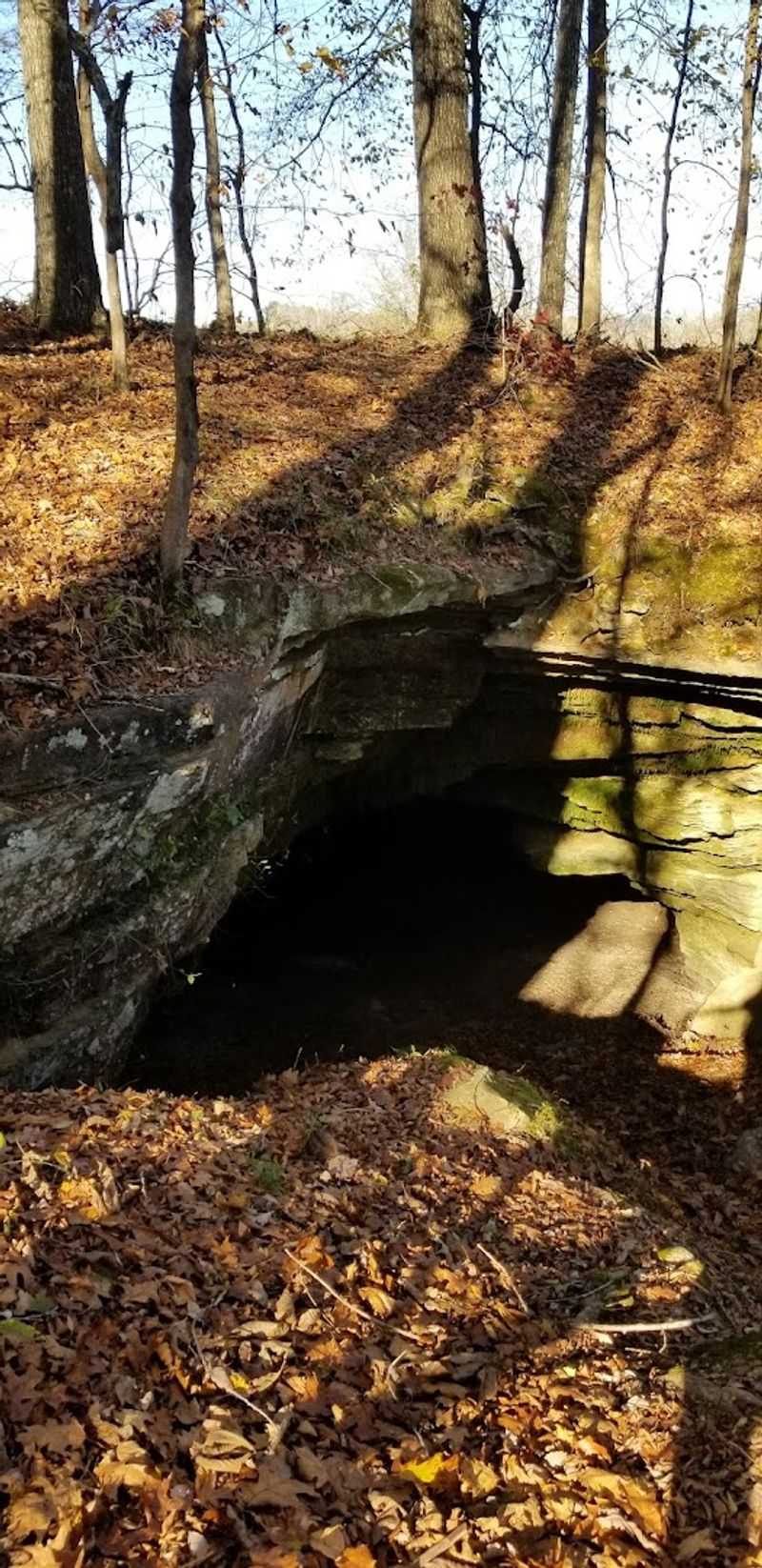
That collapse is exactly what created the stunning formation you see at Cave Spring. Two cave openings now border a wide sinkhole, the remnants of a massive underground corridor whose roof gave way long ago.
It looks almost theatrical, like nature staged the whole scene on purpose.
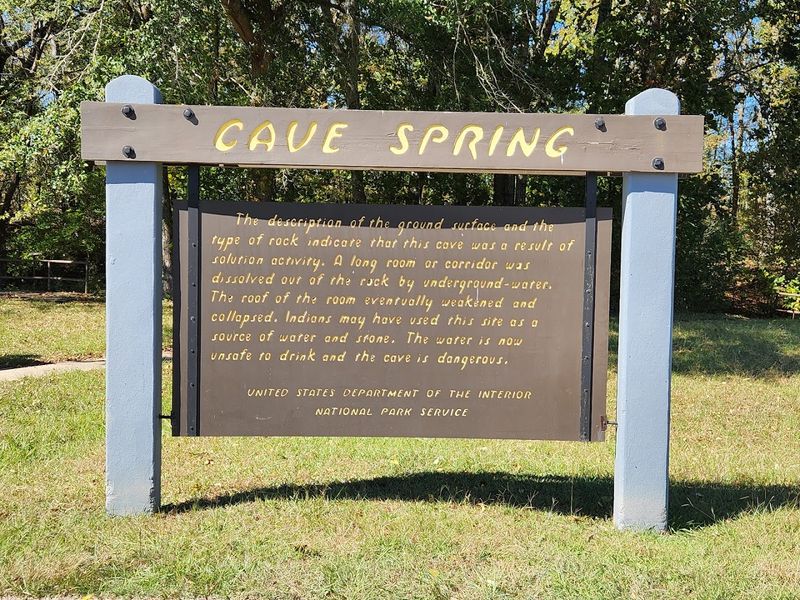
Interpretive signs at the site walk you through the geology in plain language, so you do not need a science degree to appreciate what happened here. The paved trail with stairs leads down to observation stands where you can peer directly into the cave openings.
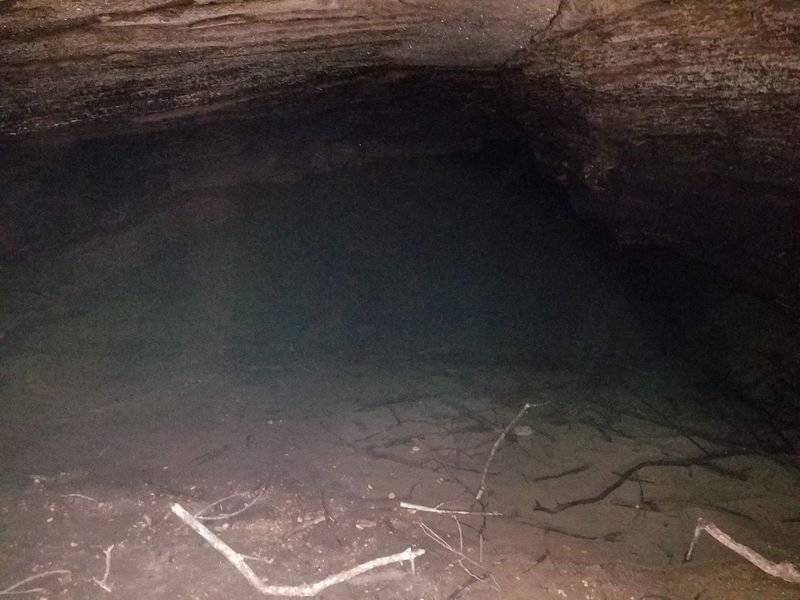
The pools inside are deep and dark, which is part of what makes the whole experience so memorable. Bring a bright flashlight and you will catch the glimmer of still water far below the surface.
Mississippi does not get credit often enough for its geological drama, but Cave Spring makes a compelling argument.
Cave Spring On The Natchez Trace Parkway
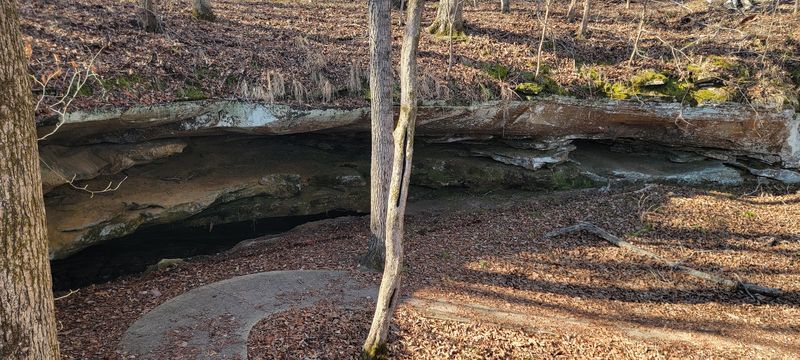
Cave Spring sits at milepost 308.4 on the Natchez Trace Parkway in Tishomingo County, Mississippi 38873, and the address alone tells you something worth knowing.
The Natchez Trace is a 444-mile scenic road steeped in history, stretching from Natchez all the way to Nashville.
Every stop along it has a story, and Cave Spring is one of the best chapters.
Pulling off at the designated parking area, you notice how quickly the forest surrounds you. The trail to the cave is short and paved, which makes the site accessible for most visitors.
Stairs lead you down to the observation stands, and the descent itself feels like crossing into a different world.
The parkway is managed by the National Park Service, so the grounds are well-maintained and clearly marked. Rangers and interpretive signs keep visitors informed about both the geology and the cultural history of the area.
A rating of 4.6 stars from visitors reflects just how consistently the site impresses people who stop to explore it. Many travelers admit they almost skipped it entirely before deciding to pull over.
That decision, almost universally, turns out to be one of the better ones they make on the whole drive.
The Chickasaw Connection And Ancient History
Long before the Natchez Trace became a parkway, it was a trail used by Native Americans for centuries. Cave Spring was a critical resource for the Chickasaw people, who recognized its value as a reliable source of water, usable rock, and shelter.
That kind of practical genius deserves real respect.
The Chickasaw Nation was one of the most powerful Indigenous groups in the southeastern United States. Their deep knowledge of the land meant they understood exactly what a site like Cave Spring offered.
Fresh water, protective rock formations, and a defensible location were not luxuries. They were survival essentials.
Historians and archaeologists have documented the cultural significance of Cave Spring as an important historic site connected to the Chickasaw people.
The interpretive signs at the location acknowledge this history directly, which adds real weight to the visit.
Standing at the observation stand, you are not just looking at geology. You are looking at a place where human beings made decisions, found sustenance, and built lives.
That layered meaning transforms Cave Spring from a scenic curiosity into something that genuinely moves you. History has a way of doing that when the land still carries the memory.
What Millions Of Years Actually Looks Like
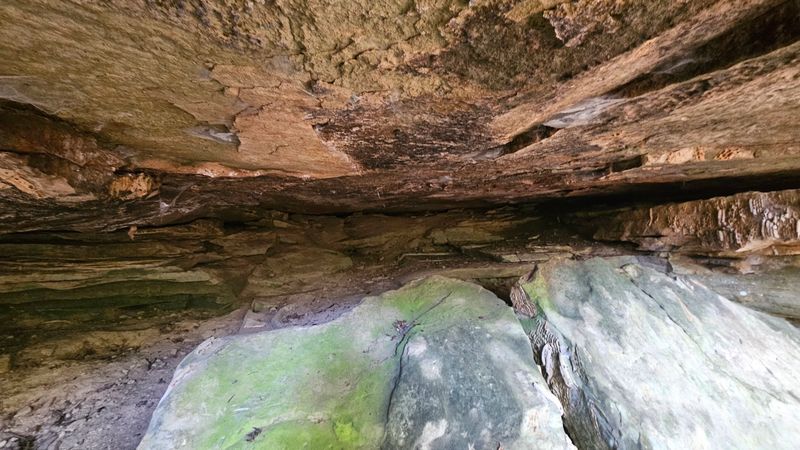
Most people understand that caves take a long time to form, but standing in front of Cave Spring makes that abstract fact feel startlingly real. The dissolved limestone walls show every year of patient erosion in their rough, pitted texture.
Nature is an incredibly slow and precise sculptor.
The process started with rainwater absorbing carbon dioxide as it fell through the atmosphere, forming a mild carbonic acid.
That acidic water worked its way through cracks in the sedimentary rock layer by layer over an almost incomprehensible span of time.
The underground room that formed eventually grew too large to support its own ceiling.
When the roof collapsed, it created the sinkhole that now separates the two visible cave openings. Each opening leads to deep pools of water that still reflect the ongoing geological story.
The water is not safe for drinking, and visitors are rightly prohibited from entering the caves themselves. The openings are considered genuinely hazardous, and the rules exist for good reason.
A bright flashlight aimed into either opening rewards you with a dramatic view of still, dark water and ancient stone.
Few places in Mississippi offer this kind of raw, unfiltered encounter with deep geological time in such a compact and accessible setting.
The best time to visit is during mild weather when the trail is dry and the forest is at its most vivid. Early morning visits offer the added bonus of quiet surroundings and softer light filtering through the trees.
The site does not charge an entry fee, which makes it one of the most rewarding free stops on the entire Natchez Trace.
The Atmosphere That Keeps People Coming Back
Pretty and creepy is not a combination you find every day. Cave Spring has earned that description honestly.
The forest around the site is dense and quiet, and when the light starts to fade, the cave openings take on a quality that is hard to shake. It is atmospheric in the best possible way.
The peaceful quality of the location is a big part of its appeal. The Natchez Trace Parkway discourages commercial traffic, so the road itself is unusually quiet.
That silence carries over to every stop along it, including Cave Spring. You are unlikely to find crowds here, which means the experience feels personal rather than touristic.
People who stop here tend to leave with a quiet appreciation for what the natural world is capable of producing without any human assistance. The cave does not need embellishment.
Its atmosphere is already doing all the work it needs to do.
Planning a visit to Cave Spring is refreshingly simple. The site is accessible directly from the Natchez Trace Parkway, and the paved trail means you do not need hiking boots or special gear to reach the observation stands.
Comfortable walking shoes and a sense of curiosity are the main requirements.
Why Cave Spring Deserves A Spot On Your Mississippi Road Trip
Bringing a bright flashlight is strongly recommended by almost everyone who has made the trip. The cave openings are dark, and the deep pools inside are not visible without a solid beam of light.
A cheap pocket flashlight will disappoint you. Bring the real thing and the experience pays off immediately.
Road trips along the Natchez Trace are already rewarding on their own terms. The 444-mile route is scenic, historically rich, and genuinely unlike any other drive in the country.
Adding Cave Spring to the itinerary takes roughly thirty extra minutes and delivers an experience that most travelers rank among the highlights of the whole journey.
The site is compact enough that it never feels overwhelming. You do not need to commit a full day or even a half day to appreciate it.
A focused stop with a flashlight and a willingness to read the interpretive signs is all it takes to walk away genuinely impressed.
Mississippi does not always get the recognition it deserves as a destination for natural wonders. Cave Spring is a strong counterargument to that oversight.
The geology is legitimate, the history is layered, and the atmosphere is entirely its own. Few places combine all three in such an accessible package.
Whether you are making the full Natchez Trace drive or just passing through Tishomingo County, pulling off at milepost 308.4 is a decision you will not question afterward.
Sometimes the best discoveries are the ones that almost did not happen, and Cave Spring fits that description with quiet confidence.