
This Wisconsin Spot Is Quietly One Of The State’s Most Interesting Places
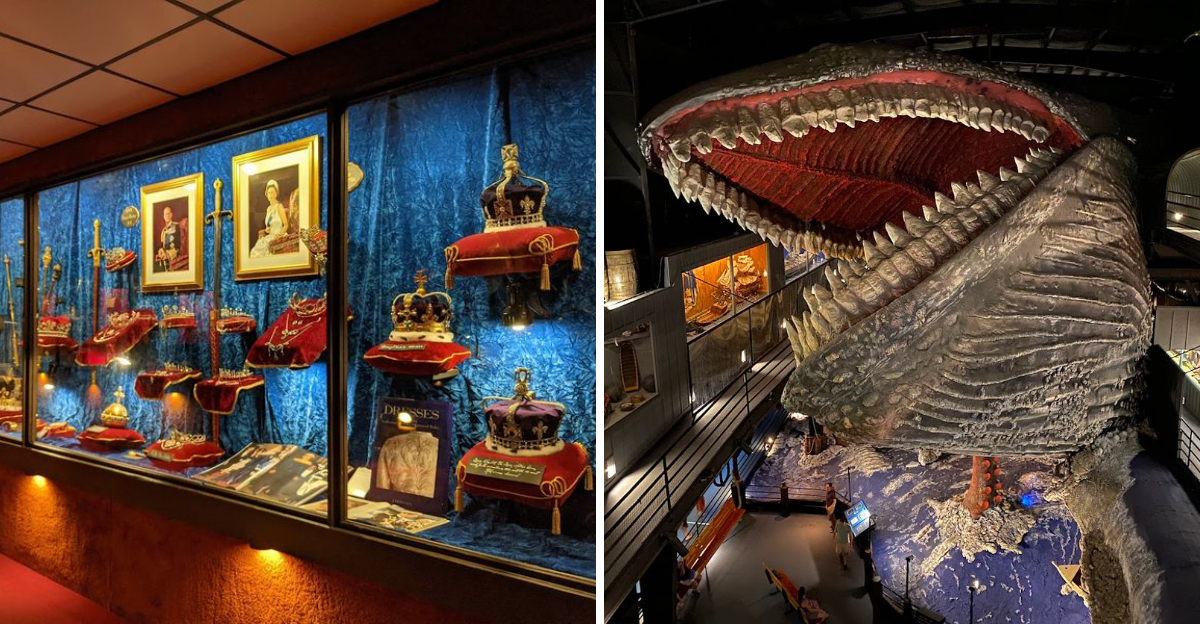
Picture a place where giant carousels, endless collections, and winding hallways all seem to compete for your attention at once. Every turn reveals something unexpected.
One room feels like a museum, the next feels like a dream that somehow became reality. Wisconsin is home to an attraction that has puzzled, amazed, and entertained visitors for decades.
What started as a bold personal vision eventually grew into a sprawling world packed with unusual treasures, oversized displays, and details that are impossible to take in during a single visit.
Cameras stay busy, conversations stop mid-sentence, and first-time guests often find themselves asking the same question: how does a place like this even exist? Curiosity alone is enough to draw people in, but the experience keeps them talking long after they leave.
A Self-Taught Eccentric Built It Entirely By Himself On Top Of A Rock
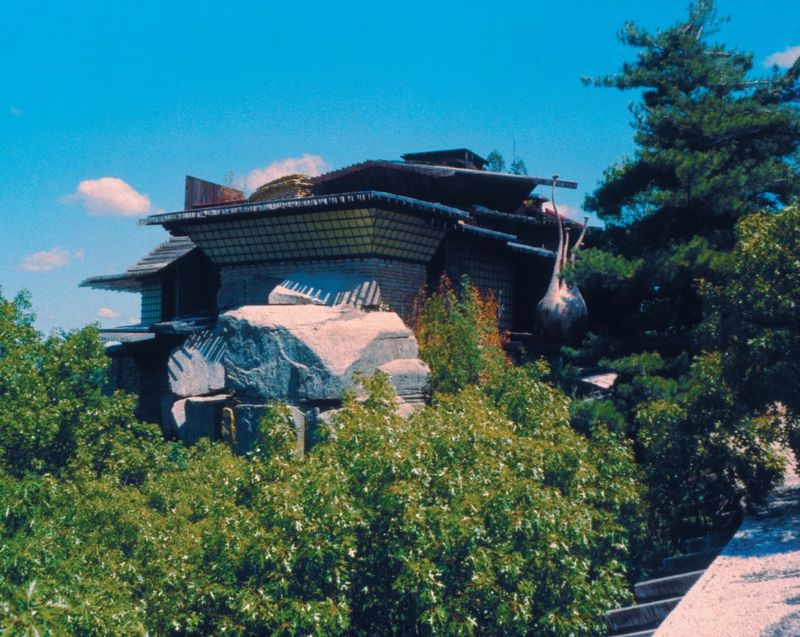
Alex Jordan Jr. started construction in 1945 without formal training in architecture or engineering. He chose a chimney rock formation as his foundation and built upward and outward from there.
The original house clings to the rock face sixty feet above the valley floor, cantilevered in ways that seem to defy common sense.
Jordan designed every room himself, incorporating Japanese influences, low ceilings, and organic shapes that follow the contours of the rock. He used materials he found or salvaged, creating spaces that feel more like caves than traditional rooms.
The structure grew organically over decades, with Jordan adding sections whenever inspiration struck.
Located at 5754 WI-23, the house remains a testament to one man’s singular vision. Jordan never stopped refining his creation, adjusting details and adding flourishes until his death.
His lack of formal training became his greatest asset, allowing him to ignore conventional architectural rules entirely.
Nobody Actually Knows Why He Built It

Jordan offered different explanations throughout his life, and none of them quite add up. Some stories claim he built it to spite Frank Lloyd Wright after a perceived insult.
Others suggest it was simply a weekend retreat that spiraled out of control. Jordan himself seemed to enjoy the mystery, changing his story depending on who asked.
The structure serves no practical residential purpose. Rooms are too small for comfortable living, hallways lead nowhere, and the layout makes no functional sense.
It exists purely as a statement, though what that statement might be remains open to interpretation.
Historians have spent decades trying to piece together Jordan’s motivations from interviews and records. What emerges is a portrait of a man driven by creative compulsion rather than logic.
He built because he could not stop building, and the reasons mattered less than the act itself. The ambiguity has become part of the attraction’s enduring appeal.
The Infinity Room Extends 218 Feet Over A Valley With Zero Supports
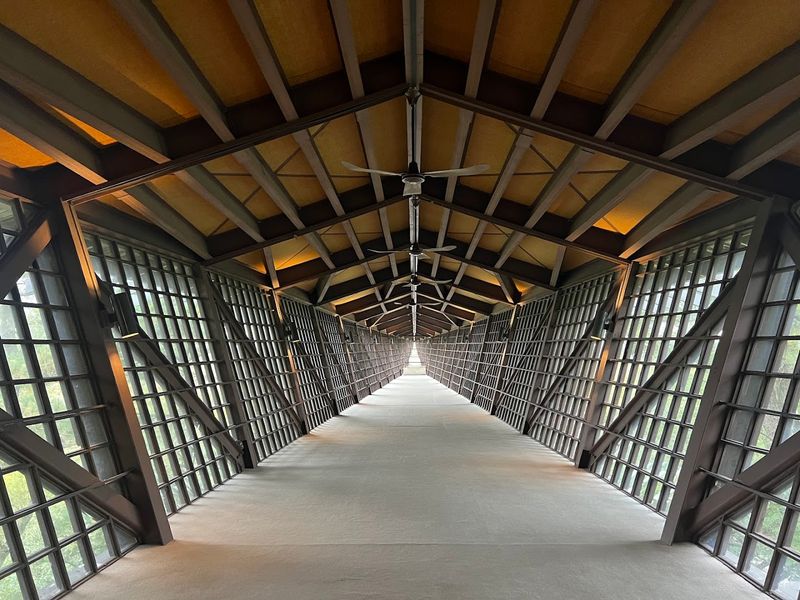
Walking into the Infinity Room produces an immediate physical reaction. The corridor stretches outward from the house with 3,000 windows on all sides, tapering to a point that seems to float in midair.
Looking down through the floor panels reveals nothing but treetops and valley far below.
Engineers still marvel at the construction. The room has no support pillars underneath, relying entirely on cantilever principles and steel reinforcement.
It sways slightly in strong winds, which Jordan intended as part of the experience. The sensation of walking on air becomes more pronounced the farther you venture.
Jordan added the Infinity Room in 1985, decades after the original house. He wanted visitors to feel suspended between earth and sky, creating a moment of vertigo and wonder.
The room accomplishes exactly that, leaving most people gripping the handrails as they inch toward the far end. It remains one of the most photographed features of the entire complex.
The World’s Largest Indoor Carousel Has 269 Animals And Not A Single Horse
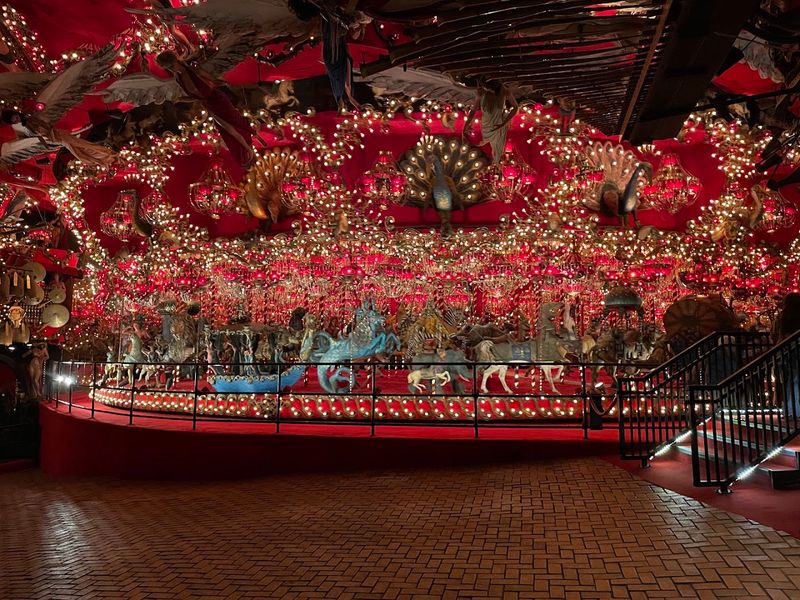
The carousel room stops visitors in their tracks with its sheer excess. Jordan commissioned the piece specifically to violate carousel tradition, populating it with dragons, sea creatures, griffins, and mythological beasts instead of the expected horses.
Twenty thousand lights illuminate the structure, creating a dizzying spectacle of color and movement.
Music plays from a massive pipe organ while the carousel turns, filling the cavernous room with sound. The ceiling disappears into darkness above, making the space feel infinite.
Cherubs and angels hang suspended overhead, adding to the surreal atmosphere. Jordan wanted grandeur bordering on overwhelming, and he achieved it.
The carousel never carries riders. It spins constantly behind barriers, existing purely as a visual experience.
This decision makes it even stranger, transforming what should be a children’s ride into something more akin to a religious vision. The animals seem to move with purpose, their painted eyes following visitors around the circular room.
A 200-Foot Sea Monster Battles A Giant Squid Inside A Room The Size Of A Blimp Hangar
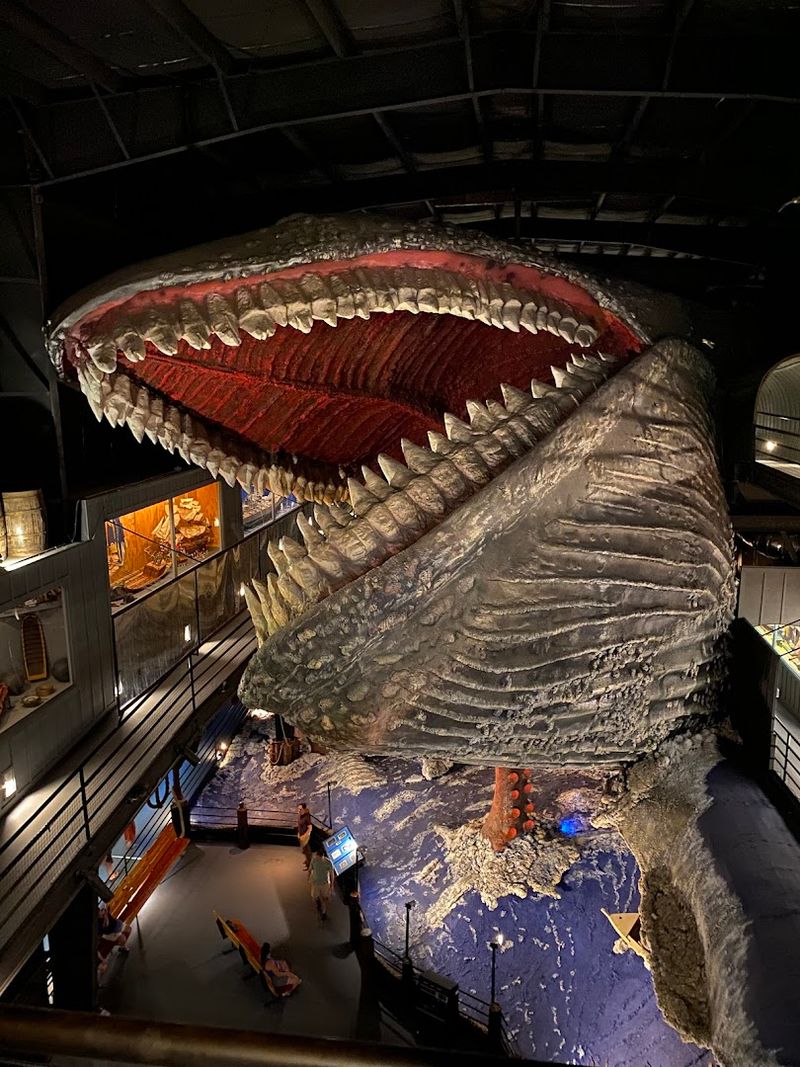
The Heritage of the Sea room ranks among the most ambitious displays Jordan ever created. A colossal whale sculpture dominates the space, locked in eternal combat with an equally massive squid.
The scale defies belief, with tentacles thick as tree trunks wrapped around the whale’s body. Smaller sea creatures fill every available surface around them.
Jordan built the room to house his maritime collection, but the centerpiece overshadows everything else. The whale’s eye alone measures several feet across, staring with what looks like genuine distress.
Rigging, ship models, and nautical artifacts cover the walls, but visitors can barely tear their attention away from the central battle.
The room requires its own climate control system due to its size. Walking through feels like entering a natural history museum designed by someone with no sense of restraint.
Jordan wanted visitors to feel small and overwhelmed, using scale to create emotional impact. The strategy works perhaps too well.
Neil Gaiman Was So Baffled By It He Put It In American Gods
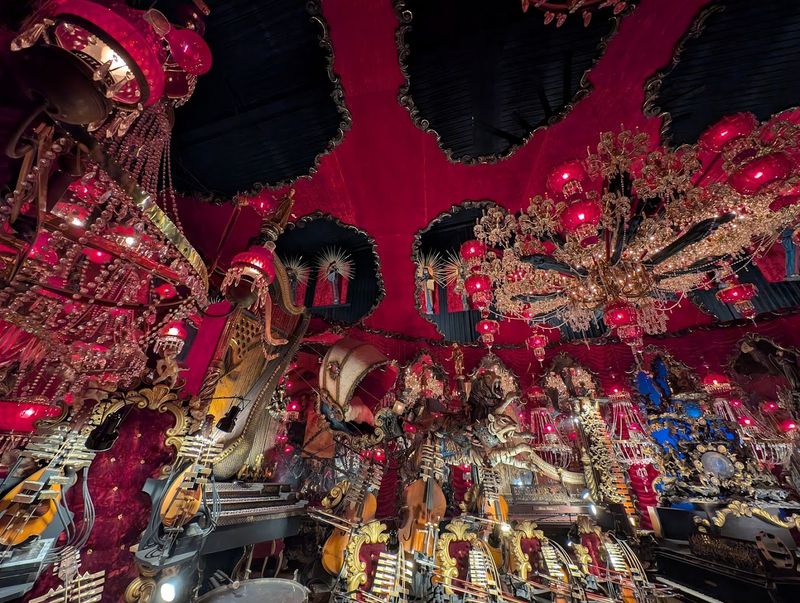
Gaiman visited the House on the Rock in the 1990s and found it so inexplicable he made it a pivotal location in his novel. In American Gods, the attraction serves as a meeting place for forgotten deities, which feels entirely appropriate given the building’s otherworldly atmosphere.
The book introduced millions of readers to a place many had never heard of.
The author described the experience as walking through someone else’s fever dream, never quite sure what you would encounter next. That sense of disorientation permeates the novel’s scenes set there.
Gaiman captured the feeling of being slightly unmoored from reality that the House on the Rock produces in nearly everyone who visits.
Since the book’s publication, literary tourists have made pilgrimages to Spring Green specifically because of the American Gods connection. The attraction embraces this new audience while maintaining its original strangeness.
Gaiman’s interpretation actually makes more sense than any official explanation Jordan ever provided.
It Takes Most People Four To Six Hours To Get Through
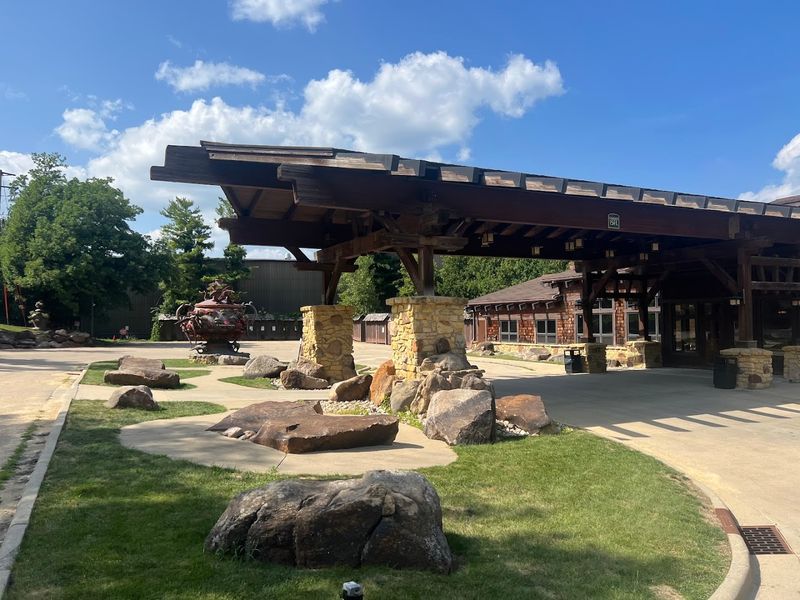
The self-guided tour covers roughly two and a half miles of walking through interconnected buildings. Rooms lead to hallways that open into larger spaces filled with more collections.
Just when you think you have reached the end, another section appears. The physical toll surprises most visitors, who arrive expecting a quick walkthrough.
The attraction operates from 9 AM to 3 PM daily, giving visitors limited time to experience everything. Even moving at a brisk pace, seeing all the collections requires multiple hours.
Many people give up halfway through, overwhelmed by the sheer volume of objects and displays. Others return multiple times, discovering new details on each visit.
Comfortable shoes become essential equipment. The route includes ramps, stairs, and uneven surfaces that follow the natural terrain.
Rest areas appear periodically, but the temptation to keep moving forward often wins out. By the end, even enthusiastic visitors feel mentally and physically drained from processing so much visual information at once.
Jordan Kept Building And Collecting Until The Day He Died

Jordan died in 1989, but construction continued right up until his final days. He acquired objects at an astonishing rate, purchasing entire collections without always knowing what they contained.
Automated music machines, dolls, weapons, armor, and curiosities filled room after room. His appetite for accumulation never diminished.
Staff members recall Jordan arriving with trucks full of new acquisitions and immediately planning where to display them. If no space existed, he simply built another room.
The collection grew exponentially, far beyond what any single person could properly catalog or maintain. Jordan seemed driven by compulsion rather than any coherent collecting strategy.
Some displays feel deliberately overwhelming, with objects stacked floor to ceiling in dizzying arrangements. Others show more restraint and curation.
The inconsistency reflects Jordan’s working method, adding whatever struck his fancy in the moment. His death ended the expansion but left behind a monument to unchecked creative obsession that continues to baffle and fascinate visitors decades later.
It Sits Just Seven Miles From Frank Lloyd Wright’s Taliesin
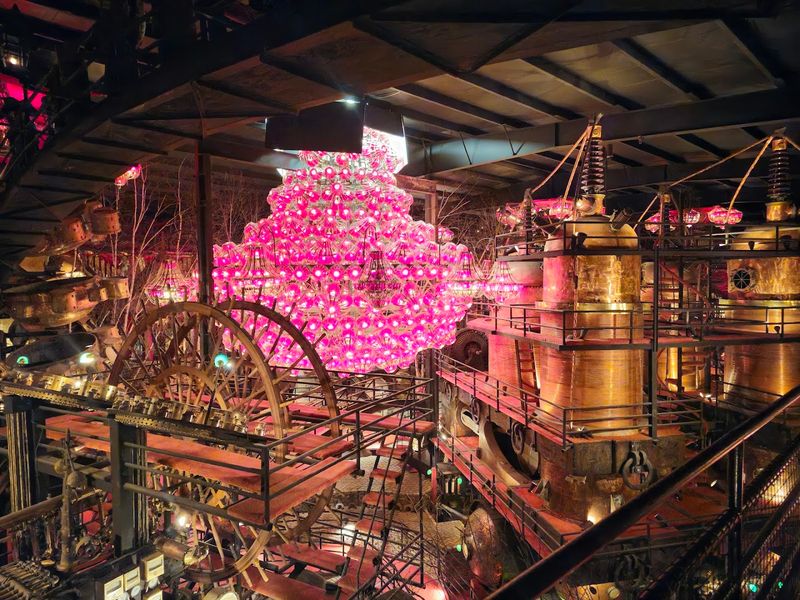
Spring Green contains two of America’s most unusual architectural achievements within minutes of each other. Wright’s Taliesin represents refined modernist principles and careful integration with landscape.
The House on the Rock represents the opposite: chaotic maximalism and defiance of architectural convention. The proximity feels like a cosmic joke.
Some historians believe Jordan built his house partially as a response to Wright’s nearby presence. The two men allegedly had a contentious relationship, though details remain murky.
True or not, the contrast between their creations could not be more stark. Wright pursued harmony and restraint while Jordan embraced excess and dissonance.
Visitors often tour both sites in a single day, experiencing architectural whiplash in the process. Taliesin soothes with its horizontal lines and natural materials.
The House on the Rock assaults the senses with vertical chaos and artificial abundance. Together they demonstrate the full range of American architectural imagination, from sublime to ridiculous, separated by just seven miles of Wisconsin countryside.
Half The People Who Visit Call It Genius The Other Half Call It A Fever Dream

No middle ground exists with the House on the Rock. People emerge either enchanted or disturbed, rarely indifferent.
Some see visionary artistry in Jordan’s refusal to conform to taste or reason. Others see a hoarder’s paradise dressed up as a tourist attraction.
Both interpretations have merit, which makes the place even more fascinating.
The collections range from genuinely impressive to deeply strange to outright unsettling. Automated music machines demonstrate real craftsmanship and historical value.
Rooms full of dusty dolls staring from glass cases feel like something from a horror film. The juxtaposition creates cognitive dissonance that some visitors find exhilarating and others find exhausting.
What cannot be disputed is the singularity of the vision. Jordan created something that could not exist anywhere else, built by anyone else.
The House on the Rock succeeds or fails entirely on its own terms, refusing to be judged by conventional standards. That commitment to a personal vision, however bizarre, commands a certain respect even from those who find the result baffling.
It’s Been Open Since 1959 And Wisconsin Still Hasn’t Fully Explained It
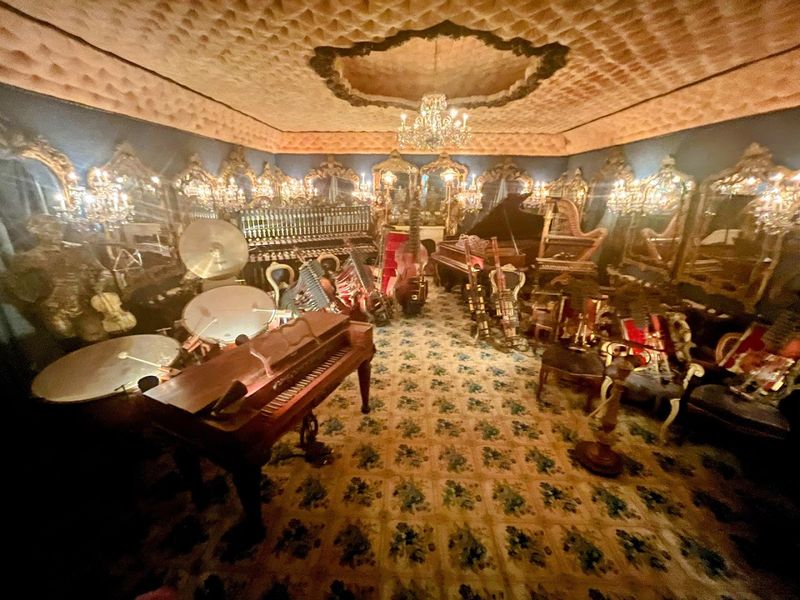
The House on the Rock has operated continuously for over sixty years, attracting millions of visitors. In that time, no definitive account of its creation or purpose has emerged.
Jordan took most of his secrets to the grave, leaving behind only the physical evidence of his obsessions. The state promotes it as a major attraction without quite understanding what it is.
Tour guides stick to basic facts about construction dates and collection sizes. They avoid interpreting Jordan’s intentions or explaining the deeper meaning behind the displays.
This restraint actually enhances the experience, allowing visitors to form their own conclusions. The absence of official narrative creates space for personal interpretation and wonder.
Perhaps explanation would diminish the attraction’s power. The House on the Rock works precisely because it resists categorization and defies analysis.
It exists as pure experience, strange and overwhelming and utterly unique. Wisconsin has wisely chosen to preserve rather than explain, maintaining the mystery that makes this corner of the state so unforgettable.