
Underrated Scenic Day Trips In Idaho Even Longtime Residents Often Overlook
The drives that matter most in Idaho rarely appear on the first page of any search result. Longtime residents pass the turnoffs for years before curiosity finally wins the argument.
The state carries more landscape variety than most people give it credit for. The day trips on this list sit inside that variety without requiring much planning beyond deciding to go.
Desert gives way to forest gives way to canyon in distances that surprise people accustomed to more predictable geography.
Some of these routes end at something specific, a hot spring, a ghost town, a river that looks nothing like what the highway suggested was coming.
Others earn their place through the drive itself. The kind of road that makes the destination secondary before the first hour is up.
1. Craters Of The Moon National Monument
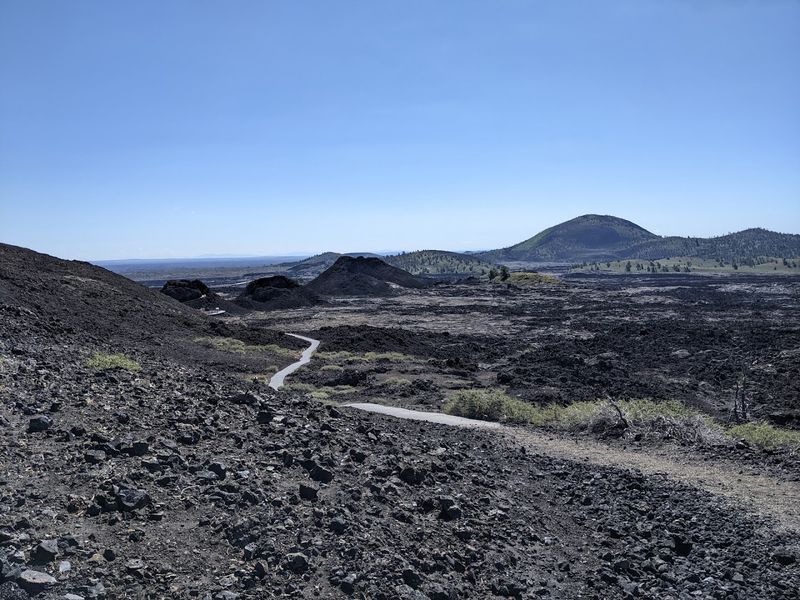
Imagine standing on a surface that looks like NASA borrowed it for astronaut training. That is exactly what Craters of the Moon feels like, and it is absolutely surreal.
The whole place was shaped by volcanic eruptions thousands of years ago.
Lava tubes run underground like secret tunnels, and you can actually walk through some of them. Bring a flashlight because it gets pitch dark fast.
The caves stay cool even on hot summer days, which is a nice bonus.
The cinder cones rise up dramatically across the horizon. Hiking up one gives you a view that looks like nothing else in the country.
You will feel like you are on another planet, no exaggeration.
Spring brings wildflowers that pop up between the black rocks in the most unexpected way. It is one of those contrasts that genuinely stops you in your tracks.
Photographers love this place for that exact reason.
Night skies here are legendary. The park is a certified Dark Sky area, so stargazing is world-class.
Pack a blanket and stay after sunset if you can.
The monument covers over 700,000 acres, so there is always a new trail or feature to explore. Most visitors only see the main loop road, which means the backcountry stays wonderfully quiet.
Getting off the beaten path here is always worth it.
Located about 90 minutes from Idaho Falls, this is a totally doable day trip.
2. Bruneau Dunes State Park
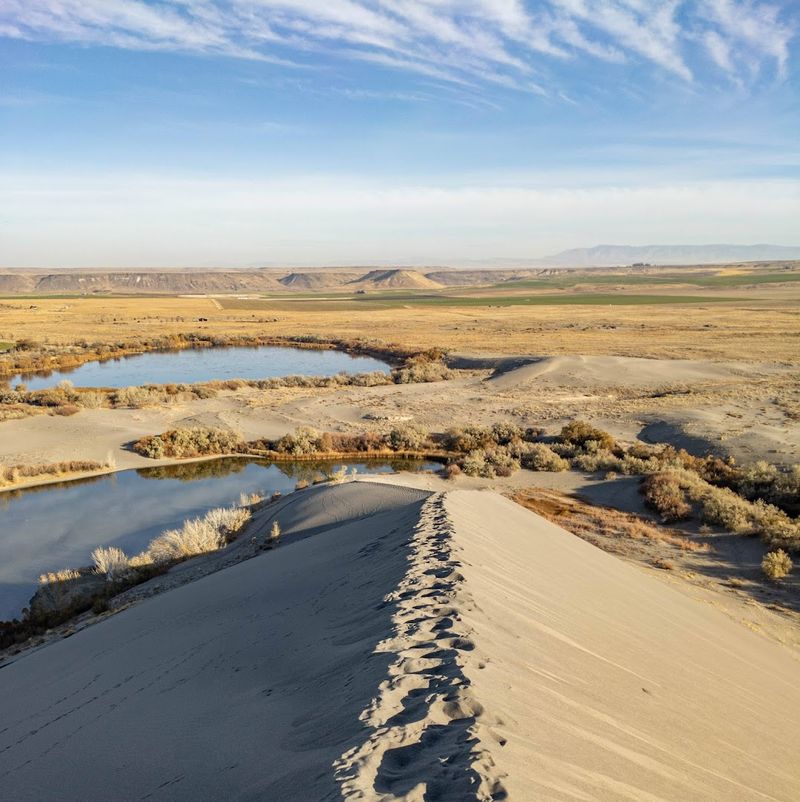
North America’s tallest single-structured dune is sitting in southern Idaho, and most people have zero idea it exists. We are talking nearly 470 feet of pure golden sand rising out of the high desert.
It is wild to see in person.
What makes Bruneau Dunes genuinely unusual is that the dunes do not move. Most dunes shift with the wind over time, but these have stayed put for thousands of years.
Scientists think the basin shape traps the sand and keeps it anchored.
Sandboarding is a real activity here, and it is way more fun than it sounds. You rent a board, hike up the dune, and slide down like a kid who forgot they are an adult.
Your legs will feel it the next morning, fair warning.
The park also has an observatory with public viewing nights. On clear evenings, the telescopes reveal Saturn’s rings and Jupiter’s moons in stunning detail.
It is a genuinely magical experience for kids and adults alike.
Two small lakes sit at the base of the dunes, and fishing is popular here. Largemouth bass and catfish are common catches.
The lakes also attract a surprising variety of birds throughout the year.
Camping overnight means waking up to a sunrise over the dunes that looks almost painted. The colors shift from pink to orange to gold in a matter of minutes.
Even if you are not a morning person, this will convert you.
The park is about an hour south of Mountain Home. The address is 27608 Bruneau Sand Dunes Rd, Bruneau, ID 83604.
3. Thousand Springs State Park
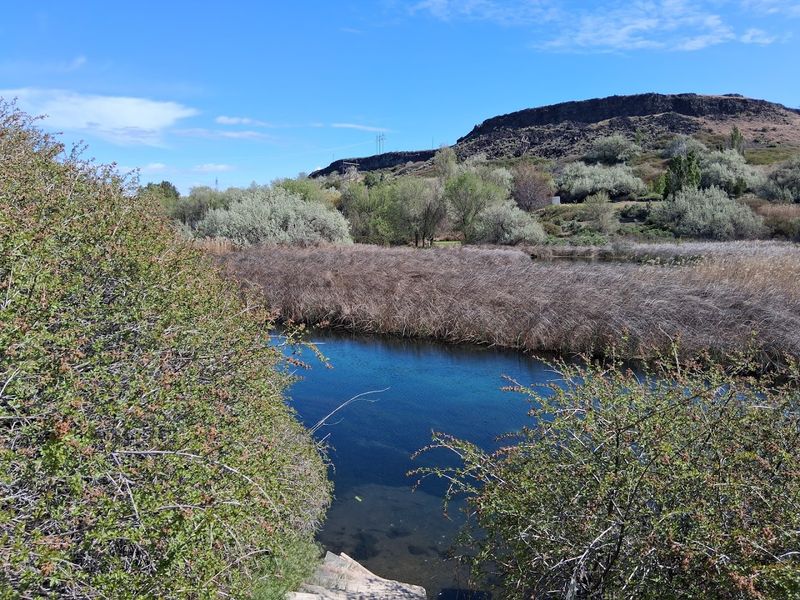
Water literally pours out of canyon walls here, and it never gets old watching it happen. Thousand Springs State Park is one of those places that feels almost too beautiful to be real.
The springs gush from ancient lava rock like the canyon is alive.
The water comes from the Snake River Plain Aquifer, which is one of the largest aquifers in the country. Rain and snowmelt sink into the lava fields hundreds of miles away, then travel underground for years before bursting out here.
That journey is kind of mind-blowing to think about.
Ritter Island is one of the park’s best sections. It sits in the middle of the Snake River and feels completely cut off from the modern world.
The old farmhouse and orchard on the island add a quiet, historic charm to the whole visit.
Malad Gorge is another unit of the park worth your full attention. A footbridge crosses the gorge and lets you look straight down into the dramatic canyon below.
The devil’s washbowl churns at the bottom with impressive force.
Niagara Springs unit has some of the clearest, coldest water you will ever see. The springs maintain a consistent temperature year-round, which keeps the water a brilliant turquoise blue.
Trout love it, and you will too.
Birdwatchers show up here regularly because the wetlands attract herons, eagles, and migrating waterfowl. The variety changes with the seasons, making repeat visits genuinely rewarding.
Bring binoculars if you have them.
The park is along US-30 near Hagerman. Find this spot at 17970 US-30, Hagerman, ID 83332.
4. City Of Rocks National Reserve
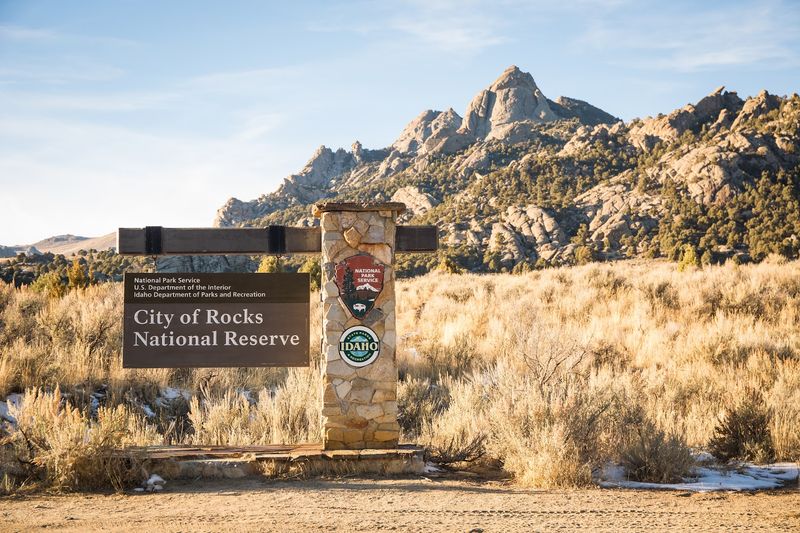
Massive granite spires shooting 60 stories into the sky sounds like something from a fantasy novel. City of Rocks is the real deal, and it has been drawing adventurers since the days of the Oregon Trail.
Pioneers actually carved their names into the rocks with axle grease, and some of those inscriptions survive today.
Rock climbers from around the world know about this place, but casual visitors often skip it. That is a huge mistake.
Even if climbing is not your thing, walking among these formations is a completely absorbing experience.
The geology here spans 2.5 billion years, making these some of the oldest exposed rocks in North America. Standing next to a formation that old puts your Tuesday afternoon in perspective.
It is humbling in the best possible way.
Wildlife sightings are common throughout the reserve. Mule deer, raptors, and the occasional black bear pass through regularly.
Golden eagles nest in the higher rock faces and are spectacular to watch in flight.
Wildflower season in spring transforms the sagebrush flats into something genuinely colorful. The contrast between the delicate blooms and the hulking granite boulders is a photographer’s dream.
Plan a visit between late April and early June for peak color.
Camping inside the reserve puts you right in the middle of the formations overnight. Waking up surrounded by those towering rocks feels like sleeping inside a cathedral.
Reservations are smart, especially on summer weekends.
The reserve sits near the small town of Almo in south-central Idaho.
5. Massacre Rocks State Park
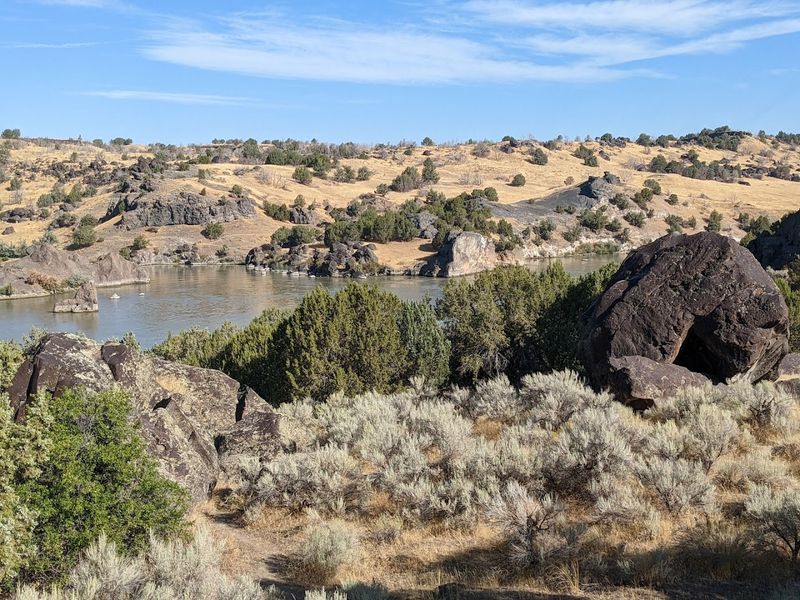
The name alone makes you curious, and the history behind it does not disappoint. Massacre Rocks sits along the Snake River in a spot where Oregon Trail wagon trains had to squeeze through a narrow gap between towering basalt boulders.
Pioneers called it the Gate of Death, which tells you everything about the vibe.
Despite the dramatic backstory, the park today is peaceful and surprisingly uncrowded. Most Idaho residents drive past it on the interstate without stopping.
That is genuinely their loss.
The Snake River frontage here is beautiful for a quiet morning walk. Cottonwood trees line the banks, and the water moves slowly enough to feel calming.
Bald eagles hunt along this stretch regularly in the winter months.
Wildflowers go absolutely wild in spring along the park trails. The combination of volcanic soil and river moisture creates conditions for an impressive variety of blooms.
Bitterroot, phlox, and Indian paintbrush show up in colorful patches.
Register Rock is a nearby must-see. Hundreds of pioneer names and dates are carved into a large basalt boulder, some dating back to the 1840s.
Reading those inscriptions makes the Oregon Trail feel immediate and real.
Fishing along the Snake River is productive here, and the park provides good bank access. Trout and bass are common catches, and the setting makes even a slow fishing day enjoyable.
The sound of the river in the background is its own reward.
Camping is available, and the sites along the river fill up fast in summer. Booking ahead is a solid move.
You can visit this place at 3592 Park Ln, American Falls, ID 83211.
6. Minnetonka Cave
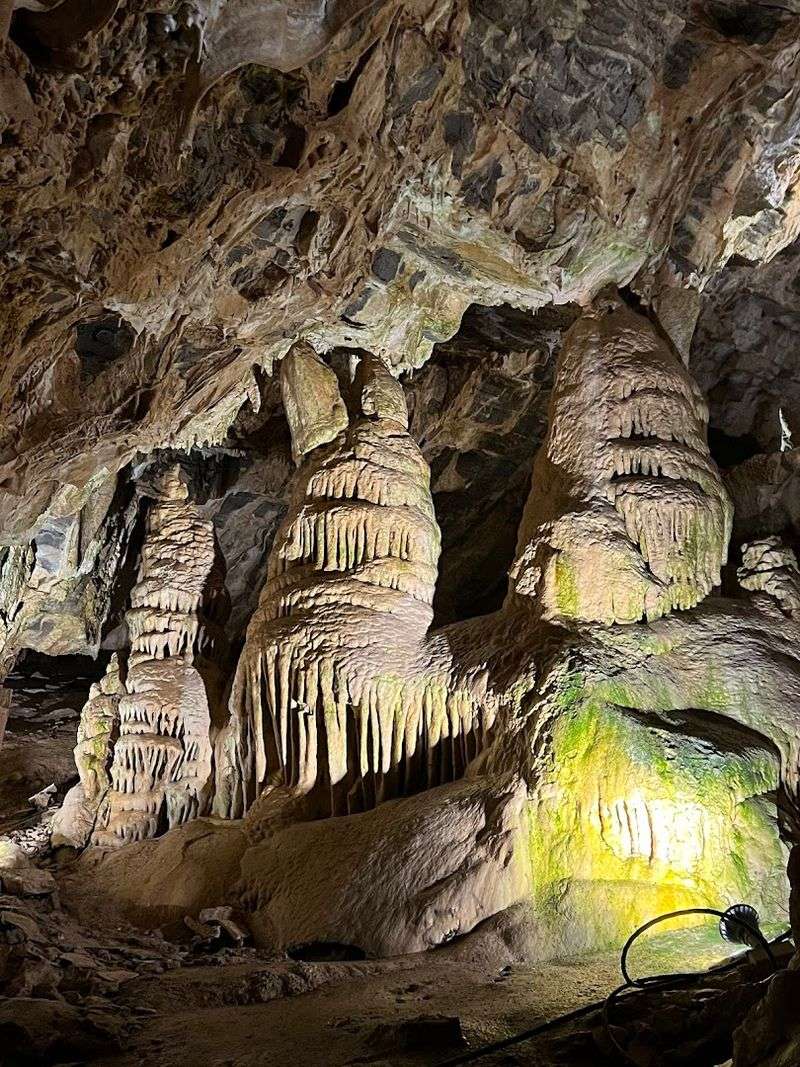
Ninety minutes of walking through a limestone cavern filled with formations that took millions of years to grow sounds like a good deal to me. Minnetonka Cave is one of the few show caves in Idaho, and it is genuinely spectacular.
Most people in the state have never even heard of it.
The cave sits at about 7,700 feet in elevation in the Bear Lake Ranger District, which means the surrounding scenery on the drive up is already gorgeous. Aspen trees and wildflowers line the road in summer.
The combination of cave tour plus mountain drive makes for a full, satisfying day.
Inside, the formations include stalactites, stalagmites, flowstone, and cave coral. Guides point out shapes that look like animals, faces, and geological wonders throughout the tour.
The storytelling makes the science feel approachable and fun.
Temperatures inside stay around 40 degrees year-round, so bring a jacket even on a scorching July day. That chill hits immediately when you walk in, and it is actually a welcome shock in summer.
Layers are your friend here.
The cave is only open during the summer months, typically June through Labor Day weekend. Tours run regularly throughout the day, and groups are kept manageable in size.
Arriving early on weekends helps avoid any wait.
Fossils of ancient sea creatures are visible in the cave walls, proof that this area was once covered by a shallow inland sea. Spotting a 300-million-year-old shell embedded in limestone is a moment that genuinely rewires your sense of time.
The cave is located near Bear Lake in southeastern Idaho.
7. Ponderosa State Park
Ponderosa pines so tall they make you tilt your head back just to find the tops. That is the first thing you notice at Ponderosa State Park, and it sets the tone for everything else.
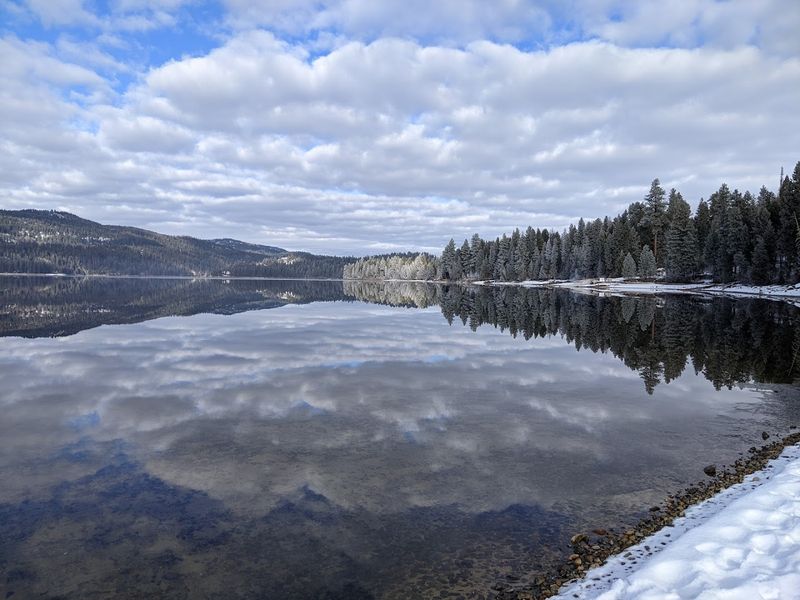
The whole park sits on a peninsula jutting into Payette Lake, which means water views are basically unavoidable.
McCall is a beloved mountain town, but the state park itself gets overshadowed by the ski resort and the lake cabins. Locals know about it, sure, but truly exploring the trails is a different story.
Most visitors stick to the beach and miss the interior completely.
The North Beach unit is perfect for families with kids. The shallow, sandy entry into the lake is gentle, and the water is surprisingly clear.
On a calm morning, the reflections of the pines in the lake look almost mirror-perfect.
The peninsula trails wind through old-growth forest that feels cathedral-like in its scale. Woodpeckers work the upper canopy while deer graze quietly below.
The forest floor smells incredible after rain, that deep pine-and-earth combination that is hard to describe but impossible to forget.
Kayaking and paddleboarding around the peninsula is one of the best ways to see the park. The shoreline reveals hidden coves and dramatic rocky outcrops not visible from any trail.
Rentals are available nearby in town.
Fall is genuinely underrated here. The pines stay green while the aspens and shrubs surrounding the lake turn gold and orange.
The color contrast against the blue water is something that earns its own road trip.
The park is just outside McCall, a short drive from downtown. Visit Ponderosa State Park at 1920 Davis Ave, McCall, ID 83638.
8. Hells Canyon Overlook
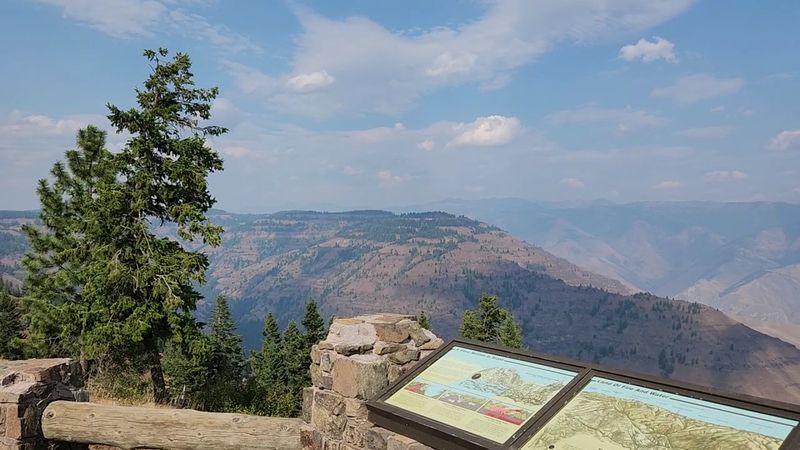
Hells Canyon is the deepest river gorge in North America, deeper than the Grand Canyon, and somehow it still does not get the recognition it deserves. The overlook near Imnaha gives you a view that genuinely stops conversation.
You just stand there and stare.
The drive to get here is part of the experience, and it is not for the faint of heart. Forest roads wind through remote terrain with drop-offs that command your full attention.
But the payoff at the end is absolutely worth every careful mile.
The Snake River runs nearly 8,000 feet below the highest canyon rim. On a clear day, you can see it glinting far below like a thin silver thread.
The scale of the whole thing is hard for your brain to process at first.
Bighorn sheep are spotted regularly along the canyon walls and access roads. Watching them navigate near-vertical rock faces with total confidence is humbling.
Golden eagles and hawks ride thermals above the canyon throughout the day.
The Hells Canyon National Recreation Area spans Idaho and Oregon, and the overlook sits right on that boundary. Standing there, you are technically in Oregon looking into Idaho, which is a fun geographic quirk to share with whoever you bring along.
Summer heat can be intense at the lower canyon elevations, but the overlook sits high enough to stay comfortable. Early morning visits reward you with softer light and cooler air.
Sunset views here are the kind of views people drive hours specifically to see.
This is a remote destination requiring planning, but it earns every bit of effort. The address is NF-490, Imnaha, OR 97842.