
This Calm Wyoming Lake Is The Perfect Hidden Escape For Travelers Seeking Peace And Quiet
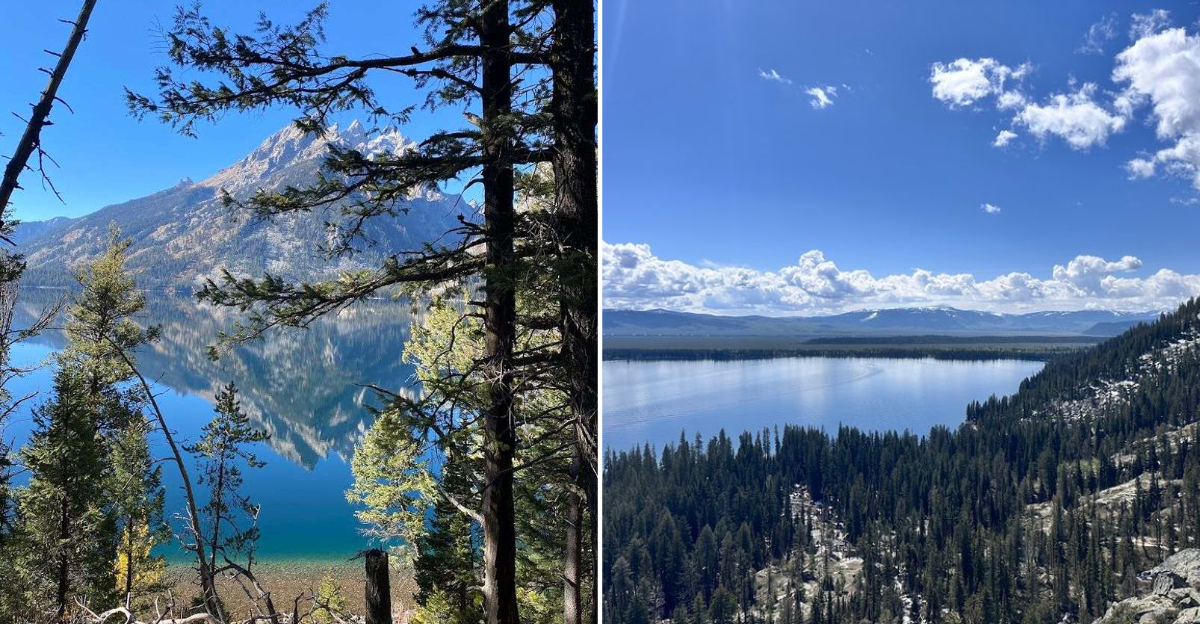
The water sits completely still on most mornings. That quality alone separates it from every other destination that uses the word peaceful without fully delivering on it.
Wyoming has lakes that draw crowds and lakes that don’t, and the distance between the two categories sometimes comes down to nothing more than a road that most maps don’t prioritize. This one sits at the end of exactly that kind of road.
No boat traffic competing with the silence. No infrastructure signaling that something worth visiting waited here.
Just water, surrounding land, and the specific quality of quiet that only arrives when a place has been left largely alone. Travelers who find it tend to stay longer than planned and leave later than intended.
Wildlife Observations In The Area
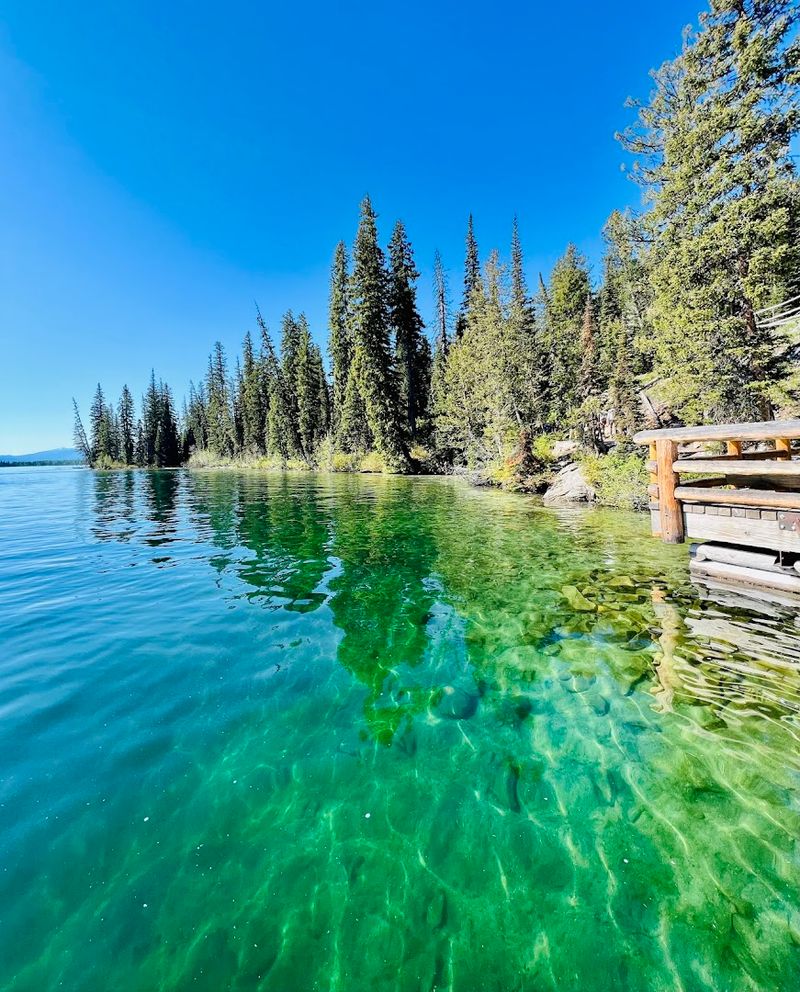
Jenny Lake sits within Grand Teton National Park, which means the wildlife here operates on a different scale than most places in the country.
The surrounding landscape of mountains, forests, and open meadows creates a habitat that supports an exceptional range of species.
First-time visitors are routinely caught off guard by how much they encounter without even trying.
Moose are among the most frequently spotted large mammals in the area, particularly in the marshy zones and willow flats near the lake’s edge.
They are large animals that deserve respectful distance, something rangers emphasize consistently throughout the park. Early morning is reliably the best window for sightings.
Black bears and grizzly bears both inhabit the greater park ecosystem. Grizzly sightings around Jenny Lake are less common than in other parts of Grand Teton, but they still happen, so visitors should carry bear spray and know how to use it.
The park provides clear guidance on bear safety at every entrance.
Bald eagles and osprey hunt over the lake regularly, and the clarity of the water makes watching them dive genuinely spectacular. Pikas and yellow-bellied marmots appear frequently along the rocky terrain near the Cascade Canyon trailhead.
Elk move through the region in significant numbers, especially during the fall rut when their calls carry across the valley in a way that stays with you long after you leave.
Best Times To Visit For Quiet Experiences
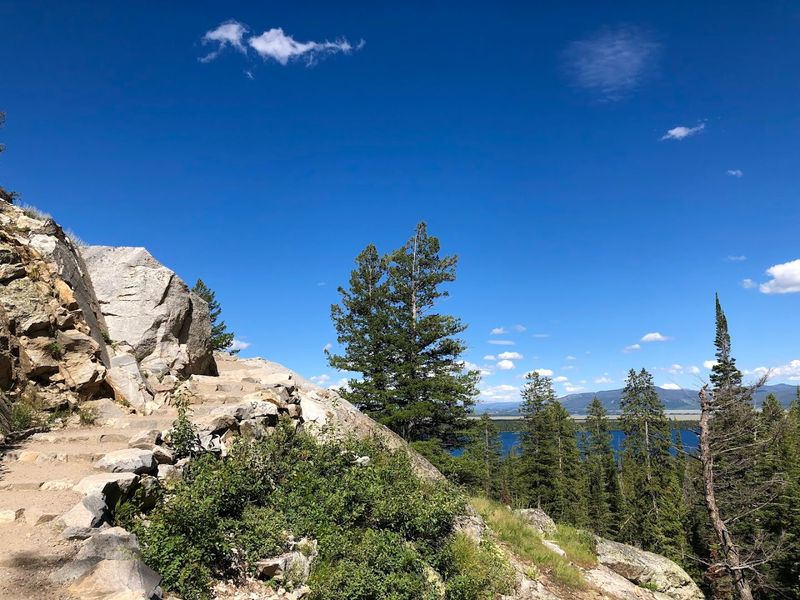
Jenny Lake is one of the most visited spots in Grand Teton National Park, and arriving without a plan during peak season can mean crowded parking and a very different experience from its quieter self. Timing genuinely shapes what you will find there.
Late September and October bring thinning crowds, cooler temperatures, and fall colors that make canyon trails especially scenic. The light during those weeks is also particularly good in the mornings.
Early June can work well too, depending on snowpack and trail conditions for that particular year. Some higher routes remain closed well into the season, so checking current conditions with the park before arriving is always worth doing.
Within any given day, arriving before eight in the morning makes a noticeable difference, as parking areas near the visitor center fill quickly on summer days. The trail to Hidden Falls feels entirely different at seven in the morning compared to noon.
That early window also gives you the best chance of calm water on the lake, which reflects the Tetons in a way that photographs cannot fully capture. Midweek visits consistently offer a quieter experience than weekends throughout the entire season.
Nearby Hiking Trails With Scenic Views
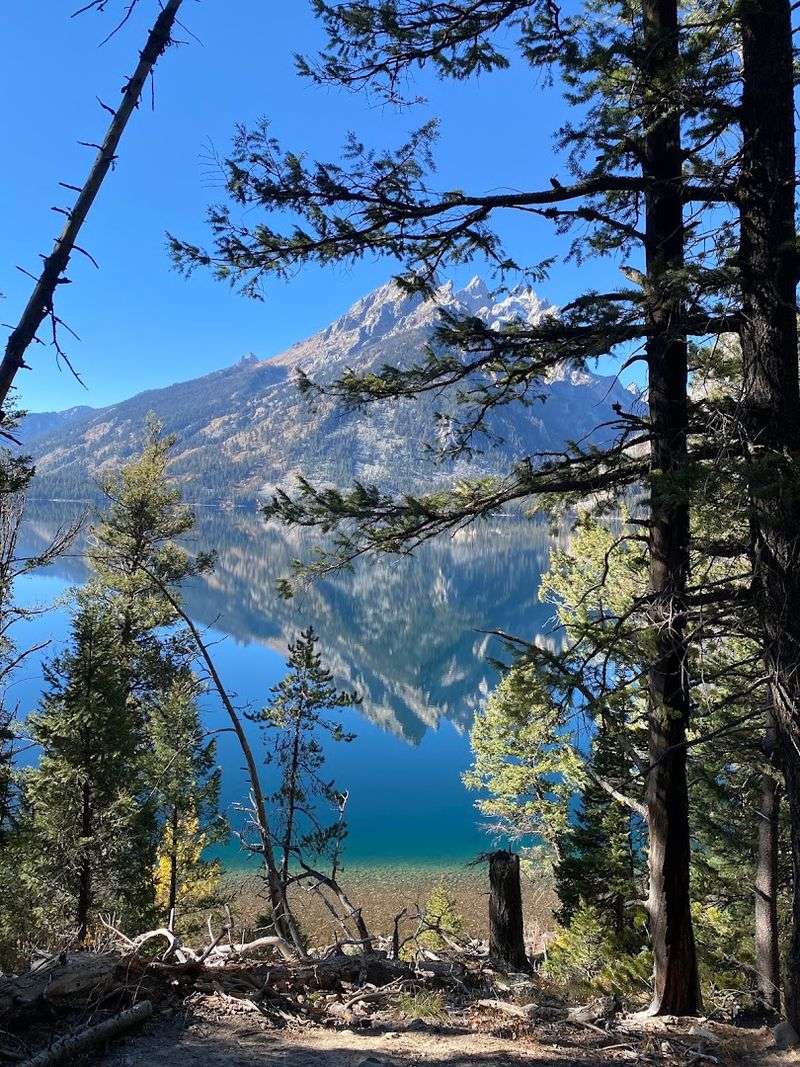
Grand Teton National Park surrounds Jenny Lake with some of the most rewarding trail options in the American West. The concentration of accessible yet dramatic routes within a short distance of the lake is difficult to match elsewhere in the country.
Cascade Canyon Trail is the most popular starting point, following a glacially carved canyon with towering walls and a stream running alongside for much of the route.
Even walking just a mile or two delivers views that justify the early wake-up call required to beat the crowds.
Inspiration Point sits above the western shore and rewards the moderate climb with an elevated perspective over the lake and the valley beyond. Most hikers reach it via the shuttle boat, which drops you directly at the trailhead on the far side.
Paintbrush Canyon and Death Canyon both offer more demanding full-day options for experienced hikers seeking solitude and elevation.
These trails see significantly less foot traffic than the routes closer to the visitor center, which changes the atmosphere considerably.
String Lake Loop provides a gentler alternative that still delivers beautiful scenery without significant elevation gain.
It connects naturally with several other trails in the area, making it a useful starting point for building a longer day depending on your pace and fitness level.
Types Of Water Activities Available
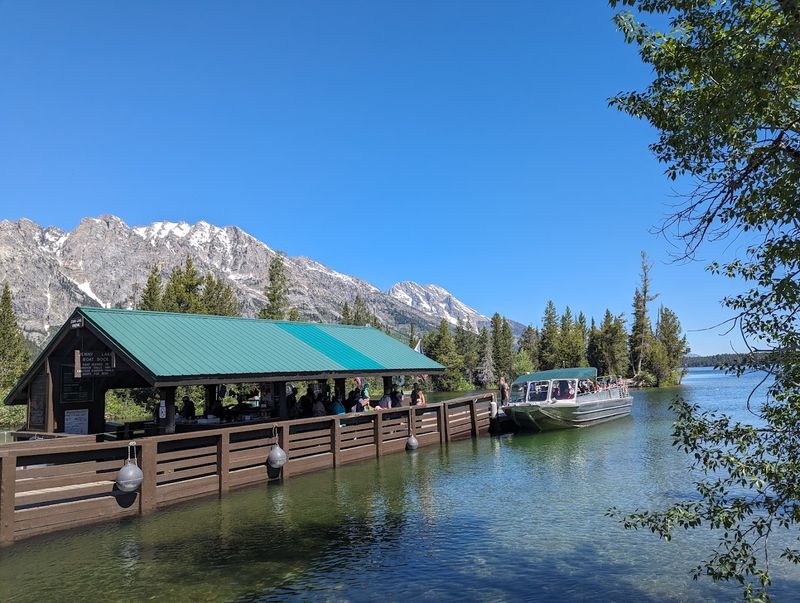
The lake itself is the centerpiece of most water-based experiences in this part of Grand Teton National Park.
Its clarity is striking, fed by snowmelt and glacial sources that keep the water cold year-round, which is worth factoring into any plans involving direct water contact.
Kayaking and canoeing are the most popular ways to get out on the water, with non-motorized watercraft launchable from designated areas near the south shore.
Paddling across to the western side offers perspectives of the Teton Range simply not available from land, and rentals are available within the park during summer.
Fishing is permitted with a valid Wyoming state fishing license, with lake trout and mountain whitefish present in the water.
The lake is not considered a primary fishing destination, so regulations around catch limits and methods are worth reviewing before heading out.
Swimming is technically allowed but genuinely cold, with water temperatures remaining frigid even during the height of summer.
The park provides no lifeguard services along the shoreline, so most people who enter the water do so briefly and with full awareness of conditions.
The shuttle boat service crossing to the western trailhead gives visitors a way to experience the water without any equipment or physical exertion. This makes it a worthwhile option for a wide range of visitors regardless of fitness level or gear.
Local Flora And Botanical Highlights
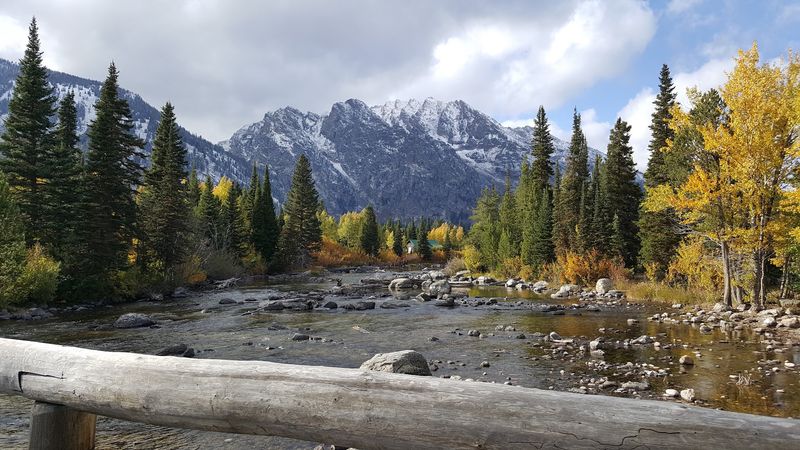
The plant life around Jenny Lake reflects the full range of conditions defining this part of Wyoming, from lakeside moisture to exposed subalpine slopes.
That variation across a compact area produces a botanical landscape that rewards anyone willing to slow down and look closely.
Wildflower season runs roughly from late June through August, with Indian paintbrush appearing in vivid reds and oranges across open meadows and rocky slopes.
Lupine, arrowleaf balsamroot, and sticky geranium fill the lower meadows with color during the same window.
The forested sections around the lake are dominated by Engelmann spruce, subalpine fir, and lodgepole pine, which shape the character of trails leading into Cascade Canyon.
These conifers create a dense canopy that filters light in ways that feel distinct from lower elevation forests.
Willows cluster thickly in wetter zones near stream channels and lake margins, providing critical habitat for moose and a range of bird species.
Above the tree line, cushion plants and alpine forget-me-nots cling to rocky surfaces in conditions that seem barely hospitable.
The persistence of plant life at that elevation adds another dimension to what longer hiking days in this area can offer.
Slowing down on those higher routes reveals a botanical landscape that most visitors moving quickly through the canyon never fully notice.
Camping Opportunities Around The Lake
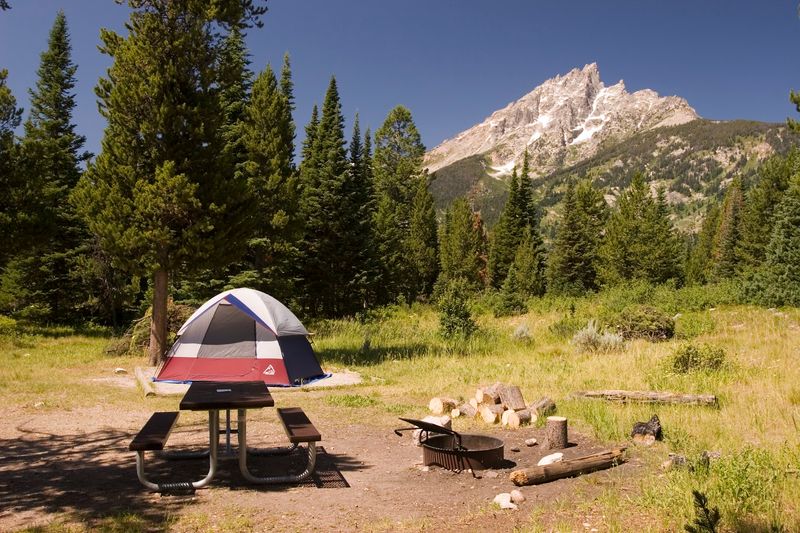
Spending a night close to Jenny Lake changes the experience entirely, with early morning light on the Tetons, pre-dawn quiet before day visitors arrive, and the sound of the lake in the evening. These are things that cannot be replicated with a day trip.
Jenny Lake Campground sits directly adjacent to the lake and is one of the most sought-after camping spots in the entire national park system.
It accommodates tents only, keeping the atmosphere quieter and more intimate, with reservations through the park system essentially mandatory.
The campground offers basic facilities, including restrooms and bear boxes, as bears are active in the area and proper food storage is strictly enforced.
Signal Mountain Campground sits a short drive north and offers a larger alternative with additional amenities, accommodating both tents and RVs.
Backcountry camping is available for those willing to obtain the required permits, with designated sites within Cascade Canyon offering a genuinely different category of experience.
Sleeping more deeply in the wilderness is something experienced campers consistently describe as transformative compared to staying near the lake.
Photography Tips For Capturing Calm Moments
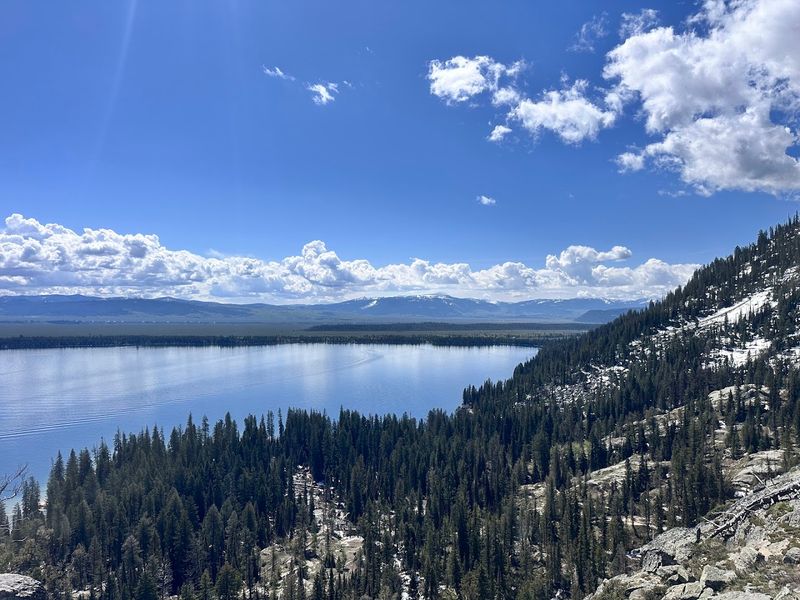
Jenny Lake rewards patient photographers with still water, dramatic peaks, and changing light, where timing matters more than expensive equipment.
Morning is the most productive window, with the lake surface at its glassiest in the hour after sunrise, before wind and boats disrupt the reflection.
The western shore, reached by shuttle boat or trail, offers angles on the mountains that are less photographed than the more accessible eastern viewpoints.
Getting there early and waiting for light to hit the peaks directly produces results that feel less familiar than the standard postcard composition.
Overcast days are genuinely useful and should not be written off, as flat light reduces harsh shadows and produces moody atmospheric images that clear blue sky days cannot.
Wildlife photography in particular benefits from the softer light that cloud cover provides.
Cascade Canyon offers framing opportunities the open lakeshore cannot, with trees, rock faces, and the stream channel providing foreground elements that add depth to mountain shots.
Moving slowly and stopping frequently produces better results than covering distance quickly on any trail in this area.
Environmental Conservation Efforts In The Region
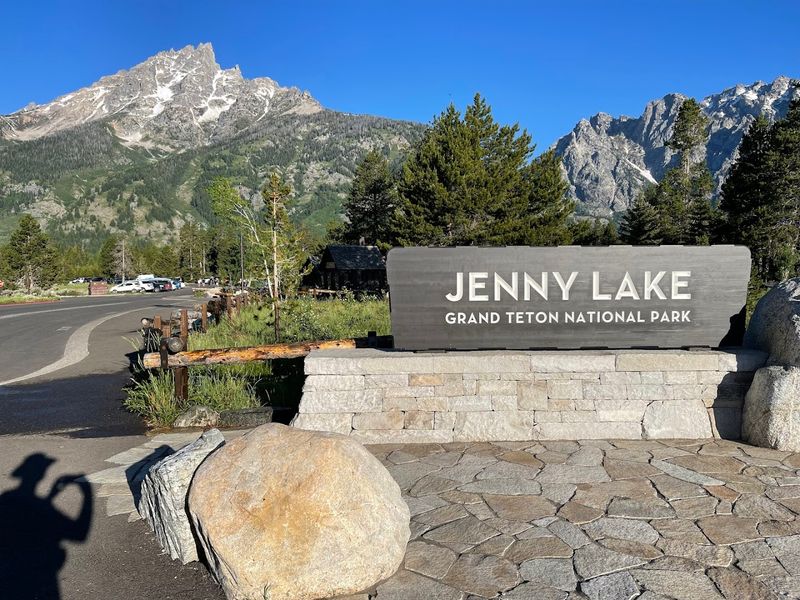
Grand Teton National Park operates under a conservation framework that preserves the landscape in a condition genuinely close to its natural state.
The park’s protected status subjects development, resource extraction, and habitat disruption to strict federal oversight.
The Greater Yellowstone Ecosystem is one of the largest intact temperate ecosystems remaining in the world, with conservation efforts extending well beyond park boundaries.
Coordination between federal agencies, state wildlife managers, and private landowners spans millions of acres.
Grizzly bear recovery represents one of the more closely watched wildlife conservation stories in the American West, with population monitoring and conflict management keeping the issue active and complex.
Invasive species management is a quieter but equally consistent priority, requiring ongoing monitoring and removal efforts along heavily trafficked trails.
Conservation planning now focuses on reducing visitor impact through shuttles, designated parking, and trail limits to balance access and habitat protection.
That balance is something park managers revisit continuously as visitation numbers increase each year.