
Wisconsin’s Narnia Trail Turns A Family Hike Into A Storybook Adventure
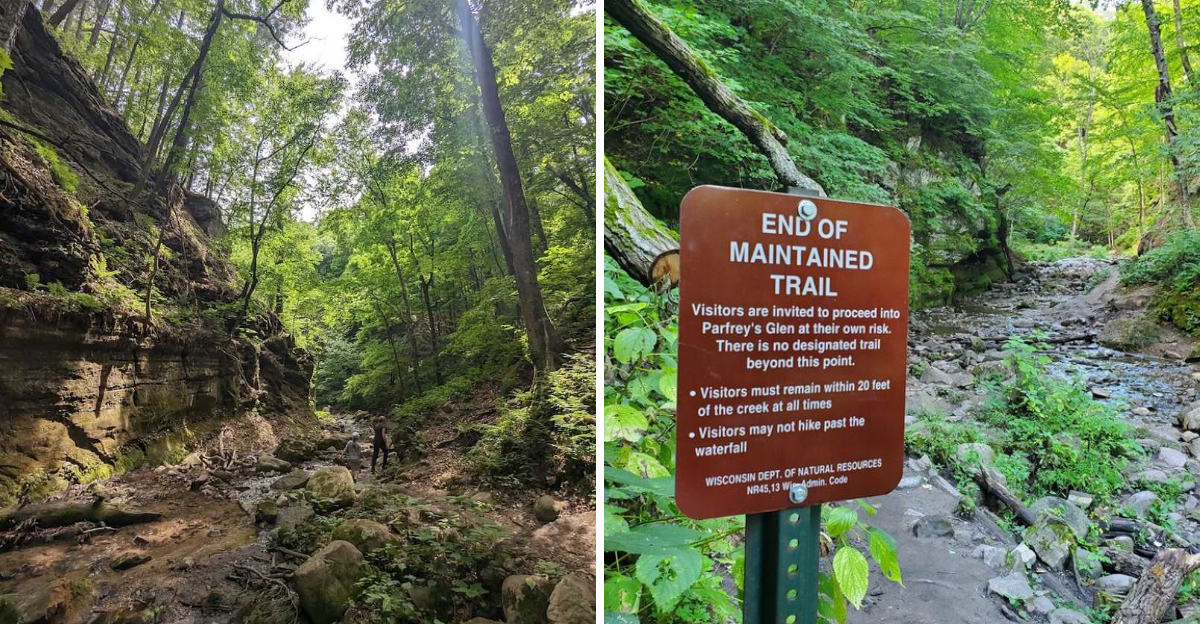
Forget the usual quick family walk idea. A short Wisconsin trail near Merrimac feels more like a doorway into a storybook canyon, with tall sandstone walls, cool creek water, and moss clinging to the rock like nature added its own decorations.
Kids get the fun part first: stepping over stones, peeking around bends, and listening for water trickling somewhere ahead. Adults get pulled in too, especially once the cliffs start showing off their age in layers carved long before anyone packed snacks for a hike.
The route is not long, but it feels full of little discoveries. By the time you turn back, an ordinary afternoon has become muddy shoes, wide eyes, and a memory everyone keeps talking about.
Wisconsin’s First State Natural Area Still Feels Like A Fairytale Passage
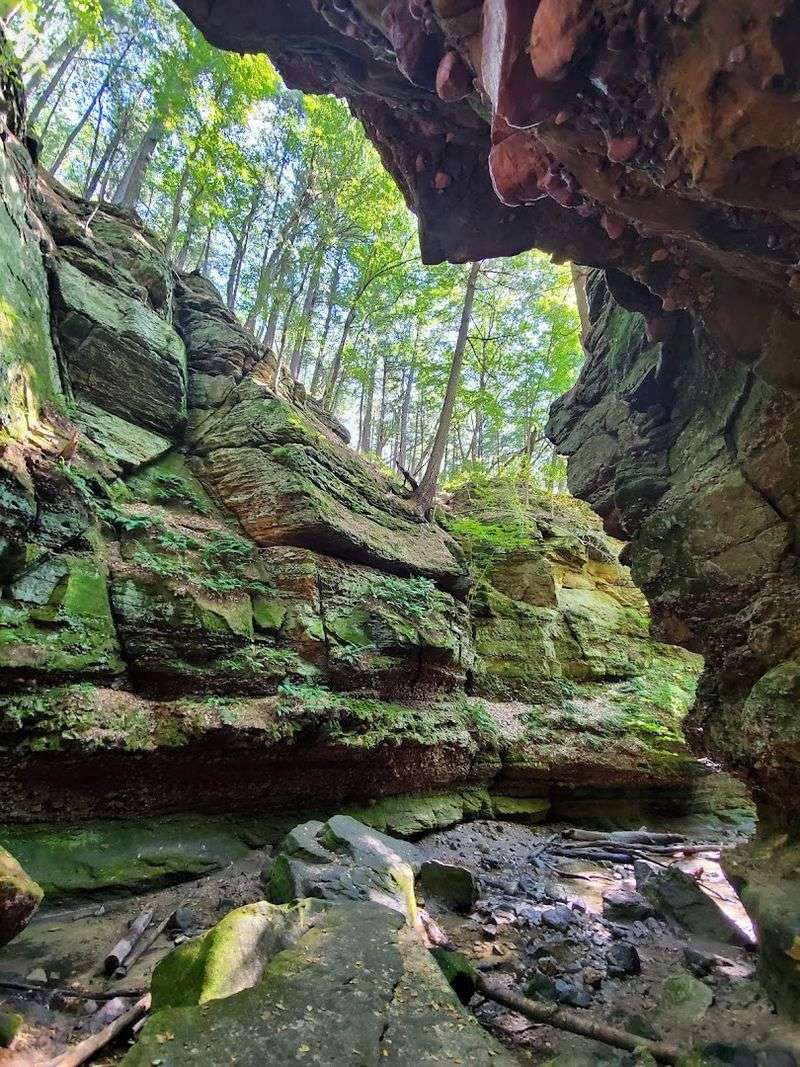
Parfrey’s Glen earned its protected status in 1952, becoming the inaugural member of Wisconsin’s State Natural Area program. The designation recognized something locals had known for generations: this gorge possesses an atmosphere unlike anywhere else in the state.
Walking between walls that rise seventy feet overhead creates an immediate sense of entering another realm entirely.
The glen sits at 1377 County Road DL in Merrimac, accessible from Highway 113. State park admission requires either a daily pass or annual vehicle sticker, with the lot filling quickly on summer weekends.
Early morning arrivals secure parking and experience the gorge when light slants through the canopy at its most dramatic angles.
Conservation efforts maintain the fragile ecosystem within these sandstone walls. The protected designation ensures future families can experience the same wonder that captivated Wisconsin’s naturalists seven decades ago, preserving both geological features and rare plant communities thriving in this microclimate.
A Short Family Hike Leads Into A Narrow Sandstone Gorge
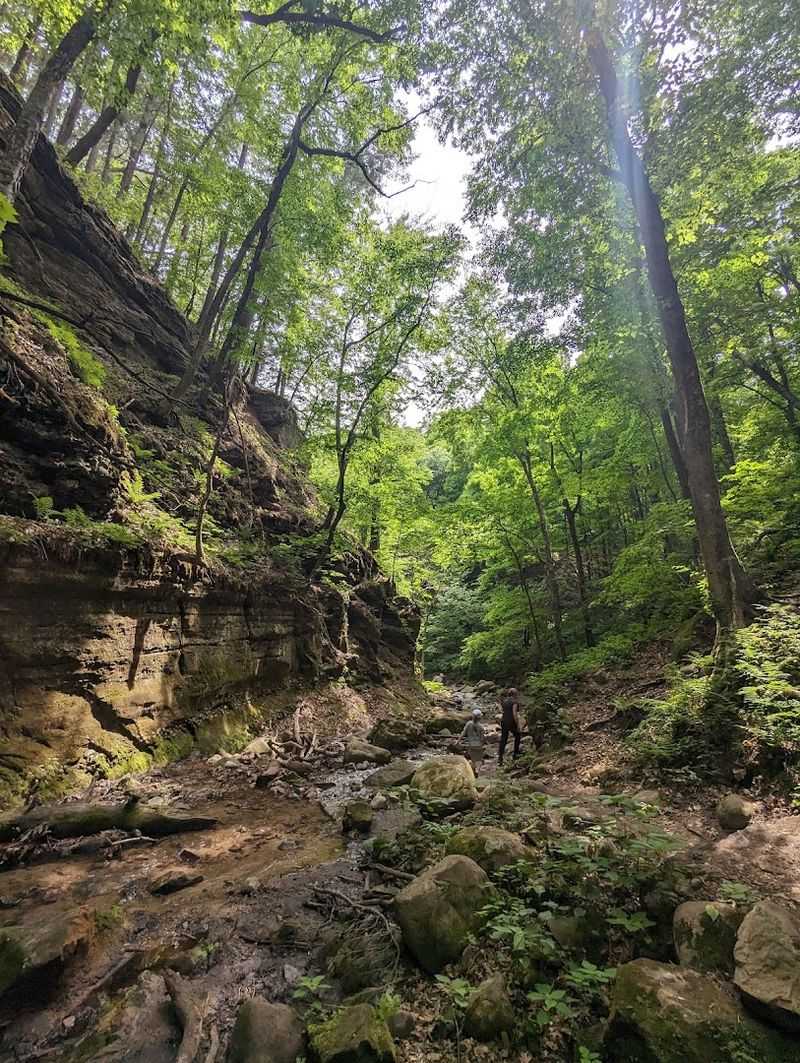
The maintained portion of Parfrey’s Glen Trail stretches roughly three-quarters of a mile from the parking area. Families with young children find this distance manageable, though the adventure truly begins when the official trail ends and the gorge narrows considerably.
The path follows gentle grades initially, making conversation easy as the landscape gradually transforms.
Sandstone formations grow more dramatic with each turn. What begins as wooded hillside hiking evolves into passage through a geological feature shaped over countless millennia.
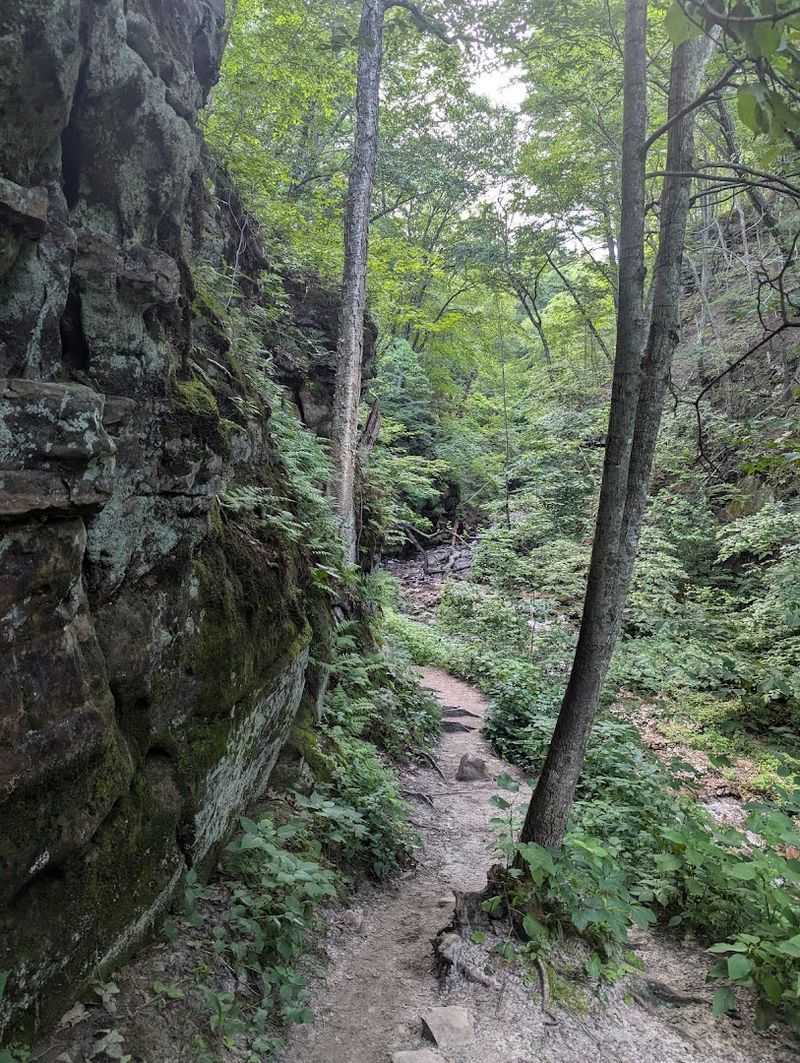
The gorge walls close in until hikers walk a corridor barely wide enough for two people abreast in certain sections.
Children instinctively respond to this landscape with imagination firing on all cylinders. The scale of the stone walls relative to small bodies creates natural comparisons to storybook settings, while the cool air rising from the streambed offers welcome relief on hot afternoons.
Parents appreciate how the enclosed space keeps wandering youngsters within sight throughout the journey.
The Trail Starts Easy Before Turning Into A Creek Bed Adventure
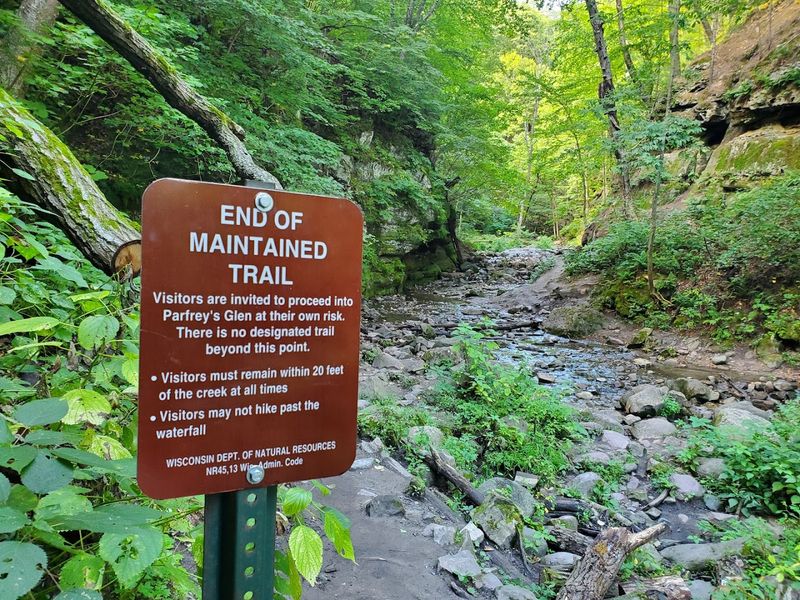
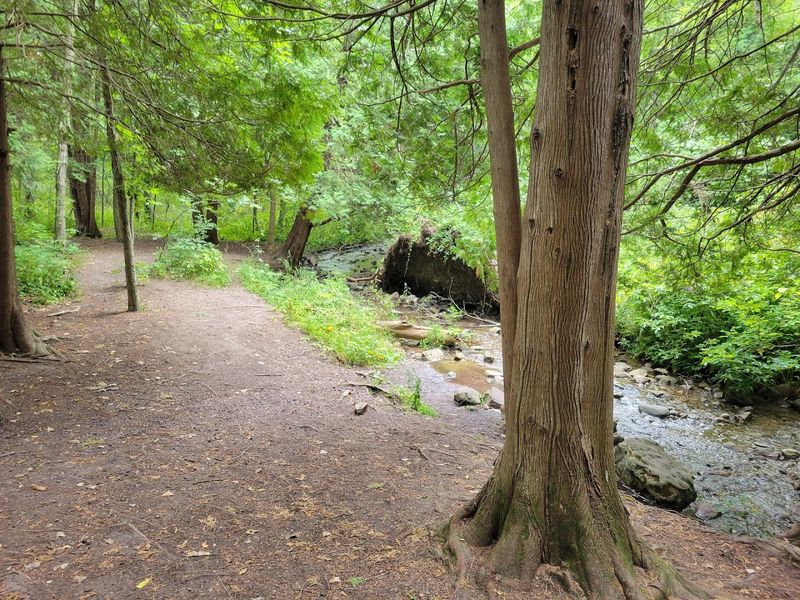
Standard trail conditions prevail for the first half of the journey into Parfrey’s Glen. Packed earth, gentle inclines, and clear pathway markers guide visitors deeper into the ravine without requiring special footwear or particular athleticism.
Signage marks the point where maintained trail ends and conditions change substantially.
Beyond that boundary, the creek itself becomes the route forward. Water flows around and over rocks ranging from fist-sized stones to boulders requiring careful maneuvering.
Hikers pick their way upstream, choosing routes across the streambed based on current water levels and personal comfort with rock hopping.
This transition from conventional trail to creek scrambling delights children accustomed to staying on designated paths. The freedom to choose one’s own route, splash through shallow pools, and climb over obstacles transforms a simple walk into genuine exploration.
Waterproof footwear becomes essential rather than optional, as keeping feet dry proves impossible once committed to reaching the waterfall upstream.
Mossy Walls And Cool Shade Give The Glen Its Storybook Mood
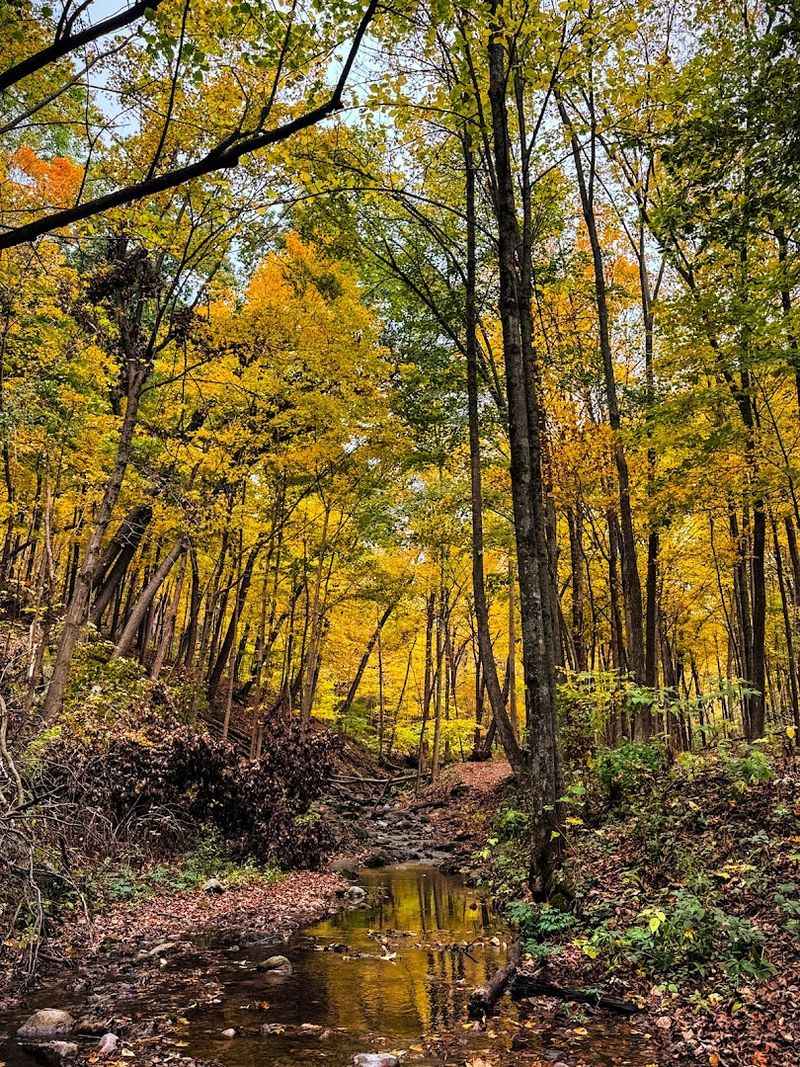
Temperature drops noticeably once the gorge walls reach their full height overhead. Sunlight struggles to penetrate the narrow opening above, creating perpetual twilight conditions even at midday.
This shade keeps the ravine ten to fifteen degrees cooler than surrounding areas, making Parfrey’s Glen particularly appealing during summer heat.
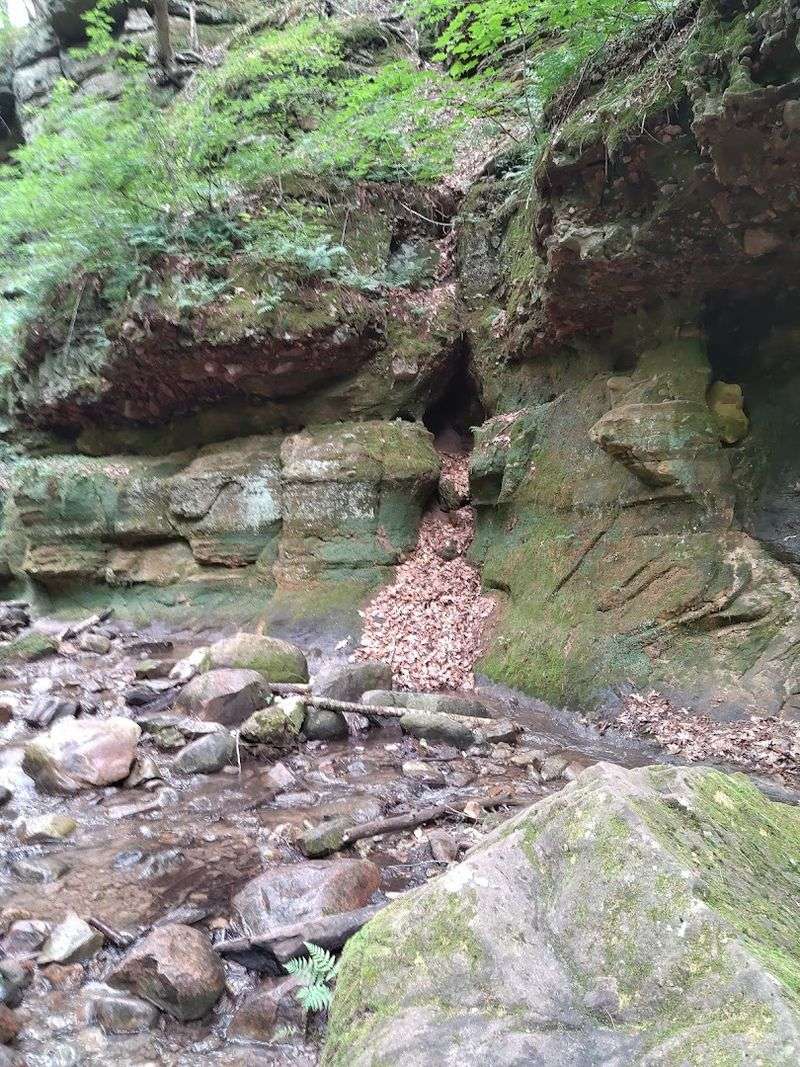
Moisture from the creek encourages moss growth across stone surfaces. Brilliant green patches cover sections of cliff face, softening the hard edges of fractured sandstone.
Ferns sprout from crevices where soil has accumulated over centuries, adding layers of texture to the vertical landscape surrounding hikers.
The combination of filtered light, verdant growth, and towering stone creates an atmosphere children readily associate with fantasy literature. Parents find themselves understanding the Narnia comparisons immediately upon entering the deepest sections.
The enclosed space, dramatic vertical relief, and lush vegetation conspire to produce a setting that feels deliberately designed rather than naturally occurring, though millions of years of erosion deserve all the credit.
A Small Waterfall Waits At The End Of The Ravine
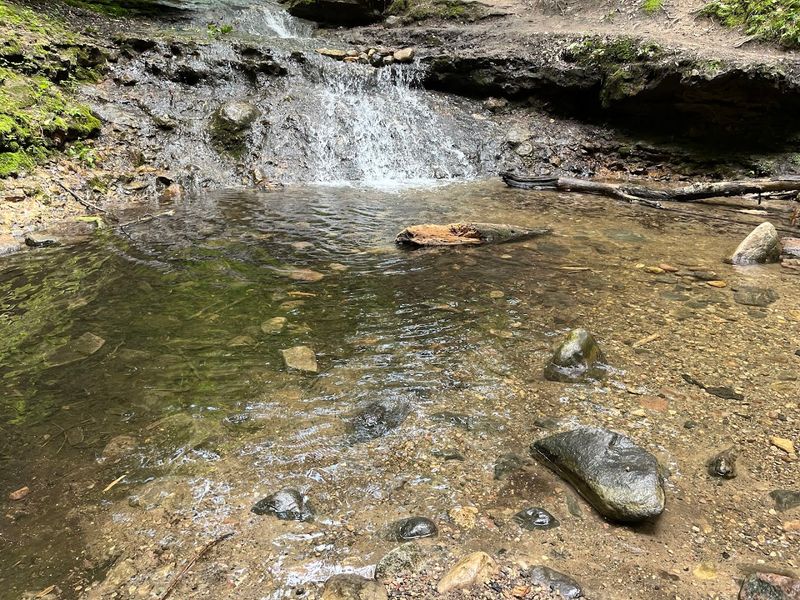
The destination justifying wet feet and boulder scrambling appears after roughly a mile of upstream progress. A waterfall drops perhaps fifteen feet over layered rock faces, modest by western standards but perfectly proportioned for this intimate gorge setting.
Water volume varies seasonally, with spring runoff producing the most dramatic flows.
Reaching the falls requires navigating one final obstacle: a large boulder that initially appears to block further progress. Climbing over or around this stone barrier reveals the cascade just beyond, creating a satisfying payoff for the effort invested.
The pool at the waterfall’s base offers a turnaround point for most visitors.
Families typically spend time here allowing children to explore, eat snacks, and simply enjoy the destination before retracing steps downstream. The enclosed amphitheater of stone around the falls focuses attention on the water’s movement and sound, creating a meditative quality that contrasts with the active scrambling required to arrive.
Photography opportunities abound, though capturing the scale and atmosphere proves challenging in the limited light.
Ancient Sandstone And Quartzite Tell A Much Older Wisconsin Story
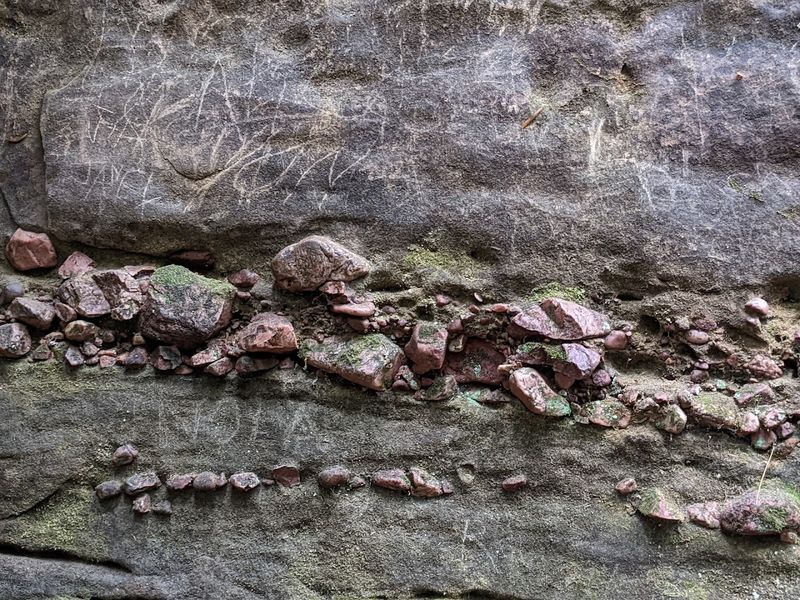
Parfrey’s Glen cuts through Cambrian-age sandstone deposited roughly 500 million years ago when shallow seas covered this region. The layers visible in cliff walls represent different periods of sediment accumulation, each stratum telling part of an incomprehensibly long story.
Quartzite intrusions appear as harder, more resistant bands within the softer sandstone matrix.
Glacial activity shaped the modern landscape, though the gorge itself formed through stream erosion over millennia. Water slowly carved through stone, exploiting weaknesses in the rock and gradually deepening the channel.
The process continues today, though human timescales make changes imperceptible without specialized measurement.
Children grasp the age of these formations more readily when examining rounded pebbles embedded in cliff faces. These stones, worn smooth by ancient waters before incorporation into sandstone, provide tangible evidence of processes operating across geological time.
Parents find themselves fielding questions about dinosaurs, oceans, and how rocks form, turning the hike into an impromptu earth science lesson with superior visual aids.
The 2008 And 2010 Floods Changed The Trail Forever
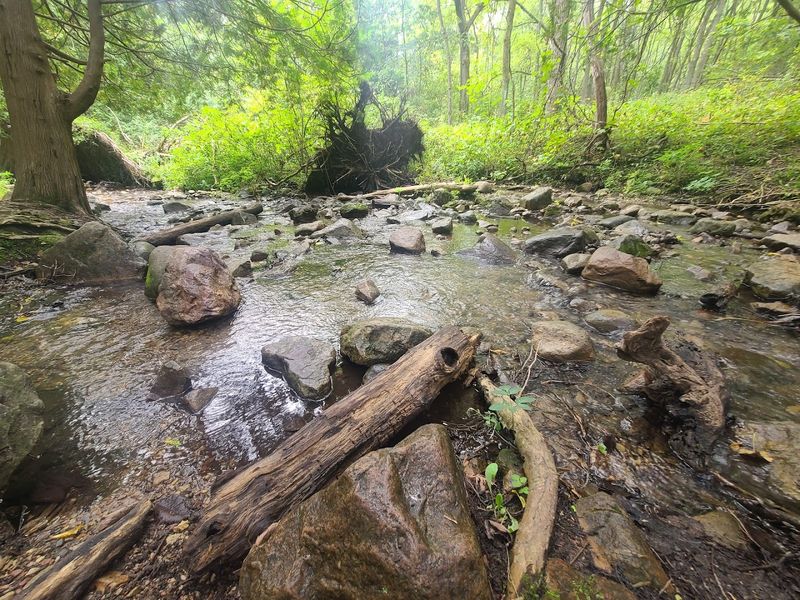
Severe flooding events in June 2008 and again in 2010 fundamentally altered Parfrey’s Glen. Massive water volumes scoured the gorge, removing the wooden boardwalk that once allowed visitors to stay dry while viewing the ravine.
Boulders the size of automobiles shifted positions, and accumulated debris from decades washed downstream in hours.
The Department of Natural Resources made a deliberate choice not to rebuild artificial structures within the glen. This decision returned the area to a more primitive state, requiring hikers to engage directly with the streambed rather than observing from elevated platforms.
The change increased difficulty but enhanced the adventure quality that now defines the experience.
Signs mark where maintained trail ends, acknowledging the transformation. Older visitors sometimes express nostalgia for the boardwalk era, while newcomers know only the current scrambling route.
The floods served as powerful reminders that natural forces continue shaping this landscape, indifferent to human convenience. Families now experience Parfrey’s Glen much as early explorers did, without infrastructure mediating the encounter.
Kids Will Love The Rock Hopping But Parents Should Plan For Wet Shoes
Young hikers treat the creek scrambling as the highlight rather than an obstacle to overcome. The opportunity to choose routes, balance on stones, and splash through water transforms transportation into entertainment.
Children often move faster than adults in this terrain, their lower centers of gravity and fearlessness providing advantages over cautious parents.
Footwear selection determines comfort levels throughout the adventure. Waterproof hiking boots offer ankle support and traction but require time to dry if water tops the uppers.
Water shoes or sandals with aggressive treads allow feet to get wet without consequence, though they provide less protection when scrambling over sharp-edged rocks.
Parents carrying young children face additional challenges in the boulder sections. A hiking stick provides valuable stability when hopping between rocks while managing a toddler.
Families with children under five might enjoy the maintained trail section and turn back before conditions become demanding, saving the full journey for when everyone can navigate independently. The key involves matching expectations to abilities rather than forcing an agenda that creates frustration.
Rare Plants And Insects Make This Place More Fragile Than It Looks
The microclimate within Parfrey’s Glen supports plant species found nowhere else in southern Wisconsin. Cool, moist conditions year-round allow northern species to survive far south of their typical ranges.
Botanists have documented rare ferns, mosses, and wildflowers thriving in this protected environment, making the gorge scientifically valuable beyond its recreational appeal.
Insect populations include species equally uncommon in the region. The constant moisture and stable temperatures create habitat for creatures requiring specific conditions.
Millipedes, distinctive dragonflies, and various beetles contribute to an ecosystem more complex than casual observation suggests.
Visitors impact this fragile community simply by walking through the space. Stepping on vegetation, disturbing soil, and introducing foreign seeds on clothing and gear all affect the delicate balance.
The concentration of foot traffic in the narrow gorge amplifies these impacts, making adherence to regulations particularly important. Staying within the streambed rather than climbing banks helps minimize damage, as does packing out all trash and avoiding picking plants or disturbing wildlife encountered along the route.
The No Pets No Food Rule Helps Protect The Magic
Regulations prohibiting dogs and food consumption within Parfrey’s Glen strike some visitors as excessive until understanding the reasoning. Pets, even leashed, disturb wildlife and introduce waste into the sensitive ecosystem.
Dog urine affects soil chemistry and plant health, while the presence of animals stresses native fauna. The confined space of the gorge concentrates these impacts.
Food restrictions prevent attracting animals and insects in ways that alter natural behaviors. Crumbs and scraps encourage scavenging, teaching wildlife to associate humans with meals.
This habitation creates problems for both animals and future visitors. The ban also reduces litter, as food packaging represents a significant portion of trash left in natural areas.
Families planning visits should eat before arriving or wait until returning to the parking area. Water remains permitted and essential, particularly on warm days when the scrambling generates heat despite cool air temperatures.
The rules require minor inconvenience but serve clear conservation purposes, helping ensure the glen retains its character for future generations discovering this remarkable landscape carved into Wisconsin bedrock.