
Food Lovers Are Raving About The Incredible German Dishes At This North Carolina Eatery
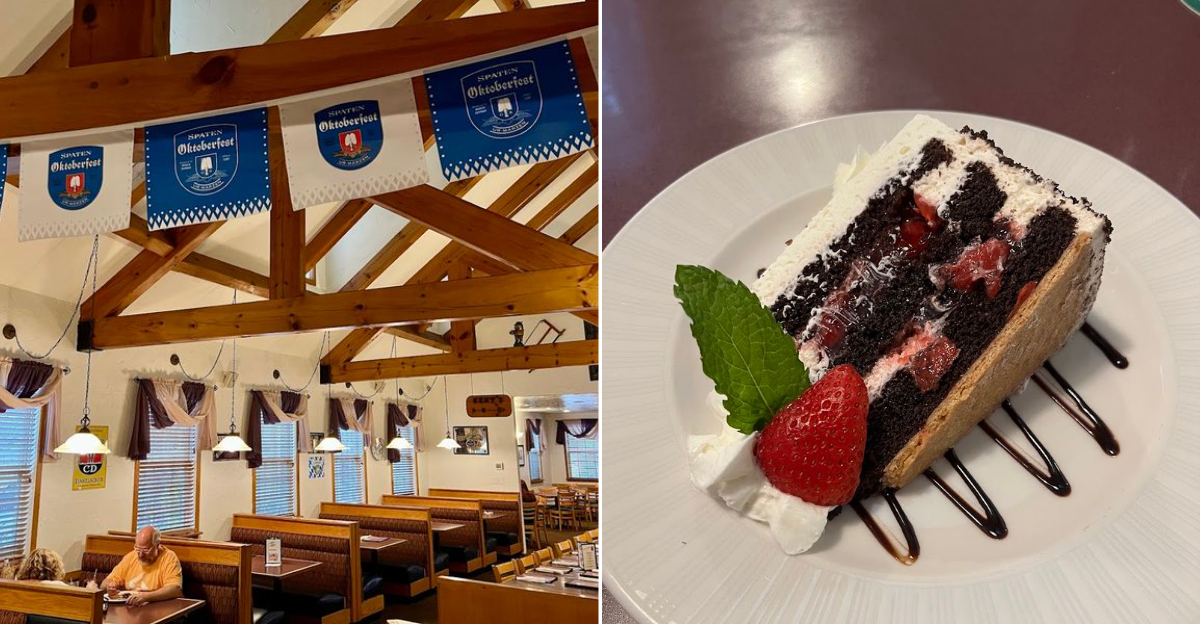
A German kitchen this uncompromising was the last thing anyone expected to find in North Carolina, and that surprise is exactly what makes the first visit so disarming. The recipes arrived intact and never once considered adjusting for a different audience.
Schnitzel and slow-cooked dishes built on technique rather than shortcuts arrive carrying genuine authority. This is not fusion or approximation.
The dining room fills with people who drove past closer options specifically to sit here. That decision gets validated somewhere between the first bite and the point where dessert stops feeling optional.
Word has been spreading through food circles in a way that suggests the secret is nearly out. Diners who have not yet made the trip are running out of reasonable excuses to delay.
Traditional Recipes Behind Popular Plates
This restaurant in North Carolina does not cut corners with its recipes. The kitchen sticks to old-school German methods that have been passed down for generations.
Dishes like Wiener Schnitzel, sauerbraten, and beef roulade show up on the menu exactly as they would in Bavaria.
The schnitzel alone is worth the trip. It comes out golden and crispy, with a crust that holds its crunch all the way to your last bite.
The sauerbraten is slow-marinated, giving the beef a deep, tangy flavor that is hard to replicate at home.
What makes these plates stand out is consistency. The kitchen produces the same bold flavors every single visit.
Nothing tastes rushed or lazy. The sausage platter brings together multiple varieties of bratwurst, all seasoned with care.
Each plate tells a story rooted in real German cooking tradition. That is what keeps people coming back week after week to this Pineville spot.
You can find Waldhorn Restaurant at 12101 Lancaster Hwy, Pineville, NC 28134, United States.
Unique Ingredients Used In Cooking
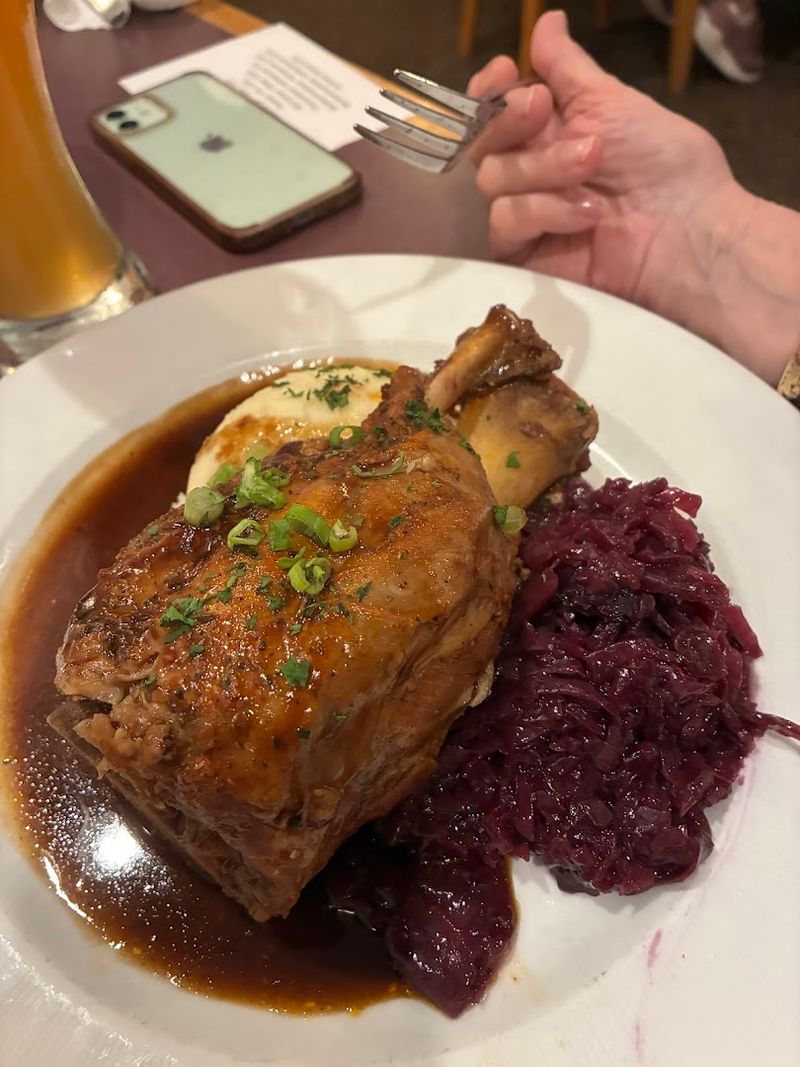
German cooking relies on ingredients that most American kitchens rarely stock. Waldhorn Restaurant makes its red cabbage, sauerkraut, and spaetzle completely from scratch.
That in-house effort changes everything about the final flavor on your plate.
Caraway seeds, juniper berries, and mustard are quietly working behind the scenes in many of these dishes. They add earthy, slightly sharp notes that layer beautifully with rich meats.
Marjoram shows up in sausages, and it gives them a warmth that is hard to put your finger on but impossible to ignore.
The potato pancakes, known as Kartoffelpuffer, use freshly grated potatoes mixed with simple seasonings. They come out thin and lacy with crispy edges.
Paired with applesauce, they hit a perfect balance of savory and slightly sweet. The Maultaschen, a German stuffed pasta, uses a filling that blends meat and herbs in a way that feels both hearty and refined.
Every ingredient at Waldhorn is chosen with purpose. Nothing on the plate feels accidental.
That attention to what goes into each dish is exactly why the food here stands apart from other German spots in the region.
Techniques That Define Authentic Food
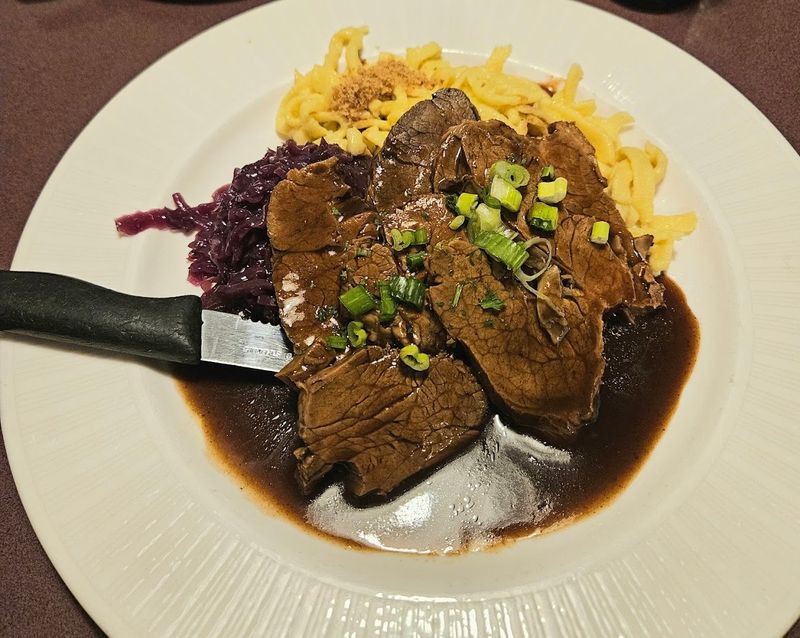
Patience is the secret weapon behind authentic German cooking. Waldhorn Restaurant uses slow-marinating techniques for dishes like sauerbraten, letting the beef soak in a vinegar-based brine for days.
That process breaks down the meat and builds a flavor profile that quick cooking simply cannot match.
Pan-frying schnitzel correctly takes real skill. The cutlet must be pounded thin and even, then dredged in breadcrumbs before being hit with a hot pan with butter.
Waldhorn nails this every time. The result is a schnitzel that stays juicy inside while the outside stays perfectly crisp.
Braising is another technique the kitchen uses well. Beef roulade gets rolled with a savory filling, then braised low and slow until it becomes fork-tender.
The braising liquid reduces into a rich sauce that gets spooned right over the top. Spaetzle is made by pressing dough through a colander directly into boiling water.
It creates small, irregular noodles with a soft, chewy texture. These techniques are not shortcuts.
They are the foundation of every dish that comes out of this kitchen, and they are the reason the food at Waldhorn tastes the way it does.
Pairing Dishes With Complementary Sides
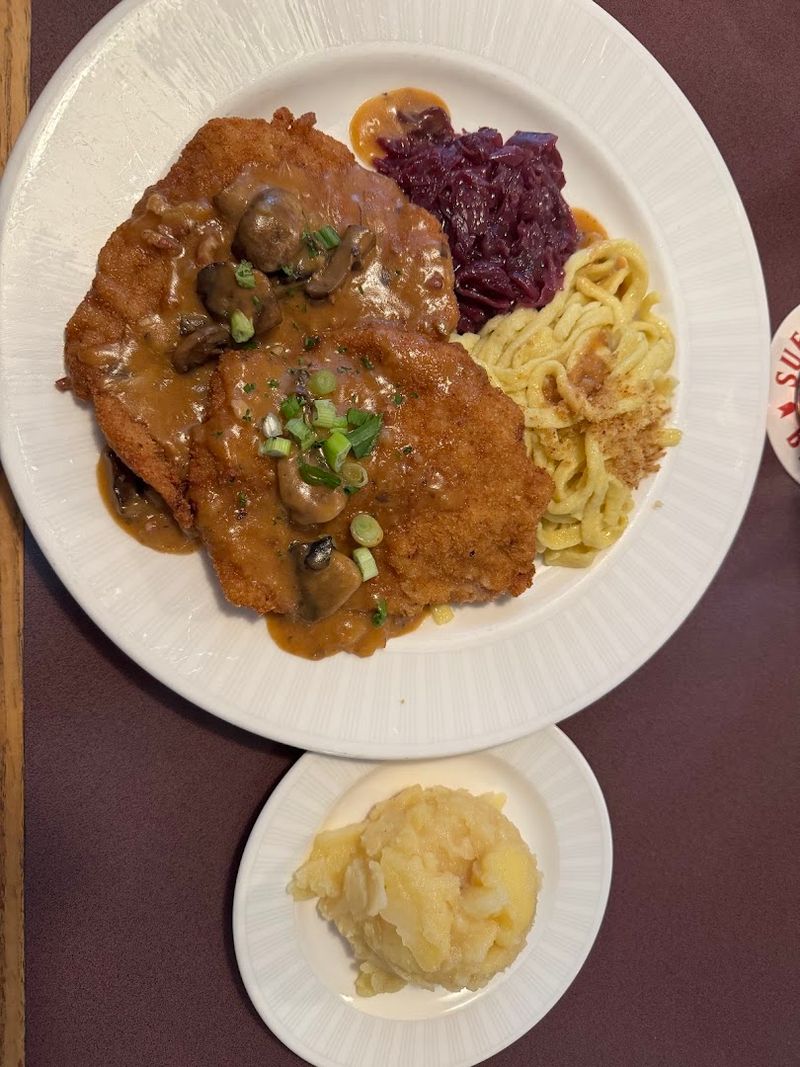
Getting the sides right is just as important as the main dish. Waldhorn Restaurant pairs its entrees with sides that actually complement the flavors on the plate.
Spaetzle with cheese, bacon, and onions is one of the most popular combinations on the menu.
Red cabbage brings a tangy sweetness that cuts through the richness of pork and beef dishes. It acts almost like a palate reset between bites.
Potato pancakes work brilliantly alongside sauerbraten because the mild starchiness of the pancake balances the bold, vinegary beef.
Pretzel rolls are another smart pairing. Their chewy, slightly salty texture works with almost everything on the table.
The giant pretzel, called Riesen Bretzel, is a showstopper on its own but also does a great job of soaking up sauces. Waldhorn puts real thought into how its sides interact with the mains.
Nothing feels like an afterthought. The vegetables are cooked with seasoning rather than just steamed plain.
The starchy sides are hearty enough to stand on their own but smart enough not to overpower the entree. That balance is what makes a complete German meal feel so satisfying from the first bite to the very last.
Seasonal Variations In Cuisine
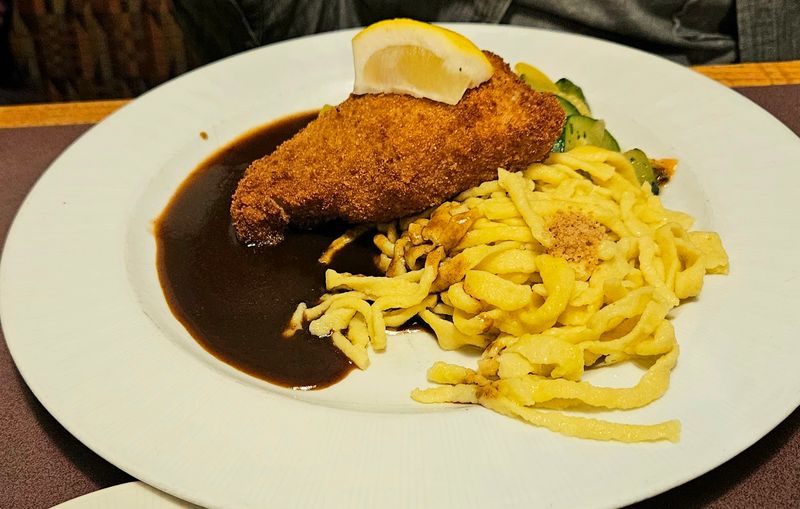
German cooking changes with the seasons in ways that feel natural and smart. Waldhorn Restaurant reflects this by rotating specials that highlight what is fresh and fitting for the time of year.
The pork shank special is one dish that shows up and immediately draws attention.
Fall and winter bring heavier, warming dishes to the forefront. Roasted meats, braised vegetables, and thick sauces feel right when the temperature drops.
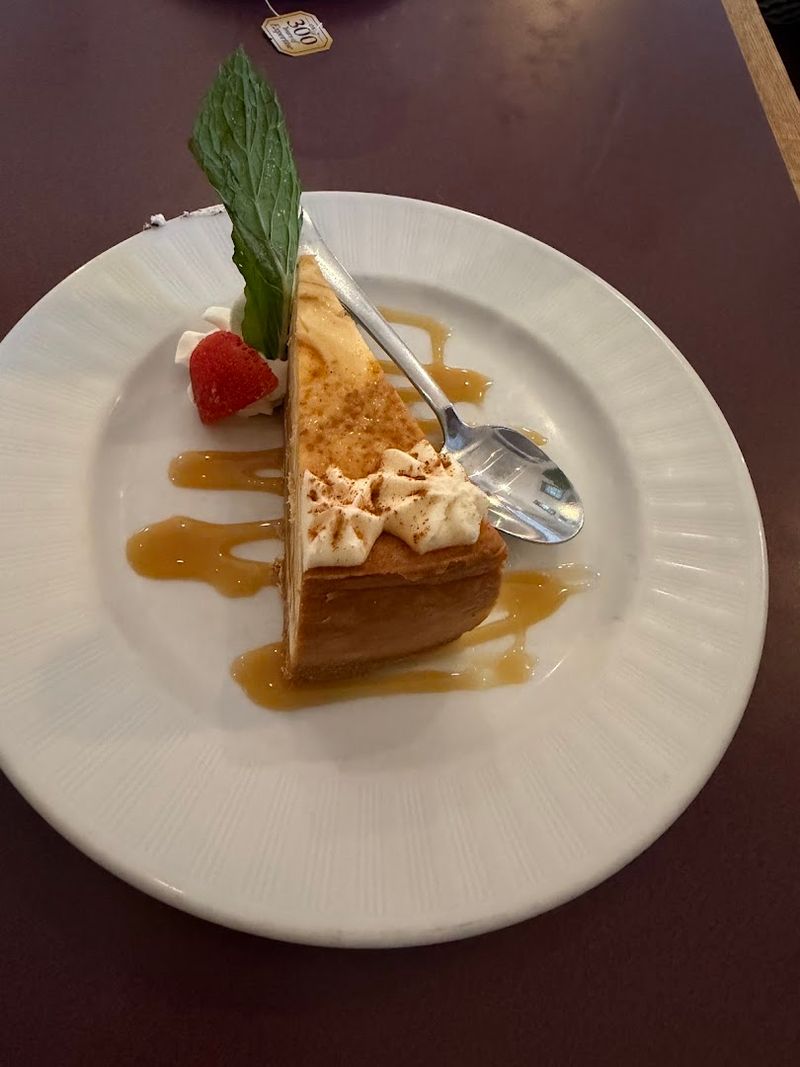
Pumpkin spice cheesecake has appeared as a seasonal dessert option, blending a familiar American flavor with the European pastry style Waldhorn does so well.
Spring and summer allow for lighter preparations. Fresh trout appears on the menu and offers a clean, delicate contrast to the heartier cold-weather plates.
Seasonal fish dishes give diners something bright and less heavy when the weather warms up. German cuisine has always been tied to the agricultural calendar.
Cooks used what was available locally and preserved what they could for winter. Waldhorn carries that spirit into its current menu by keeping things interesting throughout the year.
Checking the specials board on any given visit is always a good idea because the kitchen consistently delivers something worth trying beyond the regular menu offerings.
The Role Of Bread In German Meals
Bread is not a side note in German culture. It is practically its own food group.
Germany has hundreds of documented bread varieties, and the tradition of serving bread with meals is deeply woven into the dining experience. Waldhorn Restaurant honors that with its famous Riesen Bretzel.
The giant pretzel is a serious crowd-pleaser. It arrives at the table with a thick, chewy crust and a soft, pillowy inside.
A little mustard on the side, and you have one of the best appetizers on the menu. Pretzel rolls also make appearances and pair naturally with the restaurant’s heartier entrees.
Bread in German meals serves a practical purpose beyond just filling you up. It soaks up sauces, provides texture contrast, and gives you something to do between bites of rich meat dishes.
The slightly salty, malty flavor of a well-made pretzel works especially well alongside savory plates. Some guests have noted that a bread basket would be a welcome addition to the table.
That feedback says a lot about how much people appreciate quality bread here. The Riesen Bretzel at Waldhorn is already a destination item on its own, and it shows exactly why bread holds such an important place in the German dining tradition.
Sweet Treats And Desserts
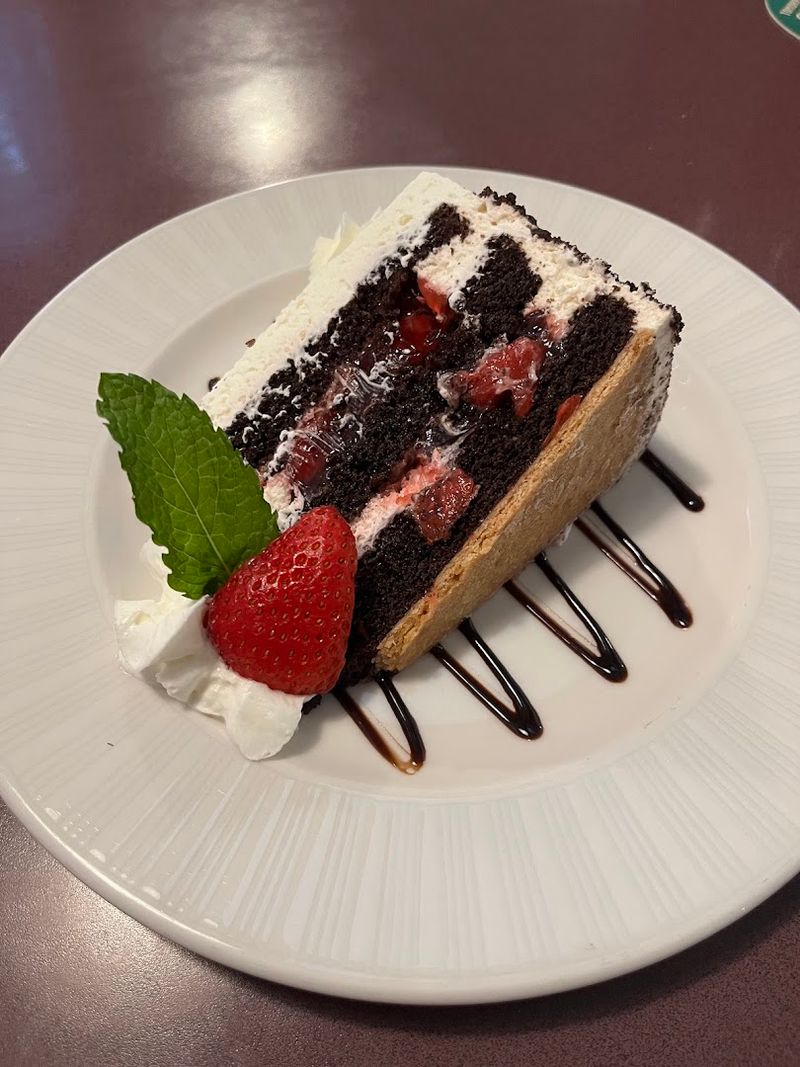
German desserts do not mess around. Waldhorn Restaurant offers two standout options that have developed a real following among regulars.
Black Forest cake and warm Apfelstrudel are the two names you will hear most often when people talk about finishing their meal here.
The Black Forest cake at Waldhorn is light and fluffy rather than overly sweet. It uses real cherries and fresh whipped cream layered between a soft chocolate sponge.
People who normally find cake too sugary often end up loving this version because it does not hit you over the head with sweetness.
Apfelstrudel arrives warm and fragrant, filled with tender spiced apples wrapped in thin, flaky pastry. A scoop of vanilla ice cream melts slowly over the top as you eat it.
That combination of warm pastry and ice cream is a textbook example of why this dessert has survived for centuries. Pumpkin spice cheesecake has also made seasonal appearances and earned its own fans.
German pastry traditions focus on balance rather than excess. The desserts here reflect that philosophy perfectly.
They feel like a proper ending to a meal rather than an afterthought. Finishing dinner at Waldhorn with one of these sweets makes the whole experience feel complete and worth every single bite.
Cultural Significance Of German Food Traditions
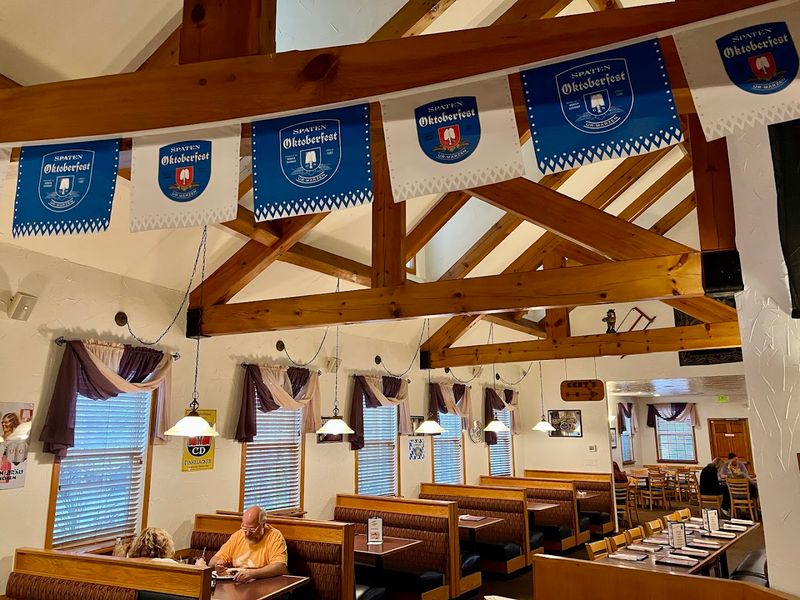
Food in German culture is about more than eating. It is about gathering, celebrating, and connecting with history.
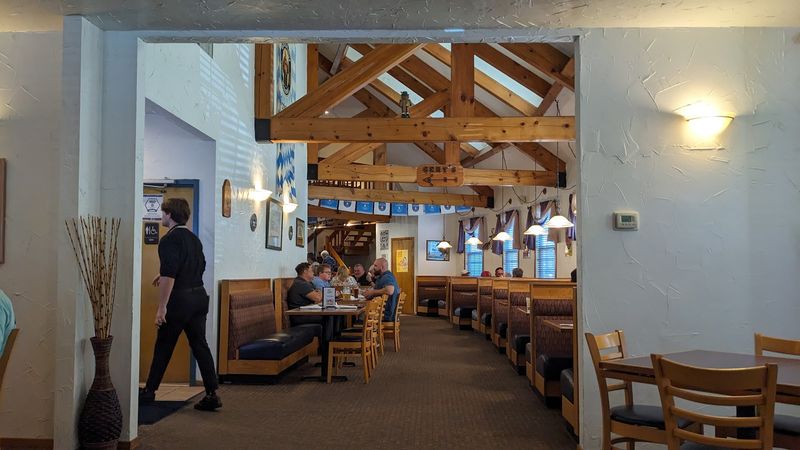
Waldhorn Restaurant brings that spirit to Pineville with a Bavarian-style interior featuring exposed timbers and traditional folk music playing softly in the background.
The concept of Gemutlichkeit, which roughly translates to coziness and warmth, drives the atmosphere here. It is the idea that a good meal shared in a comfortable space creates a feeling of belonging.
Waldhorn has built its entire environment around that philosophy, and guests feel it the moment they sit down.
German food traditions also carry deep regional identity. Bavarian cuisine, which is what Waldhorn specializes in, reflects the mountainous southern region of Germany.
Hearty meats, root vegetables, and fermented foods like sauerkraut were all practical choices for people living through harsh winters. Those dishes became cultural symbols over time.
Celebrating birthdays, anniversaries, and family milestones over a German meal at Waldhorn has become a tradition for many Charlotte-area families. People drive from Pennsylvania and Florida just to eat here.
That kind of loyalty does not happen by accident. It happens when a restaurant understands that food is memory, culture, and community all served on one plate at the same time.