
Florida Has A Sculpture Garden That Looks Like Someone Dreamed It Up And Then Actually Built It
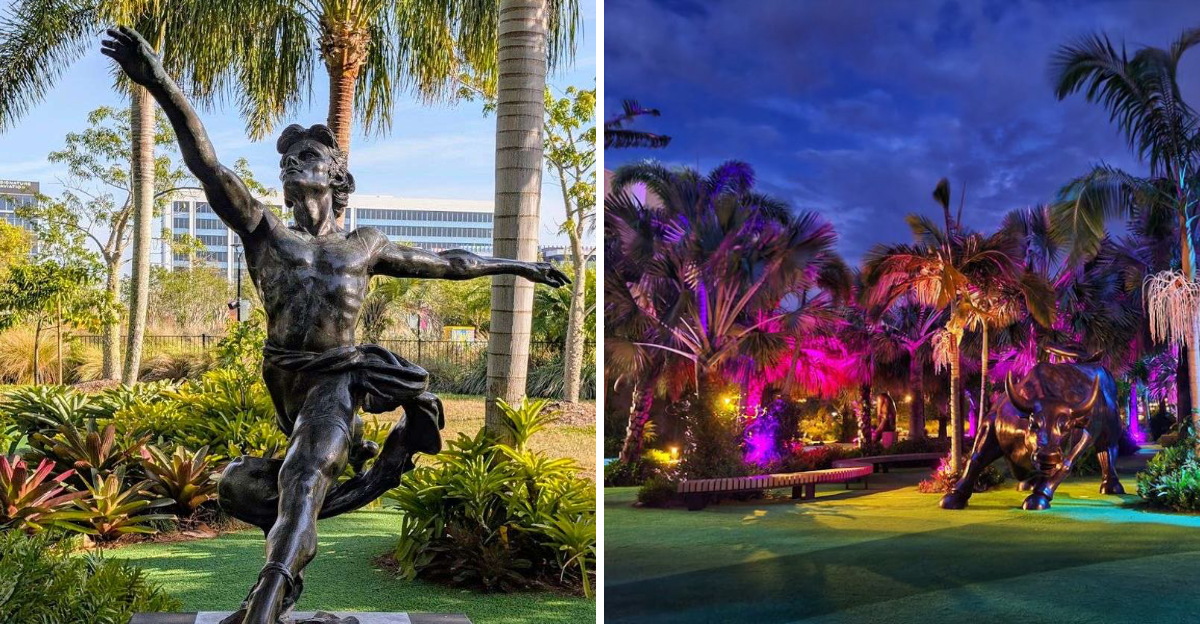
Sculpture gardens do not usually stop you cold. This one does.
Florida is home to a free, open-air gallery where iconic bronze masterpieces stand between swaying palms, night-blooming jasmine drifts through the warm air, and world-class art shows up without a single velvet rope or admission fee in sight.
No ticket booth, no lines, no pressure. Just art, atmosphere, and the kind of beauty that follows you home long after the visit ends.
The collection rotates, which means return visits reveal entirely new pieces. Florida has plenty of places that impress on arrival and fade by dinner.
This sculpture garden is built differently.
It lingers, earns a return visit, and stays with you in ways that are remarkably hard to explain.
The Garden That Came Out Of Nowhere
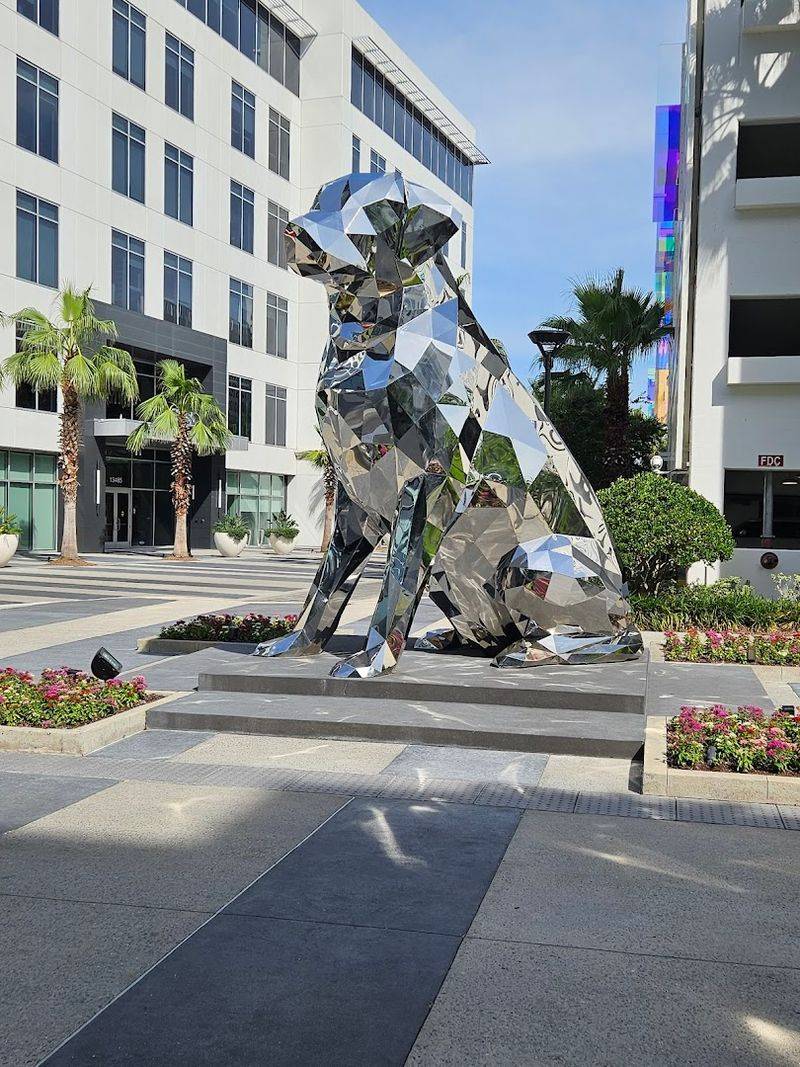
Art gardens of this scale do not just appear overnight. The Lake Nona Sculpture Garden opened in 2022, and it hit the Orlando art scene like a quiet thunderclap.
Spanning 50,000 square feet, this outdoor gallery sits right behind the Lake Nona Wave Hotel at 6100 Wave Hotel Dr, Orlando, FL 32827. It was built with one clear purpose: to bring world-class art directly into everyday life.
Florida has no shortage of tourist attractions, but this one plays by completely different rules. There are no admission fees, no gift shop pressure, and no long lines snaking around a building.
The garden is part of Lake Nona’s broader public art program, which weaves creativity into the community through murals, performances, and digital installations. This sculpture garden is the crown jewel of that effort.
It proves that great art does not have to live behind velvet ropes or inside climate-controlled museums to feel important.
The Lewis Collection On Full Display
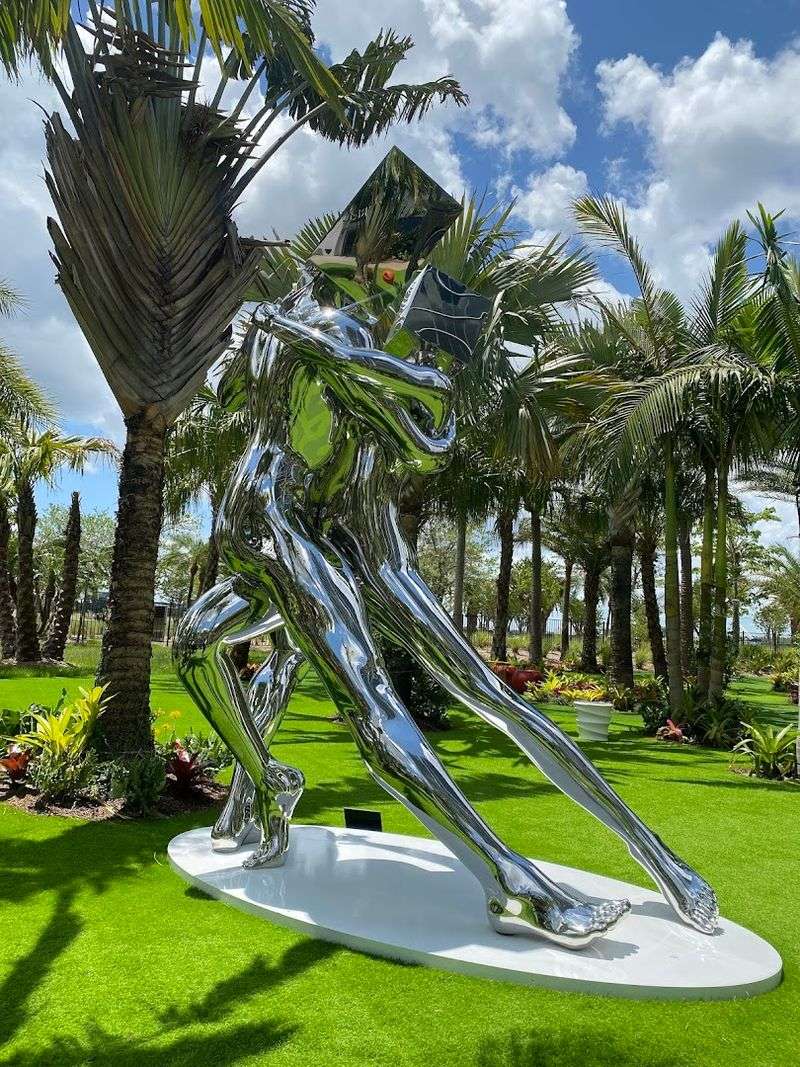
Behind every great garden is a great collection. The sculptures on display here come from The Lewis Collection, one of the largest private art collections in the entire world.
That is not a small claim. The collection rotates over time, meaning the garden never stays exactly the same.
Return visits reveal new pieces, new conversations, and new surprises waiting along the paths.
Rotating collections are a bold curatorial choice. Most outdoor gardens lock in their displays for decades.
This one keeps things fresh and gives the community a reason to come back again and again.
Florida benefits enormously from having a collection of this caliber available to the public at no cost. The artworks represent some of the most celebrated sculptors in modern and contemporary art history.
Each piece is accompanied by informational signage that explains its origins and meaning. Visitors leave knowing more than they arrived with, which is exactly what the best art experiences are supposed to do.
The Charging Bull Has Left Wall Street
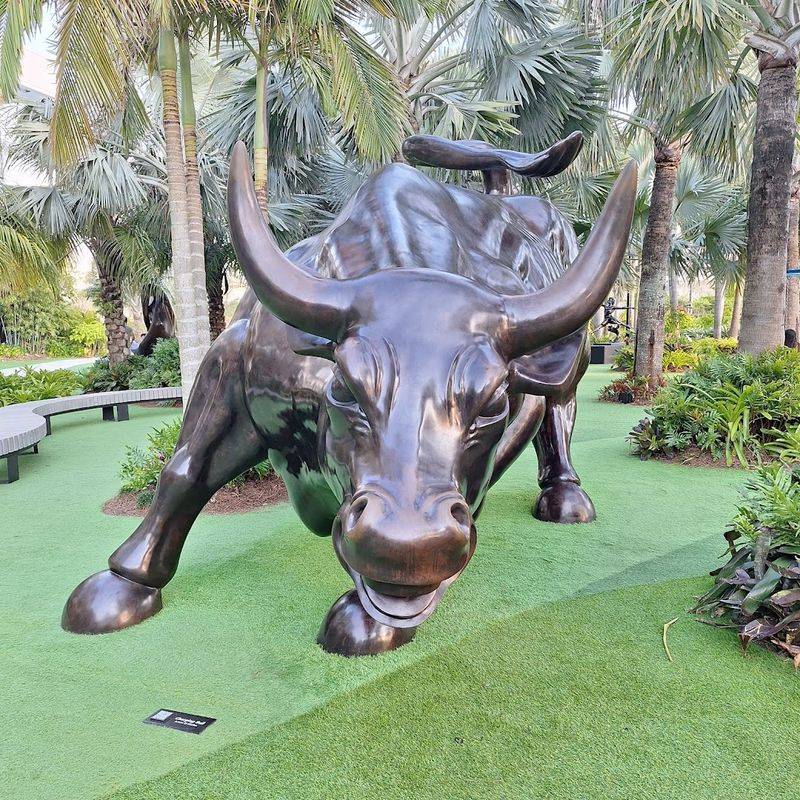
The same iconic design that made Wall Street famous now has a counterpart standing in Orlando, cast by the same sculptor from the same edition.
Arturo Di Modica created the Charging Bull, a 7,100-pound bronze sculpture that became a cultural icon at Bowling Green in New York City, and this edition now stands proudly in Orlando, Florida. Seeing it surrounded by swaying Florida palms instead of city streets gives it a completely different energy.
The sculpture radiates raw power. Every muscle is carved with precision, and the sheer weight of the piece is something you feel just by standing near it.
Visitors tend to stop here longer than anywhere else in the garden. It is the kind of artwork that pulls people in and holds them there, demanding to be photographed from every possible angle.
The Charging Bull is proof that iconic art transcends its original setting. Out of New York and into a Florida garden, it somehow feels even more alive.
Henry Moore And The Art Of Quiet Power
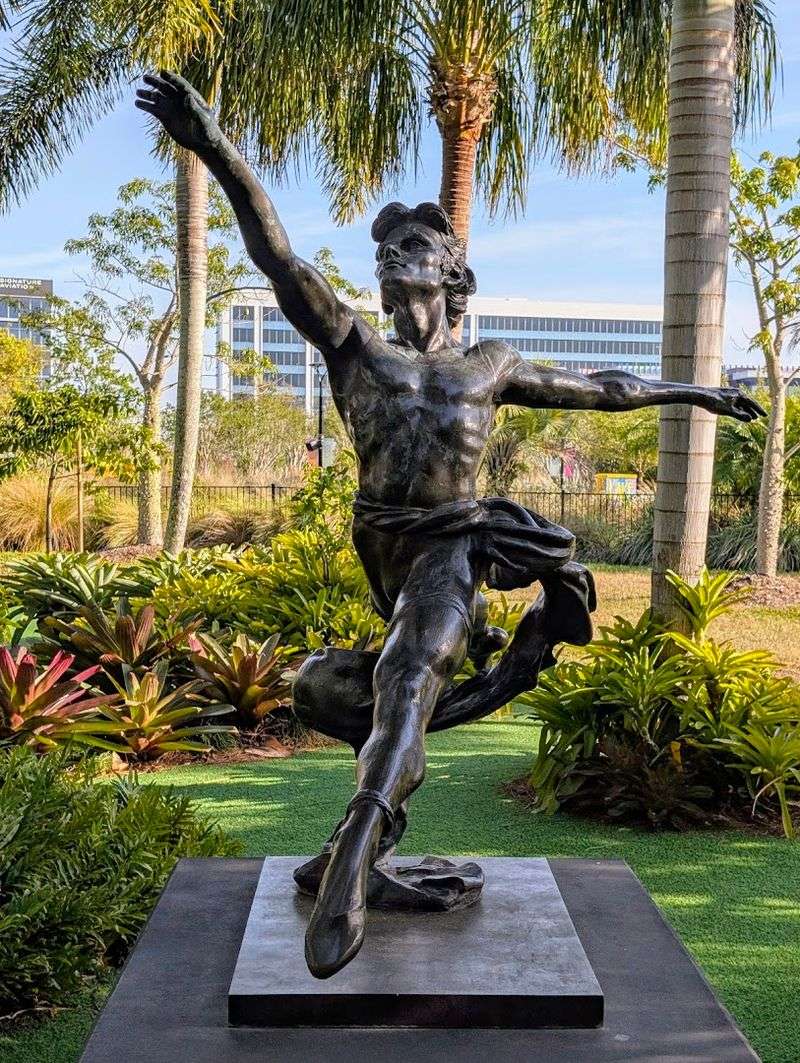
Henry Moore sculptures do something unusual. They make you feel calm and unsettled at the exact same time, and that tension is what makes them unforgettable.
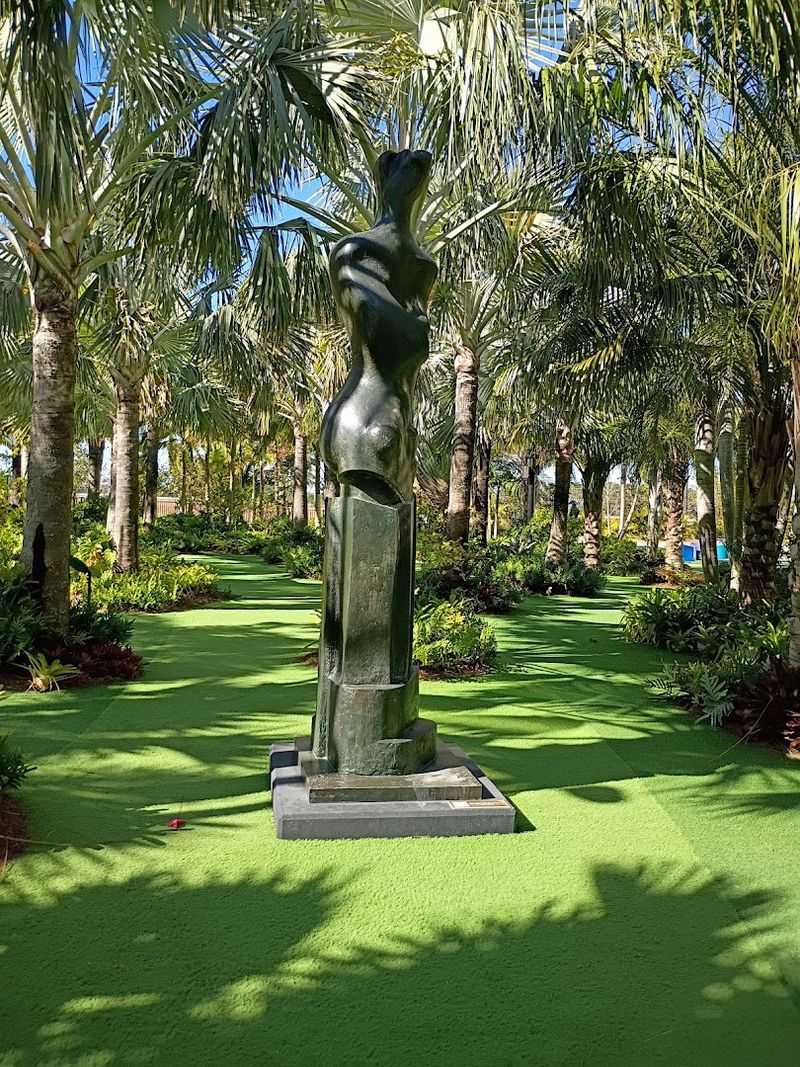
The garden features his work Upright Motive No. 9, carrying Moore’s signature style of organic, abstracted human forms that seem to breathe even in stillness.
Moore is one of the most celebrated sculptors of the twentieth century. Having two of his pieces in an open, free-access garden in Florida is genuinely remarkable for any art lover who understands what that means.
The Florida sunshine plays beautifully across the curved bronze surfaces. Shadows shift throughout the day, making the sculptures look slightly different depending on when you visit.
Morning light softens them. Afternoon sun sharpens every contour.
At sunset, they glow in a way that almost feels theatrical. Moore himself might have approved of this particular stage for his work.
Botero Brings His Bold Curves To Orlando
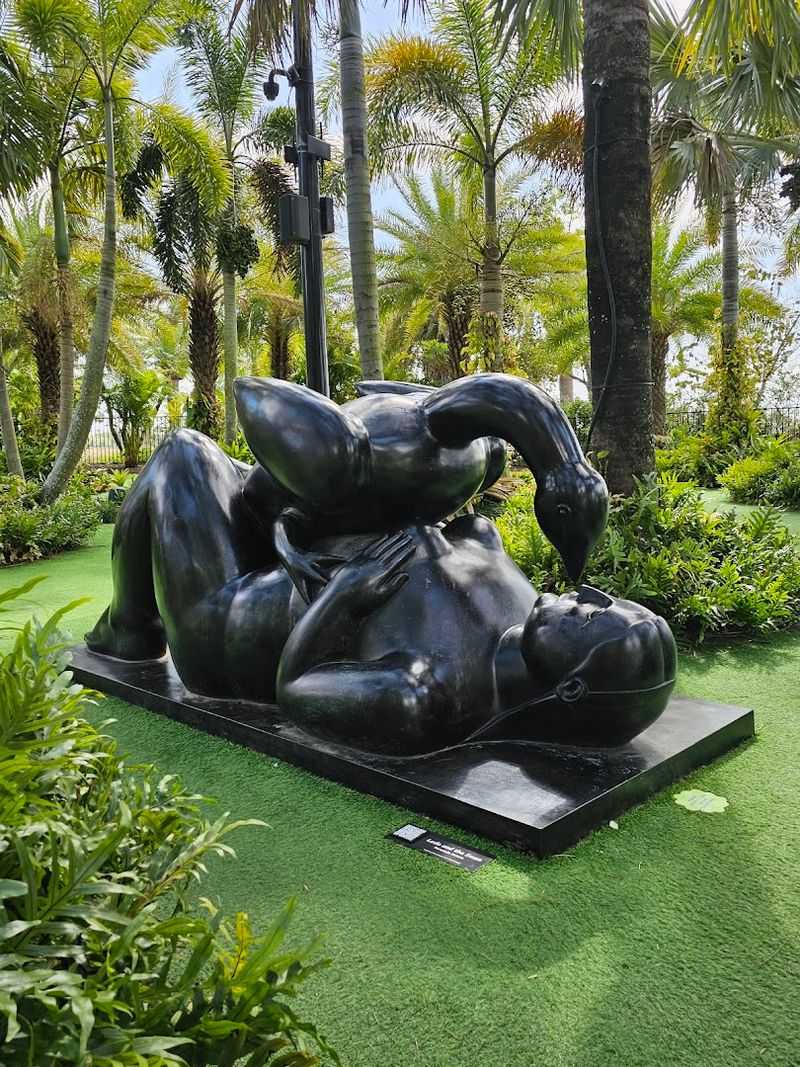
Fernando Botero’s figures are impossible to ignore. His Leda and the Swan sculpture arrives in the garden like a party that forgot to apologize for being loud.
Botero is famous for his deliberately exaggerated, voluminous figures that challenge conventional ideas of beauty and proportion. His work is immediately recognizable, and Leda and the Swan is a perfect example of his bold artistic philosophy.
The sculpture references Greek mythology, telling the story of Leda and Zeus in Botero’s unmistakable visual language. It is playful, thought-provoking, and slightly absurd in the best possible way.
Florida visitors who stumble upon this piece without prior knowledge often stop and laugh before they start thinking. That reaction is precisely what Botero wanted from his audience.
Art that makes people feel something immediately is rare. Botero’s contribution to this garden adds a layer of joy and wit that balances the more contemplative pieces nearby.
The whole collection benefits from his presence.
Philip Jackson And The Drama Of Bronze
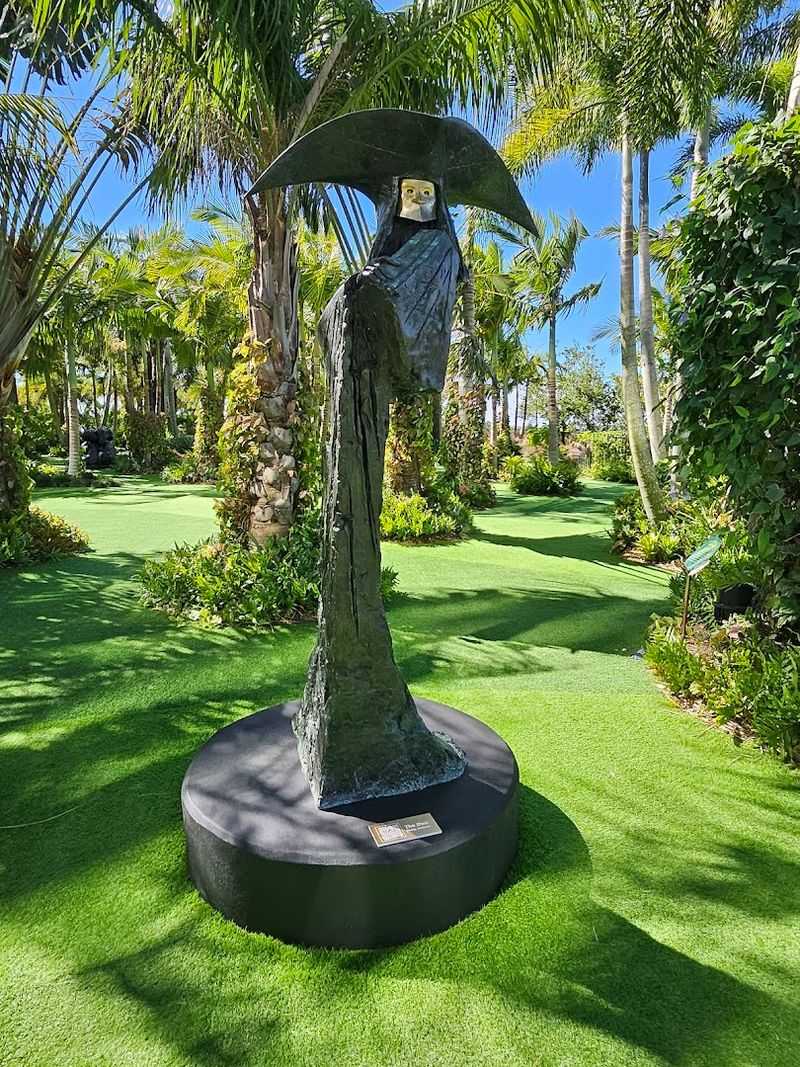
Philip Jackson works in drama. His sculptures feel like they were interrupted mid-story, frozen at the exact moment before something important happens.
The garden includes two of his pieces: Cloister Conspiracy and The Don. Both carry Jackson’s signature sense of narrative tension, where figures seem to be holding secrets or mid-conversation with someone just out of frame.
Jackson is one of Britain’s most respected figurative sculptors. His ability to capture human emotion through bronze is the kind of skill that takes decades to develop and a lifetime to fully appreciate.
Standing near his sculptures in this Florida garden feels theatrical. The surrounding palms and fragrant shrubs create a backdrop that amplifies the human drama baked into every bronze fold and gesture.
Cloister Conspiracy and The Don complement each other beautifully. Together they create a kind of silent dialogue within the garden, inviting visitors to slow down and pay attention to what bronze can communicate when handled by a master craftsman.
Local Art Gets Its Moment In The Sun
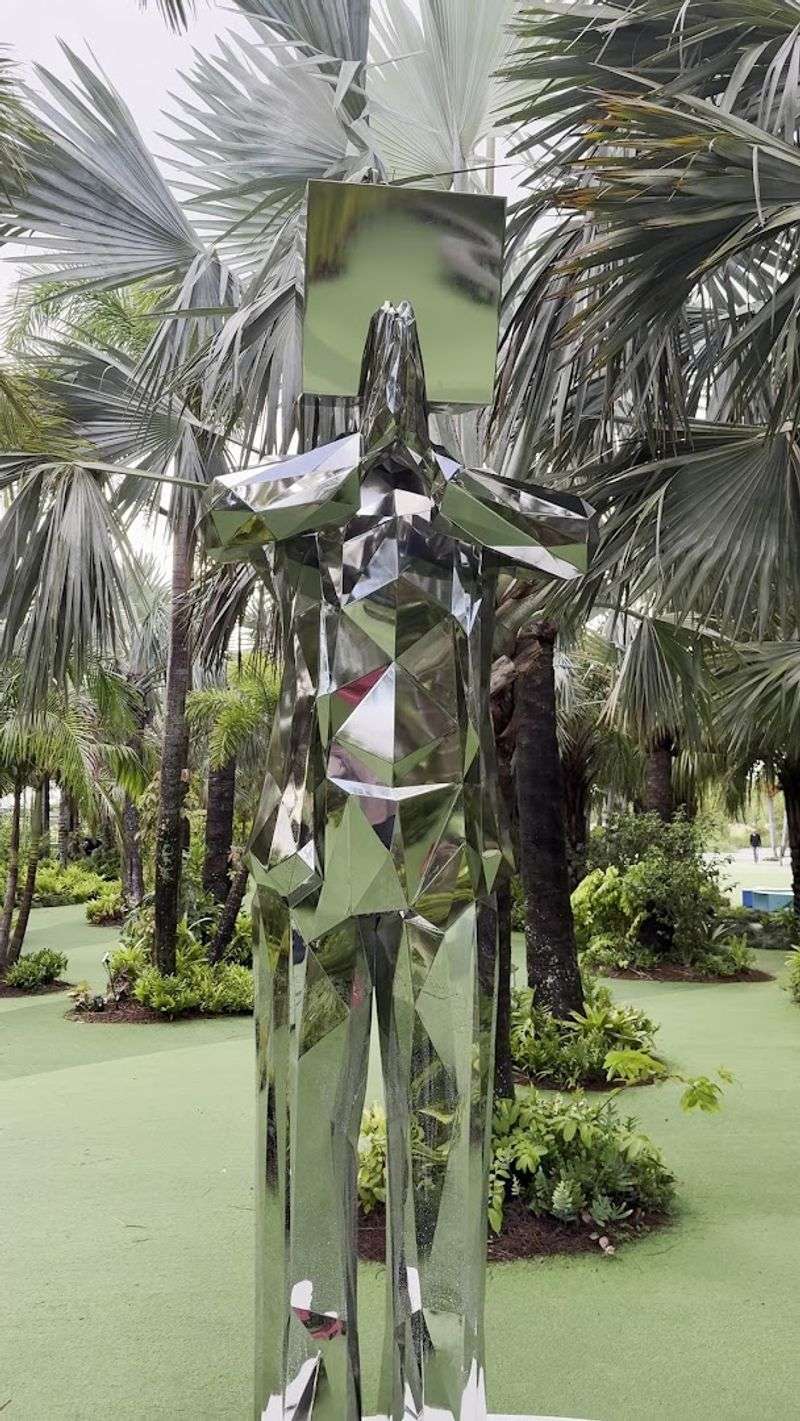
Not every piece in the garden comes from an international legend. Four sculptures by local Filipino-American artist JEFRË bring something personal and community-rooted to the collection.
His works, titled Faith, Empowerment, Time, and Passion, were previously showcased at the Orlando Museum of Art before finding their home here. Each figure features a distinctive block-headed form that symbolizes the human connection to urban architecture.
JEFRË’s presence in this collection matters. It signals that this garden is not just a showcase for global prestige.
It is a space that values local voices and regional artistic identity.
Florida has a rich and diverse creative community, and JEFRË represents that community with confidence and originality. His four figures stand as a bridge between the internationally celebrated works around them and the city that gave rise to his vision.
Visitors who pause at these pieces often find themselves reflecting on identity, ambition, and what it means to belong somewhere. That is a lot of weight for four sculptures to carry, and they carry it well.
The Landscape Deserves Its Own Standing Ovation
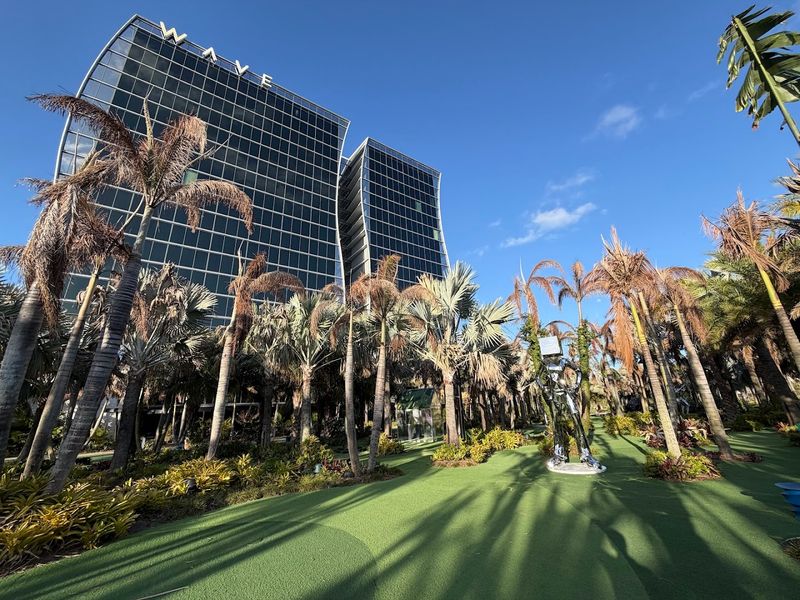
Art gets all the attention, but the landscape here is doing serious heavy lifting. Nearly 300 hand-selected, Florida-grown palm trees were planted in undulating wave patterns that mirror the curvature of the adjacent Wave Hotel.
Six different species of palms were chosen deliberately. Each was selected by arborists, landscape architects, and art curators working together to make sure the greenery enhanced the sculptures rather than competing with them.
Fragrant shrubs like ylang-ylang, gardenia, and night-blooming jasmine are woven throughout the garden. Climbing vines add texture and softness to the harder edges of the bronze and stone works nearby.
The result is a landscape that feels both curated and natural at the same time. Paths meander rather than march, encouraging slow exploration over efficient transit from point A to point B.
Small informational signs explain the plant life alongside the art. Visitors leave with knowledge about Florida’s botanical diversity as well as its art scene, which is a surprisingly satisfying combination for a free afternoon outing.
After Sunset, Everything Changes
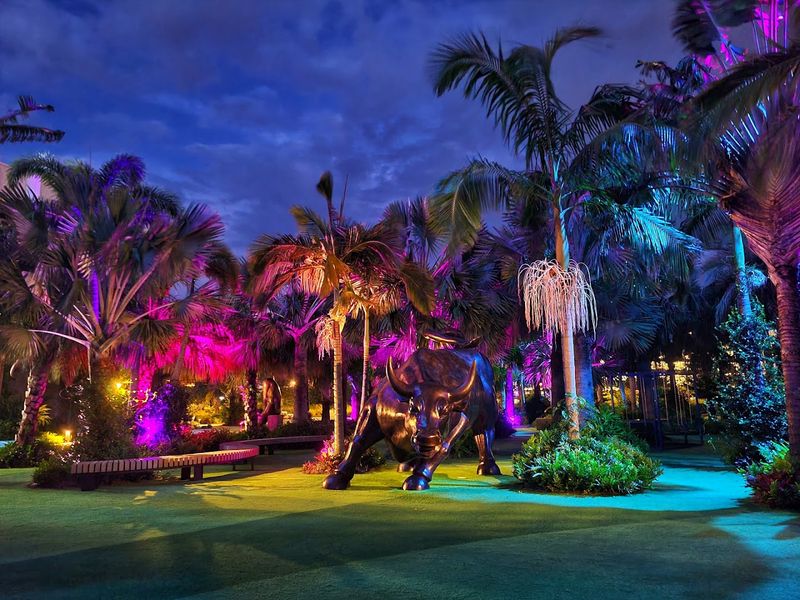
Daytime visits are lovely, but the garden saves its most dramatic performance for after the sun goes down. Colorful lighting transforms the entire space into something that feels cinematic.
Night-blooming jasmine opens up as evening settles in, filling the air with a scent that is impossible to manufacture artificially. The combination of fragrance and light creates a sensory experience that daytime simply cannot replicate.
Bronze sculptures catch the colored lights differently than they catch sunlight. Shadows deepen, contours sharpen, and familiar pieces take on entirely new personalities under the evening glow.
Florida evenings carry their own kind of magic, especially in a space designed with this much intention. A warm breeze moves through the palms, and the garden feels like it belongs to a completely different world than the busy roads nearby.
Visitors who arrive at dusk often stay longer than planned. The transition from golden hour to full night is gradual and gorgeous, and the garden handles every stage of it beautifully.
Accessibility Without Compromise
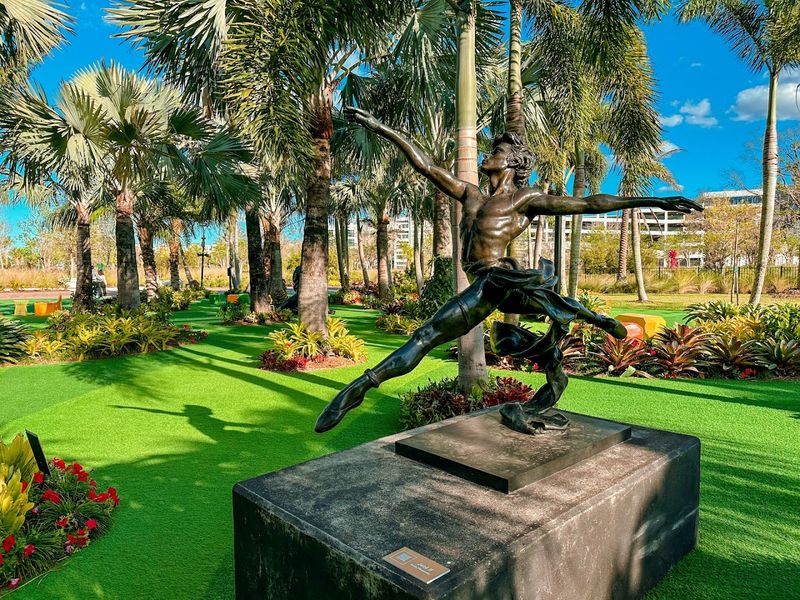
Great art should be for everyone, and this garden actually means it. Smooth, paved walkways run throughout the entire space, making it fully wheelchair accessible without sacrificing any of the visual experience.
Benches appear regularly along the paths, tucked under the shade of the palm canopy. Shaded rest stops are spaced thoughtfully, which matters enormously in a Florida climate that does not always cooperate with outdoor plans.
Dogs are welcome here too. Leashed pets join their owners on morning and afternoon walks, adding a relaxed, neighborhood-park energy to what could otherwise feel like a formal cultural institution.
Admission is free every single day, which removes one of the biggest barriers to art access. Families, solo visitors, couples, and groups of friends all arrive on equal footing with no ticket price determining who gets to experience the collection.
Parking is available in the Wave Hotel garage at no charge. Getting here is straightforward, and the staff inside the hotel are reportedly gracious and helpful to anyone navigating the space for the first time.
Photography Heaven With Natural Backdrops
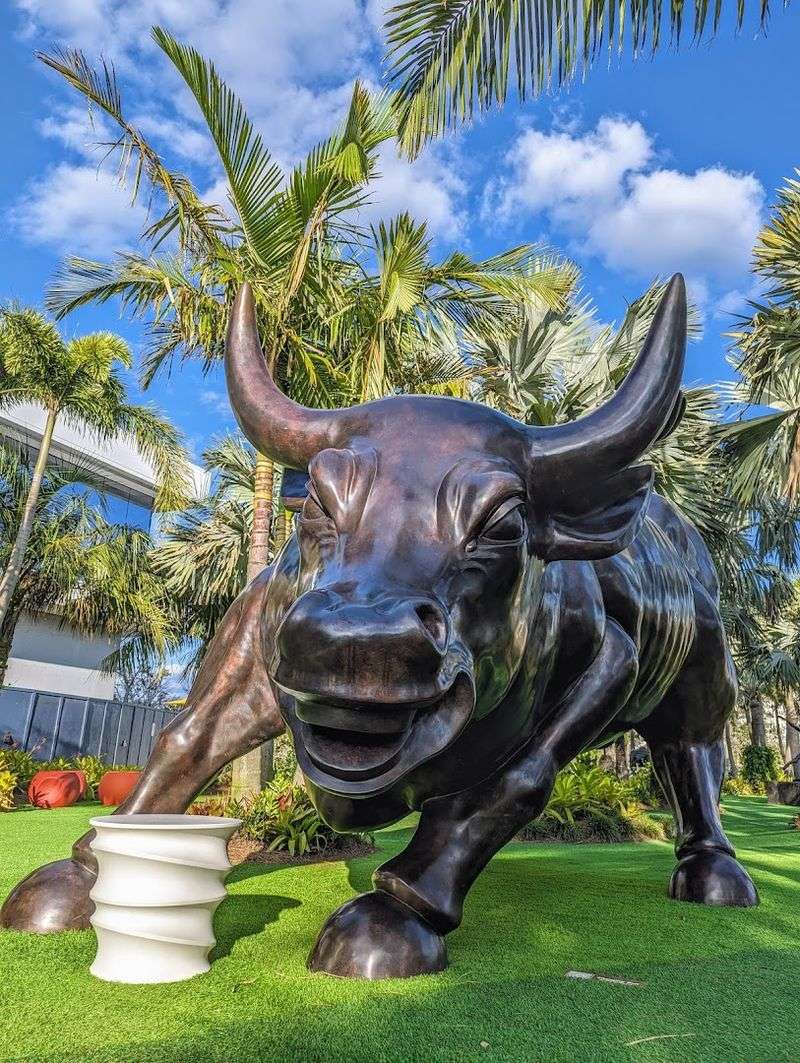
Every corner of this garden was practically designed with a camera in mind. The combination of dramatic sculptures, swaying palms, and carefully planned lighting creates compositions that require almost no effort to make look stunning.
Golden hour here is particularly spectacular. The warm orange and pink tones of a Florida sunset reflect off bronze surfaces in ways that professional photographers actively travel to capture.
Casual visitors with smartphones leave with images that look professionally staged. The garden’s meandering paths reveal new angles and unexpected framing opportunities at almost every turn.
Sculptures like the Charging Bull and Botero’s Leda and the Swan are natural focal points, but the quieter pieces reward patience. Finding a less obvious sculpture tucked between two palms and capturing it in the right light feels like a small personal victory.
The garden also draws artists who bring sketchbooks rather than cameras. Sitting with a piece for an extended time reveals details that a quick photograph misses entirely, and the atmosphere encourages that kind of slow, attentive looking.
Why This Place Stays With You After You Leave
Some places are enjoyable while you are there and forgotten by dinner. This garden is not one of those places.
Visitors consistently describe leaving with a lingering sense of calm that follows them for the rest of the day.
The combination of art, nature, fragrance, and silence creates something that is hard to categorize. It is not quite a museum, not quite a park, and not quite a hotel amenity.
It occupies its own category entirely.
Florida has built a reputation on spectacle, on big rides and loud entertainment and non-stop stimulation. This garden pushes back against all of that without making a single argument.
It simply exists as an alternative.
The fact that it is free amplifies its impact. There is no transaction to process, no value equation to calculate.
Visitors arrive, wander, feel something, and leave without owing anything.
That kind of experience is increasingly rare. The Lake Nona Sculpture Garden offers it freely, consistently, and beautifully, which is exactly why people keep coming back long after their first visit.