
This Breathtaking Coastal Drive In Oregon Is Packed With Pull-Over-Worthy Views
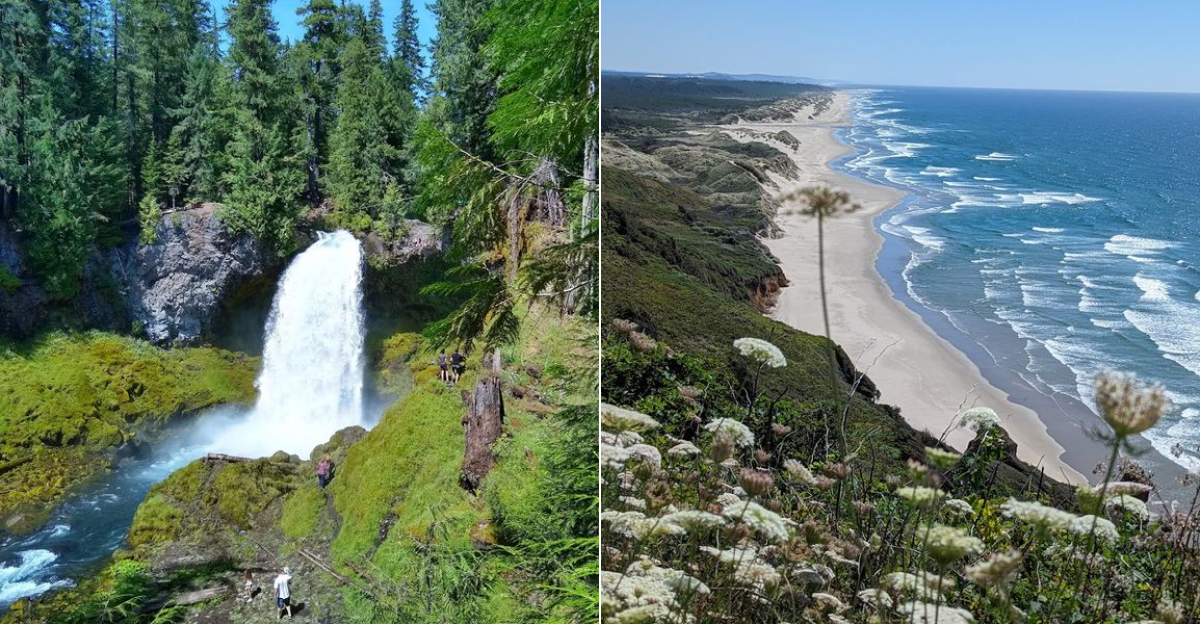
Keep the plans loose and give yourself more time than seems necessary. Oregon turns this coastal drive into a rolling adventure that feels bigger, wilder, and more unforgettable with every mile.
A great coastal drive should make the clock feel useless. In Oregon, this legendary highway gives travelers cliffs, beaches, sea stacks, whales, dunes, bridges, and more reasons to stop than anyone can count.
The fun is that every stretch has its own personality. Who would not want a road trip where puffins, lighthouses, tidepools, whale watching, and wild ocean views keep showing up one after another?
This is not a route for rushing from point to point. The best moments happen when you pull over, wander a little, and let the Pacific do all the showing off.
Haystack Rock At Cannon Beach
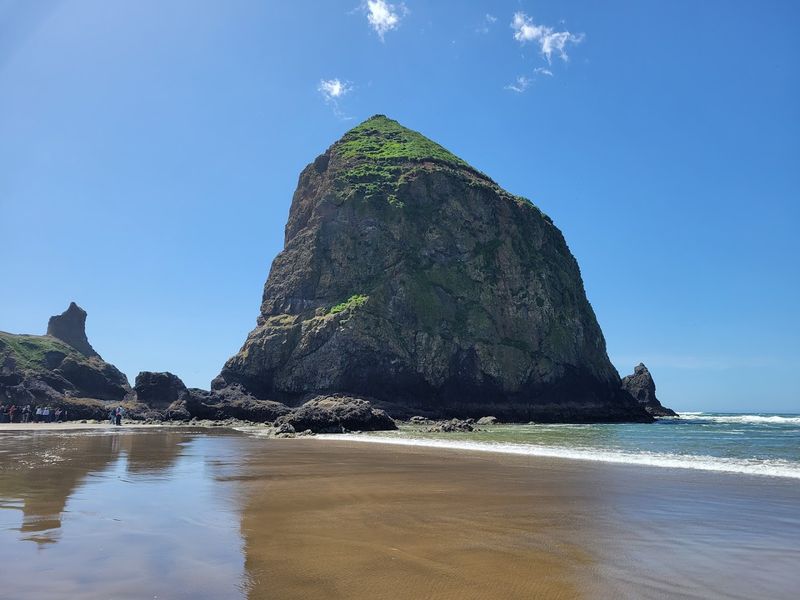
Standing 235 feet tall and rising straight out of the ocean, Haystack Rock is the kind of sight that makes you forget you were ever in a hurry. This massive basalt monolith sits right on the shoreline at Cannon Beach, and it is one of the most photographed spots in all of Oregon.
At low tide, the rock’s base becomes a living science exhibit. Tidal pools filled with sea stars, anemones, and hermit crabs appear right at your feet.
Bring the kids or just your curiosity, because the pool life here is genuinely fascinating.
Puffins nest on the rock each spring and summer, making it a favorite spot for birdwatchers. Binoculars are a smart addition to your car bag for this stop.
The beach itself is wide, clean, and open to everyone, since all Oregon beaches are free to the public.
Cannon Beach sits along U.S. Route 101 on the northern Oregon coast, just about 80 miles from Portland.
The town behind the beach is charming, with local shops and bakeries worth a wander. Can you really drive past a 235-foot ocean rock without stopping?
Probably not, and you should not even try.
Ecola State Park Views
Some viewpoints make you gasp. Ecola State Park is one of them.
Perched on a forested headland just north of Cannon Beach, this park delivers some of the most sweeping ocean panoramas anywhere on the Oregon Coast Highway.
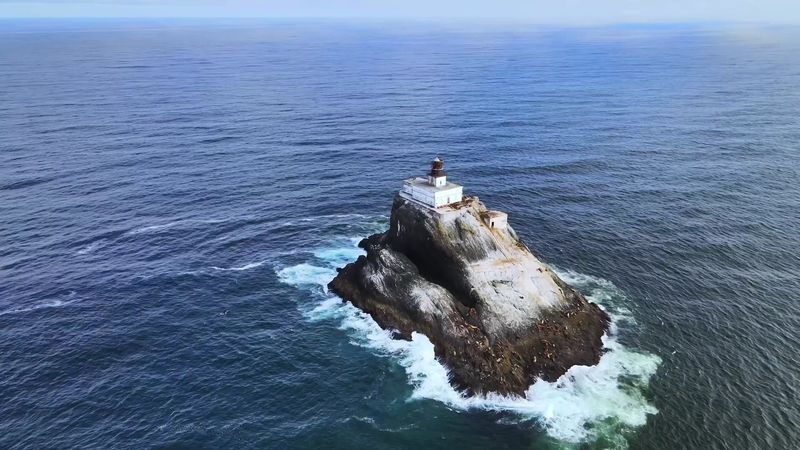
From the main overlook, you can spot Tillamook Rock Lighthouse sitting alone on a basalt island about a mile offshore. That lighthouse was built in 1881 and took workers more than a year to complete in brutal ocean conditions.
It is a tough little structure with a serious backstory.
The park has several hiking trails that wind through old-growth Sitka spruce forests before opening up to dramatic cliff-edge views. The contrast between the dark green forest and the deep blue Pacific is something a camera barely captures well enough.
Do yourself a favor and linger here longer than you planned.
Wildlife sightings are common at Ecola, from gray whales offshore to Roosevelt elk wandering the meadows near the parking area. The park entrance fee is small, and the payoff is enormous.
How often do you get forest, ocean, wildlife, and history all in one pull-off? At Ecola State Park, that is just a regular Tuesday.
Cape Perpetua’s Geological Wonders
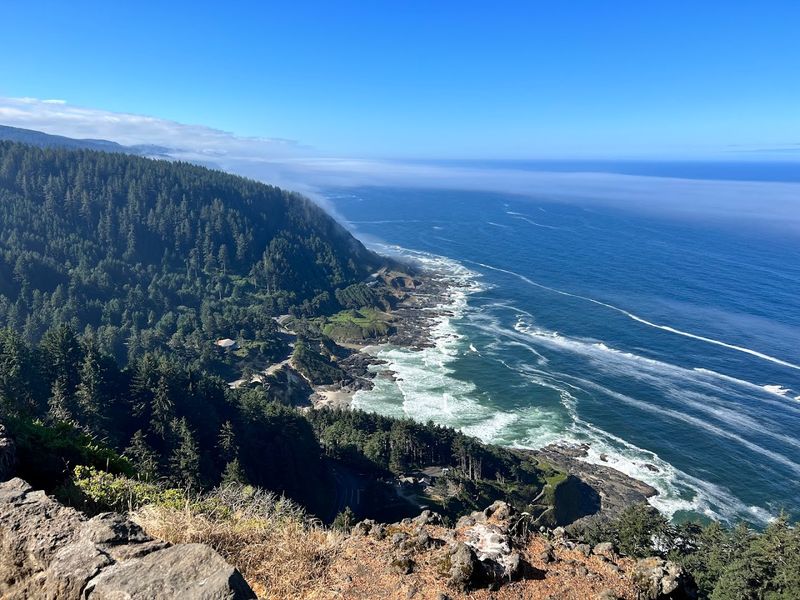
Cape Perpetua is where the Oregon Coast gets truly wild. Located along U.S.
Route 101 near Yachats on the central Oregon coast, this area sits at the highest driveable viewpoint on the entire Oregon coastline, reaching about 800 feet above sea level.
From the summit, the Pacific Ocean spreads out in every direction like an endless blue canvas. On clear days, you can see for miles in both directions along the coast.
It is the kind of view that resets your brain completely.
Down at the waterline, the geological show really begins. Thor’s Well is a natural rock hole that swallows incoming waves in a dramatic rush of white water, especially impressive during high tide.
Nearby, the Devil’s Churn sends ocean water crashing into a narrow basalt channel with a roar you can feel in your chest.
The Spouting Horn, another nearby formation, shoots water upward through a rock opening like a natural fountain. Visiting during a high tide or stormy swell turns these features into pure spectacle.
Have you ever watched the ocean literally disappear into the ground? Thor’s Well will show you exactly how that works, and it is every bit as dramatic as it sounds.
Samuel H. Boardman Scenic Corridor
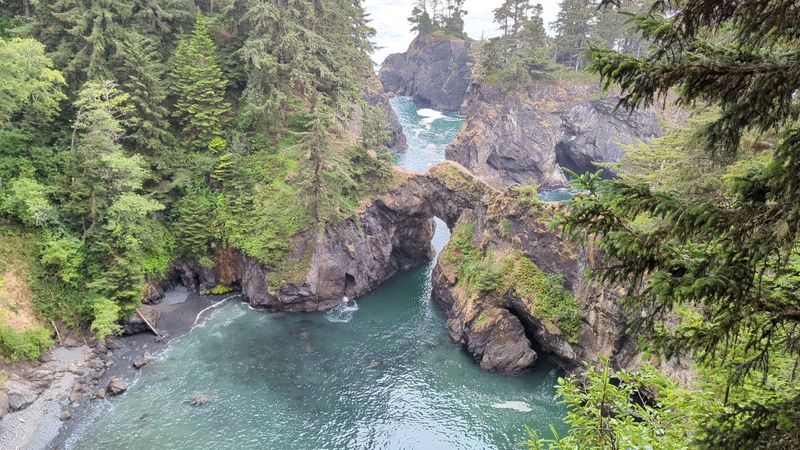
Near Brookings in southern Oregon, a 12-mile stretch of U.S. Route 101 runs through what many people call the most dramatic section of the entire Oregon Coast Highway.
The Samuel H. Boardman State Scenic Corridor is packed with pullouts, and every single one earns its spot on the map.
Arch Rock and Natural Bridges are two of the corridor’s standout formations. These ancient sea-carved structures rise from the water with a kind of quiet confidence that makes you stop mid-sentence.
The cove beaches tucked below the cliffs are tiny, remote, and look like something from a postcard that does not quite seem real.
Trails connect many of the viewpoints along the corridor, so hikers can link several stops together on foot for a more immersive experience. The Thomas Creek Bridge, found within the corridor, is the highest bridge in Oregon at 345 feet above the creek below.
That is a number worth pausing on for a second.
The southern Oregon coast gets fewer crowds than the north, which means more breathing room at these viewpoints. Sunsets here paint the sea stacks in shades of orange and pink that feel almost unfair to witness alone.
Why rush through 12 miles that took millions of years to create? Slow down and let Boardman do its thing.
Yaquina Head Lighthouse And Tidepools
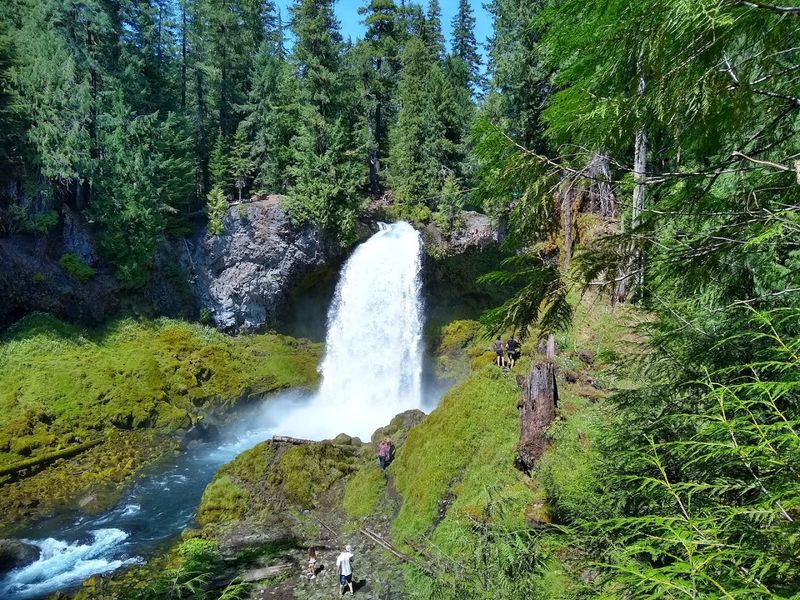
At 93 feet tall, the Yaquina Head Lighthouse is the tallest lighthouse in Oregon, and it has been guiding ships since 1873. It stands on a basalt headland just north of Newport, jutting out into the Pacific like a proud exclamation point at the end of a long sentence.
The Yaquina Head Outstanding Natural Area surrounds the lighthouse with some of the best accessible tidepools on the entire coast. Cobblestone Cove, just below the headland, is carpeted with sea stars, urchins, chitons, and hermit crabs.
Interpretive signs help visitors understand what they are looking at, making this spot just as educational as it is beautiful.
Harbor seals haul out on the offshore rocks year-round, and gray whales pass through during their migration between November and June. Bring binoculars and patience, because wildlife here moves on its own schedule.
Rangers are often on-site to answer questions and help spot whales from the cliff edge.
The lighthouse interior is open for tours, and climbing to the top rewards you with a view that stretches far up and down the coast. Newport itself is a lively coastal town worth exploring after your visit.
Could there be a better combination than a historic lighthouse, wild tidepools, and whale watching all in one afternoon? Yaquina Head says yes, absolutely.
Oregon Dunes National Recreation Area
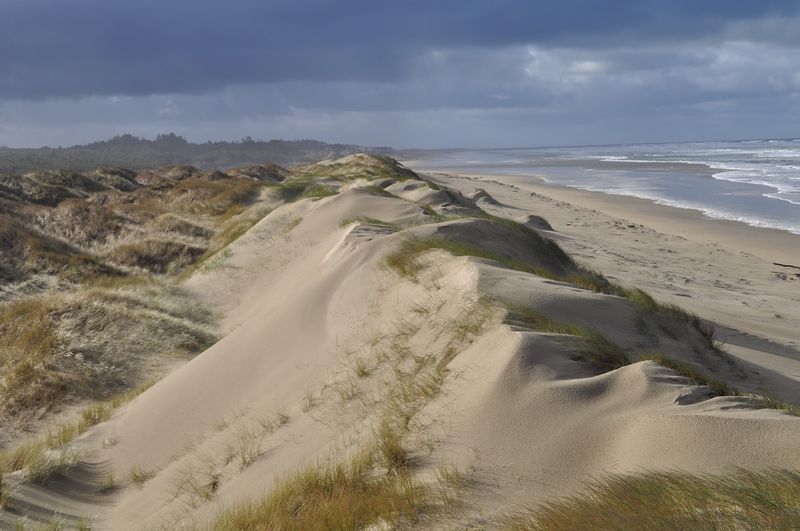
Most people picture cliffs and ocean waves when they think of the Oregon coast. The Oregon Dunes flip that expectation completely.
Stretching for about 40 miles between Florence and Coos Bay, these sand dunes are the largest coastal dunes in North America, with some peaks reaching up to 500 feet high.
The landscape here feels almost surreal, like the Oregon coast took a sharp turn into the Sahara and decided to stay a while. Wind constantly reshapes the dunes, meaning the view from the top is never exactly the same twice.
Hiking up a dune face and then running back down is one of those simple joys that works for every age group.
Off-highway vehicle riding is hugely popular here, and rental outfitters in Florence make it easy to try dune buggies or ATVs even if you have never sat in one before. For those who prefer quiet exploration, there are also peaceful hiking trails through the dunes and into the coastal forests nearby.
Freshwater lakes are scattered throughout the recreation area, offering swimming and fishing spots tucked between the sand hills. Jessie M.
Honeyman Memorial State Park, within the dunes area, is one of Oregon’s most popular camping destinations. Who knew that a drive along the Oregon coast would lead to a surprise desert adventure hiding right next to the ocean?
Depoe Bay Whale Watching
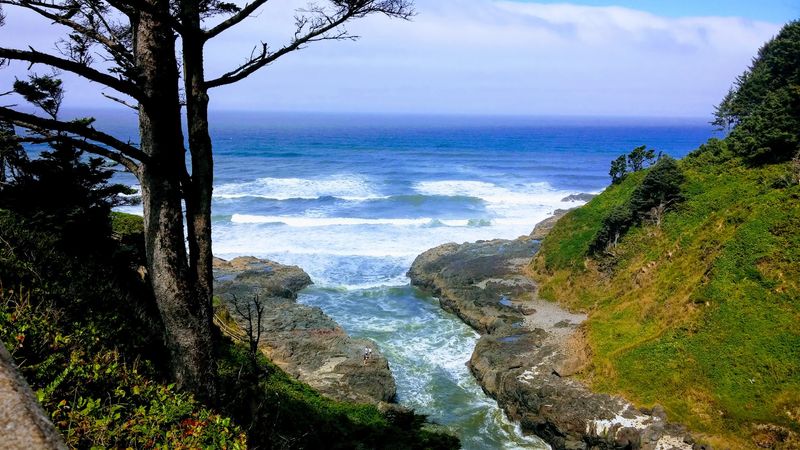
Depoe Bay holds a quirky world record: it is recognized as the world’s smallest navigable harbor, measuring just six acres. But the real draw here is what happens just beyond the harbor walls, where gray whales cruise past in numbers that will genuinely surprise you.
The Oregon coast is one of the best places in the world for land-based whale watching, and Depoe Bay sits right at the center of that action. Gray whales migrate between November and June, and a resident pod actually stays near Depoe Bay year-round.
Spotting a spout from the seawall is a very real possibility on any given day.
The Whale Watching Center, run by Oregon State Parks, is free to visit and staffed by trained volunteers during peak season. They point out whales in real time and explain migration patterns in a way that makes the whole experience click.
Have you ever had a volunteer grab your shoulder and say, right there, and then watched a whale surface 50 feet away? That is Depoe Bay on a good morning.
The town sits right along U.S. Route 101 on the central Oregon coast, making it an easy and very rewarding pull-off.
The blowhole, a natural rock formation that shoots seawater skyward during high swells, adds extra drama to the visit. Depoe Bay is small in size but enormous in personality.
Bandon Beach Rock Formations
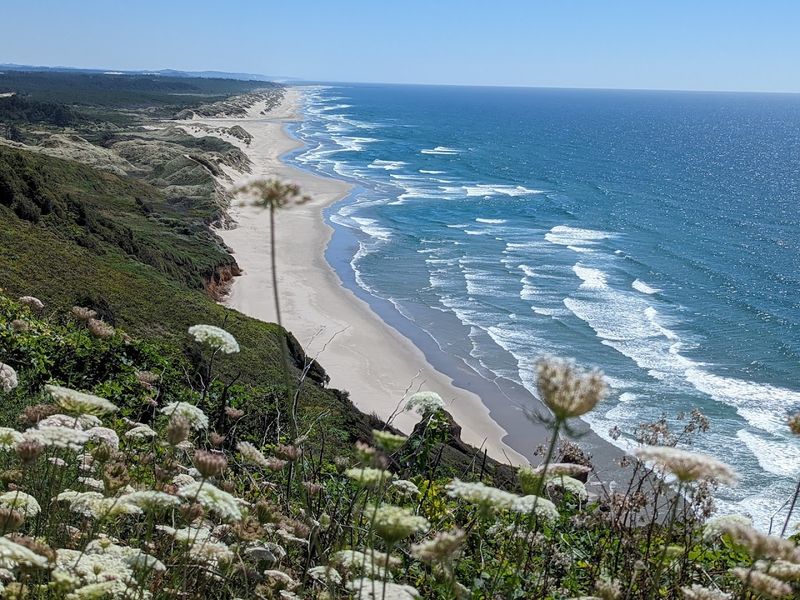
Bandon Beach has a personality all its own. The beach here is lined with a collection of sea stacks and rock formations so striking that photographers and painters return to this spot again and again across all seasons and all weather conditions.
The most famous formation is called the Wizard’s Hat, a pointed rock that earns its nickname every time the light hits it at a low angle. Face Rock, another local landmark, has a profile that local Coquille tribal legend says is a young woman turned to stone while gazing at the stars.
The story adds a layer of meaning to an already atmospheric place.
Low tide at Bandon transforms the beach into a wide, walkable stretch where you can wander right up to the base of these formations. Tide pools appear between the rocks, and the reflections of the sea stacks on the wet sand during golden hour are the kind of images that end up as phone wallpapers for months.
Bandon is located in southern Oregon along U.S. Route 101, and the town itself is worth a slow stroll through its Old Town district.
Cape Arago State Park and Shore Acres State Park are both within a short drive, making Bandon a smart base for exploring this stretch of coast. Ready to meet a wizard on the beach?
Bandon is waiting.