
The Under-The-Radar Automobile Museum In New York Where You’ll Find More Than 50 Rare And Iconic Classic Cars
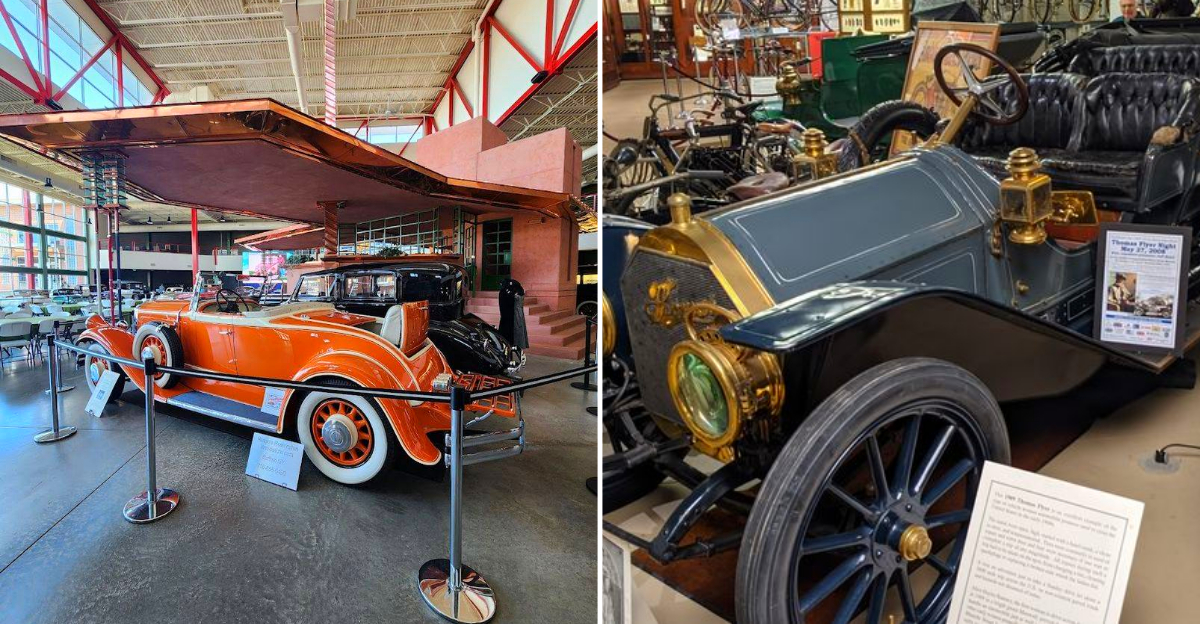
Automotive history feels different when you can walk close enough to study the curves, chrome, dashboards, and design choices that once defined American roads.
One under-the-radar Buffalo museum gives New York travelers that chance with more than 50 rare and iconic vehicles on display at a time, plus motorcycles, bicycles, signs, models, and memorabilia tied to over a century of transportation history.
The collection feels personal because it is. Its founders spent decades gathering pieces that show how style, engineering, ambition, and craftsmanship changed the way people moved.
Only a portion can be shown at once, which makes every visit feel like part of a much larger story. Car lovers will appreciate the details, but even casual visitors can enjoy the nostalgia, color, and sheer personality packed into this overlooked New York stop.
A Collection So Big Only A Fifth Of It Fits Inside
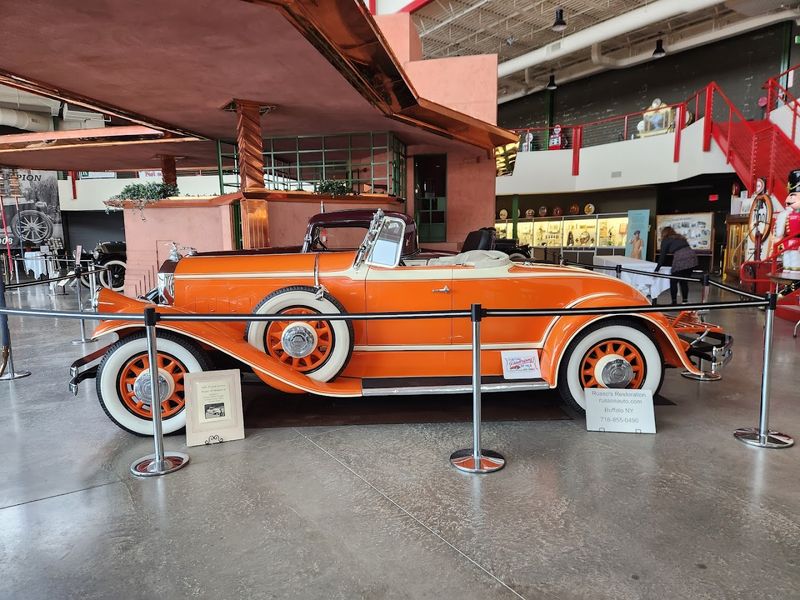
Most museums show you everything they have. The Sandoro collection operates on a completely different level.
Jim and Mary Ann Sandoro spent more than five decades gathering vehicles, memorabilia, and transportation artifacts from across American history. The result is a collection so large that only about 20 percent of it can be on display at any given time.
That means every visit has the potential to feel like a brand new experience. The rotating exhibits keep things fresh, and car enthusiasts who return multiple times often spot vehicles they have never seen before.
On any given day, roughly 40 cars fill the floor, each one carefully preserved and presented.
Car lovers consistently call it one of the most unique collections in the world. The sheer variety of vehicles, from early electric carriages to custom-built Corvettes, makes it genuinely hard to take it all in during a single visit.
Plan for at least two hours if you want to do it justice. The museum opens Thursday through Saturday from 11 AM to 4 PM, and the entry fee is a very reasonable 20 dollars per adult.
Free parking is available right outside, which is always a welcome bonus in a busy city.
The Buffalo Transportation Pierce-Arrow Museum On Michigan Avenue
Right in the heart of downtown Buffalo, at 263 Michigan Ave, Buffalo, NY 14203, sits one of the most underappreciated automotive institutions in the entire country.
The museum takes its name from the Pierce-Arrow Motor Car Company, a legendary brand that was born and built right here in Western New York.
Pierce-Arrow vehicles were once considered among the finest automobiles ever produced in the United States.
What makes the museum special is not just the cars. It tells the story of Buffalo itself, a city that played a massive role in shaping American manufacturing and transportation history.
The exhibits connect vehicles to the broader cultural and industrial story of the region, giving visitors real context rather than just a showroom of pretty machines.
The staff are genuinely knowledgeable and enthusiastic about what they do. Visitors consistently praise the friendly atmosphere and the willingness of guides to open hoods, share stories, and answer questions in depth.
The museum holds a 4.7-star rating, which speaks to the quality of the experience. Reaching the museum is straightforward, and the abundance of nearby parking means getting there is never a hassle.
The 1908 Thomas Flyer That Won A Race Around The World
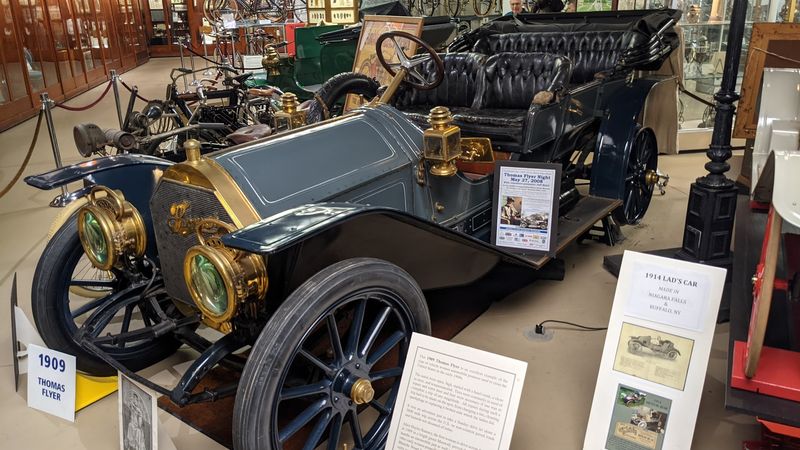
Few cars in American history carry a story as wild as the 1908 Thomas Flyer. Built right here in Buffalo, New York, this car entered one of the most grueling automobile races ever organized: the 1908 New York to Paris Race.
Competitors drove across the United States, crossed to Asia by boat, and then drove through Siberia and Europe to reach the finish line in France.
The Thomas Flyer won. That victory put Buffalo on the global automotive map and cemented the Thomas brand as a serious force in early American manufacturing.
The original winning car now rests inside the museum, giving visitors a direct connection to that extraordinary chapter of history.
Up close, the car is both beautiful and rugged. Its large spoke wheels, open driver’s seat, and bold proportions tell you immediately that it was built for endurance, not comfort.
Seeing the actual vehicle that completed that journey is a genuinely moving experience for anyone who appreciates automotive history. The Thomas Flyer stands as proof that Buffalo was not just participating in the early automobile era.
It was leading it. Do not walk past this one without stopping to read the full story posted alongside it.
Pierce-Arrow Cars Bicycles And The Brand That Started With Birdcages
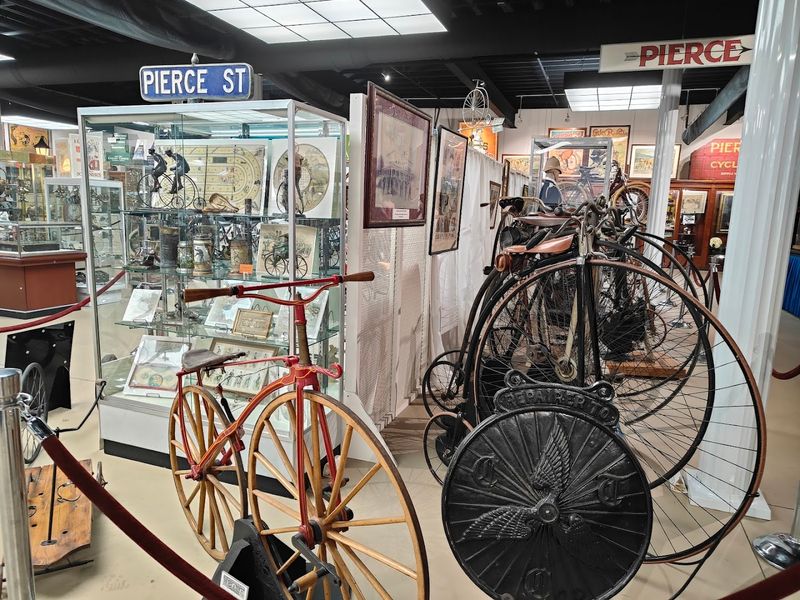
Before Pierce-Arrow built some of the most prestigious automobiles in American history, the company made birdcages. That is not a joke.
The George N. Pierce Company started as a manufacturer of birdcages and icebox parts before pivoting to bicycles in the 1890s and then to automobiles in the early 1900s.
That evolution is one of the most entertaining origin stories in American industry.
The museum traces every chapter of that journey. Vintage Pierce-Arrow bicycles sit alongside early motorcycles and the magnificent automobiles that made the brand famous.
A standout piece is the 1904 Arrow model, one of the brand’s earliest productions, which looks remarkably sophisticated for its era.
Pierce-Arrow also produced trucks and buses, several of which are on display and often overlooked by visitors focused on the passenger cars. The full picture of what Pierce-Arrow built across its history is genuinely impressive.
At its peak, a Pierce-Arrow automobile was considered a symbol of refined American luxury, favored by presidents and industrialists alike.
Seeing the full arc of the brand, from humble birdcage maker to automotive icon, all within a single museum visit, is the kind of storytelling that textbooks rarely manage to pull off this well.
Frank Lloyd Wright Built A Gas Station Inside This Museum
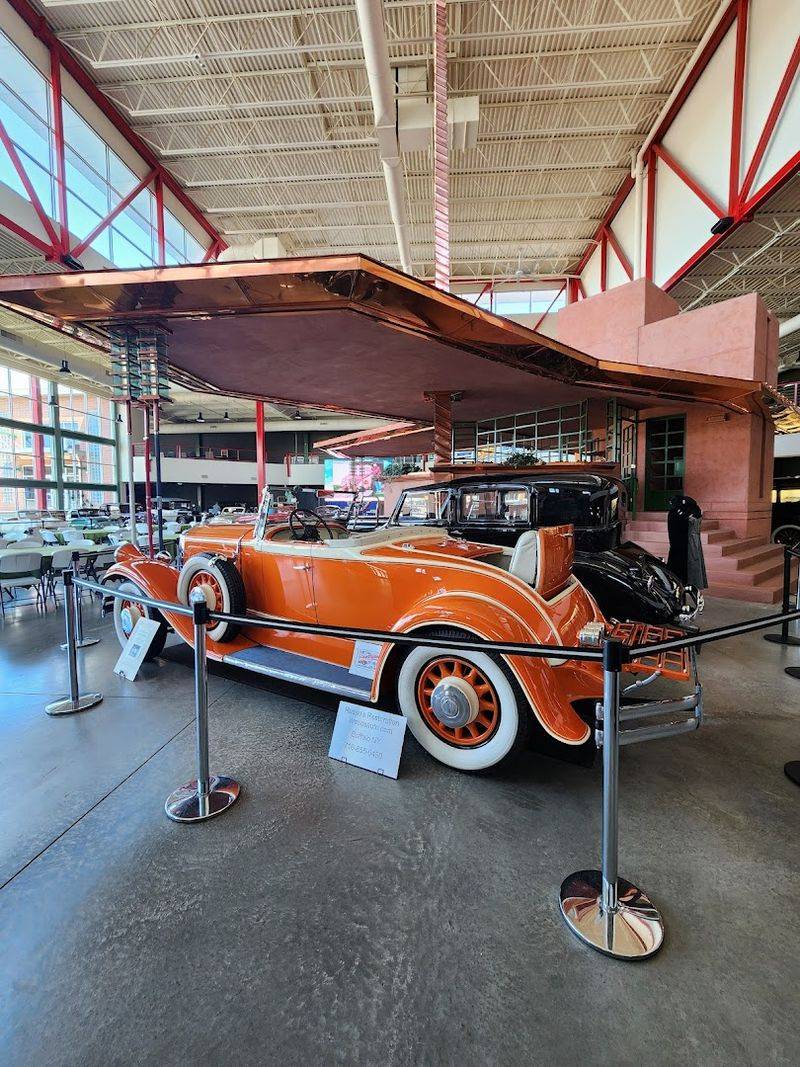
Frank Lloyd Wright designed a gas station in the 1920s that was never built during his lifetime. The Buffalo Transportation Pierce-Arrow Museum changed that.
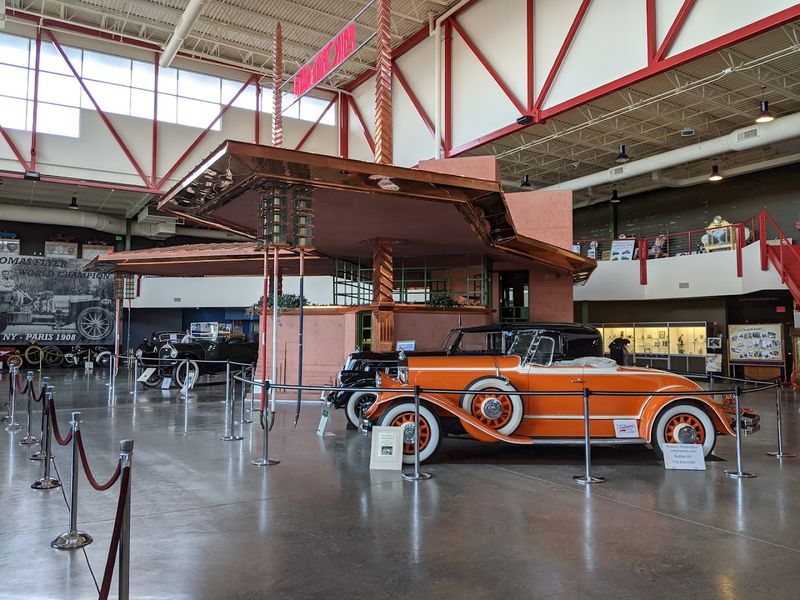
Inside the building stands a full-scale replica of Wright’s Buffalo Filling Station design, constructed faithfully to his original plans and serving as one of the most unexpected architectural highlights in all of New York State.
Wright’s design is unmistakably his. The cantilevered roof, geometric lines, and integration of form and function make it feel both futuristic and timeless at once.
Seeing it built to full scale inside the museum creates a genuinely surreal and wonderful moment for architecture fans and casual visitors alike.
Buffalo already has a strong connection to Frank Lloyd Wright through his famous Darwin Martin House, so discovering another Wright piece here feels like finding a bonus chapter in a great book.
The gas station replica adds a layer of cultural depth to the museum that goes well beyond automotive history.
It bridges the worlds of design, architecture, and American industry in a way that few museums manage. Even visitors who arrived purely for the cars often say the Wright station ends up being one of their favorite parts of the entire experience.
Rare Finds Like The 1948 Playboy And The 1901 Packard Model C
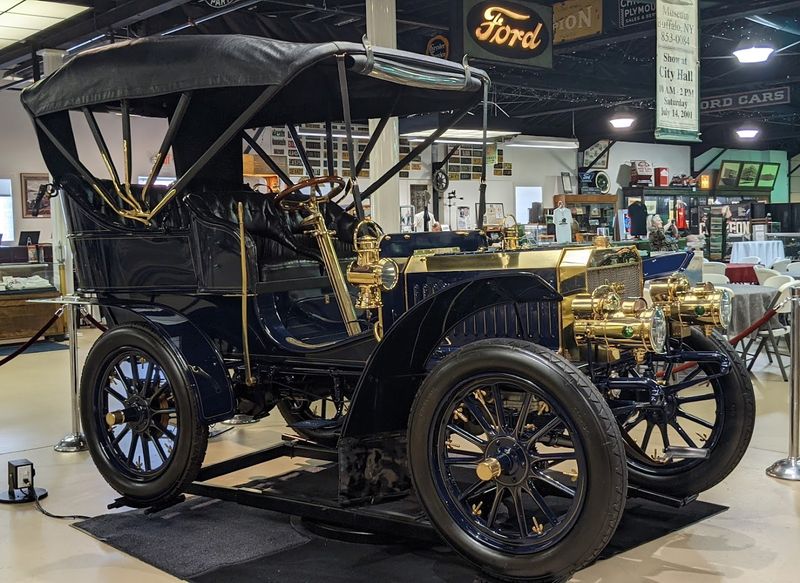
Only 97 of them were ever made. The 1948 Playboy is one of those cars that most people have never heard of, which makes finding one in mint condition inside a museum feel like stumbling onto a secret.
It is a compact sporting car that was ahead of its time in concept but never reached the mass production it deserved.
Right alongside it sits a 1901 Packard Model C, one of the earliest surviving examples of a brand that would go on to define American luxury automobiles for decades.
Finding a car this old in this condition is genuinely rare, and the museum treats it with the reverence it deserves.
Then there is the 1904 Arrow Rear Entry Tonneau, one of only two known to still exist anywhere in the world. Each of these vehicles represents a fragment of automotive history that could easily have been lost forever.
The fact that they are all gathered in one place, carefully preserved and openly displayed, is a testament to the dedication of the Sandoro family and the museum’s curatorial team.
Rare car sightings like these are exactly why serious enthusiasts make the trip to Buffalo specifically to visit this collection.
Custom Corvettes Memorabilia And The Full Spectrum Of American Car Culture
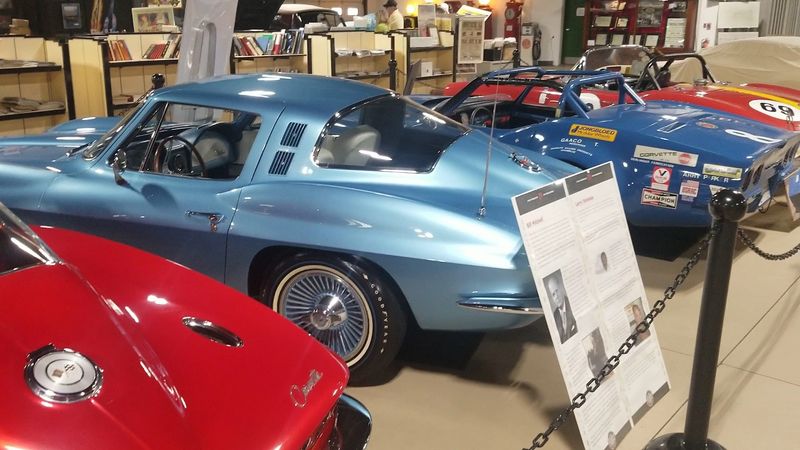
Car culture is about more than just the machines themselves. The Buffalo Transportation Pierce-Arrow Museum understands that completely.
Alongside the historic vehicles, the museum displays an extensive collection of license plates, vintage tools, automotive posters, and cultural artifacts that paint a full picture of what cars meant to American life across different decades.
The Yager Family Collection adds serious star power to the mix. Four custom-built Corvettes anchor this section, including the 1964 New York World’s Fair Mitchell Styling Corvette and the 1969 Elliot Forbes-Robinson racing Corvette.
Each of the two most prominent Corvettes is valued at approximately two million dollars, making them among the most valuable cars in the entire collection.
There is also the 1900 Jell-O Wagon, which connects Buffalo’s automotive history to its broader manufacturing legacy, and the wildly futuristic 1938 Thomas Rocket Car, which looks like it belongs in a science fiction film rather than a museum.
Vintage clothing displays, early electric vehicles from the Buffalo Electric Carriage Corp., and a cheerful mix of quirky exhibits round out the experience.
The museum never takes itself too seriously, and that sense of fun is exactly what keeps visitors exploring every corner for well over an hour.