
Wisconsin Has A 12th-Century Norwegian Church And It Is Hiding On An Island Most Visitors Never Reach
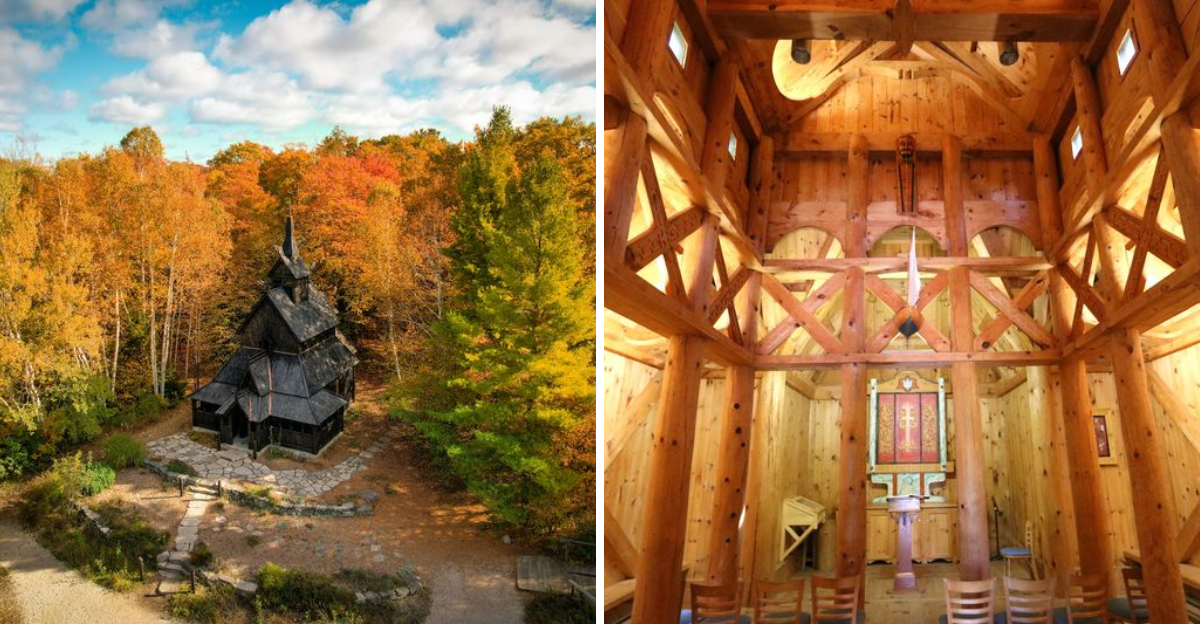
A ferry ride can make a day feel wonderfully unplugged before the real surprise even appears. Far beyond Wisconsin’s busier shoreline stops, a wooden sanctuary waits among quiet trees with steep rooflines, dragon-like details, and the mood of an old Nordic tale.
Step closer and the craftsmanship starts stealing the show. Every carved edge seems to whisper about long winters, sea crossings, and families who carried their heritage to a rugged island community.
Built by hand in the 1990s, the structure honors Scandinavian roots without feeling like a museum behind glass. It feels alive, peaceful, and a little unreal.
Bring curiosity, good walking shoes, and enough battery for photos because this is not your usual church visit.
Modeled After A Medieval Norwegian Church
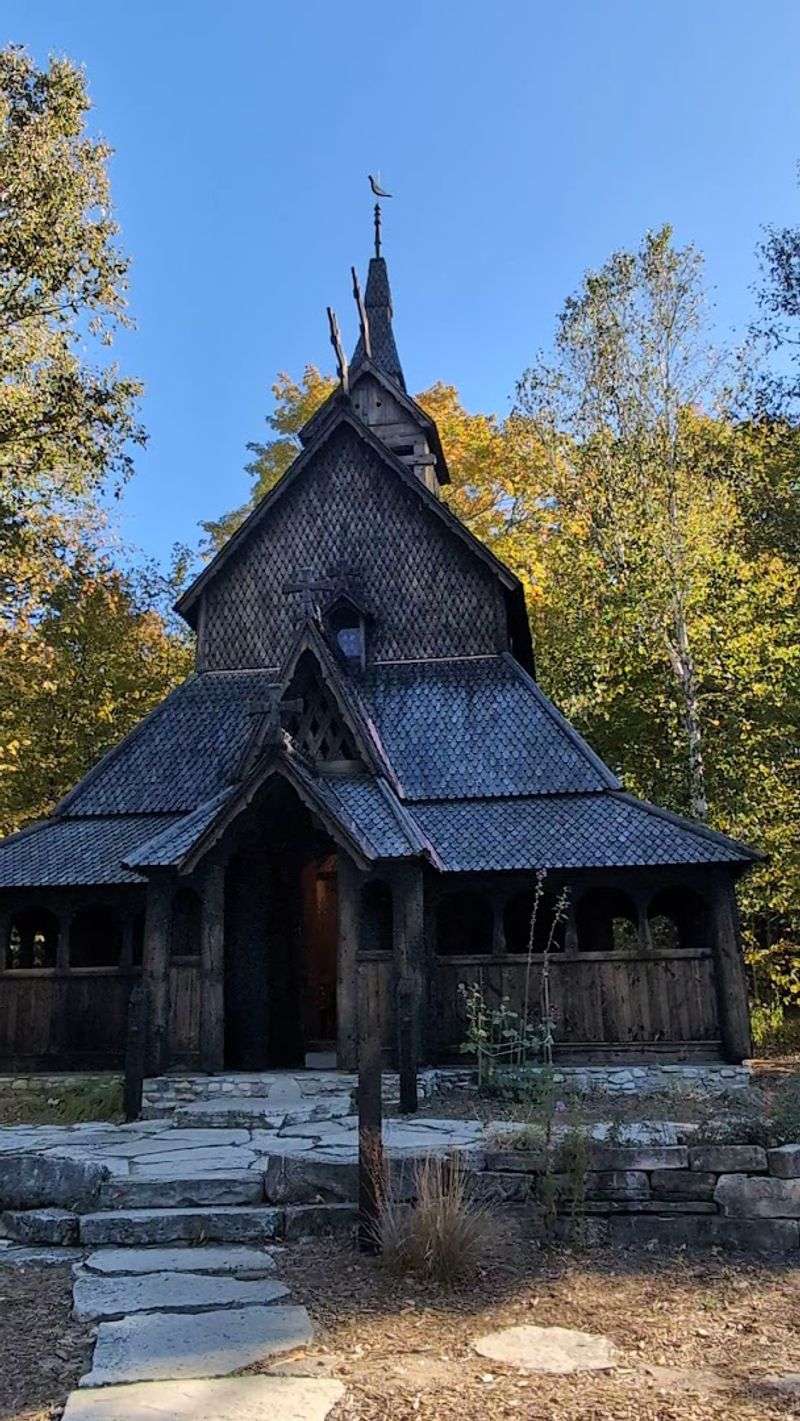
Washington Island’s wooden chapel draws its design directly from the stave churches that dotted Norway’s landscape during the Middle Ages. These structures represented a unique moment in architectural history, combining pagan Viking traditions with Christian faith in buildings that felt both ancient and revolutionary.
The island version captures that same spirit with remarkable accuracy.
Craftsmen studied historical examples to recreate the steep rooflines, overlapping wooden scales, and dramatic vertical lines that defined the originals. Every angle and proportion reflects centuries-old building methods.
The result feels transported across both ocean and time, standing along Town Line Road as if it had always belonged to this Wisconsin forest.
Built To Honor Scandinavian Roots
Scandinavian immigrants shaped Washington Island’s character from its earliest settlement days, bringing traditions and values that still define the community. The Stavkirke stands as a living tribute to those families who crossed the Atlantic and built new lives in an unfamiliar land.
Trinity Lutheran Church spearheaded the project to celebrate that enduring connection.
Construction began in the 1990s with a clear purpose: create something that would honor the past while serving the present. The building connects modern island residents to their ancestral homeland through shared craftsmanship and faith.
It reminds visitors that heritage matters, that remembering where we come from shapes who we become, and that beautiful things can emerge when communities preserve their stories in wood and stone.
Set In A Quiet Forest Grove
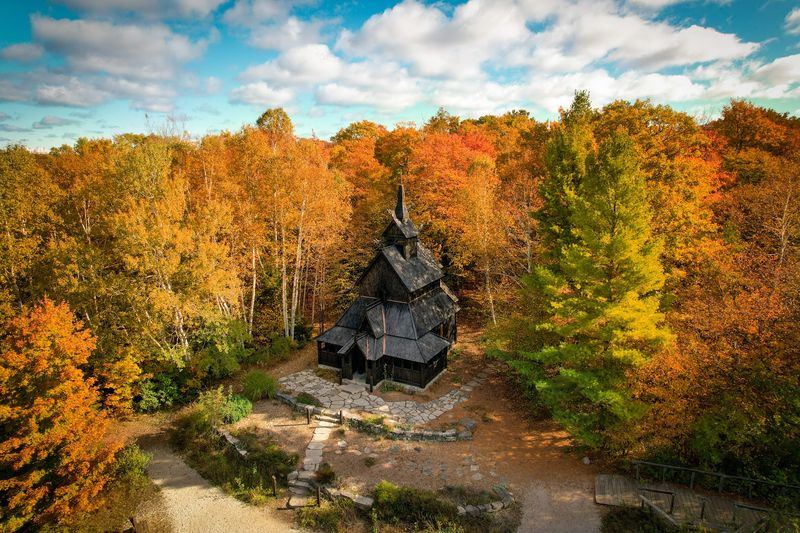
Tall evergreens surround the chapel on all sides, creating a natural cathedral that amplifies the building’s presence. The forest filters sunlight into soft patterns that shift throughout the day, casting the dark timber in constantly changing moods.
Birds provide the only soundtrack beyond the occasional rustle of wind through branches.
The setting was chosen deliberately to echo the remote Norwegian locations where original stave churches were built. Those medieval structures often stood in clearings where forest met farmland, serving scattered rural populations.
Here on Washington Island, the grove offers similar isolation and contemplation. The woods create a buffer from modern life, allowing visitors to step into a space where time moves differently and silence carries weight.
Covered With Thousands Of Wooden Shingles
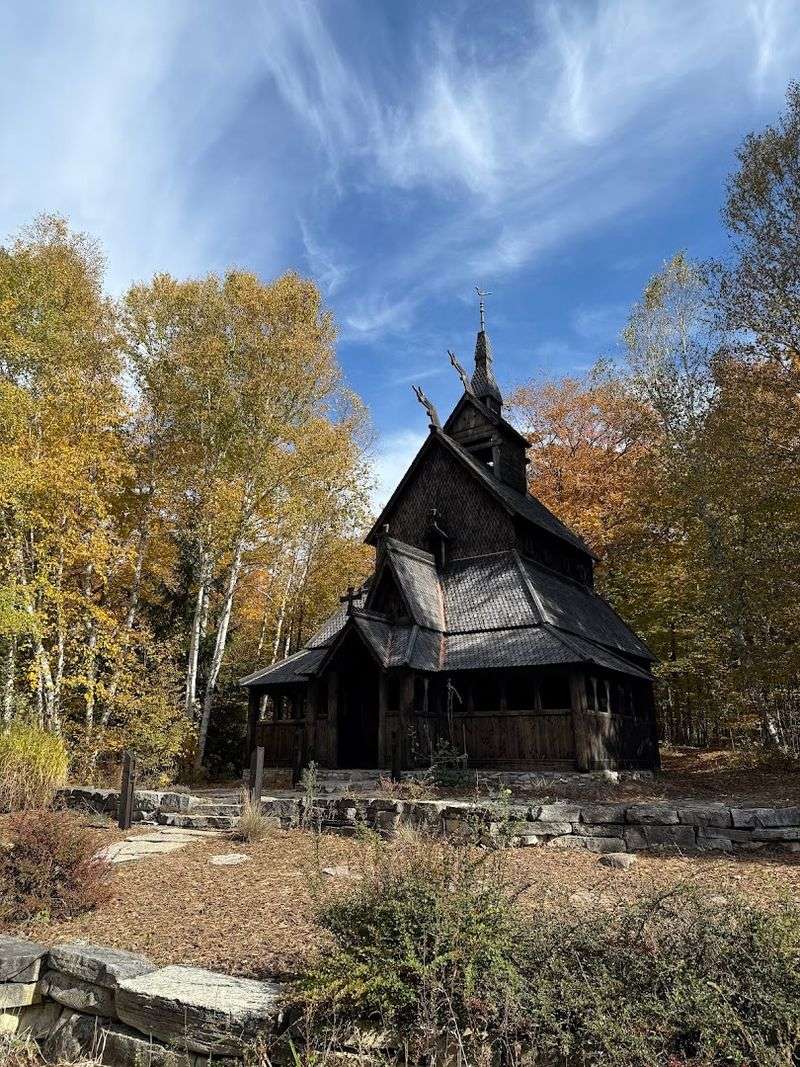
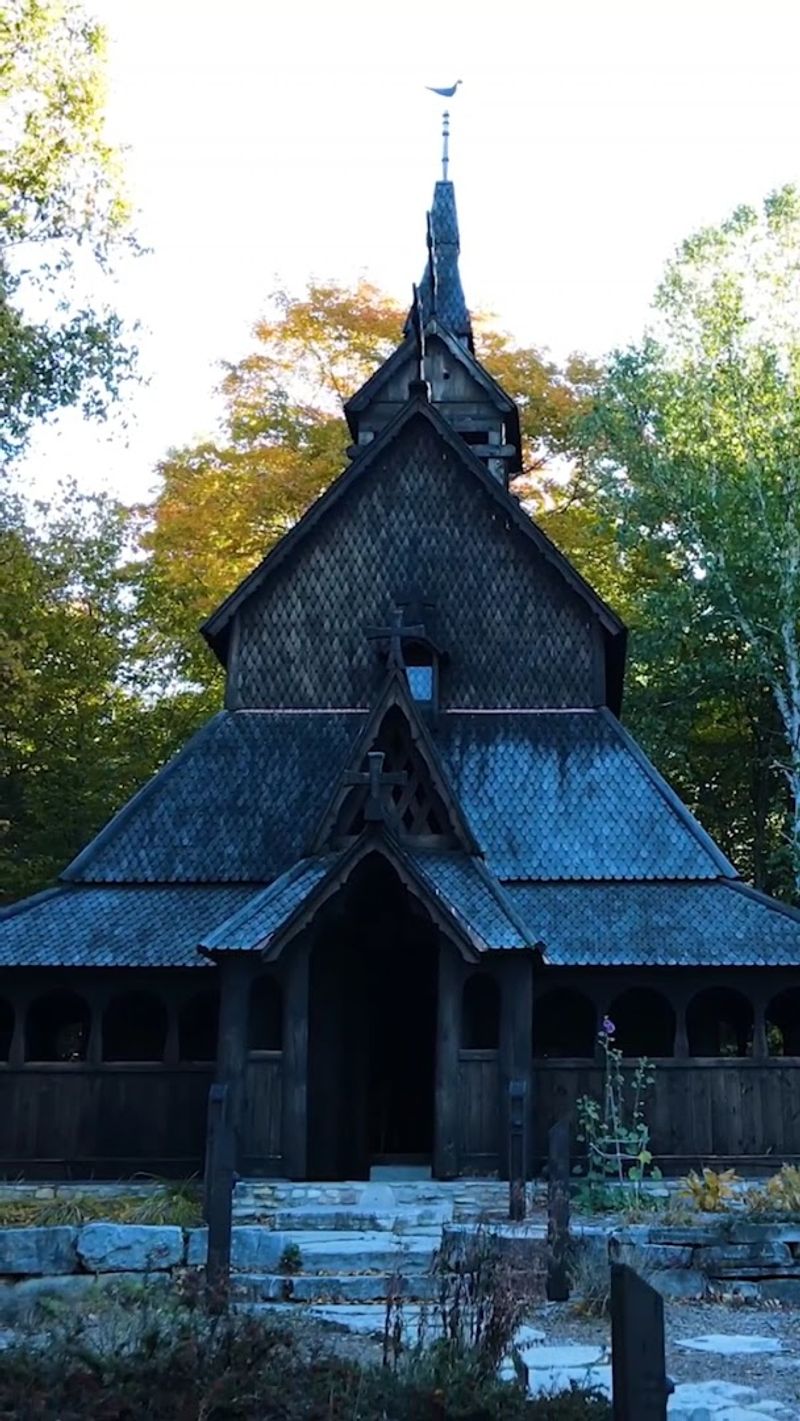
The exterior surface consists of thousands of individual wooden shingles that overlap like fish scales or dragon skin. Each piece was cut and fitted by hand, following techniques that Scandinavian builders perfected over generations.
The shingles create a textured skin that sheds water while allowing the building to breathe and age gracefully.
Time has already begun its work on the wood, darkening the surface to a rich charcoal that makes the structure feel older than its actual years. Rain washes over the shingles without penetrating, snow slides off the steep slopes, and sun slowly transforms the color deeper still.
The effect is both protective and beautiful, proving that functional design often produces the most striking aesthetics when executed with skill and patience.
Shaped By Twelve Tall Wooden Stavs
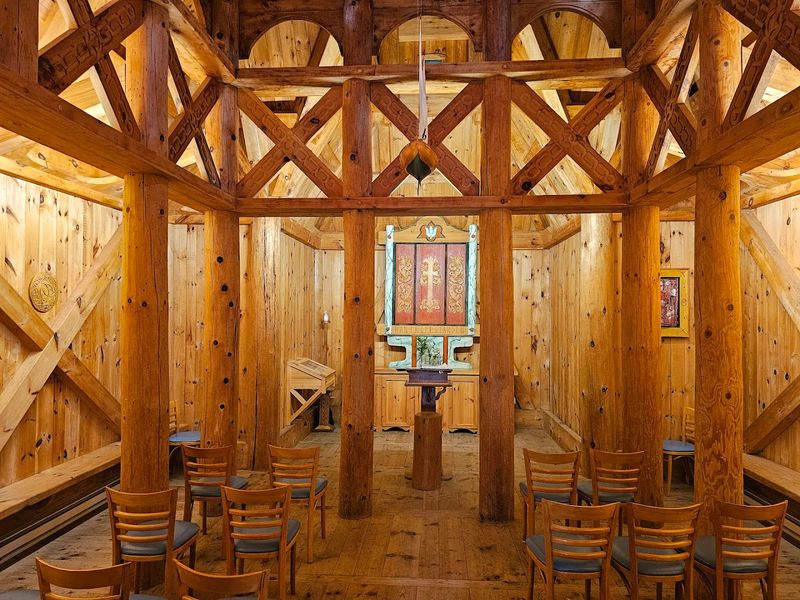
The term stave church comes from the vertical posts that form the building’s skeleton. Twelve massive timbers rise from floor to ceiling inside the Washington Island chapel, each one carefully selected and shaped to bear the structure’s weight.
These stavs represent the twelve apostles in Christian symbolism, adding spiritual meaning to practical engineering.
Traditional builders placed these posts on stone foundations to prevent rot, then joined them with elaborate woodwork that required no metal fasteners. The Washington Island version honors that approach, using wooden pegs and precise joinery throughout.
Standing inside, you can see how the stavs organize the small space, creating rhythm and order. They demonstrate how medieval craftsmen solved structural problems with elegance, turning necessity into art through materials that grew in the surrounding forests.
Decorated With Viking-Style Details
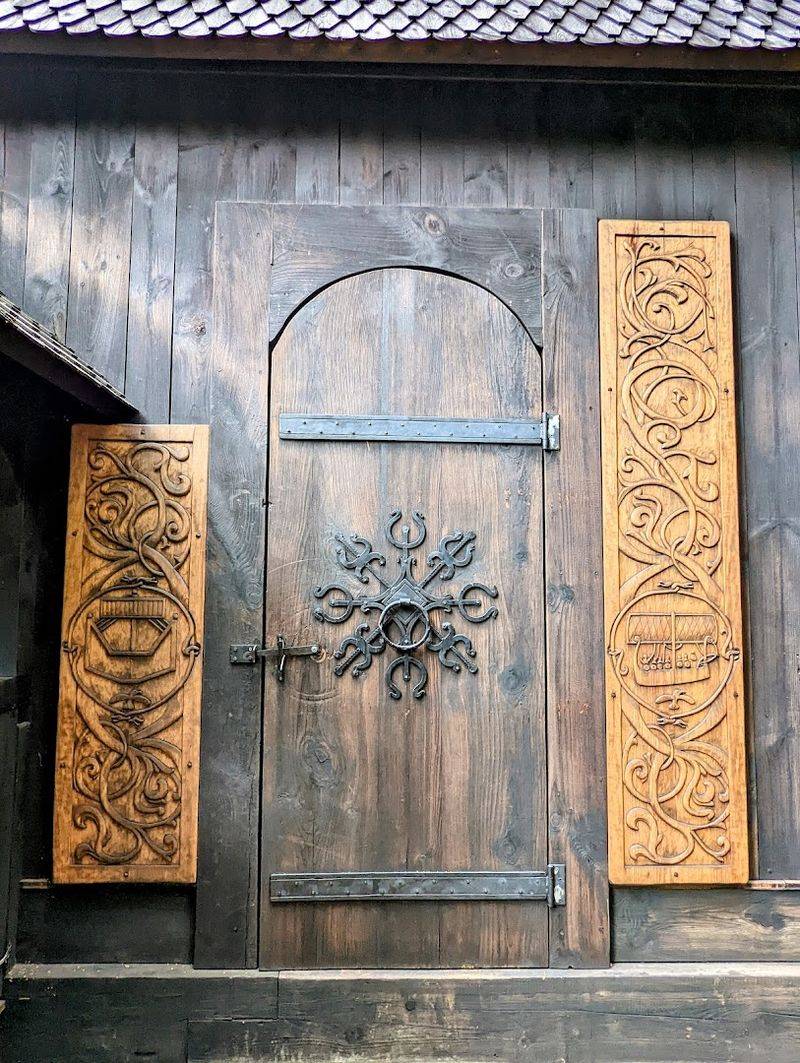
Dragon heads peer from the roofline peaks, their carved features echoing the prow ornaments that once adorned Viking longships. These fierce guardians represent the pagan past that Christianity absorbed rather than erased when it spread through Scandinavia.
The carvings add personality and connection to an earlier worldview that valued strength and protection.
Other Norse-inspired details appear throughout the building in subtle ways. Decorative woodwork incorporates patterns from ancient manuscripts and artifacts.
The craftsmanship celebrates a culture that valued beauty alongside utility, that carved elaborate designs into everyday objects, and that believed good work honored both maker and user. These Viking touches remind visitors that faith traditions layer upon each other, that conversion rarely meant complete abandonment of what came before, and that the best architecture tells complex stories.
Built With Help From Volunteers
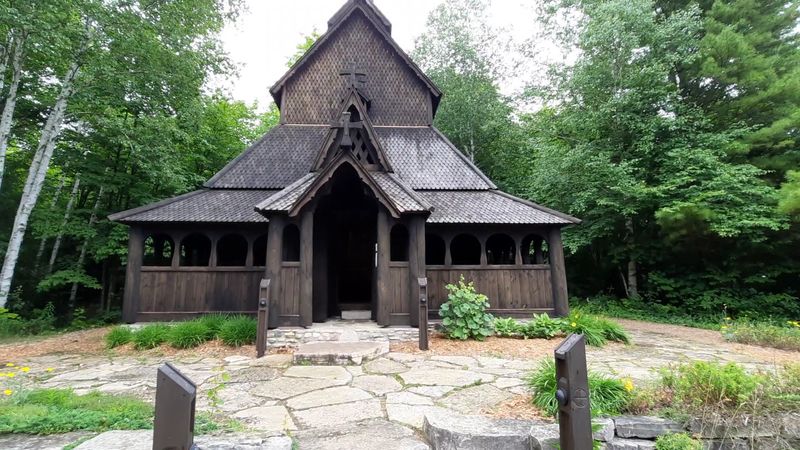
The Stavkirke rose through community effort rather than professional construction crews alone. Volunteers contributed countless hours learning traditional techniques, shaping wood, and assembling pieces under the guidance of skilled craftsmen.
The project became a shared accomplishment that strengthened bonds between participants and deepened their connection to the finished building.
Some volunteers brought carpentry experience while others arrived with willing hands and open minds. They discovered that building with old methods teaches patience and precision in ways modern construction rarely demands.
The work required attention to grain patterns, moisture content, and how wood behaves across seasons. Participants gained skills while creating something larger than themselves, proving that meaningful projects can unite people across different backgrounds when the goal resonates with shared values and heritage.
A Prayer Path Leads Visitors In
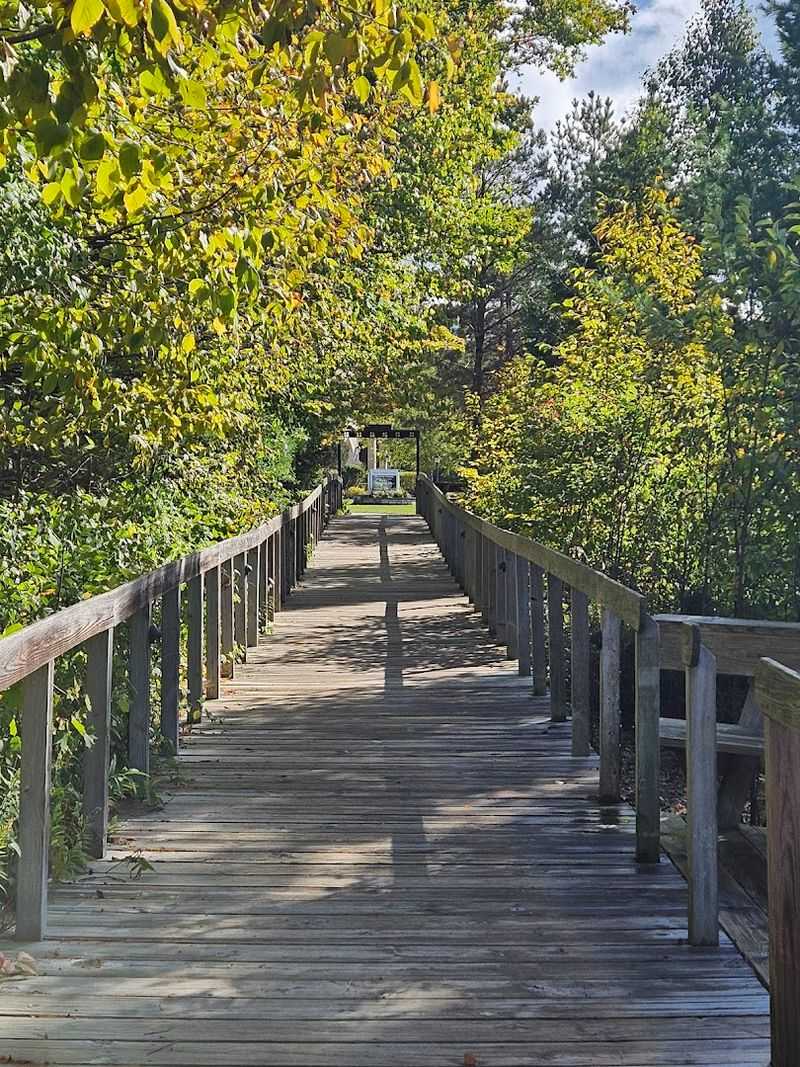
A wooden walkway winds through the trees from the parking area to the chapel entrance, creating a transitional journey that prepares visitors for what awaits. The path was designed for accessibility, allowing people of varying mobility to reach the building comfortably.
Gentle curves follow the natural terrain while maintaining easy grades.
Walking this route shifts your mental state from driving to contemplation. The forest closes in around you, traffic sounds fade, and the dark church gradually reveals itself through the branches.
The approach matters because it establishes rhythm and expectation. By the time you reach the building, you have already begun to slow down and pay attention.
The prayer path demonstrates understanding that sacred spaces need thresholds, that arrival should feel intentional, and that the journey to a destination shapes the experience as much as the destination itself.
The Chapel Feels Small And Peaceful
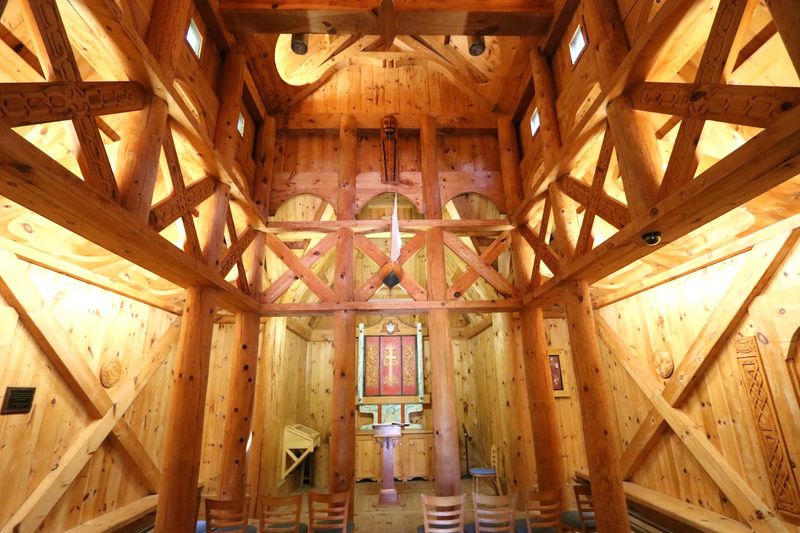
The interior holds perhaps two dozen people comfortably, creating an intimate scale that encourages quiet reflection. Light enters through small windows, illuminating the hand-worked wood surfaces without overwhelming the space.
Simple wooden chairs provide seating while allowing the architecture itself to remain the focus.
The size proves perfect for its purpose. Grand cathedrals inspire awe through soaring spaces, but this chapel works differently.
The compressed dimensions draw attention inward and upward along those twelve tall stavs. Sound behaves differently in the small volume, making whispers feel significant and silence feel full.
Visitors often speak of feeling wrapped or held by the space rather than diminished by it. The peaceful atmosphere emerges from proportions that feel human-scaled, from materials that age gracefully, and from the accumulated quiet of everyone who has paused here before you.
Visitors Can Step Inside For Free
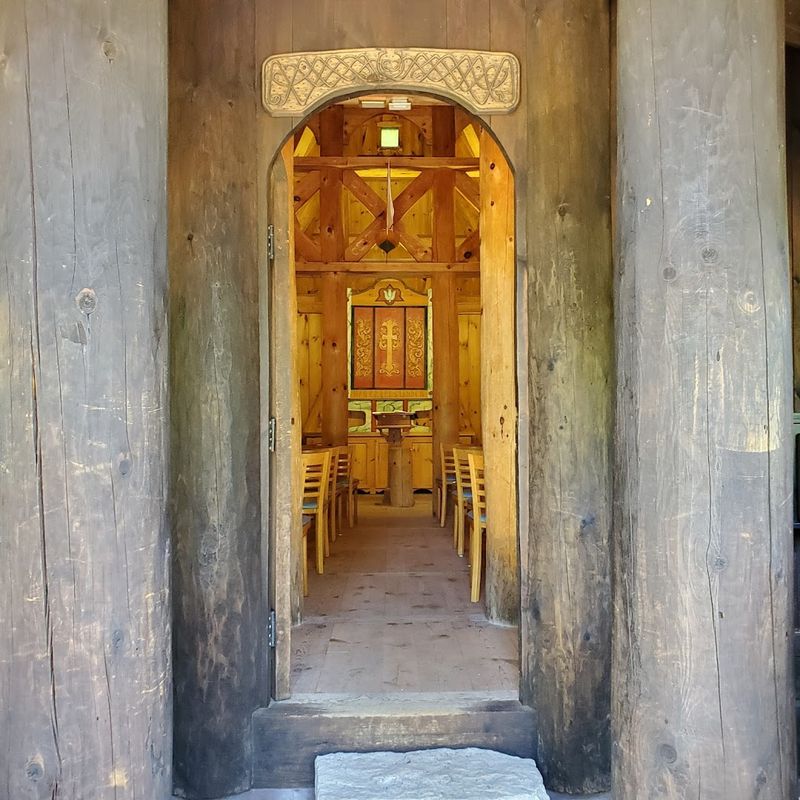
The Stavkirke welcomes visitors without charge, open 24 hours every day of the year. This accessibility reflects both Norwegian tradition and island hospitality.
Churches in Scandinavia have long served as community gathering places available to all, and the Washington Island version continues that practice. The phone number 920-847-2179 provides information for those planning visits.
Free admission removes barriers that might otherwise keep people away. Travelers can stop spontaneously without worrying about tickets or schedules.
Locals can return repeatedly to share the space with visitors or find solitude during off hours. The open-door policy recognizes that meaningful experiences should not require payment, that beauty and peace belong to everyone, and that the best gifts are those given freely.
This approach has built goodwill and brought the chapel into countless travel stories shared by people grateful for such unexpected generosity.
A Labyrinth Adds Another Quiet Stop
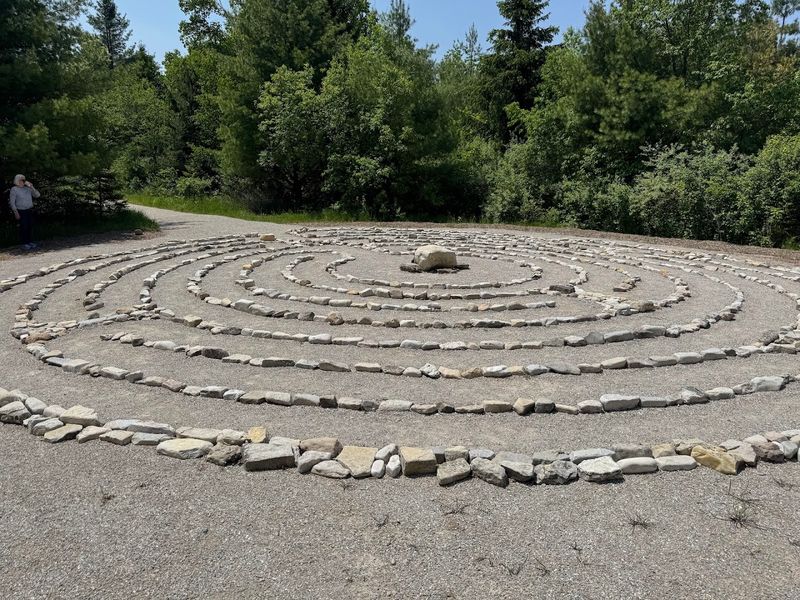
Beyond the chapel, a labyrinth offers another form of contemplative practice. The walking meditation follows a single winding path to a center point and back out again, different from a maze because there are no wrong turns or dead ends.
The pattern invites movement at a deliberate pace, creating space for thought or prayer through physical motion.
Labyrinths have served spiritual seekers across many traditions for thousands of years. The one at Washington Island fits naturally with the Stavkirke’s purpose, providing an outdoor counterpart to the indoor space.
Some visitors walk it before entering the chapel, others afterward, and some skip the building entirely to focus on the labyrinth alone. The combination recognizes that people find peace through different methods, that sacred ground can take many forms, and that offering choices respects the diverse ways humans seek meaning.
It Shows Door County’s Nordic Side
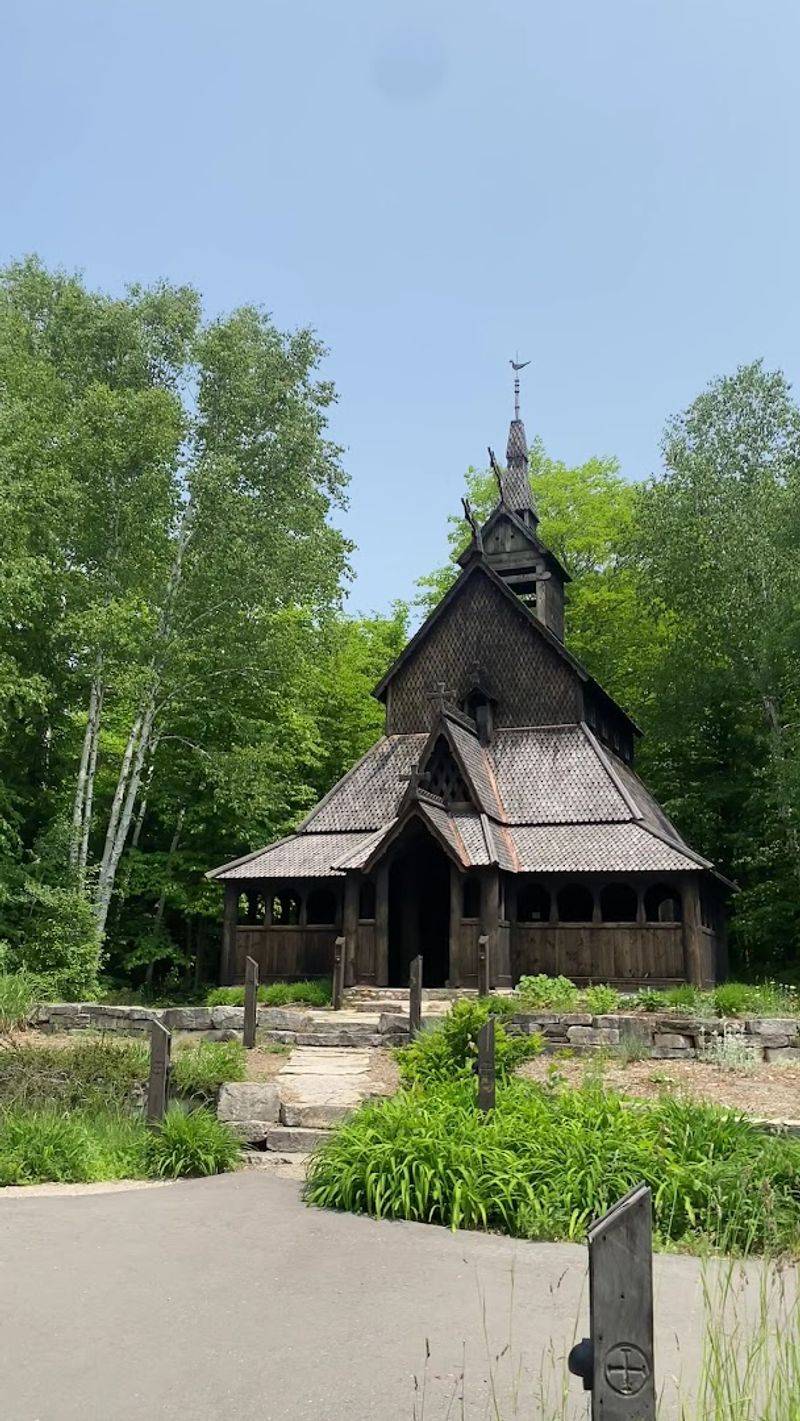
Door County attracts visitors with its cherry orchards, lighthouses, and waterfront villages, but the Stavkirke reveals a deeper cultural layer that many travelers miss. The Nordic influence runs strong through Washington Island’s history, language, and community life.
This wooden church makes that heritage visible and accessible to outsiders curious about the forces that shaped this corner of Wisconsin.
The location at Town Line Road, Washington, WI 54246, requires effort to reach, involving a ferry crossing that separates casual tourists from committed explorers. That journey filters the audience naturally, ensuring that those who arrive have chosen to seek out this particular experience.
The Stavkirke rewards that choice with architecture and atmosphere found nowhere else in the region, proving that Door County’s appeal extends beyond its better-known attractions into quieter corners where culture and craft still matter deeply.