
Discover The Magic Of This Georgia Beach That Changes Character After Dark
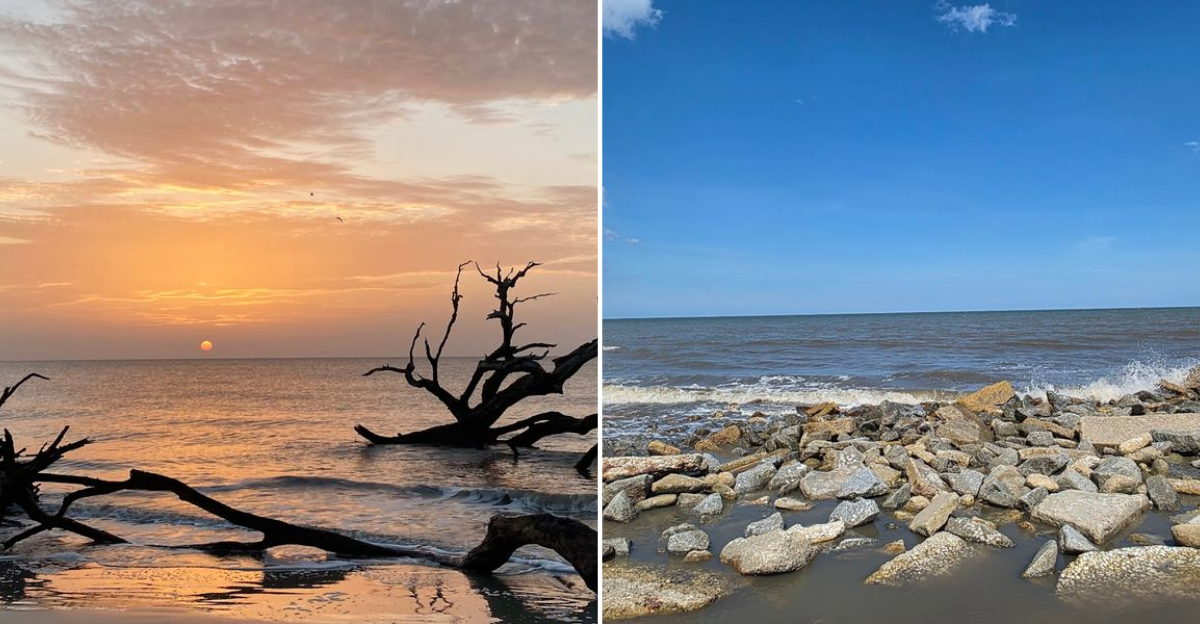
Daylight here behaves the way most beaches do, pleasant and predictable. After sunset, something shifts that no brochure adequately prepares a visitor to expect.
The transformation happens gradually as the crowds thin and the light changes color completely. What felt like an ordinary stretch of sand by afternoon starts revealing a different personality entirely.
Visitors who stay past the usual departure time describe the atmosphere in terms that sound almost contradictory to what they experienced hours earlier. The same shoreline, somehow, becomes a different place.
Georgia’s coastline holds more than one identity, and this beach proves that point more convincingly than anywhere else along it. Daytime visitors see half the story, and the other half waits patiently for whoever decides to stay.
Nighttime Wildlife And Natural Habitats
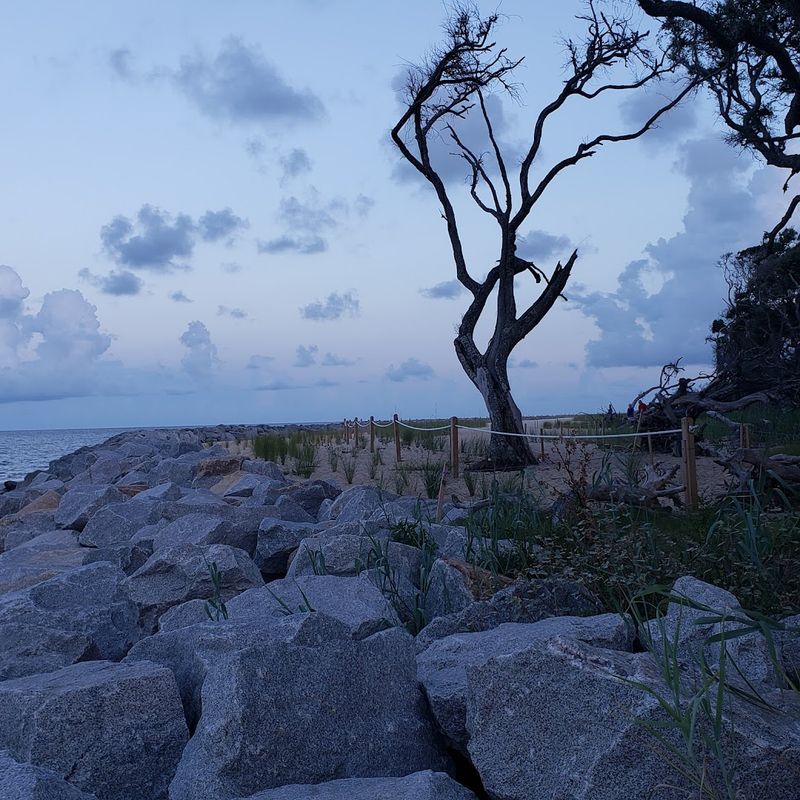
This beach becomes a living, breathing wildlife sanctuary once the sun disappears. Loggerhead sea turtles crawl ashore to nest along this stretch of Jekyll Island shoreline.
That is why there is a strict local ordinance banning bright flashlights on the beach after dark. Only dim red lights are allowed.
Fines apply if you ignore this rule, so take it seriously.
The turtles are not the only ones active at night. Owls call from the tree line.
Bald eagles have been spotted roosting near the driftwood. Ghost crabs dart across the sand so fast you will think your eyes are playing tricks on you.
A protected bird sanctuary runs parallel to the beach, making this corridor especially rich in wildlife. The wooded path leading to the shore feels alive with sound.
Rustling leaves, distant splashing, and the steady hum of insects fill the air. Walking through that path in the dark is genuinely eerie in the best possible way.
Your eyes adjust slowly, and then suddenly the ocean appears in front of you. It is one of those moments that actually stops you in your tracks.
The natural habitat here is protected and respected, which is exactly why it stays so wild and beautiful. Jekyll Island, GA 31527.
Changes In Beach Scenery After Sunset
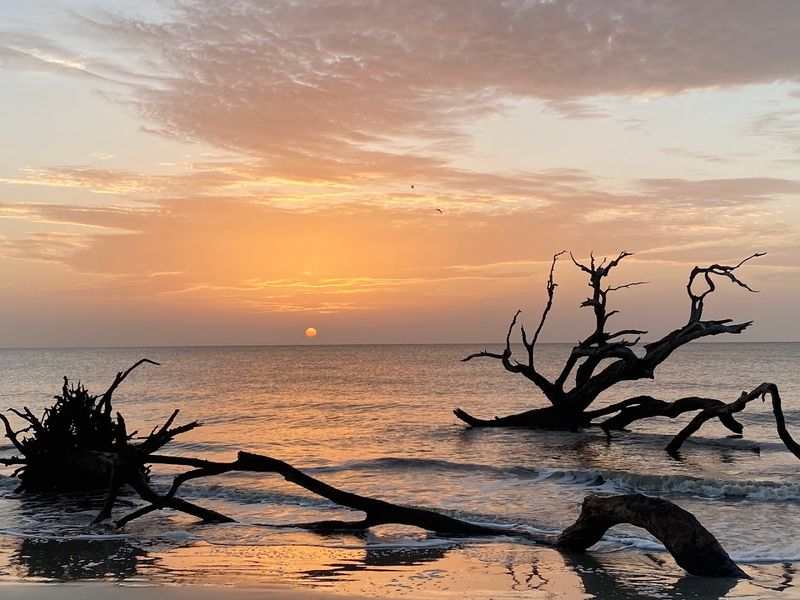
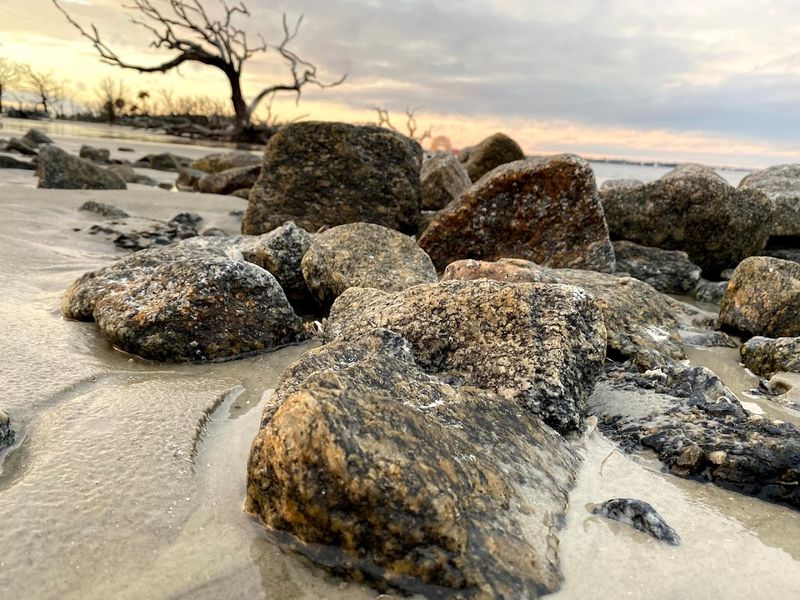
The transformation at Driftwood Beach after sunset is genuinely hard to describe without sounding dramatic. During the day, those massive bleached tree skeletons look striking.
At night, they become something else entirely. Shadows stretch across the sand.
The gnarled branches reach upward like arms frozen in place.
The beach clears out fast after dark. Most visitors leave before sunset, which means you often get the whole place to yourself.
That shift in crowd size completely changes the atmosphere. The noise fades.
The wind picks up. Waves sound louder somehow when fewer people are around.
Decades of coastal erosion created this landscape by pulling a maritime forest into the sea. What remains are the skeletal trunks and root systems of ancient oaks and pines.
High tide covers most of the beach, so low tide is when you see the full dramatic scene. At night, the tide still dictates what is accessible.
Checking a local tide chart before your evening visit is genuinely useful, not optional. The moon reflecting off the wet sand and the pale tree trunks creates a visual that no filter can improve.
The scenery shifts from haunting to almost peaceful depending on where you stand. Every angle looks different.
Every hour brings a new mood. This beach does not stay still, even in the dark.
Stargazing Opportunities Along The Coast
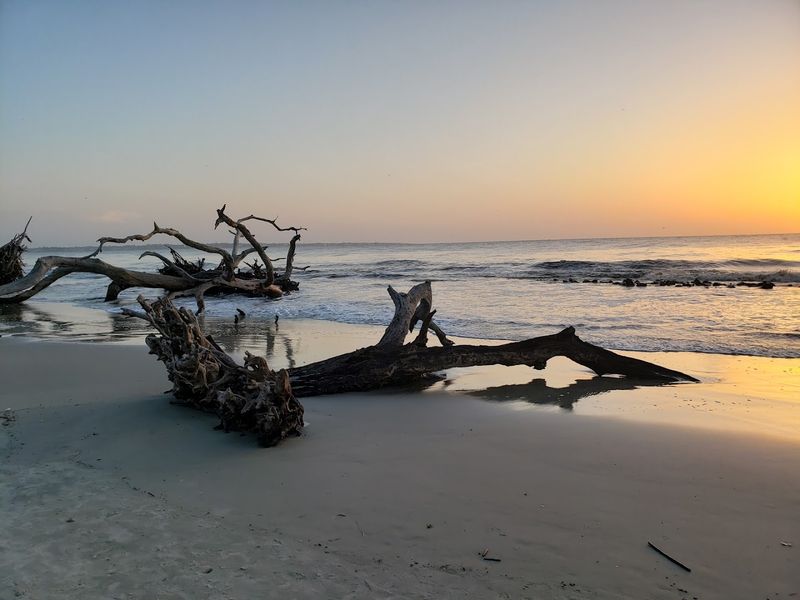
Driftwood Beach is one of the best stargazing spots on the Georgia coast, and that is not an exaggeration. The dark skies above Jekyll Island allow the Milky Way to appear with the naked eye once your eyes fully adjust.
Give yourself about 20 minutes in the dark. Then look up.
It is genuinely breathtaking.
The ordinance restricting bright flashlights actually works in your favor here. Fewer artificial lights mean darker skies.
That single rule, designed to protect sea turtles, accidentally creates ideal conditions for stargazers. Sometimes conservation and recreation align perfectly.
The best nights for stargazing are clear and moonless. New moon phases give you the darkest possible sky.
Bring a star map app on your phone, but switch it to night mode so you do not ruin your adjusted vision. The sound of the Atlantic in the background while you stare up at thousands of stars is a combination that feels almost surreal.
Star trails, moonrise shots, and wide-angle Milky Way captures are all possible here. The beach faces east, which means you catch moonrise directly over the water.
Photographers and casual visitors alike find this corner of Jekyll Island worth staying out late for. Honestly, the sky above Driftwood Beach might be the most underrated part of the entire experience.
Evening Beach Activities For Visitors
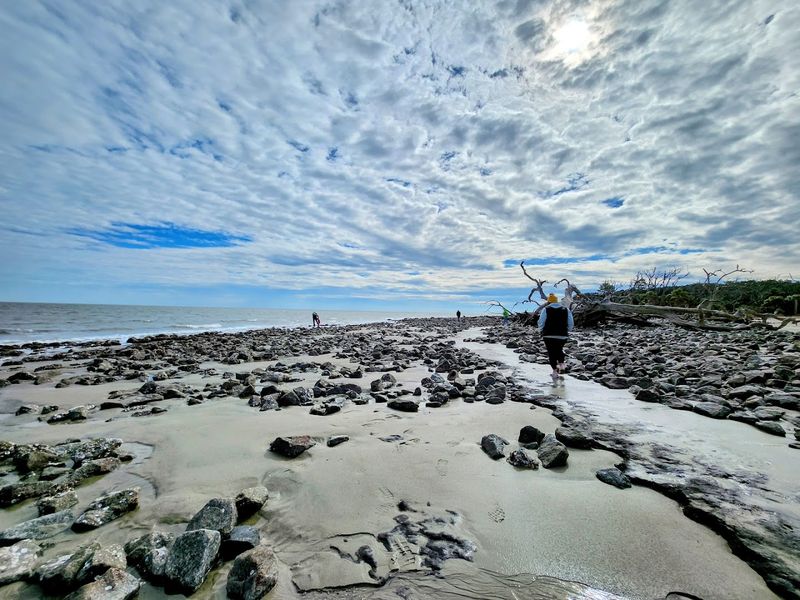
Nighttime at Driftwood Beach is surprisingly active, even without a crowd. Walking the shoreline after dark is a completely different experience from the daytime version.
The sand feels different underfoot. The air is cooler.
The sounds take over where the visuals leave off.
Public access to the beach runs 24 hours a day, seven days a week. That means evening and late-night visits are totally fair game.
Bring a dim red flashlight, not a bright white one. Wear closed-toe shoes or sturdy sandals because driftwood pieces and roots hide in the sand.
The wooded trail to the shore is short but can be disorienting in full darkness.
Night photography is easily the most popular evening activity here. Star trail captures, long-exposure wave shots, and moonrise images attract photographers from across the country.
Some visitors simply come to sit among the tree trunks and listen to the ocean. Others walk the full length of the beach in both directions.
Tide pool exploration is possible in the early evening before the tide fully shifts. Blue crabs and small marine life are sometimes visible in shallow pools near the tree roots.
There are no vendors, no concessions, and no crowds after dark. Just the beach, the sky, and those extraordinary trees standing silent in the sand.
It is an easy, free, and memorable way to spend a Georgia evening.
Tide Impact On Coastal Landscape At Night
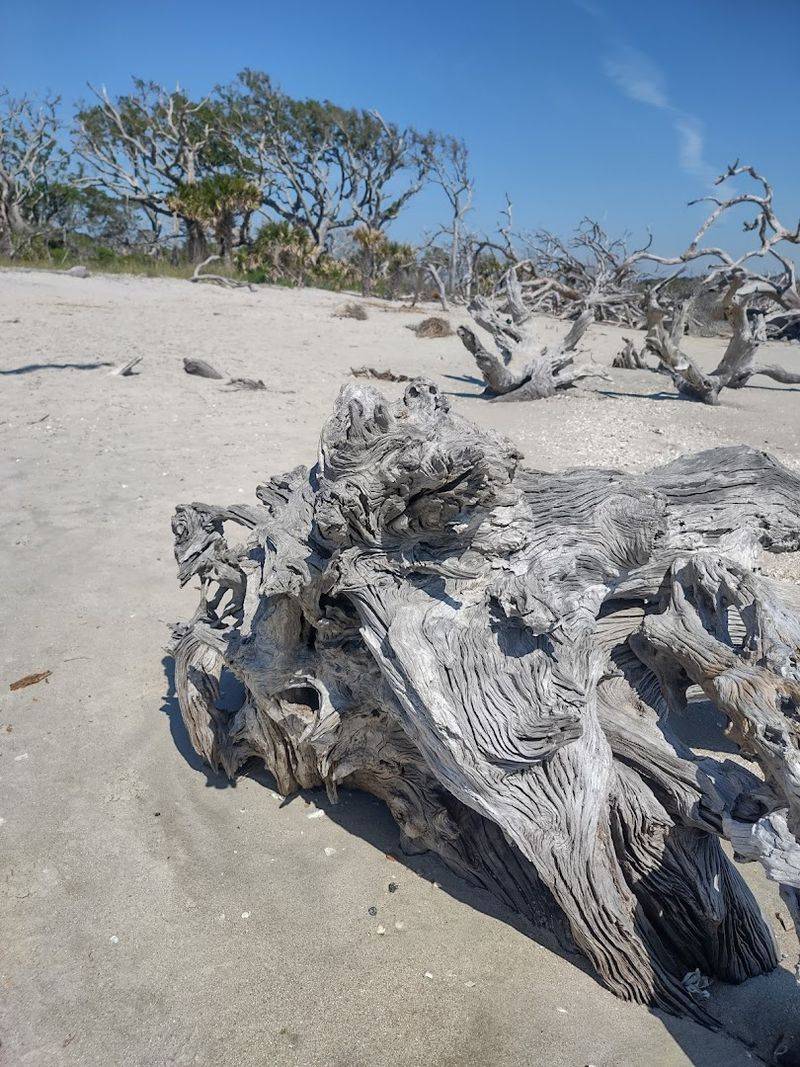
Tides shape everything at Driftwood Beach, and that is even more obvious after dark. High tide at night can swallow most of the beach entirely.
What looks like a wide, walkable shoreline at low tide becomes a narrow strip of wet sand within hours. Knowing the tide schedule is genuinely the most practical thing you can do before visiting.
Low tide reveals the full forest of driftwood trunks and root systems. High tide pushes water right up to the tree line.
At night, that shift happens quietly and quickly. You might walk out to a wide beach and return to find the tide has cut off part of your path.
This is not dangerous if you are paying attention, but it is worth knowing.
The erosion that created this landscape is still ongoing. Each tidal cycle pulls more sand away and reshapes the shoreline.
Those ancient oak and pine skeletons shift position slightly over the seasons. Some lean further.
Some fall. The beach is literally changing year by year, tide by tide.
At night, you can actually hear the water working against the base of the trees. It makes a distinct hollow sound when waves hit the exposed roots.
Standing there in the dark listening to that process is oddly meditative. The landscape feels ancient and alive at the same time, which is exactly what makes Driftwood Beach unlike anywhere else on the Georgia coast.
Photography Tips For Night Beach Scenes
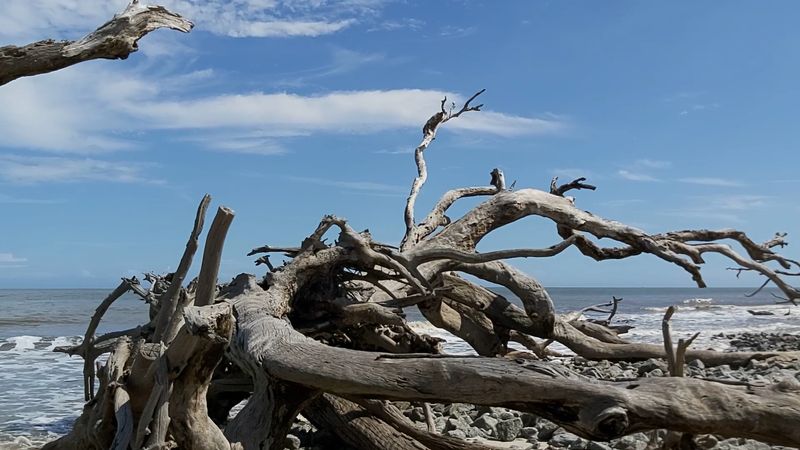
Night photography at Driftwood Beach rewards patience and preparation. The combination of ancient tree silhouettes, dark Atlantic water, and open sky creates compositions that are nearly impossible to replicate anywhere else on the East Coast.
Bring a sturdy tripod. Long exposures are your best friend here.
Set your camera to manual mode. A wide aperture like f/2.8 or f/1.8 lets in more light.
ISO between 1600 and 3200 works well for Milky Way shots. Shutter speeds between 15 and 25 seconds capture star movement without too much blur.
Focus manually on the brightest star you can find, then lock it in.
The red light ordinance actually helps your photography. Less ambient light means cleaner exposures.
Arrive early to scout your composition while there is still some twilight. The beach faces east, so moonrise happens directly over the water.
Timing your shoot around a full or nearly full moon adds natural illumination to the tree trunks without washing out the stars. Wide-angle lenses capture more of the sky and more of the dramatic driftwood landscape simultaneously.
Shoot in RAW format for maximum editing flexibility. Bring extra batteries because cold night air drains them faster than expected.
The most striking shots often include the gnarled tree shapes in the foreground with the star field above. That contrast between the organic and the cosmic is what makes Driftwood Beach a legitimate night photography destination.
Safety Considerations For Night Beach Visits
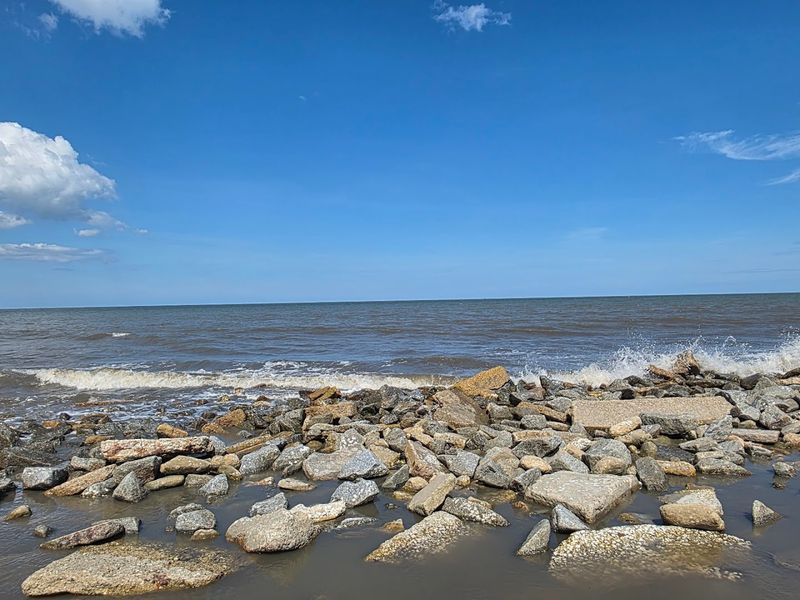
Visiting Driftwood Beach after dark is genuinely safe as long as you prepare properly. The biggest physical hazard is the terrain itself.
Driftwood roots, fallen branches, and uneven sand are everywhere. In full darkness, these obstacles are easy to miss.
Wear shoes with good grip, not flip-flops. Sandals work in a pinch, but closed-toe footwear is smarter.
Carry a dim red flashlight, not a bright white one. This is both a legal requirement and a practical safety measure.
Red light preserves your night vision better than white light anyway. Keep the beam low and pointed at the ground in front of you.
The wooded trail from the parking area to the beach is short but can feel disorienting at night without any ambient lighting.
Check the tide chart before you go. High tide at night can move in faster than expected.
If you walk far down the beach, make sure you have a clear path back. Bring a fully charged phone for navigation and emergencies.
Let someone know where you are going and when you plan to return. The beach has no lifeguards, no facilities, and no overnight services.
Parking is free and available roadside, but the area is quiet and relatively isolated after dark. None of this is meant to scare you off.
Driftwood Beach at night is absolutely worth experiencing. Just go prepared and stay aware of your surroundings.
Cultural And Historical Significance At Dark
Jekyll Island carries a lot of history, and Driftwood Beach sits right in the middle of it. The island was once a private retreat for some of the wealthiest families in America.
The Vanderbilts, Rockefellers, and Morgans all spent time here. Walking the northern shoreline at night, it is easy to imagine what this place looked like before tourism, before roads, before any of it.
The trees themselves are historical artifacts in a way. Some of the oaks on this island are over 500 years old.
The ones that fell into the sea and became the driftwood landscape lived through centuries of coastal Georgia history. At night, standing among those ancient trunks feels different than it does in daylight.
The darkness strips away the modern context. It is just you and something very, very old.
Just up the road from Driftwood Beach sits the Horton House, one of the oldest surviving tabby structures in Georgia. Built in the 1740s, it stands as a reminder of how long people have called this island home.
Visiting Driftwood Beach at night and then walking near the Horton House creates a layered sense of time that daytime tourism rarely delivers. The island holds its stories quietly after dark.
The silence is not empty. It carries the weight of centuries of coastal life, shifting tides, and a maritime forest slowly returning itself to the sea.