
This Wisconsin Church Has One Of The Most Beautiful Settings You’ll Ever See
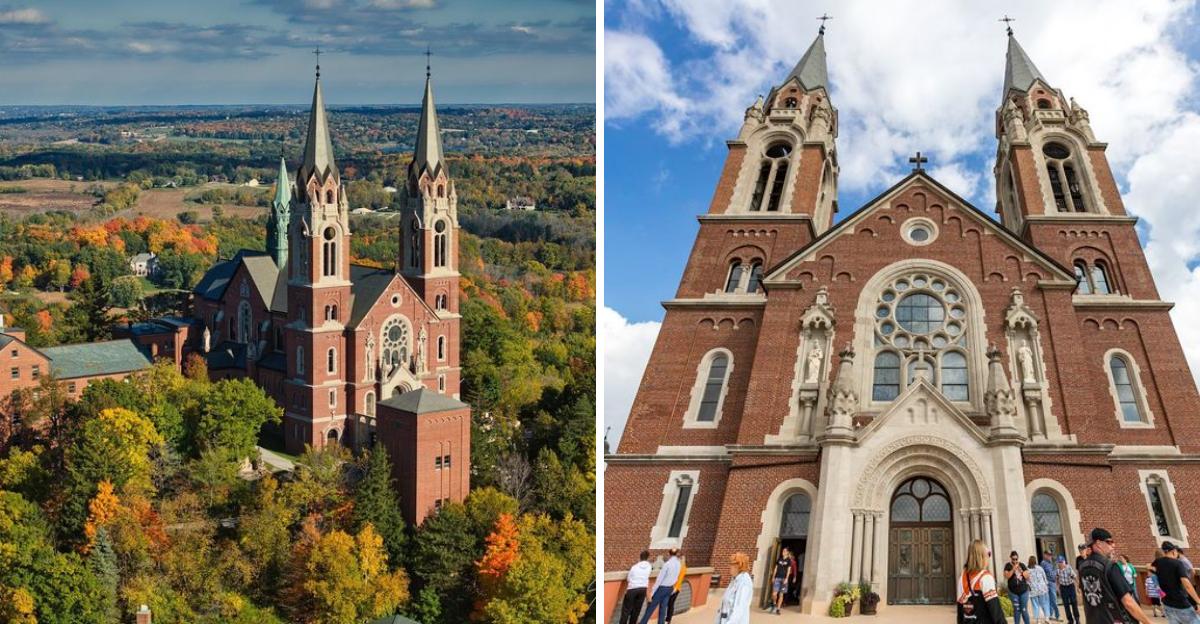
A church on a hill already sounds peaceful, but this one makes the whole drive feel worth it. High above the Kettle Moraine woods, its twin towers rise over the trees like a landmark you were meant to notice.
Wisconsin has many beautiful places, but this setting feels different because it mixes quiet forest views, old architecture, and a sense of calm that hits before you even step inside. People come for many reasons.
Some want to pray, some want the history, and others just want to climb the tower and see the view. By the time you look out over southeastern Wisconsin, it is easy to understand why visitors remember this place.
Holy Hill Sits On One Of Southeastern Wisconsin’s Highest Points
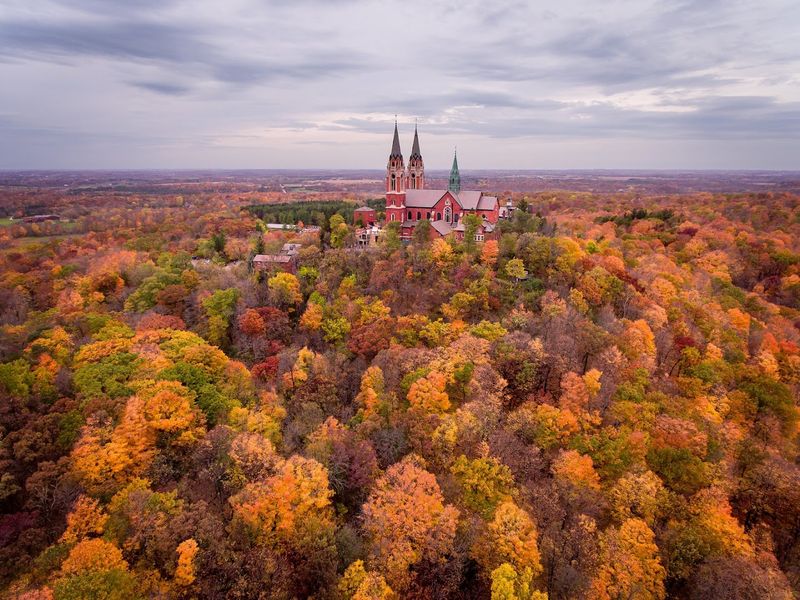
Geography plays a central role in what makes this basilica so memorable. The church occupies one of the highest natural elevations in southeastern Wisconsin, rising prominently above the surrounding Kettle Moraine landscape.
This elevated position gives the entire site a commanding presence that can be spotted from considerable distances. The hill itself becomes part of the experience before visitors even arrive, building anticipation as the twin spires come into view.
Standing at this elevation provides a sense of separation from everyday concerns. The height offers physical distance from the flatlands below and creates an atmosphere that feels removed from ordinary life.
Cool breezes sweep across the hilltop even on warm days, and the air feels noticeably fresher.
Pilgrims and travelers have long recognized the significance of high places for reflection and prayer. This particular summit delivers on that ancient tradition with natural beauty and carefully maintained grounds that honor both the landscape and the spiritual purpose of the site.
The Basilica Rises Above 435 Acres Of Peaceful Wooded Scenery
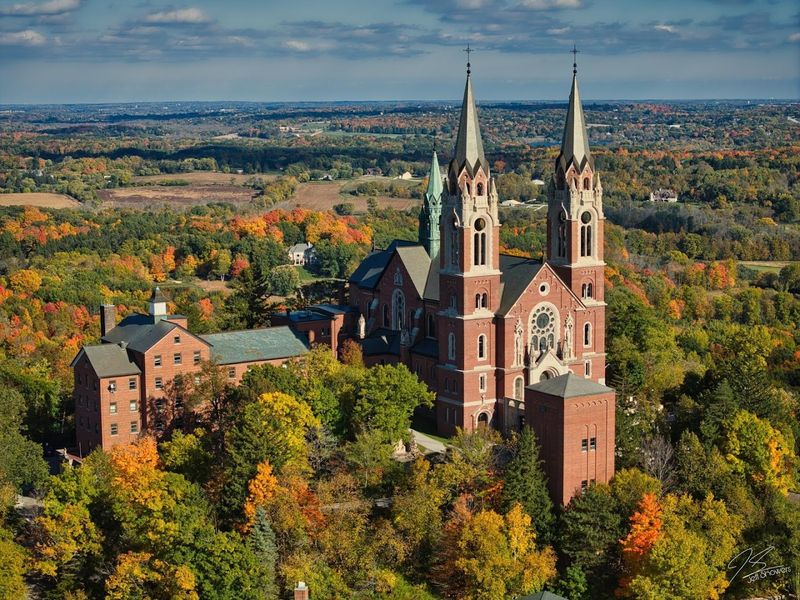
Forests surround the basilica on all sides, creating a natural buffer that enhances the sense of retreat. More than 400 acres of woodland spread out from the church grounds, offering visitors a genuine escape into nature alongside their spiritual or sightseeing experience.
Walking paths wind through these woods, allowing people to explore the terrain at their own pace. The trails remain well maintained and accessible, suitable for casual strolls rather than demanding hikes.
Birds call from the branches overhead, and seasonal wildflowers add color to the understory.
This extensive acreage means the basilica never feels crowded by development or commercial intrusion. The wooded buffer preserves the contemplative character of the site and ensures that views from the church and tower showcase natural beauty rather than parking lots or buildings.
Different seasons transform the forest dramatically. Spring brings fresh green growth, summer offers deep shade, autumn paints the hillsides in brilliant colors, and winter reveals the bare architecture of the trees themselves.
Each visit can feel entirely new depending on the time of year.
The Twin Spires Make The Hilltop Setting Feel Almost Storybook
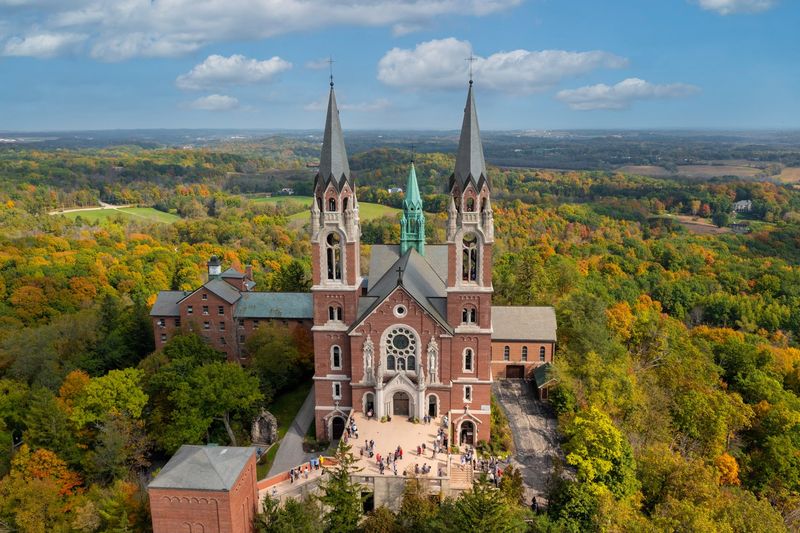
Two towers rise symmetrically from the basilica, creating an instantly recognizable silhouette against Wisconsin skies. These twin spires give the building a distinctly European character that seems transported from another continent or century.
The architectural choice to build dual towers rather than a single spire adds visual balance and grandeur. From a distance, the paired towers create a dramatic focal point that draws the eye upward.
The design references medieval church architecture while serving practical purposes for the modern building.
Approaching the basilica from various angles reveals how the towers interact with the landscape. Sometimes they appear to float above the treeline, other times they emerge gradually as visitors climb the access road.
The effect carries a sense of discovery and wonder that appeals to people of all ages.
At sunset or during dramatic weather, the towers take on particularly striking appearances. Clouds may frame them, light may catch their surfaces at interesting angles, or they may stand in stark silhouette.
Photographers find endless compositions, and first-time visitors often pause to simply take in the view before proceeding inside.
Visitors Can Climb 178 Steps Up The Scenic Tower
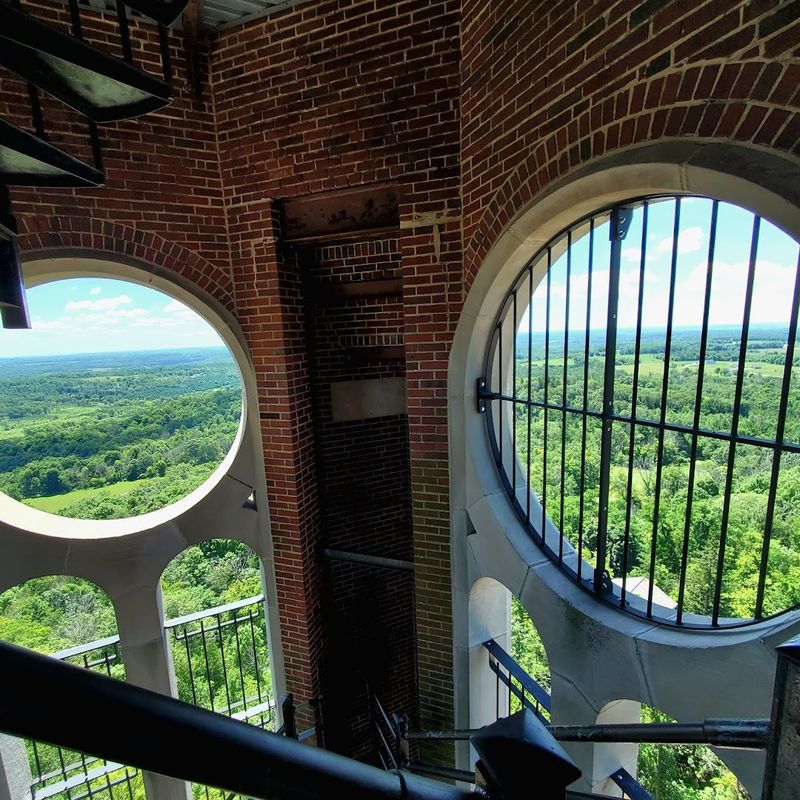
One of the towers opens to the public, inviting those with energy and curiosity to make the climb. The stairway consists of 178 individual steps that spiral upward through the tower’s interior, offering an adventure within the larger visit.
The stairs are narrow and steep, requiring reasonable fitness and mobility. Only one person can comfortably pass at a time in most sections, which means climbers sometimes need to wait for descending traffic.
This creates brief moments of camaraderie among strangers sharing the experience.
Small windows punctuate the climb, offering preview glimpses of the expanding view. These openings provide natural light and opportunities to catch your breath while gauging your progress.
The temperature inside the tower stays noticeably cooler than outside, particularly on summer days.
Reaching the observation level brings a genuine sense of accomplishment. The effort required makes the destination feel earned rather than simply given.
Families often celebrate together at the top, and solo visitors take quiet satisfaction in completing the ascent before turning their attention to the panoramic rewards waiting at the summit.
The Tower Reaches 192 Feet From Its Base To The Spire
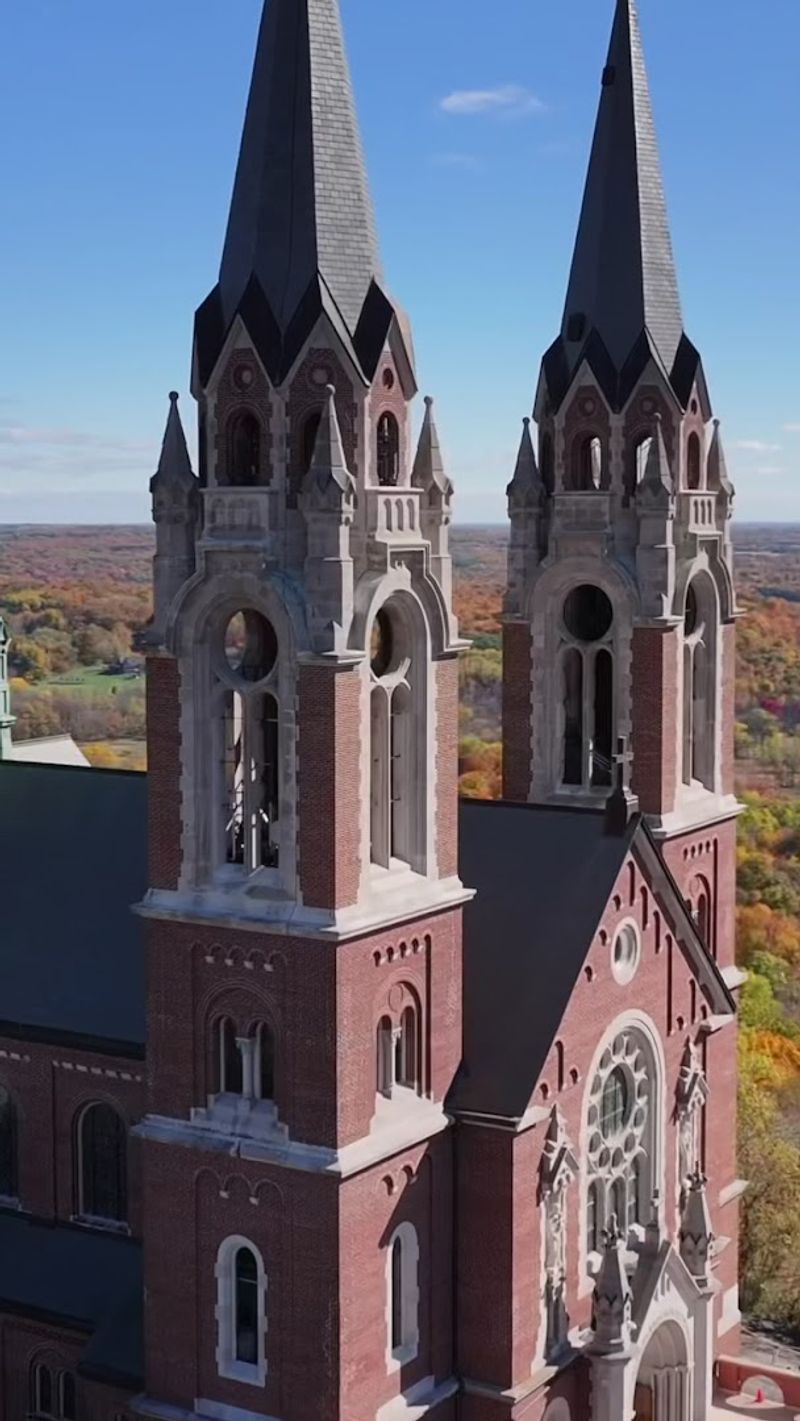
Height measurements give perspective to the tower’s impressive scale. From foundation to the very tip of the spire, the structure extends 192 feet into the Wisconsin sky, making it visible across miles of countryside.
This vertical dimension combines with the hill’s natural elevation to create extraordinary viewing opportunities. The tower essentially adds a second layer of height to an already elevated location, multiplying the advantage of the site’s geography.
Standing at the base and looking upward provides its own dramatic moment. The stone walls rise steadily, drawing your gaze toward the pointed summit.
The scale becomes more apparent when you spot people at the observation level, their small figures revealing just how high the tower truly stands.
For comparison, this height exceeds most residential buildings by a substantial margin. The tower reaches higher than a typical 15-story building, all constructed in the 1920s using traditional building methods.
The engineering and craftsmanship required to complete such a structure nearly a century ago remains impressive by any standard, speaking to the dedication behind the entire basilica project.
The Panoramic Views Are A Major Reason People Make The Trip
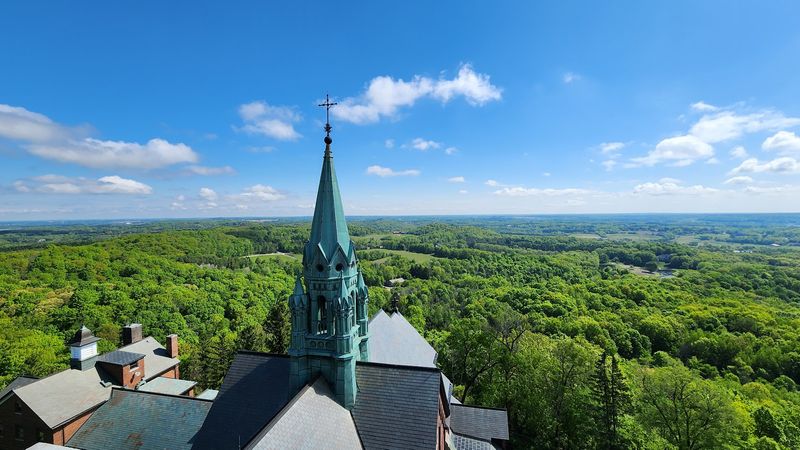
The observation deck delivers on the promise suggested by the climb. Views extend in every direction, offering perspectives that shift with the seasons, weather, and time of day.
On clear days, the Milwaukee skyline appears on the eastern horizon, its buildings recognizable despite the distance. To the west and north, the Kettle Moraine’s rolling terrain spreads out in waves of forest and farmland.
The southern view takes in more agricultural land dotted with farmsteads and small communities.
Fall brings the most dramatic transformation to these views. The forests explode into color, creating a patchwork of reds, oranges, and golds that seems to stretch endlessly.
Many visitors specifically time their trips to coincide with peak autumn color, and the tower provides the perfect vantage point to appreciate the seasonal display.
Even in other seasons, the views hold appeal. Spring’s fresh green growth, summer’s lush fullness, and winter’s stark beauty each offer their own rewards.
The changing light throughout the day also alters the character of what you see, making morning, midday, and evening visits distinctly different experiences.
Holy Hill Welcomes Pilgrims, Sightseers, And Quiet Day Trippers
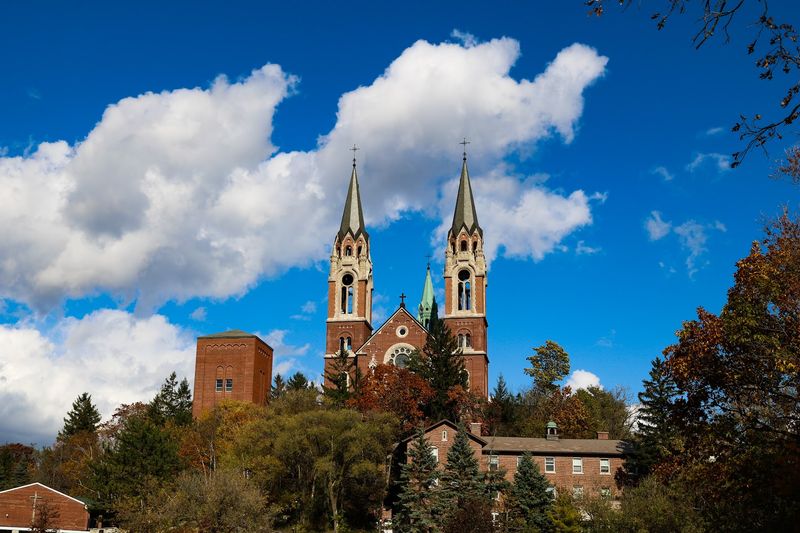
The site serves multiple purposes simultaneously without conflict. Religious pilgrims arrive seeking spiritual connection and prayer, while tourists come for the architecture and views.
Day trippers from nearby cities treat it as a pleasant destination for an afternoon outing, and all these groups share the space respectfully.
No admission fee creates an accessible experience for everyone. Donation boxes provide opportunities for those who wish to contribute, but the church, grounds, and tower remain open to all regardless of ability to give.
This openness reflects the welcoming spirit of the site.
People visit alone, in couples, with families, or in organized groups. Some arrive for scheduled masses, others simply want to sit quietly in the pews.
Certain visitors make Holy Hill a regular stop in their routines, returning multiple times each year, while others come once as part of a broader Wisconsin trip.
The cafe and gift shop add practical amenities without overwhelming the sacred character of the location. You can grab coffee or purchase religious items, books, and souvenirs, but these commercial elements stay modest and appropriate to the setting.
The Shrine Draws Hundreds Of Thousands Of Visitors Each Year
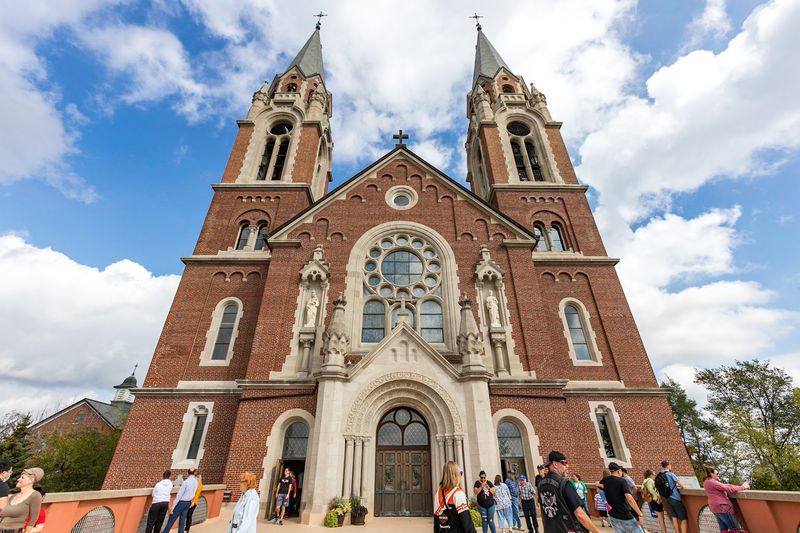
Annual visitor numbers reach into the hundreds of thousands, making Holy Hill one of Wisconsin’s most visited religious sites. This steady stream of people reflects the basilica’s broad appeal and its status as both a spiritual destination and tourist attraction.
Peak times occur during weekends, holidays, and especially during fall color season. Parking lots fill quickly on popular days, and the tower climb may involve waiting your turn.
Arriving early in the day or visiting on weekdays can provide a quieter, more contemplative experience if crowds feel overwhelming.
The high visitation numbers also speak to the site’s success in maintaining its character despite popularity. Many locations deteriorate or become overly commercialized when faced with such traffic, but Holy Hill has preserved its essential nature.
The grounds remain clean and peaceful, and the spiritual atmosphere persists even during busy periods.
Special events and celebrations draw additional visitors throughout the year. Religious feast days bring larger congregations, and seasonal programs attract families and community groups.
The location at 1525 Carmel Road in Hubertus has become a recognized landmark that appears on many Wisconsin bucket lists and travel itineraries.
The Church’s Architecture Looks Dramatic Against The Trees
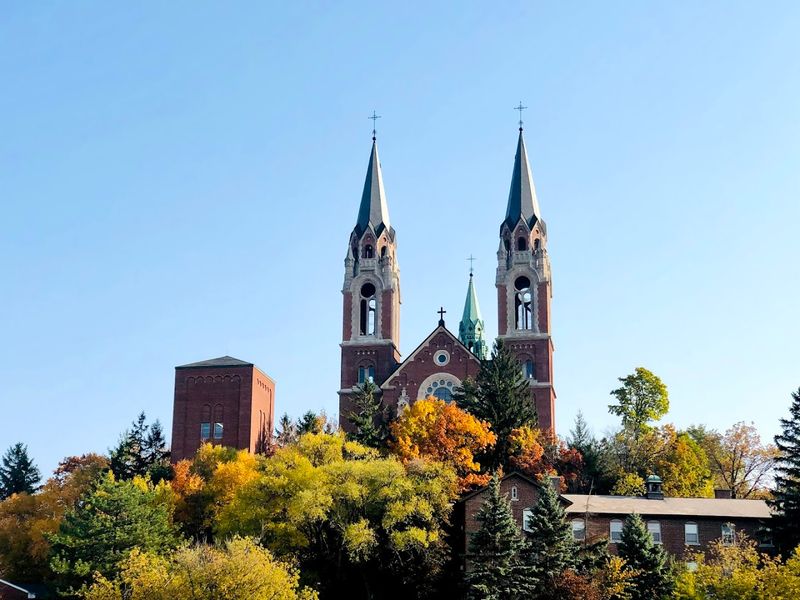
Neo-Romanesque design gives the basilica a medieval character that contrasts beautifully with the American woodland setting. Heavy stone construction, arched windows, and the twin towers all reference European church architecture from centuries past, creating visual drama against the decidedly North American forest backdrop.
The building materials themselves contribute to the effect. Stone walls catch and reflect light differently than the organic textures of bark and leaves.
The hard edges of the architecture play against the soft, irregular forms of the surrounding trees, creating visual interest from every angle.
Photographers particularly appreciate how the natural frame of branches and foliage enhances compositions of the church. Different seasons alter this relationship dramatically, from the bare branches of winter that create stark silhouettes to the full summer canopy that partially conceals and reveals the building.
Inside, the architecture continues to impress with soaring spaces, detailed stonework, and magnificent stained glass windows. The craftsmanship evident throughout the building demonstrates serious artistic and engineering ambition.
Visitors often spend considerable time simply looking upward and around, taking in the ornate details that reward close observation.
The Setting Feels Especially Beautiful During Wisconsin’s Fall Colors
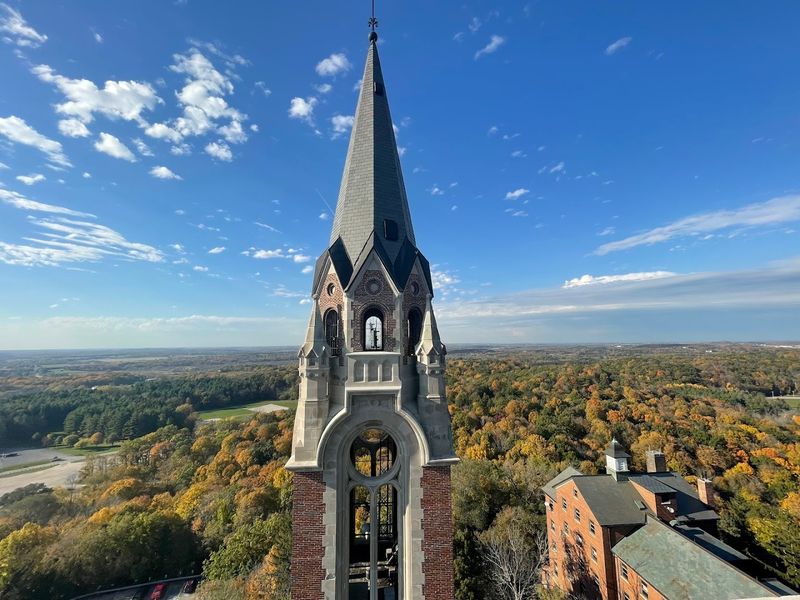
Autumn transforms the entire experience at Holy Hill. The forests that surround the basilica erupt into spectacular color displays that rank among Wisconsin’s finest fall scenery.
Maples, oaks, and other hardwoods create a tapestry of warm hues that seems almost impossible in its intensity.
The tower climb becomes even more rewarding during this season. Looking out from the observation deck over an ocean of autumn color provides memories that last long after the visit ends.
The views stretch for miles in every direction, all painted in nature’s boldest palette.
Driving to the site during peak color offers its own pleasures. The approach roads wind through the same forests visible from the tower, creating a full immersion in fall beauty.
Many visitors combine their basilica trip with broader leaf-peeping tours through the Kettle Moraine region.
Timing a fall visit requires some attention to conditions. Peak color typically arrives in early to mid-October, though exact timing varies with weather patterns.
The basilica’s website and local tourism resources provide updates on foliage conditions, helping visitors plan their trips for maximum visual impact during this spectacular season.