
The Delta Town, Mississippi, Everyone Drives Past Is Hiding An Open-Air Blues Museum That Deserves Far More Than A Glance
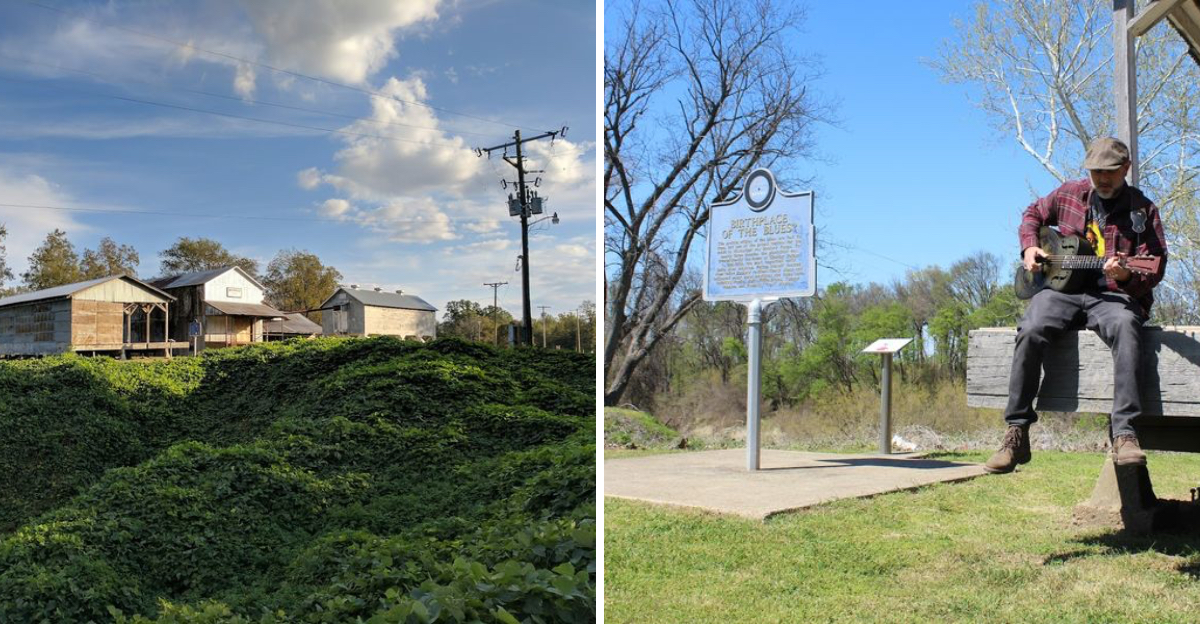
Flat cotton fields don’t usually make history.
This stretch of Delta farmland built an entire sound.
Rusted tin roofs and weathered fields still hum with old guitar riffs and porch songs.
Sharecroppers turned humble work songs into raw, soulful Delta blues that changed American music forever.
Legends walked these same rows long before anyone called it sacred ground.
Their voices now drift from speakers scattered across open land, filling the air like a museum without walls.
No ticket booths, no roped-off exhibits, no distance between you and the past.
Wide open fields hide one of Mississippi’s richest musical secrets.
Plan a slow drive through blues country and let this open-air stop catch you off guard here in Mississippi.
The Cotton Plantation That Changed American Music Forever
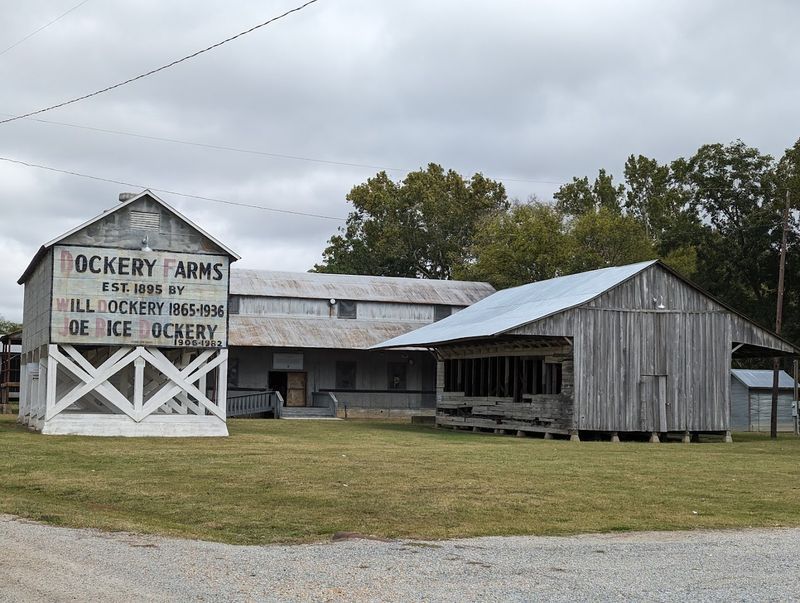
Few patches of farmland in the United States carry the cultural weight of Dockery Farms.
What began in 1895 as a massive agricultural operation became one of the most musically significant places in American history.
William Alfred Dockery established the plantation by purchasing vast land initially for its timber resources.
He quickly recognized the extraordinary fertility of the Mississippi Delta soil.
The operation pivoted hard toward cotton cultivation, eventually covering around 25,600 acres at its peak.
The plantation functioned like a self-contained town.
It had its own general store, post office, school, and medical care.
Workers from across the South settled here for extended periods, drawn by the relatively fair treatment they received.
That stability created something unexpected.
A rich cultural melting pot formed among the workers.
Their shared experiences, traditions, and creativity fused together in ways no one planned.
Mississippi became the unlikely setting for a musical revolution, and it all started on this unassuming stretch of Delta farmland that most travelers still drive past without a second glance.
How A Work Song Became A World-Changing Sound
Blues music did not appear out of nowhere.
It grew slowly, organically, from the daily lives of African American workers laboring under the wide Mississippi sky.
Their work songs and field hollers carried deep roots in West African vocal traditions.
Those sounds blended with spirituals and personal storytelling.
Over time, the raw emotional truth in those voices evolved into something the world had never quite heard before.
The guitar arrived in the Delta around the 1890s, reportedly introduced by Mexican workers passing through the region.
Workers picked it up eagerly.
Evening gatherings on porches and in boarding houses became informal music sessions where styles merged and new ideas sparked.
What made Dockery Farms different from other plantations was the environment.
The owner encouraged workers to play music during their leisure hours.
That freedom was rare for the era.
It gave musicians space to experiment, collaborate, and refine a sound that felt urgent and deeply personal.
The Delta blues was not invented in a studio.
It was lived into existence, right here in Mississippi.
The Legends Who Called This Place Home
The roster of musicians connected to Dockery Farms reads like a who’s who of blues royalty.
Charley Patton, widely regarded as the Father of Delta Blues, lived and performed here intermittently for nearly three decades.
His powerful voice and commanding guitar style laid a foundation that countless artists built upon.
Patton learned from an older resident named Henry Sloan, then passed his knowledge forward to others who came through the farm.
That chain of influence shaped an entire genre.
Robert Johnson, whose legendary deal-at-the-crossroads myth looms large in blues folklore, also spent time at Dockery Farms.
Son House, Willie Brown, Tommy Johnson, and Roebuck Staples all had connections to this land.
The concentration of talent here was remarkable.
Musicians heard each other, challenged each other, and pushed each other toward something greater.
Dockery Farms was not just a place where blues happened.
It was the place where blues artists shaped one another into legends whose music still echoes across Mississippi and far beyond its borders.
Old Buildings That Refuse To Let History Disappear
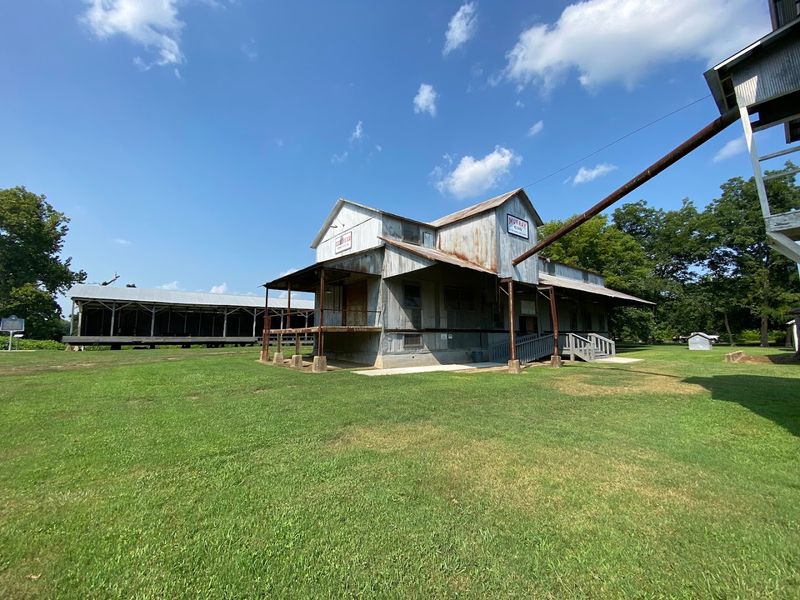
Visiting Dockery Farms at 229 MS-8, Cleveland, MS 38732 means stepping into a place where the past is still physically present.
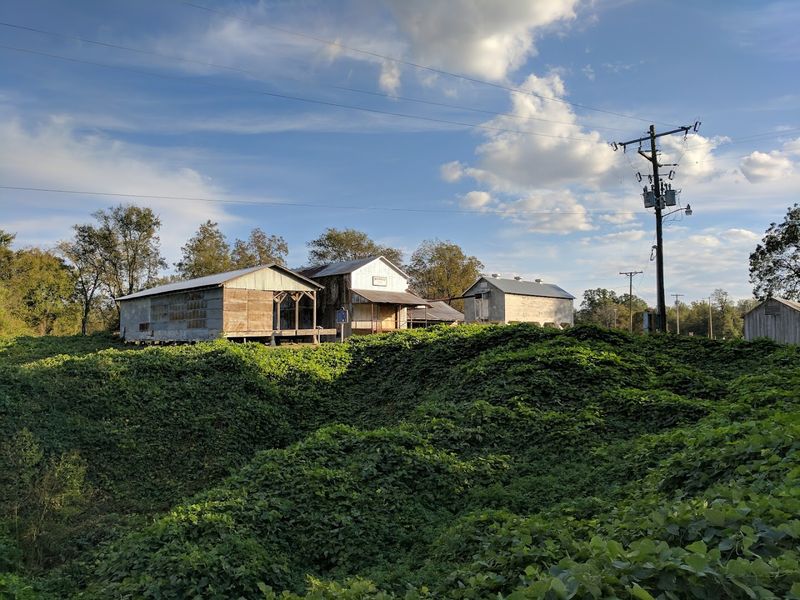
Several original structures from the 1920s and 1930s still stand on the property, and they speak volumes without saying a word.
The historic cotton gin anchors the site.
Its steel frame and corrugated tin siding have been carefully restored, and it now serves as a venue for tours and interpretive displays.
Walking through it connects visitors to the economic engine that once drove this entire community.
The seed house, built around 1930 from cypress wood with a corrugated tin roof, still holds its shape.
A mule shed, hay barn, and cotton storage shed remain on the grounds as well.
The ruins of the old commissary hint at the busy commercial life that once thrived here.
These buildings are not just old.
They are outstanding examples of early 20th-century Delta plantation architecture.
Each structure tells a different chapter of the same story.
Preservation efforts here have been careful and respectful, ensuring that future generations can walk the same ground that shaped American music.
The River And The Railroad That Connected It All
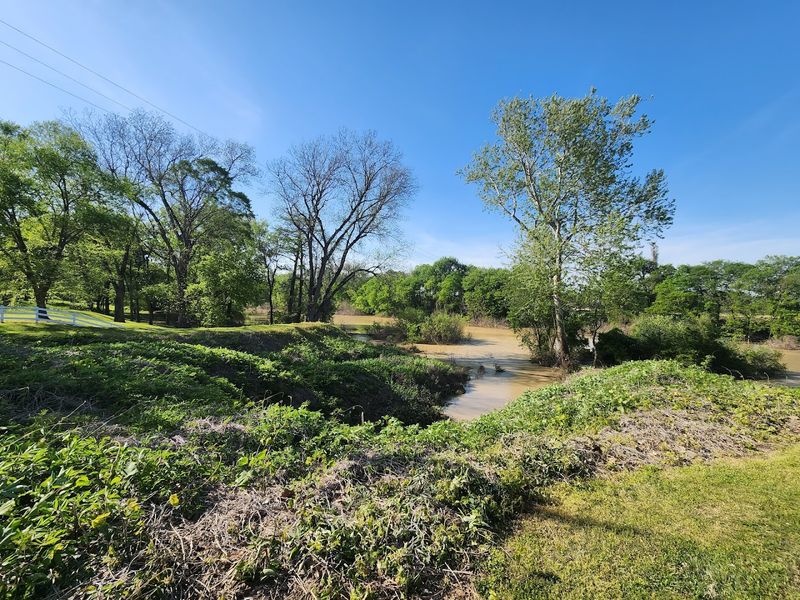
Geography shaped Dockery Farms in ways that go far beyond cotton fields.
The plantation sits directly on the Sunflower River, a waterway that served as a vital artery through what was once a dense wilderness of cypress and gum trees.
The gradual clearing of that land for agriculture transformed the natural landscape entirely.
Yet the river remained a constant presence, providing water, transport, and a kind of rhythm to daily life on the farm.
Around 1900, a new railroad branch nicknamed the Yellow Dog reached the area.
Dockery Farms built its own rail terminal to connect the remote plantation to the broader rail network.
Workers and musicians alike used this line, which locals called the Pea Vine due to its winding route through the Delta.
That railroad mattered enormously for the spread of music.
Artists like Charley Patton traveled by train, carrying the Delta sound from one community to the next.
The river and the railroad were not just logistical tools.
They were cultural highways that helped the blues born in Mississippi travel outward and eventually reach the entire world.
An Open-Air Museum With No Velvet Ropes
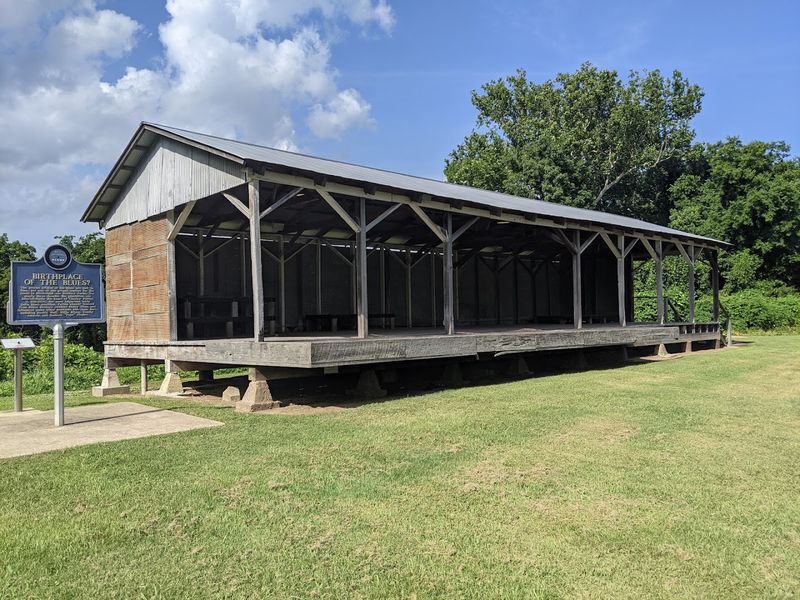
One of the most refreshing things about Dockery Farms is how accessible it is.
There are no ticket booths, no timed entry slots, and no roped-off exhibits that keep visitors at arm’s length from history.
The site operates as a self-guided experience, open to visitors who want to explore at their own pace.
Interpretive signs placed throughout the grounds share context about the buildings, the people, and the music that emerged here.
Audio elements at certain signs let visitors hear actual blues music drifting across the same fields where it was born.
A donation box on site accepts contributions that help fund the ongoing upkeep of this important place.
Visitors can also find a guestbook inside, filled with names and notes from travelers who came from across the country and around the world.
The cotton gin building is open for exploration, and its thick, wide floorboards feel solid underfoot in a way that modern construction rarely matches.
Guided tours may be available with advance planning.
For anyone curious about American music history, this stop in Mississippi offers one of the most genuine cultural experiences available anywhere in the South.
A Mississippi Blues Trail Landmark Worth The Detour
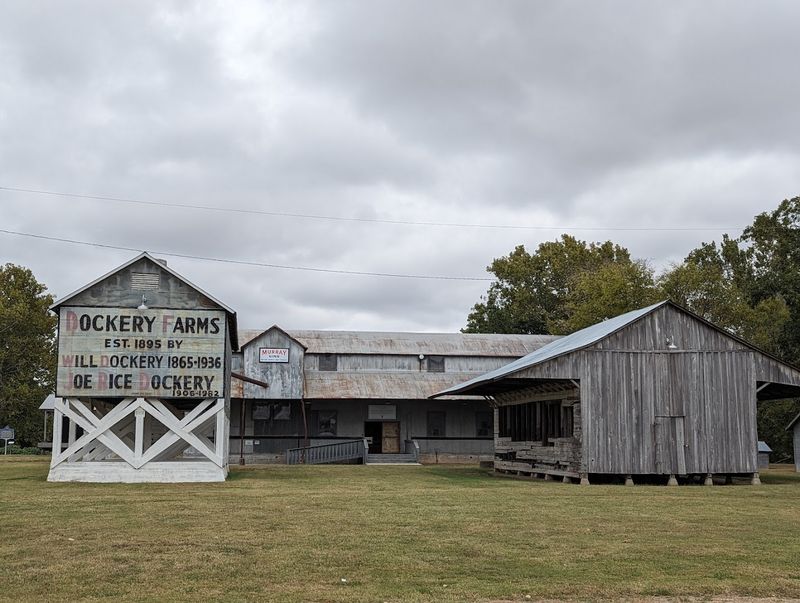
Official recognition matters when it comes to preserving history, and Dockery Farms has earned its share.
The property was added to the National Register of Historic Places in 2006, a designation that acknowledges its national cultural importance.
In 2017, Mississippi granted the site Landmark status, the highest level of state-level historic protection available.
These designations are not honorary plaques.
They carry real protections that help ensure the site remains intact for decades to come.
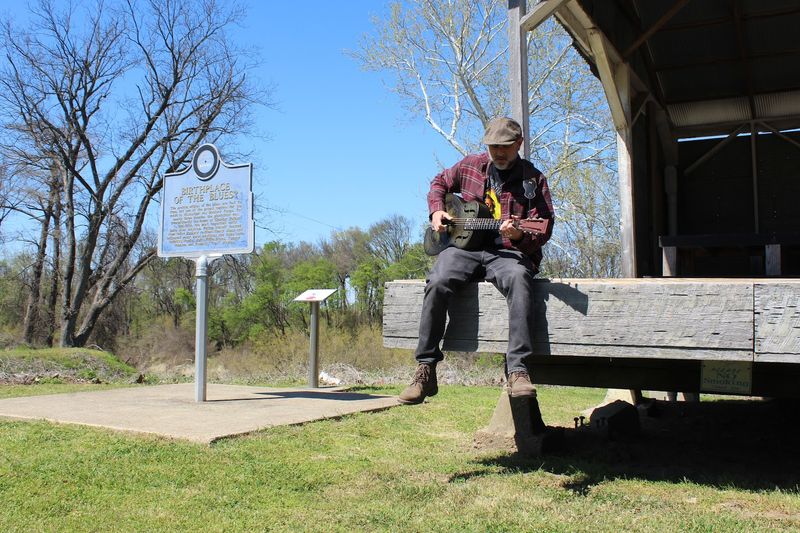
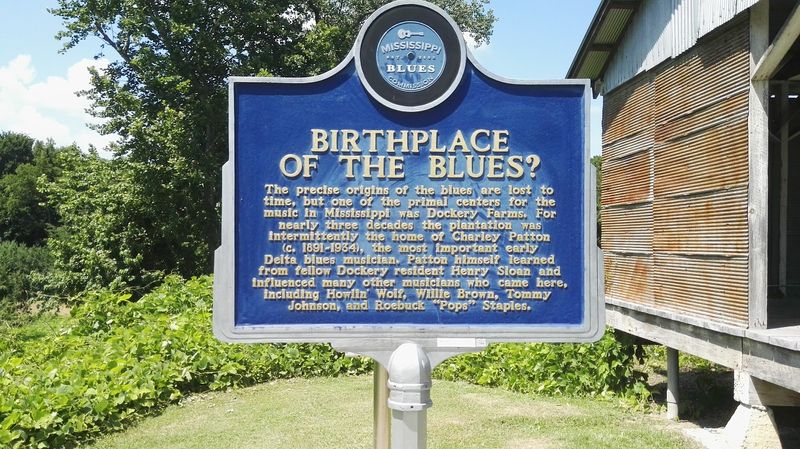
A prominent Mississippi Blues Trail marker stands on the property.
The marker identifies Dockery Farms as one of the primal centers of blues music in the state.
The Blues Trail connects significant locations across Mississippi that contributed to the genre, and Dockery holds a prime position on that map.
Travelers following the Blues Trail often describe the Dockery stop as one of the most emotionally powerful on the entire route.
The combination of physical history, open landscape, and ambient music creates an atmosphere that guidebooks struggle to capture.
Some places earn their reputation through marketing.
Dockery Farms earned its through a century of musical truth that Mississippi has wisely chosen to protect and share.
The Atmosphere That Visitors Keep Trying To Describe
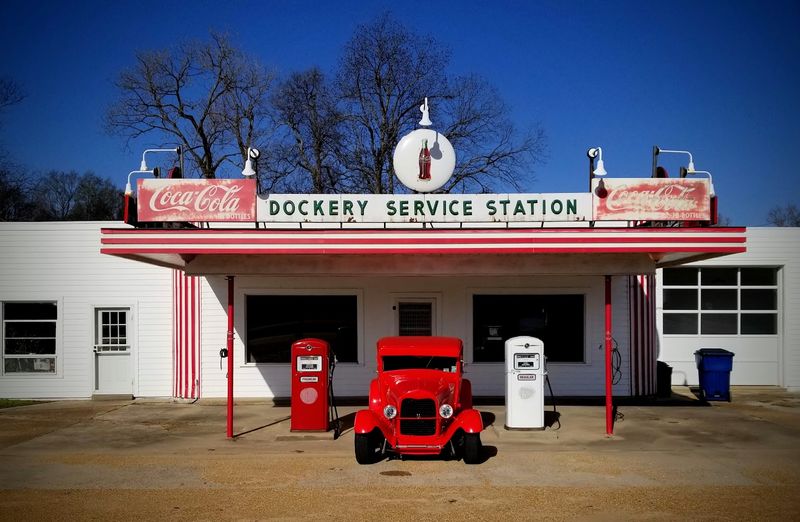
Words tend to fall short when visitors try to explain what Dockery Farms feels like.
Reviewers consistently reach for words like haunting, beautiful, and heavy, not in a frightening way, but in the way that meaningful places carry the weight of real human experience.
Pressing the audio button on the interpretive sign and standing quietly while blues music plays through outdoor speakers across the open grounds is an experience that many visitors describe as unexpectedly moving.
The flat Delta landscape stretches in every direction.
The old buildings stand still and silent.
The music fills the air.
That combination hits differently than a museum exhibit behind glass ever could.
There is no barrier between the visitor and the history here.
The same sky, the same river, the same soil that surrounded the musicians who created this genre surrounds every person who visits today.
Mississippi has no shortage of interesting roadside stops, but Dockery Farms occupies a category of its own.
It is the kind of place that stays with people long after they drive away, the kind that makes them tell others to stop, slow down, and actually feel something real.
The Global Ripple Effect Of One Delta Plantation
The music that grew out of Dockery Farms did not stay in Mississippi.
It traveled.
It transformed.
It eventually reached every corner of the world in ways that would have been impossible to predict in the early 1900s.
The Delta blues laid the structural and emotional foundation for rock and roll.
Muddy Waters carried the tradition north to Chicago.
British bands in the 1960s, including the Rolling Stones and Led Zeppelin, absorbed the Delta sound deeply and sent it back to American audiences in amplified form.
Artists like Eric Clapton and Bob Dylan traced their musical roots directly to the blues players who passed through this stretch of the Mississippi Delta.
Funk, soul, rhythm and blues, and modern Americana all carry strands of DNA that connect back to this land.
The themes that made the blues powerful, struggle, resilience, longing, and hope, never go out of style.
They are universal.
Dockery Farms did not just produce a regional music style.
It sparked a cultural chain reaction whose effects are still rippling forward, heard in stadiums and headphones and radio stations worldwide every single day.
Why Every Road Trip Through Mississippi Should Include This Stop
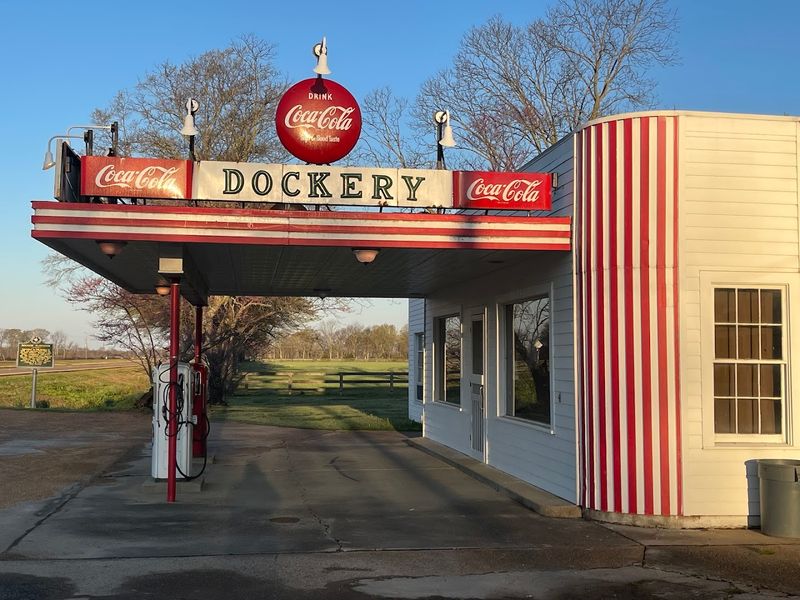
Road trips through the Mississippi Delta offer a particular kind of quiet beauty.
The landscape is wide, the sky is enormous, and the history runs deep beneath every mile of flat highway.
Dockery Farms fits naturally into that rhythm.
The stop requires no advance booking for a self-guided visit.
Admission is free.
The grounds are open, walkable, and genuinely interesting even for visitors who arrive knowing very little about blues music.
The interpretive signs do the teaching, and the buildings do the rest.
For travelers who want more depth, reaching out in advance to arrange a guided tour adds a richer layer of storytelling to the experience.
The site caretaker, when present, can share stories and context that no sign can fully replicate.
Dockery Farms sits on MS-8 between Cleveland and Ruleville, easy to find and easy to reach from several major Delta routes.
It is the kind of stop that turns a drive through Mississippi into something genuinely meaningful.
Most people who stop say the same thing afterward: they wish they had known about it sooner, and they are already planning to come back.