
This 1772 German Church In New York Was Built By Palatine Settlers And Still Has The Cannonball Hole To Prove It
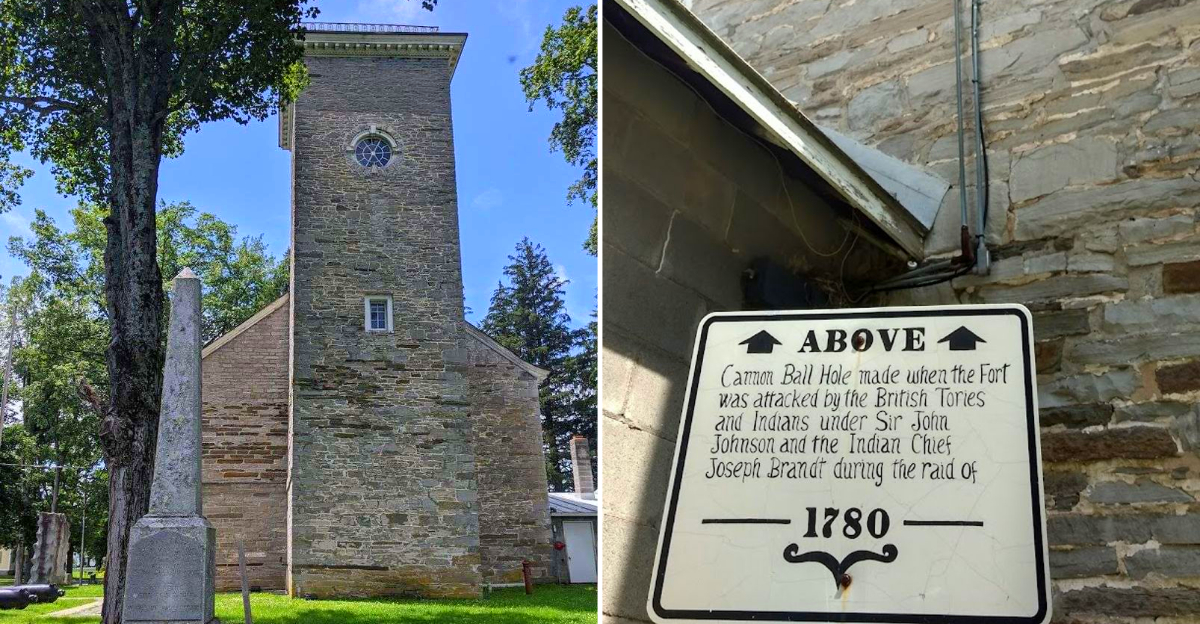
Some historic sites ask you to imagine the past. This New York one points to a cannonball scar and lets the wall do the talking.
In Schoharie Valley, a stone church built in 1772 by German Palatine settlers still stands, with evidence of the Revolutionary War marked directly on its exterior. That single hole turns the building from a pretty old landmark into something far more gripping.
It survived fear, conflict, community upheaval, and centuries of change, yet it remains solid enough to make visitors pause before they even step inside.
The surrounding museum complex adds even more depth, with artifacts, stories, and buildings that connect local life to larger American history.
This is not history sealed behind glass and softened by distance. It feels physical, immediate, and surprisingly personal, like the past left one clear mark just to make sure nobody forgot.
A Church That Refused To Fall
Not every old building has a story worth telling, but this one has a story worth traveling for.
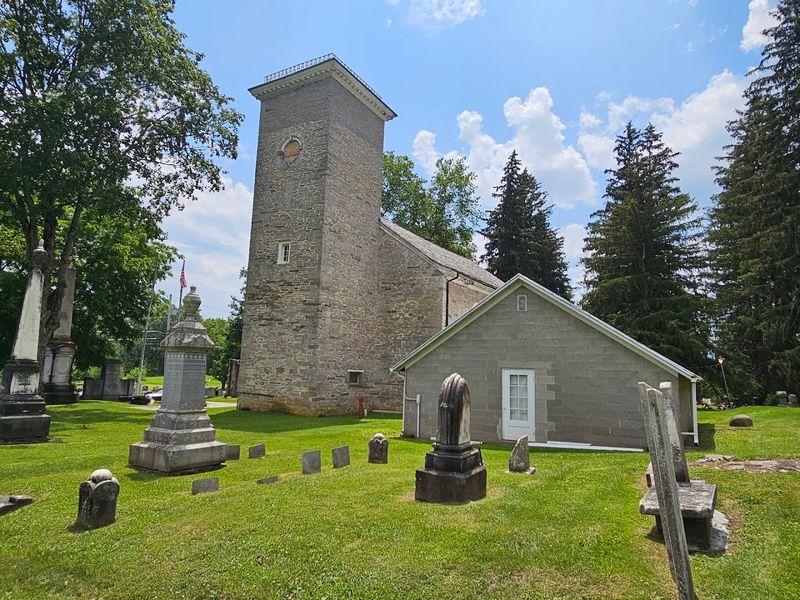
Long before it became a museum, the structure at the heart of the Old Stone Fort Museum Complex served a peaceful congregation of German Palatine settlers who had made the Schoharie Valley their home in the early 1700s.
Completed in 1772, the church was the third building raised by this determined community. They had crossed an ocean, survived hardship, and built something meant to last.
The thick stone walls were not originally designed for warfare, but they proved more than capable when the time came.
New York has no shortage of historic landmarks, but very few carry this kind of layered identity. The building started as a place of worship, became a military fortification, returned to church use, and eventually found its final calling as a public museum.
Each chapter left a mark. The stones themselves seem to carry the weight of every era they witnessed.
Visiting feels less like touring a building and more like reading a very well-preserved letter from the past.
Old Stone Fort Museum Complex: Where Every Wall Has A Story
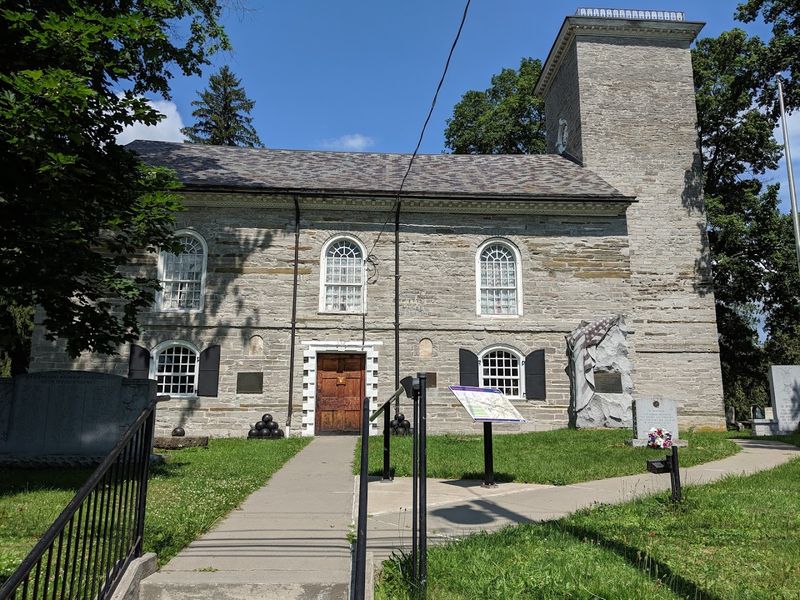
Officially known as the Old Stone Fort Museum Complex, the site sits at 145 Fort Rd in Schoharie, NY 12157, and it operates under the care of the Schoharie County Historical Society. The society has been running things here since 1889, which means even the museum itself has history worth noting.
The complex is not just one building. Across the street from the main fort, a collection of roughly eight relocated historic structures forms an annex that includes a one-room schoolhouse, a law office, and several other preserved buildings.
It is a full neighborhood of the past packed into a walkable space.
Admission is kept very reasonable, with a small fee for adults and reduced rates for younger visitors. The museum is open Tuesday, Monday, and Friday from 10 AM to 4 PM, and Saturday through Sunday from 10 AM to 5 PM.
Wednesday and Thursday the doors stay closed. Staff members are known for being genuinely knowledgeable and enthusiastic, not just going through the motions. You can reach them at 518-295-7192 or browse ahead of your visit at theoldstonefort.org.
Palatine Settlers And The Valley They Built
Around 1712 and 1713, a wave of German Palatine refugees arrived in the Schoharie Valley and began putting down roots. These were not casual travelers.
They were people who had fled religious persecution and poverty in the Rhine region of Germany, eventually making their way to New York after a difficult journey through England.
The community they built in what was then called Fuchs Dorf, meaning Fox Town in German, was tight-knit and resilient. They established farms, families, and faith communities.
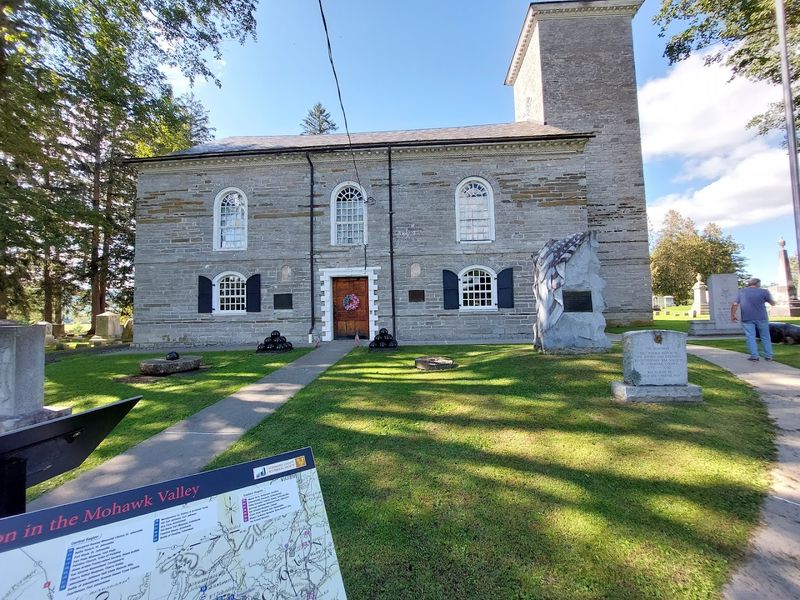
By 1772, their congregation had grown enough to construct its third and most permanent church, the building that still stands today.
Understanding who built the Old Stone Fort helps you appreciate why it survived. Palatine settlers were practical, resourceful, and deeply committed to their community.
They did not build things halfway. The stone walls they raised were thick, carefully fitted, and built to endure generations.
Walking through the museum, you get a real sense of who these people were beyond the history books. Their craftsmanship is not just preserved, it is still standing and still impressive more than 250 years later.
From Pews To Palisades: The Fort Years
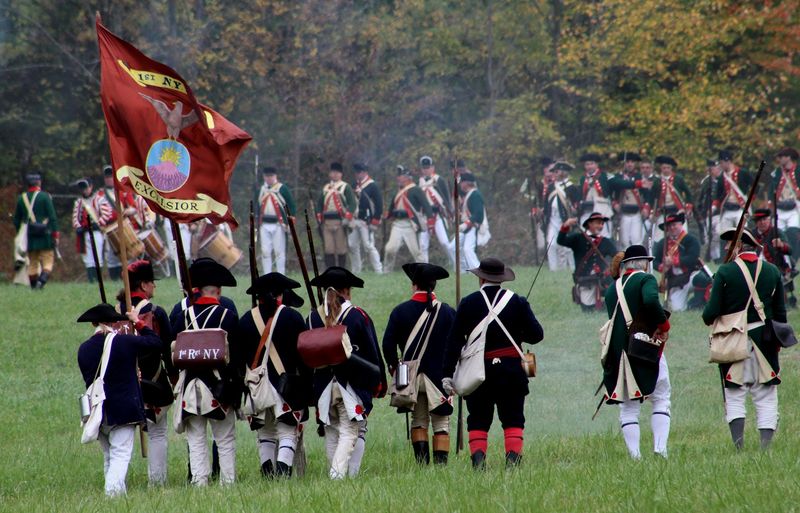
In 1777, with the Revolutionary War heating up across the colonies, the Schoharie Valley church was transformed into a military stronghold. A log stockade was built around it, and the building officially became known as the Lower Fort.
It joined two other forts in the valley as part of a defensive network protecting local settlers.
The most dramatic moment came on October 17, 1780. A force of around 800 Loyalists and Native Americans, led by Sir John Johnson and Mohawk Captain Joseph Brant, swept through the Schoharie Valley in a coordinated raid.
They attacked the Lower Fort but were unable to break through its defenses.
The raid was fierce and fast. The attackers burned farms and crops throughout the valley, but the fort held.
That resilience mattered enormously to the communities sheltering inside its walls. The transformation from church to fort was not just a practical military decision.
It was a community choosing to protect itself using the strongest structure it had.
That choice, and the building that made it possible, is exactly why the Old Stone Fort Museum Complex exists today as one of New York’s most compelling Revolutionary War sites.
The Cannonball Hole That History Left Behind
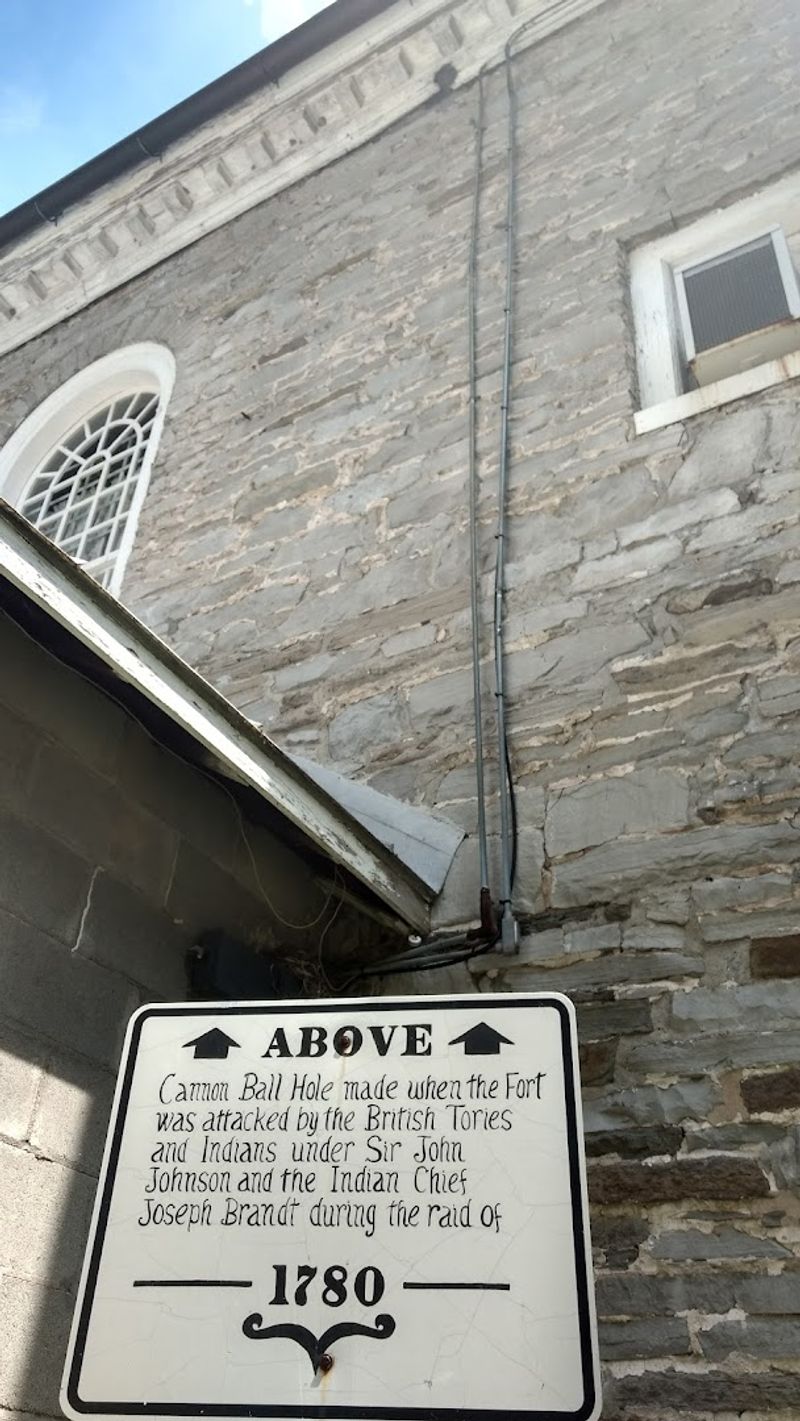
Of all the things you will see at the Old Stone Fort Museum Complex, the cannonball hole might be the most quietly stunning. It sits in a cornice at the rear of the building, visible from the cemetery side, and it has been there since October 17, 1780.
Nobody patched it. Nobody covered it up.
It is just there, matter-of-fact and undeniable.
The cannonball that made it did not bring the building down. The fort held, the settlers survived, and the stone church outlasted the war by centuries.
Inside the museum, the actual cannonball and the original beam it struck are preserved and on display, giving visitors a complete picture of the moment from two angles.
There is something genuinely moving about standing next to a hole that was made during a battle you learned about in school. It collapses the distance between then and now in a way that no textbook ever quite manages.
The cannonball hole is not a recreation or a replica. It is the real thing, sitting exactly where it landed, turning a quiet corner of a New York churchyard into one of the most tactile history experiences in the entire state.
Inside The Museum: Artifacts Worth Every Minute
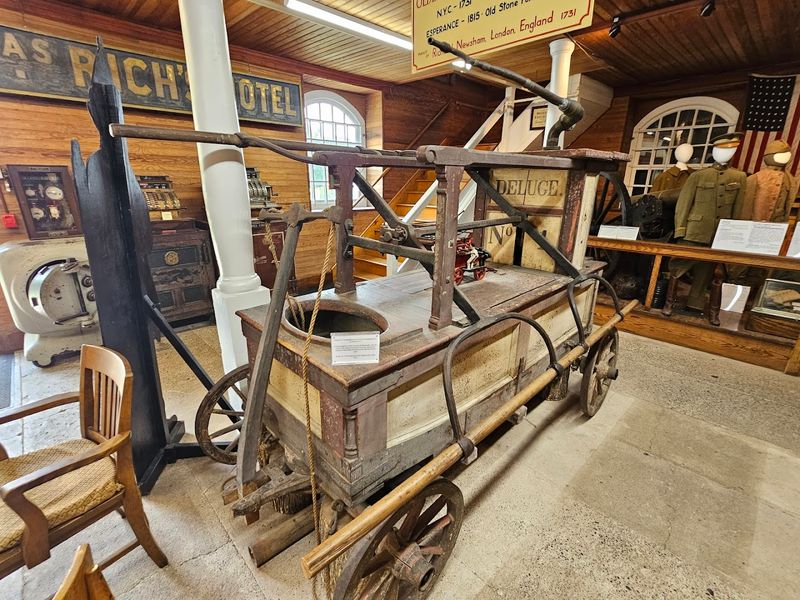
Once you step past the stone threshold, the museum opens up into a genuinely broad collection. The ground floor covers local history with military antiques, colonial tools, and items tied directly to the Schoharie Valley’s past.
Every display case feels thoughtfully arranged, not overwhelming but satisfying.
Head upstairs and the tone shifts into something wonderfully unexpected. The upper floor houses a 19th-century curiosity collection that the museum has maintained since its earliest days.
Weapons from the Philippines, unusual artifacts from around the world, and objects that defy easy categorization sit alongside more traditional historical displays. It is the kind of collection that makes you slow down and look twice.
One standout piece is the oldest fire truck in the United States, which is preserved inside the museum. That single fact alone tends to stop visitors mid-step.
The staff adds real value to every visit. They know the stories behind the objects and share them freely without making you feel like you are on a scheduled tour.
Plan for at least 90 minutes inside the main building alone, and more if you want to explore the full complex at the pace it deserves.
The Cemetery That Completes The Picture
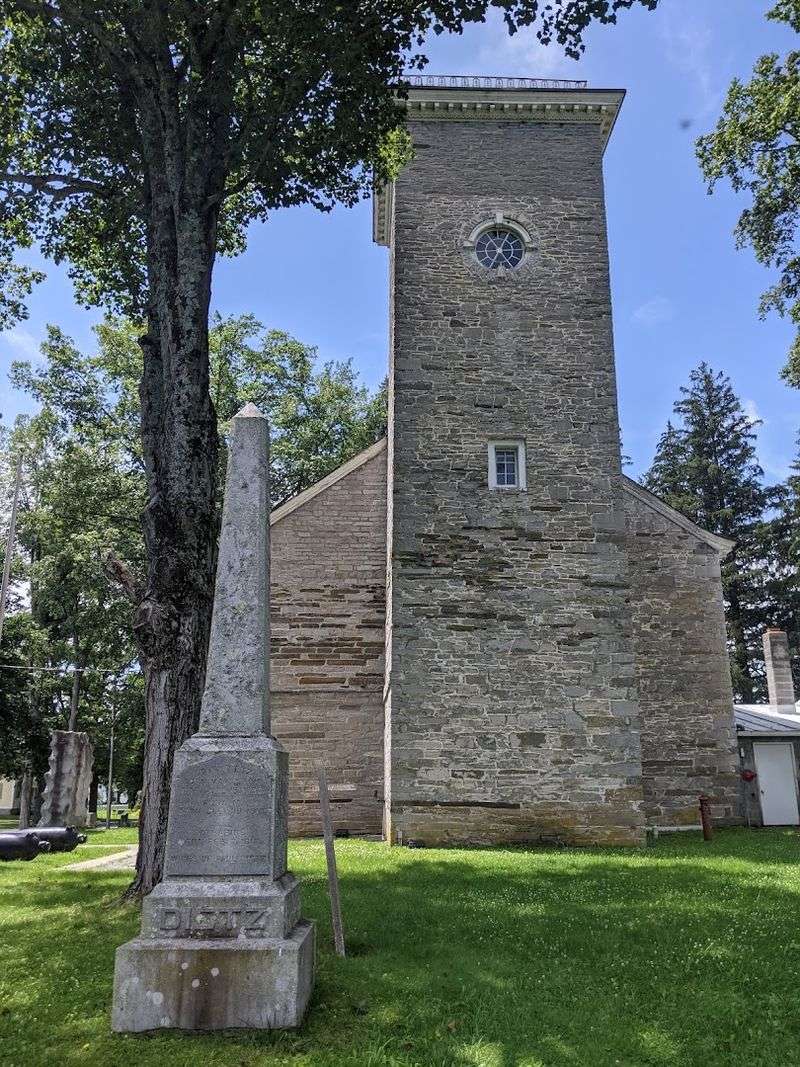
Right behind the main building, the cemetery at the Old Stone Fort Museum Complex holds some of the oldest headstones in the Schoharie Valley.
Many of the markers belong to Palatine settler families, the same people who built the church and later sheltered inside its fortified walls during the war.
Walking through the cemetery is a calm, grounding experience. The old stones have a quiet dignity to them, and the proximity to the cannonball hole in the cornice above makes the space feel especially layered.
History is literally overhead and underfoot at the same time.
The cemetery is accessible even on days when the museum building is closed, which makes it a worthwhile stop regardless of your timing. Genealogy enthusiasts have long made the trek to Schoharie specifically to search these grounds for family connections.
Even visitors with no personal ties to the area find the space meaningful. The headstones are worn but still legible in many cases, and the setting, with the stone church rising behind the markers, creates one of the most atmospheric views the entire complex has to offer.
Bring a camera and take your time.
The Fort Annex Across The Street
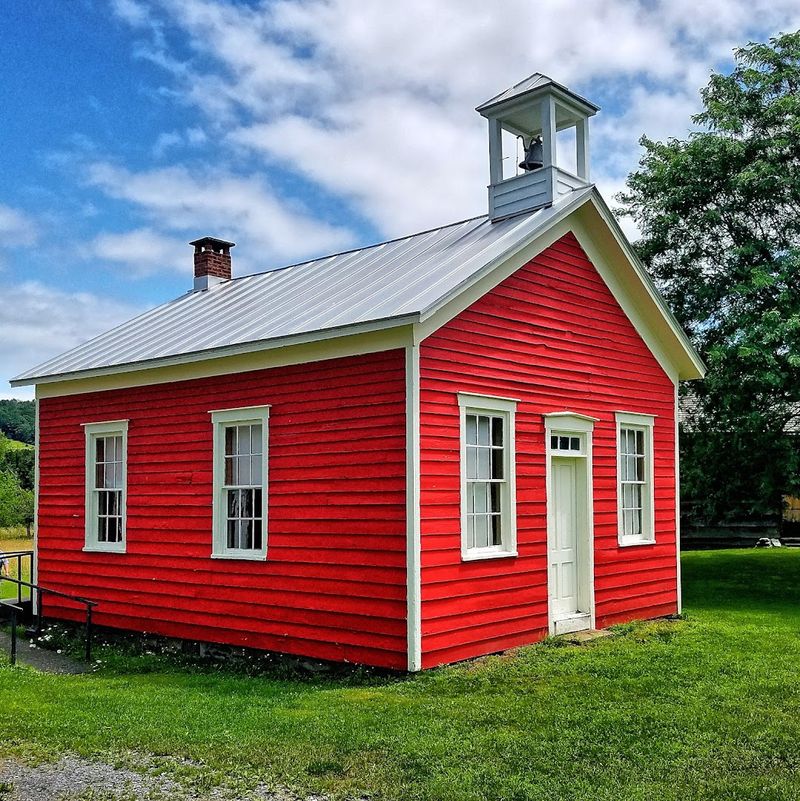
Many visitors arrive focused on the main stone building and leave without crossing the street. That is a genuine missed opportunity.
The Fort Annex sits directly across from the main museum and brings together roughly eight historic structures that were relocated to the site for preservation.
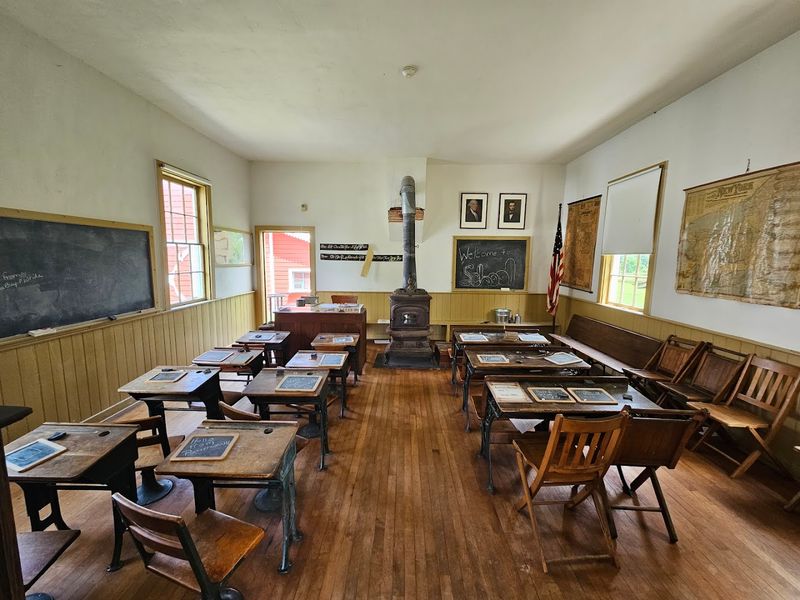
Among them you will find a one-room schoolhouse that gives a vivid sense of what early education looked like in rural New York. A preserved law office, a barn, and several other period structures round out the collection.
Each building is set up to reflect its original function, making the annex feel less like a storage lot and more like a living village.
Staff members are happy to point visitors to the annex, and the knowledgeable team ensures no one misses it.
The schoolhouse in particular tends to be a crowd favorite, especially for younger visitors who find it both funny and fascinating that children once sat in those tiny wooden seats for full school days.
The annex is included in the general admission, so there is no extra cost to explore. It simply rewards the curious visitor who takes the time to look beyond the main attraction.
Kids, Scavenger Hunts, And Real History
History museums can sometimes feel like homework in a prettier building. The Old Stone Fort Museum Complex works hard to avoid that.
A scavenger hunt designed for younger visitors runs through the upper floor of the main building, turning artifact exploration into a game that keeps kids genuinely engaged.
Parents consistently note that the activity holds attention in a way that simply walking past display cases does not. The scavenger hunt encourages kids to observe details, ask questions, and interact with the space rather than just pass through it.
It is a small touch with a big payoff for family visits.
Beyond the scavenger hunt, the collection’s variety does much of the heavy lifting. Prehistoric tools sit near colonial-era weapons.
A 19th-century curiosity cabinet sits upstairs waiting to spark questions. The oldest fire truck in the country tends to get a strong reaction from visitors of all ages.
Families who visit the full complex, including the annex schoolhouse, often find that children are still talking about specific exhibits on the drive home. That kind of lasting impression is not something every museum achieves, and the Old Stone Fort earns it honestly.
Plan Your Visit And Make A Day Of It
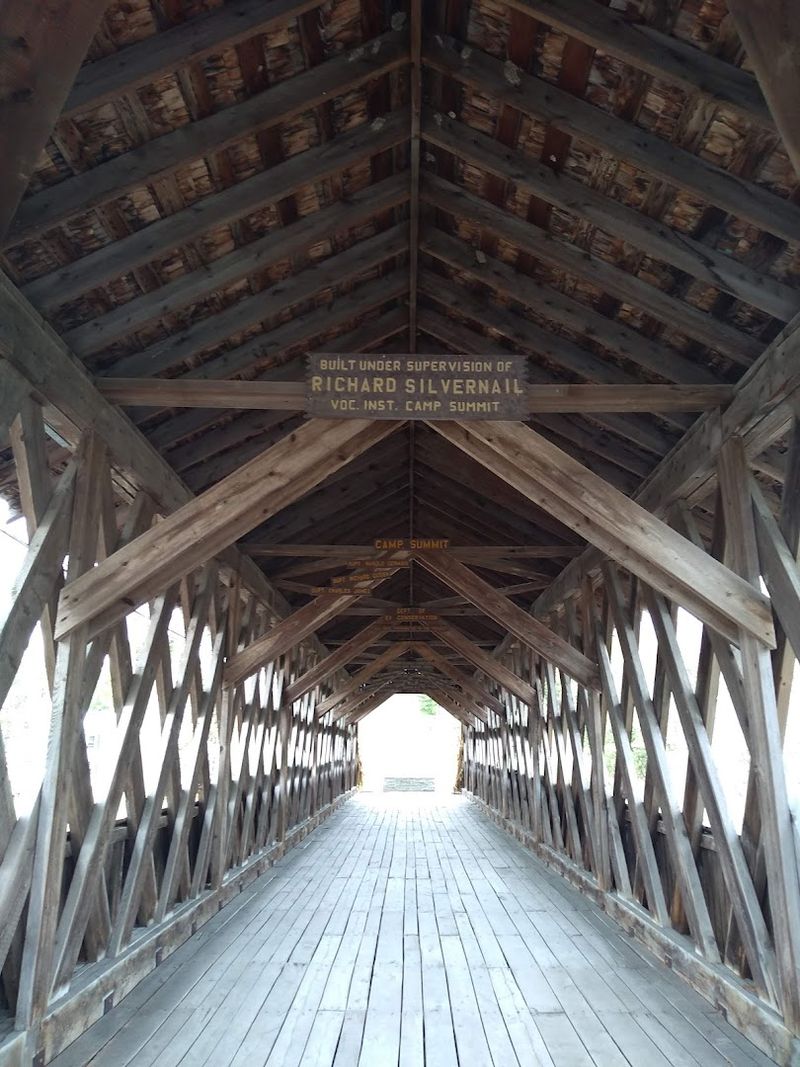
A visit to the Old Stone Fort Museum Complex pairs naturally with everything else the Schoharie Valley has to offer. About half a block down the road from the museum, a historic covered bridge sits over a quiet creek and is absolutely worth the short walk.
It is the kind of detail that turns a good afternoon into a great one.
The museum is open Tuesday, Monday, and Friday from 10 AM to 4 PM, and on Saturday and Sunday from 10 AM to 5 PM. Wednesday and Thursday are closed, so plan accordingly.
Admission is priced accessibly, with reduced rates for younger visitors, and the experience easily justifies the cost.
If you find yourself hungry after exploring, staff members have been known to recommend the Carrot Barn nearby as a solid lunch option. New York’s Schoharie Valley is genuinely underrated as a day-trip destination, offering history, scenery, and an unhurried pace that makes exploration feel restorative rather than rushed.
Whether you come for the cannonball hole, the cemetery, the curiosity collection, or simply to stand inside a building that has outlasted empires, the Old Stone Fort Museum Complex delivers something real.
Call ahead at 518-295-7192 or visit theoldstonefort.org to confirm hours before you go.