
This Hidden Mississippi Waterfall Is One Of The State’s Best Kept Outdoor Secrets
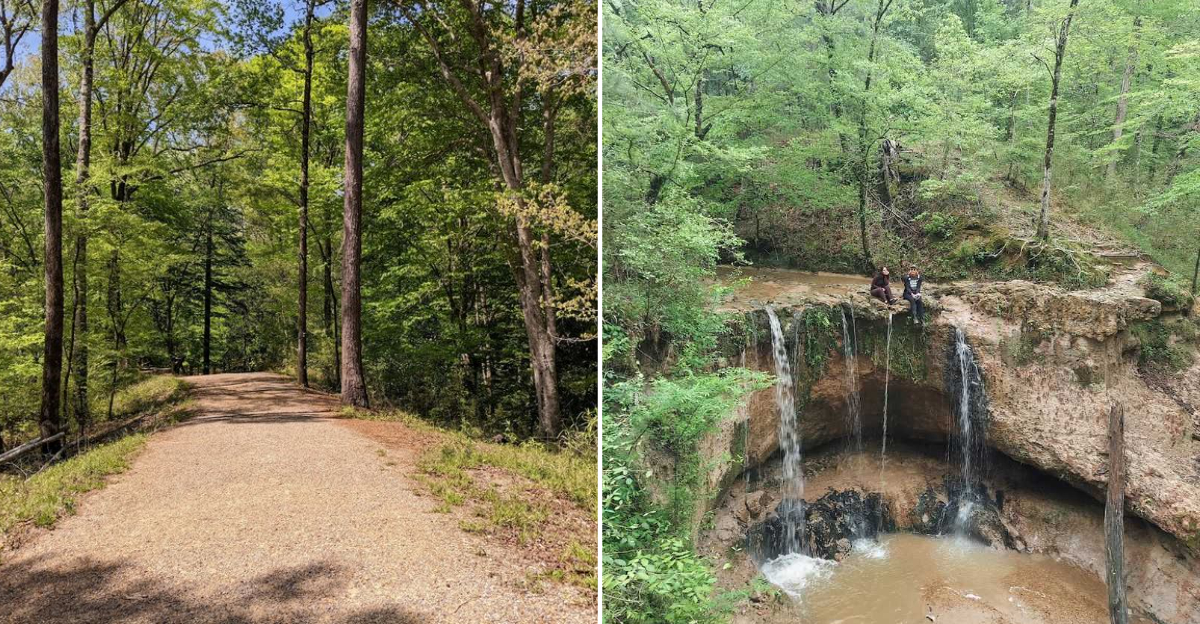
Most waterfalls that deserve attention have already been found and tagged beyond recognition. This one managed to avoid that fate entirely, sitting exactly where it has always sat without an audience large enough to change it.
The trail offers no dramatic previews or markers that build anticipation deliberately. The waterfall simply appears, and that absence of warning makes the arrival considerably more satisfying than a sign ever could.
Visitors who find it describe the experience with the restraint of people still deciding how much to share. That hesitation is the most honest review any hidden outdoor spot ever receives.
Mississippi keeps its natural surprises across landscapes that discourage casual exploration. This waterfall rewards the effort with something the state’s outdoor reputation rarely gets credit for producing.
Geological Formation And History
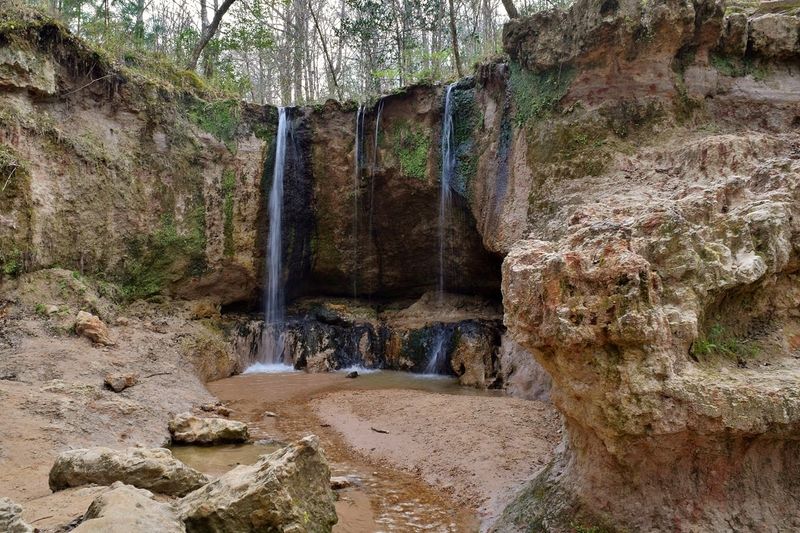
The waterfalls at Clark Creek did not appear overnight. They formed over millions of years through a fascinating geological process.
The Citronelle formation, laid down between 2.8 and 6.6 million years ago, is the star of the show.
This ancient layer is made of sand and gravel. Iron oxide nodules inside it create those deep red streaks you see in the rock.
Over time, as the formation dries, it hardens into siltstone ledges. Those ledges are what make the waterfalls possible.
The landscape also features steeply sloping loess bluff hills. These bluffs give the area its dramatic, rugged character.
You will also notice layers called Peoria loess and the Upland Complex mixed throughout the terrain.
Clark Creek Natural Area officially became a protected park in 1978. That protection came through a joint effort by the Mississippi Wildlife Heritage Committee and The Nature Conservancy.
It is a 700-acre preservation area that has stayed wild ever since.
Standing near one of those waterfalls and knowing the rock beneath your feet is millions of years old is a surreal feeling. The geology here is genuinely rare for the South.
You can find the park at 366 Ft Adams Pond Rd, Woodville, MS 39669.
Flora And Fauna Surrounding The Waterfall
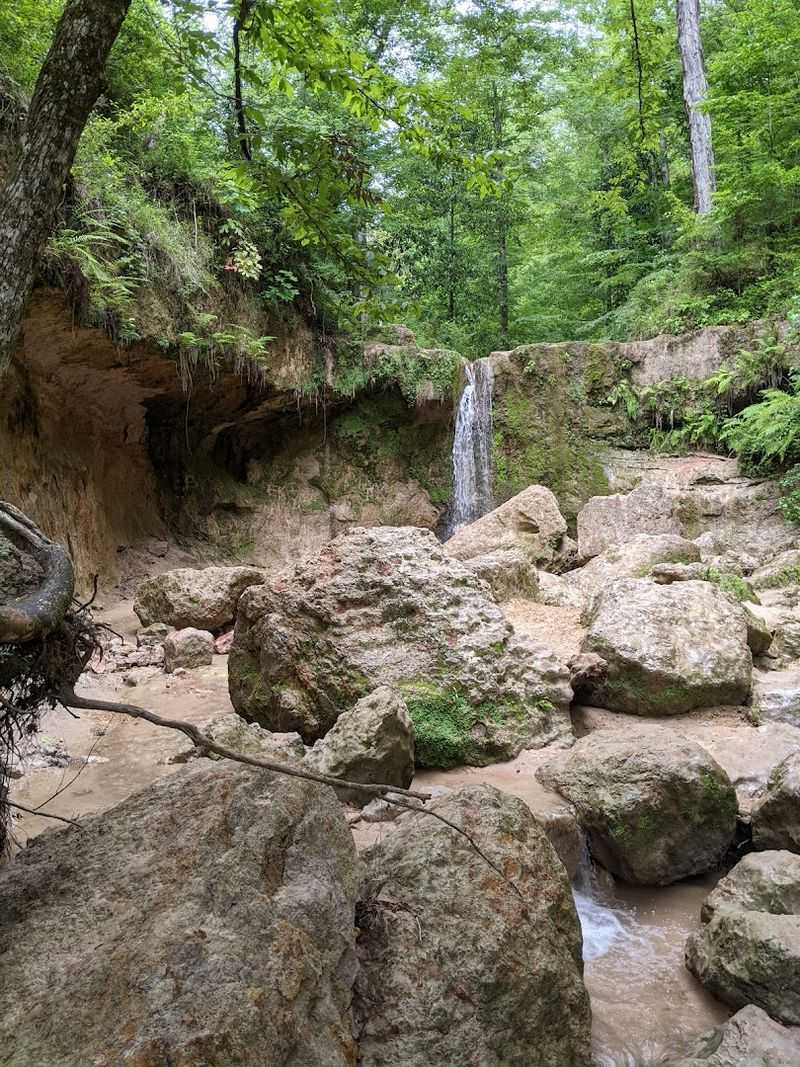
Clark Creek Natural Area is basically a living encyclopedia of Southern plant life. Large beech trees and magnolia trees dominate the forest canopy.
Walking beneath them feels like entering a green cathedral.
The park also hosts some genuinely rare species. Southern sugar maple and pyramid magnolia grow here, which is unusual for Mississippi.
Even more impressive, the park holds world records for its Mexican plum and bigleaf snowbell trees. That is not something you hear every day.
The understory is packed with wildflowers, especially in spring. Ferns, mosses, and flowering shrubs fill in every gap.
The biodiversity here is remarkable for a 700-acre space.
Wildlife is equally impressive. White-tailed deer, chipmunks, and black bears all call this area home.
Yes, black bears. Keep your snacks close and your eyes open.
Birds are plentiful throughout the year, both migratory and resident species. Snakes are present too, so watch your step on rocky ledges.
A rare land snail also lives here, which sounds small but is a big deal ecologically.
The state endangered Southern red belly dace fish thrives in the creek waters. Spotting one takes patience, but it is worth the effort.
The natural world at Clark Creek is layered, alive, and endlessly interesting.
Seasonal Variations And Their Effects On Flow
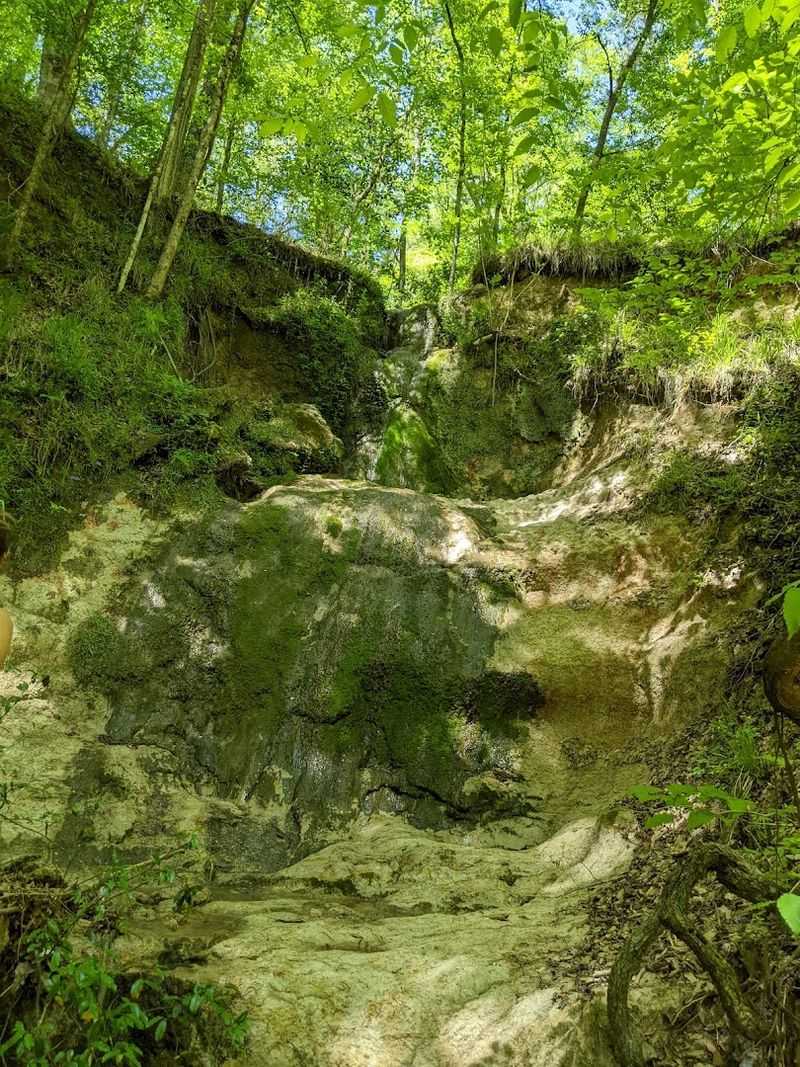
Not every visit to Clark Creek looks the same. The waterfalls change dramatically depending on the season and recent rainfall.
That unpredictability is honestly part of the charm.
Early spring is widely considered the best time to visit. Rainfall is more frequent, wildflowers are blooming, and the water flow is at its strongest.
All 50 waterfalls can be active during periods of adequate rainfall. That is a lot of cascading water in one place.
Summer visits are possible but come with trade-offs. The humidity in southwest Mississippi is no joke.
Water levels can drop significantly during dry stretches, and some falls may slow to a trickle.
Autumn brings a beautiful payoff. The hardwood trees turn brilliant shades of red, orange, and gold.
Even if the water flow is lighter, the color contrast against the rock is stunning. It makes for incredible photos.
Winter visits are quieter and cooler, which some hikers prefer. Fewer crowds, fewer bugs, and a certain stark beauty to the bare forest.
Water flow in winter depends heavily on storm patterns.
Planning your trip around recent rainfall is a smart strategy. Check local weather before heading out.
A good rain two or three days before your visit usually means the falls will be flowing well and worth every step of the hike.
Hiking Trails And Access Points Nearby
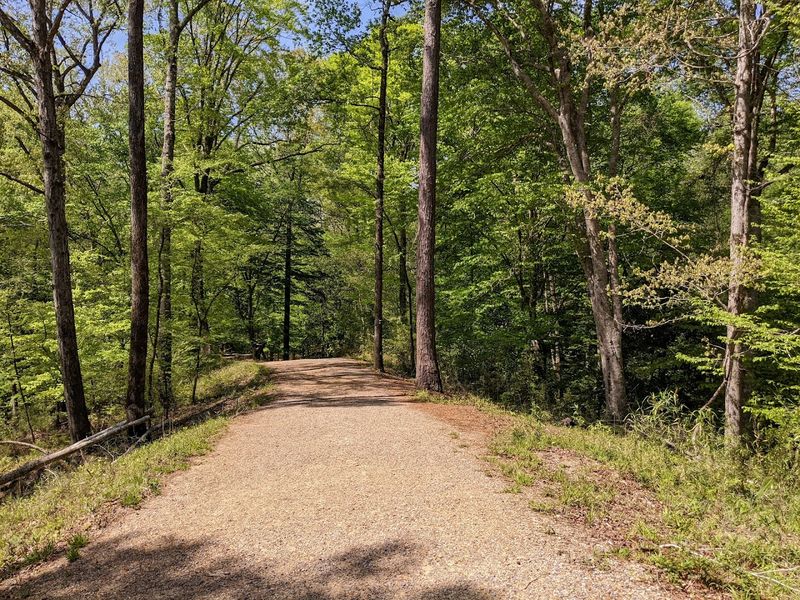
Clark Creek offers two main trail options, and they are very different experiences. The improved trail is about 1.75 miles and typically takes around two hours to complete.
It features pea gravel surfaces and steep wooden stairs.
The primitive trail is a whole different level of commitment. It stretches approximately 2.6 miles and can take three to five hours.
Expect fallen trees, creek crossings, and some genuinely rugged terrain. It is not for casual walkers.
Both trails are steep in sections. Sturdy footwear is not just recommended; it is essential.
Hiking boots with good grip will save you from some very embarrassing slips on wet gravel.
The park is located approximately 13 miles west of Woodville, Mississippi, off Highway 24. There is a parking area at the entrance where you will find restrooms.
Water is available at the trailhead but not on the trails themselves, so bring plenty for the hike.
A small parking fee applies and operates on an honor system. Check current rates before visiting as they can change.
Check the official MDWFP website for current hours and any seasonal updates before making the trip.
Trail maps and signs are posted throughout, though some sections require close attention. The primitive trail especially demands focus.
Getting turned around out there is easier than you might expect, so stay aware of your surroundings at all times.
Wildlife Watching Opportunities In The Area
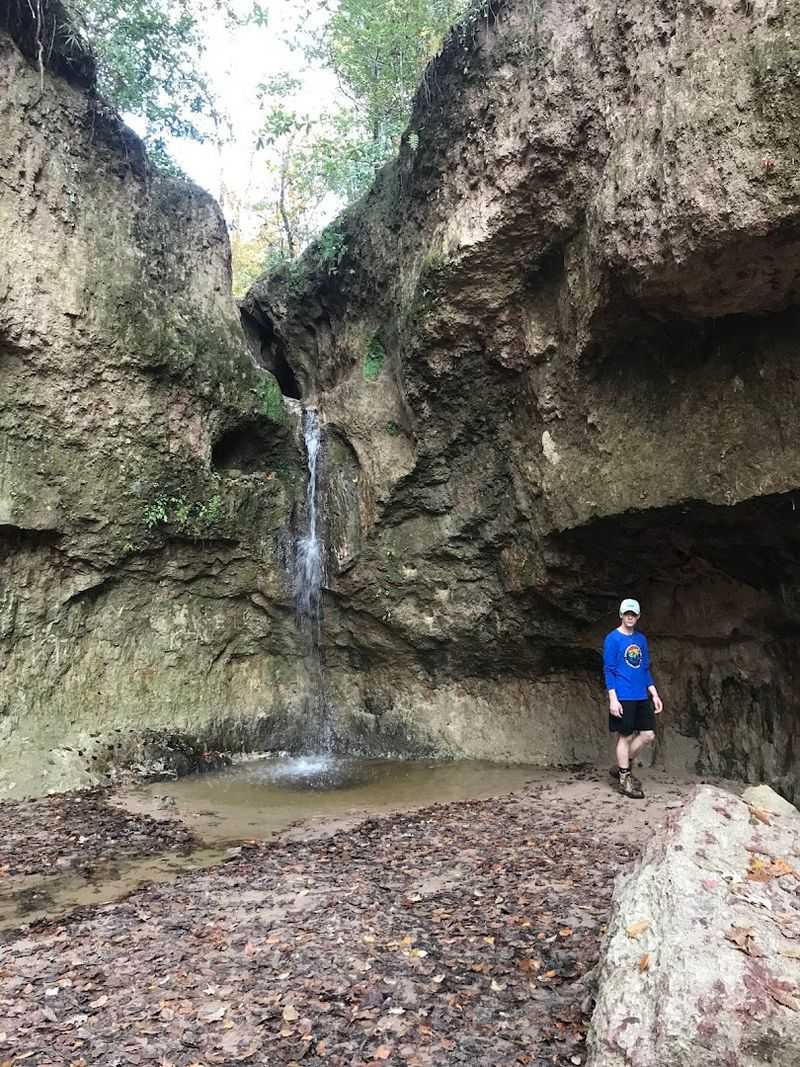
Clark Creek Natural Area is a genuinely rewarding spot for wildlife observation. The mix of forest, creek, and bluff habitat creates ideal conditions for a wide variety of species.
You do not need to be an expert naturalist to enjoy what shows up here.
White-tail deer are commonly seen along the trails, especially in early morning. Chipmunks and squirrels are practically everywhere.
They are bold, curious, and completely unbothered by hikers.
Foxes, coyotes, and armadillos are also present in the area. Black bears have been documented here too.
Sightings are not guaranteed, but knowing they are out there adds a certain electricity to the hike.
Birds are a major draw for wildlife enthusiasts. Both migratory and resident species pass through throughout the year.
Bring binoculars if bird watching is your thing. The forest canopy creates excellent cover for songbirds and woodpeckers.
Dawn and dusk are peak activity times for most animals. Arriving early in the morning gives you the best chance of spotting something memorable.
Moving slowly and quietly on the trail makes a real difference.
The creek itself supports aquatic life, including the state-endangered Southern red belly dace. Watching for movement in clear, shallow water near the falls is a surprisingly peaceful activity.
Nature at Clark Creek rewards patience more than speed every single time.
Camping Sites And Outdoor Amenities
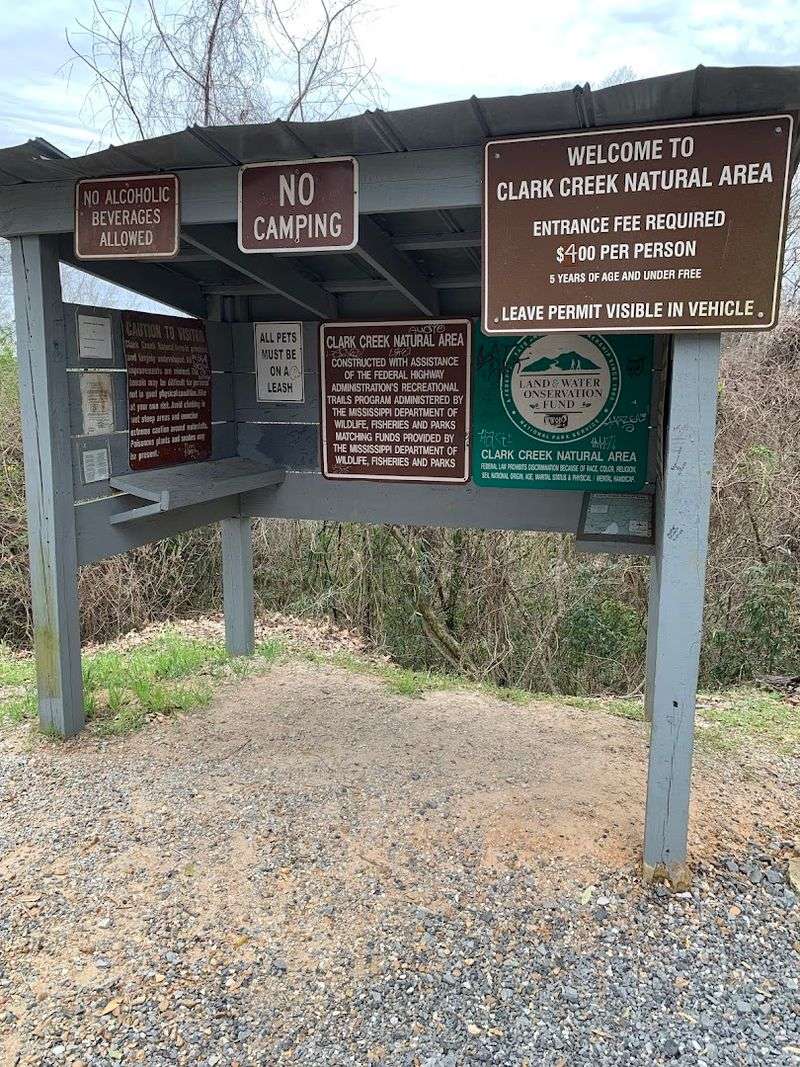
Camping inside Clark Creek Natural Area itself is not permitted. The park is a preservation area, and overnight stays within its boundaries are not allowed.
That rule exists to protect the ecosystem, and it is worth respecting.
The good news is that nearby options exist. End of the World RV Park and Clear Springs Campground are both within a reasonable driving distance.
They offer a base camp for multi-day exploration of the region.
On-site amenities are limited but practical. Public restrooms are available at the parking area near the trailhead.
That is a genuine convenience after a long hike, and you will appreciate it more than you expect.
There are no food services on site. Pack your own snacks and meals before arriving.
A cooler in the car with cold water and food waiting at the end of a tough hike is one of life’s simple pleasures.
Potable water is not available anywhere in the park. Bring more water than you think you will need.
Dehydration on a steep, humid trail is not a fun situation.
The park operates daily from 8 AM to 5 PM. Plan your hike so you are back at the trailhead well before closing.
Getting caught on the primitive trail after dark is a scenario best avoided entirely. Preparation makes the whole experience smoother and more enjoyable for everyone.
Conservation Efforts And Environmental Impact
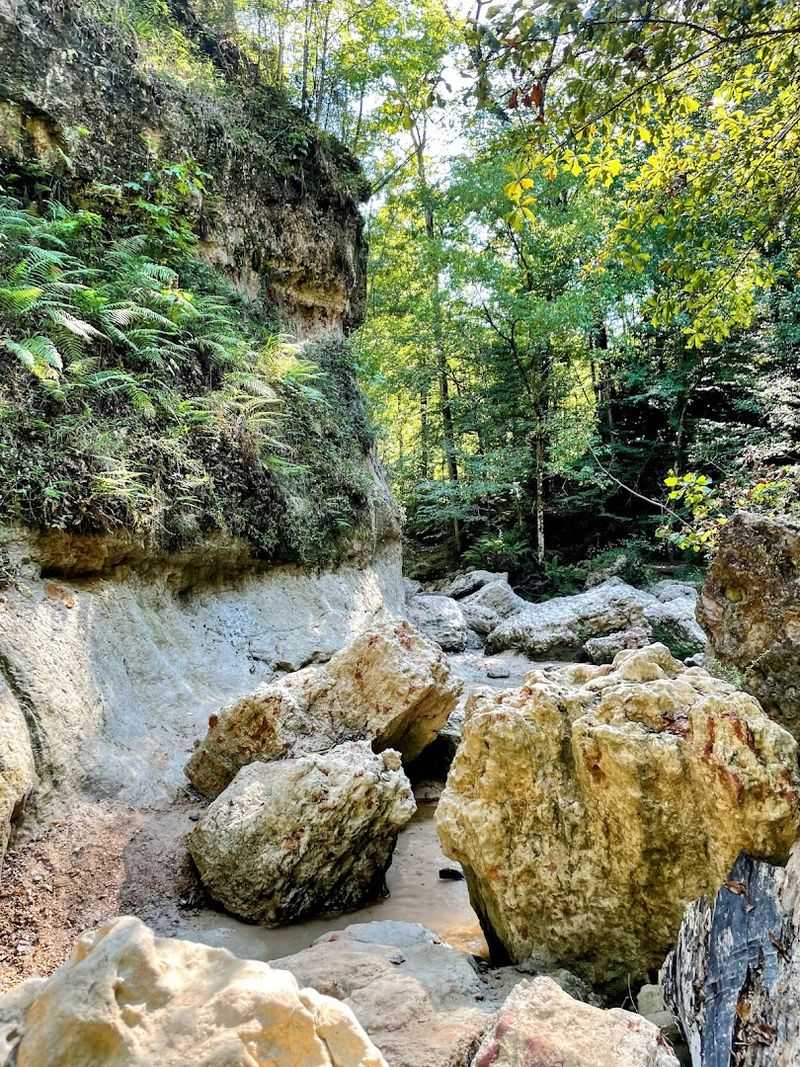
Clark Creek Natural Area covers 700 acres of protected land. It was established in 1978 specifically to preserve its rare and fragile environment.
The effort required cooperation between multiple organizations, including the Mississippi Wildlife Heritage Committee and The Nature Conservancy.
The park provides critical habitat for the threatened black bear. Without protected land like this, bear populations in southwest Mississippi would face serious pressure.
The forest buffer here matters more than most visitors realize.
The federally endangered Carolina magnolia vine grows within the park boundaries. The state-endangered Southern red belly dace fish also depends on the creek’s clean, undisturbed water.
Both species are rare enough that losing this habitat would be a significant ecological loss.
Hunting is strictly prohibited inside the natural area. Motorized vehicles are not permitted either.
Only foot traffic is allowed, which keeps the landscape intact and minimizes soil erosion on the steep bluff terrain.
Litter is an ongoing concern at the park. Some visitors have noted trash left behind on the trails, which is disappointing in a place this ecologically significant.
Packing out everything you bring in is a basic responsibility here.
The conservation framework at Clark Creek is a model for how natural areas can be protected without heavy development.
Keeping it wild and accessible at the same time is a balance worth maintaining for future generations who will want to experience it too.
Photography Tips For Capturing Scenic Views
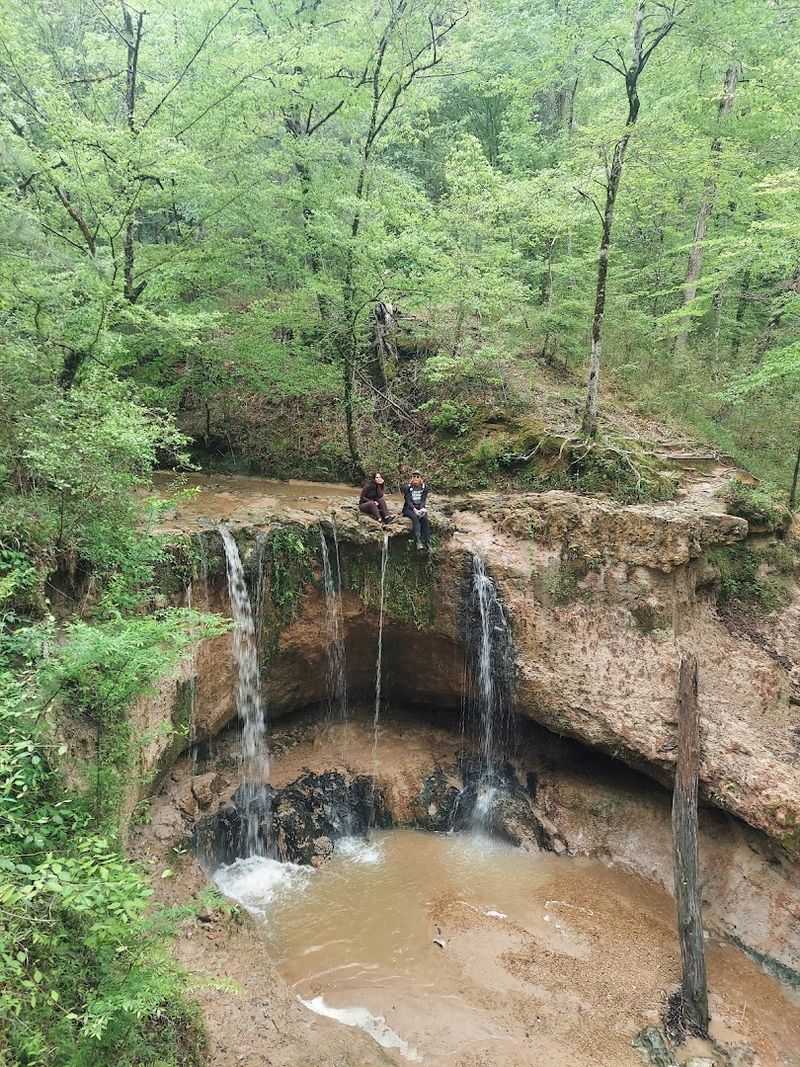
Clark Creek Natural Area is a photographer’s dream, but it takes some planning to get the best shots. The waterfalls are the obvious subject, and they photograph beautifully when the water is flowing well.
Visit after a good rainfall for maximum drama.
A slow shutter speed creates that silky, flowing water effect that looks incredible in waterfall photos. A tripod is useful here, though carrying one on steep trails requires some commitment.
A lightweight travel tripod is a solid compromise.
Spring offers vibrant green foliage and wildflowers as natural backdrops. Autumn delivers warm reds and golds that contrast beautifully against the dark rock faces.
Both seasons produce stunning results with very different moods.
Overcast days are actually ideal for waterfall photography. Direct sunlight creates harsh shadows in forested areas and blows out the white water.
A cloudy sky acts like a natural diffuser and gives your images even, flattering light.
The diverse plant life here is worth photographing beyond just the waterfalls. Rare trees, mosses, ferns, and wildflowers all make compelling subjects.
Macro photography works especially well for the smaller botanical details along the trail.
Protect your gear on the trail. The terrain is rugged, and creek crossings are real.
A waterproof camera bag or dry bag insert is smart packing. Getting your camera wet on a slippery rock is a memory nobody wants to make at Clark Creek.