
Massachusetts Is Home To A Grand Gothic Revival Cathedral With Deep Boston History
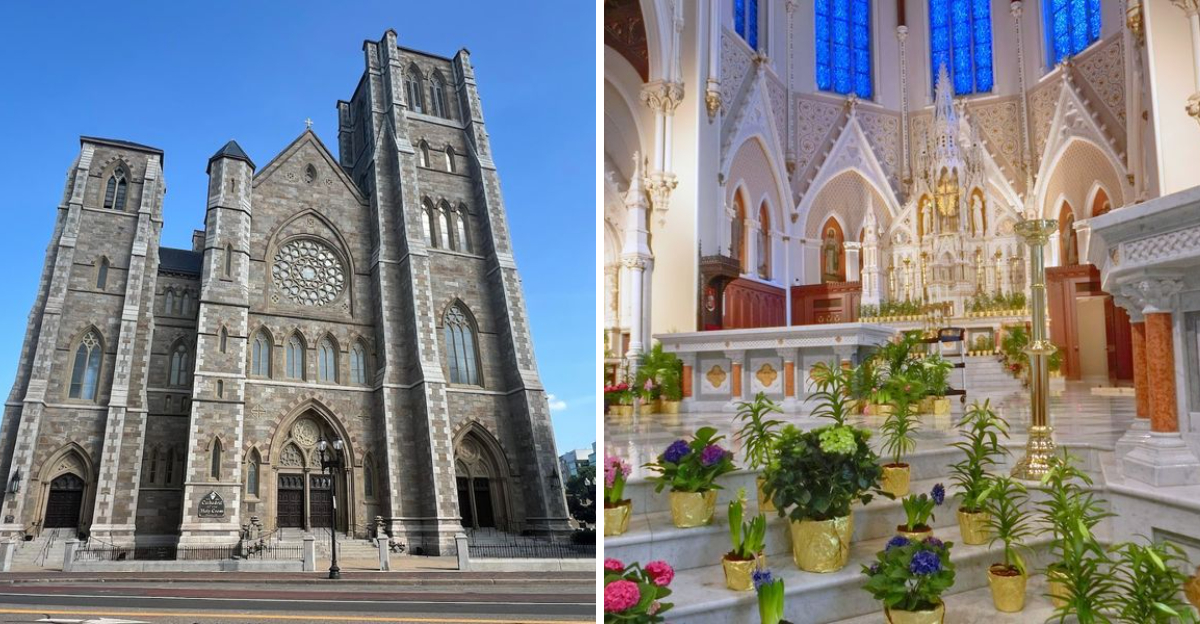
Some buildings demand a second look. Massachusetts holds one of those.
A towering brick structure rises with pointed arches and stained glass that catches light in striking ways. Construction started during the Civil War era.
It took nearly a decade to finish. Boston’s population was exploding then, filled with new immigrants searching for a place to belong.
The result still stands as one of the largest Catholic churches in New England. It seats thousands under a soaring vaulted ceiling.
Step past the heavy doors and city noise disappears almost instantly. Massive columns rise toward a ceiling that seems too high to be real.
The pipe organ alone carries a history worth learning. Visitors come for architecture tours, quiet reflection, or simply to see craftsmanship modern construction rarely attempts.
This landmark holds more than a century of stories, and every visit reveals something new.
A Beacon Of Faith And Foundation
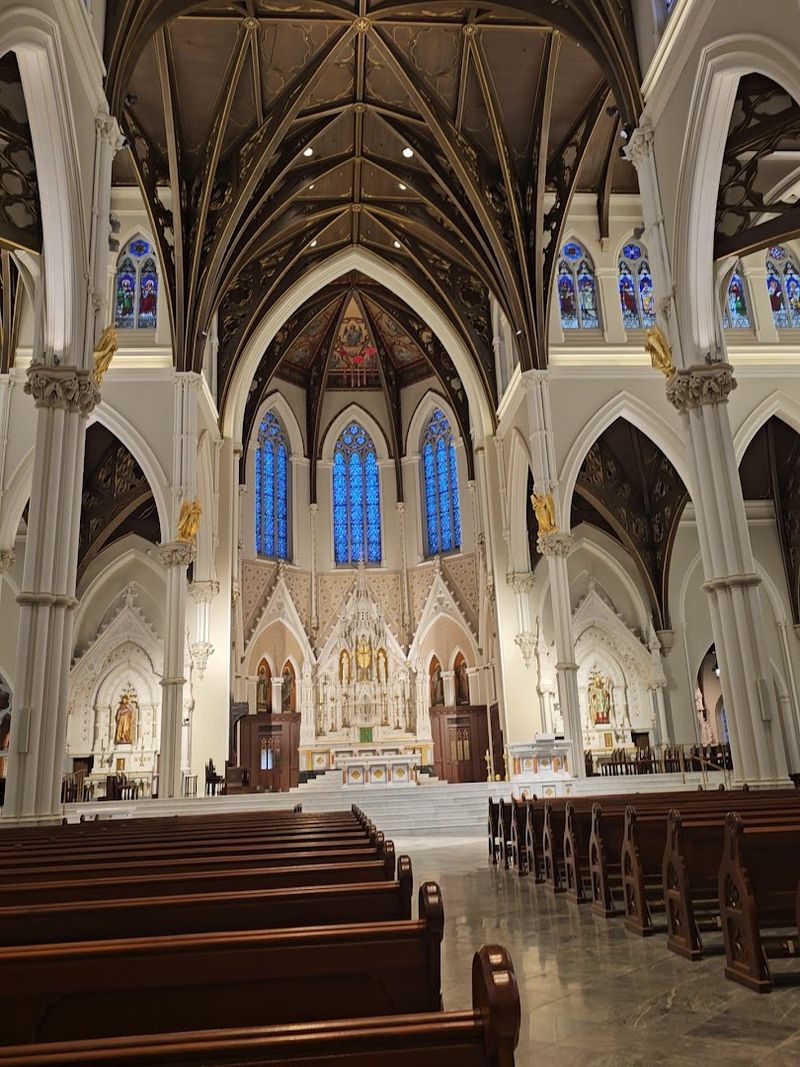
Before a single stone was laid, the need for this cathedral was already urgent. Boston’s Catholic population had grown at a pace that outstripped every available space.
The original Holy Cross Church, designed by Charles Bulfinch and opened in 1803 had long since reached its limit.
Bishop John Fitzpatrick recognized the challenge and began planning a grander structure in 1860. The Civil War delayed progress, but groundbreaking finally took place in April 1866.
The cathedral was dedicated on December 8, 1875, a date that carries deep significance in the Catholic calendar.
What makes the origin story remarkable is how the building was funded. The community itself raised the money, parishioner by parishioner, dollar by dollar, in the difficult years following a national war.
The cathedral stands today as proof that collective devotion can produce something genuinely extraordinary. The foundation was not just stone and mortar.
It was the shared determination of a people who believed a great church was worth every sacrifice.
Stones That Whisper History
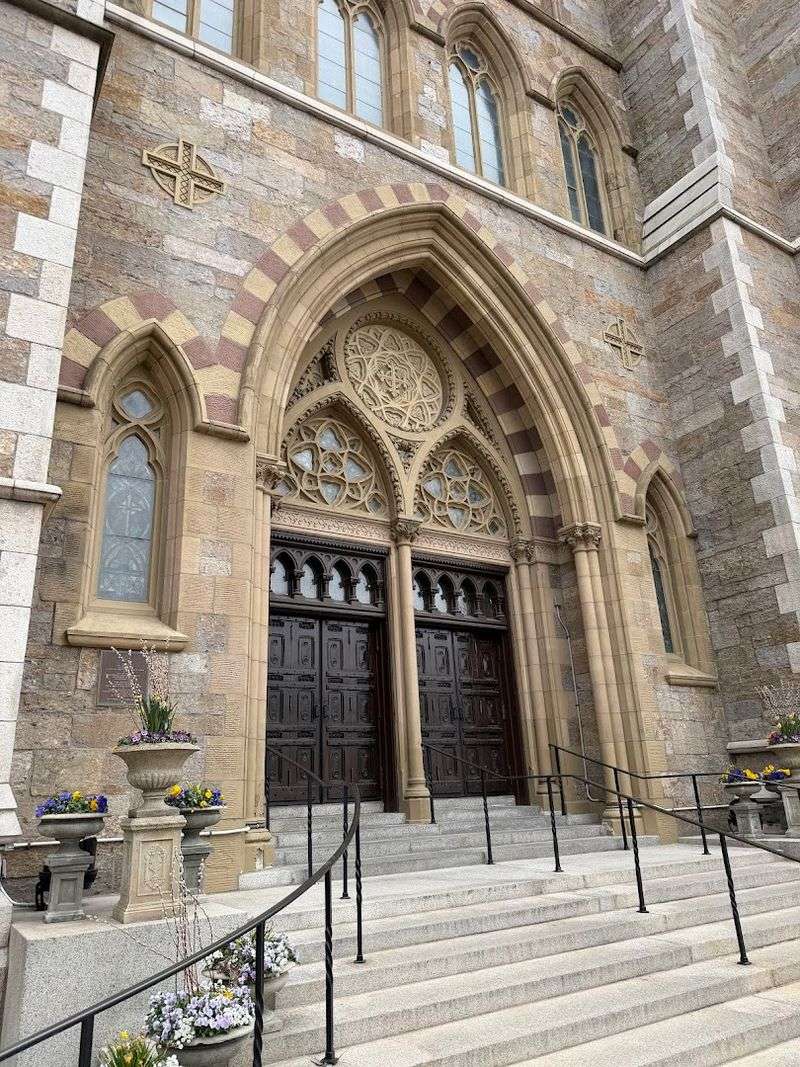
Run your hand along the exterior of this cathedral and you are touching Massachusetts itself. The outer walls are built from Roxbury puddingstone, a conglomerate rock found naturally in the Boston region.
Paired with grey limestone from Quincy quarries, the combination gives the building a texture and palette that feels organically New England.
But the most quietly powerful detail is hidden in plain sight. Bricks salvaged from the Ursuline convent in Charlestown, burned during anti-Catholic riots in 1834, were deliberately placed in the arch above the main entrance.
That decision was not accidental. It was a statement, a way of saying that the community had endured and would continue to endure.
Every material used in the construction carries a story. The stone did not come from distant quarries or imported shipments. It came from the land the community already called home.
For a building meant to serve immigrants searching for belonging, that choice of local materials was as meaningful as any sermon preached within its walls.
The exterior of the Cathedral of the Holy Cross is not just architecture. It is a record of survival written in rock.
An Architectural Symphony In Stone
Patrick Keely designed sixteen Catholic cathedrals across the United States, and the Cathedral of the Holy Cross stands among his finest achievements.
An Irish-American architect with a commanding understanding of ecclesiastical proportion, Keely brought both technical mastery and spiritual sensitivity to the Boston commission.
The numbers alone are impressive. The building stretches 364 feet in length, spans 90 feet in width, and climbs 120 feet in height, making it one of the largest Catholic churches in all of New England.
Original plans called for two soaring towers, though they were never completed. Even without them, the structure commands its surroundings with confidence.
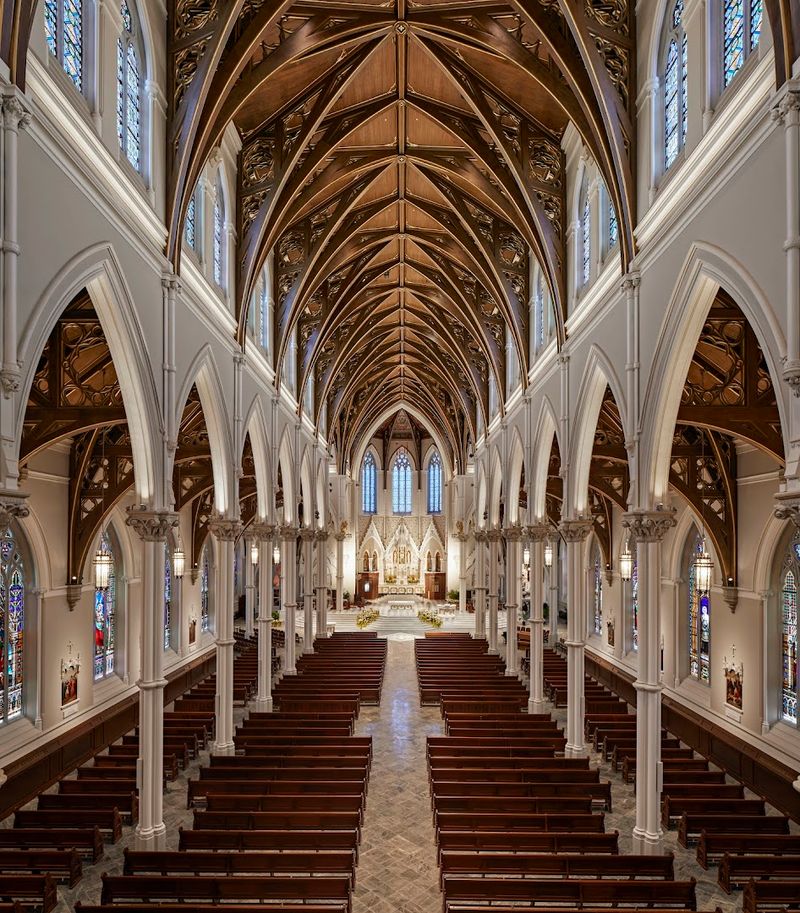
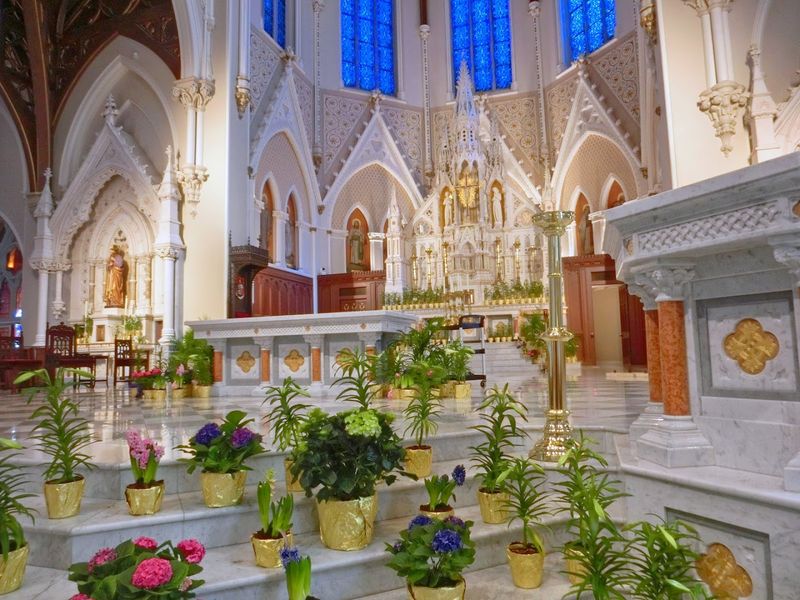
A thorough renovation transformed the interior into something luminous. New white and light grey marble floors reflect ambient light upward, brightening the entire nave.
Ceiling trusses were highlighted in metallic gold, drawing the eye skyward along lines that Keely originally intended.
The pointed arches, the colonnaded nave, and the careful vertical proportions all work together to create a space that feels simultaneously grand and intimate.
Visiting the cathedral today means experiencing Keely’s original vision, now more fully realized than at any previous point in the building’s long history.
Echoes Of A Resilient Community
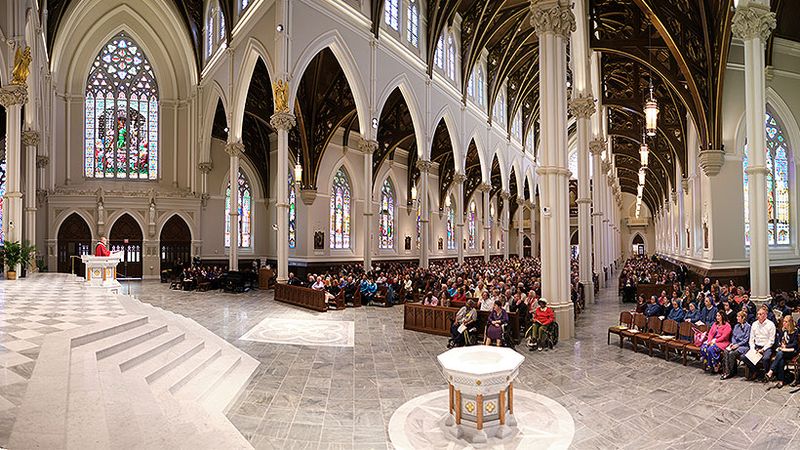
A cathedral built by immigrants carries a different kind of weight than one commissioned by wealthy patrons.
From the very beginning, the Cathedral of the Holy Cross was conceived as a spiritual home for people who had arrived in Boston with very little and were determined to build something lasting.
The Irish community that funded its construction did so in the aftermath of the Civil War, during a period of economic uncertainty and persistent social prejudice.
Raising money under those conditions required more than generosity. It required a collective act of faith in the future.
That founding spirit has never fully left the building. The cathedral has continued to serve successive waves of immigrants and communities, evolving alongside the city’s changing population.
Its parish today reflects the South End’s remarkable diversity, with services conducted in English, Spanish, and the Ethiopian Eritrean Ge’ez Rite. The Latin Mass is also celebrated regularly.
For a building that began as a refuge for one displaced community, its current role as a gathering place for many different cultures feels like a natural continuation of its original purpose.
The cathedral does not simply remember its history. It actively extends that history forward with each passing Sunday.
A Sanctuary For Notable Occasions
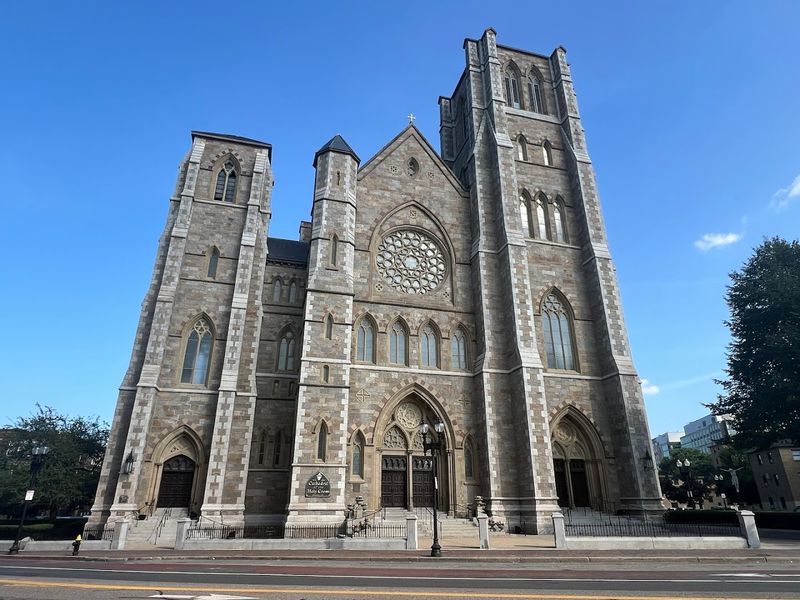
Few buildings in Boston have witnessed as much history as the Cathedral of the Holy Cross. In 1964, the cathedral held a requiem Mass for President John F.
Kennedy, a nationally broadcast event that drew the country together in mourning. The occasion confirmed the cathedral’s place not just in local Catholic life but in the broader American story.
In 1979, Pope John Paul II visited during his first apostolic journey to the United States, leading a prayer service for two thousand priests inside the cathedral. His chair remains on display within the building, a quiet artifact of that extraordinary afternoon.
Nine years later, in 1988, Saint Teresa of Calcutta spoke within the same walls about her mission of charity and service.
More recently, in 2013, the cathedral provided space for reflection following the Boston Marathon Bombing. Former President Barack Obama delivered an address during a prayer service held there for the victims.
The building was added to the National Register of Historic Places in 1973, an acknowledgment that its architectural and historical significance extends well beyond its congregation.
At 1400 Washington Street, history has not just passed through. It has repeatedly chosen this address as its home.
The Resounding Voice Of The Organ
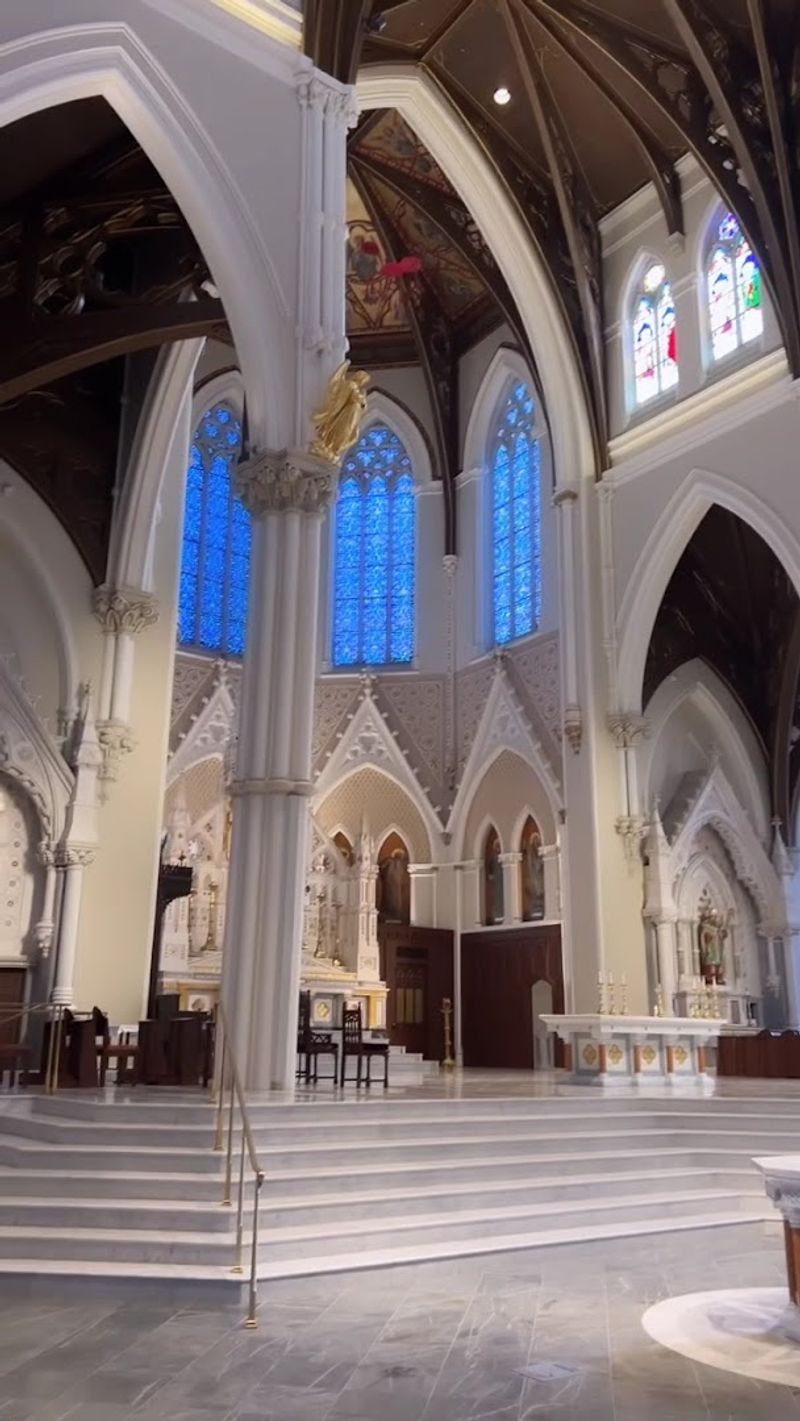
There is an instrument inside the Cathedral of the Holy Cross that has been filling the building with music since the year the cathedral opened.
Built in 1875 by the Hook and Hastings Company of Boston, it is catalogued as Opus 801 and holds the distinction of being the largest surviving instrument ever produced by that celebrated firm.
The organ spans three manuals and a pedal, incorporating 101 ranks in total. Among its specialized components are imported reeds and distinctive stops that give the instrument a tonal richness difficult to replicate with modern construction.
Hook and Hastings, originally known as E. and G. G. Hook, was one of the foremost American organ builders of the 19th century, recognized for combining technical precision with musical sensitivity.
Hearing the organ during a Sunday Mass is an experience that changes the atmosphere of the entire nave.
The sound does not simply fill the space. It transforms it, lending a physical weight to the air that makes the architecture feel even more substantial.
For nearly 150 years, this instrument has served as the cathedral’s musical voice, outlasting renovations, historical upheavals, and generations of organists, remaining as vital today as it was the day it was first played.
Reflecting A Vibrant Modernity
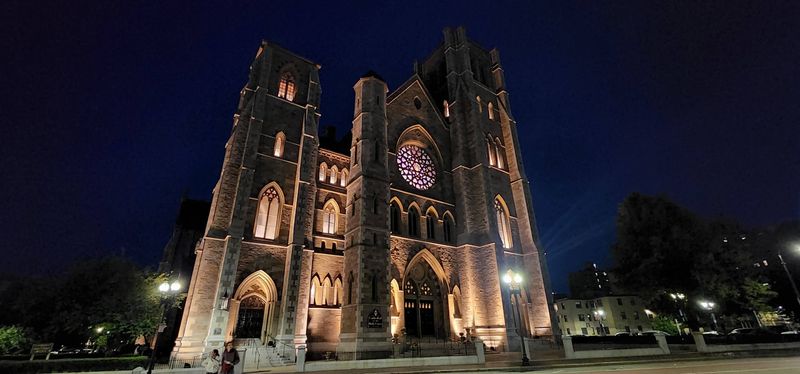
A building that has stood since 1875 faces a particular challenge. It must honor the integrity of its original design while meeting the practical needs of a present-day community.
The Cathedral of the Holy Cross addressed that challenge through a comprehensive renovation that updated the space without erasing what made it meaningful.
The renovation introduced improved accessibility features, modern lighting systems, and updated audiovisual technology, all integrated carefully into the historic structure.
The interior was brightened considerably, making the stained glass windows more vivid and the overall atmosphere more welcoming for visitors of all backgrounds.
The cathedral’s engagement with its community extends well beyond Sunday services.
The building functions as an emergency shelter, a food pantry, and an immunization center, serving the diverse population of Boston’s South End in practical, immediate ways.
A summer camp for children and low-income senior housing round out a portfolio of programs that reflect a genuine commitment to the neighborhood.
The renovation was not simply cosmetic. It was an investment in the cathedral’s next century of community life, ensuring that a building with such a distinguished past remains equally relevant to the generations who will inherit it.
Modernity and history, at 1400 Washington Street, are not in conflict.
The Enduring Heart Of Boston Catholicism
As the mother church of the Archdiocese of Boston and the seat of the Archbishop, the Cathedral of the Holy Cross occupies a position of unique authority in the region’s religious life.
That authority is not merely ceremonial. It shapes the spiritual direction of one of the most historically significant Catholic communities in the United States.
The cathedral’s parish reflects the full range of cultures that now call Boston home. Masses are celebrated in English, Spanish, and the Ethiopian Eritrean Ge’ez Rite, alongside the traditional Latin Mass.
For a single building to hold that range of liturgical traditions is a genuine achievement, one that speaks to the inclusive spirit the cathedral has cultivated over generations.
Standing outside at 1400 Washington Street and looking up at the Roxbury puddingstone facade, it is easy to understand why this building has endured.
It was built with conviction, maintained with care, and kept alive by a community that has never stopped believing it matters.
The Cathedral of the Holy Cross is not a relic preserved for tourists. It is a working institution, as engaged with Boston today as it was in 1875. That continuity, across 150 years of change, is its most remarkable quality.