
This Short Wisconsin Trail Is Our July Waterfall Hike Of The Month
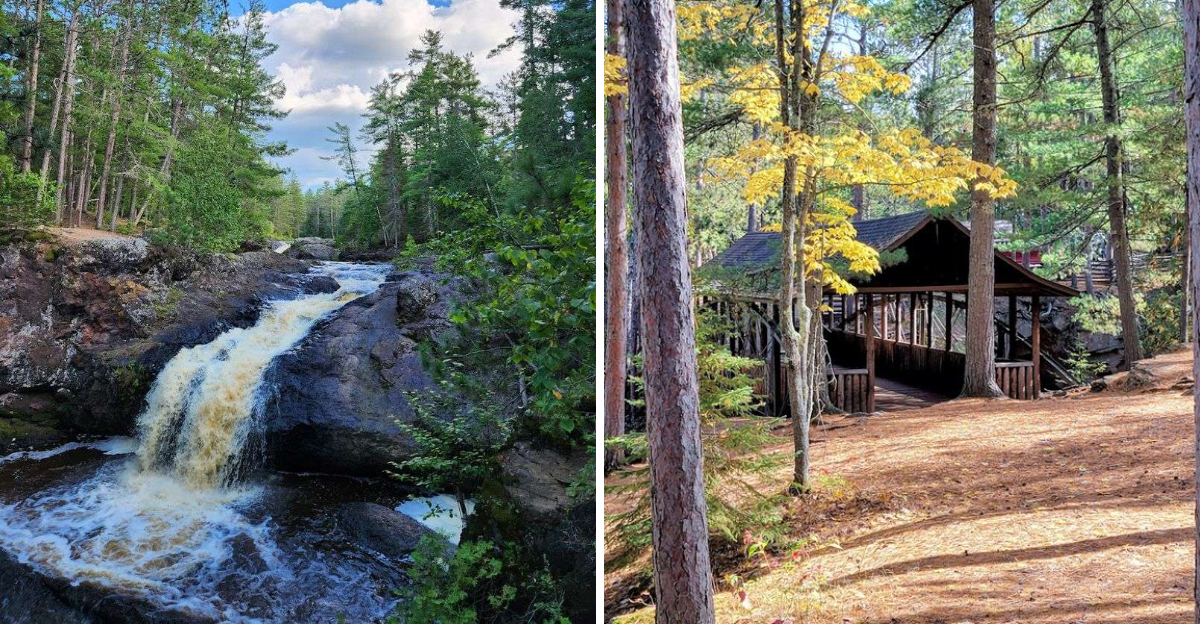
Waterfall chasers do not need a brutal climb or an all-day trek to get their drama fix in Wisconsin. Here, the river puts on a full show fast, crashing over old rock, slipping into foamy chutes, and tossing mist into the air like it knows July needs a cooling trick.
One minute you are walking a mellow trail, the next you are staring at rushing water with enough noise to drown out your group chat. Better yet, the whole place feels generous.
You can wander a little, linger a lot, or call it a perfect quick adventure without feeling like you failed some outdoor endurance test. Big payoff, low effort, zero need to pretend you packed like a mountaineer.
This Short Wisconsin Hike Packs In Waterfalls Fast
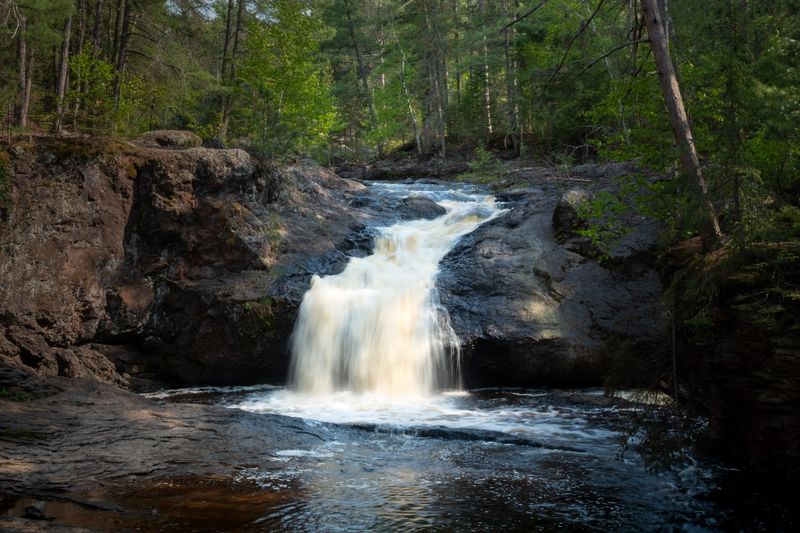
Most waterfall hikes make you work for the payoff. Amnicon Falls State Park flips that script entirely, placing several distinct waterfalls within a comfortable walking distance that feels more like a stroll than a trek.
The main trail follows the Amnicon River closely, allowing hikers to move from one waterfall to the next without the usual exhaustion that comes with chasing cascades. Upper Falls, Lower Falls, and Snake Pit Falls all sit within easy reach of the parking area.
Families with young children find this arrangement particularly useful since little legs tire quickly.
The park operates from 6 AM to 11 PM daily, giving visitors flexibility in timing their visit. Early morning light catches the mist beautifully, while late afternoon shadows add drama to the rock formations.
The trails remain well maintained, with clear signage that prevents confusion even for first-time visitors who arrive without maps or detailed planning.
The Covered Bridge Gives You The Best View
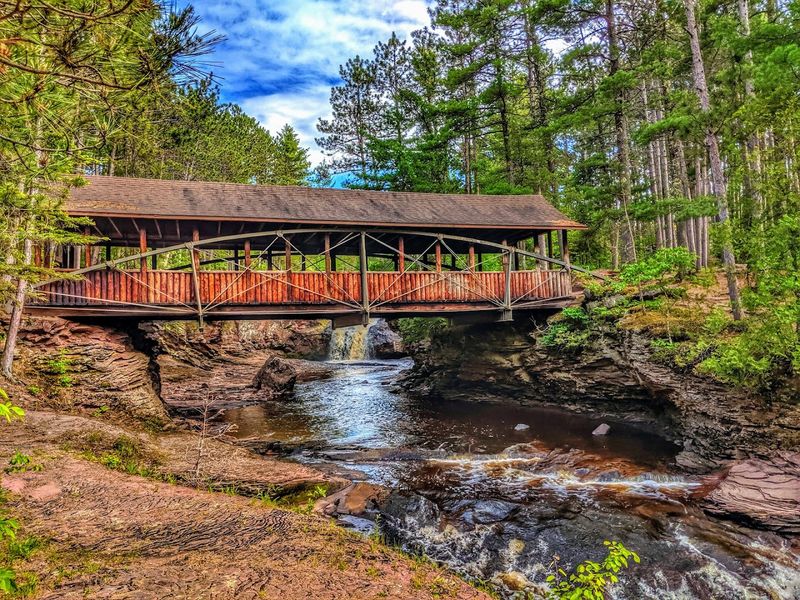
A covered bridge built with practical intentions has become the signature viewpoint of the entire park. The structure spans the Amnicon River at a strategic point where waterfalls tumble both upstream and downstream, creating a viewing platform that feels almost unfairly advantageous.
Standing inside the bridge, visitors can pivot between two distinct waterfall perspectives without moving more than a few steps. The wooden roof provides shade during hot July afternoons while framing the water views in a way that enhances rather than obstructs.
Photographers appreciate the natural light filtering through the open sides.
The bridge also serves as a functional crossing point, connecting trails on both sides of the river and making loop hikes possible. Its accessibility means that people with mobility limitations can still experience close waterfall views without navigating rocky scrambles.
The combination of utility and beauty makes this bridge more than just a picturesque detail in the landscape.
Upper Falls And Lower Falls Sit Close Together
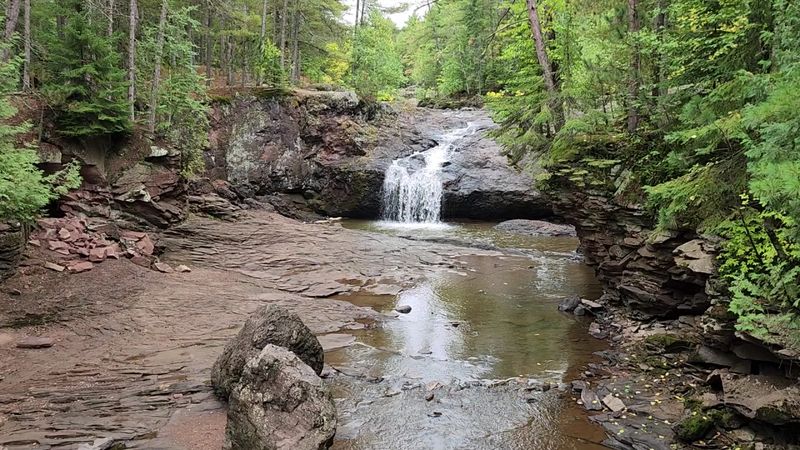
Geography placed Upper Falls and Lower Falls within sight of each other, creating a doubled experience that rewards minimal effort. The two waterfalls share the same stretch of river but display completely different personalities in how they move water over rock.
Upper Falls drops with more vertical drama, sending water straight down in a concentrated plunge that creates substantial spray. Lower Falls spreads wider, cascading over layered rock formations in a series of steps that produce a gentler but equally captivating display.
The contrast between the two makes comparison inevitable and adds depth to the viewing experience.
A short walk connects both falls, with viewing areas positioned to capture each one from multiple angles. July water levels typically remain strong enough to showcase both falls at their best without the spring flooding that can make trails muddy and difficult.
The proximity means visitors can linger at one fall, move to the other, then return to their favorite without feeling rushed or exhausted by distance.
The Amnicon River Brings The Drama
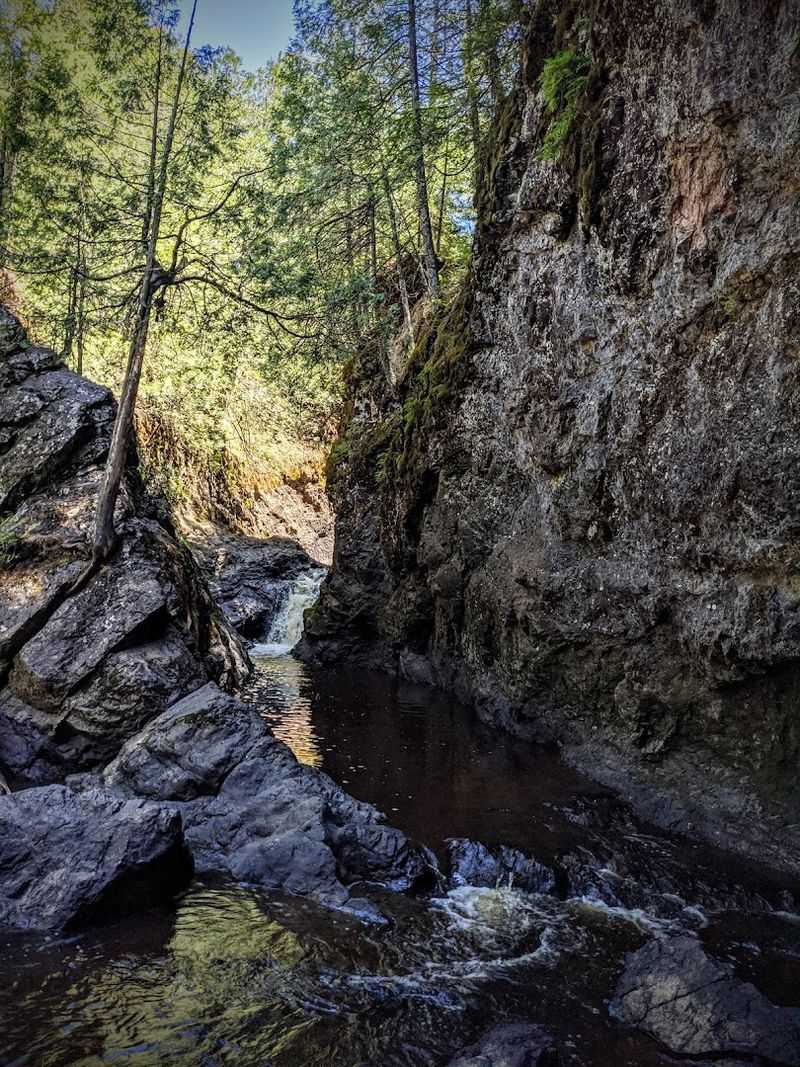
Rivers create the conditions for waterfalls, but the Amnicon River does more than simply provide flowing water. Its interaction with the underlying geology produces the dramatic drops and churning rapids that define the park experience.
The river cuts through billion-year-old rock formations, exposing layers that tell stories about ancient volcanic activity and geological upheaval. As water moves across these uneven surfaces, it accelerates, drops, and swirls in patterns that change with seasonal water levels.
The sound alone creates atmosphere, with the constant rush of moving water providing a soundtrack that drowns out modern distractions.
Walking along the river reveals constant visual interest beyond just the named waterfalls. Smaller cascades and rapids appear between the major falls, creating a continuous display rather than isolated highlights.
The river’s energy feels palpable even during calmer summer months, suggesting the power it must possess during spring runoff when snowmelt swells its volume considerably.
July Is Perfect For A Cool Waterfall Walk
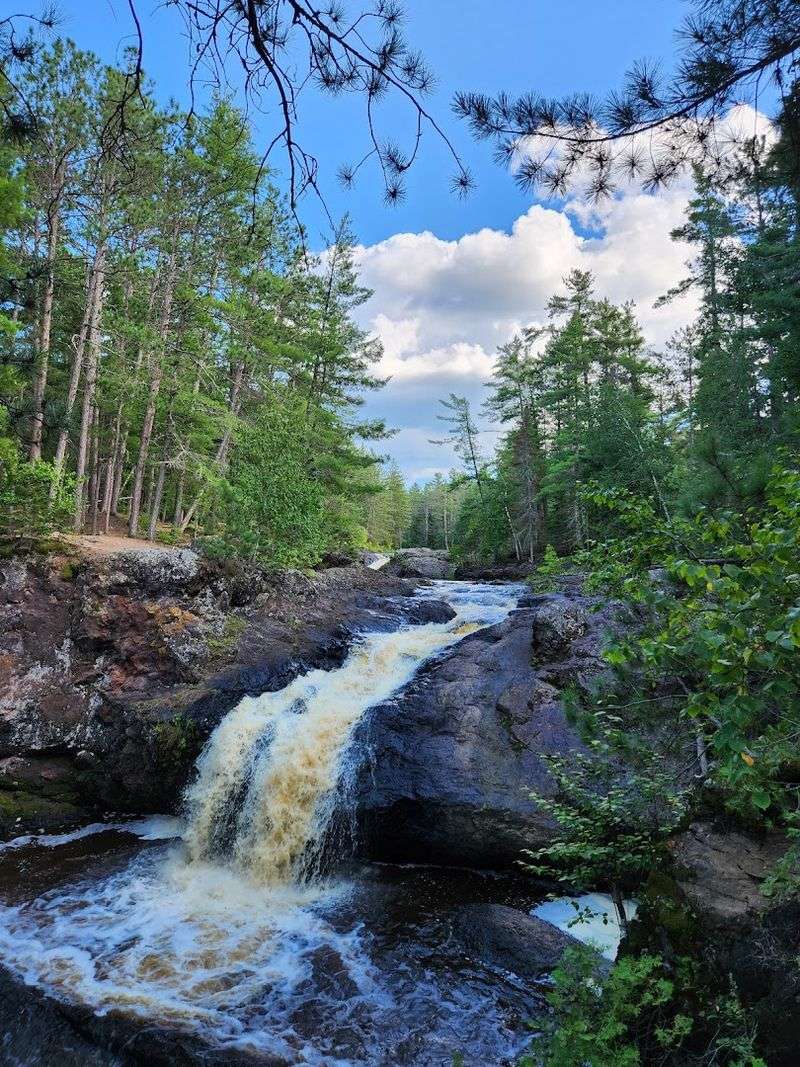
Summer heat in Wisconsin can surprise visitors who expect constant cool breezes from nearby Lake Superior. July temperatures regularly climb into the eighties, making waterfall mist feel like natural air conditioning rather than an inconvenience.
The combination of shade from mature forest canopy and cooling spray from multiple waterfalls creates microclimates along the trail that offer genuine relief from heat. Hikers notice the temperature drop as they approach each waterfall, with the effect most pronounced at Upper Falls where spray reaches farthest.
The park’s compact layout means you never wander far from these cooling zones.
July also brings stable weather patterns that make planning easier compared to the unpredictable conditions of spring or fall. Rain remains possible but tends to arrive as brief afternoon thunderstorms rather than day-long soakers.
The trails dry quickly after rain, and water levels stay consistent enough that waterfalls perform reliably without the extreme fluctuations seen earlier in the year when snowmelt dominates flow patterns.
The Falls Were Shaped By The Douglas Fault
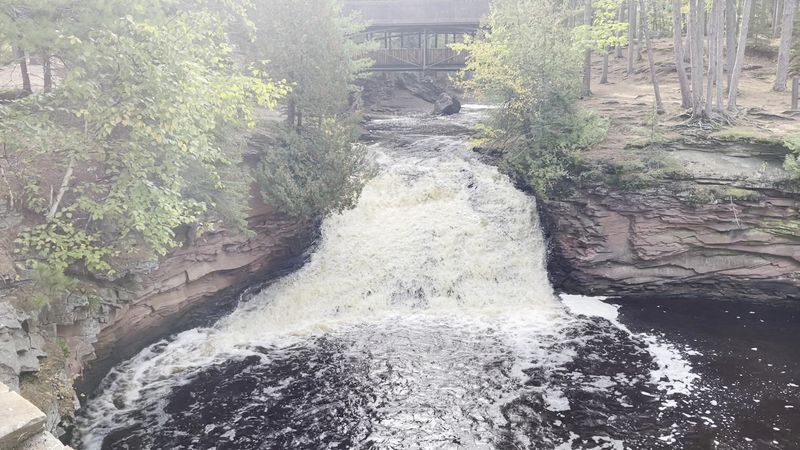
Geology textbooks describe fault lines with clinical precision, but seeing one in action adds dimension that words struggle to capture. The Douglas Fault runs directly through Amnicon Falls State Park, creating the dramatic elevation changes that allow waterfalls to exist in the first place.
This fault line represents a fracture in the earth’s crust where rock layers shifted vertically millions of years ago. The resulting step in the landscape gave the Amnicon River something to fall over, transforming what might have been gentle rapids into the concentrated drops visitors see today.
The fault remains visible in the exposed rock faces along the river, showing clear demarcation between different geological layers.
Park literature explains the geological significance, and interpretive pamphlets available at the entrance provide detailed information for visitors interested in the science behind the scenery. Understanding the fault adds context that transforms casual observation into genuine appreciation for the deep time and powerful forces that created this landscape long before humans arrived to admire it.
The Rocks Tell A Billion Year Old Story
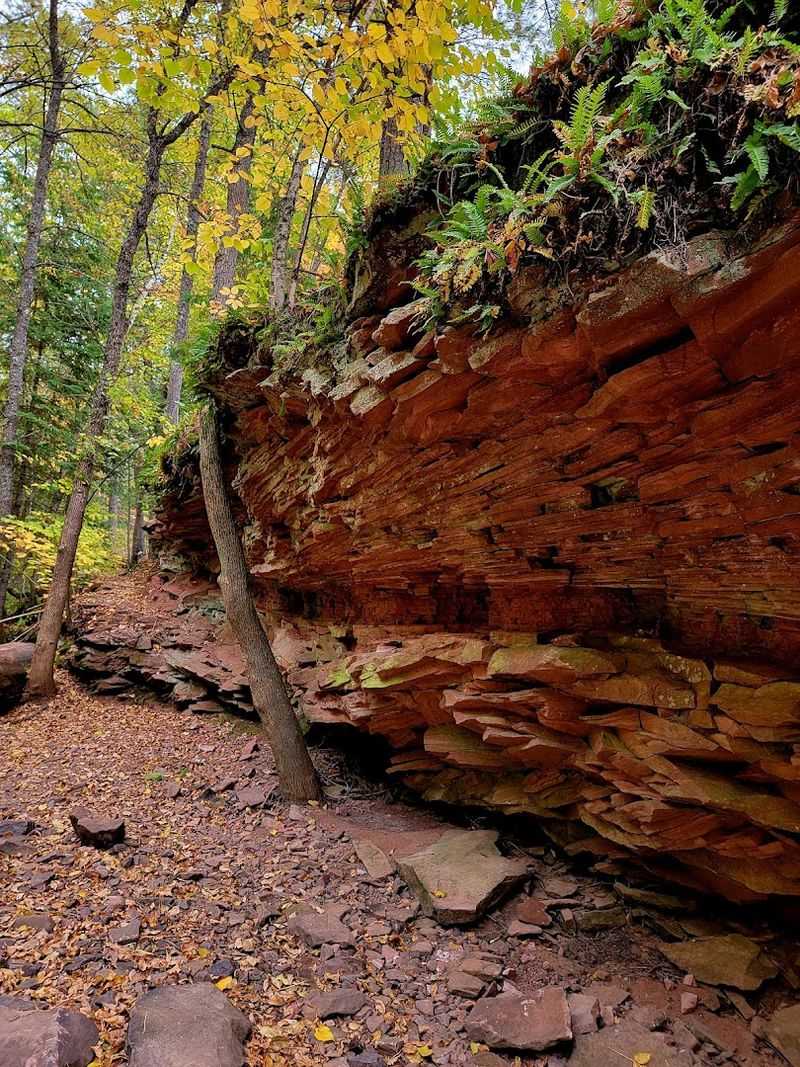
Age becomes difficult to comprehend when measured in billions rather than thousands. The rock formations at Amnicon Falls State Park date back approximately one billion years, placing them among the oldest exposed surfaces in Wisconsin.
These ancient rocks originated from volcanic activity during a period when the region looked nothing like its current forested appearance. Lava flows cooled and solidified into the reddish-brown basalt visible throughout the park today.
Subsequent geological processes buried, compressed, and eventually re-exposed these formations, allowing the Amnicon River to carve through them and reveal their layered structure.
The rocks display visible characteristics that hint at their volcanic origins, including vesicular textures where gas bubbles were trapped in cooling lava. Colors range from deep red to brownish-gray depending on mineral content and weathering.
Touching these surfaces connects visitors directly to deep geological time in a way that feels more immediate than reading about it, making abstract concepts suddenly tangible beneath your fingertips.
The Bridge Was Moved Before It Became Famous
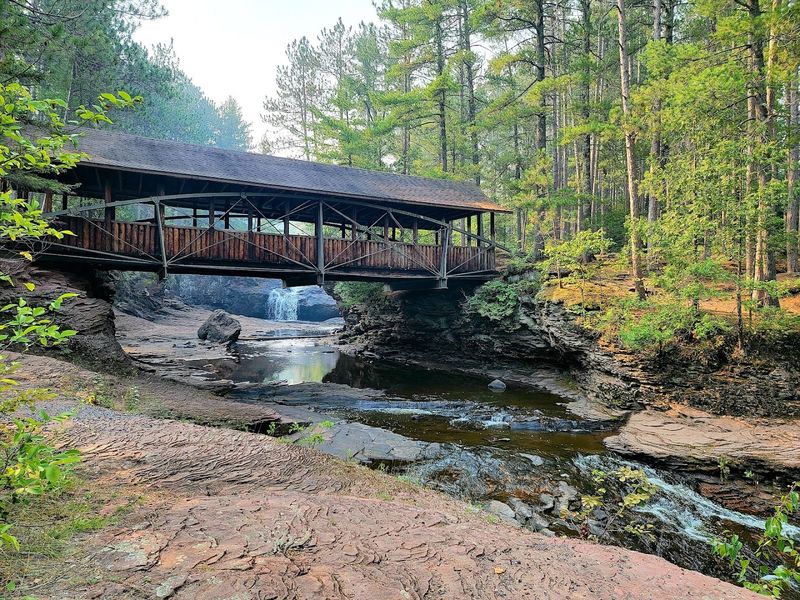
The covered bridge that now defines Amnicon Falls State Park began its life elsewhere, serving a completely different purpose before relocation gave it new significance. Originally constructed to span a different waterway, the bridge was moved to its current location where it could serve park visitors while gaining protection as a historical structure.
Moving a covered bridge requires careful disassembly, transportation, and reconstruction that respects the original building techniques while ensuring modern safety standards. The timber frame construction that made these bridges durable also made them portable, at least in theory.
Engineers marked each beam and joint during disassembly to ensure proper reassembly at the new site.
The relocation proved fortunate for both the bridge and the park. The structure gained a scenic setting that attracts attention and appreciation, while the park acquired a functional historical feature that enhances the visitor experience beyond natural scenery alone.
The bridge now serves more people in its second location than it likely did in its first, giving it renewed purpose and ensuring its preservation for future generations.
A 1939 Roof Turned The Bridge Into A Landmark
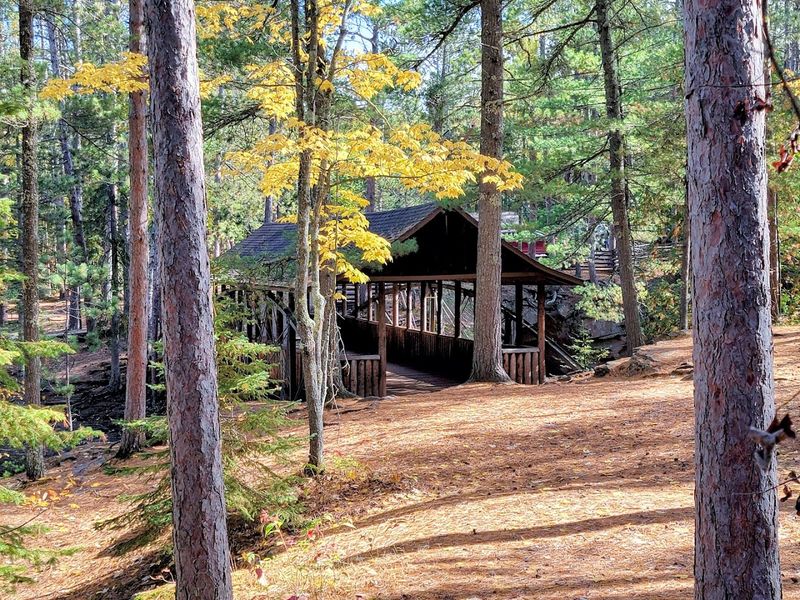
Bridges existed for centuries before someone decided to add roofs, transforming purely functional structures into the distinctive covered bridges that now trigger nostalgia and camera clicks. The Amnicon Falls bridge received its roof in 1939, converting it from a simple crossing into a landmark that defines the park’s identity.
The roof serves practical purposes beyond aesthetics, protecting the wooden structural elements from rain and snow that would otherwise accelerate decay. Covered bridges last decades longer than their uncovered counterparts because the roof shields critical joints and beams from moisture.
The 1939 addition essentially guaranteed the bridge’s survival into the present day.
But practicality alone does not explain the emotional response covered bridges trigger in visitors. The roof creates an enclosed space that feels separate from the surrounding landscape, offering a moment of transition as you move from one riverbank to the other.
That brief passage through sheltered dimness before emerging back into sunlight adds theatrical quality to what might otherwise be a mundane crossing, turning a simple walk into a memorable experience.
Now And Then Falls Feels Like A Bonus Hunt
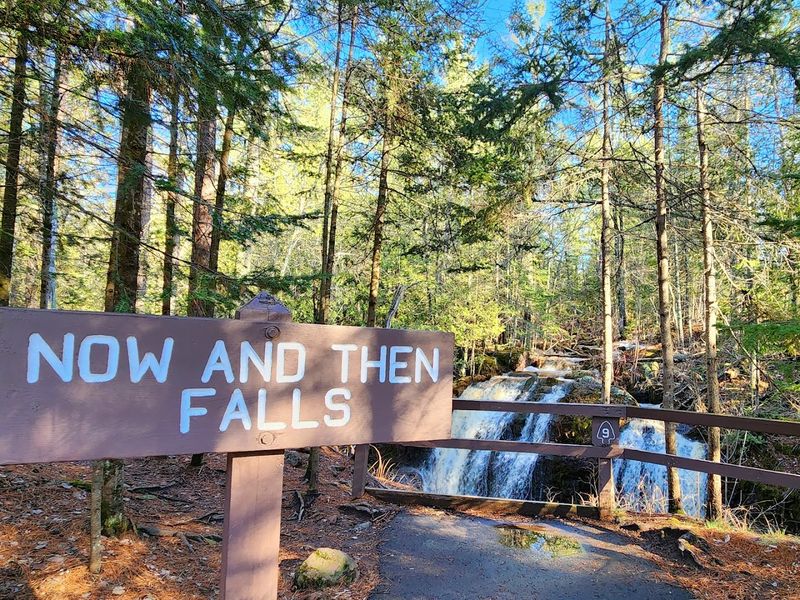
Some waterfalls announce themselves with constant roar and obvious signage. Now And Then Falls takes a different approach, appearing or disappearing based on recent rainfall and seasonal water levels, making its discovery feel like finding something secret rather than following a map to an expected destination.
The name perfectly captures the intermittent nature of this cascade, which flows impressively after rain but may reduce to a trickle during dry periods. July conditions typically fall somewhere in between, offering enough water to justify the short detour required to reach it but not always guaranteeing the dramatic display visible during wetter months.
This uncertainty adds an element of chance that appeals to visitors who enjoy exploration over guaranteed outcomes.
Reaching Now And Then Falls requires slightly more effort than viewing the main waterfalls, with a rougher trail that feels more adventurous than the well-maintained paths near the covered bridge. The extra effort filters out casual visitors, meaning those who make the trek often find themselves alone with the falls, creating a more intimate experience than the busier main viewing areas typically allow.