
This Tennessee Waterfall Has Three Drops And One Seriously Underrated View
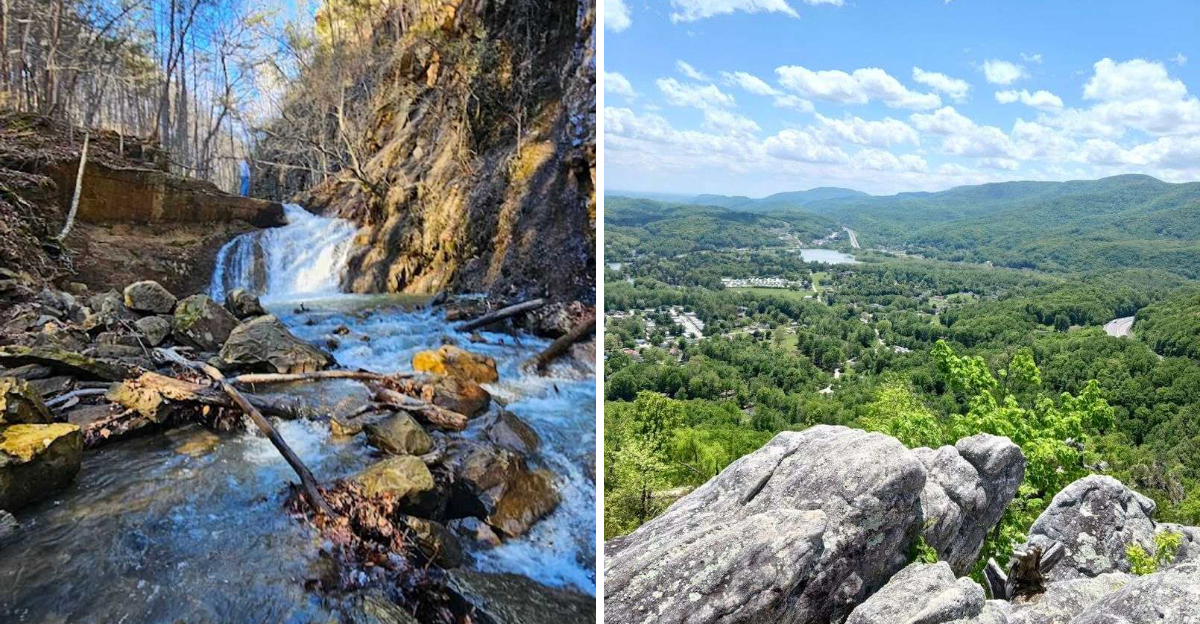
Tennessee knows how to make a waterfall feel like a surprise, especially when one cascade is not enough. This one comes with three drops, a rocky setting, and a view that still does not get the attention it deserves.
Why does that make it better? Because the whole stop feels more personal, more peaceful, and a little more rewarding once you finally see it.
The water moves over the ledges with just enough drama to make you pause. Then the surrounding rock, trees, and quiet trail make the scene feel even bigger than expected.
It is not the loudest waterfall adventure in Tennessee, and that is exactly the charm. Some places do not need crowds to prove they are worth the trip.
They just need one seriously good view.
An Unexpected Waterfall Revelation
Most people speed past this stretch of East Tennessee without a second glance, focused on reaching Knoxville or heading north toward Kentucky.
That is a genuine shame, because just off the highway sits one of the region’s most visually compelling waterfalls.
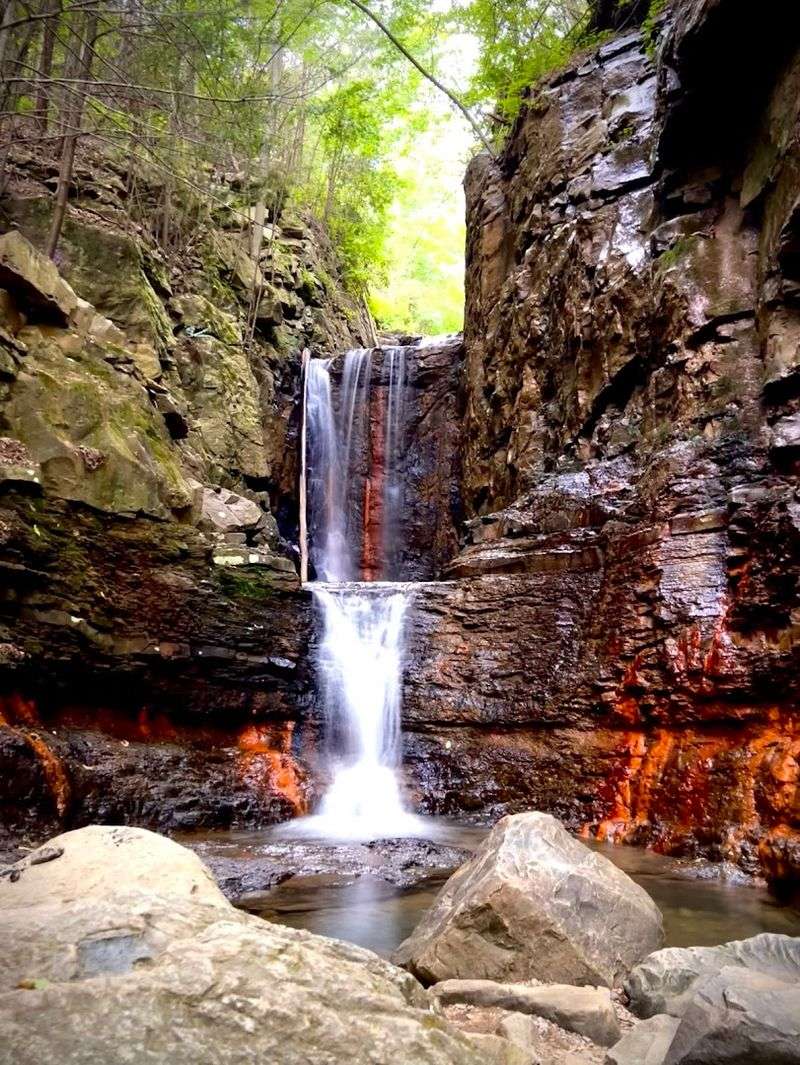
This waterfall drops 120 feet in three separate tiers. Each tier has its own personality.
The upper drop is forceful and direct, the middle one fans across a wider rock face, and the lower portion collects into a pool that invites visitors to linger.
The address sits roughly 30 minutes northwest of Knoxville, making it accessible without requiring a full-day expedition.
What surprises most first-time visitors is how quickly the falls reveal themselves. The trail from the parking area is short and manageable, delivering a genuine reward within 15 minutes.
For a waterfall of this scale and character, that accessibility feels almost too generous. Plan your visit after rainfall for the most dramatic water volume, especially during winter or early spring months.
The Ancient Path Of Bruce Creek
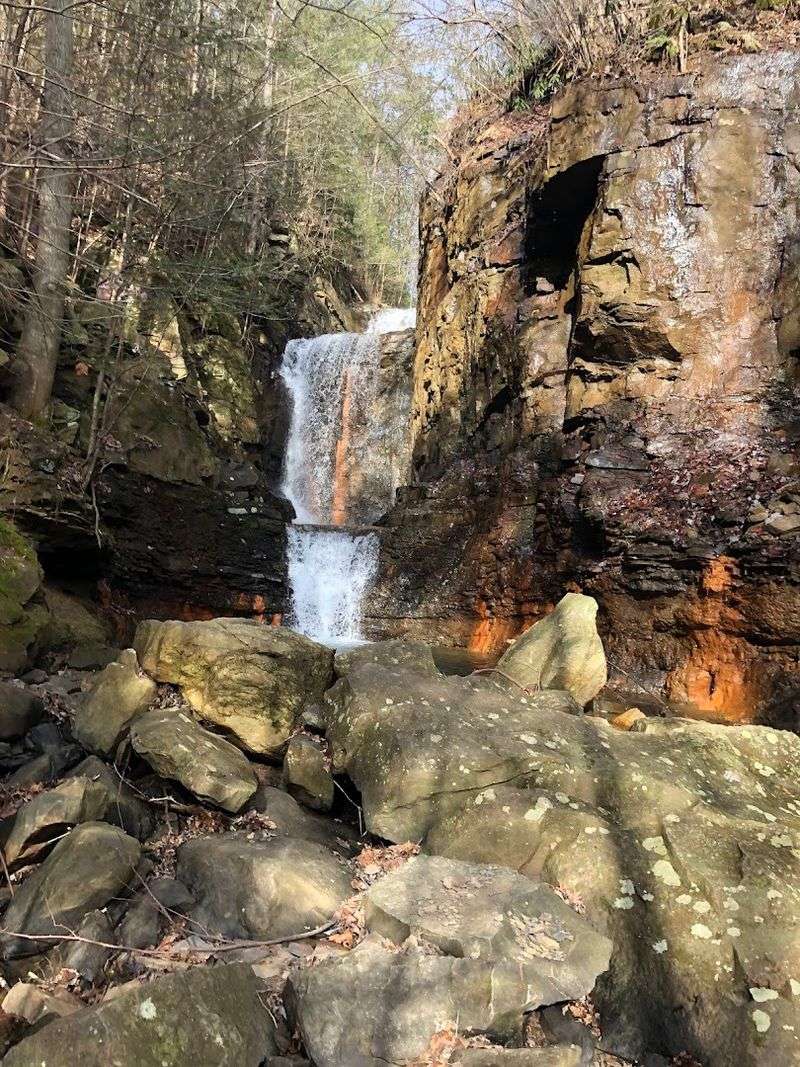
Every waterfall has a source, and at Little Egypt, that source is Bruce Creek, a waterway with a history more eventful than its modest name suggests.
The creek carves through a narrow valley at the base of Cumberland Mountain, feeding the falls with water gathered from the surrounding ridges.
Before the 1980s, this creek had a different relationship with the land below. Seasonal flooding was a persistent problem, particularly for the infrastructure above, where Interstate 75 was being constructed along the mountain’s edge.
The creek’s natural path put the highway at risk, forcing engineers to rethink the entire drainage system in this section of Campbell County.
Walking alongside Bruce Creek today, you would never guess it carries such a loaded history. The water moves with calm authority over smooth stones, and smaller unnamed cascades appear at regular intervals along the trail.
Wildflowers, including trillium and wild iris, crowd the banks during spring. The riparian corridor feels genuinely untouched, even though human decisions shaped much of what you see.
That contrast between apparent wildness and deliberate design is one of the trail’s most compelling qualities for attentive visitors.
A Sculpted Landscape’s Hidden Beauty
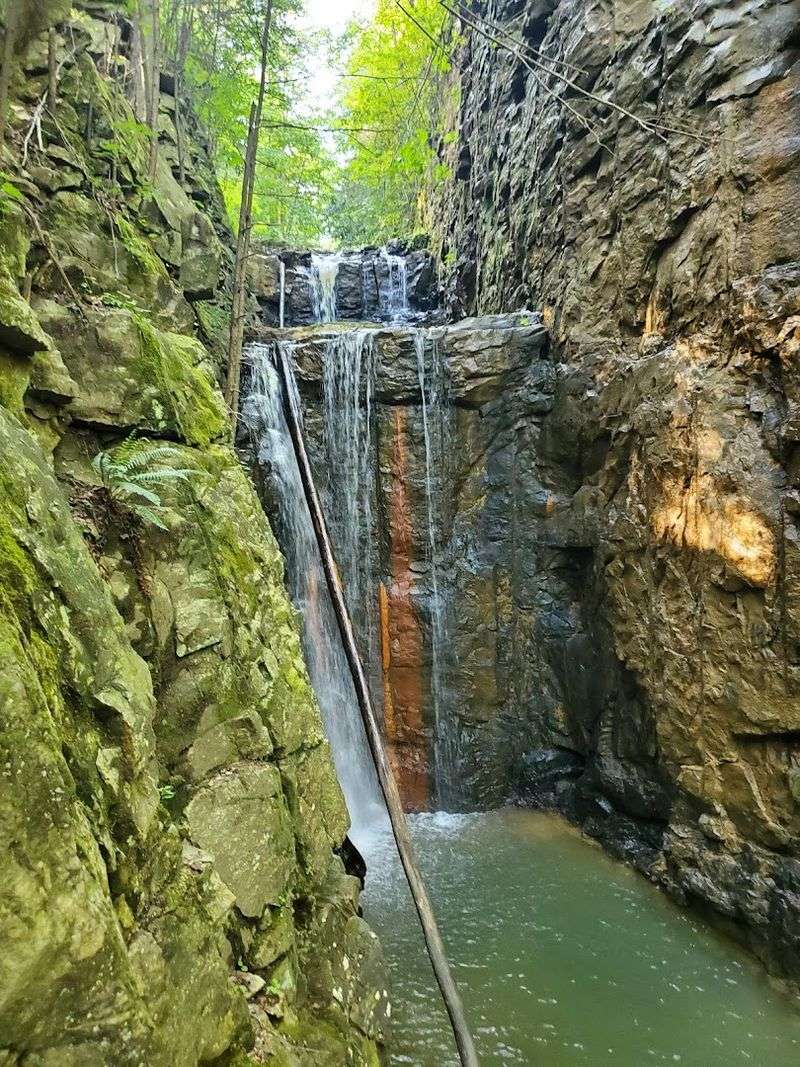
Here is a fact that changes how you look at Triple Falls: the waterfall is man-made.
In the 1980s, the Tennessee Department of Transportation undertook a significant engineering project to redirect Bruce Creek and protect Interstate 75 from repeated flood damage.
Workers blasted and carved the mountainside, creating the multi-tiered cascade that visitors now photograph and admire.
If you look carefully at the rock faces surrounding the falls, drill marks and blast scars remain visible. They are not immediately obvious, but once you spot them, they reframe the entire experience.
What appears to be a purely natural formation is actually a collaboration between geology and human ambition, shaped by both ancient stone and mid-century machinery.
Far from diminishing the appeal of the falls, this backstory adds a layer of fascination that purely natural waterfalls rarely possess.
The water behaves exactly as it would over any mountain rock face, carving small channels and smoothing surfaces with each passing season.
Nature has been quietly reclaiming the engineered landscape for decades now, softening edges and filling crevices with moss and fern. The result is a waterfall that looks entirely at home in its mountain setting, regardless of how it came to exist.
The Trail’s Gentle Beginnings
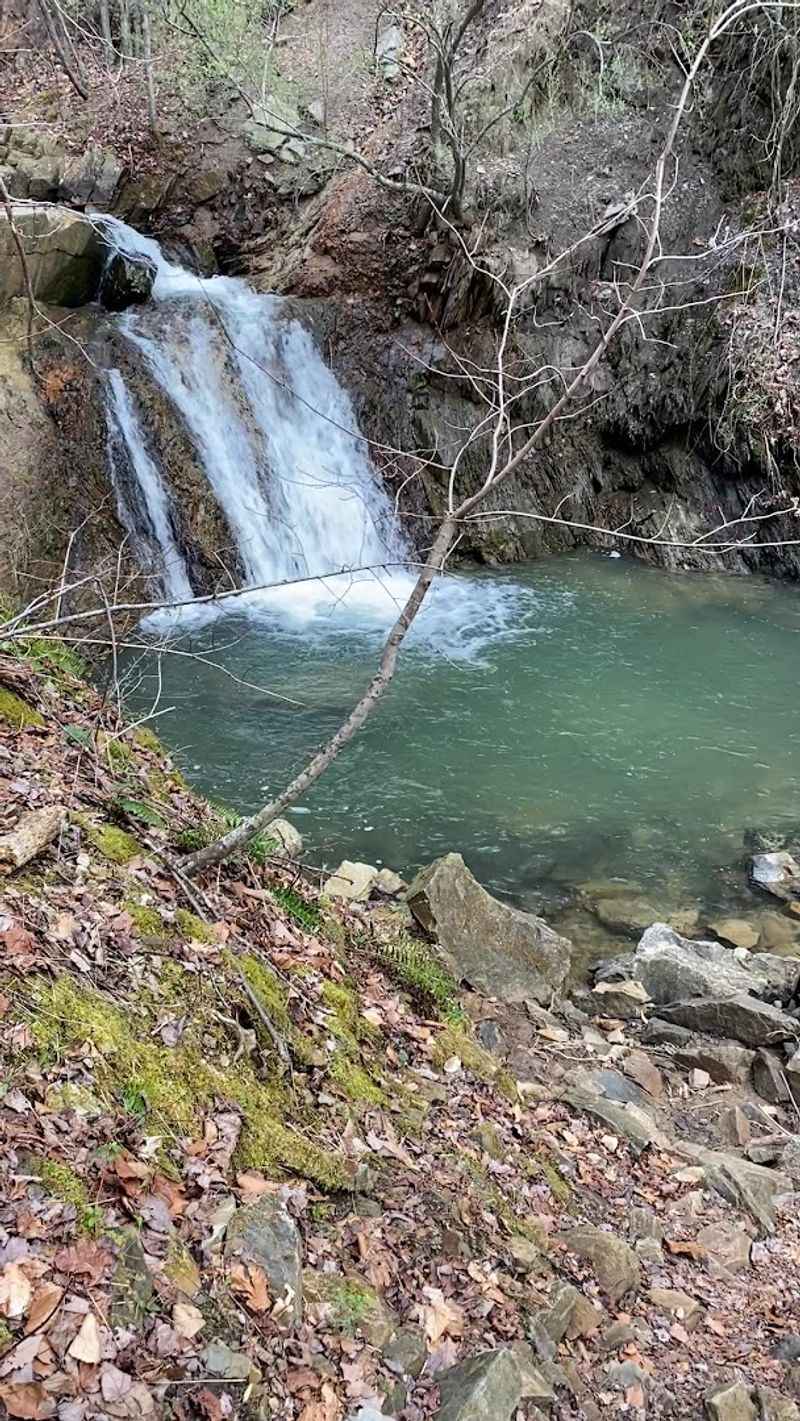
Finding the trailhead for the first time is part of the adventure. There is no large sign announcing your arrival, no formal parking lot, and no visitor center offering maps.
A small marker on a tree reading Little Egypt serves as the primary indicator that you have found the right spot. Parking is limited to pull-offs along narrow Shelton Hollow Lane, so arriving early on weekends is a practical strategy.
The trail itself begins with admirable ease. The first section is wide, relatively flat, and follows Bruce Creek closely enough that you can hear the water from nearly every point along the path.
This gentle opening makes the hike accessible to families with older children and casual walkers who want a reward without excessive effort. The 1.9-mile out-and-back route covers manageable ground in its lower half.
Bring water, wear sturdy footwear with grip, and leave expectations of formal infrastructure at the car. The absence of amenities is part of the appeal here.
This trail has not been polished for mass tourism, and that quality gives it a character that developed, heavily signposted hiking destinations often lack. It feels like a place you discovered rather than a place that was handed to you.
Reaching The Cascade’s Embrace
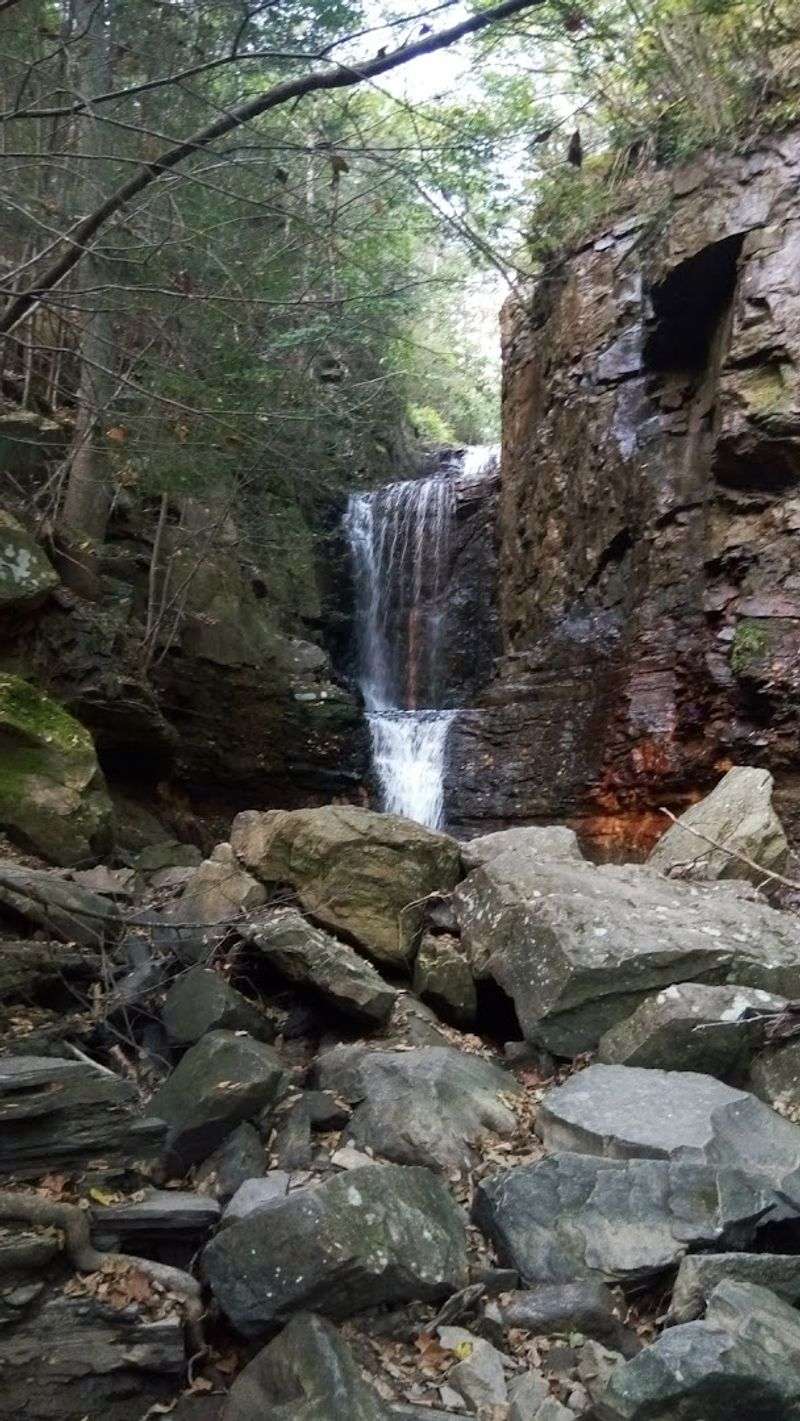
The walk to the main falls takes less than 15 minutes from the parking area at a comfortable pace.
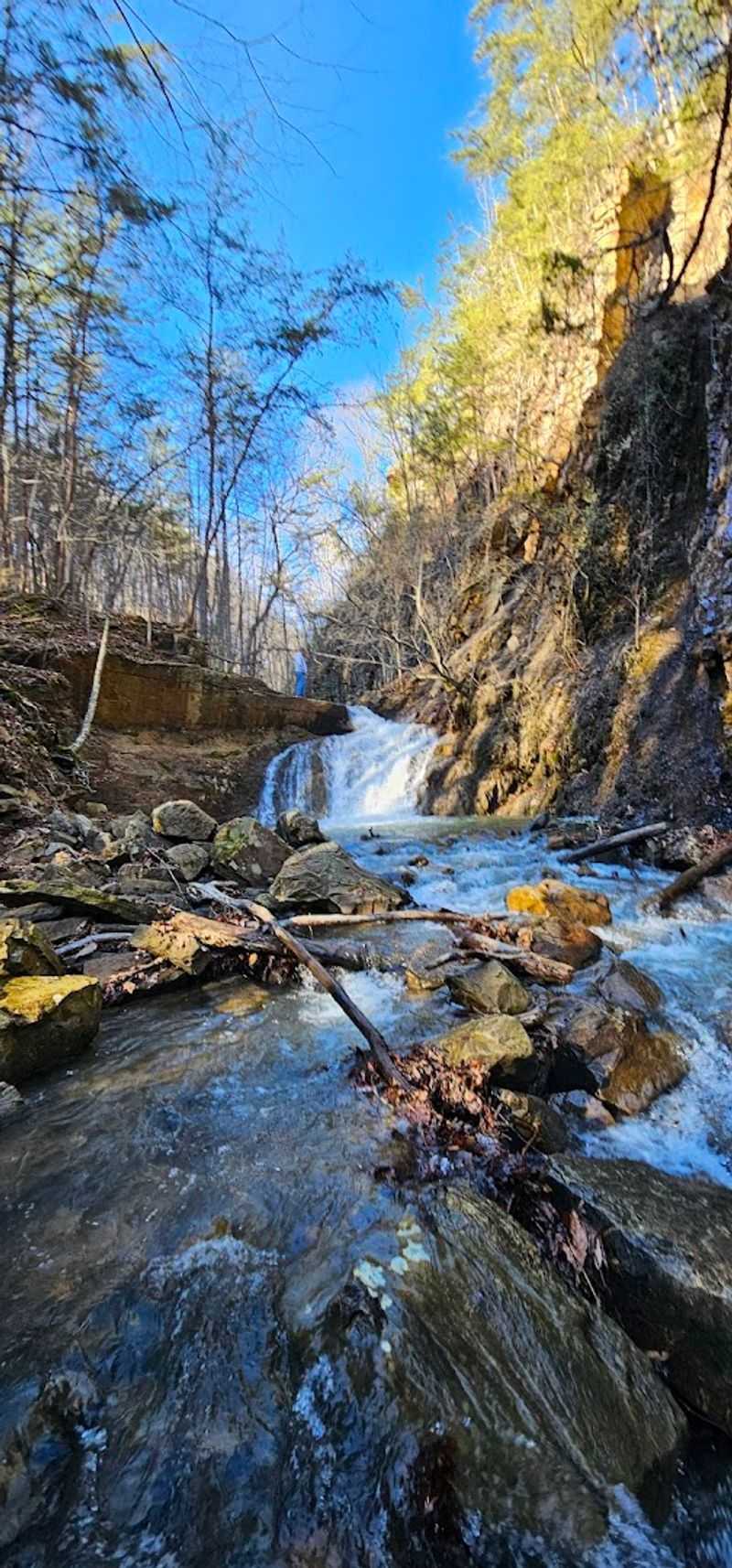
Along the way, smaller cascades and unnamed drops appear beside the trail, offering preview moments that build anticipation rather than satisfy it.
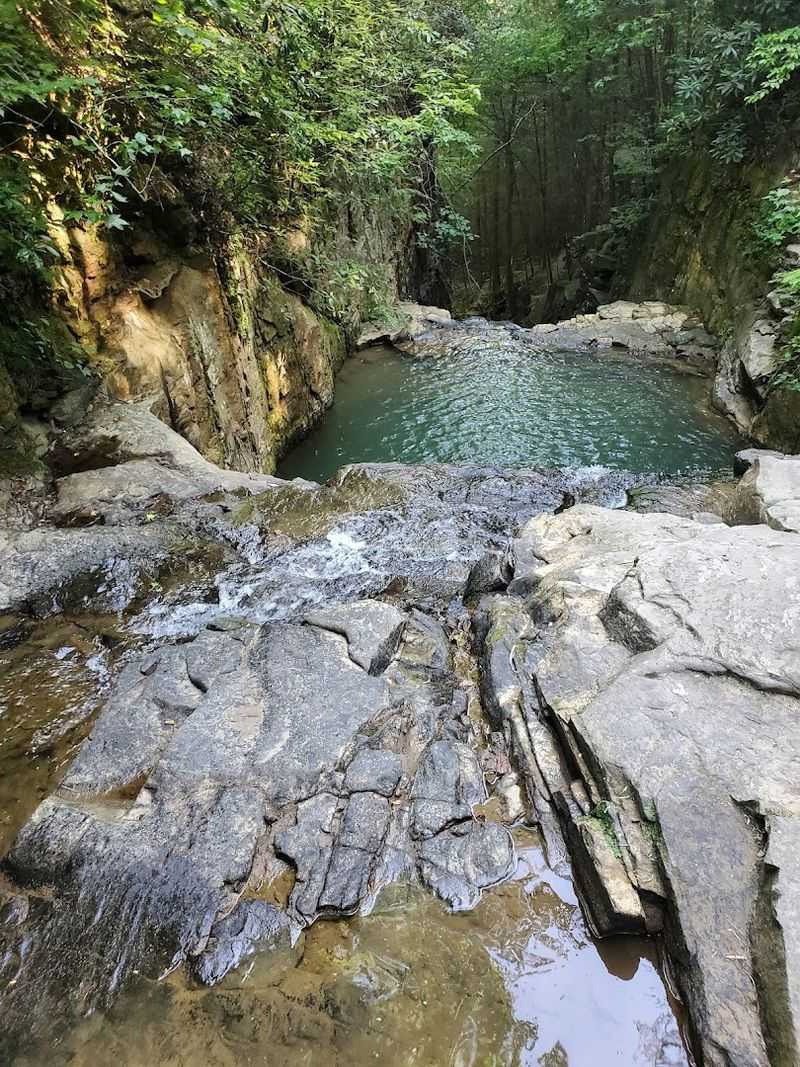
Each mini-waterfall has its own rock shelf and small pool, and several are deep enough for wading during warmer months.
A notable landmark appears near the trailhead: a large box culvert through which Bruce Creek is diverted beneath Cumberland Mountain.
It is an industrial structure in a natural setting, and it sits without apology, a visible reminder of the engineering decisions that shaped this entire corridor.
Most visitors pass it quickly, drawn forward by the sound of falling water ahead.
When Triple Falls finally appears, the scale registers immediately. The 120-foot drop across three tiers creates a sustained roar that fills the narrow valley.
Water volume varies considerably by season. Winter and spring visits after significant rainfall produce the most impressive flow, with water spilling wide across each rock face.
Summer visits are quieter but offer swimming opportunities in the lower pool. Regardless of season, the falls deliver a visual experience that justifies the short walk many times over.
The Summit View That Makes The Hike Even Better
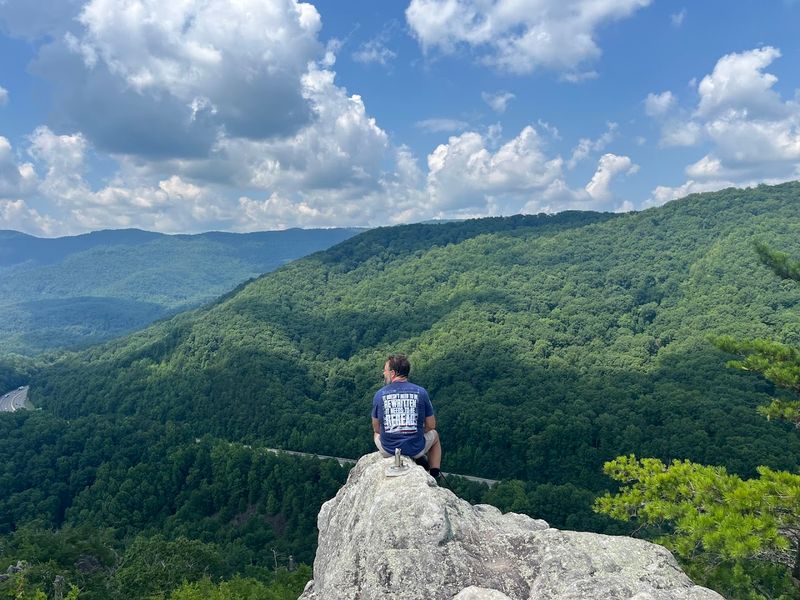
Stopping at the falls is a perfectly reasonable decision. The views are satisfying, the sound of the water is absorbing, and the pools invite extended stays.
But the trail continues upward, and what it offers above the falls is worth the additional effort for those with steady legs and a tolerance for steep terrain.
Past the main cascade, the character of the trail shifts dramatically. The gentle creek-side walking gives way to a sustained climb marked by switchbacks and exposed rock.
This section demands attention. Footing becomes less predictable, and the angle of ascent will test cardiovascular endurance even for reasonably fit hikers.
The path leads toward an elevated formation known as Devil’s Racetrack, a ridge of conglomerate sandstone that sits prominently above the valley floor.
The name carries a certain theatrical quality, but the terrain earns it. The rock underfoot changes texture and color as you climb, shifting from the dark, water-smoothed stone near the creek to the rougher, lighter conglomerate of the upper ridge.
Each switchback reveals a slightly broader view through the tree canopy, offering encouragement to keep moving.
The summit does not disappoint those who arrive breathing hard and wondering if the climb was worth the trouble. It always is.
A New Angle On One Of Tennessee’s Quietest Waterfall Stops
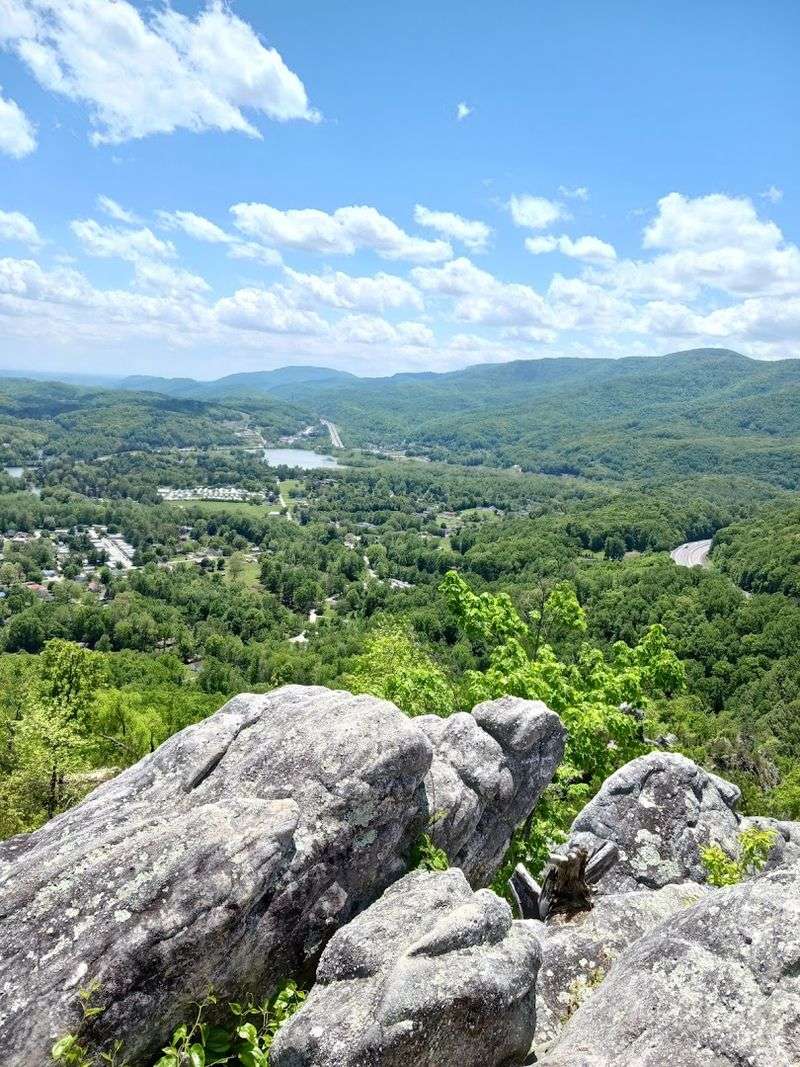
Standing on the Devil’s Racetrack changes the scale of everything you experienced on the way up. The valley below opens broadly, and the visual reach extends far beyond the immediate ridgeline.
On clear days, the Great Smoky Mountains appear as a blue-gray silhouette along the southern horizon, distant but unmistakable in their mass and elevation.
The overlook delivers a 360-degree panorama that encompasses the Powell Valley, surrounding ridges, and the thin thread of Interstate 75 running along the mountain’s western edge.
That same highway whose construction prompted the creation of the waterfall below now appears as a minor detail in a much larger landscape.
The perspective shift is satisfying in a way that feels almost philosophical.
The conglomerate sandstone formation of Devil’s Racetrack is distinctive enough to be visible from the interstate below, which means many drivers have seen it without knowing what they were looking at.
Arriving at this rock after climbing through the forest gives the formation a different meaning.
It is not just a geological curiosity visible from a car window. It is a destination with earned views, a place where the effort of arrival shapes how deeply you appreciate what surrounds you.
Bring a camera, but also bring time to simply stand and look.
The Echoes Of History In Stone
The name Little Egypt carries a certain weight, and its origins are not entirely clear in historical records.
Some local accounts describe a boulder-filled area near the falls that resembles a temple-like gathering space, its arrangement of large stones giving the impression of an ancient enclosure.
That description alone is enough to make you look more carefully at the rock formations as you pass through.
The culvert system beneath Cumberland Mountain is another piece of this layered history. Built to redirect Bruce Creek and protect Interstate 75, it represents a mid-century engineering decision that altered the hydrology of the entire area.
The waterfall that visitors admire today exists because of that intervention, which means the landscape is simultaneously natural and constructed, ancient and modern.
Graffiti appears on some of the rock surfaces near the lower falls, a less welcome layer of human imprint that contrasts with the engineering legacy above. It is worth acknowledging without dwelling on it.
The broader character of the place absorbs these marks without losing its essential appeal.
East Tennessee has a long tradition of people finding meaning in its mountains, and Little Egypt on Shelton Hollow Lane in Caryville, TN 37714 continues that tradition in its own complicated, fascinating way.
Leaving The Valley’s Grandeur
The return walk from Devil’s Racetrack to the trailhead offers a different experience than the climb up.
Descending through the switchbacks, you pass the falls again from a higher angle before dropping back to creek level.
The light shifts depending on the time of day, and afternoon sun filters through the canopy in a way that makes the water surfaces catch and scatter the light across the surrounding rock.
The temperature along the creek corridor is noticeably cooler than at the trailhead, sometimes by ten degrees or more during summer months. That natural air conditioning makes the lower trail feel like a reward after the exposed upper climb.
Visitors often stop again at the main falls on the way back, finding a different angle or simply sitting with the sound of the water for a few minutes before returning to the car.
The occasional sound of traffic from Interstate 75 drifts down from above, but it never dominates the experience. It functions more as a reminder of how close civilization sits to this particular stretch of wilderness, and how rarely people choose to stop.
Little Egypt rewards the ones who do stop, offering a trail that manages to feel both manageable and genuinely wild, sometimes within the same ten-minute stretch of walking.