
This Massachusetts Museum Feels Like A Venetian Palace Dropped Into Boston
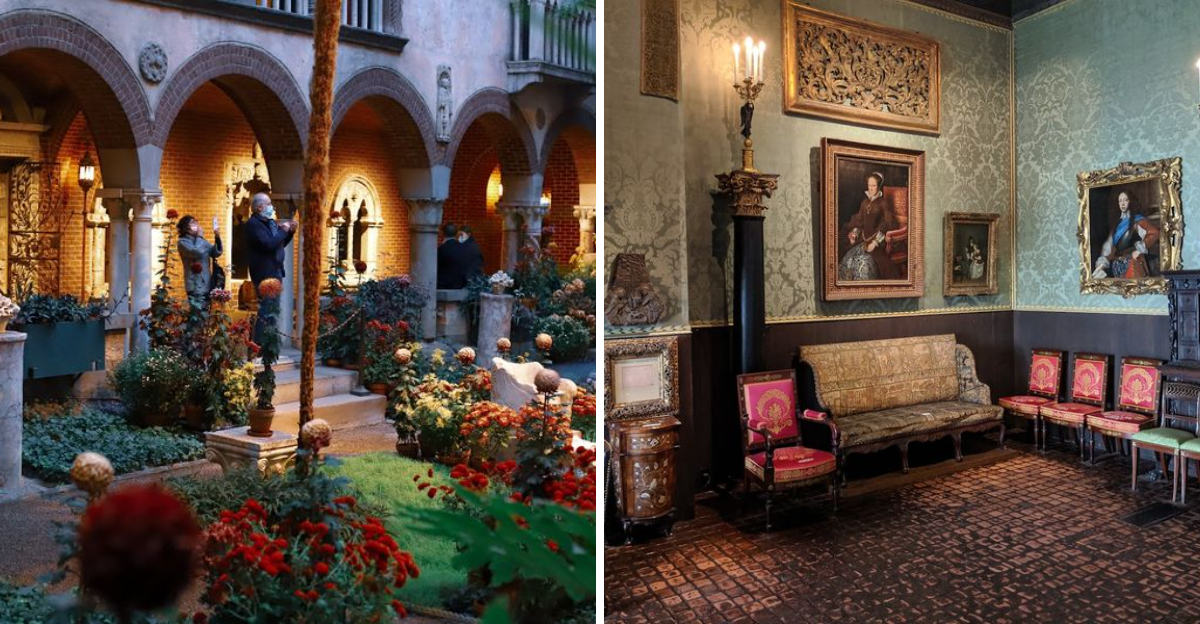
Can a museum feel like a passport stamp? This one somehow does.
Massachusetts has a place where Boston suddenly feels closer to Venice, with arched walkways, a glowing courtyard, old-world rooms, and art that surrounds you instead of sitting quietly on a wall.
The whole visit feels different right away. You are not just moving through galleries. You are stepping into someone’s bold idea of beauty, travel, and culture all gathered under one roof.
Every corner seems planned to make you slow down and look again. There are paintings, sculptures, flowers, balconies, and quiet spaces that make the city outside feel far away.
It is elegant without feeling stiff, dramatic without being too much, and strange enough to stay in your mind. For a Boston day trip with serious wow factor, this Massachusetts museum delivers.
An Unexpected Entrance To Another Time
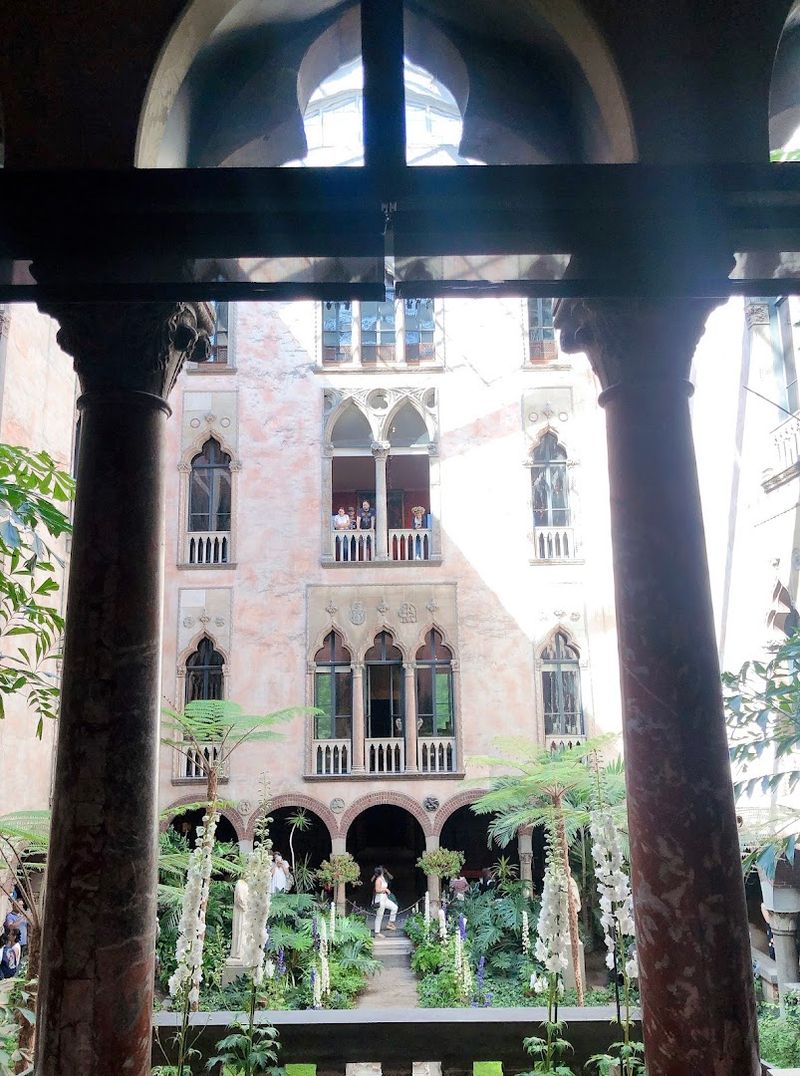
Visitors quickly realize that Boston’s familiar cityscape has given way to something far more unusual.
The building’s soft pink exterior, inspired by 15th-century Venetian palaces, stands in quiet contrast to the surrounding architecture of the Fenway neighborhood.
It does not demand attention loudly. Instead, it earns it gradually, the way a well-written book earns yours by the end of the second chapter.
The museum was originally called Fenway Court when it first opened to the public in 1903. Isabella Stewart Gardner personally oversaw its design alongside architect Willard T.
Sears, selecting arches, columns, and balconies sourced directly from Venetian dealers during her travels abroad. Nothing about the building is accidental.
Stepping inside, the city noise fades almost immediately. A particular calm settles in, not the hushed formality of a traditional institution, but something warmer and more personal.
Visitors often describe the sensation as entering a private residence rather than a public building.
That feeling is entirely intentional and reflects the vision of a woman who believed art should be experienced intimately, not observed from a careful, clinical distance.
A Founder’s Vision, Preserved In Every Room
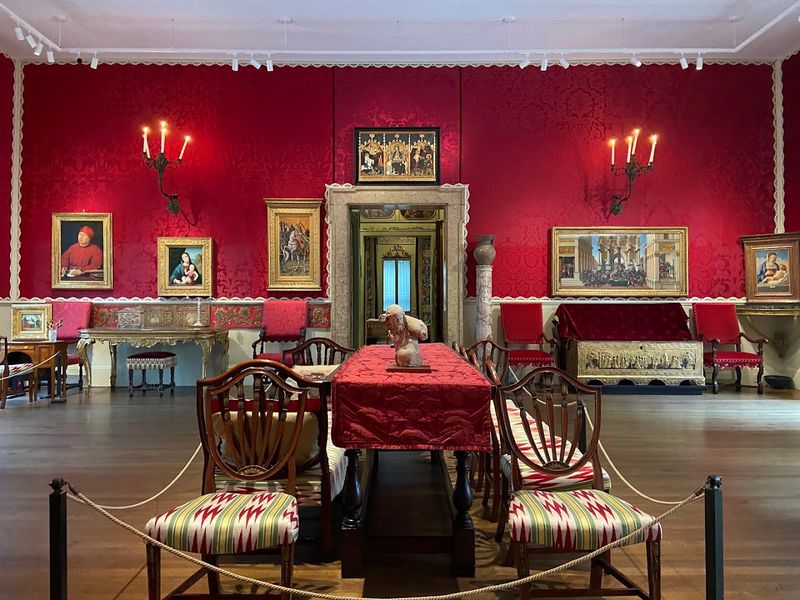
Isabella Stewart Gardner was not the type of person who collected art passively. She pursued it with the focused energy of someone who understood that beauty, left uncollected, simply disappears.
Born in 1840, she spent decades traveling through Europe and Asia, building one of the most personal and eclectic art collections ever assembled by a private individual in the United States.
Her will contained a remarkable directive: the collection must remain exactly as she arranged it, displayed for the education and enjoyment of the public forever. No curator would rearrange her choices.
No trend would reorganize her rooms. That instruction has held firm for well over a century, and the result is a museum that still carries her fingerprints on every wall.
More than 7,500 objects fill the galleries, including paintings by Titian, Rembrandt, Botticelli, Raphael, Manet, Degas, and John Singer Sargent.
Rare books, textiles, ceramics, sculptures, and archival materials round out a collection that resists easy categorization.
Gardner placed her favorite pieces near windows, where natural light could reach them throughout the day. That small, deliberate habit still shapes how visitors experience each room, long after she is gone.
The Courtyard That Changes With Every Season
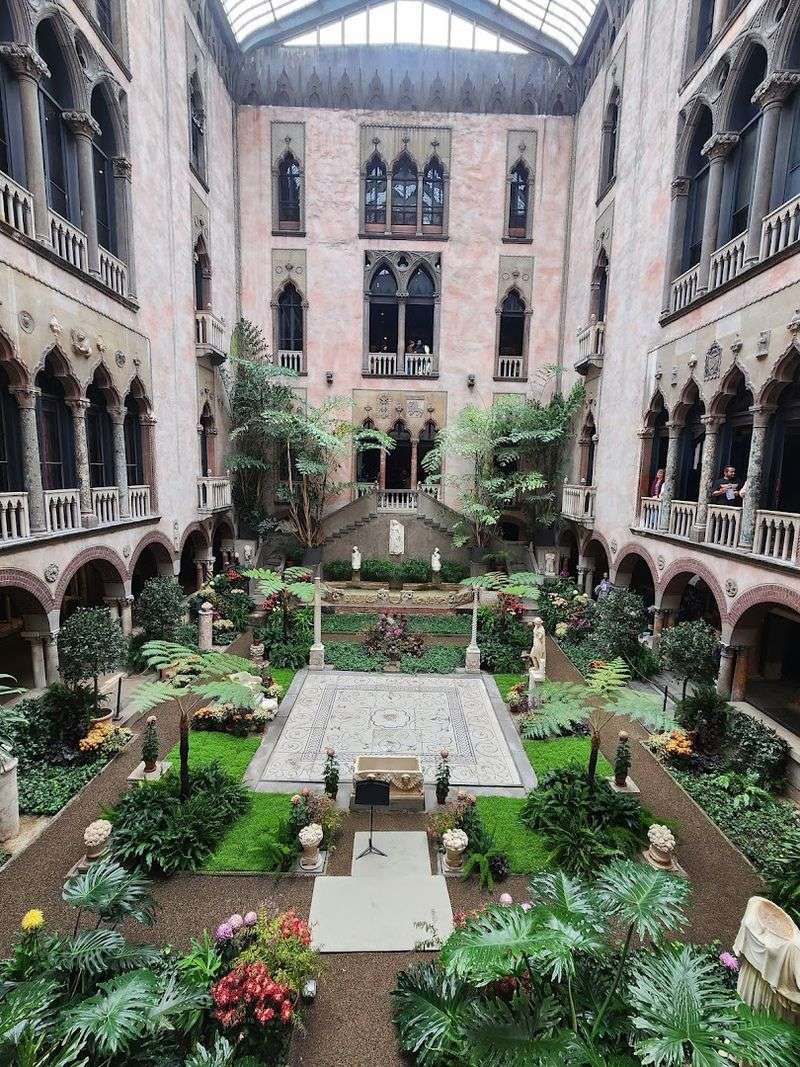
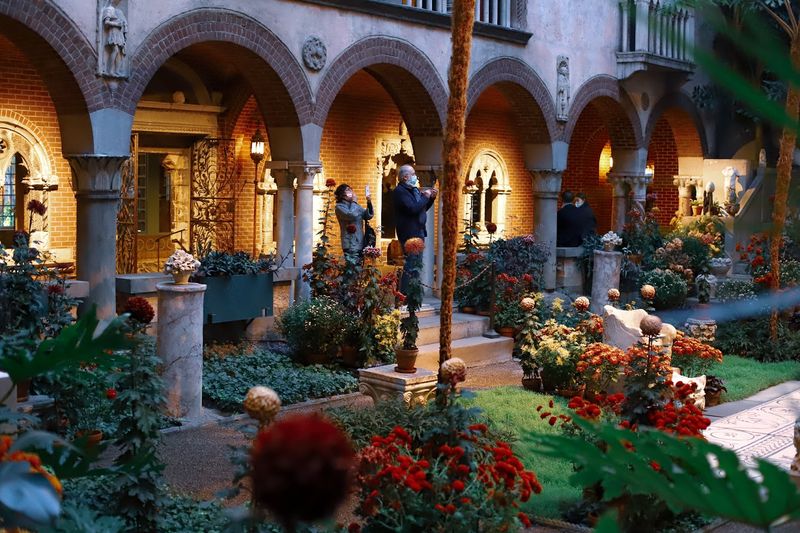
Most museum courtyards are decorative afterthoughts. The one at the Isabella Stewart Gardner Museum is the beating center of the entire building.
Three floors of galleries wrap around it, offering different sightlines from every level, and the space below shifts in character depending on when you visit.
An ancient Roman mosaic covers the floor, and Greek and Roman sculptures emerge from surrounding greenery in a way that feels organic rather than staged.
A soaring glass canopy overhead draws natural light down into the space throughout the day, changing the mood from bright and airy in the morning to golden and warm by afternoon.
Eight authentic Venetian stone balconies line the inner walls, reinforcing the palazzo atmosphere that Gardner worked so carefully to create.
The horticultural program here is genuinely ambitious. Six distinct floral arrangements rotate through the year, moving from delicate winter orchids to cascading spring nasturtiums and beyond.
The gardening staff maintains these displays with real precision, and longtime visitors often return specifically to see what is blooming.
Arriving on a Saturday morning when the nasturtiums are hanging overhead is one of those small, unhurried pleasures that a city like Boston rarely offers so gracefully.
Masterworks That Defy Simple Classification
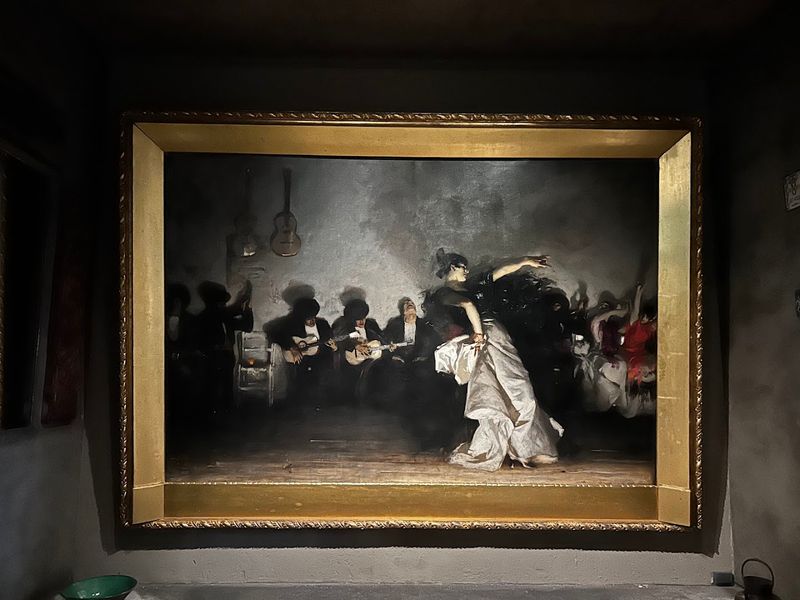
Titian’s The Rape of Europa hangs in the Titian Room with the authority of a painting that has seen centuries pass. Rembrandt’s Self-Portrait, Aged 23 occupies the Dutch Room with a quiet confidence that stops visitors mid-step.
John Singer Sargent’s El Jaleo, measuring roughly seven feet tall and eleven feet wide, fills an entire wall of the Spanish Cloister and rewards anyone willing to stand before it long enough to absorb its scale.
These are not minor works tucked into a regional collection. They are genuinely significant paintings, and they share space with Fra Angelico’s Death and Assumption of the Virgin, works by Botticelli, Raphael, Manet, Degas, and Whistler.
The arrangement follows Gardner’s personal logic rather than strict chronological or stylistic order, which creates unexpected conversations between objects from different cultures and periods.
Asian antiquities appear alongside American portraits. Medieval tapestries share rooms with Renaissance furniture.
The effect is intellectually stimulating in a way that organized, era-specific displays rarely achieve. Gardner assembled over 7,500 objects in total, including 1,500 rare books and 7,000 archival items.
Spending two focused hours here still leaves rooms unexplored and details unnoticed, which is a fair measure of the collection’s depth.
Venetian Architecture Woven Into Boston Stone
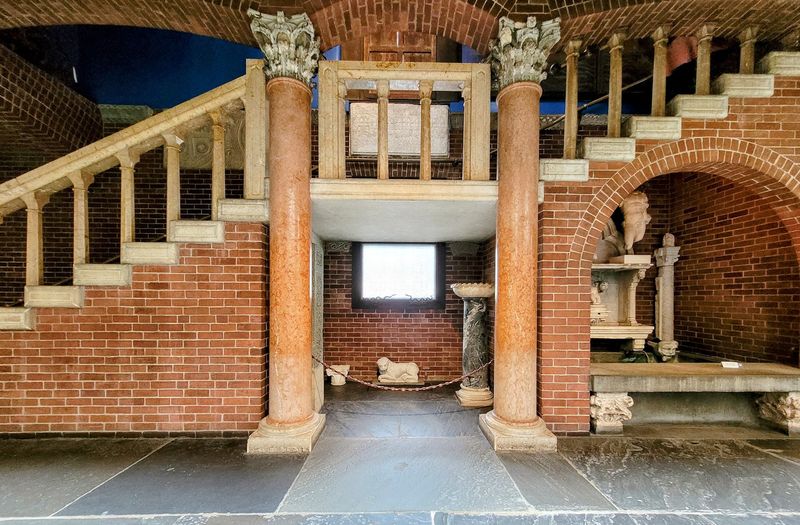
The architectural story of this building begins not in Boston but in Venice, where Isabella Stewart Gardner spent considerable time studying the palazzi along the Grand Canal. She returned from those trips carrying more than memories.
Authentic windows, arches, balconies, and columns made the journey across the Atlantic, acquired from Venetian dealers and eventually incorporated directly into the structure at 25 Evans Way.
Working with architect Willard T. Sears, Gardner made hands-on decisions about placement that went well beyond the typical patron’s involvement.
She chose where each architectural fragment would sit, how light would enter specific rooms, and which proportions would best evoke the Italian Gothic and Renaissance styles she admired. The result is a building that does not feel assembled from borrowed parts.
It feels coherent, as though it grew from a single sustained idea.
Eight authentic Venetian stone balconies line the interior courtyard walls, and the overall facade carries that characteristic soft pink hue associated with Venetian waterfront buildings.
For visitors arriving from other parts of Boston, the transition is abrupt and genuinely surprising.
Nothing in the surrounding Fenway neighborhood prepares you for what waits inside, which may be precisely the effect Gardner had in mind when she began building it more than a century ago.
Renzo Piano’s Contemporary Wing Joins The Story
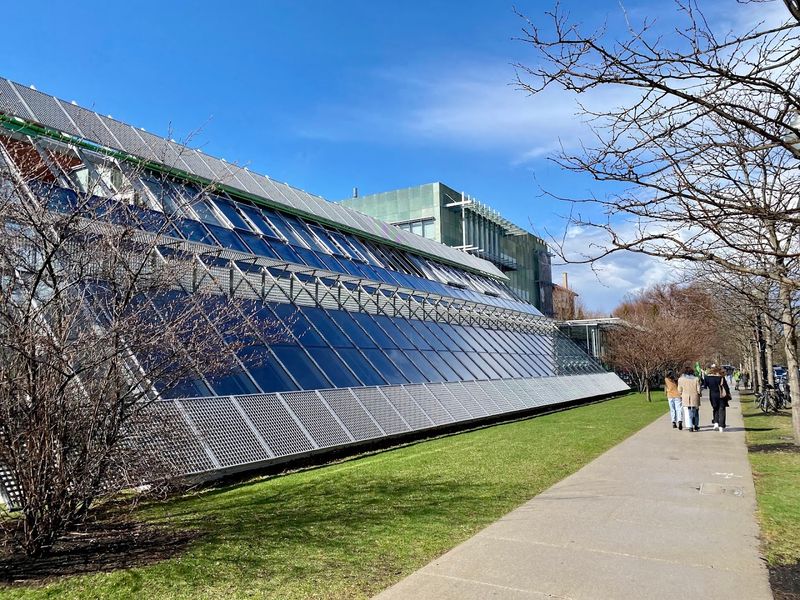
In 2012, a new chapter joined the museum’s long history when Italian architect Renzo Piano completed a contemporary wing adjacent to the original structure.
Piano is known internationally for projects that engage with their surroundings rather than compete against them, and his work here follows that same careful logic.
The new building does not attempt to mimic the Venetian aesthetic of the original. Instead, it stands as a clearly modern structure that defers to its neighbor without disappearing.
The wing provides spaces that the original palazzo simply could not accommodate: a proper visitor entrance, a cafe, coat check facilities, concert halls, classrooms, and galleries for temporary exhibitions.
These additions allow the museum to host educational programs and live performances throughout the year, extending its reach beyond the permanent collection and into ongoing cultural life.
Gardner herself was deeply invested in music and the arts beyond painting and sculpture, so programming concerts and educational events within the institution she founded carries a certain fidelity to her original spirit.
The Renzo Piano building is also where visitors begin their experience today, moving from the contemporary into the historic as they enter the palazzo.
That transition, from a light-filled modern lobby into a 15th-century Venetian world, is one of the more memorable moments the museum offers.
Empty Frames And The Heist That Still Haunts The Galleries
On the night of March 18, 1990, two men dressed as police officers talked their way into the Isabella Stewart Gardner Museum and spent 81 minutes removing thirteen works of art valued at an estimated 500 million dollars.
They took paintings by Rembrandt, Vermeer, and Degas, along with a Manet, a Flinck, a Chinese bronze beaker, and a Napoleonic finial.
They have not been recovered. The case remains the largest unsolved art theft in history.
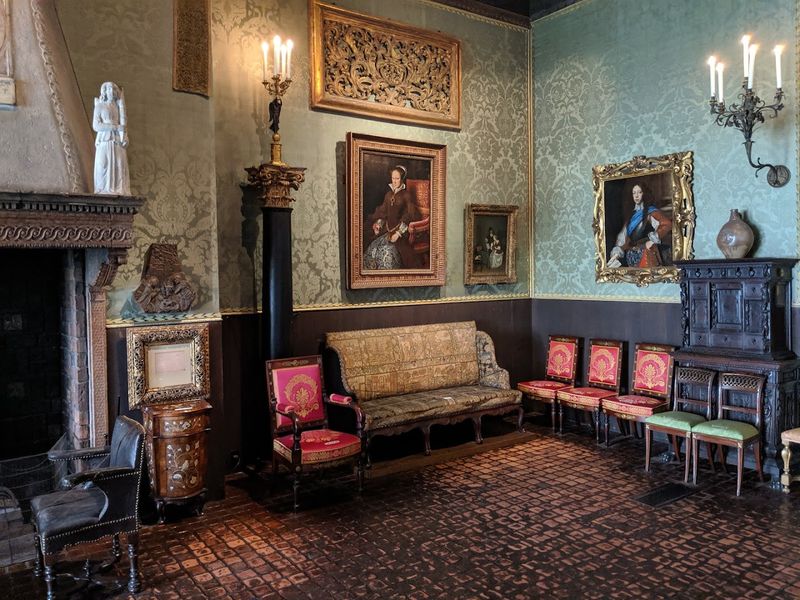
What makes the Gardner’s response to this loss so distinctive is the decision to leave the empty frames exactly where the stolen paintings once hung.
The frames remain on the walls of the Dutch Room and other galleries, serving as placeholders for works that may or may not ever return.
Standing before them produces a specific kind of unease that no label or exhibit text could replicate.
The museum has maintained an active interest in recovering the stolen pieces, and a reward has been offered for information leading to their safe return.
For visitors, the empty frames add a layer of narrative to the museum experience that goes beyond aesthetics.
They raise questions about permanence, loss, and what it means to preserve something that is no longer there. Few museums carry that kind of weight so honestly.
How To Plan Your Visit Without Missing The Best Parts
Planning ahead makes a meaningful difference at the Isabella Stewart Gardner Museum. Tickets sell out regularly, particularly on weekends and during popular seasonal displays like the spring nasturtium installation.
Booking online before your visit is a reliable habit that removes the uncertainty of arriving at the door without a confirmed spot.
The museum opens at 11 AM most days, with extended hours until 9 PM on Thursdays. Saturday and Sunday hours begin slightly earlier at 10 AM.
The museum is closed on Tuesdays. A useful tip from experienced visitors is to start on the top floor and work downward, which tends to result in a less crowded experience, particularly in the morning.
Free coat check and locker facilities are available, and medium to large bags must be checked before entering the galleries.
Audio guides are accessible via QR codes throughout the building, offering additional context for specific works without overwhelming the experience with printed labels.
The gift shop carries thoughtful selections including art books, greeting cards, and collectibles worth browsing.
The cafe in the Renzo Piano wing provides a comfortable place to pause mid-visit. Dedicate at least two to three hours to move through the collection properly.
The museum is located at 25 Evans Way, Boston, Massachusetts and can be reached by phone at 617-566-1401.