
This Texas BBQ Institution Draws Visitors From Four Different States
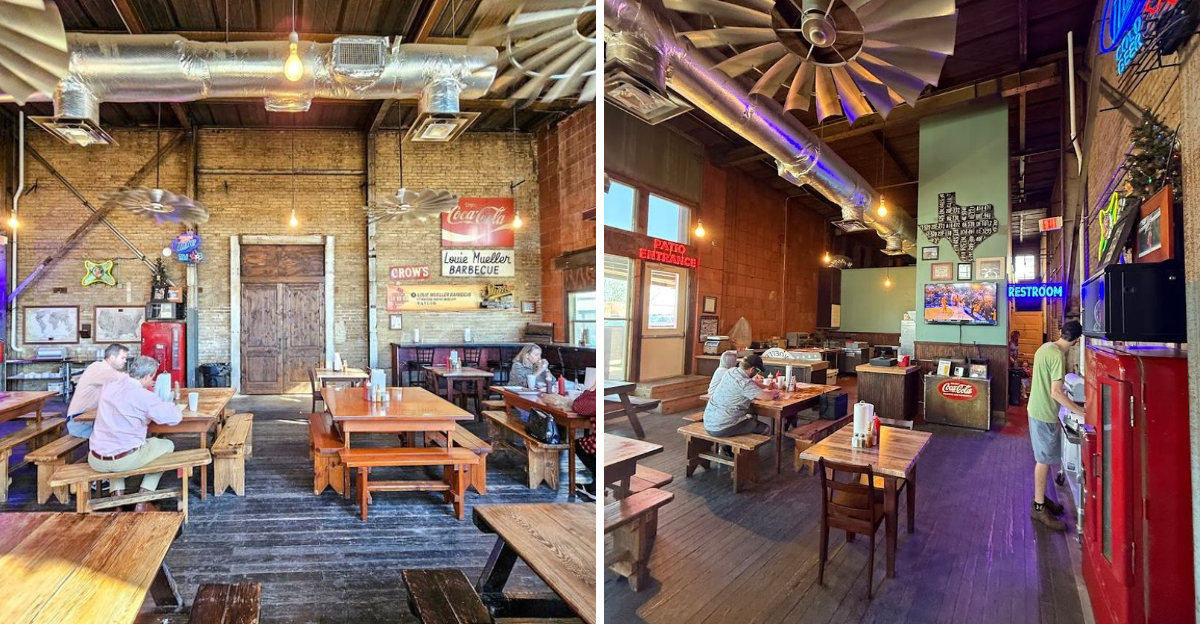
Smoke this thick never happens by accident. Four different states already chase this Texas institution on purpose.
Creaky screen doors swing open onto walls stained deep brown by decades of post oak fire. Worn tables and heavy smoky air pull you straight into another era.
A brisket this famous does not need decoration. Butcher paper, bold pepper bark, and meat so tender it barely needs a knife say plenty on their own.
Then there is a beef rib so massive people call it prehistoric, plus a sausage recipe guarded like a family secret for generations. Why do travelers skip dozens of closer options just for this one Texas plate?
Curious yet? That drive might be worth planning sooner than later.
A Legacy That Started With Leftovers
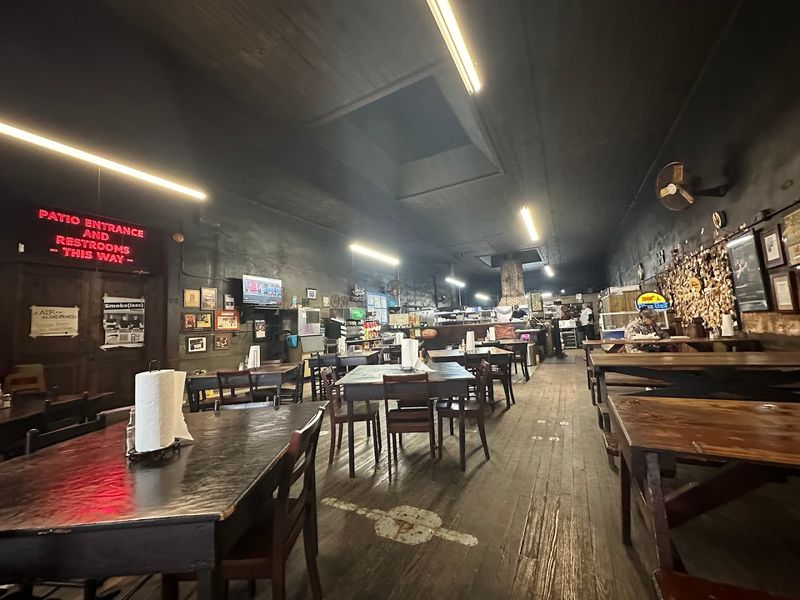
Back in 1946, a grocery store owner in Taylor, Texas, started smoking leftover meats from his market to feed hungry railroad workers at lunch. That humble, resourceful act quietly planted the seed for one of the most celebrated barbecue institutions in the entire country.
The operation officially became a restaurant in 1949, shifting from a side hustle into something far more serious. Ownership passed from the founder to his son, who ran the pits for over three decades and earned a prestigious James Beard Foundation Award in 2006.
That honor placed this restaurant among a small, elite group of Texas barbecue establishments ever recognized this way, cementing its place in the state’s culinary history.
Today, the third generation of the founding family commands the pits, keeping the same traditions alive without cutting corners. The story reads less like a business history and more like a slow-burning love letter to smoked meat.
Few restaurants anywhere in the United States can claim a lineage this deep, this consistent, and this genuinely earned.
The Cathedral of Smoke Earns Its Name
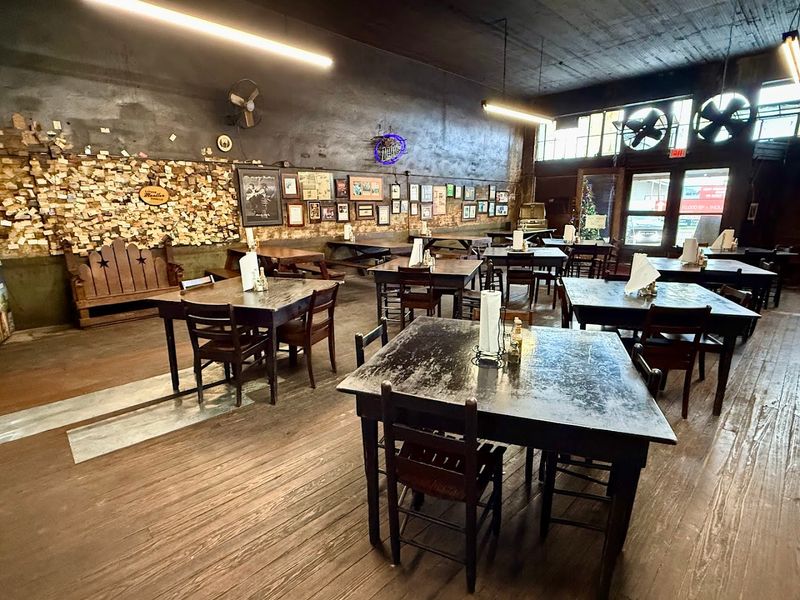
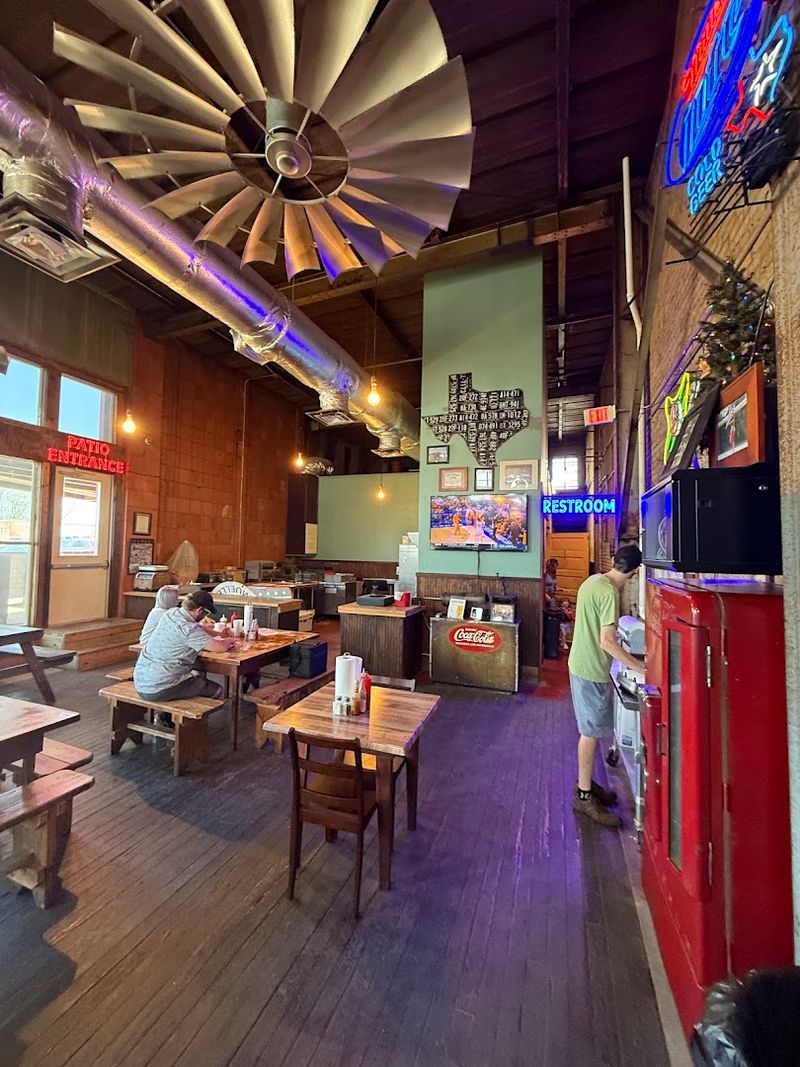
Creaky screen doors swing open to reveal a space that feels like stepping into a time capsule. The building, a former gymnasium that became the restaurant’s home in 1959, carries the visual weight of every fire that has ever burned inside it.
Walls and ceilings have turned a deep, rich brown from decades of slow-burning post oak smoke. This earned the place its famous nickname, the Cathedral of Smoke, and one look around makes it clear why.
Business cards from visitors around the world cover the walls, turning the dining room into an unofficial global guestbook.
A non-functional jukebox, silent since 1975, sits in the corner like a quiet monument to another era. Worn wooden tables invite strangers to sit close and share the kind of meal that makes conversation easy.
The atmosphere at Louie Mueller Barbecue, located at 206 W 2nd St, Taylor, TX 76574, is as much a part of the experience as anything on the menu.
Ancient Pits With A Remarkable Story
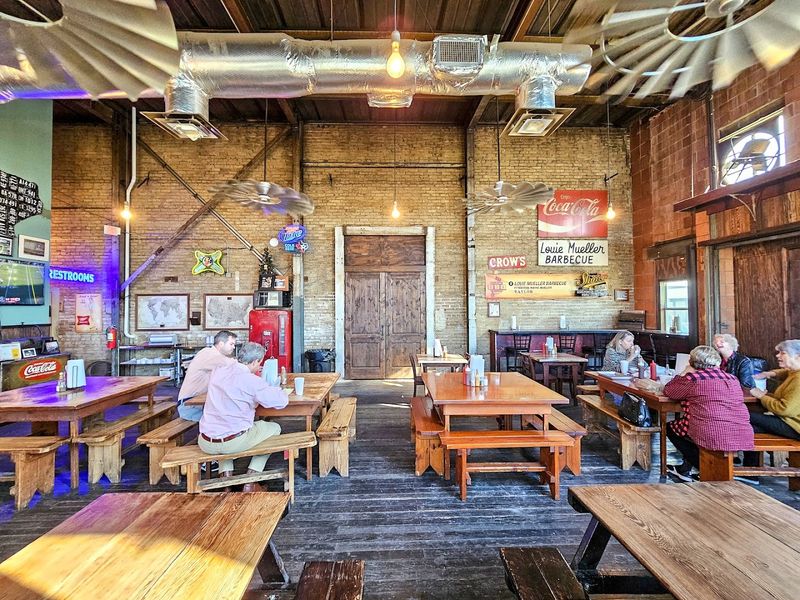
The brick pits at this Taylor institution are not just cooking equipment. They are architectural relics rooted in old German and Czech culinary traditions that shaped Central Texas barbecue into what it is today.
The original pit, built in 1959, anchored the operation for decades. A grease fire in 2013 severely damaged it, but the chimney survived intact.
The pit was carefully rebuilt to preserve its historic character, and the smoke never really stopped for long.
Post oak wood burns in a large firebox at one end of the building. An open flue pulls heat and smoke naturally into the cooking chamber, then sends it up through a towering 30-foot chimney.
Meats rest on a single layer of metal grates, allowing smoke to circulate evenly around every cut. Pitmasters rotate the meat regularly, adjusting to temperature shifts within the pit.
This level of attention, applied every single service day, is what separates a great barbecue restaurant from a legendary one.
Brisket That Sets The Standard
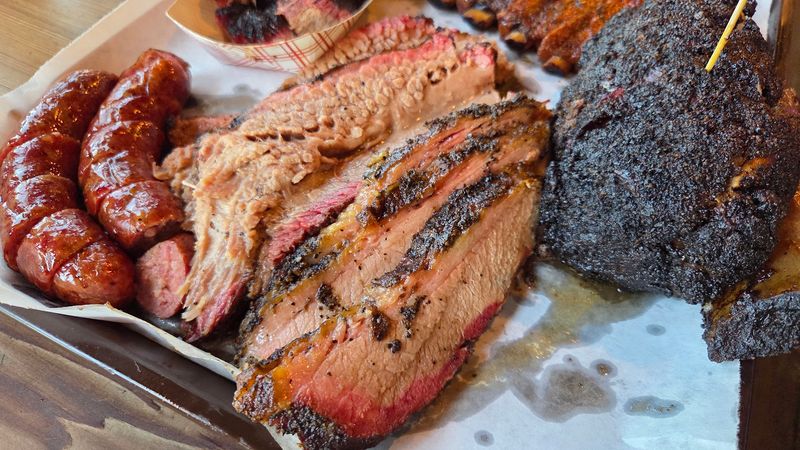
Ask any serious barbecue enthusiast what the benchmark looks like, and the answer often circles back to Central Texas brisket done right. The version served here has been shaping that conversation for a long time.
Each slice carries a thick, dark bark built from a simple rub of coarse black pepper and salt. Underneath that crust, the meat is tender and richly marbled, with rendered fat that practically dissolves on contact.
The smoke flavor runs deep without overwhelming the natural beefiness of the cut.
Both lean and moist options are available, giving first-timers a chance to explore the full range of what slow cooking with post oak can produce. The moist cut tends to win over newcomers quickly, but the lean brisket has its own loyal following.
Ordering by the pound on butcher paper keeps the presentation honest and focused entirely on the meat. No garnish, no distraction, just the kind of brisket that makes people drive across state lines without a second thought.
The Dino Rib Is A Spectacle All Its Own
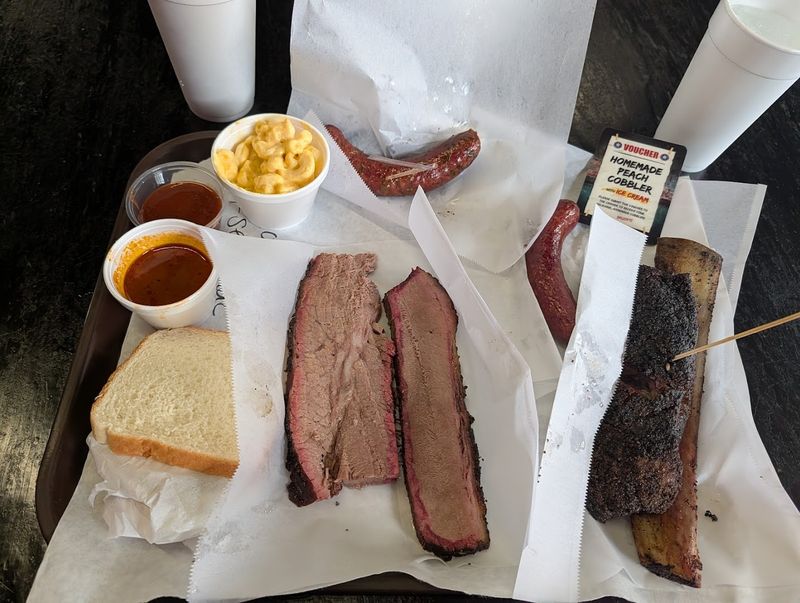
Few things on any barbecue menu command the kind of immediate attention that a beef rib this size does. Called dino ribs for obvious reasons, these colossal cuts arrive looking almost prehistoric, and they taste every bit as powerful as they look.
The dark bark forms a thick crust seasoned with the same salt and pepper blend used across the menu. Beneath it, the meat is rich, deeply smoky, and so tender that it pulls away from the bone with almost no resistance.
The fat renders slowly over hours of smoking, weaving through the muscle in a way that keeps every bite moist and intensely flavorful.
Visitors who have tried beef ribs elsewhere often describe this version as the one that reset their expectations entirely. The size alone makes it a visual event worth photographing, but the flavor is what earns the return visits.
Many people drive from well outside Texas specifically to experience this cut. It is the kind of dish that becomes a story people tell at dinner tables for years afterward.
House-Made Sausage With A History
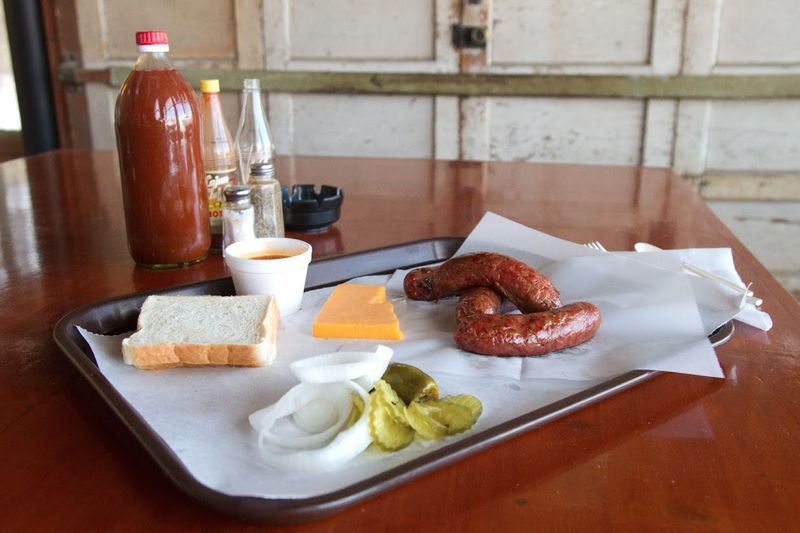
Not every barbecue restaurant can point to a sausage recipe with a specific origin year. The house-made all-beef sausage served here traces directly back to a recipe developed in 1967, and it has remained a menu staple ever since.
The casing delivers a satisfying snap on the first bite, giving way to a juicy, peppery interior that carries a clean smoke flavor throughout. A jalapeno variety adds heat for those who want a little more intensity without losing the core character of the original.
Sausage at a Texas barbecue joint often plays a supporting role, but this version earns genuine attention on its own. The recipe reflects the German and Czech immigrant traditions that shaped the food culture of Central Texas, where sausage-making was a craft passed down through generations.
Ordering a link alongside a pound of brisket is practically a tradition for regulars. First-time visitors who skip it often find themselves wishing they had ordered one more.
The recipe has outlasted trends, fads, and competitors by simply being very, very good.
The Ordering Ritual Feels Like Part Of The Meal
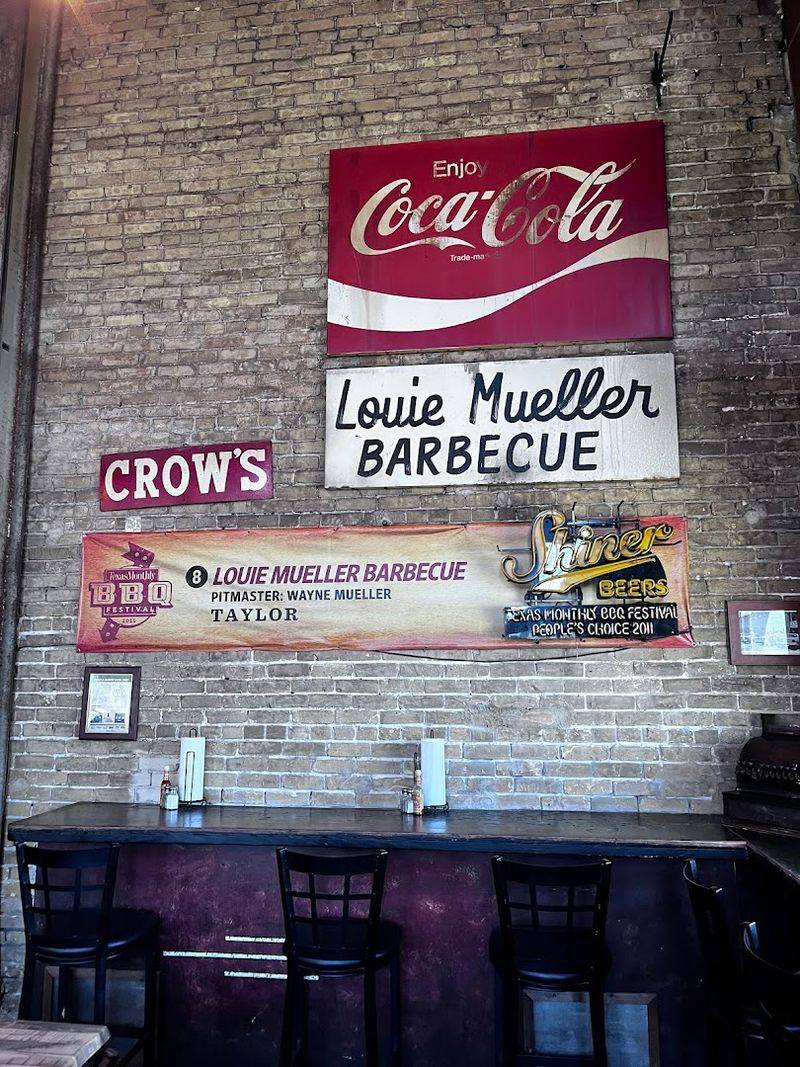
Ordering at this Taylor institution follows a rhythm that feels deliberately old-school, and regulars would not have it any other way. The line forms along one side of the dining room, moving toward a counter where pitmasters carve and portion meat to order.
Everything is served by the pound on butcher paper, with bread, onions, and pickles offered on the side. The process feels less like placing a fast-food order and more like participating in a ritual that connects the current visit to every meal served here since 1949.
Newcomers sometimes feel the pace is slow, but that unhurried approach is part of the character.
Payment options include cash and credit, though a small surcharge applies to credit card transactions. The sauce, a hot and chunky house-made version, sits on the side as an option rather than a requirement.
The meat stands on its own without it. Arriving early tends to reward visitors with the best selection of cuts before popular items sell out.
When the flag outside flies, food is available. No flag means the kitchen has run out for the day.
Taylor, Texas Is Worth The Drive Itself
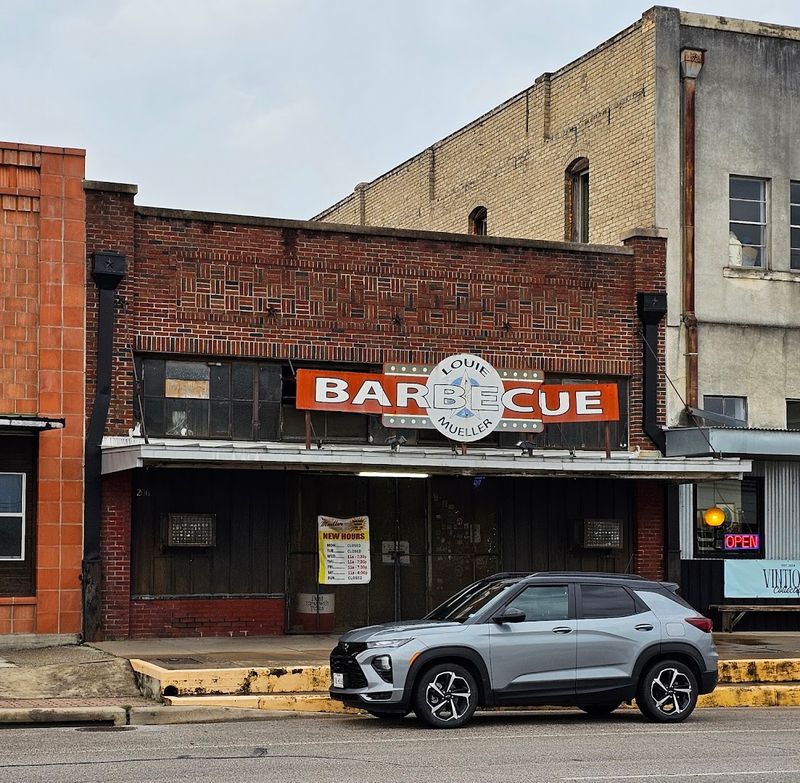
Taylor sits roughly 30 to 45 minutes northeast of Austin, making it an easy and rewarding day trip from the state capital. The town itself has a quiet, unhurried energy that feels like a genuine contrast to the city bustle most visitors leave behind.
The restaurant anchors a corner near the town square, surrounded by antique stores and locally owned businesses that invite a leisurely stroll before or after the meal. The setting gives the whole experience a sense of place that a strip-mall location could never replicate.
Historic Taylor carries its own charm, with architecture and storefronts that reflect a slower era of small-town Texas life. Visitors who plan ahead often combine the barbecue stop with a wander through the surrounding streets, picking up local finds and soaking in the atmosphere.
The drive out through Central Texas countryside adds to the sense of occasion. By the time the smell of post oak smoke hits the nose from the parking lot, the anticipation has been building for miles.
That buildup is part of what makes the meal taste so good.
Four States, One Destination
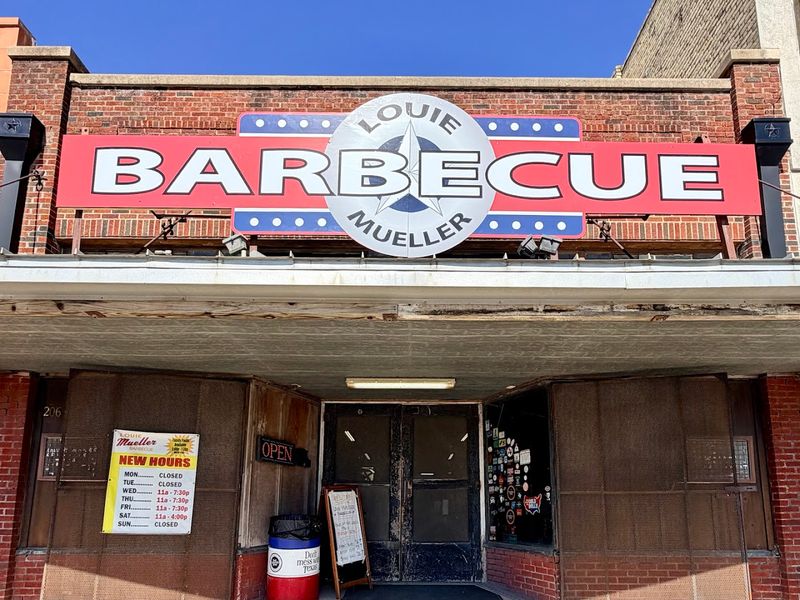
Word travels fast when barbecue is this good. Visitors regularly make the trip to Taylor from Oklahoma, Louisiana, New Mexico, and beyond, turning what could be a local lunch spot into a genuine multi-state draw.
The James Beard Foundation Award in 2006 amplified the restaurant’s already strong reputation and brought national media attention that reached food lovers far outside Texas. Recognition from publications like the New York Times, combined with consistent placement on Texas Monthly’s top barbecue lists, created a feedback loop of credibility that keeps drawing new visitors year after year.
In 2022, the establishment received designation as a Texas Treasure Business, a recognition that honors long-standing enterprises with deep community roots and cultural significance. That title resonates with out-of-state visitors who sense immediately that this place carries weight beyond its menu.
People plan entire road trips around a single meal here. Some return annually, treating it less like a restaurant visit and more like a reunion with a place that genuinely matters to them.
That kind of loyalty is not manufactured. It is earned over decades.
Sides That Know Their Role
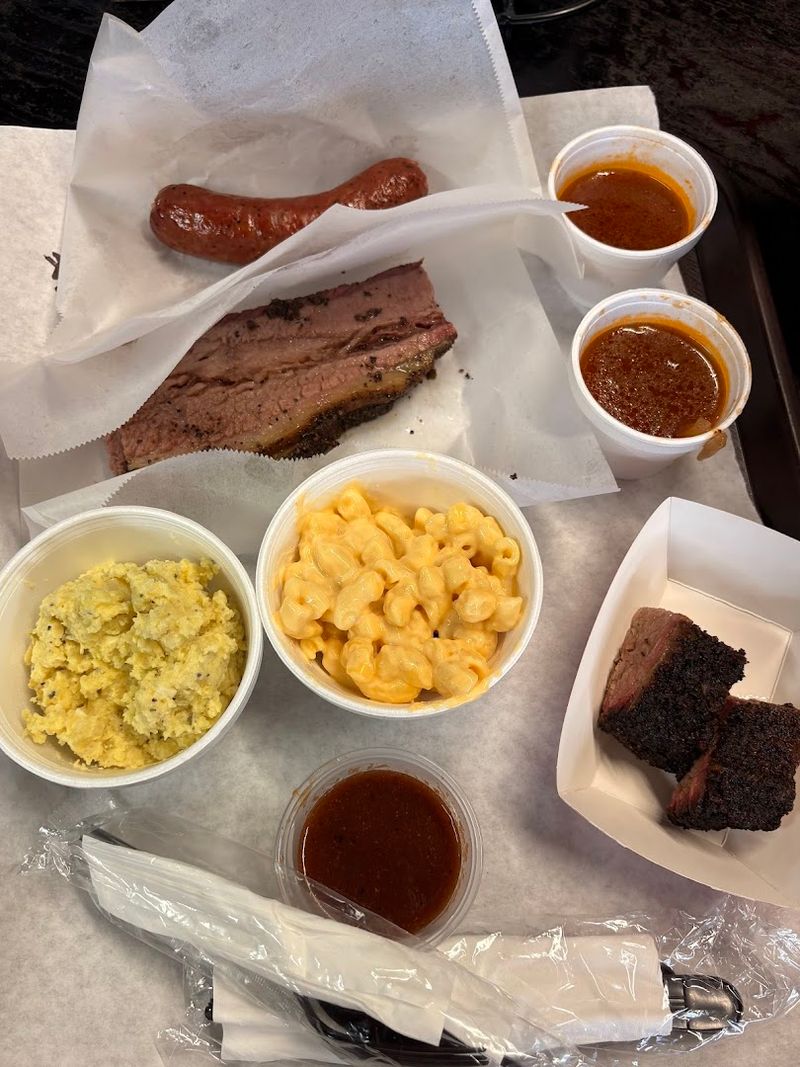
The sides at this Central Texas institution understand their assignment. They complement the meat without trying to compete with it, which is exactly the right approach when the main attraction is this strong.
Potato salad arrives as a straightforward, satisfying option that pairs well with the saltier cuts. Mac and cheese shows up on trays across the dining room, though opinions on it vary among regulars.
Baked beans carry a smoky depth that makes sense in this context. Coleslaw rounds out the selection with a fresh, crunchy contrast to the richness of the smoked meats.
The peach cobbler has developed a quiet but devoted following among dessert seekers, with its caramelized top layer drawing particular praise. White bread and raw onions come standard with most orders, continuing a Central Texas tradition that stretches back generations.
These accompaniments are not afterthoughts. They reflect a regional food culture where every element of the meal has a purpose.
The sides ground the experience in Texas tradition while letting the smoked meats remain the undisputed center of attention.
An Atmosphere That Cannot Be Faked
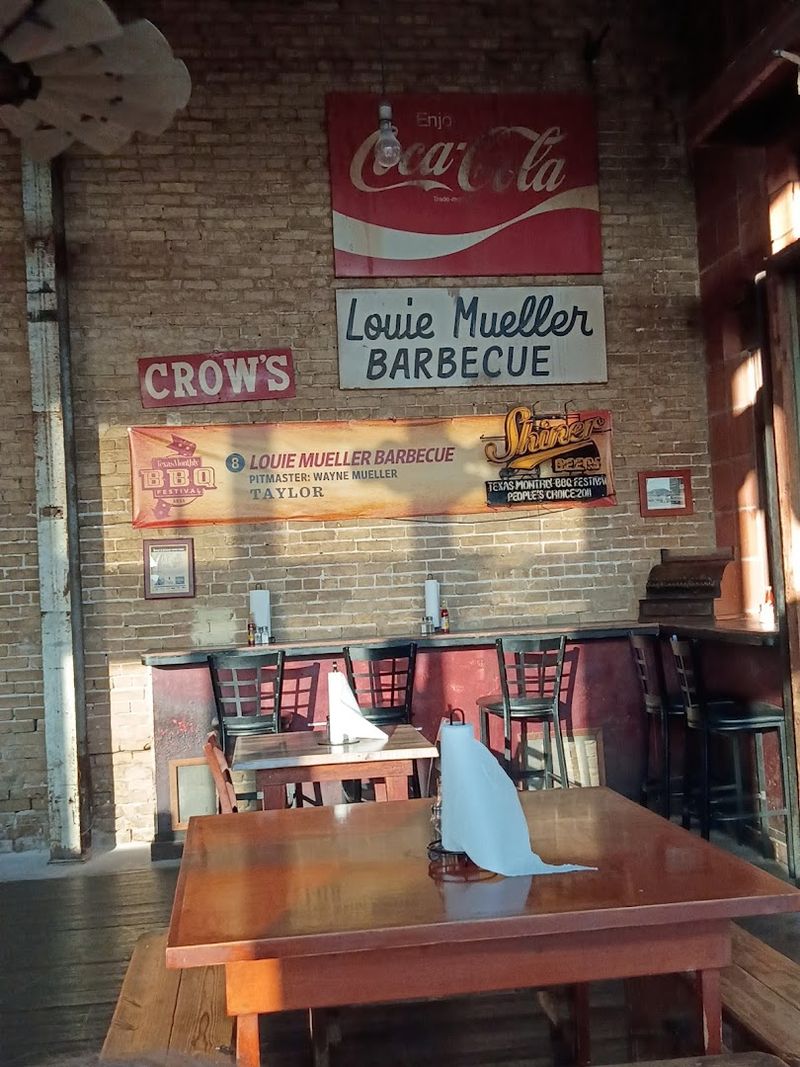
Plenty of new barbecue restaurants try to recreate the look and feel of an old-school Texas joint. Distressed wood, vintage signage, and carefully chosen lighting can get close.
But nothing replicates what 75-plus years of actual smoke does to a building.
The walls here carry a patina that no interior designer can manufacture. Business cards from visitors across the globe cover nearly every available surface, creating a living record of how far people have traveled for a plate of smoked meat.
The ceiling is dark and rich with the residue of countless fires. The floor is worn smooth by generations of hungry customers.
Even the silence of that old jukebox, untouched since 1975, adds something to the room. It signals that this place is not performing nostalgia.
It simply never stopped being what it always was. First-time visitors often spend several minutes just looking around before they even think about the menu.
The building tells the story more effectively than any sign or placard ever could. That authenticity is the reason people keep coming back from across Texas and beyond.
Planning A Visit Worth Remembering
A few practical details make the difference between a smooth visit and a frustrating one. The restaurant operates on a limited weekly schedule, opening only on select weekdays, so checking ahead before making the drive is essential.
Arriving early rewards visitors with the widest selection of cuts.
Watch for the flag flying out front. When it is up, food is being served.
When it is down, the kitchen has sold out for the day. That flag system is not a gimmick.
It is a reliable signal that has guided visitors for years. Parking is generally available close to the building, which sits right on the edge of downtown Taylor.
Both the smoke-filled main dining room and a separate air-conditioned room are available for seating, giving visitors options depending on their comfort level. Large groups can be accommodated, and the counter service moves steadily once the line gets going.
Budget accordingly, as the beef ribs in particular sit at a higher price point that reflects both their size and the labor involved in producing them. The meal is an investment, and most visitors leave feeling it was well worth it.