
This WWII Submarine In Wisconsin Lets You Walk Through Real Naval History
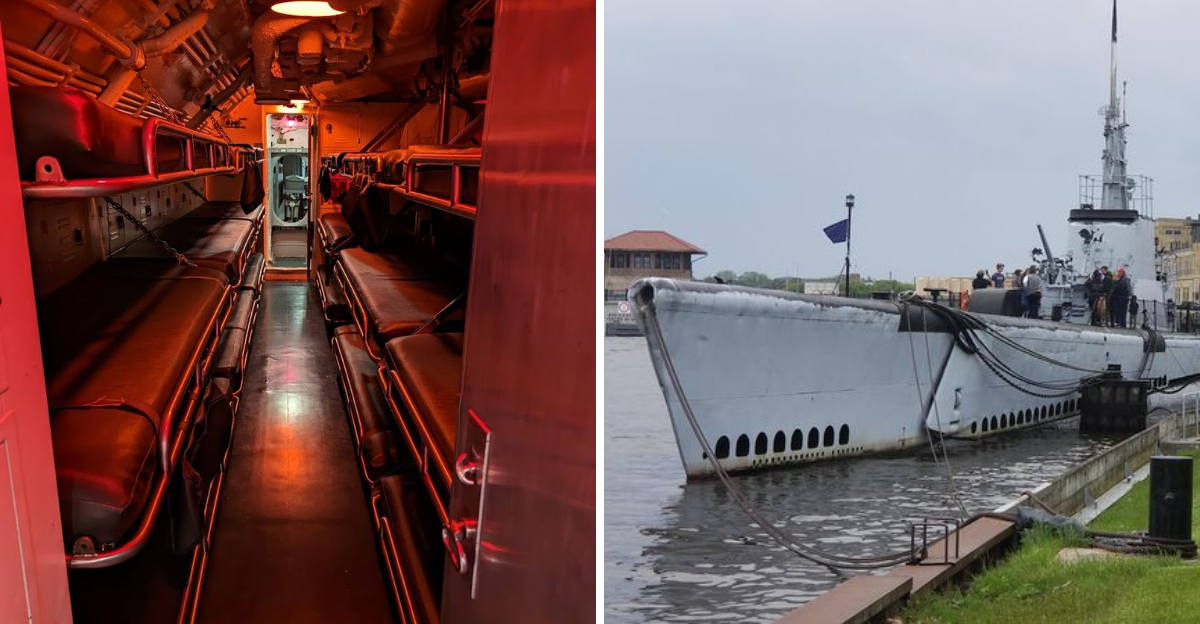
A real World War II submarine is not something you simply look at and move past. Wisconsin gives visitors the chance to step into narrow passageways, duck through tight openings, and feel how intense life below the water must have been.
Every bunk, gauge, ladder, and metal corridor adds another layer to the story. Suddenly, history does not feel distant.
It feels close, cramped, and impossible to ignore. Sailors once lived inside these steel walls while crossing dangerous Pacific waters, and that weight still lingers.
The experience is fascinating, a little eerie, and surprisingly emotional, especially when you realize how much courage it took to serve in a place built for survival.
Visitors Can Step Inside The Real WWII Submarine USS Cobia
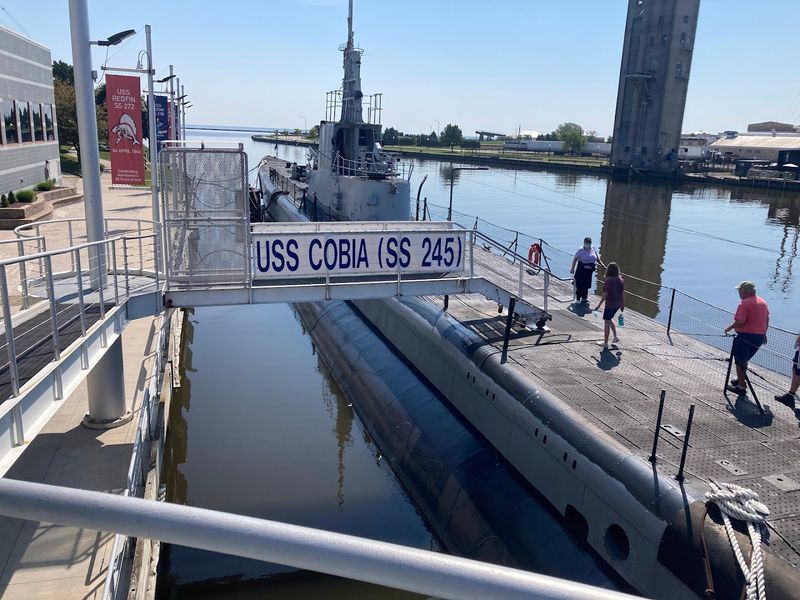
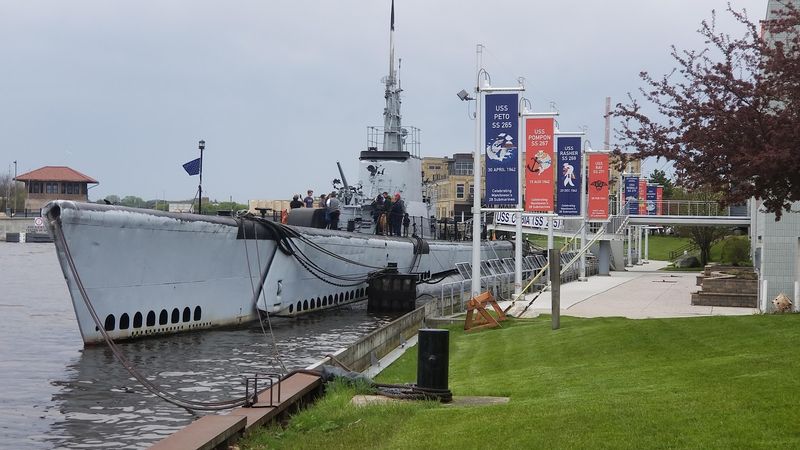
The USS Cobia sits permanently moored at 75 Maritime Dr in Manitowoc, and climbing aboard means stepping into authentic naval history. Built in 1943, this Gato-class submarine served with distinction in the Pacific theater and now serves as a floating classroom for anyone curious about submarine warfare.
The vessel remains remarkably intact, with original equipment still in place throughout most of its 312-foot length.
Access to the submarine comes with museum admission, and visitors can explore at their own pace or join guided tours led by knowledgeable staff. The experience begins with a steep ladder descent through a hatch, immediately giving you a sense of what sailors faced every time they went below.
Natural light fades quickly as you move deeper into the boat, replaced by the dim glow of overhead lights that recreate wartime conditions.
Photography is permitted throughout the vessel, though tight spaces make wide-angle shots challenging. The self-guided tour typically takes forty-five minutes to an hour, depending on how thoroughly you want to examine each compartment.
The Tour Shows How Tight Life Was Below The Surface
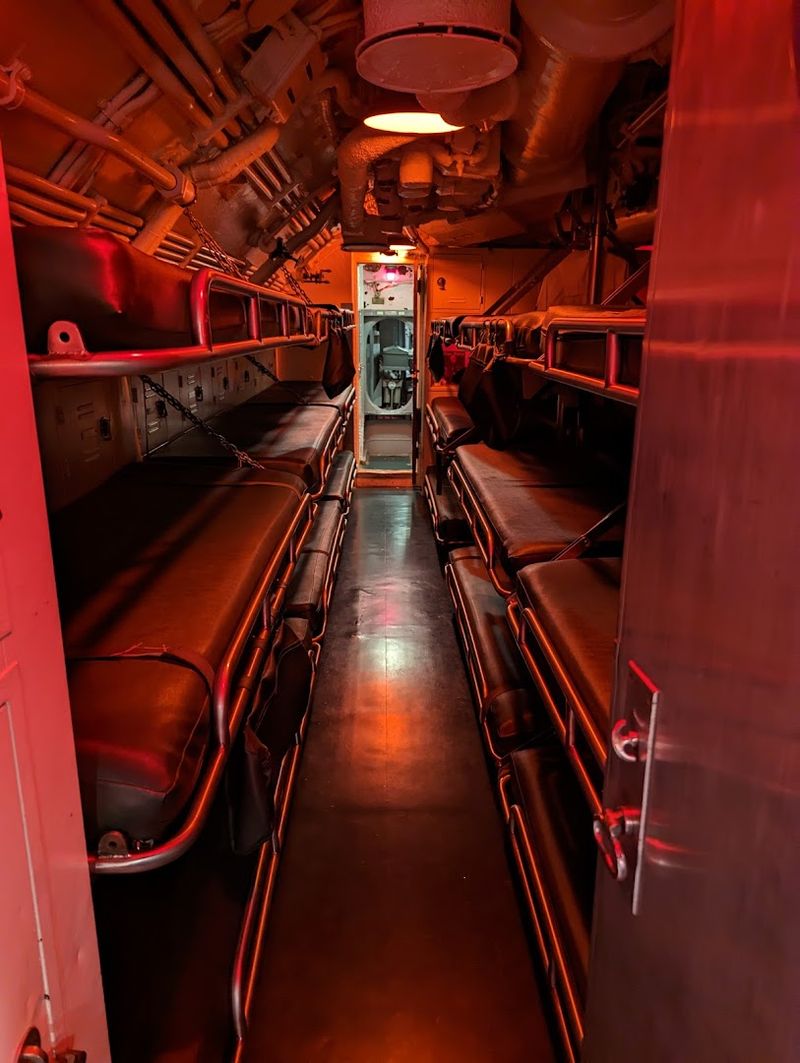
Moving through the Cobia forces you to duck under pipes, squeeze past machinery, and navigate passageways barely wide enough for one person. These cramped conditions were home to eighty sailors who lived, worked, and fought in this confined space for months at a time.
Every square inch served a purpose, with no room wasted on comfort or privacy.
The narrow corridors connect different sections of the boat, each one packed with valves, gauges, and equipment that kept the submarine operational. Sailors had to memorize the location of hundreds of controls and operate them in complete darkness during emergencies.
Modern visitors often find themselves bumping into overhead pipes or doorframes, offering just a hint of the physical challenges submariners faced daily.
Hatches between compartments could be sealed watertight in seconds, potentially trapping crew members in flooding sections to save the rest of the boat. This grim reality hung over every patrol, adding psychological pressure to the already demanding physical conditions.
The tour makes these sacrifices tangible rather than abstract.
Torpedo Rooms Make The History Feel Instantly More Real
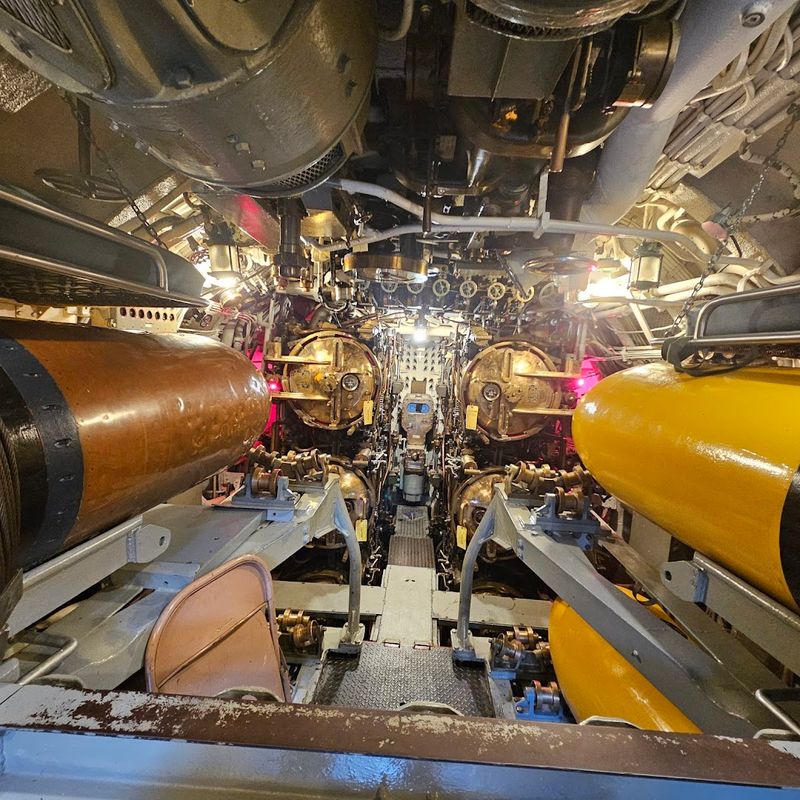
Both the forward and aft torpedo rooms contain the massive tubes that gave submarines their offensive punch during the war. These circular openings dominate the compartments, and seeing them up close helps visitors understand the weapon that made submarines so feared.
Practice torpedoes rest in their racks, each one measuring over twenty feet long and weighing more than three thousand pounds.
Sailors slept in bunks mounted directly above the torpedoes, sharing their living space with these deadly weapons. The arrangement made practical sense since torpedo rooms were among the larger compartments on the boat, but it meant crew members fell asleep inches away from high explosives.
Loading procedures required precise teamwork, with multiple sailors coordinating to move torpedoes from storage into firing position.
The Cobia carried twenty-four torpedoes on patrol, and firing them required flooding tubes with seawater before opening outer doors. Guides explain how crews calculated firing solutions using mechanical computers, accounting for target speed, distance, and course.
These technical details transform the torpedo rooms from museum pieces into working battle stations.
The Control Room Gives Visitors A Look At Wartime Pressure
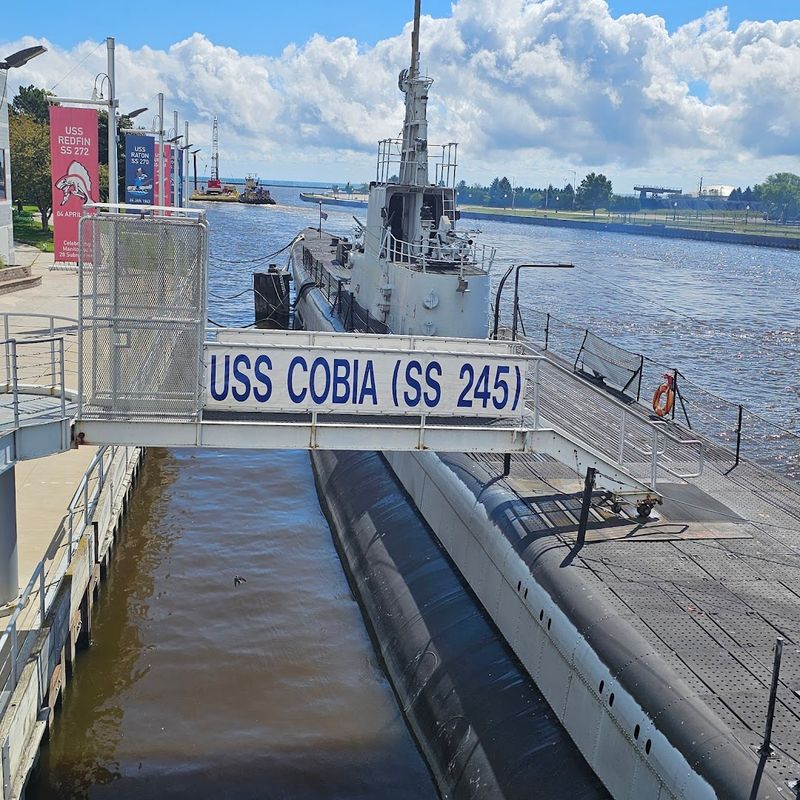
The control room served as the submarine’s nerve center, where commanding officers made split-second decisions that determined survival or destruction. Two periscopes rise through the ceiling, and visitors can actually look through them to see the Manitowoc River and surrounding area.
The view through these optical instruments reveals how limited submarine commanders’ vision was when approaching targets or evading destroyers.
Banks of gauges monitor depth, trim, speed, and dozens of other critical measurements that kept the boat operating safely. The diving station features large wheels that controlled planes and ballast tanks, allowing operators to adjust the submarine’s depth and attitude.
During depth charge attacks, sailors in this room worked frantically to keep the boat level while evading explosions that could crush the hull.
Charts and plotting tables occupy one corner, where navigators tracked position and planned courses through enemy waters. The cramped space somehow accommodated a dozen men during battle stations, each focused on their specific duty.
Standing in this compartment while imagining alarms blaring and depth charges detonating overhead creates profound respect for submarine crews.
Tiny Bunks Show How Sailors Lived For Weeks At Sea
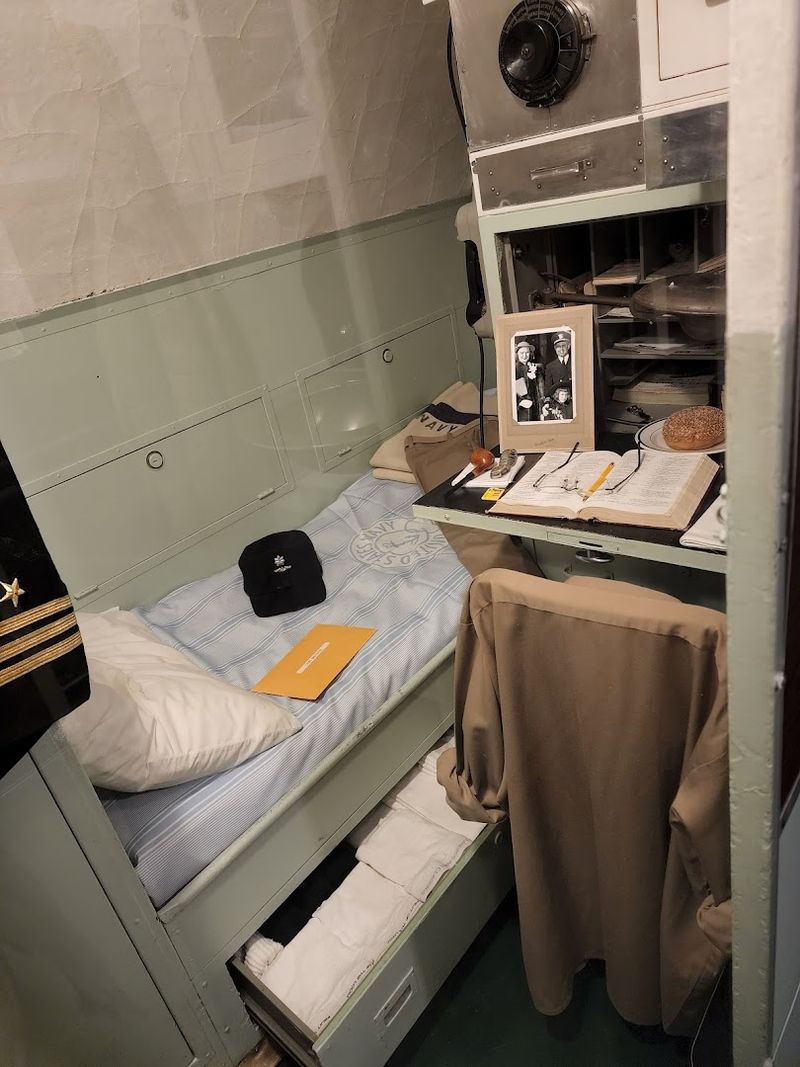
Sleeping accommodations aboard the Cobia barely deserve the name, consisting of narrow bunks stacked three high in whatever space remained after equipment installation. Most bunks measure just six feet long and two feet wide, with perhaps eighteen inches of clearance before hitting the bunk above.
Sailors slept fully clothed, ready to respond to emergencies at any hour of the day or night.
Hot bunking was common practice, with sailors sharing sleeping spaces across different watch schedules. One man would vacate a bunk to stand watch while another climbed in to sleep, meaning the mattresses never fully cooled.
Personal storage consisted of a small locker barely large enough for a few changes of clothes and essential items.
The lack of natural light made it impossible to distinguish day from night, disrupting normal sleep patterns and adding to the psychological strain. Ventilation systems struggled to keep air fresh with eighty men breathing in sealed compartments, and temperatures often climbed uncomfortably high in tropical waters.
These sleeping quarters demonstrate how submariners endured physical hardship as part of their daily routine.
USS Cobia Completed Six War Patrols During World War II
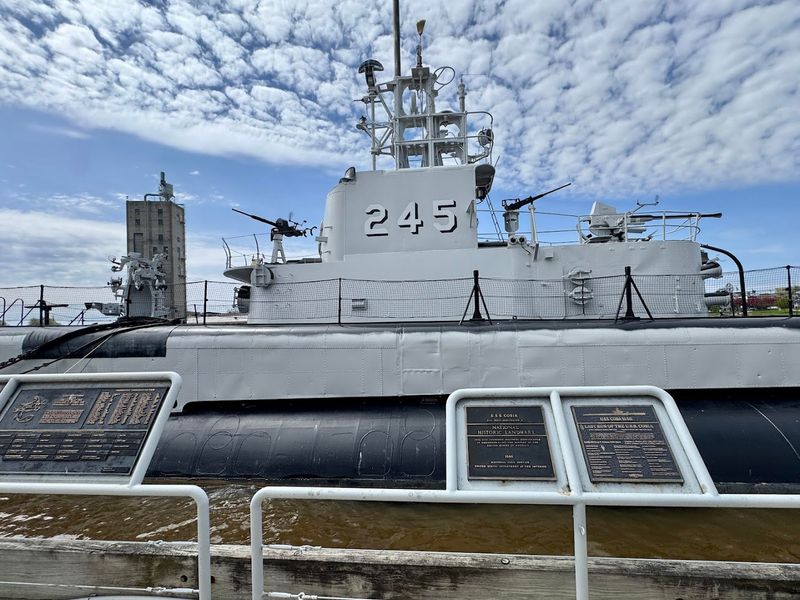
Between 1944 and 1945, the Cobia conducted six combat patrols in the Pacific theater, spending months at sea hunting Japanese shipping. Each patrol lasted between forty and sixty days, during which the crew remained submerged during daylight hours and surfaced only at night to recharge batteries and refresh air supplies.
These extended periods underwater tested both equipment and human endurance to their limits.
The submarine operated primarily in the South China Sea and along the Philippines, targeting merchant vessels that supplied Japanese military forces. Patrols followed a pattern of transit to the hunting grounds, several weeks on station attacking enemy ships, and return to base for resupply and repairs.
Crew members faced constant danger from enemy aircraft, destroyers, and shore batteries throughout these missions.
Records show that the Cobia encountered numerous enemy vessels and engaged in multiple attacks during her service. The submarine survived depth charge attacks and mechanical failures that could have proven fatal in less capable hands.
Reading patrol reports brings home the reality that this peaceful museum exhibit once prowled hostile waters as a weapon of war.
This Submarine Sank Thirteen Enemy Vessels In The Pacific
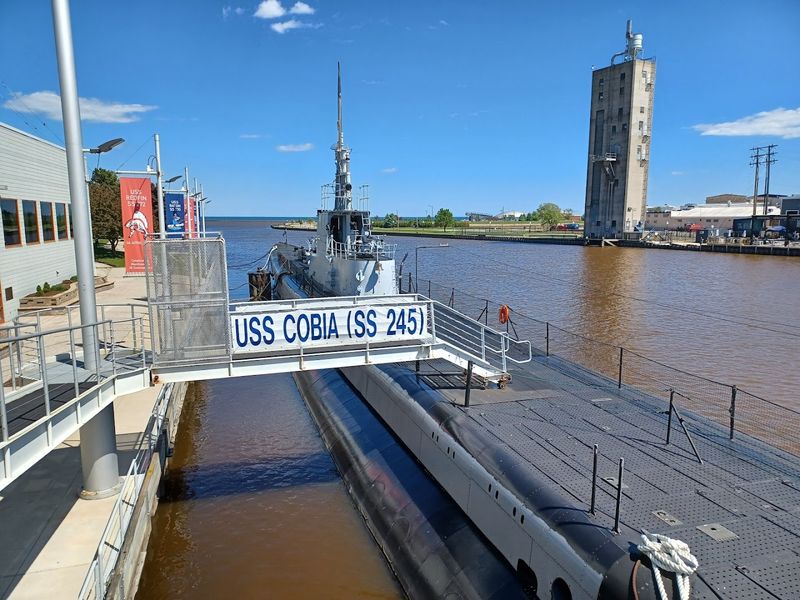
Official Navy records credit the USS Cobia with sinking thirteen enemy ships totaling over sixteen thousand tons during her war patrols. These victories came at tremendous risk, as each attack exposed the submarine to counterattack from escorts and patrol craft.
The confirmed kills include cargo ships, tankers, and smaller vessels that formed Japan’s maritime supply network.
Successful attacks required approaching targets close enough for accurate torpedo shots while remaining undetected by lookouts and radar. Commanders had to calculate firing solutions quickly, accounting for target movement and torpedo running characteristics.
After launching torpedoes, submarines typically dove deep and ran silent to escape the inevitable depth charge response from escorts.
Not every attack succeeded, and the Cobia experienced her share of mechanical failures, missed shots, and evasive maneuvers that saved the boat but allowed targets to escape. The thirteen confirmed sinkings represent only the successful portion of many more attempted attacks.
These combat achievements earned the Cobia four battle stars and established her place in naval history as an effective fighting vessel.
Manitowoc’s Shipbuilding Past Makes The Museum Even More Meaningful
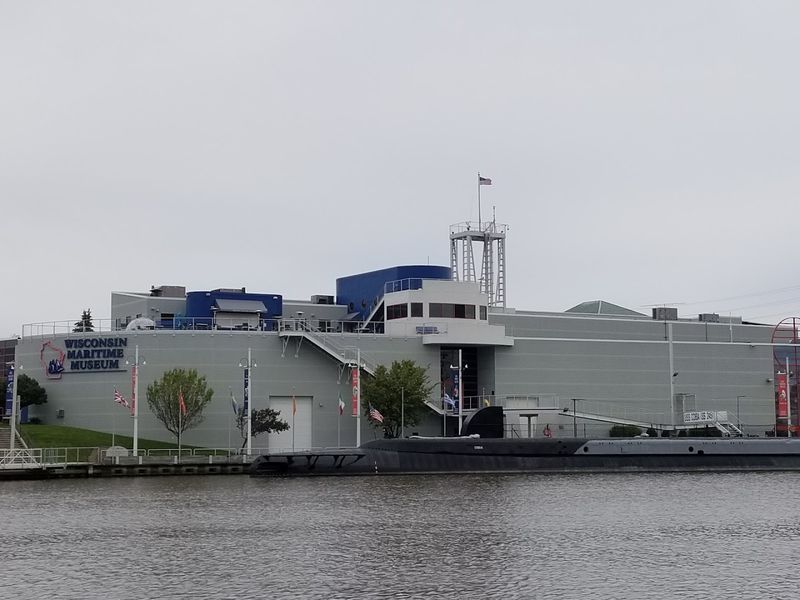
The Wisconsin Maritime Museum sits in a city with deep connections to submarine construction, making the Cobia’s presence particularly significant. Manitowoc Shipbuilding Company transformed from a small Great Lakes operation into a major submarine producer during World War II.
The company’s location over a thousand miles from the ocean presented unique challenges that workers and engineers overcame through ingenuity and determination.
Completed submarines had to travel down the Mississippi River to reach the Gulf of Mexico, a journey that included navigating locks, bridges, and narrow channels never designed for military vessels. This remarkable feat of logistics happened repeatedly as Manitowoc delivered boat after boat to the Navy.
The museum dedicates significant exhibit space to documenting this local contribution to the war effort.
Walking through displays about shipbuilding history adds context to the Cobia tour, helping visitors understand the industrial mobilization that made victory possible. Photographs show women and men working in the yards, many of them local residents who learned specialized skills to support the war.
The museum preserves this proud chapter of Wisconsin history for future generations.
Local Workers Helped Build Twenty Eight Submarines During The War
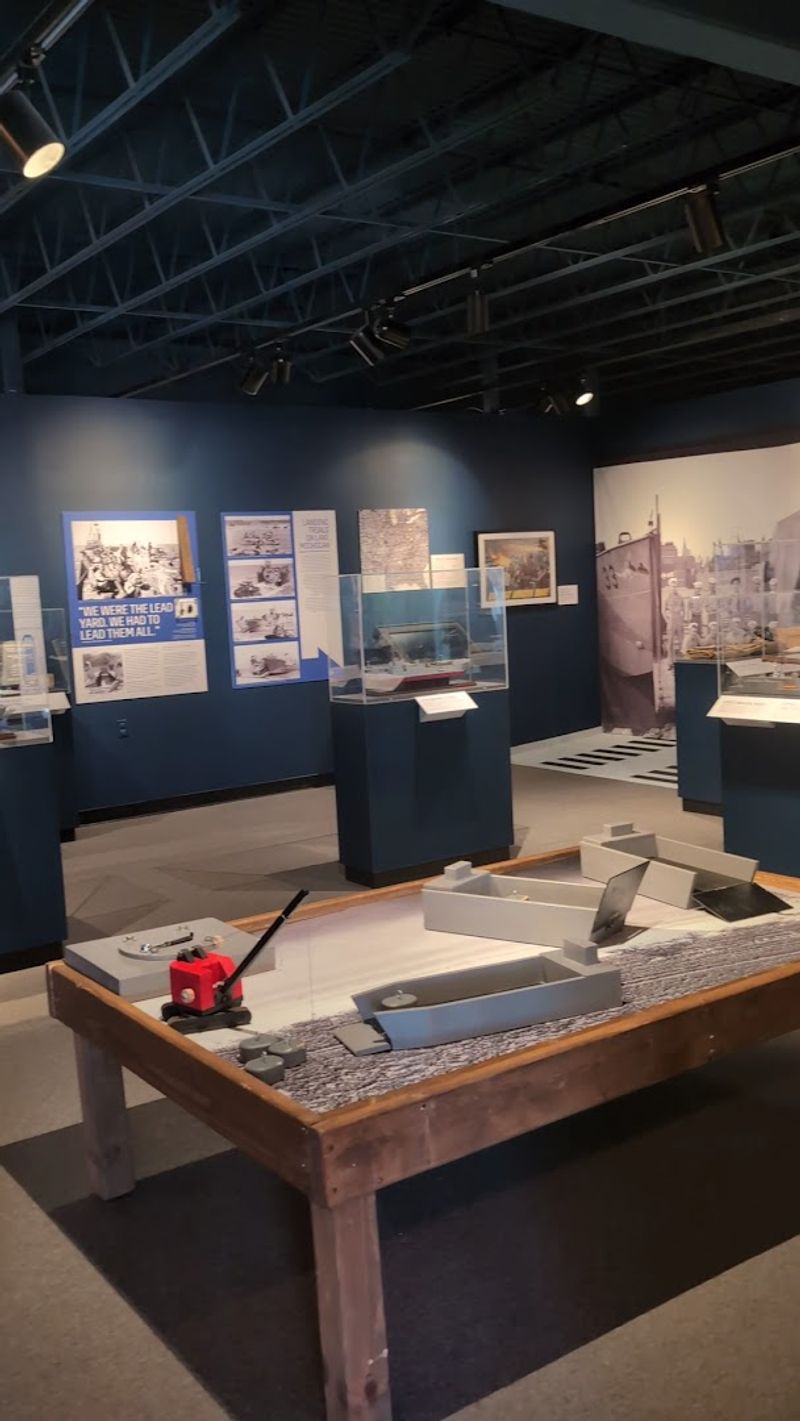
Between 1942 and 1945, Manitowoc Shipbuilding Company constructed twenty-eight submarines for the United States Navy, an extraordinary accomplishment for a facility far from traditional naval shipyards. The workforce expanded rapidly from a few hundred employees to over seven thousand at peak production.
Many workers had never seen a submarine before starting jobs that required precision metalwork and complex assembly procedures.
The company delivered its first submarine in 1942 and maintained a steady production pace throughout the war, with boats launching every few months. Quality control remained stringent despite the pressure to produce vessels quickly, as any defects could prove fatal to crews at sea.
Workers took pride in their craftsmanship, knowing that sailors’ lives depended on properly welded seams and correctly installed equipment.
The museum features photographs and artifacts from the shipbuilding era, including tools, badges, and personal accounts from workers who built these boats. Some exhibits highlight specific individuals who contributed to the effort, personalizing the industrial statistics.
This local connection makes the Cobia more than just a historical artifact for Manitowoc residents.
The Museum Turns Wisconsin’s Maritime History Into A Hands-On Visit
Beyond the submarine, the Wisconsin Maritime Museum offers three floors of exhibits covering Great Lakes shipping, shipwrecks, and regional maritime culture. Interactive displays let visitors operate ship controls, examine recovered artifacts, and learn about the vessels that once dominated commerce on the lakes.
The collection includes detailed ship models, navigational instruments, and personal items from sailors who worked these waters.
A particularly compelling section focuses on Great Lakes shipwrecks, displaying items recovered from vessels lost in storms and accidents. These exhibits remind visitors that maritime work carried risks long before submarines entered service.
Photographs and survivor accounts bring these disasters to life, showing how quickly conditions could turn deadly on the lakes.
The museum opens daily at 9 AM and provides several hours of engaging content for history enthusiasts and casual visitors alike. Admission includes both the indoor exhibits and submarine access, making it an excellent value for families.
Special programs and temporary exhibits rotate throughout the year, giving repeat visitors new material to explore during subsequent trips to Manitowoc.