
The Utah Road Trip That Brings You Face-To-Face With The American West’s Greatest Views
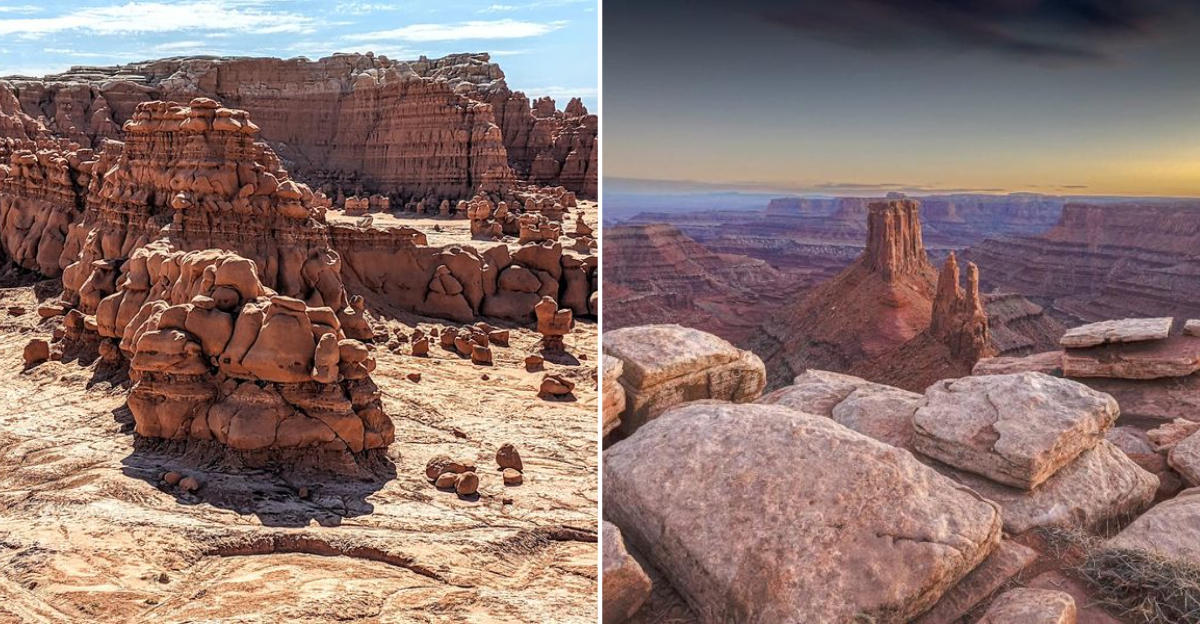
The postcard view cannot capture the vertigo of looking down a thousand-foot canyon drop. A photograph flattens the scale of towering red rock arches that have stood for millions of years.
This winding blacktop highway through Utah connects the most dramatic overlooks on the continent. The road cuts directly through giant waves of petrified dunes that change color with the moving sun.
Massive sandstone monoliths rise above the desert floor like ancient skyscrapers carved by the wind. Drivers often pull over onto the gravel shoulders just to stare into the vast, silent emptiness of the canyons.
The dry desert air smells faintly of wild sagebrush and sun-baked earth. Every crest of the highway reveals another jagged horizon that forces you to realize how small you really are.
1. Arches National Park
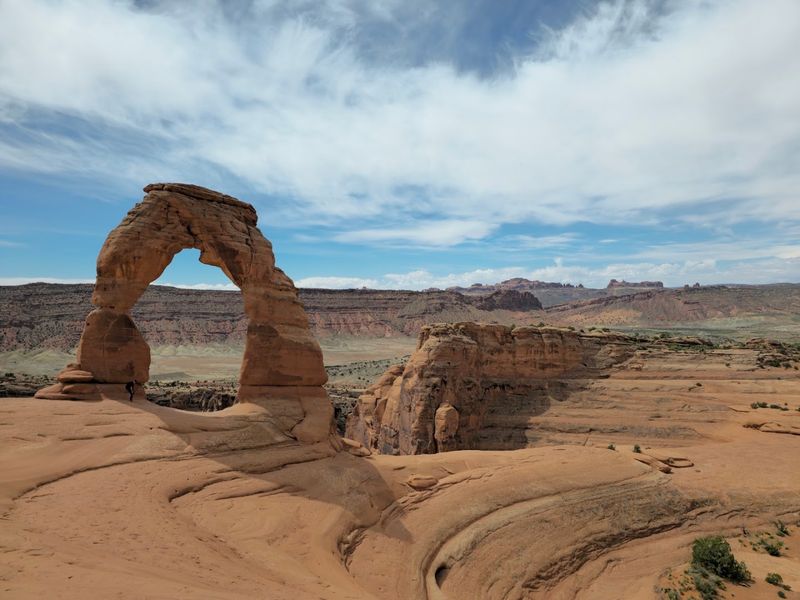
Over 2,000 natural sandstone arches exist in one place, and that place is right here. Arches National Park is basically nature showing off without apology.
It sits five miles north of Moab, and the drive in alone will make your jaw drop.
The iconic Delicate Arch is the star of the show. You have seen it on Utah license plates, and yes, it looks even better in person.
The hike to reach it is about three miles round trip, and every step is worth it.
Beyond Delicate Arch, the park is packed with towering sandstone fins and balanced rocks. Some of those balanced rocks look physically impossible.
You will spend time just staring, wondering how they have not fallen yet.
The park comes alive at sunrise and sunset. The light turns everything orange, red, and pink.
Photographers camp out for those moments like it is a concert.
Bring plenty of water because the desert heat is real. The trails can feel exposed and hot at midday.
Early morning hikes are the smartest move you can make.
Wildlife also calls this park home. Mule deer, jackrabbits, and lizards are common sightings.
You might even spot a red-tailed hawk circling overhead.
Arches National Park also has a dark sky designation. Stargazing here is an experience that feels almost spiritual.
The Milky Way stretches across the sky like a glowing river.
2. Bryce Canyon National Park
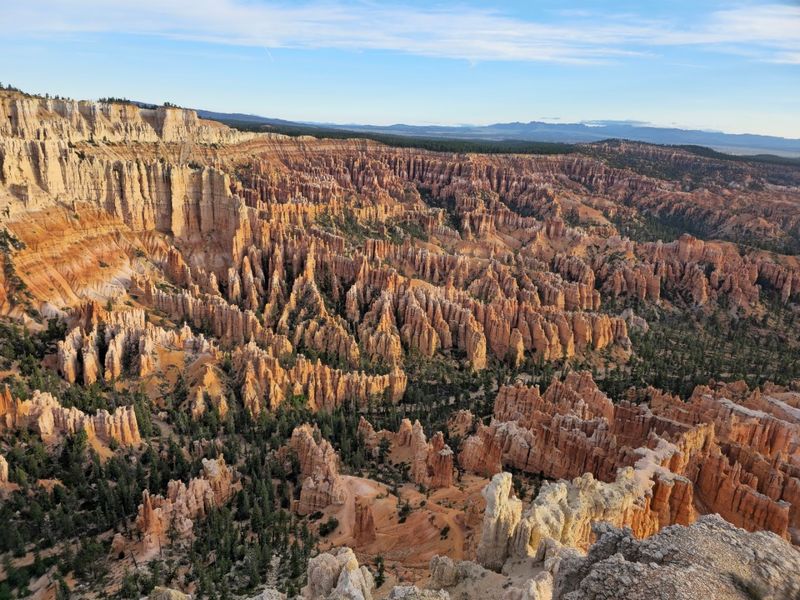
Nobody warned me that Bryce Canyon would look like a fantasy world. The hoodoos here are unlike anything else on Earth.
These tall, spire-shaped rock pillars line the canyon in thousands, creating a scene that feels completely surreal.
Hoodoos form through millions of years of freezing, thawing, and erosion. Water seeps into cracks, freezes, expands, and slowly chips the rock apart.
It is a slow, patient process with spectacular results.
Sunrise Point and Sunset Point are the two most popular overlooks. Both names are accurate instructions for when to visit.
The light during those hours turns the hoodoos into something that glows.
Bryce Canyon sits at a high elevation, around 8,000 to 9,000 feet. That means the air is cooler here than in lower Utah parks.
It also means snow dusts the hoodoos in winter, which looks absolutely magical.
The Navajo Loop Trail is a favorite among hikers. It drops down into the canyon and weaves between the hoodoos up close.
Walking among them gives you a completely different perspective.
Astronomy lovers take note. Bryce Canyon is one of the darkest places in the continental United States.
The park even hosts an annual astronomy festival that draws visitors from around the world.
Wildlife is active here too. Prairie dogs pop up along the rim trail and act like tiny comedians.
Utah prairie dogs are actually a protected species, so keep your distance and enjoy the show.
3. Canyonlands National Park
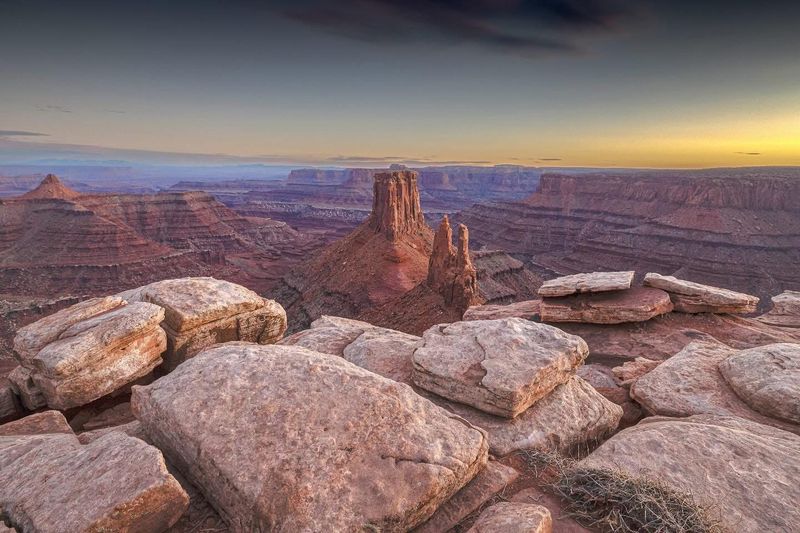
Canyonlands is the kind of place that puts your entire sense of scale into question. Mesas rise hundreds of feet from the canyon floor.
The Colorado and Green Rivers carved these formations over millions of years, and the result is breathtaking.
The park is divided into four districts. Island in the Sky is the most visited and easiest to access.
From its mesa top, you can see the canyon stretching out in every direction like a giant map.
Mesa Arch is the park’s most photographed spot. At sunrise, light pours through the arch and reflects off the canyon walls below.
Photographers line up before dawn just to grab that perfect shot.
The Needles district offers a completely different vibe. Colorful spires of Cedar Mesa sandstone rise from the ground in clusters.
Hikers and backpackers love this area for its remote, rugged trails.
The Maze district is for serious adventurers only. It is one of the most remote and difficult areas to reach in the entire United States.
Navigation skills and proper gear are not optional here.
Rock art from ancient Puebloan people can be found throughout the park. Horseshoe Canyon holds some of the most impressive examples.
These paintings are thousands of years old and still remarkably detailed.
Mountain biking is also popular in Canyonlands. The White Rim Road is a 100-mile trail that loops around Island in the Sky.
Most riders take three to four days to complete it.
4. Dead Horse Point State Park
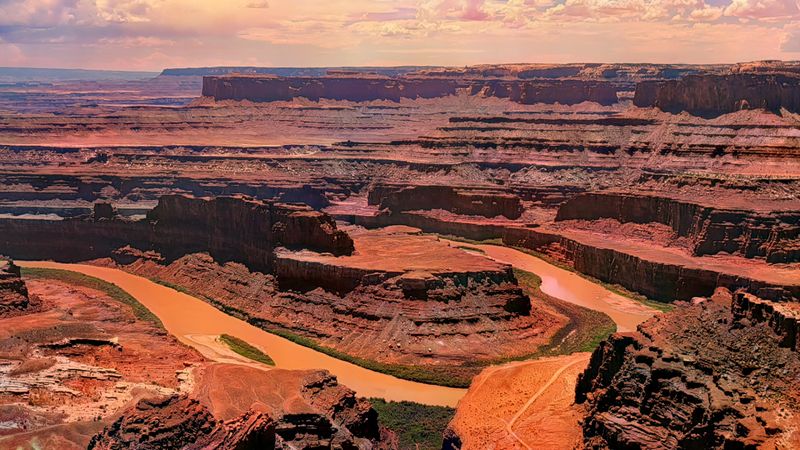
The name alone should make you curious. Dead Horse Point has a legend behind it that is equal parts fascinating and heartbreaking.
Cowboys once used this narrow peninsula of rock to corral wild mustangs, and tragically, some horses passed away of thirst on the point.
The overlook here shows a dramatic gooseneck bend in the Colorado River far below. The river loops in an almost perfect horseshoe shape.
It looks like a painting, except it is completely real and completely massive.
The cliffs drop nearly 2,000 feet straight down. Standing at the edge gives you a genuine rush.
Even confident people take a step back and breathe slowly for a moment.
Dead Horse Point sits about 20 miles north of Moab. It is close enough to pair with a visit to Canyonlands on the same day.
Many road trippers combine both stops into one epic afternoon.
The park has a visitor center with exhibits about the geology and history of the area. Rangers are friendly and full of interesting facts.
They love when visitors ask questions.
Sunrise and sunset views from the point are legendary. The canyon walls shift through shades of orange, red, and purple as the light changes.
Photographers consider this one of the best spots in all of Utah.
Camping is available at Dead Horse Point. The campground sits on the mesa with wide open sky above.
Falling asleep under that canopy of stars is something you will not forget quickly.
5. Capitol Reef National Park
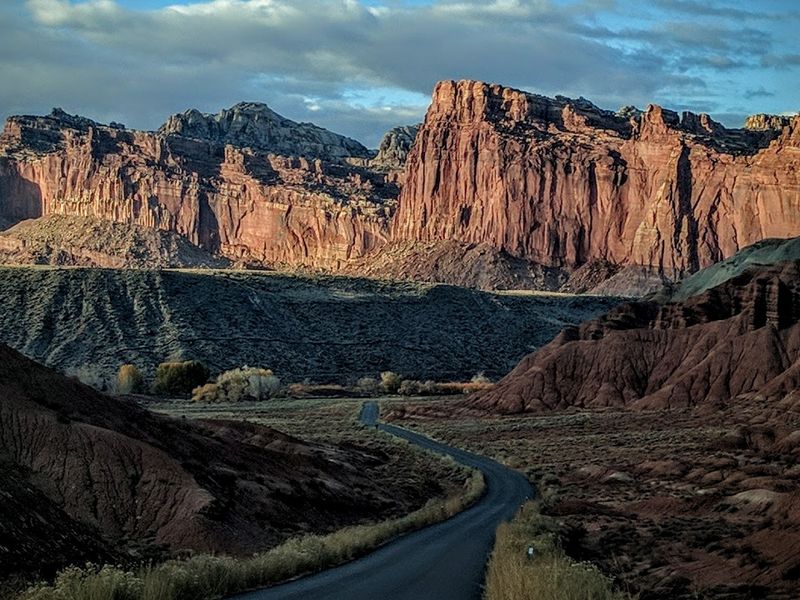
Capitol Reef is the underrated spot of Utah’s national parks. Fewer crowds, more mystery, and geology so dramatic it stops you mid-sentence.
The Waterpocket Fold is the park’s defining feature, a nearly 100-mile-long wrinkle in the Earth’s crust.
Early explorers compared the massive white sandstone domes to Capitol buildings. They named the area Capitol Reef, and the name stuck.
Standing beneath those domes, you completely understand why.
The Scenic Drive winds through the heart of the park. It passes colorful cliffs, carved canyons, and ancient orchards planted by Mormon pioneers in the 1880s.
Yes, actual fruit trees still grow here and produce real fruit.
Visitors can pick fruit from the orchards during harvest season. Apples, peaches, pears, and cherries are available depending on the time of year.
It is one of the most unexpected and delightful surprises in any national park.
Petroglyphs left by the Fremont people cover a panel near the visitor center. These ancient rock carvings are estimated to be between 700 and 1,300 years old.
Standing in front of them feels like reading a letter from another era.
Hickman Bridge is one of the park’s best hikes. The trail leads to a natural bridge that spans 133 feet across a canyon.
The views from the top extend across the entire Fremont River valley.
Capitol Reef also offers some seriously dark skies. Stargazing here rivals any park in Utah.
The Milky Way appears in full detail on clear nights.
6. Goblin Valley State Park
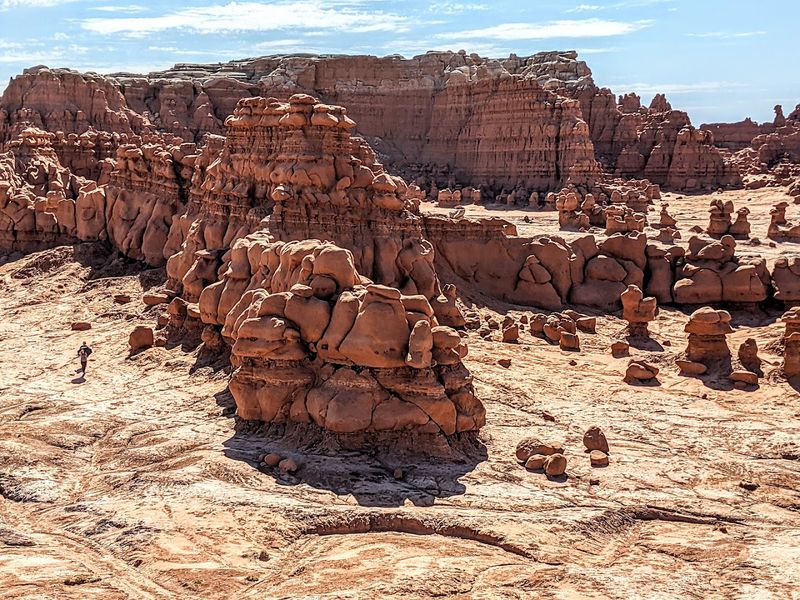
Goblin Valley looks like the set of a science fiction movie. Thousands of mushroom-shaped rock formations cover the valley floor in every direction.
Cowboys stumbled upon this weird, wonderful place decades ago and probably thought they were dreaming.
The formations are called goblins, and the name is perfect. They range from knee-high to taller than a person.
Each one has its own quirky shape, and no two look exactly alike.
Erosion created these goblins from softer Entrada sandstone. Water and wind slowly carved away the rock over millions of years.
The harder caps on top protected the softer material below, creating the mushroom effect.
You are actually allowed to walk among the goblins freely. There are no marked trails through the main valley.
That freedom to wander makes the experience feel genuinely adventurous.
Kids absolutely lose their minds here in the best possible way. The goblins are fun to climb around and explore.
Parents have to work hard to keep up with the excitement level.
The park was also famously used as a filming location. The 1999 film Galaxy Quest used Goblin Valley as an alien planet.
Once you see the landscape, that casting decision makes total sense.
Camping at Goblin Valley is a highlight for overnight visitors. The campground sits near the valley with clear skies overhead.
Stargazing here is spectacular since the park sits far from city lights.
Nearby Little Wild Horse Canyon offers a slot canyon hike worth adding to your itinerary. The narrow walls and winding passage are unforgettable.
It pairs perfectly with a morning in the Goblin Valley.
The address is 18630 Goblin Valley Rd, Green River, UT 84525.
7. Natural Bridges National Monument
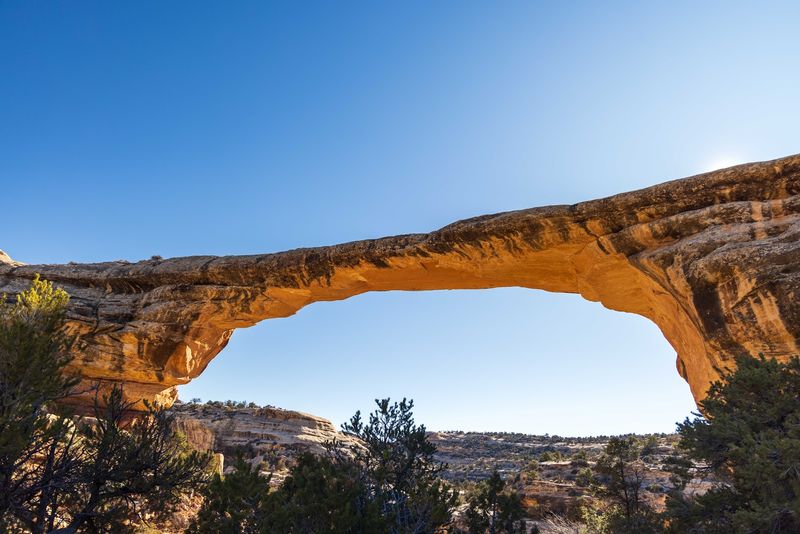
Natural Bridges National Monument is where water wrote its greatest story in stone. Three massive natural bridges span the canyons here, each one formed by a stream cutting through sandstone over thousands of years.
Bridges differ from arches because water did the carving, not wind.
The three bridges are named Sipapu, Kachina, and Owachomo. These are Hopi Indian words, honoring the Indigenous people who have deep connections to this land.
The names carry meaning and history that add another layer to the visit.
Sipapu is the largest of the three. It spans 268 feet and stands 220 feet tall.
Walking beneath it is a genuinely humbling experience that makes you feel small in the best way.
Owachomo is the oldest and thinnest bridge. It looks almost delicate compared to the others.
Scientists believe it will eventually collapse, though not for thousands of years.
Ancient Puebloan ruins are scattered throughout the canyon. Rock art panels and stone structures date back hundreds of years.
Hiking the canyon loop trail connects all three bridges and passes several archaeological sites.
Natural Bridges was the first National Monument in Utah. It was established in 1908 by President Theodore Roosevelt.
That kind of history gives the place an extra sense of importance.
The monument was also the first place in the United States to be designated an International Dark Sky Park. Light pollution is virtually nonexistent here.
Nighttime skies reveal stars in numbers that are hard to believe until you see them yourself.
8. Kodachrome Basin State Park
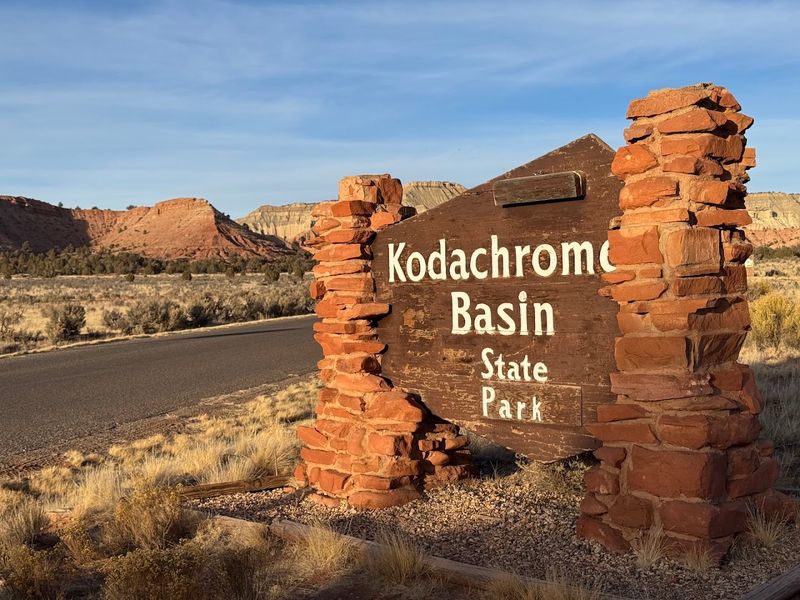
A National Geographic expedition named this park after a brand of film, and that says everything. The colors here are so vivid and saturated that the team in 1948 could not think of a better comparison.
Kodachrome Basin earns every bit of that name.
The park features 67 monolithic stone spires called sedimentary pipes or sand pipes. These formations are extraordinarily rare and found in very few places on Earth.
Scientists believe ancient hot springs created them millions of years ago.
The tallest spires reach up to 170 feet high. They rise from the desert floor in shades of red, orange, pink, and white.
Walking among them feels like wandering through a sculpture garden designed by geology itself.
The sandstone layers here reveal approximately 180 million years of geologic history. Each color band represents a different era.
Reading those layers is like flipping through the pages of Earth’s autobiography.
Hiking trails wind through the park at a relaxed pace. The Grand Parade Trail is perfect for families and casual hikers.
It loops past several spires and offers great views without a brutal elevation gain.
Horseback riding is available in the park through a local outfitter. Exploring the basin on horseback adds a genuinely Western feel to the whole experience.
It is the kind of activity that makes you feel like you belong in a classic film.
The park sits close to Bryce Canyon, making it an easy add-on stop. Many visitors combine both in a single day.
Kodachrome Basin deserves more than a glance, though, so plan for at least a few hours.