
8 Mississippi Blues Landmarks That Celebrate The Birthplace Of An American Music Legend
“I got the blues, but I’m too damn mean to cry,” a gravelly voice once echoed from a wooden porch. Those raw, aching chords were born right here in the shadow of the cotton fields and dusty crossroads.
This flat landscape holds the heavy memory of acoustic guitars and harmonicas played around flickering fires. People travel from all over the world to touch the weathered wood of these historic shacks.
They want to stand on the exact dirt where the rhythm of modern American music first found its heartbeat. Each location tells a story of hardship transformed into pure, timeless art.
This Mississippi trail preserves the fragile ghosts of a sound that changed radio stations forever. You do not just visit these old buildings.
You listen to the walls sing.
1. B.B. King Museum & Delta Interpretive Center
Nobody in the world played guitar the way B.B. King did.
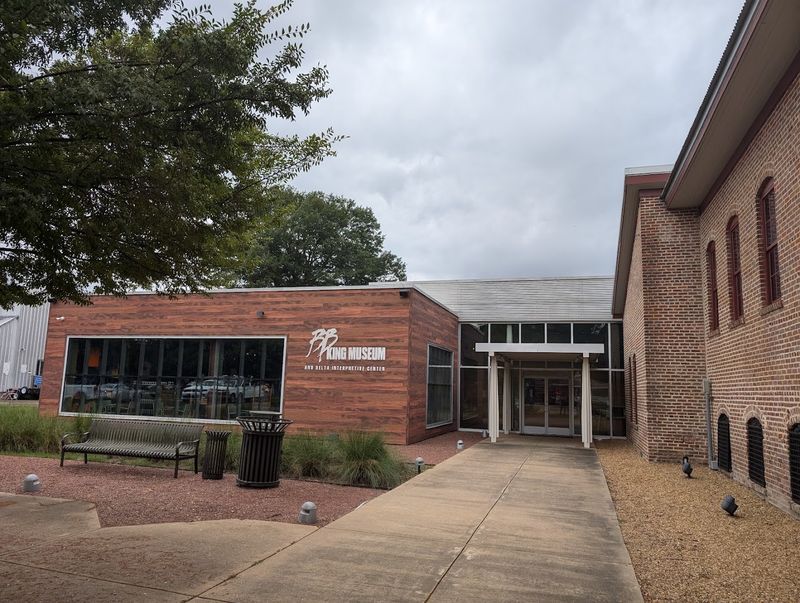
His sound could make you laugh and cry at the same time. This museum in Indianola is basically a love letter to the man and his music.
You walk in and immediately feel the weight of his story. He grew up picking cotton not far from here.
The museum traces his entire journey, from sharecropper fields to sold-out concert halls around the world.
There are personal artifacts everywhere. His actual guitars are on display, including his beloved Lucille.
Seeing them up close feels almost surreal, like meeting a celebrity in person.
Interactive exhibits let you explore the history of the Delta blues. You learn how the region shaped not just B.B.
King but an entire genre of music. The storytelling here is genuinely moving.
Photographs, handwritten notes, and stage costumes fill the space. Each item tells a piece of his remarkable life.
You leave knowing B.B. King far better than when you arrived.
The building itself is impressive and thoughtfully designed. It sits right in the heart of Indianola, which is a small town with a huge musical legacy.
Locals are incredibly proud of it.
Kids enjoy it too, which is always a good sign. The exhibits are engaging without being overwhelming.
Plan at least two hours because you will not want to rush through any of it.
Visiting here feels like a genuine pilgrimage. You are standing on ground that matters deeply to American music history.
Find it at 400 2nd St, Indianola, MS 38751.
2. Gateway To The Blues Museum
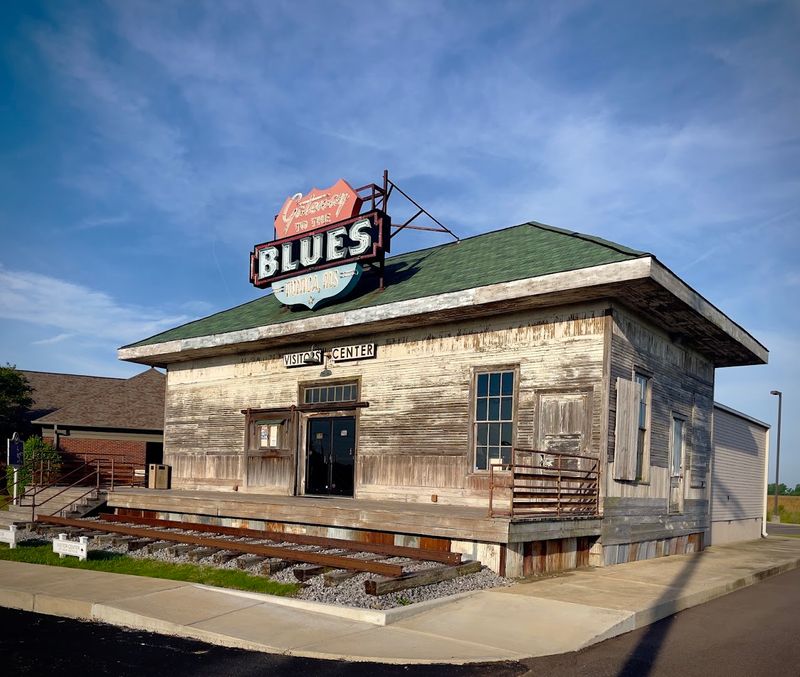
Your blues road trip honestly deserves a proper starting point. The Gateway to the Blues Museum in Tunica gives you exactly that.
It sets the stage before you even head deeper into the Delta.
The building used to be a train depot, and it still looks the part. Walking through it feels like stepping into a sepia-toned photograph.
The bones of the old structure are still very much there.
Inside, though, it is surprisingly modern. Interactive exhibits guide you through the full history of the blues.
You get context, timeline, and stories all wrapped up in one visit.
One of the coolest features is the recording booth. You can actually record your own blues song in there.
It is a little humbling to try and a lot of fun to hear yourself afterward.
The museum covers legendary artists from the region in real depth. Names like Robert Johnson, Muddy Waters, and John Lee Hooker come alive through the exhibits.
Their influence on global music becomes crystal clear here.
Staff members are knowledgeable and genuinely enthusiastic. They will point out details you might miss on your own.
That kind of guided passion makes a huge difference in how much you take away.
The gift shop has great finds too. Books, music, and locally made keepsakes are all worth browsing.
It is the perfect place to grab something meaningful before continuing your journey.
Tunica might surprise you with how much it offers blues lovers. This museum is absolutely the best place to begin.
You will find it at 13625 US-61, Tunica Resorts, MS 38664.
3. Mississippi Blues Trail – Robert Johnson Gravesite
Robert Johnson is basically the ghost that haunts the entire blues world. He recorded only 29 songs.
Yet his influence on music is almost impossible to overstate.
The legend says he went to a crossroads at midnight and made a deal with the devil. In exchange for his soul, he received unbelievable guitar skills.
Whether you believe that or not, his music does sound otherworldly.
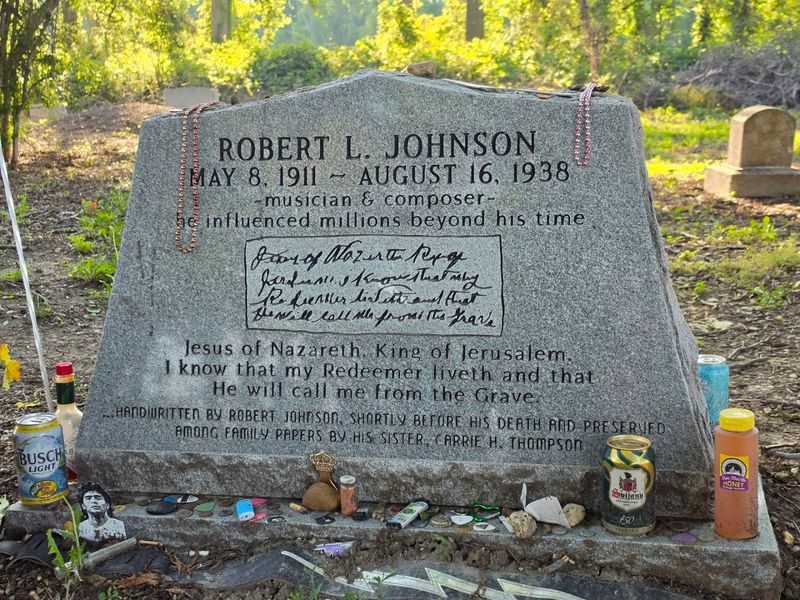
His gravesite is believed to be at Little Zion Missionary Baptist Church near Greenwood. There is a Mississippi Blues Trail marker there that tells his story.
Standing at that spot is genuinely eerie in the best way possible.
The cemetery is quiet and shaded. It has a reflective atmosphere that you do not find at most tourist stops.
People leave guitar picks, flowers, and notes at the grave as offerings.
Johnson passed away in 1938 at just 27 years old. The exact cause of his death remains a mystery.
That mystery only adds to the legend surrounding his short but explosive life.
His recordings influenced Eric Clapton, Keith Richards, and Jimmy Page. Rock and roll as we know it carries his fingerprints.
Visiting here helps you understand just how deep those roots go.
The Blues Trail marker program across Mississippi does an incredible job of preserving these stories. Each marker is a mini-history lesson you can read in minutes.
They are scattered all across the Delta.
This stop is quieter than a museum but hits just as hard emotionally. Bring some respect and take your time.
The gravesite is located near Main St, Greenwood, MS 38930.
4. Dockery Farms
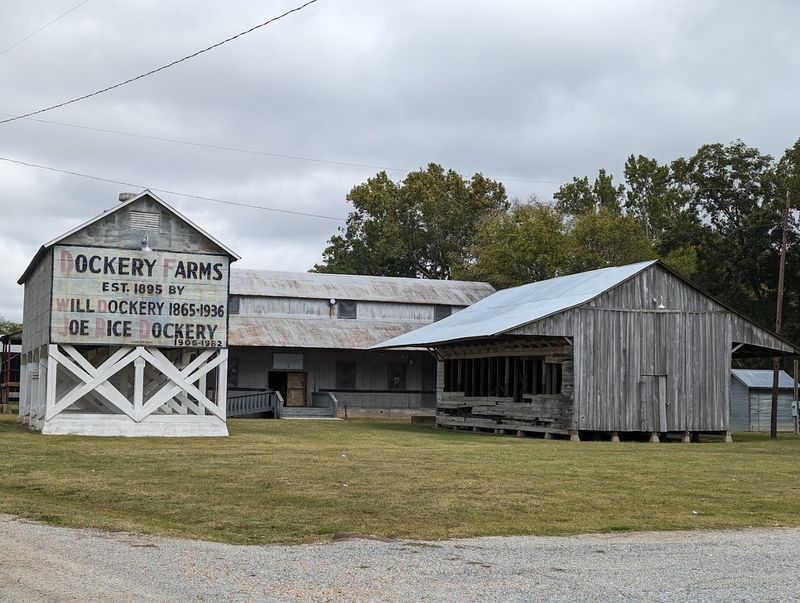
Dockery Farms is the kind of place that makes history nerds absolutely lose their minds. And honestly, rightfully so.
Many music historians call it the true birthplace of the Delta blues.
This was a working cotton plantation starting in 1895. Hundreds of sharecroppers lived and worked here over the decades.
The conditions were hard, and the music that came out of those conditions was even harder.
Charley Patton is the big name connected to Dockery Farms. He lived here for years and became one of the first recognized blues stars.
His raw, powerful style influenced nearly every blues musician who came after him.
Other legends passed through too. Howlin Wolf and Robert Johnson both had connections to this land.
The list of musical giants tied to Dockery is genuinely staggering.
Several original buildings still stand on the property. The grain silos, the commissary, and other structures give you a real feel for what life was like here.
It is not a polished tourist attraction, and that is actually what makes it special.
A Mississippi Blues Trail marker on the property explains the full history. Reading it while looking at the old buildings around you is a powerful experience.
You feel the weight of those years.
The flat Delta landscape stretches out in every direction. The sky feels enormous here.
It is easy to understand how a place this wide open could produce music that reaches for something big.
Dockery Farms is a must-visit for any serious blues fan. It is raw, real, and unforgettable.
Head out to 229 MS-8, Cleveland, MS 38732.
5. Delta Blues Museum
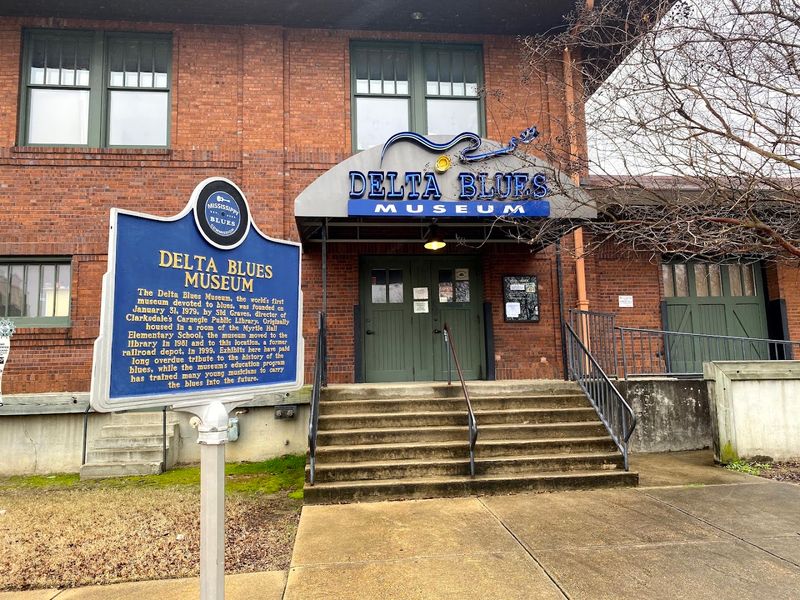
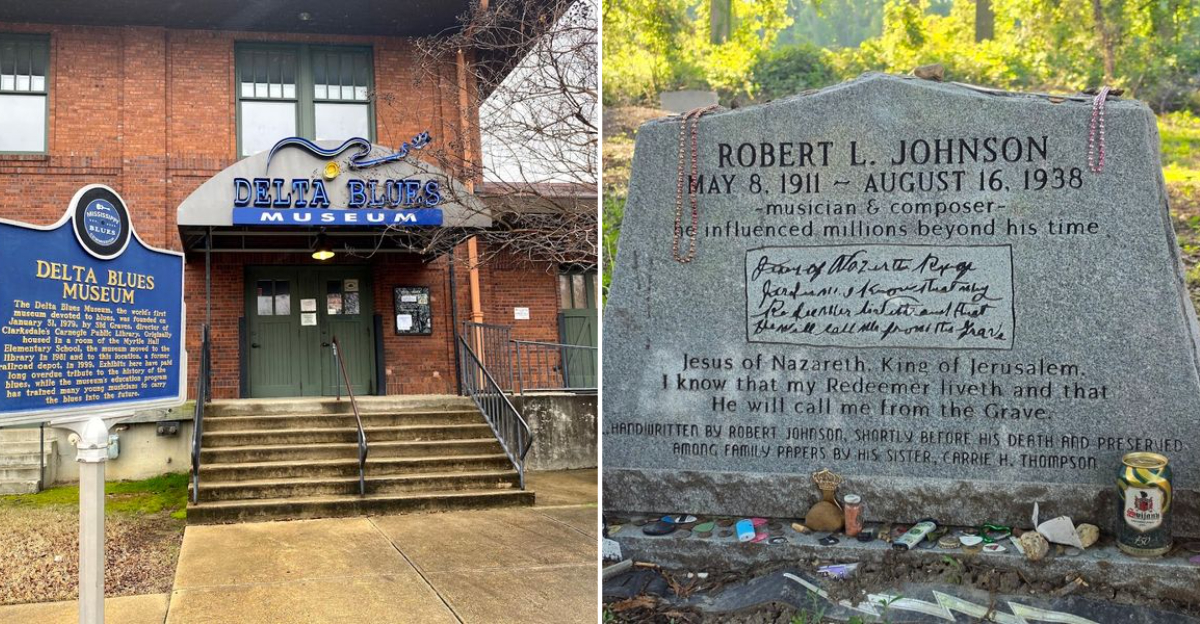
Clarksdale holds a very special place in blues history, and the Delta Blues Museum sits right at the center of that legacy. It was the first blues museum ever established in the world.
That alone tells you this place means serious business.
The building is a converted railroad freight depot from the early 1900s. The architecture adds a layer of authenticity that newer buildings simply cannot fake.
You feel the history in the walls themselves.
The star exhibit is Muddy Waters’ actual cabin. It was relocated from Stovall Plantation and rebuilt inside the museum.
Standing next to it feels like standing next to something sacred.
There is also the Muddywood Guitar, which is made from wood taken from that same cabin. It was crafted by ZZ Top guitarist Billy Gibbons as a tribute.
The story behind it is as cool as the guitar itself.
Exhibits cover dozens of Delta blues artists in depth. You get biography, music, cultural context, and photographs all in one place.
It is comprehensive without being exhausting.
Live music events happen here regularly. Catching a performance inside this space elevates the entire experience.
The acoustics and the atmosphere make it feel truly authentic.
The museum store carries a solid selection of blues recordings. If you want to build your collection while on the road, this is the place to do it.
Staff can even help you find artists you have never heard of before.
Seriously, no blues road trip through Mississippi is complete without this stop. It is essential, full stop.
Visit at 1 Blues Alley, Clarksdale, MS 38614.
6. Ground Zero Blues Club
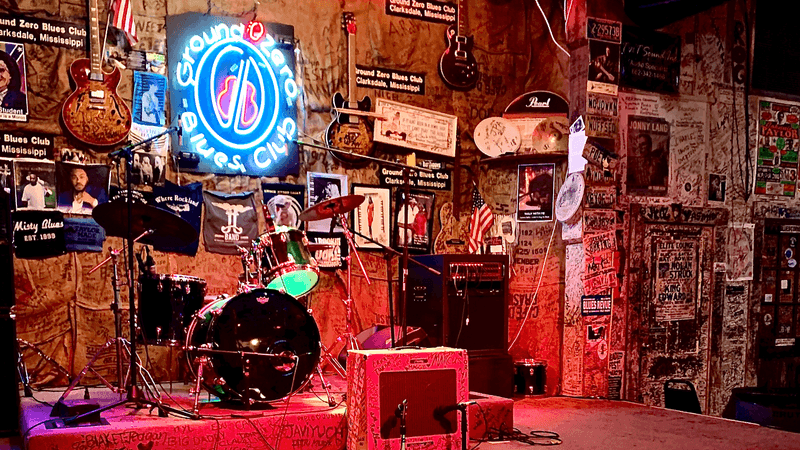
Morgan Freeman co-owns a blues club in Clarksdale, and it is every bit as cool as that sentence sounds. Ground Zero Blues Club is loud, unpredictable, and full of personality.
It is not trying to be anything other than exactly what it is.
The name is intentional. Clarksdale is considered ground zero for the blues, the very epicenter of where it all started.
Naming the club after that idea was a bold and fitting choice.
Walk inside, and the vibe hits you immediately. Raw brick walls, mismatched furniture, and old signs cover nearly every surface.
Nothing matches, and everything works together perfectly.
The stage is small and close to the crowd. When a band is playing, you feel every note in your chest.
There is no separation between performer and audience here. It is intimate in the best possible way.
Live blues happens regularly, often featuring local artists who have been playing these songs their whole lives. These are not tourist performances.
These are real musicians doing what they love.
The crowd is always a mix of locals and visitors from all over the world. You will hear multiple languages at the tables around you.
Blues music has that universal pull that draws people from everywhere.
The walls are covered in signatures and drawings left by past visitors. Adding your name to the collection is practically a tradition.
It is a small act that connects you to everyone who has visited before you.
Ground Zero Blues Club is not just a stop on a tour. It is an experience that sticks with you long after you leave.
Find it at 387 Delta Ave, Clarksdale, MS 38614.
7. The Blues Crossroads
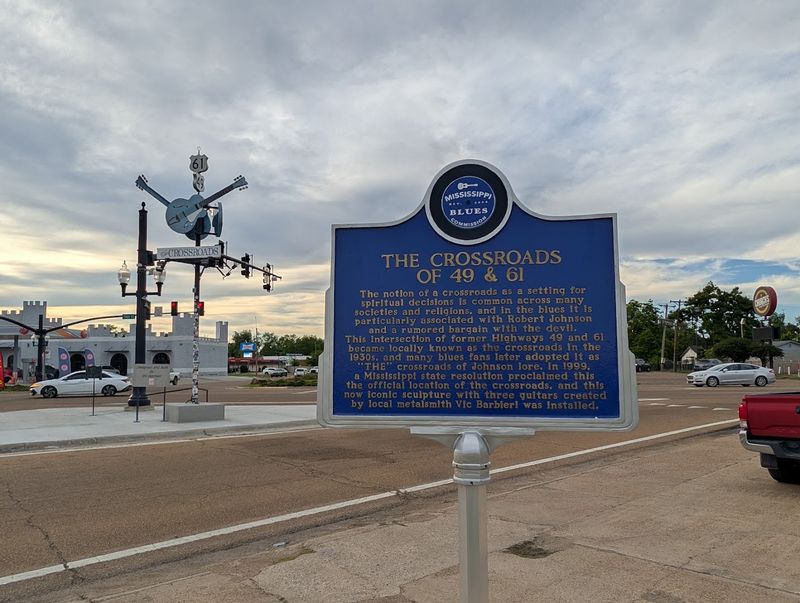
Few places in American music carry as much mythology as this intersection. Highways 61 and 49 cross right here in Clarksdale.
And this is where the Robert Johnson deal-with-the-devil story is said to have gone down.
Now, historians will tell you the actual crossroads from the legend is debated. But Clarksdale claimed it, marked it, and the world accepted it.
Sometimes the story matters more than the coordinates.
Giant guitar sculptures mark the spot today. They are hard to miss and instantly recognizable to blues fans.
Tourists stop here constantly to take photos, and honestly, you absolutely should too.
The energy at this intersection is strange in a fascinating way. Cars rush through on a normal day.
But if you stand there for a moment and think about what this corner represents to music history, it gets under your skin.
Robert Johnson supposedly came here at midnight to tune his guitar. A mysterious figure met him, tuned it for him, and played a few songs.
After that night, Johnson became the most celebrated blues guitarist of his era.
That story launched a thousand songs, albums, and movies. The crossroads became a metaphor for artistic sacrifice and ambition.
It shows up in blues lyrics, rock music, and pop culture constantly.
Eric Clapton named his blues band after the legend. The Coen Brothers referenced it in their films.
The myth has legs that stretch far beyond Mississippi.
Standing here connects you to all of that. It is a free stop, takes about fifteen minutes, and leaves a lasting impression.
The Blues Crossroads is at 599 N State St, Clarksdale, MS 38614.
8. Highway 61 Blues Museum
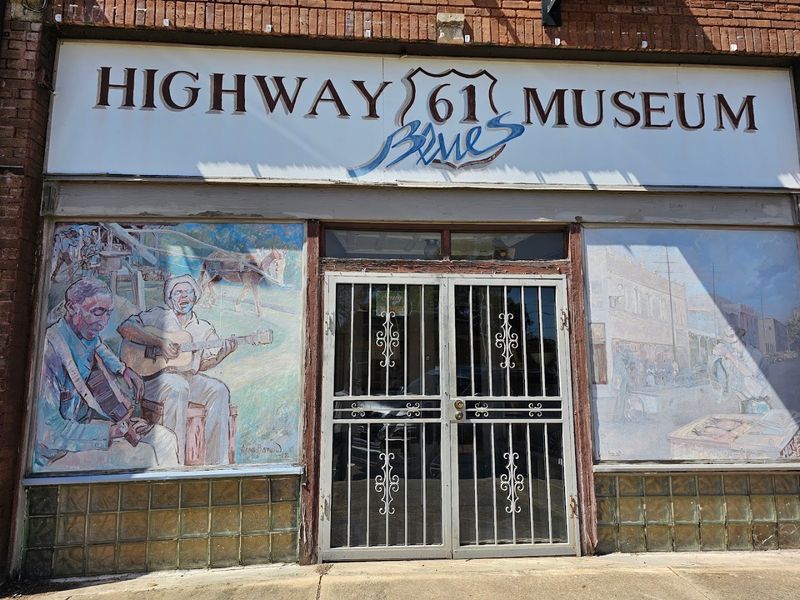
Leland is a small town that does not always make the top of the Mississippi travel lists. That is genuinely a shame, because the Highway 61 Blues Museum here is one of the most charming stops on any blues road trip.
Small in size, enormous in heart.
Highway 61 is the road that runs through the heart of the Delta. It connects dozens of towns with deep blues roots.
Leland sits right along that stretch, and this museum honors the entire corridor beautifully.
The collection inside is personal and carefully assembled. Local donations, vintage photographs, and handwritten stories fill the space.
You get the sense that real community love went into building this museum.
One fun fact that surprises many visitors is that Jim Henson, the creator of the Muppets, grew up in Leland. The town celebrates that connection proudly alongside its blues heritage.
Kermit the Frog was inspired by the frogs in the local bayou.
The blues exhibits cover artists directly tied to the Highway 61 corridor. Sonny Boy Williamson, Little Milton, and others from this region get their due recognition here.
These are names that deserve far more mainstream attention.
On some days, you might catch live acoustic blues being played inside. It happens organically and without much fanfare.
That spontaneous quality is part of what makes the museum feel so alive.
The staff here are some of the friendliest people you will meet on the entire trip. They love talking about the music and the town.
Their enthusiasm is completely genuine and totally contagious.
Do not skip Leland on your blues journey. This museum rewards the detour every single time.
Visit at 307 N Broad St, Leland, MS 38756.