
This Wisconsin College City Stands Out As One Of The Most Livable In The Midwest

A city balanced on a sliver of land between shimmering lakes sounds like fiction. This college town wears that label proudly, and Wisconsin serves up scenery no coastal postcard can match.
Students race across a bustling street connecting a domed capitol to a lively campus, dodging street musicians and popcorn carts along the way. Saturday mornings turn the town square into a farmers market frenzy packed with cheese curds, flowers, and fresh bread.
Trails stretch for miles through forests, prairies, and quiet lakeside corners most tourists never find. Architecture buffs will spot a curvy, lake-hugging building that took decades to finally get built.
Wisconsin makes livable feel effortless, keeping its best secrets close. Consider this your invitation to start planning a weekend around all of it.
A City Born From Glaciers And Civic Ambition
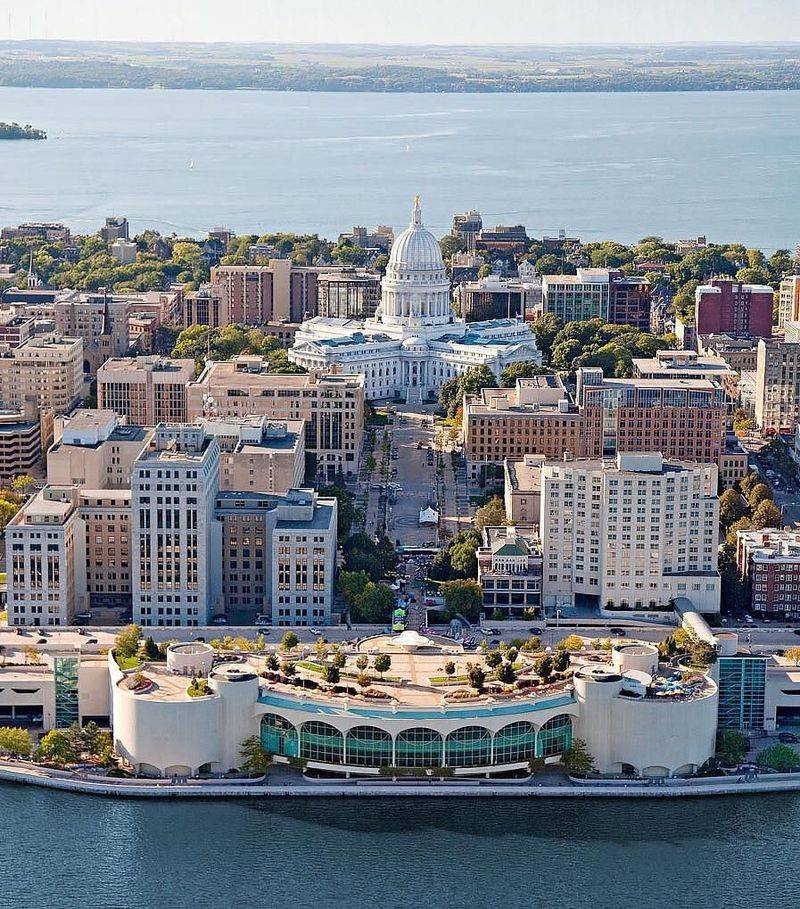
About 13,000 years ago, retreating glaciers carved out one of the most striking urban landscapes in North America. Rolling hills, dense forests, and a chain of lakes emerged from the ice, setting the stage for a city unlike any other.
The Ho-Chunk Nation, the region’s original inhabitants, called this land Teejop, meaning “land of the four lakes.” They built effigy mounds along the lakeshores for ceremonial purposes, some of which still survive today.
Madison was officially founded in 1836 and named after President James Madison. A former federal judge strategically lobbied for it to become the territorial capital, and by 1838, Wisconsin had its seat of government here.
That combination of natural wonder and political ambition shaped the city’s identity from day one. The glacial past is still visible in the terrain, and the civic pride that launched this capital is very much alive in its streets, parks, and public spaces today.
Life On The Isthmus Between Two Lakes

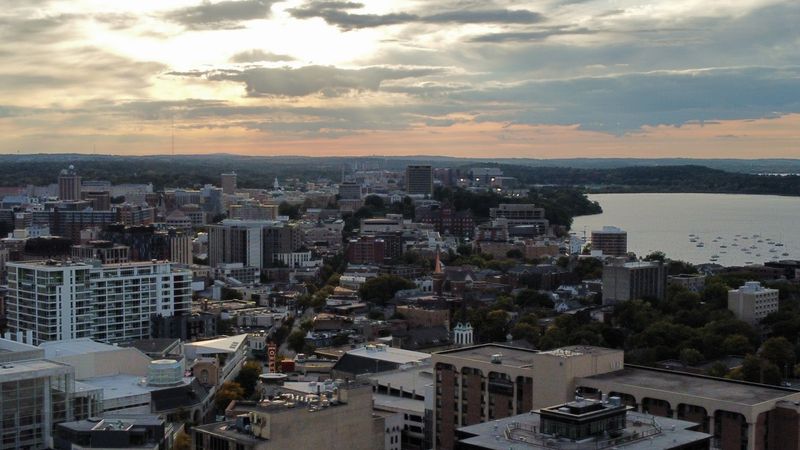
Madison holds a rare geographic distinction. It is one of only two major U.S. cities built on an isthmus, a narrow strip of land flanked by water on both sides.
Lake Mendota lies to the north and Lake Monona stretches to the south.
This unique layout gave the city its memorable unofficial motto: “Lake, City, Lake.” Shimmering water is visible from nearly every major street downtown, and that constant proximity to nature shapes how residents live and move through the city.
Beyond the two main lakes, Wisconsin’s capital region also claims Lake Wingra, Lake Waubesa, and Lake Kegonsa. Each one adds to the aquatic character of the area and opens up more space for paddling, fishing, and shoreline walks.
Visitors can rent kayaks, hop on paddleboards, or simply find a bench along the water’s edge. The isthmus setting is not just a quirky geographic fact.
It is the beating heart of Madison’s outdoor identity and daily rhythm.
The University That Shapes The Whole City
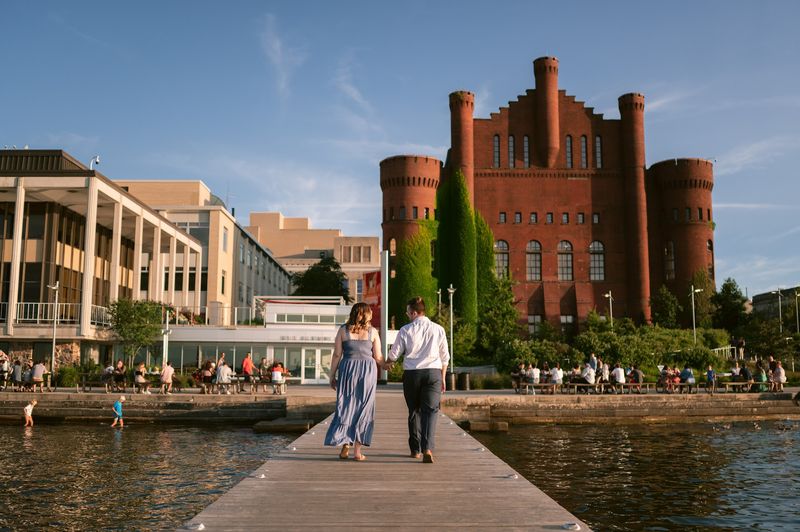
The University of Wisconsin-Madison does not just sit inside the city. It defines it.
Founded in 1848, the same year Wisconsin became a state, the university has grown into one of the top public research institutions in the country.
With an enrollment of more than 40,000 students from across the U.S. and around the world, the campus injects a constant pulse of youth, creativity, and intellectual energy into everyday city life. The result is a place that feels perpetually curious and forward-thinking.
The university operates under a guiding philosophy known as the “Wisconsin Idea,” which holds that the benefits of education should reach every corner of the state, not just the campus. That outward-looking mission has shaped Madison’s culture in deep and lasting ways.
Economically, the institution is a powerhouse. It supports thousands of jobs and generates significant economic activity for Wisconsin each year.
The campus itself, with its historic buildings and lakeside setting, is worth exploring even on a casual afternoon stroll.
State Street And The Capitol Square Scene
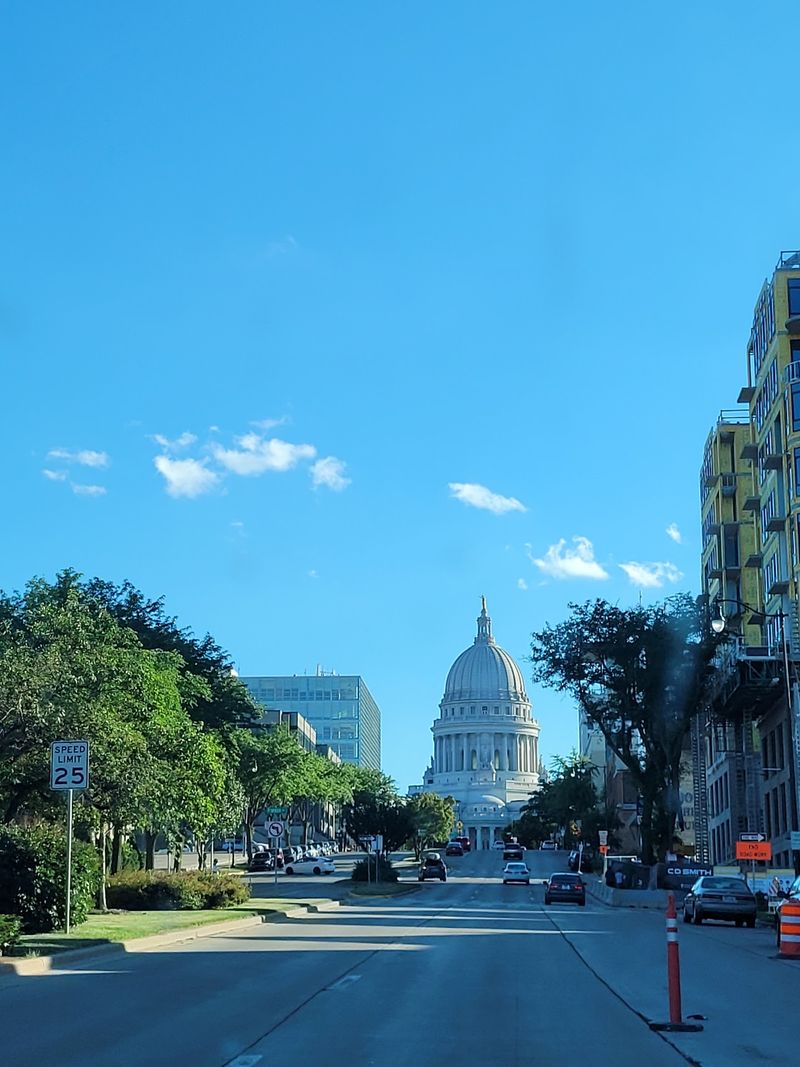
State Street is Madison’s most famous stretch of pavement, and it earns every bit of that reputation. This pedestrian-friendly corridor runs directly from the University of Wisconsin-Madison campus all the way to the Wisconsin State Capitol building.
Along the way, it is lined with independent shops, coffee houses, bookstores, art galleries, and casual eateries. Street performers often claim corners, adding spontaneous music and movement to the already lively scene.
The energy shifts throughout the day but never really slows down.
At the Capitol end, the square transforms into a community gathering place. On Saturday mornings, it hosts the Dane County Farmers Market, which draws hundreds of vendors and thousands of visitors.
Fresh produce, artisan cheeses, handmade goods, and local flowers fill the stalls in a celebration of Wisconsin’s agricultural richness.
The Capitol Square is also the site of outdoor concerts and seasonal events that bring the whole city together. State Street and the square form the social and cultural spine of Madison, connecting university life to civic pride in one walkable route.
The Wisconsin State Capitol And Its Stunning Dome

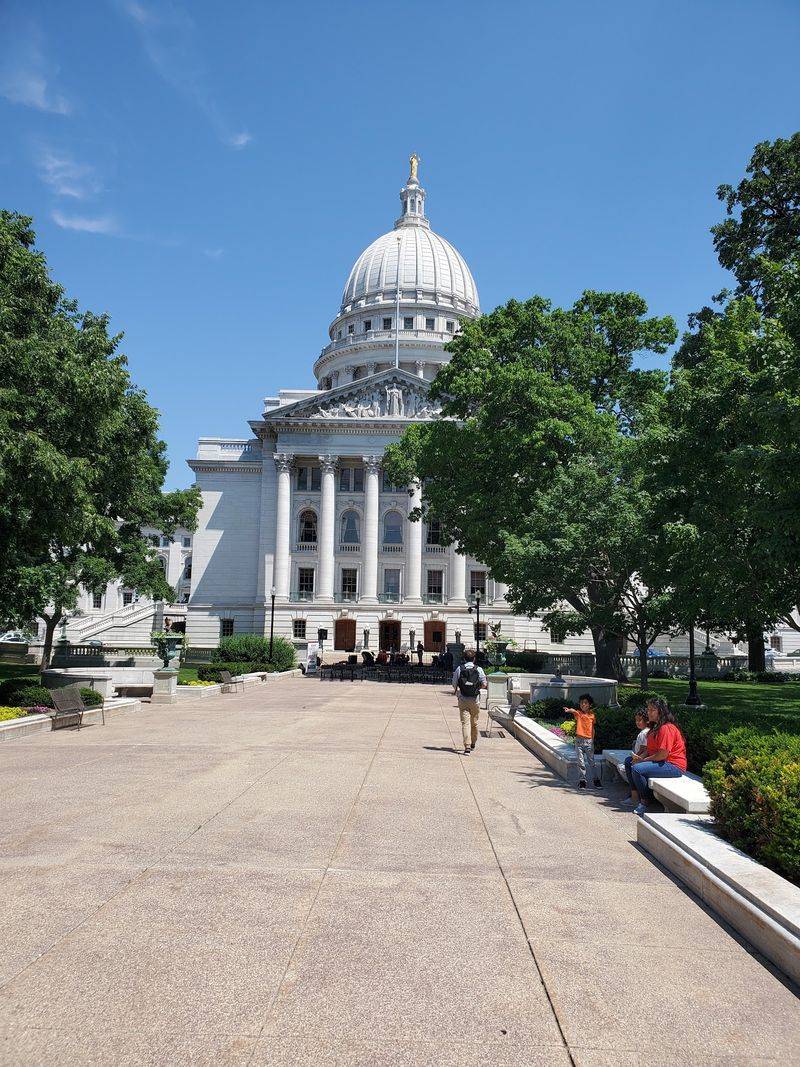
The Wisconsin State Capitol is hard to miss. Rising 284 feet above the city, its white granite dome is the largest of its kind in the United States and one of the largest in the world.
The building sits at the center of Madison, commanding views from nearly every direction.
Modeled loosely after the U.S. Capitol in Washington, D.C., the structure was completed in 1917 after years of careful construction.
At its peak sits a bronze statue called “Wisconsin,” draped in gold leaf and holding a badger helmet, a nod to the state’s nickname and motto of “Forward.”
Free guided tours run daily and take visitors through ornate legislative chambers, marble corridors, and rooms decorated with murals and mosaics. During summer months, an observation deck on the sixth floor opens up, offering sweeping panoramic views across the isthmus and both lakes.
The Capitol is surrounded by a 13-acre park that serves as a natural gathering point. It anchors Madison’s downtown with architectural grandeur and democratic symbolism that feels genuinely earned.
Green Spaces And Trails That Go On Forever
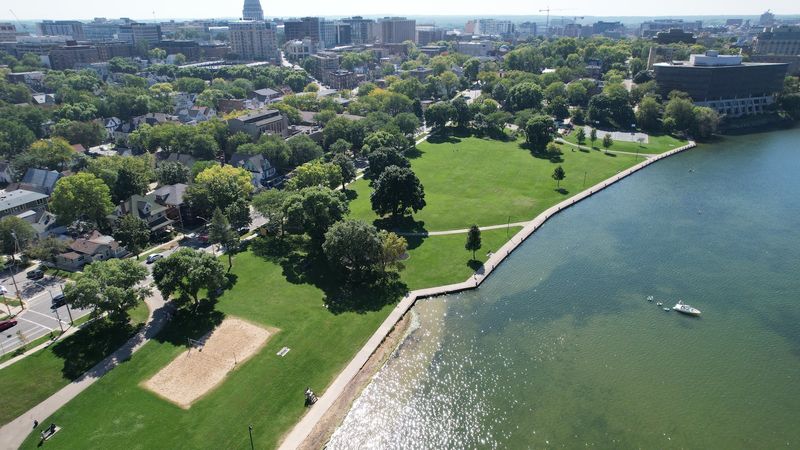
Few cities of Madison’s size can match its commitment to green space. The city maintains over 270 parks and 12 public beaches, giving it one of the highest ratios of park space per resident among major U.S. cities.
That is not an accident. It reflects a deliberate civic value placed on outdoor access.
More than 200 miles of biking and hiking trails weave through the city and its surrounding neighborhoods. Madison has long been recognized as one of the most bicycle-friendly cities in the country, with dedicated lanes and trails connecting nearly every corner of the isthmus.
The University of Wisconsin-Madison Arboretum spans 1,200 acres and serves as a landmark in ecological restoration. Its trails pass through restored prairies, wetland corridors, and old-growth forests that feel remarkably wild for a place so close to the city center.
Olbrich Botanical Gardens adds another dimension, with 16 outdoor acres and a glass-pyramid conservatory housing tropical plants and free-flying birds. For those who prefer their nature with a bit of structure, this is a peaceful and rewarding stop.
The Memorial Union Terrace Experience
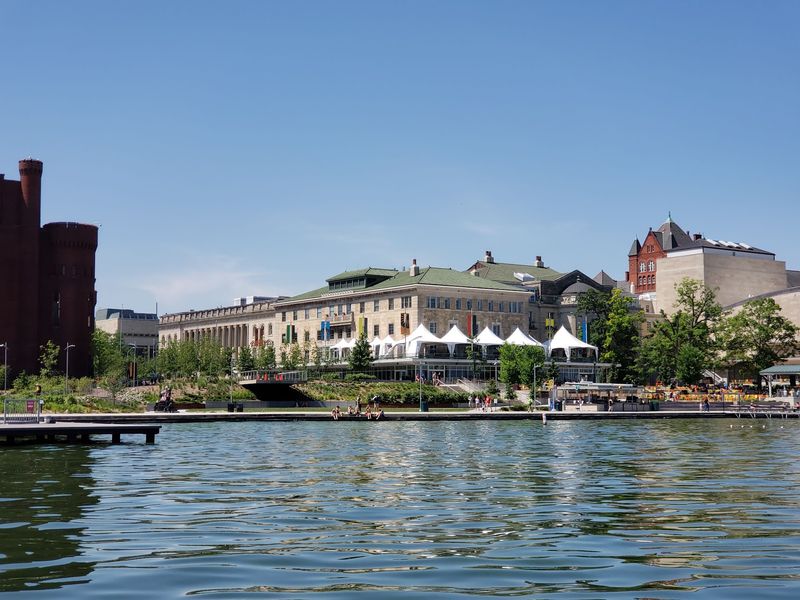
Few spots in the Midwest carry as much relaxed charm as the Memorial Union Terrace. Perched along the southern shore of Lake Mendota on the University of Wisconsin-Madison campus, it draws students, locals, and visitors with equal enthusiasm throughout most of the year.
The terrace is famous for its colorful sunburst-patterned chairs scattered along the waterfront. Those chairs have become something of an icon for Madison itself, popping up on postcards, social media feeds, and city branding across Wisconsin.
Sitting in one with a lake view is almost a rite of passage.
Live music happens regularly on the outdoor stage, covering everything from jazz and folk to student bands finding their footing. The atmosphere is relaxed but social, the kind of place where an hour can stretch into an entire afternoon without anyone noticing.
The terrace also serves food and frozen custard, a Wisconsin staple. It captures the city’s ability to blend academic culture with pure, uncomplicated enjoyment in a setting that happens to be absolutely beautiful.
Frank Lloyd Wright’s Mark On Madison
Madison has a meaningful connection to one of America’s most celebrated architects. Frank Lloyd Wright, a Wisconsin native, left a lasting imprint on the city through his organic design philosophy and several notable projects tied to the area.
The most prominent example is Monona Terrace Community and Convention Center, located at One John Nolen Drive along the shore of Lake Monona. Wright originally conceived the design in 1938, but the building was not completed until 1997, decades after his passing.
The wait was worth it.
The structure extends gracefully over the water, featuring curved lines, horizontal terraces, and a rooftop garden that offers stunning views of the lake and downtown skyline. It hosts community events, conventions, and public gatherings, making it both a functional and architectural landmark.
For architecture enthusiasts, exploring Madison through the lens of Wright’s influence adds a rewarding layer to any visit. The building demonstrates how thoughtful design can feel both timeless and deeply tied to its natural surroundings in Wisconsin.
Arts, Culture, And A Calendar That Never Slows Down
Madison punches hard in the arts. The city supports a rich cultural infrastructure that goes well beyond what most mid-sized capitals can claim.
The Chazen Museum of Art on the university campus holds an impressive permanent collection and regularly draws visiting exhibitions from around the world.
The Madison Museum of Contemporary Art brings a more modern edge to the scene, with rotating shows that challenge and engage. Many of the city’s museums offer free or low-cost admission, making culture genuinely accessible to everyone passing through.
The Overture Center for the Arts serves as the city’s premier performance venue, hosting Broadway touring productions, symphony performances, dance companies, and local theater groups throughout the year. Its presence gives Madison a cultural anchor that rivals cities several times its size.
The summer calendar fills quickly with outdoor events. Concerts on the Square, Art Fair on the Square, and the Madison Night Market all draw large crowds and celebrate local creativity.
The arts scene here keeps evolving, with new voices and venues constantly adding to the mix across Wisconsin’s capital.
Distinct Neighborhoods With Their Own Personality
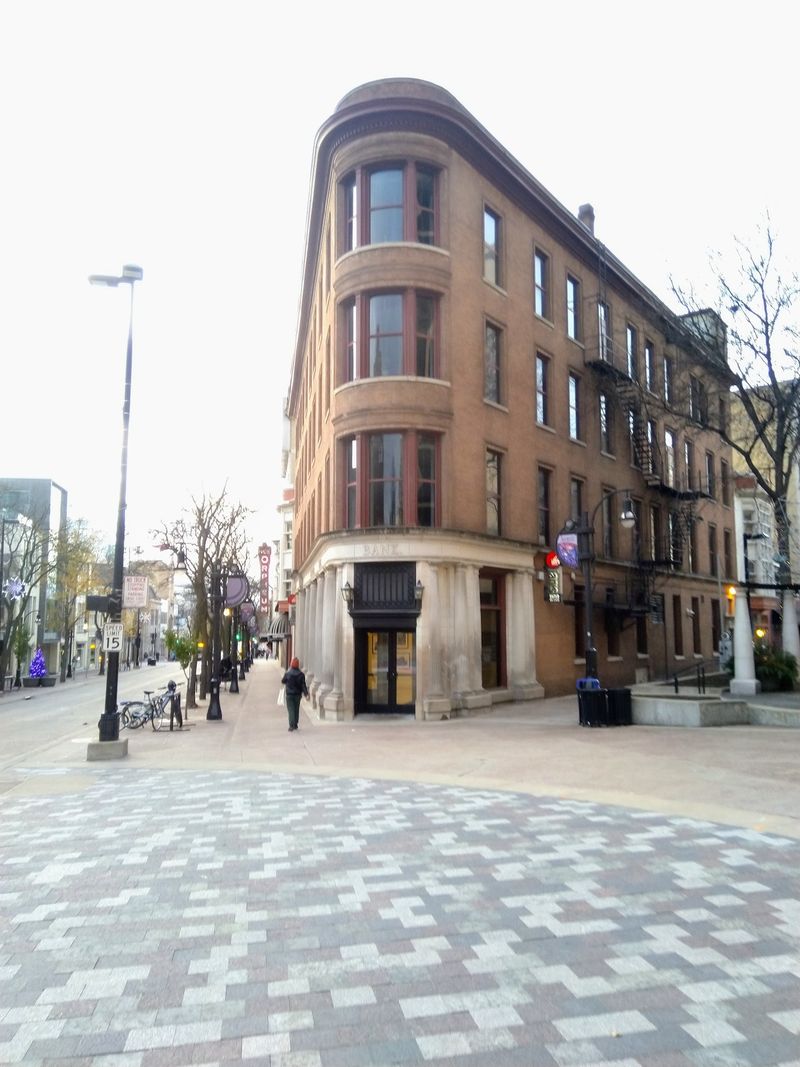
Madison is not a one-size-fits-all city. Each neighborhood carries its own flavor, and exploring them on foot reveals just how layered and interesting this place really is.
The variety keeps things fresh no matter how many times someone visits.
Monroe Street, close to downtown and the arboretum, has the feel of a classic intellectual neighborhood. Independent bookshops, family-run restaurants, and quiet residential streets give it a settled, welcoming atmosphere.
It sits near Henry Vilas Park Zoo, which is free to enter and beloved by families across the region.
On the near east side, Williamson Street, known locally as “Willy Street,” delivers something completely different. The neighborhood is known for its eclectic mix of ethnic eateries, vintage shops, community murals, and a music scene that spills out of small venues on weekend nights.
It has a bohemian energy that feels authentic rather than performed.
The Capitol and downtown area ties everything together with dining, nightlife, and cultural options concentrated in a walkable core. Madison’s neighborhoods ensure that every visitor finds a corner of the city that feels made just for them.