
9 Mississippi Places To Find Gemstones, Quartz, And Other Natural Treasures
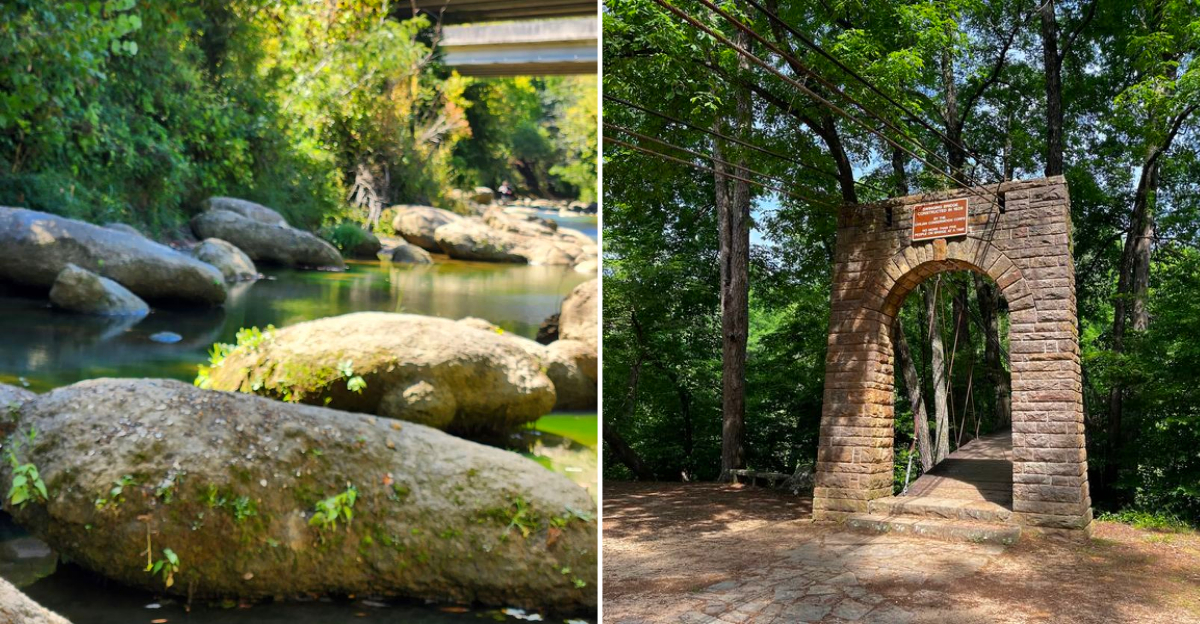
Mississippi’s ground holds more sparkle than most people give it credit for these days. You’ll find hiding quartz, gemstones, and other natural treasures just waiting for someone patient enough to dig.
Creek beds and designated dig sites across the state let visitors sift through sediment with their bare hands, pulling up finds that feel a lot more exciting than anything bought in a store. Nobody needs mining experience to enjoy this.
A little patience and a willingness to get your hands dirty covers most of what’s required. Quartz catches the light in a way that stops people mid-scoop every single time.
Some spots even let you keep whatever you find, turning an afternoon outside into a genuine treasure hunt. Digging through Mississippi dirt has never sounded this rewarding until you’ve actually tried it yourself.
1. Bell Creek – DeSoto National Forest
Let’s get one thing straight in particular. Not every treasure hunt requires a map and a shovel.
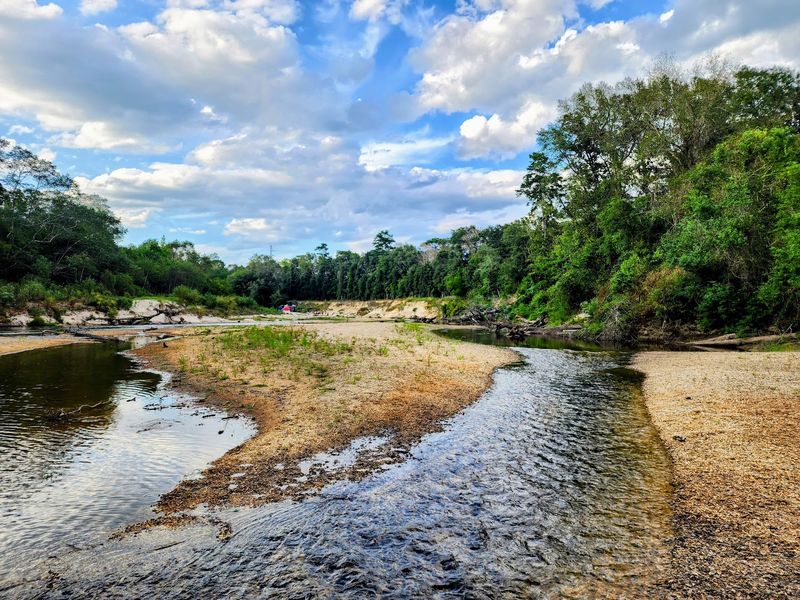
Bell Creek in Harrison County, inside DeSoto National Forest near Hattiesburg, is one of those rare spots where the earth practically hands you something beautiful.
The creek runs through Gulf Coastal Plain geology, where Quaternary sediments and Tertiary formations have spent millions of years concentrating silica-rich materials.
Agates are the star attraction here, but jasper, chert, and various forms of quartz also show up regularly along the gravel bars. After a solid rainstorm, freshly exposed banks tend to reveal the best specimens.
The water does a lot of the sorting work for you, which is a nice bonus.
Collecting common minerals on DeSoto National Forest land is permitted for personal, non-commercial use with hand tools, so panning and sluicing are both fair game. You can reach the forest through multiple access points near Hattiesburg.
Beginners absolutely love this spot because the terrain is manageable and the rewards come quickly. Bring a mesh bag, a small trowel, and plenty of curiosity because Bell Creek tends to over-deliver.
2. Paden – Itawamba County
Amber hunting sounds like something out of a science fiction plot, but Paden makes it completely real.
This small town sits in Itawamba County, Mississippi, where outcrops of the Tuscaloosa Formation push through the earth and offer up pieces of fossilized resin that can measure one to three inches across.
Each piece is essentially a time capsule from the Late Cretaceous period. Whatever may be the case with your interest in history, hands-on knowledge like this is good to have.
The Tuscaloosa Formation dates back roughly 100 million years and consists of sandstone, shale, clay, sand, and gravel deposits. Amber forms when ancient tree resin hardens and fossilizes over geological time, and finding a chunk of it in your hand feels genuinely surreal.
Beyond amber, the area also yields quartz varieties and chalcedony nodules worth pocketing.
The terrain around Paden is relatively flat with gentle elevation changes, making it approachable for rockhounds of all experience levels. Clay pits are the primary hunting grounds here, so dress for mud and bring boots you do not mind getting dirty.
Paden proves that some of the most extraordinary finds come from the most unassuming places, and Mississippi keeps delivering on that promise in the best possible way.
3. Wesson Gravel Pits – Wesson, MS
Wesson has a quiet, small-town charm that hides a seriously productive rockhounding reputation.
Situated in Copiah County east of Highway 55 and north of Route 84, the gravel pits around Wesson are well known among collectors for turning up agates, geodes, chalcedony, petrified wood, and chert.
The banded patterns on the agates alone make the trip worthwhile.
Petrified wood is a particular highlight here. The gravel pits and nearby dredge tailings have produced some remarkable specimens over the years.
Geodes occasionally appear as well, often transported by ancient river activity from upstream formations into these Tertiary and Quaternary sedimentary deposits.
The flat terrain makes surface collecting straightforward, especially for first-timers who are not yet ready for creek wading or steep terrain.
Road cuts and exposed creek banks are productive areas, and the best time to search is right after heavy rain refreshes the surface material.
Wesson is proof that Mississippi rewards the patient and the observant. Keep your eyes low, move slowly along the exposed banks, and you will almost certainly leave with something worth showing off.
A small hand lens helps you spot the banding on agates before you even pick them up.
4. Red Bluff – Morgantown, MS
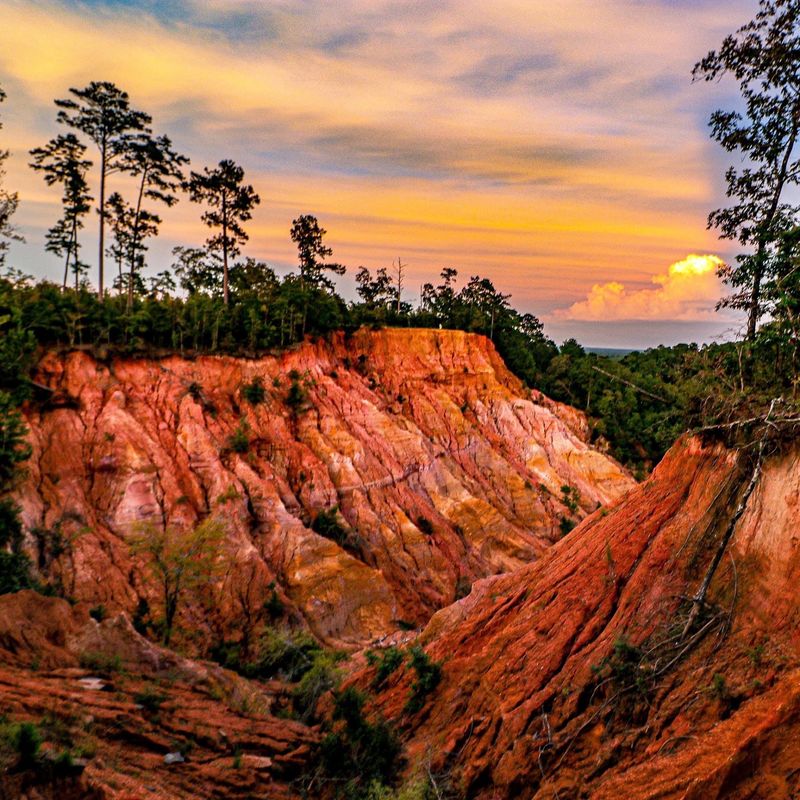
Red Bluff earns its nickname fair and square. Known as Mississippi’s Little Grand Canyon, this stunning formation sits approximately 1.5 miles northwest of Morgantown in Marion County, carved out by the Pearl River over countless years of natural erosion.
The bluffs stretch over a mile long and reach up to 400 feet tall, painted in vivid shades of red, orange, and purple clay.
The exposed Eocene and Oligocene strata along the riverbank are where rockhounds focus their attention. Agates, jasper, and fossilized specimens including silicified Paleozoic fossils embedded in gravel all make appearances here.
The sediments are primarily quartz-based, which means the mineral variety is real and accessible.
Red Bluff operates as a de facto public park with no entrance fee, which makes it one of the most accessible natural landmarks in the state. It is privately owned, so always verify current collecting rules before your visit since restrictions can shift.
The visual spectacle alone justifies the drive even on a day when collecting is off the table.
Bring a camera, wear sturdy footwear for the uneven terrain near the riverbank, and take a moment to appreciate just how dramatically beautiful Mississippi geology can be when it decides to show off.
5. Bienville National Forest – Bienville Pines Scenic Area
Bienville National Forest covers roughly 178,000 acres across Scott and Smith counties in central Mississippi, and rockhounds have been quietly enjoying its offerings for decades.
Petrified wood, chalcedony, chert, quartz, jasper, and iron concretions all show up in the creek gravels and gravel bars scattered throughout the forest.
The petrified wood here has a fascinating backstory. Ancient hardwood trees were slowly replaced by chalcedony and opal over millions of years, turning organic material into something that looks and feels like stone but holds the shape of wood grain.
Jasper tends to appear in earthy reds and yellows that are genuinely striking.
Iron concretions add an unusual twist to the mix. Dense, heavy, and rust-colored, they require a good eye to spot among ordinary gravel but reward the effort with their satisfying weight and odd shapes.
National Forest rules allow casual collecting of common minerals and petrified wood for personal use at up to 25 pounds per day plus one piece, with a 250-pound annual cap. Creek beds and gravel bars are your best bet for concentrated finds.
The Bienville Pines Scenic Area within the forest is a beautiful base for exploring and offers trail access that puts you right in productive collecting territory.
6. Homochitto National Forest – Southwest MS
Southwest Mississippi holds a geological surprise inside the Homochitto National Forest.
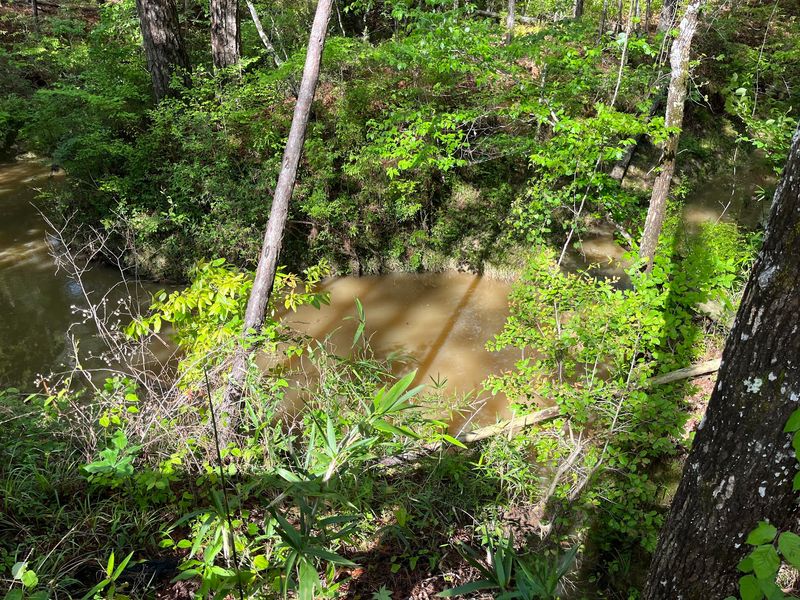
Spanning Franklin, Adams, Jefferson, Claiborne, Amite, and Wilkinson counties, the Homochitto River basin is a productive zone for agates with beautiful banded patterns, jasper, and petrified wood.
The river has been sorting and concentrating these materials for a very long time.
Fragments of Sioux Quartzite occasionally turn up here too, carried by ancient river systems from northern sources far outside Mississippi. That detail alone makes the forest feel like a geological crossroads.
Large petrified logs scattered throughout the landscape are a dramatic reminder of the forests that once stood here millions of years ago.
National Forest regulations permit collecting of common invertebrate fossils, petrified wood, and mineral specimens for personal use. The daily limit is 25 pounds plus one additional piece, with a 250-pound annual cap.
Stream beds and sandy areas along the river are the most productive zones since water action naturally sorts and surfaces the best material. Homochitto rewards collectors who take their time and work systematically along the banks.
Wear waterproof boots, bring a mesh sieve for sorting gravel, and plan to spend at least a few hours working the creek beds for the best results.
7. Tishomingo State Park – 105 Co Rd 90, Tishomingo, MS 38873
Tishomingo State Park sits in the foothills of the Appalachian Mountains in northeast Mississippi and looks like it belongs on a different continent.
Massive sandstone formations, moss-covered boulders, and deep fern-filled crevices create a landscape that feels genuinely prehistoric.
You can find the park at 105 County Road 90, Tishomingo, MS 38873, right at Milepost 304 of the Natchez Trace Parkway.
Collecting inside the park boundaries is strictly off limits to protect the natural environment, but the surrounding Tishomingo County more than compensates.
Public road cuts along Highway 25 and other county roads yield quartz pebbles, small agates, chert, and Devonian fossils including brachiopods and crinoids that are genuinely exciting to find.
The park itself offers rock climbing by permit on the natural sandstone outcroppings, and canoeing down Bear Creek adds an entirely different kind of adventure to the day.
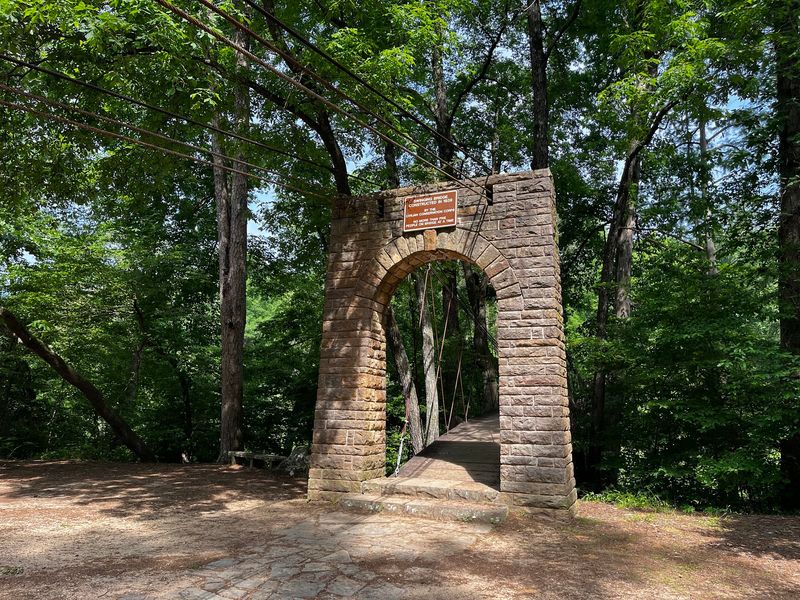
Bear Creek winds through dramatic bluffs and passes under a pedestrian swinging bridge that is worth a photo stop.
Even if you spend zero time collecting, Tishomingo State Park delivers an outdoor experience that few places in Mississippi can match. Plan a full day here because the scenery alone keeps pulling you further down the trail.
8. Mississippi Petrified Forest – 124 Forest Park Rd, Flora, MS 39071
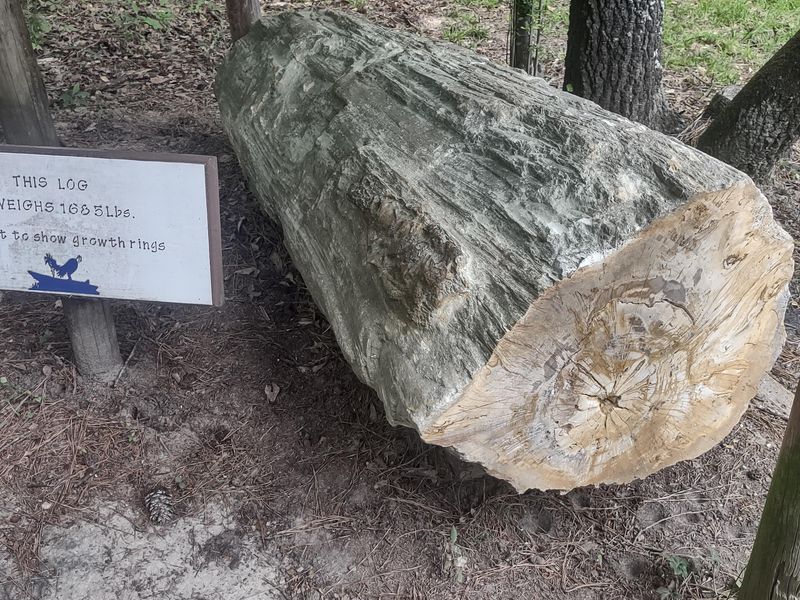
Ancient trees turned completely to stone and a gem flume where you keep every single thing you find. That is the Mississippi Petrified Forest in a nutshell.
Located at 124 Forest Park Road, Flora, MS 39071, this privately owned National Natural Landmark is one of only two petrified forests in the entire eastern United States. The fossilized fir and maple logs here are over 36 million years old.
While collecting the petrified wood directly from the nature trail is not permitted, the gem fluming experience more than satisfies the collector in everyone.
You purchase a bag of mine muck, wash and screen it in the flumes on the rock patio, and walk away with whatever sparkles you uncover.
Pyrite, quartz, rose quartz, amethyst, citrine, and calcite are all regular finds in those bags.
Beyond the flume, the Earth Science Museum on site is packed with fossils and minerals from around the world and is genuinely worth an hour of your time.
The nature trail winds past colossal petrified logs that make you feel appropriately small in the grand timeline of Earth history.
Admission fees apply, and the park is family-friendly from start to finish. Flora is about 25 miles north of Jackson and easy to reach on a day trip.
9. W.M. Browning Cretaceous Fossil Park – County Rd 7450, Baldwyn, MS 38824
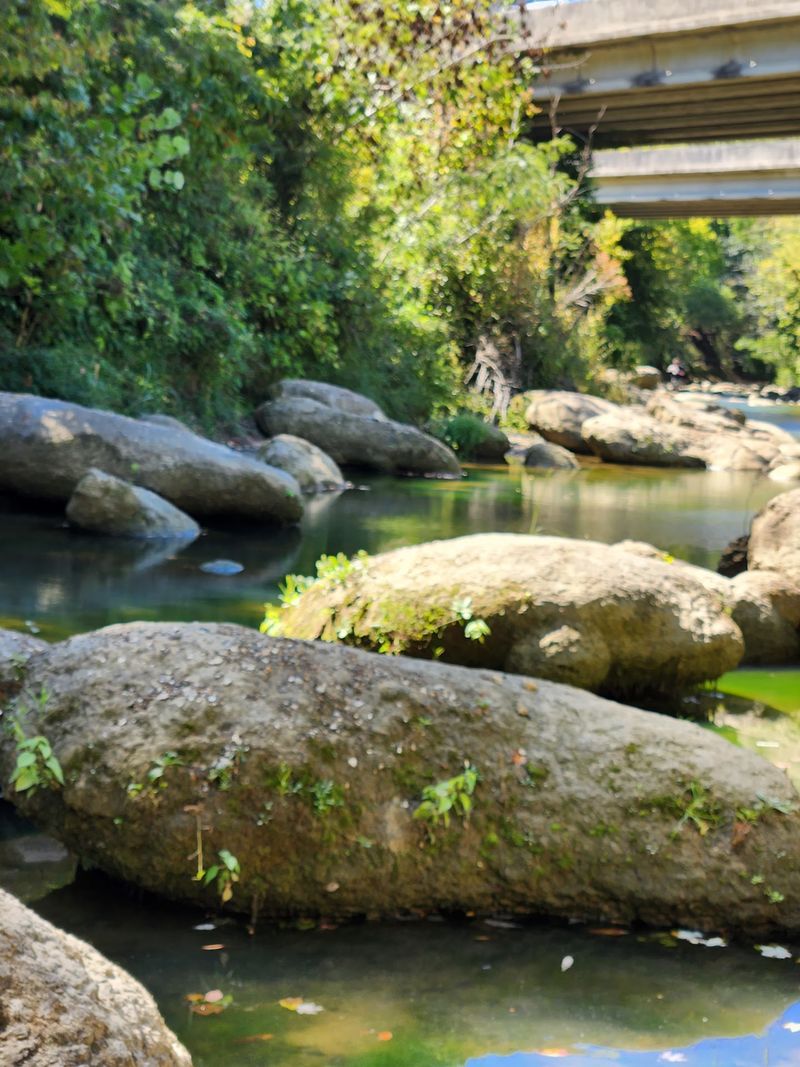
Seventy-five million years ago, northeast Mississippi sat beneath a shallow sea teeming with sharks, mosasaurs, and ancient marine life. Today that ancient seafloor is accessible to anyone willing to wade into Twenty Mile Creek at the W.M.
Browning Cretaceous Fossil Park, located at County Rd 7450, Baldwyn, MS 38824. No permits required, no entrance fee, just you and the creek.
Shark teeth are the headline act here. Goblin shark and crow shark teeth show up regularly in the creek gravel, alongside oysters, clam shells, bivalves, sponges, turtle remains, and crocodile fragments.
Some fortunate visitors have even pulled out dinosaur material from this site, which makes every scoop of gravel feel genuinely suspenseful.
The best strategy is to focus on the creek gravel, sandbars, and the areas around large boulder-sized concretions where fossils concentrate naturally. Water shoes are essential, and a mesh sieve or colander dramatically improves your success rate.
Plan your visit during periods of low water for the safest and most productive conditions. The park sits near Frankstown in Prentiss County and is well worth the drive from anywhere in northern Mississippi.
Honestly, finding a 75-million-year-old shark tooth before lunch is a perfectly reasonable goal here.