
This Tiny Mississippi Museum Is Inside An Old Train Car Most Travelers Drive Right Past
Highway signs in the Mississippi Delta are terrible at bragging. The good stuff barely gets a mention, which is how most people miss this one entirely.
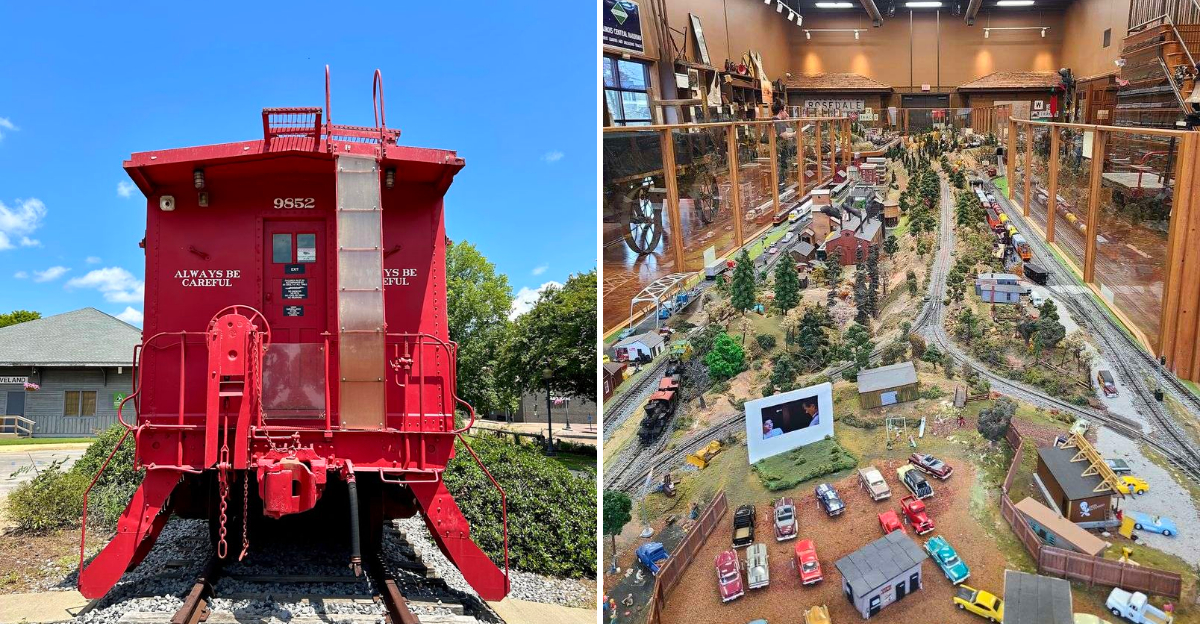
Near an old depot sits a small building holding a 1941 caboose you can actually climb inside, plus a model railroad long enough to fill a bowling lane.
Admission runs exactly nothing. The volunteers running the place know every story attached to every inch of it and will happily tell you all of them if you give them an opening.
Give it an hour on your way through. Locals brag about this place for a reason, and it takes about ten minutes inside to figure out what that reason is.
A Small Door With A Very Long Story
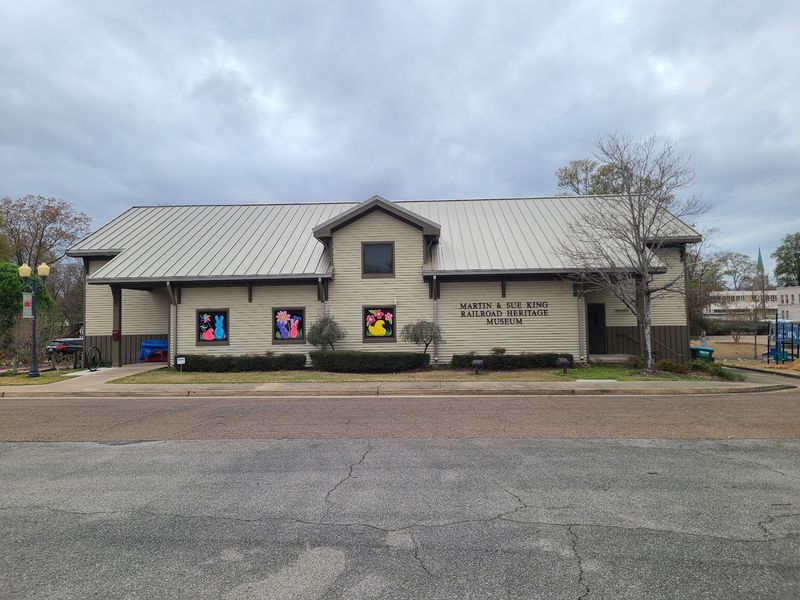
Small towns hide their best secrets in plain sight. A modest brick building sits beside working tracks in the Delta, and the front door gives away almost nothing about what waits behind it.
Inside, the scale flips. What looks like a one room stop turns into a full account of how steel rails built this corner of Mississippi, town by town and crop by crop.
The collection was assembled by people who actually cared, not by a committee with a budget. You feel that difference immediately.
Tools sit where a worker might have set them down. Lanterns still carry scuffs from real nights on the line.
Volunteers hover nearby, ready to answer questions but happy to let you wander. Ask one about the local landscape and you may lose forty minutes to a conversation you did not plan on having.
Kids get a scavenger hunt sheet, which keeps small hands busy while grown ups read the placards. Families rarely leave in a hurry.
Best of all, entry is free. Donations go straight back into the exhibits, so your pocket change helps the next visitor discover the same surprise you did.
Meet The Martin And Sue King Railroad Heritage Museum
Names matter here. The museum honors Martin King Jr., who served as Cleveland’s mayor for roughly three decades, and his wife, Virginia Sue Thweatt King.
Both loved this town’s rail history deeply.
Mayor King kept model trains right on his office desk, which tells you plenty about the man. That personal passion became a public gift when the museum opened in 2009.
You will find it at 115 S Bayou Avenue in Cleveland, Mississippi, a short stroll through the historic downtown blocks. The structure itself belongs to the original rail depot, so the setting carries genuine weight.
Exhibits lean toward the 1940s through the 1960s, a stretch when trains ran the rhythm of daily life across the Delta. Freight moved cotton.
Passenger cars moved dreams.
Doors open Tuesday through Friday from 10:30 in the morning until 4:30 in the afternoon, plus Saturdays from 10 until 2. Sundays and Mondays stay quiet.
Groups should call ahead at 662-843-3377 so the staff can plan. Director Anna Sledge and curator James Marquis Jr. make sure nobody leaves without learning something worth repeating.
Climb Aboard The 1941 Caboose
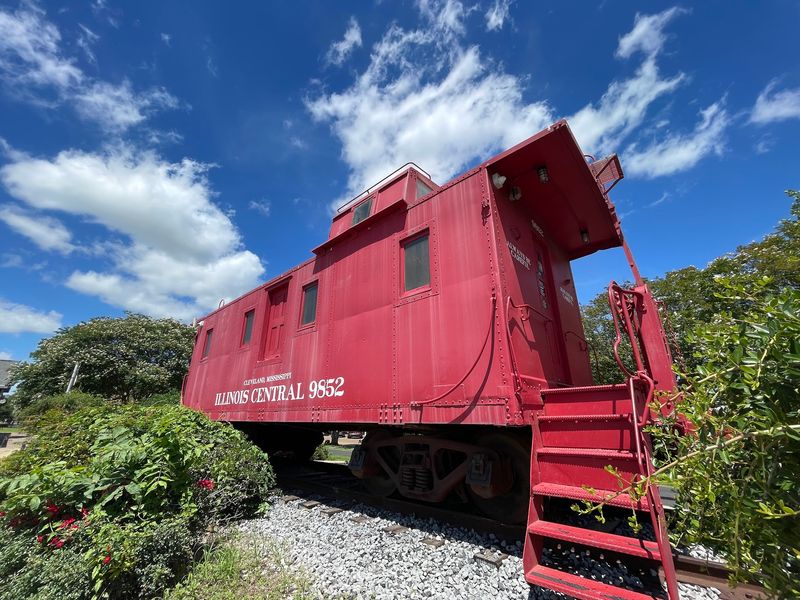
Rope barriers ruin museums. Happily, the 1941 Illinois Central caboose here invites you in, boots and all, which makes it the rare artifact you get to occupy rather than admire from six feet back.
Look up and you will spot the offset cupola, the raised lookout where a crew member watched the cars ahead for trouble. Sliding wooden doors still roll on their tracks.
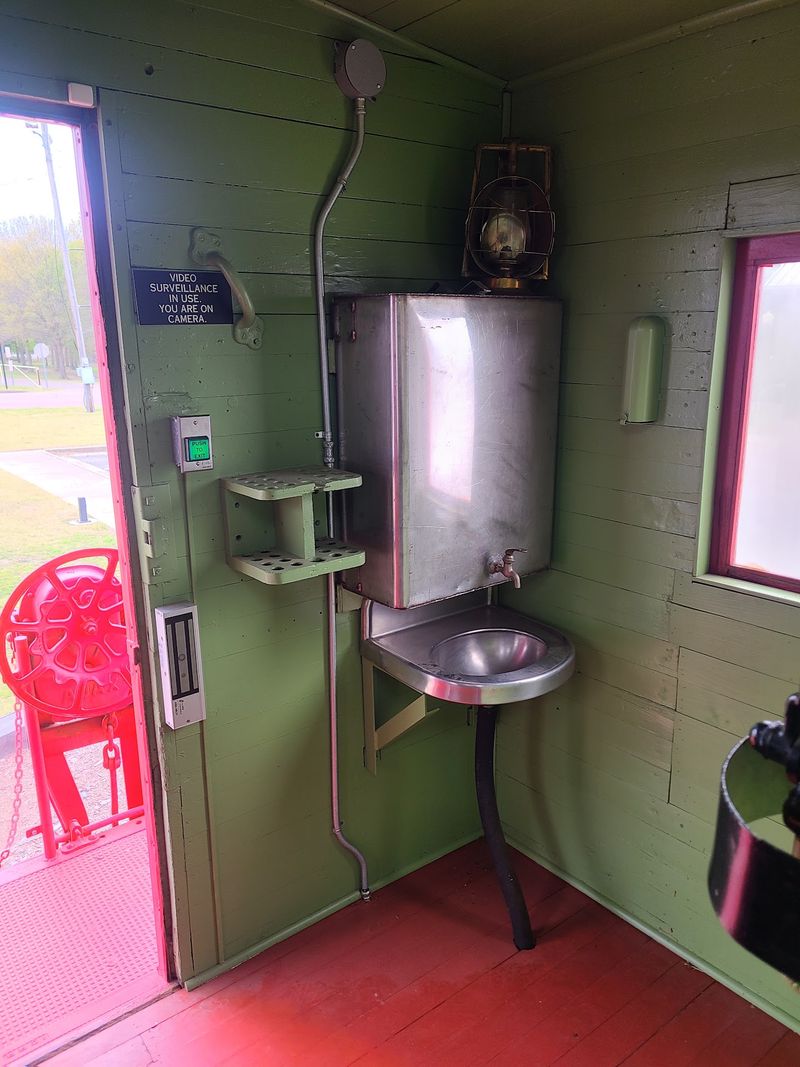
The cast iron stove anchors the interior. Long hauls through cold nights demanded heat, and this squat little furnace supplied it along with, presumably, coffee that could strip paint.
A water fountain sits nearby, plain and practical. Brake controls and pressure gauges line the walls, reminders that a caboose was an office, a bunkhouse, and a safety station rolled into one.
Standing in that narrow space changes how you think about railroading. The crew lived here for hours at a stretch, reading the train by feel and sound.
Bring a camera. The red paint against Delta sunlight photographs beautifully, and kids tend to claim the cupola seat within about four seconds of climbing aboard.
Bunks fold against the wall, narrow enough that a full night of sleep took real commitment.
Mississippi’s Biggest O Gauge Wonderland
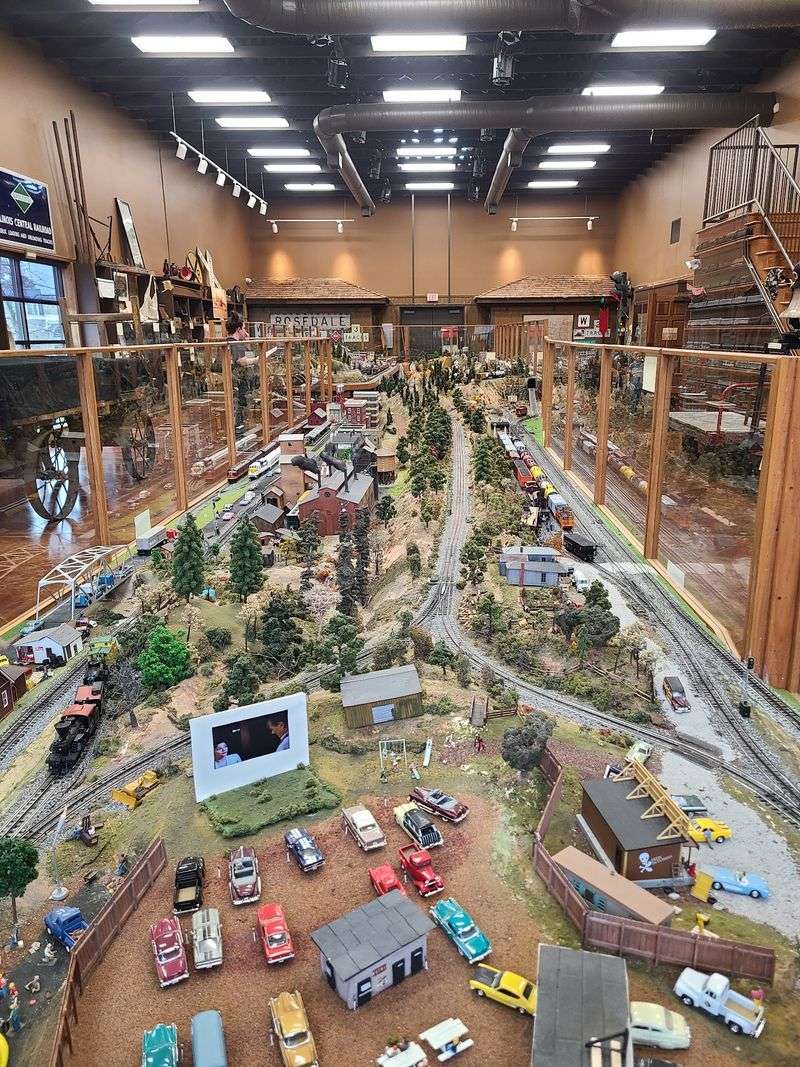
Seventy one feet by seventeen feet. Those numbers describe the largest O gauge model train layout in Mississippi, and they still undersell the thing once you are standing beside it.
The builders invented a place called Anytown, Mississippi, set somewhere between the 1940s and the 1960s. Storefronts, farmland, a depot, water towers, all of it circling the railroad like planets around a sun.
Trains run continuously, which means there is always motion to follow. Watch one locomotive long enough and you start noticing the tiny jokes hidden in the scenery.
Detail work here borders on obsessive in the best way. Miniature laundry, minuscule signage, trees built strand by strand.
Craftsmanship this patient deserves slow eyes.
Docents will point out spots modeled on real local landmarks, including a few businesses that no longer exist. Longtime Delta residents often recognize buildings from childhood.
Plan more time than you think you need. Serious lookers spend a couple of hours here and still catch fresh details on the way out.
Also worth knowing: adults get just as hooked as children. Nobody outgrows a train that actually moves.
Younger visitors often need a lift to see over the edge, so a step stool or a set of strong arms helps.
Gandy Dancer Tools And Depot Treasures
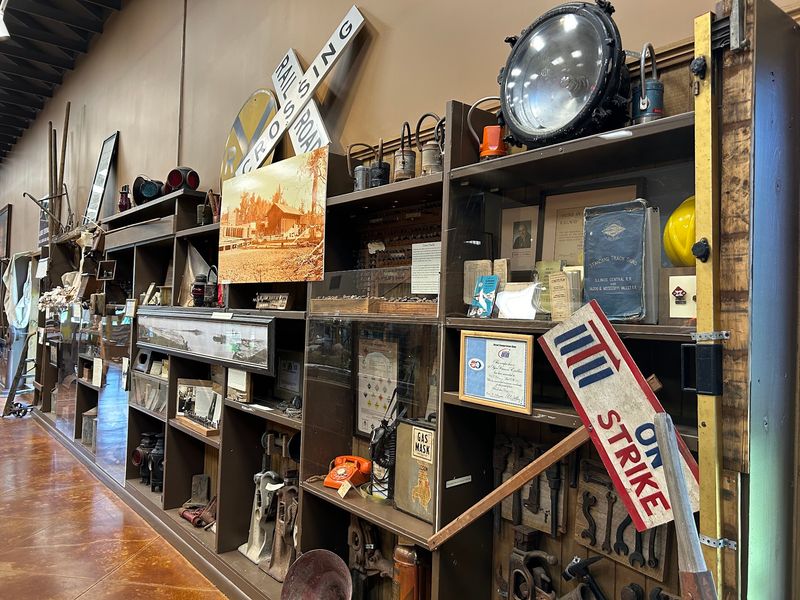
Ever heard of Gandy Dancers? Track crews earned that name for the rhythmic, almost choreographed way they swung tools while laying and leveling rail.
Their heavy implements sit on display here.
Lifting one in your imagination is enough. The labor was brutal, the teamwork constant, and the results carried a whole region’s economy on their shoulders.
Timetables and depot schedules fill another section. Precision mattered enormously before radios, and those printed columns kept trains from meeting where they should not.
Luggage wagons lean nearby, the kind that once hauled trunks across a platform. Every bag meant somebody arriving or leaving, which is the quiet poetry of any depot.
Potbelly stoves handled the drafty stations. Cotton sacks speak to the crop that defined Delta commerce and rode these rails toward market.
Signal lanterns hang with their glass still intact, and a locomotive headlight glows large enough to make you step back. Together the objects sketch a working world.
Read the labels, then ask questions. The staff supply context that turns a shelf of old iron into a genuine account of Mississippi labor and grit.
How Rails Built The Town Itself
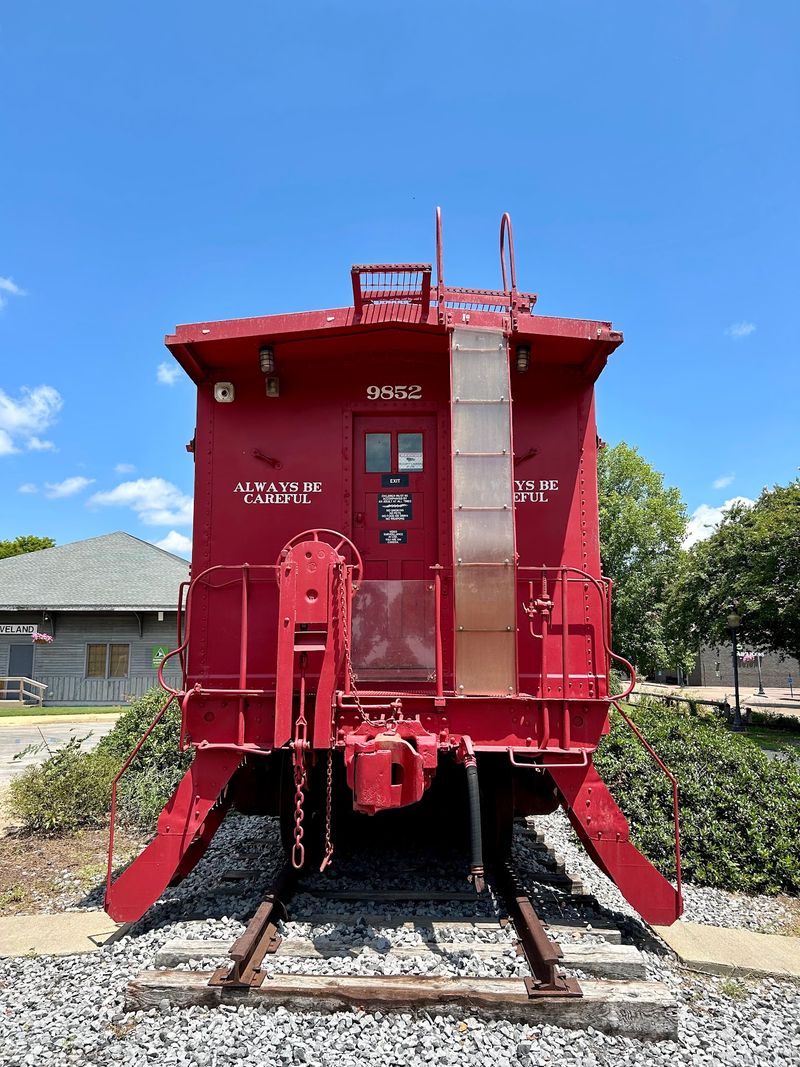
Cleveland exists because of trains. Before the town received its charter in 1886, the area held a stretch of the Louisville, New Orleans and Texas Railroad, chartered back in 1850.
That line stitched New Orleans to St. Louis, Missouri, pulling goods and people through flat farmland that had few other reliable routes. Settlement construction began in 1869.
Names changed a few times before Cleveland stuck. Such shuffling was common for depot towns whose identities grew alongside the timetable.
Housing the museum in part of the original depot gives the history a literal foundation. You are reading about the town’s birth while standing on the spot where it happened.
Rails delivered more than freight. They brought mail, newspapers, visitors, and opportunity, which is how outposts thickened into real communities with schools and storefronts.
Exhibits trace that growth clearly, connecting engineering decisions to street corners you can walk afterward. The link feels immediate rather than academic.
Step outside once you finish and the downtown reads differently. Buildings that seemed ordinary suddenly look like the product of a railroad’s long shadow, which is a fine souvenir.
Where Train Whistles Met The Blues
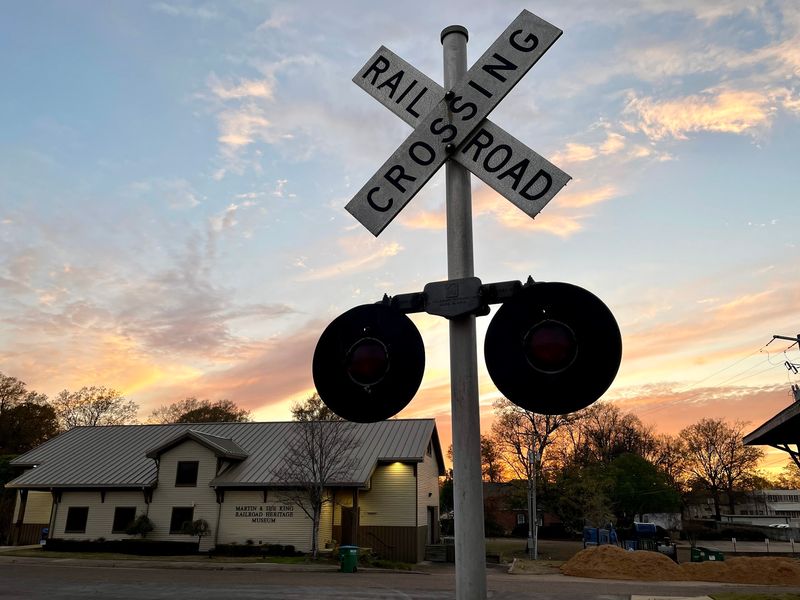
Music historians keep circling back to the railroad, and for good reason. The Blues grew up beside these tracks, borrowing the chug of wheels and the moan of a distant whistle.
Musicians rode the rails through the Delta, carrying songs from one town to the next. Every stop swapped influences, and the sound thickened along the way.
W.C. Handy reportedly first encountered the Blues while waiting in a depot, listening to a tune about the railroad.
He later grasped its full power while performing in Cleveland.
Trains offered songwriters the perfect double meaning. A locomotive could mean leaving heartbreak behind or coming home at last, sometimes in the same verse.
The museum threads that cultural story through its exhibits, so the visit covers art as well as industry. Mississippi’s heritage rarely separates the two neatly.
After you finish exploring, the surrounding historic downtown rewards a wander. Delta Dairy waits across the street for a sweet finish to the afternoon.
Small museum, generous payoff. This one punches far above its square footage, and you will likely plot a return trip before you reach the car.
The Grammy Museum Mississippi sits a few minutes away, which makes a natural second stop for anyone chasing the music thread further.