
There’s No Place Quite Like This Pirate Museum In Massachusetts And You Should Totally Visit It
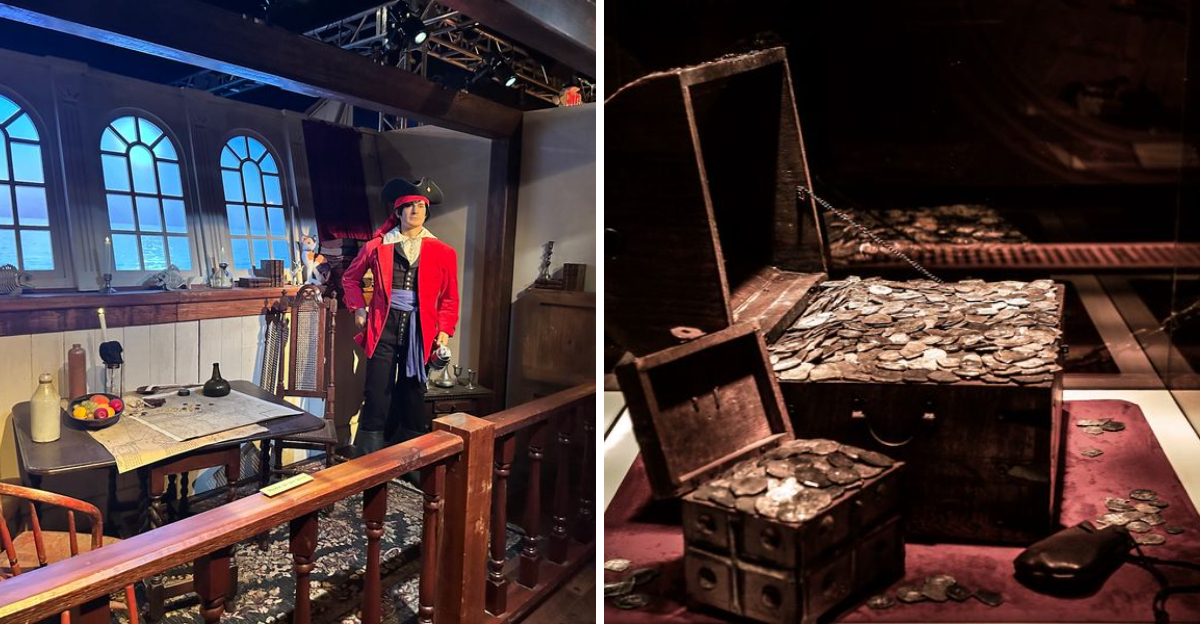
Ever wondered what it felt like to sail with real pirates centuries ago? Massachusetts has a spot that answers that question in the most unexpected way.
This museum doesn’t just display old artifacts behind glass. It recreates the story of an actual pirate ship, complete with sounds, scents, and details that pull visitors straight into the eighteenth century.
Kids and adults both find themselves leaning in closer, trying to read every plaque and peek into every corner.
What makes this experience different is how personal it feels. Visitors follow the journey of real people who lived through piracy, and that human connection sticks with you long after leaving.
Interactive displays let guests touch replica coins, explore a recreated ship deck, and imagine life during a storm at sea.
Massachusetts holds many historical attractions worth exploring, and this museum turns education into genuine entertainment. Walking through its exhibits, you’ll quickly understand why so many people say it’s unlike anything else they’ve visited.
The Only Authenticated Pirate Treasure On Earth
Plenty of places promise pirate treasure. Almost none can prove it.
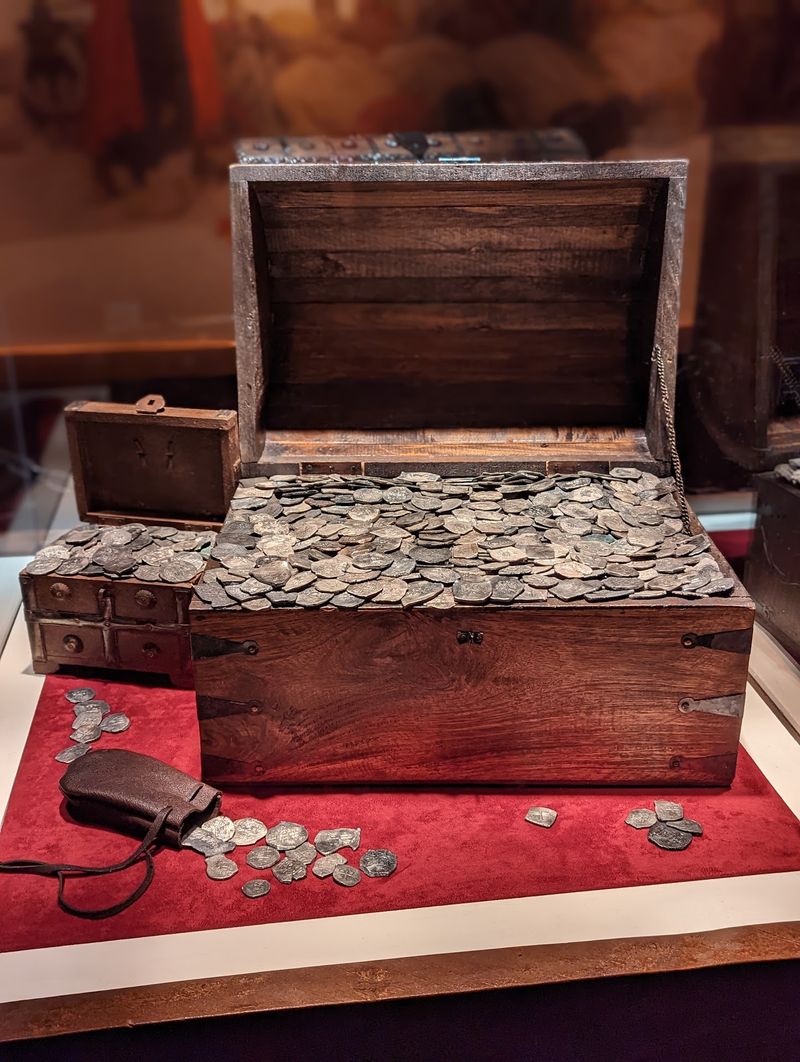
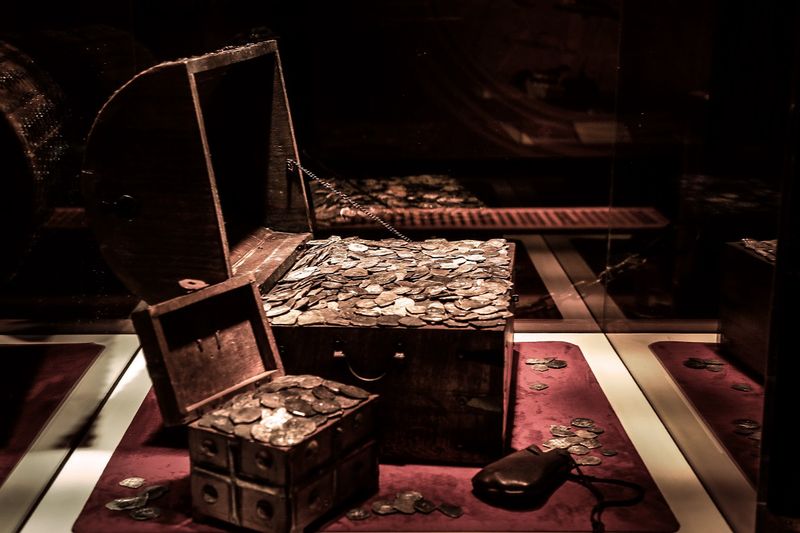
The collection here comes from the Whydah Gally, which went down off Cape Cod in April 1717, and it remains the world’s only fully authenticated pirate treasure ever recovered.
Coins, cannons, weapons, jewelry, and navigational instruments fill the rooms, each one lifted from sand and saltwater after nearly three centuries below. The metal looks its age.
Some pieces still carry the crust of the seabed, which somehow makes them feel more honest than anything polished.
The detail people remember most is the chance to hold an actual silver piece of eight.
Not a copy. An actual coin that sat in a pirate’s pocket before the storm took the ship. Photography is not allowed around the treasure chest, which keeps the moment quiet and oddly personal.
Standing there, the arithmetic of it becomes clear. Someone earned that coin, gambled with it, maybe stole it, and then lost it to the Atlantic.
Now it rests in your palm on Derby Street. History rarely gets that close, and it rarely feels this heavy.
Black Sam Bellamy And The Ship That Made Him Rich
Samuel Bellamy was about 28 when he passed away, and by then he had captured more than 50 vessels.
Historians rank him among the wealthiest pirates who ever lived, which is a remarkable resume for a man who barely reached thirty.
His flagship, the Whydah, began life as a slave ship. Bellamy took it in early 1717 and turned it into the center of his small fleet.
The museum does not skip past that origin, and the exhibit explains it plainly rather than dressing it up.
Then comes the ending. A ferocious nor’easter drove the Whydah onto the shoals near Wellfleet, and the ship broke apart with almost all hands lost. Bellamy went down with it.
Woven through the account is Maria Hallett of Cape Cod, remembered locally as the Witch of Wellfleet and long believed to have been his sweetheart. Whether every detail of their story is true, the legend has survived on the Outer Cape for three hundred years.
Ambition, fortune, and a single bad night at sea. The exhibit tells it without exaggeration, which is exactly why it lands.
Walking A Recreated Deck Of The Whydah
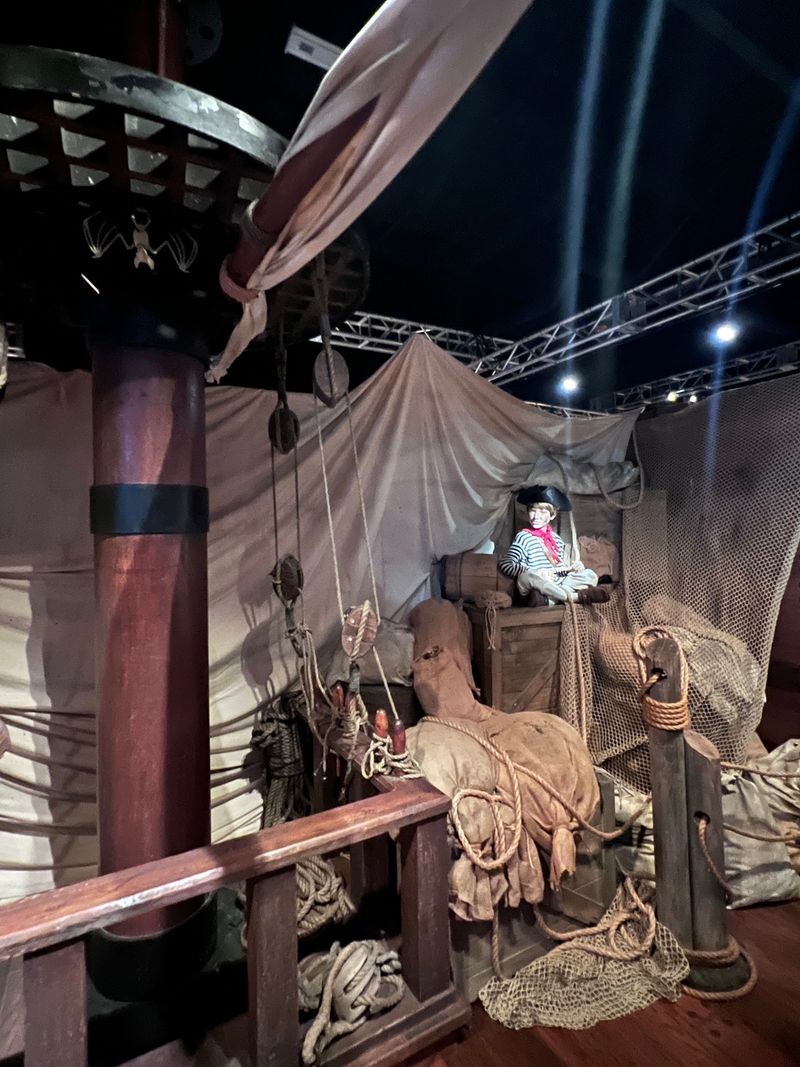
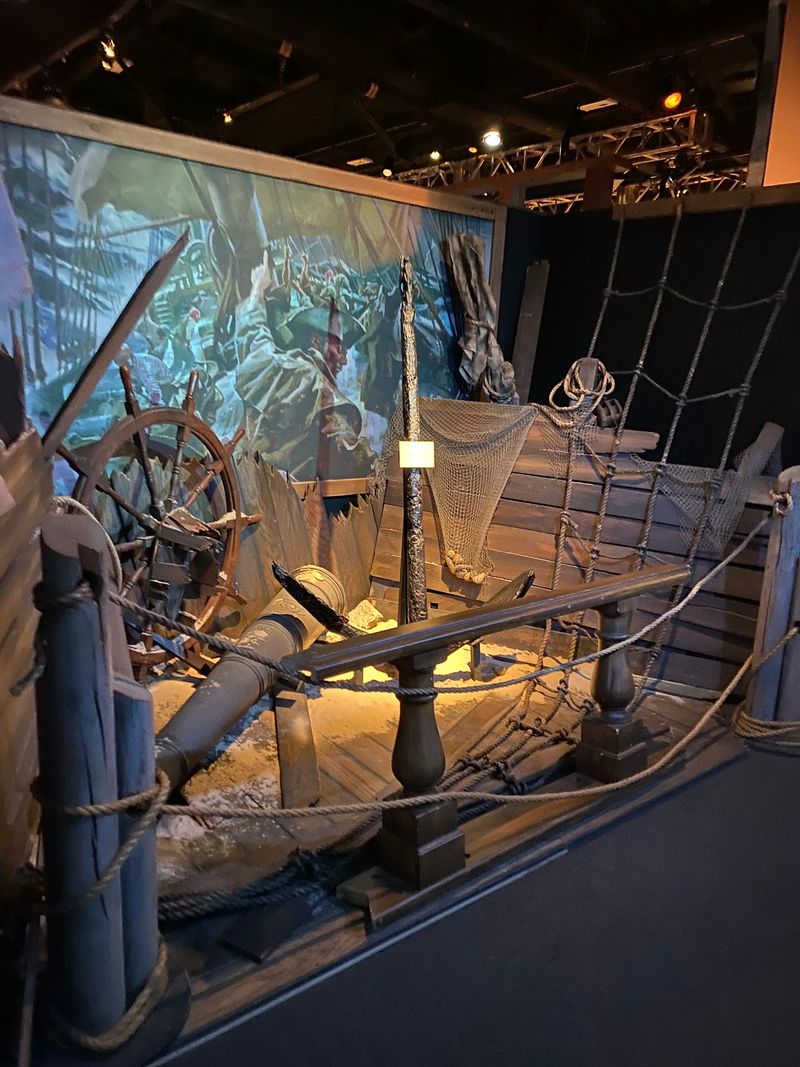
Reading about life aboard a pirate ship is one thing. Standing on a partial replica of the Whydah’s deck rearranges your sense of scale entirely.
The recreation gives a real feel for how tight quarters were, how ropes and barrels crowded every inch of usable space, and how little privacy any sailor could expect.
Around 146 men shared that world. Nobody had room to sulk.
Artifact stations sit along the route, and there are hands-on corners where knot-tying gets demonstrated properly. It sounds like a small thing until you try it and realize how much skill the work demanded.
Sailors tied these knots in darkness, in rain, with the ship pitching under them.
Life-sized figures and multimedia displays fill in the rest, and the layout follows a clear path so nothing feels scattered. Children get plenty to touch, which keeps the room lively without turning it into chaos.
Real Pirates Salem museum opens at 10 AM daily and closes at 4:30 PM, so the deck area is easiest to explore in the first hour after opening, when the space stays quiet enough to linger.
Inside The Discovery Lab Where Artifacts Are Still Being Freed
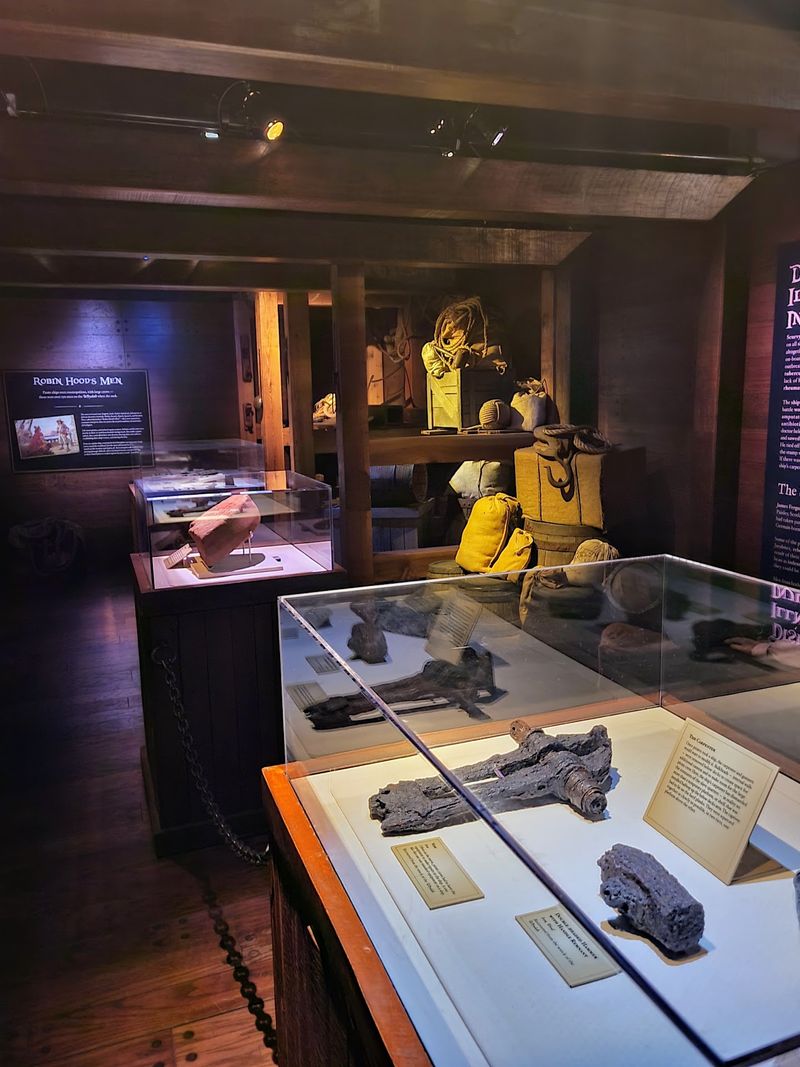
Barry Clifford found the Whydah in 1984, roughly 260 years after it sank, and that discovery is still unfolding. Only a portion of the ship’s cargo has come up so far.
Archaeological teams return to the site each summer.
The Discovery Lab shows what happens next. Artifacts do not emerge from the ocean looking like museum pieces.
They arrive as concretions, lumps of sand, iron oxide, and shell fused around whatever lies inside.
Conservators work slowly to separate the object from the crust, sometimes over years. Watching that process explains why the field moves at the pace it does, and why patience matters more than luck.
Some items on display remain mid-treatment, which gives the room an unusual honesty. You are looking at unfinished work rather than a finished exhibit.
There is something genuinely satisfying about a museum that admits the story is incomplete. Somewhere off Wellfleet, more of the Whydah is still buried, waiting for a diver with good weather and better timing.
The lab makes that ongoing search feel immediate rather than academic.
Salem’s Saltwater Past Beyond The Witch Trials
Ask most people about Salem, Massachusetts and the conversation goes straight to 1692. Fair enough.
Yet the town spent far longer as one of the busiest ports in early America than it ever spent trying witches.
Salem’s deep harbor and useful position along the coast made it a serious maritime center through the 17th and 18th centuries.
Merchants grew wealthy here. So did privateers, who carried government commissions permitting them to raid enemy shipping.
That distinction gets explained clearly at the museum. A privateer had paperwork. A pirate did not. The line between them was thinner than either side liked to admit, and men crossed it in both directions.
The address puts the whole thing in context. Charlotte Forten Park, 285 Derby Street, sits a short stroll from the wharves where Salem’s fortunes were actually made.
Ship money built the grand houses along the street and paid for the architecture people still photograph today.
Understanding that changes how the city reads. The witch story is famous, but the ocean shaped Salem far more deeply, and this museum makes the connection impossible to miss.
A Crew More Equal Than Most Of Colonial America
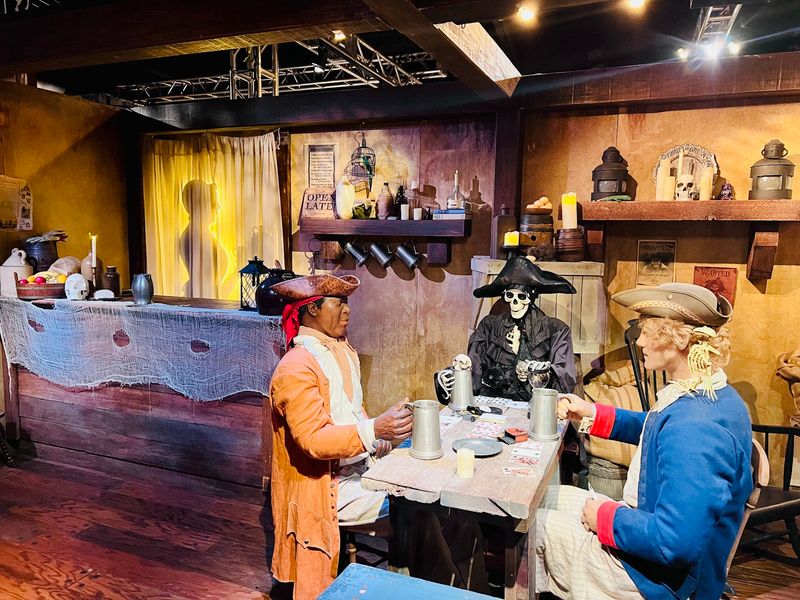
Here is a fact that reliably surprises people. Pirate crews of Bellamy’s era often ran on something close to democracy, at a time when almost nothing else in the Atlantic world did.
Articles were agreed upon in advance. Plunder was divided by an established formula. Captains could be voted out. Injured men received compensation.
The Whydah’s company included sailors of African, European, and Native American descent, and each had a voice and a share.
The museum lays this out carefully without turning it into a fairy tale. These were violent men in a violent trade, and the exhibits say so.
The harder truths get equal space. Voyages claimed lives through disease, accident, and combat.
Food spoiled. Wounds turned fatal. And the Whydah itself was built to transport enslaved human beings before Bellamy captured it, a fact the displays confront rather than sidestep.
That balance is what elevates the place. Romance and brutality sit in the same room, and the museum trusts you to hold both at once.
Very few attractions on this coast manage that kind of restraint.
Lantern Light, Timber, And Storytellers In Costume
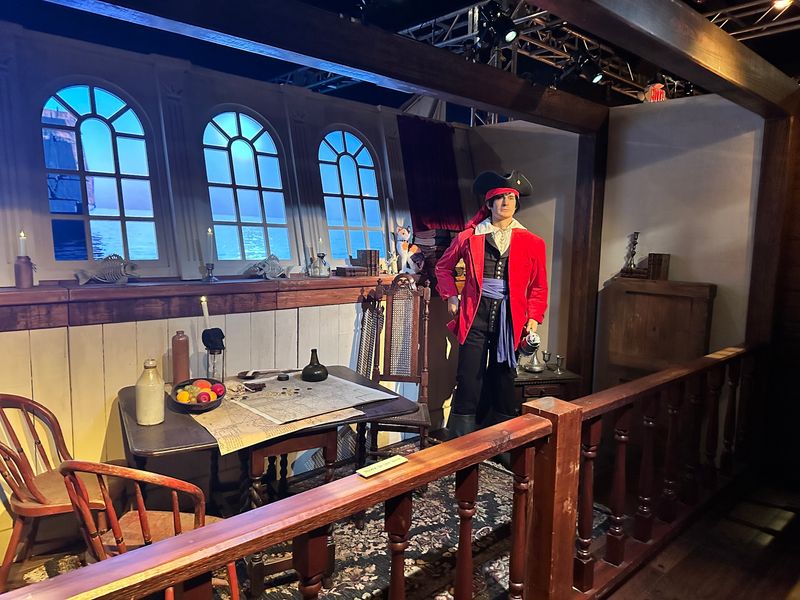
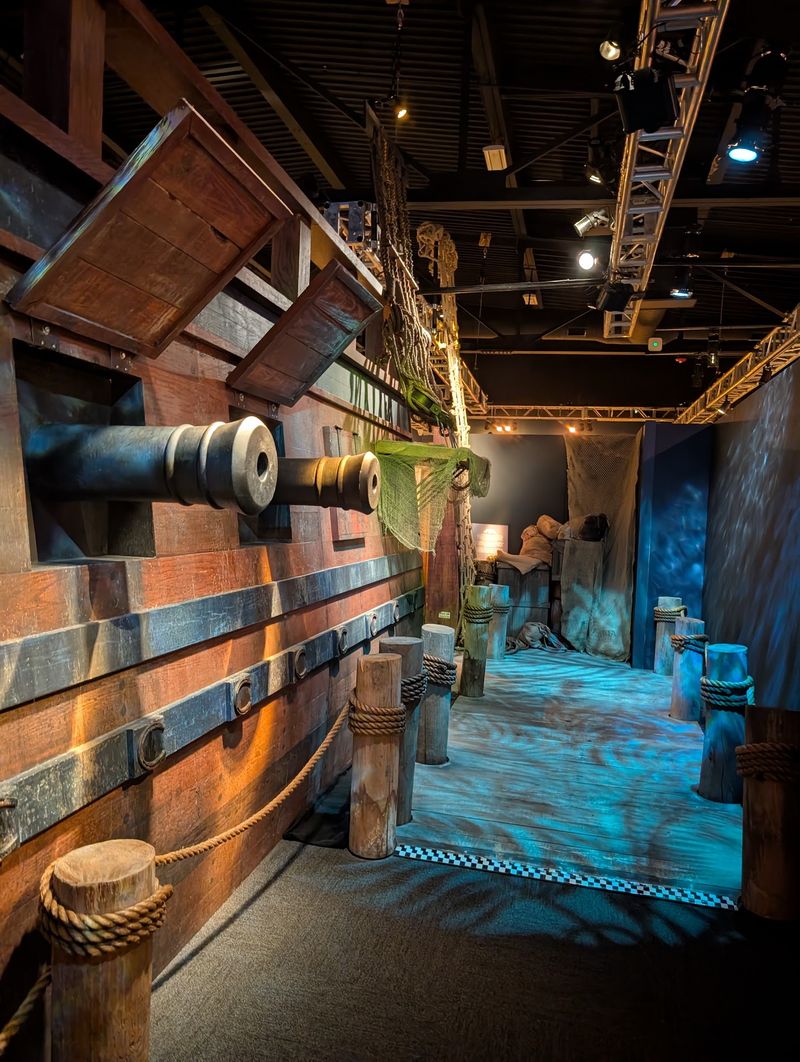
The atmosphere announces itself before any label does. Wooden beams overhead, weathered ship parts along the walls, corridors that stay deliberately dim.
Lighting does a great deal of the work here, and it does it well.
Guides move through the space, some in full costume, offering personal tours packed with history and a fair amount of humor.
Directors’ tours run longer and go deeper, and the staff have built genuine reputations for knowing their subject cold.
An introductory film sets up the Whydah’s story before the galleries open out, which helps enormously. By the time you reach the artifacts, you already understand who these people were and what they wanted.
Practical notes worth having. Hours are 10 AM to 4:30 PM every day of the week, and the phone number is (978) 259-1717 if you want to ask about tour times before arriving.
Restrooms are small, so plan accordingly during busier stretches of the calendar.
Quieter months bring an unexpected advantage. Fewer people means more time to read every panel and ask every question that occurs to you.
Why This Chronicle Of Ambition Stays With You
Some museums leave you with facts. Others leave you with a question you keep turning over on the drive home.
What stays here is the sheer improbability of it all. A young man from Devon crossed an ocean, took a slave ship, gathered a fortune large enough to make him legendary, and lost everything in a few hours of bad weather.
Then the sea kept his cargo for 267 years before giving part of it back.
Because the Whydah is the only proven pirate shipwreck ever excavated, everything on display carries a weight that reproductions never manage. There is no guessing involved.
The building sits at Charlotte Forten Park, 285 Derby Street, easy walking distance from the rest of the Salem waterfront, and an hour or two here reshapes the whole day.
The witch history remains, but it stops being the only thing. What lingers is a clearer sense of what drove men to sea in 1717.
Money, mostly. Also freedom, of a rough and dangerous kind. That combination built a legend, and here you can actually hold a piece of it.