
This Nevada Vineyard’s Views Are Best Experienced During Harvest Season
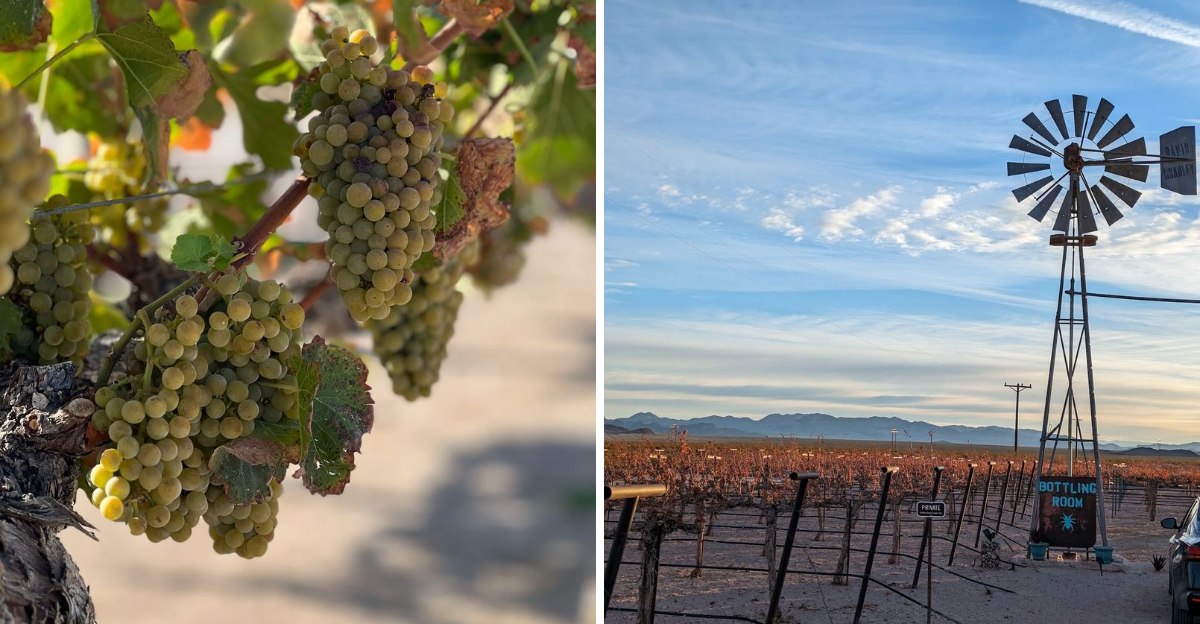
Grapes thrive in one of the hottest deserts in America, and the story gets better from there. Rows of vines cut straight through sand and scrub in a corner of Nevada nobody expects.
Mountains rise behind the vines while the sky turns shades that feel unreal at dusk. Cool desert nights roll in fast once autumn arrives, perfect for lingering by the fire.
Harvest weeks bring the whole place to life, with color in the leaves and energy everywhere. Trailers, tents, and cozy stays sit right among the vines, each facing its own angle of desert beauty.
Clear autumn nights bring out more stars than most people spot back home. Nevada quietly keeps a spot like this ready when the desert calls you toward harvest season instead of the crowds.
Vines Where Nobody Expects Them
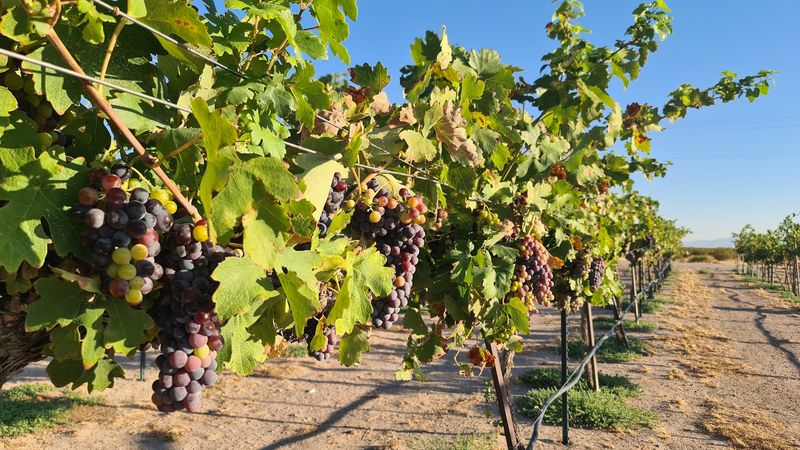
Grapes in one of the hottest corners of the country? That is the whole premise here.
A family relocated to the Mojave Desert during the pandemic and fell for the quiet, rural setting. Learning to tend a vineyard came next, mostly through trial and patience.
Today the ranch counts among the first vineyards in Nevada, with five different grape varietals planted across the property. The grapes are grown and processed entirely on-site, which is rare for a campground of any kind.
The address, for anyone plugging it into a map, is 5065 Cook Rd, Amargosa Valley, NV 89020, United States. It sits about 90 minutes from Las Vegas.
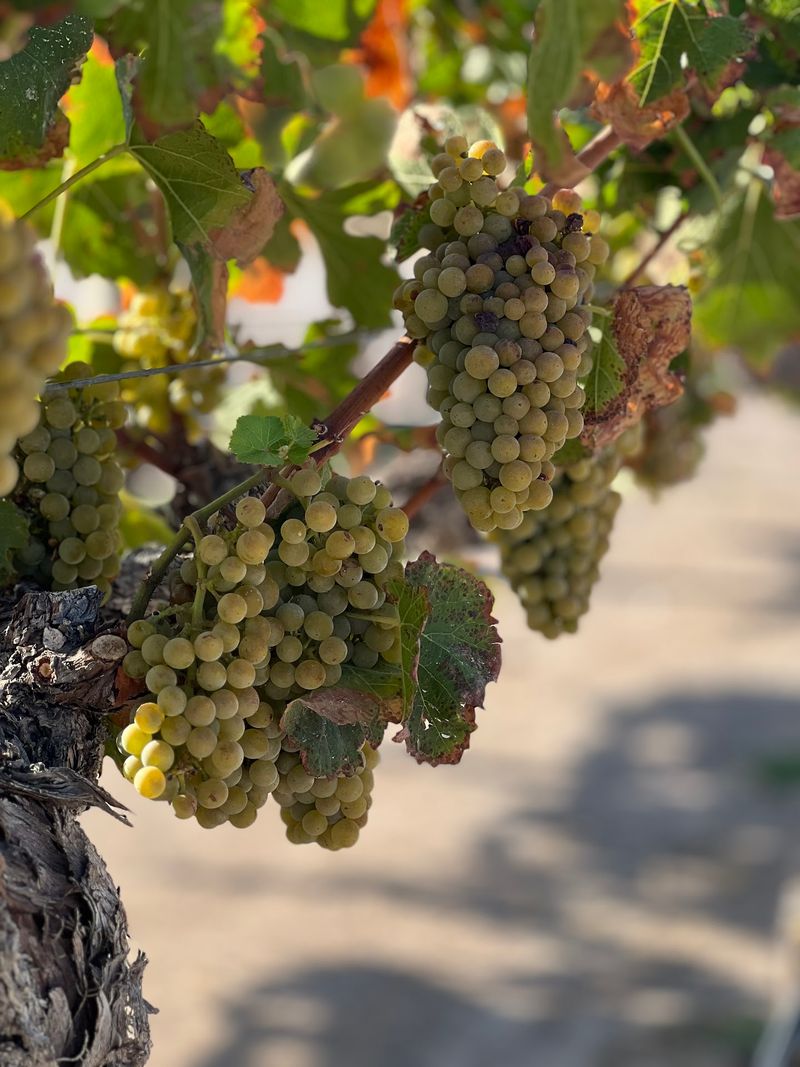
Harvest season is when the story becomes visible. Fruit clusters darken, leaves shift color, and the rows look their fullest.
Hosts share their journey freely, and questions about the vines rarely go unanswered. The ranch also keeps expanding, so returning guests often notice something new.
Watching agriculture succeed in ground this dry gives the whole visit an underdog charm.
Sunsets That Wrap Around You
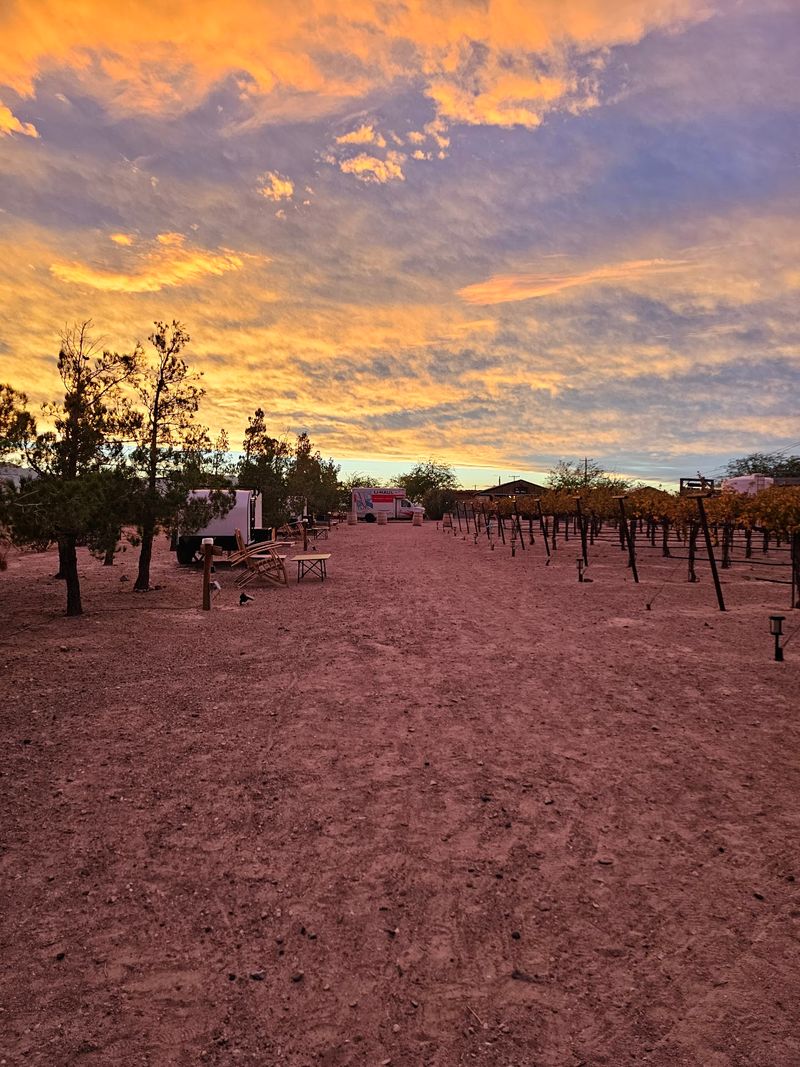
The sky here does not do subtle. Sunset stretches nearly all the way around the horizon.
Vineyard rows run toward open desert, and beyond them the Funeral Mountain range of Death Valley cuts a jagged edge against the color. Morning delivers its own version, with soft light spilling across the vines.
Guests often park themselves in Adirondack chairs built from oak barrels and simply wait for the show. Some cook dinner in the shared outdoor kitchen while the sky changes behind them.
Harvest season timing helps enormously. Cooler evenings mean sitting outside stays comfortable instead of becoming an endurance test.
Photographers get lucky here. The lack of buildings, trees, and traffic leaves nothing to clutter the frame.
Sunset views come up again and again in guest conversations, and for good reason.
Bring a light jacket for autumn evenings, since desert temperatures drop fast once the sun clears the ridgeline. The cooling air arrives quicker than most visitors expect.
Harvest Season Steals The Show
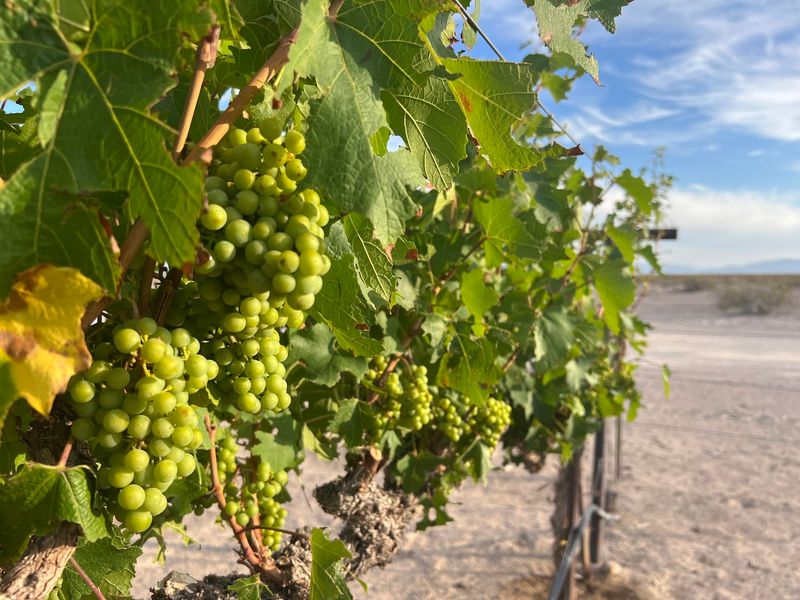
September and October carry the crown. Grapes reach their peak right as the desert finally cools down.
Months of careful watering, pruning, and worrying come together in a few short weeks. The vineyard buzzes with more activity than any other time of year.
Daytime heat softens into something reasonable, which changes everything about a desert stay. Hiking becomes pleasant, sitting outside becomes normal, and sleeping gets easier.
The first fall frost usually lands between late October and early November, closing the growing window. Timing a visit just ahead of that puts guests in the sweet spot.
Autumn light also flatters the rows, casting long shadows across the sandy soil in late afternoon.
Exact harvest dates shift year to year depending on weather, so calling ahead makes sense if the grapes are the main draw.
Guests who arrive in this window tend to describe the trip differently than summer visitors. The desert feels welcoming rather than demanding, and the vineyard looks alive.
Teardrop Trailers With Real Comfort
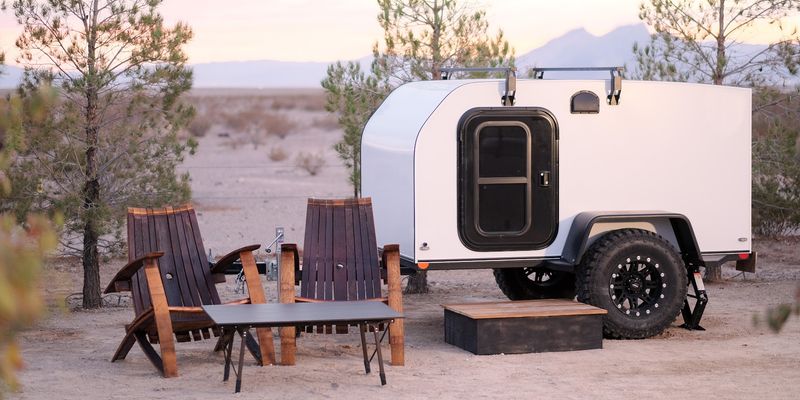
Tiny trailers, surprisingly big comfort. That combination explains why the glamping units get booked so eagerly.
Each teardrop trailer comes with a queen mattress and full bedding, plus heating and air conditioning. In a place this remote, working climate control counts as luxury.
Outside, guests find a grill, a private fire pit, an outdoor dining table, and those barrel-built Adirondack chairs. Cooking dinner while the sky turns orange becomes the evening ritual.
Some units include their own bathroom and shower, and several are stocked with towels, cookware, and basic kitchen tools. Many guests report packing gear they never needed.
Trailers carry names rather than plain numbers, which adds character to the booking process.
Pets are welcome, a detail that matters near Death Valley where pet-friendly lodging thins out quickly.
Sites sit reasonably close together, so this is a friendly setup more than a solitary one. Anyone craving total isolation should keep that in mind before reserving.
Sleeping in a Converted Studio
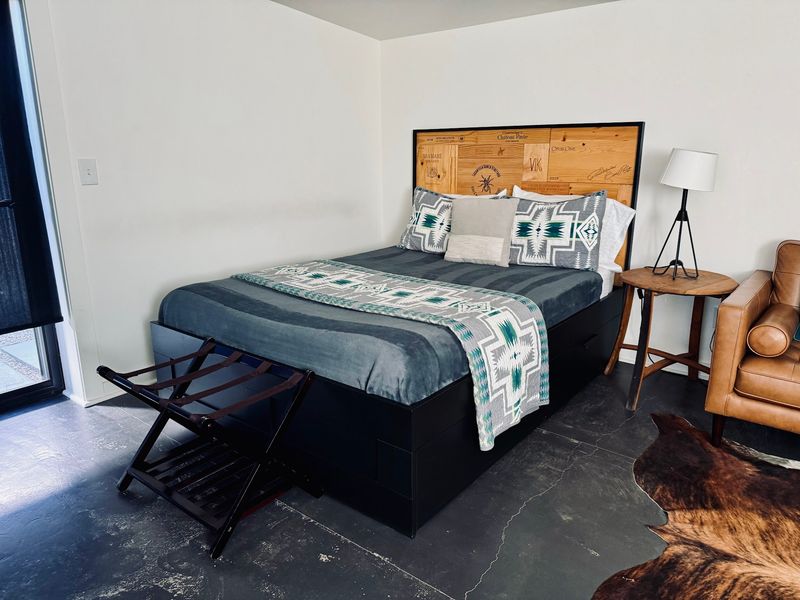
A converted storage room as a bedroom. That is not a phrase most campgrounds can use.
Alongside the trailers, the ranch offers private studio apartments and a converted room available to rent. Both give guests solid walls, comfortable beds, and a genuinely unusual story to tell.
Views stay excellent no matter the choice. Most lodgings look out toward the vineyard or the surrounding mountains, with private outdoor seating and fire pits out front.
Guests staying in these rooms mention strong Wi-Fi, easy comfort, and sunrise views arriving right outside the door.
The mix of rustic materials and modern touches gives the whole property a handmade feel. Nothing looks mass-produced.
For travelers unsure about tents but curious about desert camping, these rooms bridge the gap nicely.
Availability varies, and the more unusual units tend to fill first during cooler months. Booking early for harvest season is smart planning rather than paranoia.
Tents, RVs, And Room For Everyone
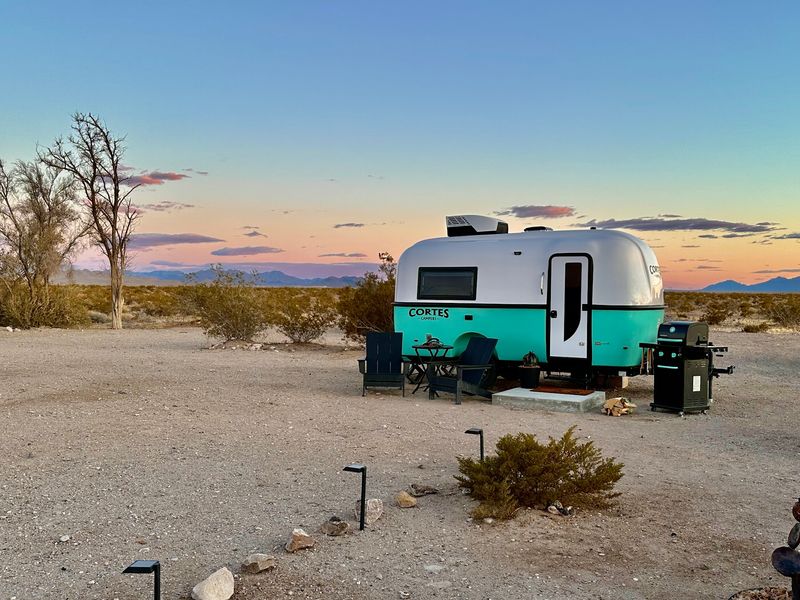
Rolling in with a rig? There is space for that too.
Traditional tent sites sit alongside dedicated RV spots, some with hookups and some suited to dry camping. Access roads are unpaved but generally manageable, and guests have driven them in low-clearance vehicles without trouble.
Tent campers get a real advantage here, since the shared facilities cover most needs. A covered cooking shelter, utensils, and a microwave mean less gear to haul across the desert.
Generators are not part of the soundtrack, which keeps evenings peaceful. That quiet is a big part of the appeal.
Larger trailers sometimes need a bit of shuffling to fit properly, so sharing rig dimensions when booking saves hassle.
Harvest season weather makes tent camping far more pleasant than summer, when daytime heat climbs hard.
Between the vineyard rows and the open desert beyond, even the simplest tent site comes with a view worth waking up for.
The Gathering Hall And The Shared Kitchen
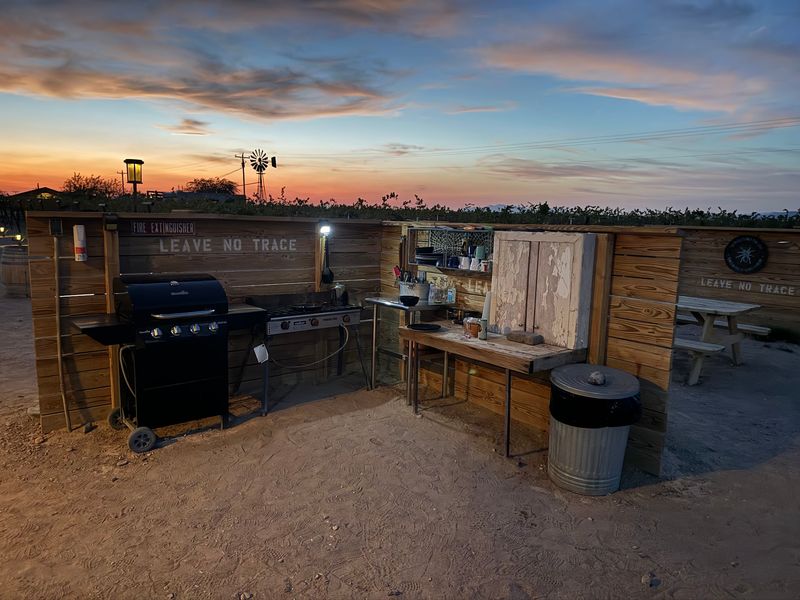
Community happens over cooking. The shared gathering hall proves it nightly.
This shared gathering space anchors the property, offering a place to sit, snack, and swap notes about the day. A full-sized refrigerator lives inside for perishables, which van travelers appreciate deeply.
The outdoor kitchen comes stocked with propane barbecues, cookware, and enough utensils to handle a real meal. Guests regularly describe cooking dinner while the sunset does its thing behind them.
Game tables, including ping pong and shuffleboard, fill downtime for anyone not chasing sunsets.
A small honor-system store sells snacks and shirts, handy when the nearest supplies sit miles away.
Communal fire pits pull people together after dark, and conversations tend to run long under all those stars.
Hosts stay friendly and helpful, frequently offering advice about nearby roads, weather, and park conditions. Their local knowledge often saves guests a wrong turn or two, which counts for a lot out here.
That Famous Outdoor Shower
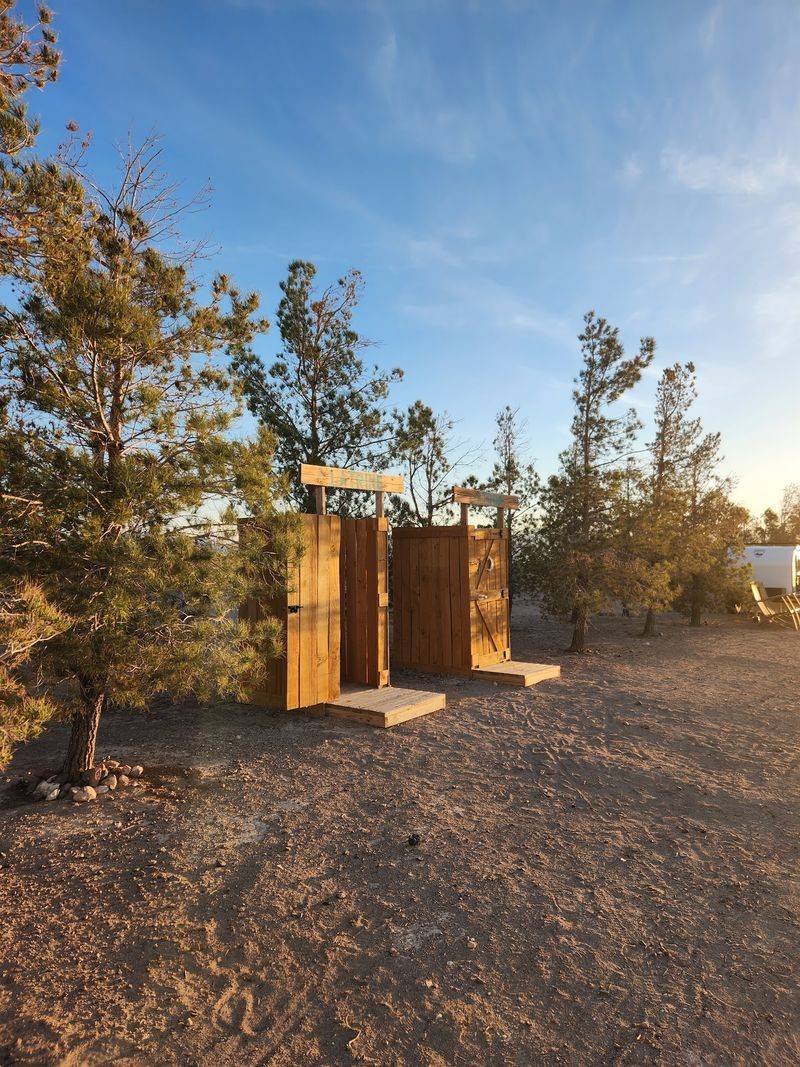
Showering under open sky ranks high on the list of guest favorites here.
The outdoor shower gets mentioned constantly, and not just as a novelty. Rinsing off desert dust while looking at mountains beats a cramped stall by a wide margin.
Bathhouse facilities and shared composting toilets round out the amenities, and cleanliness comes up repeatedly in guest comments. For a remote property, the upkeep is impressive.
Some trailers include private showers, though hot water in the smallest units can run short. Extra shower options scattered around the grounds solve that easily.
Autumn makes the outdoor shower especially enjoyable, with warm afternoons and no bitter chill waiting afterward.
Bringing sandals and a quick-dry towel keeps things simple, even though towels are often provided.
Little touches like this separate the ranch from standard roadside campgrounds. Practical needs get met, but with a bit of flair thrown in for good measure.
Dark Skies And The Milky Way
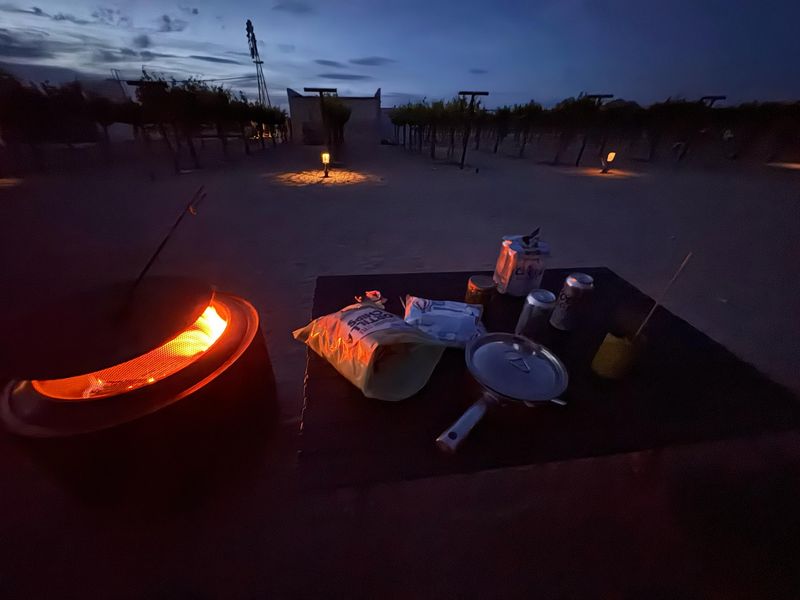
Look up once and the plans change. Bedtime gets postponed.
Minimal light pollution puts this stretch of desert among the darkest areas in the lower 48 states. The Milky Way shows up as a clear band rather than a faint smudge.
Guests cluster around fire pits after dark, letting eyes adjust and constellations sharpen. Conversation slows down and necks start aching from all that upward staring.
Harvest season delivers longer nights than summer, which means more viewing hours without waiting until midnight.
A red flashlight helps preserve night vision, and a reclining chair beats craning upward for an hour.
Moon phase matters more than most visitors realize. New moon nights reveal far more than a bright full moon allows.
Stargazing shows up in guest chatter more than almost any other feature. Considering the vineyard views and sunsets competing for attention, that says plenty about the night sky overhead.
A Basecamp For Death Valley
Twenty minutes. That is roughly the drive to Death Valley National Park from the front gate.
Ash Meadows National Wildlife Refuge sits a short drive away too, protecting spring-fed pools and species found nowhere else.
The eight-acre property borders BLM land, so hiking and wandering start right at the edge of the vineyard. No trailhead parking lot required.
Guests routinely use the ranch as a basecamp, heading out for sunrise drives and returning at dusk for a fire and a hot meal.
Cooler harvest weather makes park hiking far more sensible than a summer attempt.
The quirky Amargosa Opera House also draws curious travelers in the wider area, adding a strange dose of culture to a desert road trip.
Coming back to a stocked camper after a long day in the park feels like a small victory. Nevada rewards the drive out here.
Growing Grapes In Extreme Heat
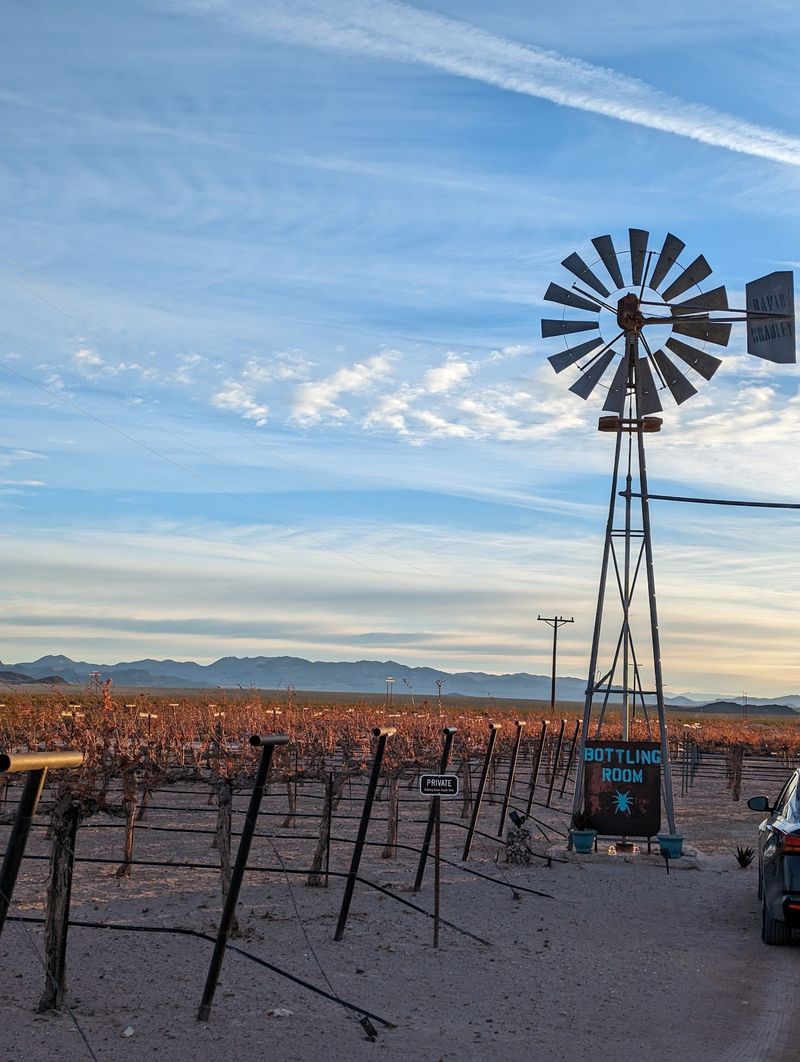
Roughly 3.4 inches of rain per year. Farming under those numbers takes nerve.
Amargosa Valley runs on a hot desert climate, and that intensity shapes everything about the vineyard. Water discipline is not optional.
The growing season stretches from early March into late November, giving the vines plenty of time to develop before the first fall frost arrives.
Extreme conditions bring real challenges, but they can also concentrate flavor in the fruit. Desert-grown grapes carry a character all their own.
Walking the rows during harvest reveals how much work sits behind each cluster. Irrigation lines, careful spacing, and constant monitoring keep the plants going.
Summer visitors quickly understand the difficulty firsthand, with daytime highs climbing near triple digits.
Hearing hosts explain the agricultural side turns a scenic backdrop into something more interesting. The vines stop being decoration and start being an accomplishment worth admiring.
Planning Notes Worth Packing
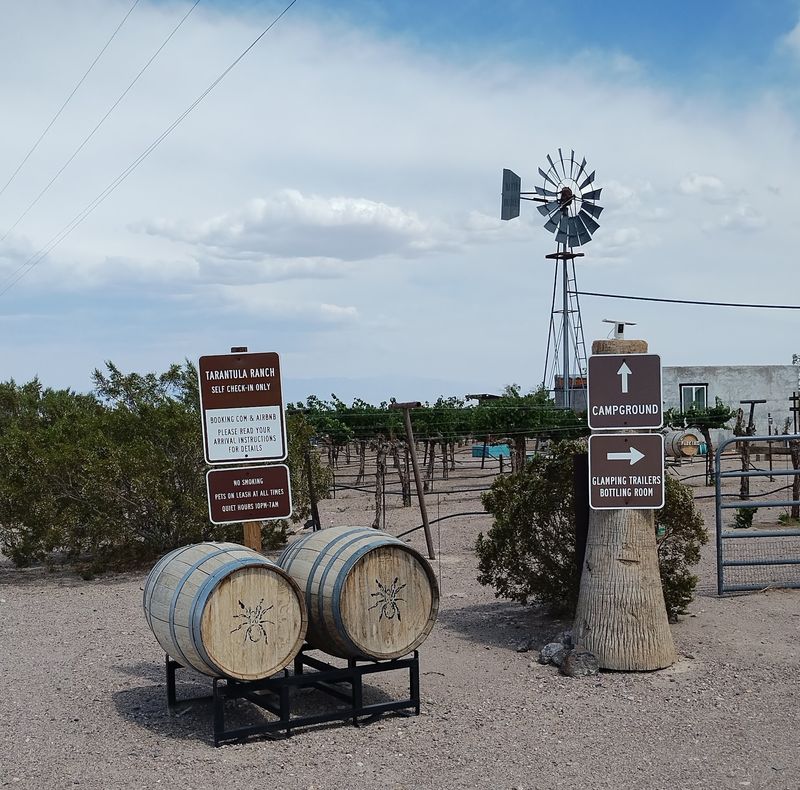
Remote means remote. Services nearby are limited, so arriving prepared beats improvising.
Water tops the packing list, followed by groceries, since restocking options thin out fast in this part of Nevada. A nearby local store helps for basics and prepared food.
Surprisingly, strong Wi-Fi covers the property, and cell service works better here than in much of the surrounding region. Remote work from a vineyard is oddly doable.
Pets are allowed, and several friendly resident cats patrol the grounds, delighting guests who miss their own animals.
Harvest season brings cooler days and chilly nights, so layers matter more than heavy coats.
Unpaved roads handle normal vehicles fine, even after rain, according to plenty of guests in two-wheel-drive cars.
Booking ahead is wise during autumn, when Death Valley traffic picks up and desert weather turns friendly.
Show up with full water bottles, an empty schedule, and curiosity about how grapes survive out here.