
This Mississippi Greek Restaurant Serves Loaded Gyros, Flaky Spanakopita, And Hearty Greek Classics
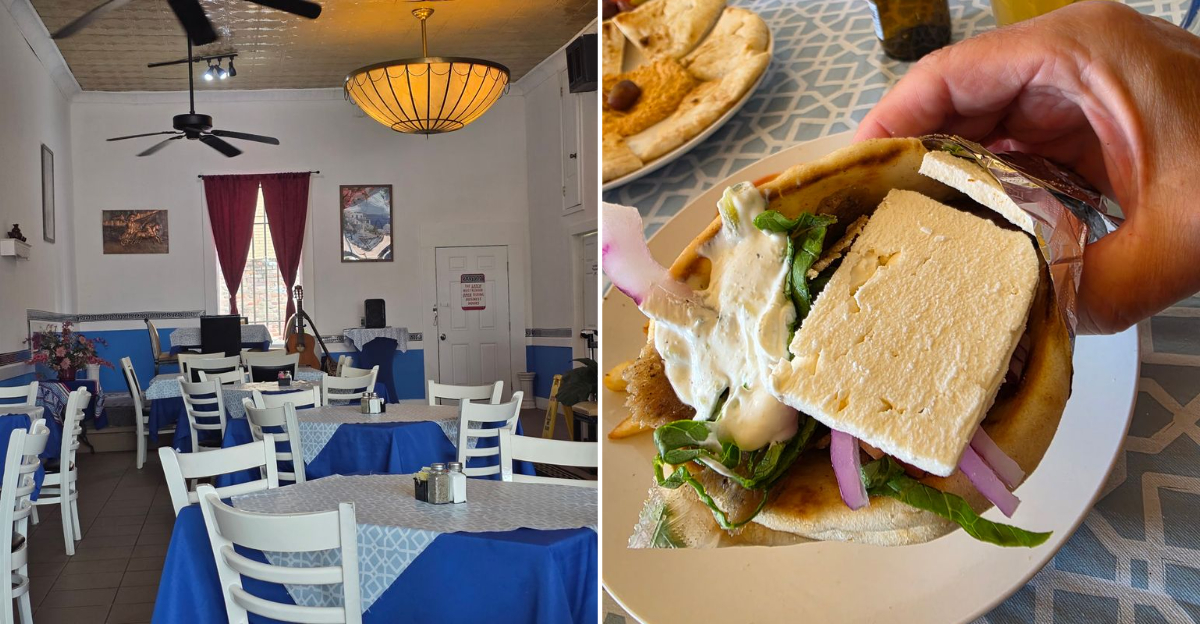
At this restaurant, you might forget you’re in Mississippi altogether and feel like you’ve landed in Athens instead. Gyros here come loaded generously, never skimped on meat or toppings despite the affordable price.
Spanakopita arrives flaky and fresh, prepared the traditional way without shortcuts. Regulars order the same Greek classics consistently, trusting the quality to stay exactly the same every visit.
Nothing about the menu feels Americanized or simplified for local tastes. Portions stay hearty, matching the comfort food reputation this restaurant built over the years.
Every dish gets prepared with the same care regardless of how busy the dinner rush gets. This restaurant proved that sometimes authentic Greek food shows up in the most unexpected places.
Authentic Gyro Preparation Techniques
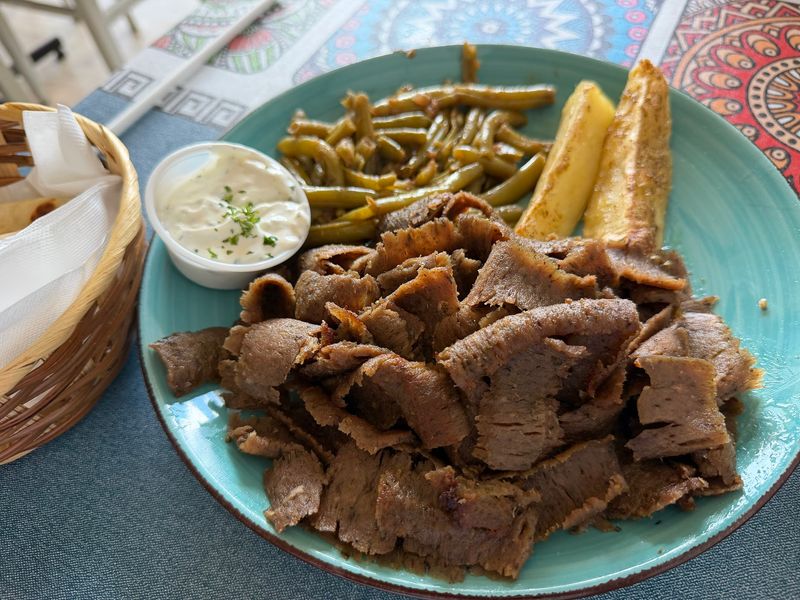
Real gyro meat does not come pre-sliced from a bag and reheated in a microwave. At Acropolis in Mississippi, the beef and lamb stack turns slowly on a vertical rotisserie, and the meat gets cut fresh right off the broiler when an order comes in.
That single detail changes everything. The edges stay crisp, the inside stays juicy, and nothing tastes dried out or chewy the way rushed gyros often do.
The classic Gyro Dinner keeps things traditional with those beef and lamb slices, warm pita, and cool tzatziki on the side. It is the version to order if you want to judge a Greek kitchen honestly.
Then there is the Biloxi Greek Gyros, which is where the coast sneaks into the recipe. Beef and lamb are joined by grilled shrimp, pepper-jack cheese, buffalo ranch sauce, lettuce, tomato, and onion in one loaded wrap.
Fans of big city Greek diners will spot the Chicago Greektown Gyros on the menu too, also cut fresh from the broiler. Different toppings, same commitment to slicing on demand.
Practical tip for first-timers: the gyros here run large, so splitting one with an appetizer works well. Plenty of tables end up with go-boxes anyway.
You will find all of it at 871 Howard Ave Ste A, Biloxi, MS 39530.
Secrets Behind Flaky Spanakopita Pastry
Phyllo dough is unforgiving. Roll it too thick, and you get cardboard; handle it carelessly, and it tears, so the spanakopita coming out of this kitchen says a lot about who is behind the stove.
The layers arrive golden and shattering, the kind that leave crumbs on the plate you will absolutely chase with your fork. Inside sits a filling of spinach, feta cheese, onions, and a mix of herbs that keeps the whole thing from tasting flat.
Feta does the heavy lifting flavor-wise. It brings salt and tang, while the onions soften and sweeten as they cook down with the greens.
What makes this version work is balance. Too much spinach turns soggy, too much cheese turns heavy, and the middle ground is where a good Greek pie lives.
Ordering advice worth remembering: a side of tzatziki turns spanakopita into something even better. The cool cucumber and yogurt play nicely against warm, buttery pastry.
Spanakopita also happens to be one of the most talked-about dishes on this menu, right alongside the gyro plate. Vegetarians finally get a real option instead of a sad side salad.
Fun bit of history: phyllo means leaf in Greek, which explains why the layers look paper-thin. Grandmothers across Greece still stretch it by hand on kitchen tables.
Exploring Hearty Classic Recipes
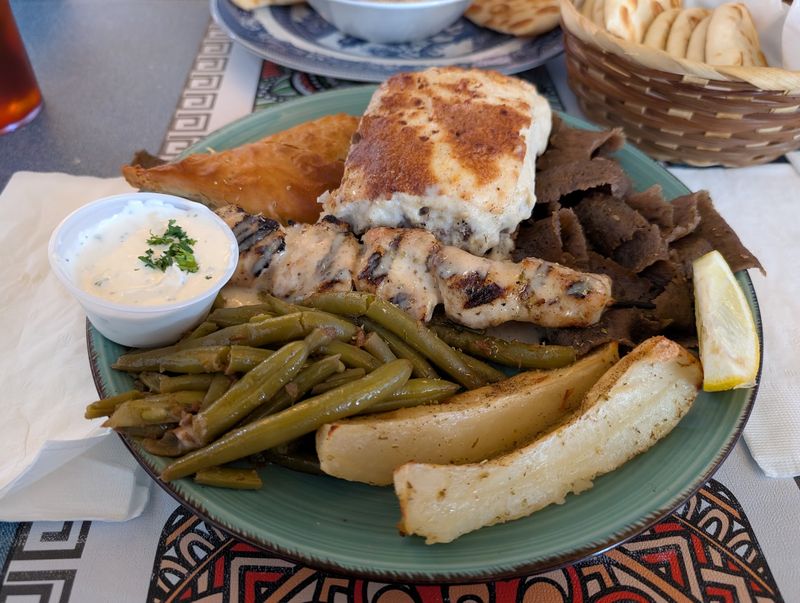
Some menus chase trends. Acropolis follows the rhythm of a Greek family table instead, which means layered casseroles, marinated skewers, and dishes that fill you up properly.
Moussaka is the showstopper for a lot of people. Eggplant, potato, and seasoned beef stack up under a creamy béchamel that browns on top and holds everything together.
Pastitsio works the same magic with pasta. Tubes of noodles soak up meat sauce, then that same rich béchamel blankets the whole pan before baking.
Dolmadakia offer a lighter contrast, served chilled with rice and spices rolled inside tender grape leaves. Some versions include beef mixed with the rice.
Souvlaki fans have choices. Chicken Souvlaki and Greek Souvlaki platters come as marinated tenderloin skewers, grilled until the edges char just enough.
Athenian Chicken leans on lemon, garlic, and Greek spices while baking, and the Broiled Red Snapper gets dressed in olive oil, lemon, and herbs. Gulf Coast seafood meeting Greek technique makes perfect sense in Biloxi.
Cannot decide? The Tour of Greece sampler exists for exactly that problem, letting one plate cover several classics at once.
Smart move for a first visit: order a sampler, take notes, then commit to a favorite next time. Half the fun is arguing about which dish wins.
Unique Mediterranean Herb Combinations
Oregano gets called the spice of life in Greek cooking, and it earns that nickname here. It shows up in marinades, on grilled meats, and in that unmistakable aroma that hits before the food does.
The chicken breast marinade proves that simple wins. Salt, pepper, garlic oil, and oregano nothing fancy, nothing hiding the chicken itself.
Spanakopita brings a different herb blend into the mix, layered with spinach, feta, and onions. The herbs there add brightness rather than heat.
Now for the surprise. The stewed green beans carry a hint of cinnamon, which sounds strange until you taste it and realize why Greek cooks have done it for generations.
Cinnamon in savory food is a Mediterranean signature. It adds warmth and depth without turning anything into dessert.
Dolmades get their own herb treatment, and Mediterranean herbs sharpen up the tzatziki sauce too. Every dish gets seasoned with intention instead of a generic shake of mixed spices.
Something worth trying: order the green beans as a side even if beans normally bore you. They tend to convert skeptics faster than any appetizer on the menu.
Lemon deserves mention as the unofficial ninth herb. Squeezed over meat, fish, and potatoes, it wakes up everything it touches and keeps rich dishes from feeling too heavy.
Fresh Ingredients In Dishes
Scratch kitchen is a phrase restaurants throw around loosely. At Acropolis, it means sauces, dressings, and dishes built in-house rather than opened from containers.
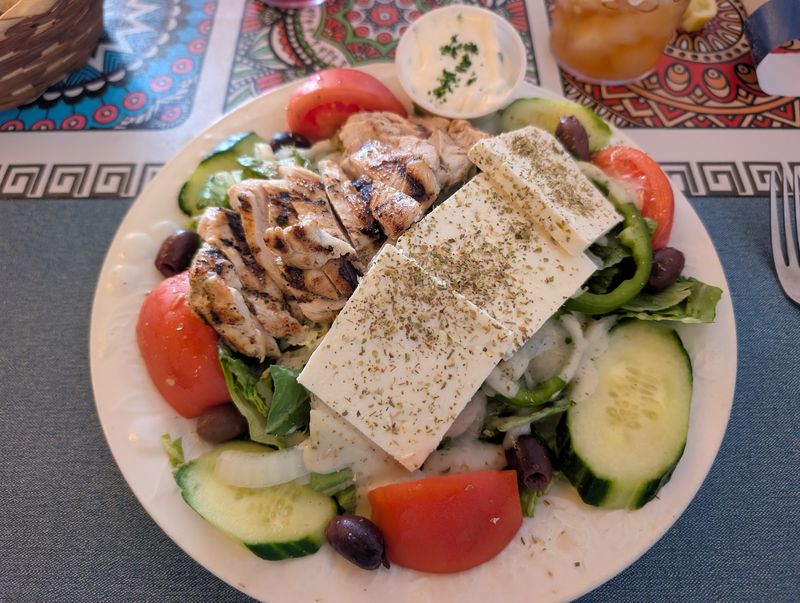
The salads make that obvious. Lettuce, tomatoes, cucumbers, onions, green peppers, and Kalamata olives arrive crisp and cold, with feta laid on top instead of dusted like an afterthought.
Pita bread comes out warm and soft, which matters more than people expect. Cold, stiff pita ruins hummus, and nobody wants that.
Seafood gets treated with respect too. The shrimp gyro uses fresh shrimp, grilled rather than fried into anonymity, and the Gulf location makes that choice feel natural.
Freshness also explains why the flavors read so clean. When ingredients are good, the cooking can stay simple and let each one keep its own character.
Hummus here surprises people. Smooth, well-seasoned, and different enough from grocery store tubs that it becomes the thing they talk about later.
Helpful ordering note: pair hummus and tzatziki with extra pita and share across the table. It stretches into a small feast before the entrees even land.
The kitchen keeps hours that support this approach, running lunch through dinner most of the week and closing Sundays. Fewer shortcuts, shorter hours, better food.
That trade sounds fair.
Traditional Cheese Varieties Used
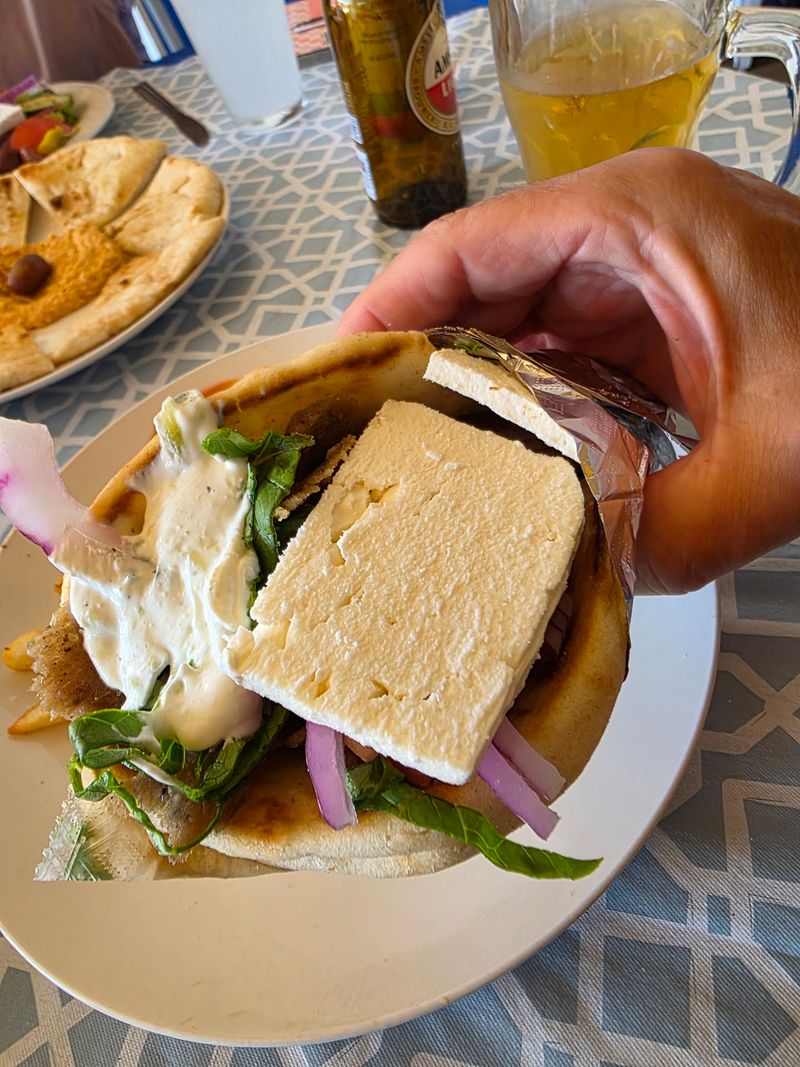
Feta is the backbone of this menu. It crumbles into spanakopita, tops Greek salads in thick slices, and finishes entrees like the Chicken Breast Acropolis with a salty punch.
Good feta walks a line. Creamy enough to soften against warm food, firm enough to hold its shape on a fork, and always tangy.
The Biloxi Greek Gyros takes a detour into American territory with pepper-jack cheese. Melted over beef, lamb, and grilled shrimp, it adds gentle heat that has no business working as well as it does.
Kefalograviera enters the picture through Saganaki, the pan-fried cheese dish that Greek restaurants treat like theater. Firm, nutty, and salty, it crisps on the outside while going soft inside.
Cheese in Greek cooking rarely gets used as a blanket. It works as seasoning, sharpening flavors instead of smothering them.
Here is a fun detail: feta has protected status in the European Union, meaning only cheese made in specific Greek regions with sheep and goat milk can legally carry the name.
Practical tip for cheese lovers: order something with feta plus something with melted cheese to taste the contrast. Cold and crumbly next to hot and stretchy makes for a much more interesting meal.
Signature Sauces And Dips For Food
Tzatziki runs this show. Cucumber, yogurt, and garlic whipped into something cool and thick, and it shows up beside gyros, pita, spanakopita, and fried zucchini.
Great tzatziki needs balance. Too much garlic overwhelms, too little makes it bland, and the cucumber has to be handled so the sauce never turns watery.
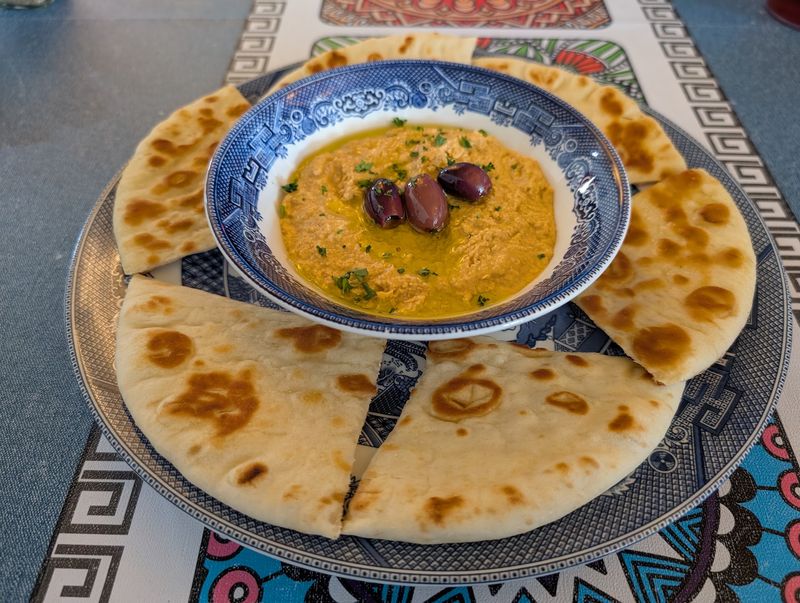
Hummus holds the other spot as favorite dip. Chickpeas blended smooth and served with pita, and this version tastes noticeably different from the standard stuff.
Then things get creative. The Biloxi Greek Gyros uses a buffalo ranch sauce, a bold twist that leans into local taste while keeping the Greek foundation intact.
Salads get homemade Greek dressing, and one version arrives with a honey cream-style pour that adds a soft sweetness over crisp vegetables.
Marinara shows up with Greek meatballs, keftedes, and the kitchen also works with pesto, Santorini sauce, and a roasted red pepper sauce for seafood plates.
Strategy worth trying: order a couple of dips as appetizers and use them across the whole meal. Tzatziki on grilled meat, hummus on pita, red pepper sauce with fish.
Sauces often reveal a kitchen’s confidence. When a restaurant makes its own dressings and dips daily, everything else on the plate usually follows the same standard.
Cultural History Of Culinary Traditions
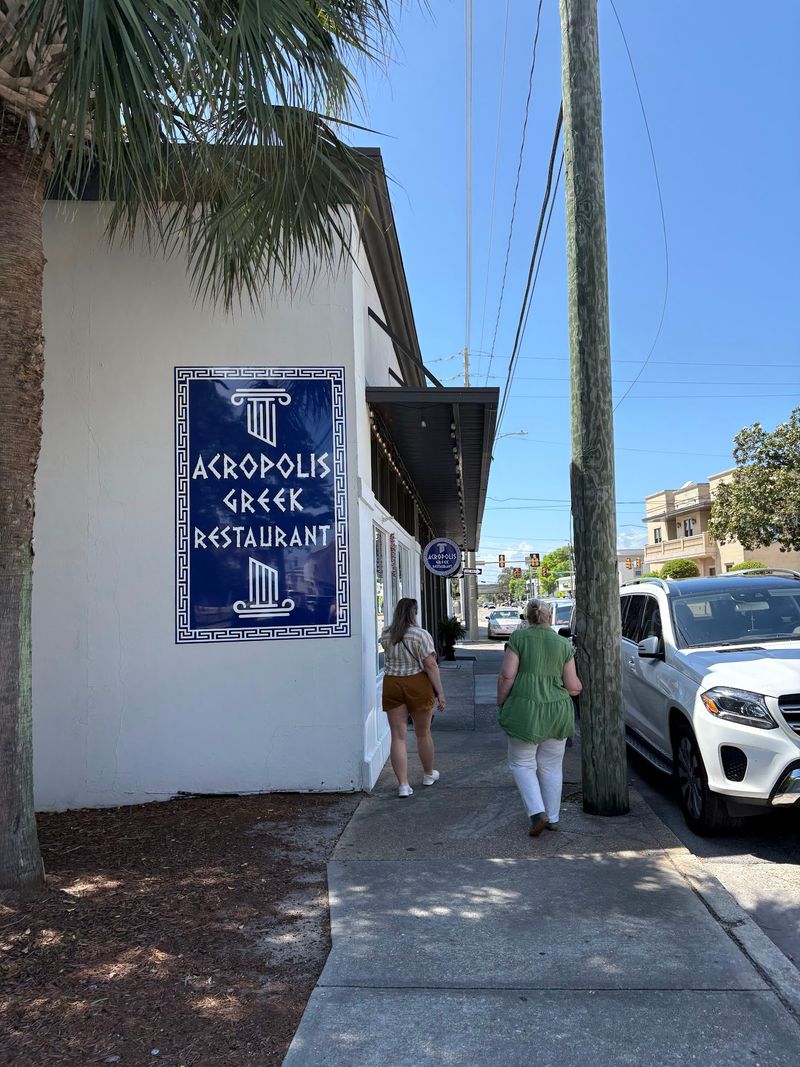
Behind this menu sits George Trigas, a native of Greece and longtime Biloxi resident who has been feeding this city Greek food for years.
He was the original owner of Mr. Greek, another local spot, so the Greek cooking tradition on Howard Avenue did not start yesterday.
Recipes here trace back through generations rather than a corporate test kitchen. That lineage explains why the moussaka, spinach pie, and lemon chicken taste like someone’s family standard instead of a menu draft.
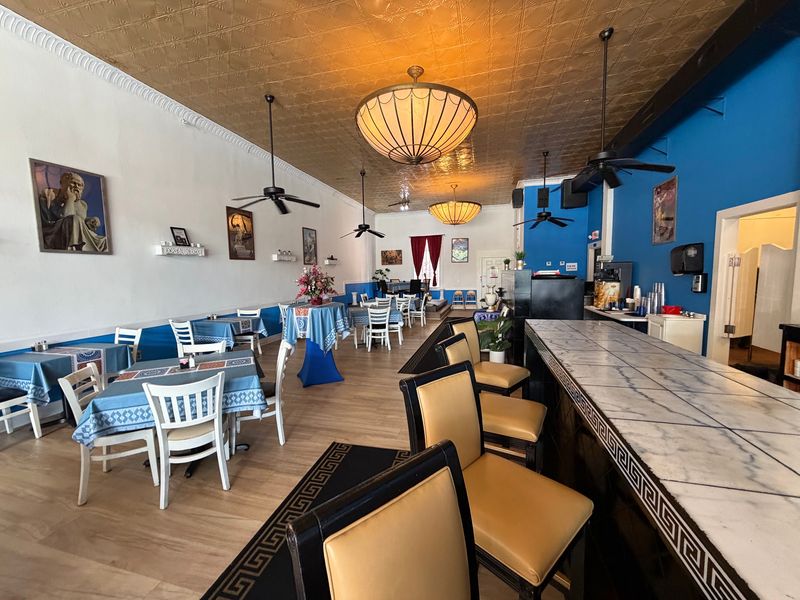
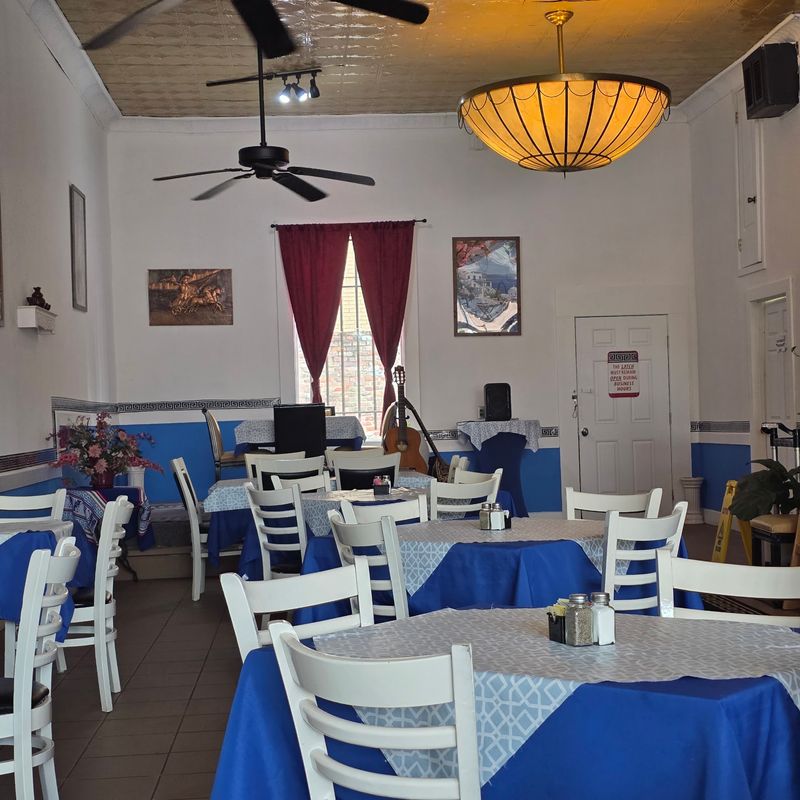
The dining room supports the food. Greek details fill the historic building without tipping into theme-park territory, and Greek music plays quietly in the background.
Owner-chef John and his wife Debby move through the room and talk with guests, which gives the place a family-run feeling that chains cannot manufacture.
Menu balance tells its own story. Grilled meats, warm pita, lemon, and oregano appear over and over, with each ingredient allowed to keep its own voice.
Locals fill tables at lunch, and visitors taking a break from the casinos keep finding it. Word spreads fast when a small restaurant gets things right.
Save room for dessert if you can. Baklava and homemade cheesecake close the meal the way a Greek table should, sweet, sticky, and worth the extra fork.