
This Pennsylvania Balloon Festival Is One Of August’s Most Stunning Outdoor Events
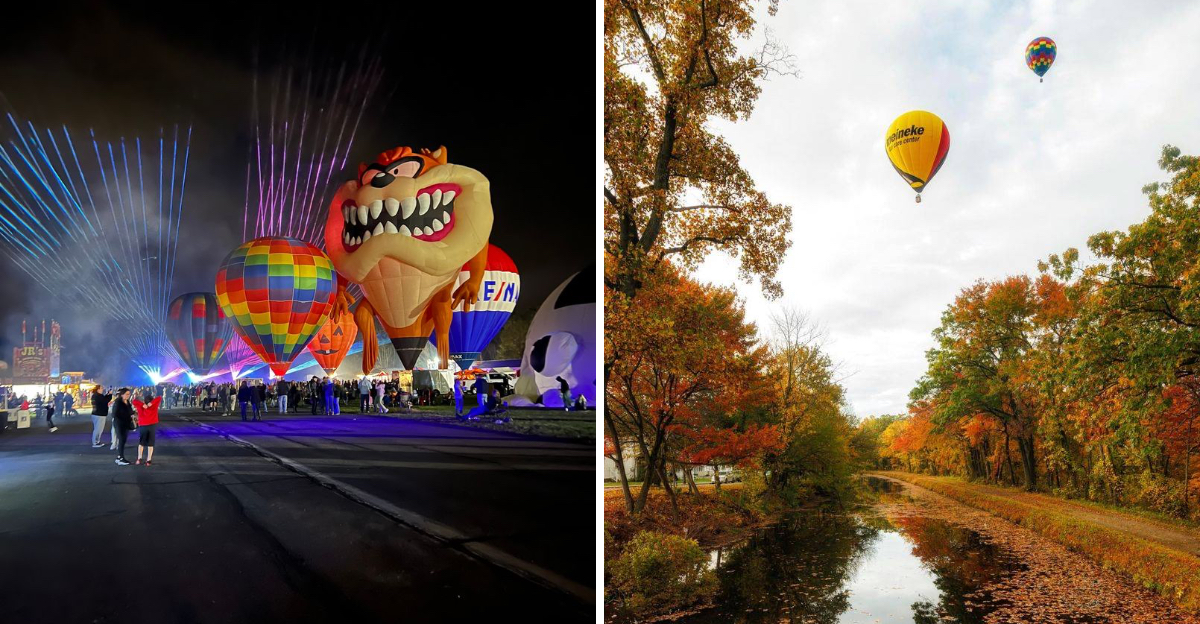
Picture giant balloons glowing like lanterns against a mountain skyline. That kind of magic fills Pennsylvania every August, and this festival never gets old.
Fireworks crack the night open while lasers slice through fog and a DJ keeps the whole crowd moving. Kids dash between bounce houses and food trucks loaded with sweet, salty treats.
Pennsylvania throws an outdoor party unlike anything else in the region, and this field turns into pure spectacle once the sun dips low. Balloons rise slow and massive, tethered rides lift you just high enough to gasp.
Bring a chair, bring your appetite, and watch what unfolds when the sky lights up. Curiosity alone might be reason enough to start planning your evening under those glowing giants.
Balloons Rising Over A Working Airfield
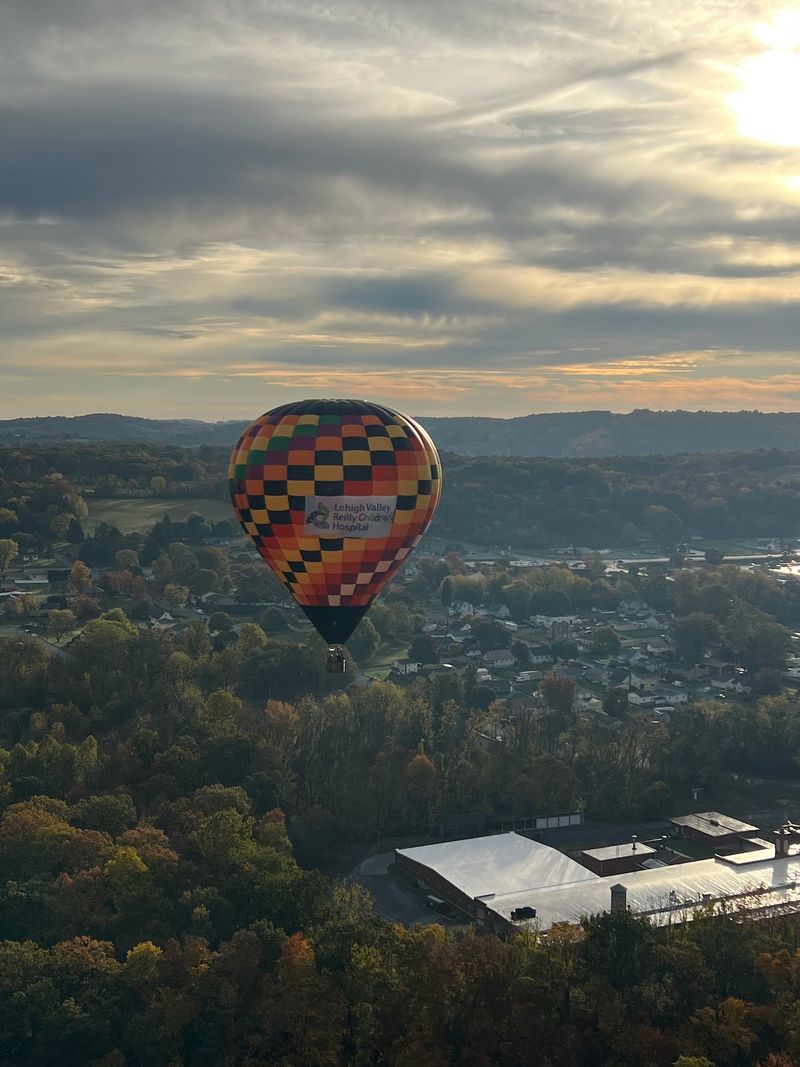
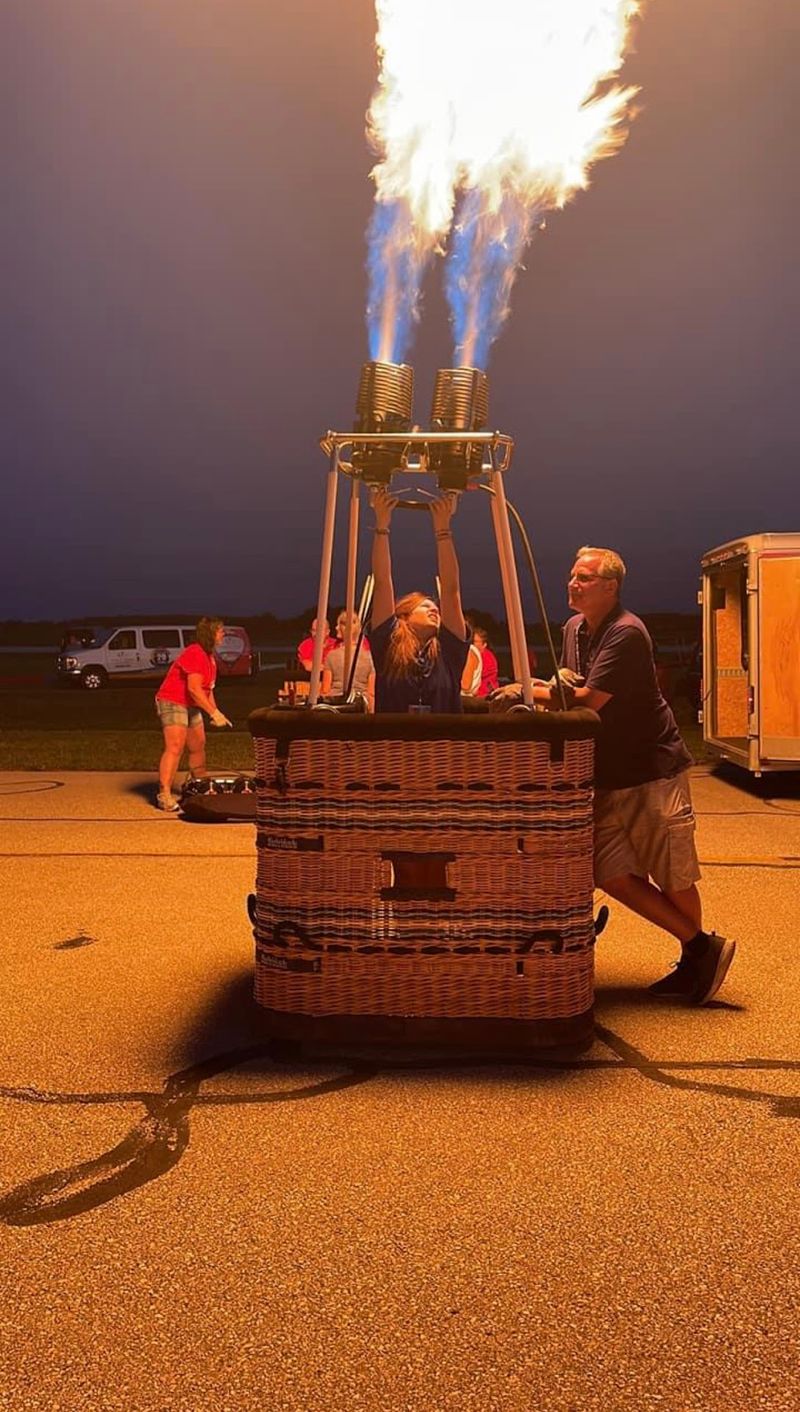
Few things quiet a crowd faster than a balloon standing upright. The envelope fills, the burner roars, and hundreds of heads tilt back at once.
Launches at Lehigh Valley Balloon Fest happen from the open field at Slatington Airport, 1000 Airport Rd, Slatington, PA 18080, in Lehigh County, Pennsylvania. Crews spread the fabric flat, run cold air in with fans, then heat it until the balloon rises off the grass.
The whole process takes a while, and watching it counts as half the fun. Ground teams shout instructions, ropes go tight, and baskets tip upright in one smooth motion.
Late afternoon and early evening tend to bring the calmest air. Pilots prefer those windows because gusty midday conditions make inflation risky.
Numbers vary from year to year and evening to evening. Some nights bring a full field, others just a handful of aircraft.
Stand near the fence line for scale. From close range, a balloon looks impossibly large against the mountains.
Bring a camera with a wide lens if you have one.
The sight rewards patience more than planning.
Where The Festival Sets Up Camp
An airport makes a surprisingly good festival ground. Flat, wide open, and framed by wooded hills on the northern edge of the Lehigh Valley.
Slatington sits in Lehigh County, Pennsylvania, close to the Blue Mountain ridge and the Lehigh River. The drive in cuts through farmland and small boroughs.
The grounds where the Lehigh Valley Balloon Fest is held are essentially a large field. Vendors line one side, the launch area sits in the middle, and spectators fill the rest.
That layout means great sightlines almost everywhere. It also means very little shade, so a hat helps on warm evenings.
Walking the full loop of the festival does not take long. Most visitors circle it a few times over the course of an evening.
Terrain is uneven grass in places, so sturdy shoes beat sandals. Strollers work, though they roll better on the packed paths.
Parking sits on site, on the airport property itself.
Give yourself extra time on arrival and departure, because traffic on the access road can slow to a crawl when crowds move at once.
When The Field Starts To Glow
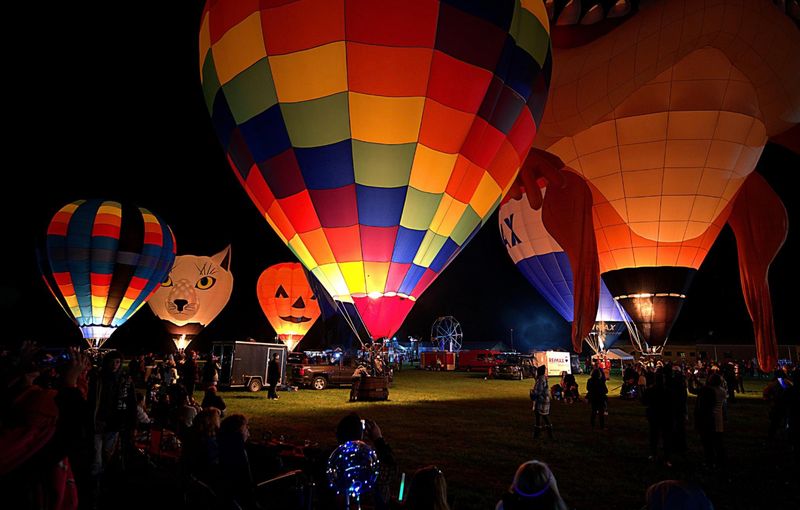
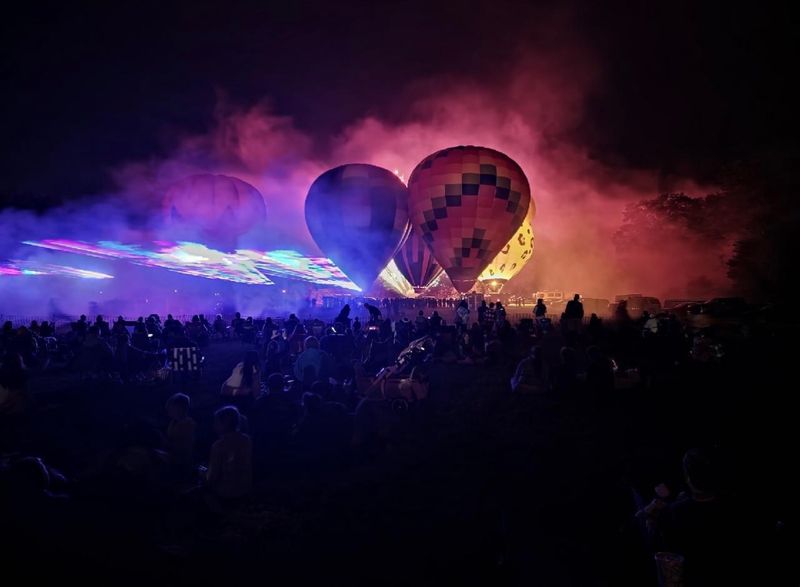
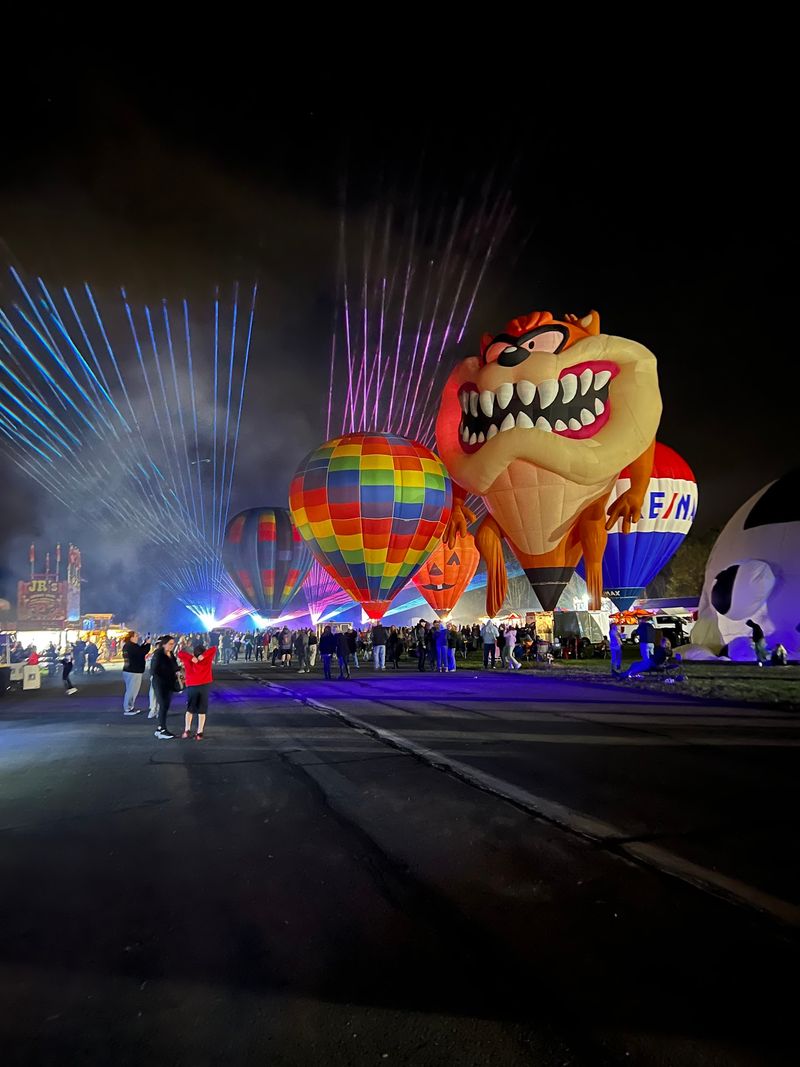
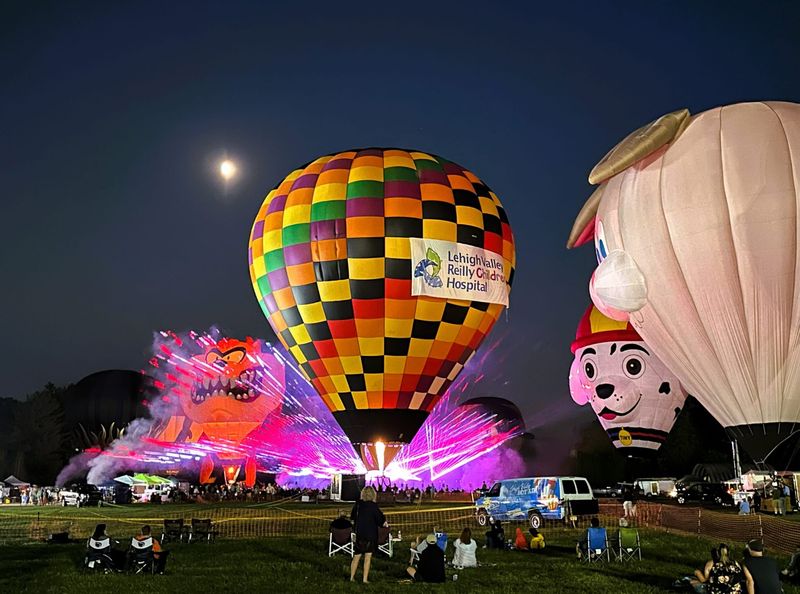
Darkness turns the field into something else entirely. Balloons stay tethered, and the burners fire in bursts.
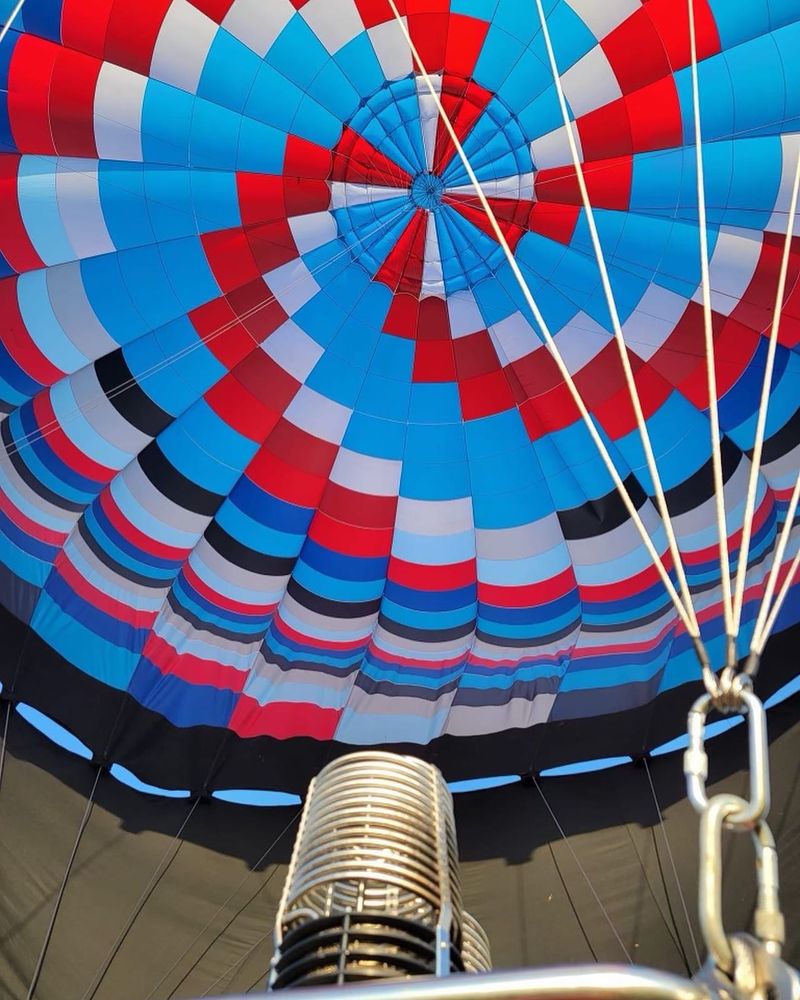
Each blast lights the envelope from inside. Reds, blues and stripes flare bright, then fade back to shadow.
The balloon glow ranks among the most photographed parts of the whole weekend. Visitors mention it constantly, and it is easy to see why.
Because the balloons stay anchored, the glow can sometimes go ahead when free flight is not possible. Wind still matters, though, and organizers make the call on the night.
Music usually plays alongside the glow. Bursts of flame tend to sync loosely with the beat.
Find a spot before dusk if you want a clear view. Once the light drops, the front rows fill fast.
Phone cameras struggle in low light, so steady hands or a small tripod help.
Kids seem to love this part most of all. The scale of a lit balloon at close range makes an impression that photos rarely capture.
Stay put afterward, because more is coming.
Lasers, Fog And A Fireworks Finish
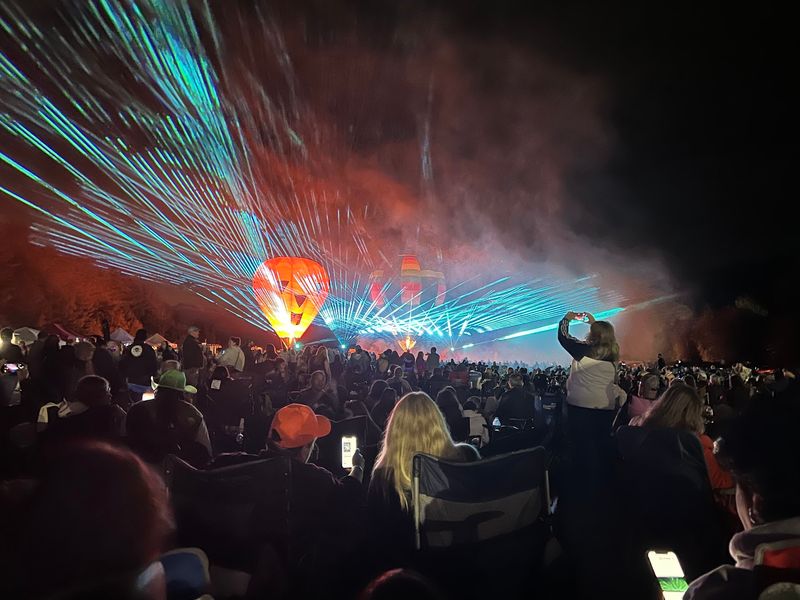
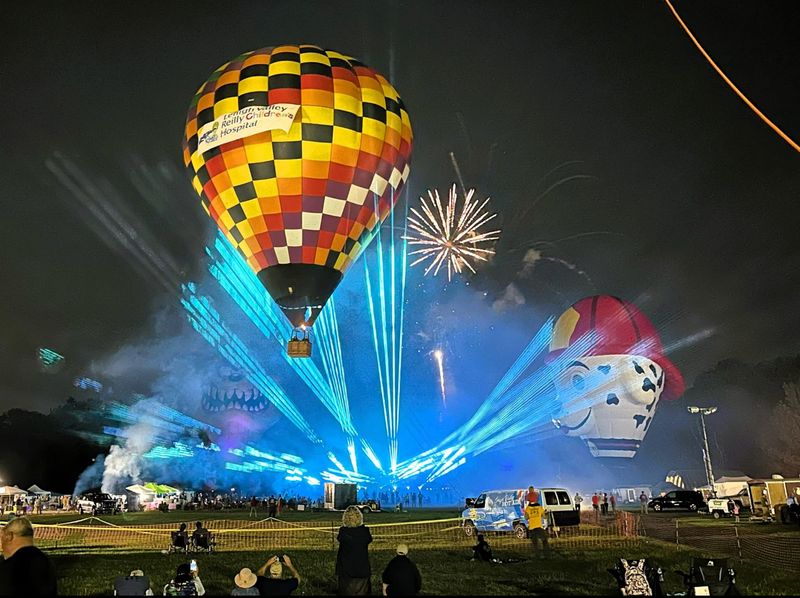
Green beams slice through fog while the crowd stares upward. The laser show has become one of the festival’s signature moments.
Beams sweep over the field, timed to music that leans toward dance, techno and country mixes. Fog machines give the light something to catch.
Fireworks typically follow. Bursts open above the airfield, reflecting off any balloons still lit on the grass.
Visitors often describe this stretch as the strongest part of the night. It packs light, sound and color into a short window.
Timing shifts depending on sunset and conditions, so schedules posted earlier in the season can change.
Ear protection is worth considering for very young children. Fireworks over an open field sound louder than expected.
Blankets work better than chairs for this segment, since lying back gives the best angle.
Weather can still interfere. Storms or heavy wind may push things later or cancel them outright.
Nothing about a night sky show is guaranteed anywhere, but when it runs, the combination of lasers and fireworks earns the applause it gets.
Tethered Rides And Higher Adventures
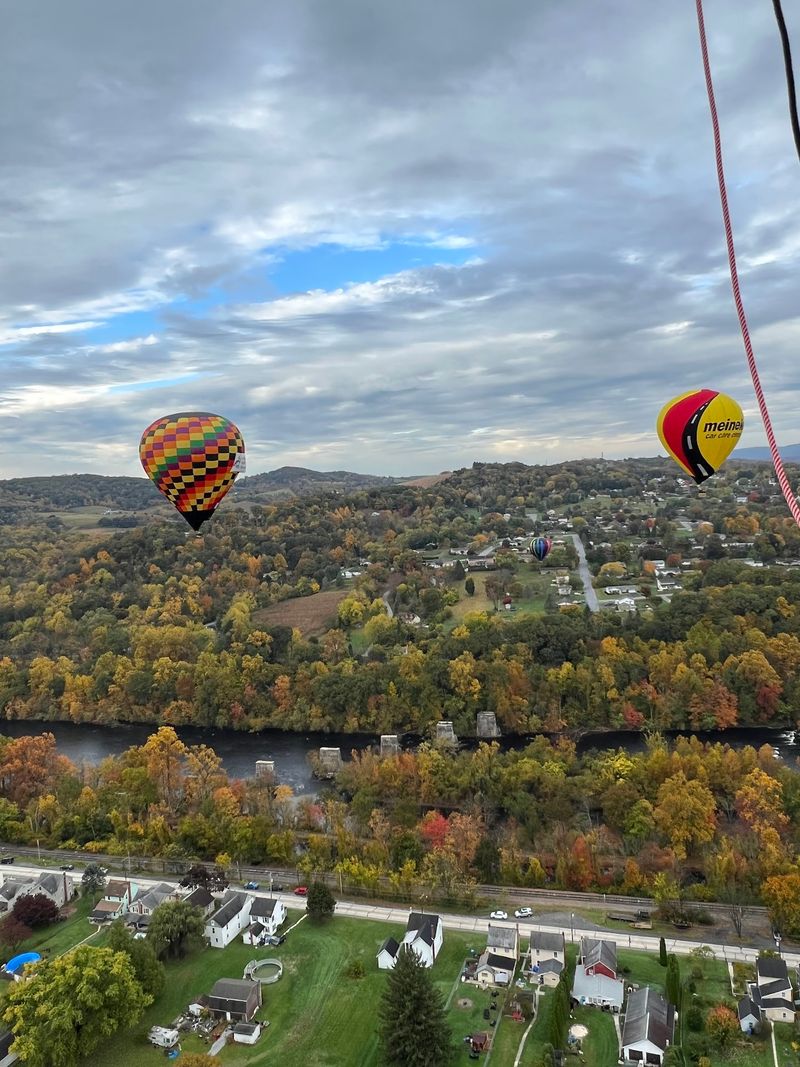
Ever wanted your feet off the ground without leaving the field? Tethered rides make that possible.
Ropes hold the balloon in place while it rises a short distance. Passengers get a few minutes up top and a fresh view of the whole festival.
Longer options sometimes appear too, including full passenger flights and helicopter rides. Availability changes and spots fill quickly.
Extra fees apply for all of these, separate from admission. Booking ahead is common, though capacity limits exist.
Wind decides everything. Rides pause or cancel when conditions turn, and that happens more often than most first-timers expect.
Ask staff directly about status rather than waiting on announcements. Lines can form early, and information travels unevenly across a big open field.
Height limits and age guidance may apply for younger riders. Check before queuing with small children.
Treat any aerial add-on as a bonus rather than the reason for the trip.
Plan the evening around the ground activities, then celebrate if a ride actually happens. That mindset saves a lot of disappointment.
Live Music Drifting Across The Grass
Guitars and drums fill the gaps between balloon activity. A stage anchors one end of the grounds, and bands play through the afternoon and evening.
Acts tend to be local and regional, covering familiar songs that keep crowds moving. Visitors regularly single out the music as a highlight.
Later in the night, a DJ often takes over to run sound alongside the light show.
Sound carries well across an open airfield. You can hear the set from most corners of the grounds while browsing vendors.
Some people set up chairs near the stage and stay put for hours. Others drift in and out between food stops.
Lineups change each year, so treat the schedule as a rough guide.
A field this size means dancing space is never a problem. Kids often claim the front area and turn it into their own party.
If loud music is not your thing, the far side of the field offers a quieter perch.
Either way, the soundtrack keeps the waiting hours from feeling long.
Food Trucks And Snack Stops
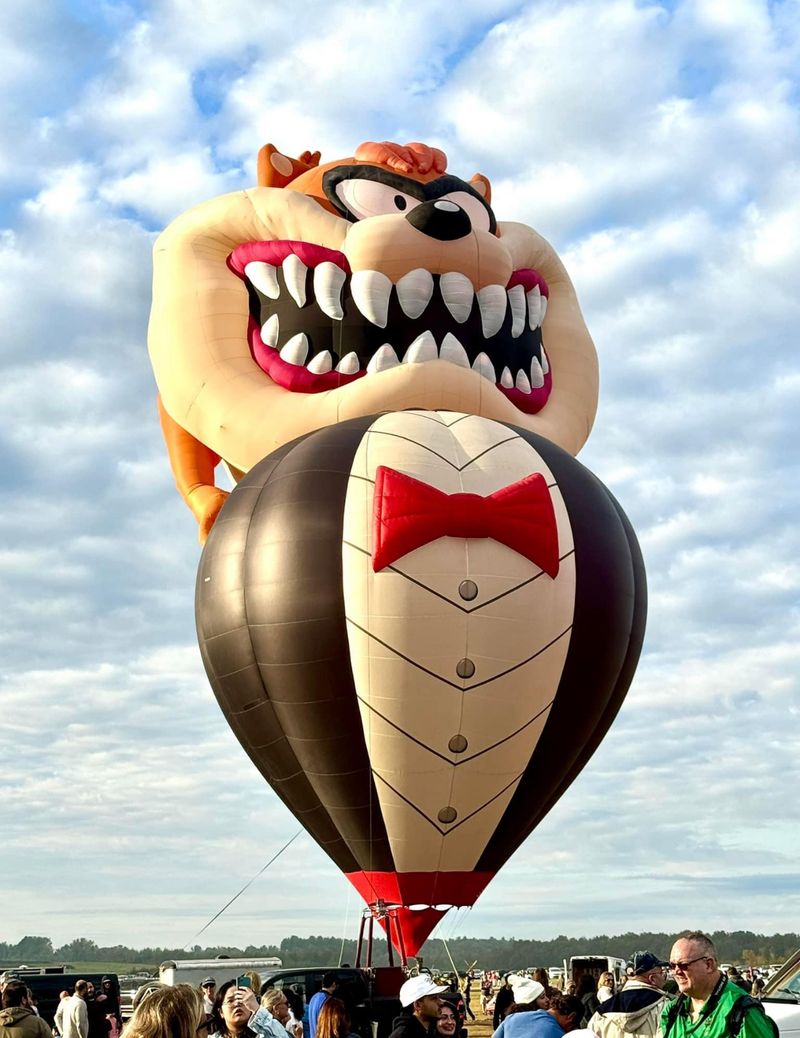
Hungry crowds keep the vendor row busy from gate opening onward. Trucks and tents line one edge of the field.
Expect familiar outdoor event fare plus a few specialty options. Menus rotate year to year depending on who signs up.
Opinions on value differ. Some visitors call prices fair, others find them steep, which is fairly typical for ticketed outdoor events.
Bringing water is a smart move on warm August evenings. Hydration matters when you are standing on an open field for hours.
Craft and merchandise sellers set up nearby, offering candy, snacks, toys and home goods. Browsing them fills the stretch before the glow begins.
Card payments are common now, but carrying a little cash removes any guesswork.
Seating is not provided, so plan to eat standing or bring your own chair.
Portable restrooms serve the grounds rather than permanent facilities.
Eat earlier rather than later if you want to avoid the pre-sunset rush, when nearly everyone lines up at once and the queues stretch across the grass.
Keeping Younger Visitors Busy
Bounce houses solve a lot of problems at an outdoor event. Kids burn energy while adults wait for the sky to fill.
Inflatable obstacle courses, small carnival rides and face painting have all appeared at past editions. Offerings shift from year to year.
Some attractions come included with admission, while others cost extra. Asking at the gate clears up which is which.
Roaming entertainers occasionally work the grounds, including jugglers who switch to glowing props after dark.
Younger children often find the balloons themselves the biggest thrill. Standing beside an inflated envelope is a memorable moment on its own.
Crowds thicken after sunset, so agree on a meeting point early. Open fields look identical in the dark.
Bring a light jacket for kids, because temperatures drop once the sun goes down over the ridge.
A flashlight or headlamp makes the walk back to the car easier.
Families make up much of the crowd here, and the atmosphere reflects that, relaxed, noisy in a good way, and easy to navigate with children in tow.
Why Weather Calls The Shots
Wind runs this show, not the schedule. Pilots make judgment calls based on gusts, ground speed and cloud conditions.
Balloons have no steering wheel. They drift with the air, which makes calm conditions essential for a safe launch and landing.
Midday heat creates unstable air, so activity concentrates in late afternoon and evening. Organizers have noted this directly when explaining timing.
Cancellations happen, and they can be frustrating for anyone who traveled far. Some visitors have arrived to find no balloons in the air at all.
Going in with realistic expectations changes the experience entirely. Treat flight as a possibility, not a promise.
Check forecasts before leaving home, paying attention to wind speed rather than just rain chances.
Following the festival’s official updates on the day helps, since plans can shift within hours.
Even without launches, crews may still inflate balloons on the ground, and the glow sometimes proceeds.
Safety decisions protect pilots, passengers and spectators alike, and no experienced crew will risk a hundred-foot aircraft in unpredictable air.
Packing Smart For An Evening On The Field
Chairs. Bring them.
That single tip appears in visitor comments more than any other.
General seating is not provided, and the grounds are essentially an open field. Blankets work too, especially for watching fireworks overhead.
Sunscreen matters in the late afternoon, since shade is scarce. Layers matter after dark, when the temperature dips.
Closed shoes handle uneven grass better than flip flops, particularly if recent rain has left soft patches.
Refillable water bottles cut down on cost and waste. Portable phone chargers help too, because cameras drain batteries fast.
Gates open in the late afternoon on event days. Arriving early gives you first pick of viewing spots.
Tickets can typically be bought ahead of time or at the gate, and parking is on site with its own fee.
Restroom facilities are portable units, so plan accordingly.
A small bag with wipes, snacks and a flashlight covers most situations.
Prepared visitors consistently report better evenings here, and the difference usually comes down to a folding chair and a jacket.
A Small Town Effort With Big Ambitions
Behind the lights sits a local story. The festival grew from a small community effort in Slatington rather than a corporate production.
Organizers have publicly described starting the event with family and friends, aiming to give the area something fun for kids and residents.
Growing pains have come with that. Parking flow, communication and crowd management have all drawn criticism over the years.
Feedback has prompted changes, including adjusted gate times so visitors are not waiting through the hottest, least flyable hours.
Special access nights for children with additional needs have also featured in past editions, offered free of charge.
Knowing the scale behind it shapes expectations. A volunteer-driven event will not run like a major state fair.
It also explains the friendly, informal tone across the grounds.
Pennsylvania has plenty of large festivals, but few grew out of a single household’s idea.
Supporting a homegrown event means accepting rough edges alongside real charm, and plenty of returning families seem happy with that trade.
Making The Most Of Your Trip There
Timing beats luck almost every time. Arriving in the late afternoon lands you on the field before the best hours begin.
Balloon activity, the glow, lasers and fireworks all cluster in the evening. Coming too early means a long wait with little to see.
Exiting takes patience. Cars funnel out through limited access points, and the line moves slowly once fireworks end.
Some visitors leave a few minutes early to beat that crush. Others simply relax, sit tight and let the field clear.
The drive itself is pleasant, winding through Lehigh County farmland with Blue Mountain rising nearby.
Combining the visit with a daytime stop elsewhere in the region makes the trip feel fuller. The Lehigh Gap and local rail trails sit within easy reach.
Confirm dates ahead of time, since the schedule can shift between seasons.
Go for the whole atmosphere rather than one guaranteed sight.
Balloons, music, fireworks and a summer night in Pennsylvania add up to an evening worth the drive, even when the wind has other plans.