
The Most Remote Lake In Nebraska Is A Quiet Hidden Gem For Nature Lovers And Outdoor Enthusiasts
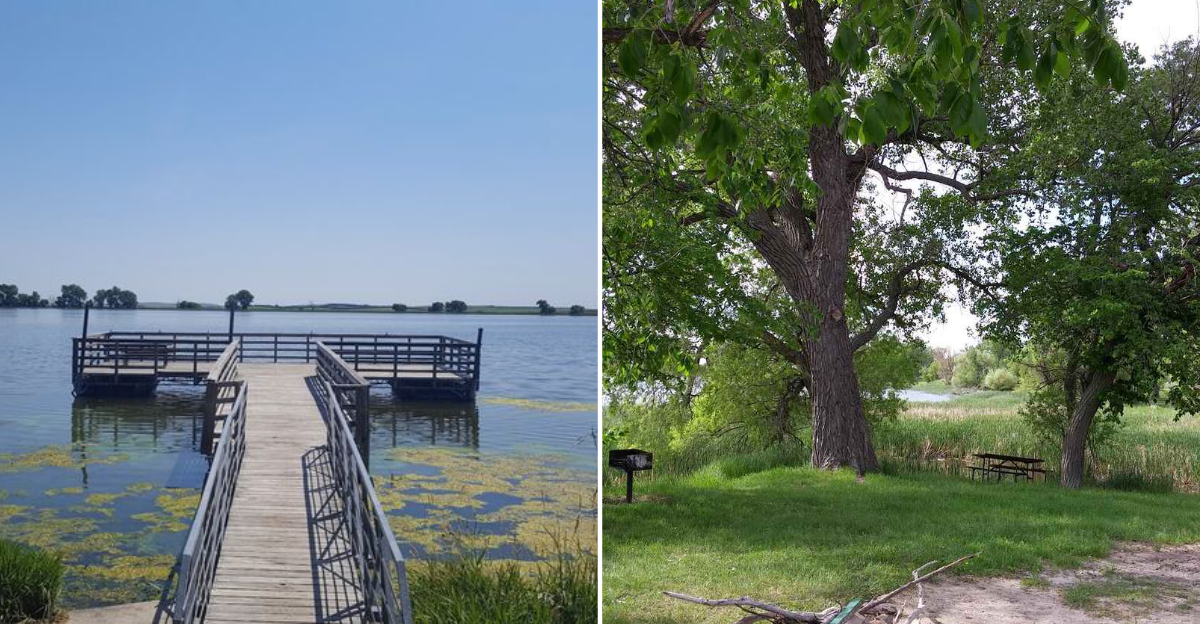
Nebraska rarely comes to mind when people think of peaceful lakes, but that’s exactly what defines this remote spot. Crowds stay light here, even during peak summer months when other lakes fill up fast.
The water stays calm enough for easy swimming without much competition for good spots. Locals know this lake well, appreciating the quiet more than convenience or nearby amenities.
Nothing about the setting feels commercialized despite its appeal among those who’ve found it. Regulars treat this lake almost like a personal retreat, returning often for the peace it offers.
Photography and wildlife watching add another reason to slow down here beyond just relaxing by the water. This lake proved that sometimes the most beautiful places require driving a little further to find.
Unique Wildlife Viewing Opportunities At The Remote Lake
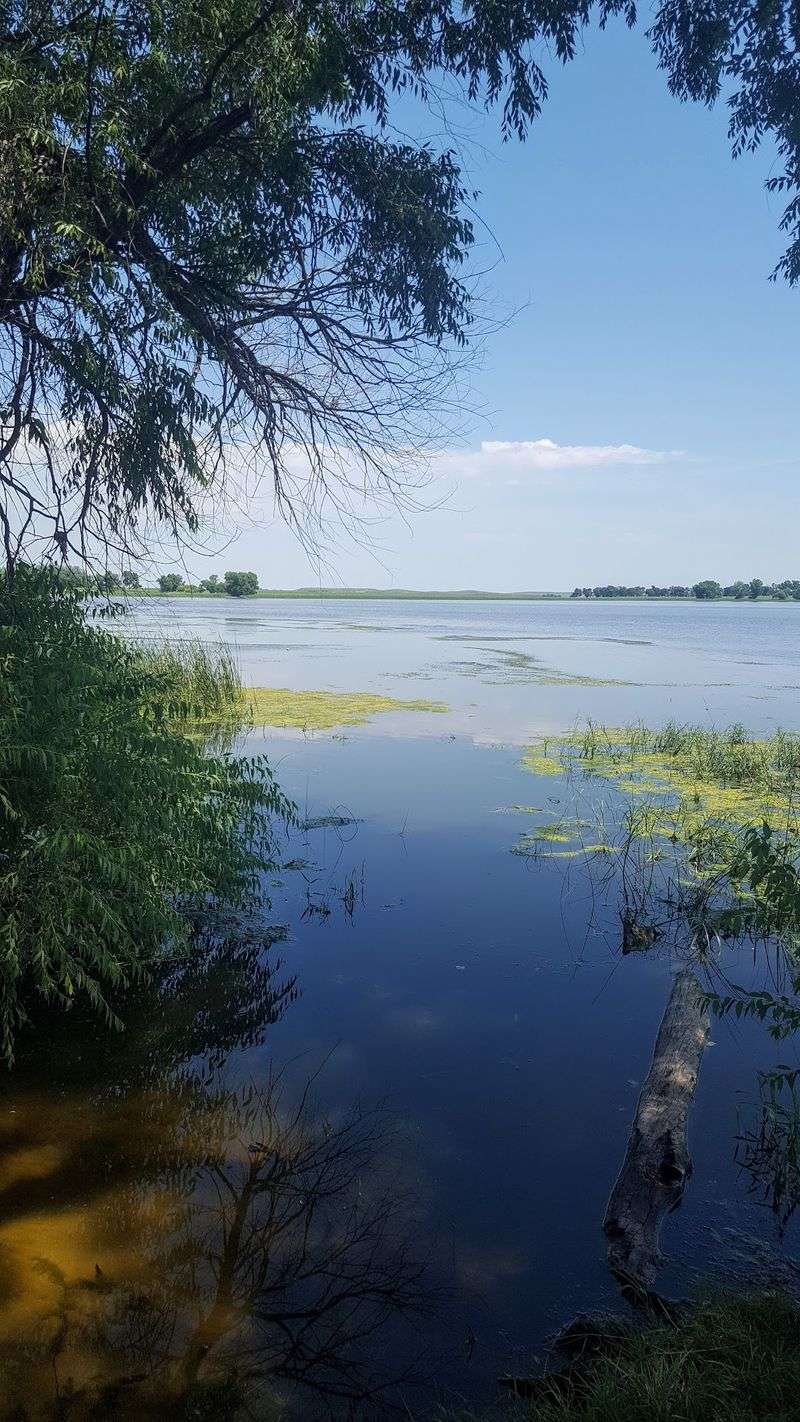
Great blue herons run the show here. They stand in the shallows like statues, then strike at yellow perch with a speed that seems physically unreasonable for a bird with those legs.
Walgren Lake sits where open prairie meets water, and that combination pulls in a steady rotation of animals.
The area is a recognized wildlife viewing location, so the odds of spotting something interesting are genuinely good rather than wishful thinking.
Evenings bring the coyotes. Their calls carry across the water once the light drops, and it is a sound that reminds you exactly how far from a city you are.
Then there is the monster. A creature was reportedly sighted in the 1920s, described as large enough to snack on waterfowl, and the legend never really lost.
Locals still bring it up, usually with a grin, and visitors still scan the water just in case.
Smaller creatures deserve attention too. Turtles sun themselves on logs, frogs get noisy near the reeds, and dragonflies patrol the shoreline all summer long.
Bring binoculars and patience, because wildlife here rewards people who sit still instead of stomping around. Early morning and the hour before sunset are the busiest stretches for animal activity.
Top Hiking Trails Surrounding The Quiet Hidden Gem
Nobody needs mountain-climbing gear out here. Walgren Lake State Recreation Area keeps its trails easy, flat, and friendly to anyone who just wants to move their legs and look at water.
The Shoreline Trail is the crowd favorite. It loops around the lake, hands you constant views, and doubles as a birdwatching route without asking much from your knees.
For something shorter, the Nature Trail acts as an interpretive walk through native grassland and lakeside habitat. It works well for kids who lose interest after twenty minutes, which is most kids.
Want a little more effort? The Prairie Loop brings moderate terrain and a stronger sense of the Sandhills landscape rolling out around you.
Grass, sky, more grass, and hardly a building in sight.
The Access Trail is the practical one, a short connector linking parking areas to different points along the water. Anglers use it constantly to reach favorite fishing spots.
Spring and fall are the sweet spots for walking here. Temperatures stay mild, the wildflowers show up, and summer bugs have not fully committed yet.
Pack water regardless of season, since shade comes and goes and the prairie sun does not negotiate. Sturdy shoes beat sandals when the ground gets uneven near the shoreline sections.
Fishing Techniques Suited For The Remote Lake Environment
Seven of the most mentioned words about this lake all circle back to one thing: fishing. The water holds largemouth bass, black crappie, white crappie, northern pike, channel catfish, yellow perch, walleye, bluegill, and black bullhead.
Panfish are the real strength here. Crappie and bluegill keep beginners busy and keep experienced anglers from getting bored between bigger bites.
Walleye hunters do well drifting or trolling crawler harnesses, meaning a snelled spinner paired with a crawler and either an inline sinker or a bottom bouncer. Keeping roughly a 45-degree line angle, just off the bottom, is the classic approach.
Jigging with minnows or leeches also produces, especially around submerged structure. Trolling crankbaits works through much of the open water season, and the first and last hours of daylight along the shoreline or over deeper water tend to be prime.
Rules matter. A state park permit is required for entry; anglers are limited to two lines with two hooks each, and culling or high-grading is not allowed.
Bag limits apply to specific species, including a fifteen-fish limit on black crappie. Check current regulations before casting, since they can shift year to year.
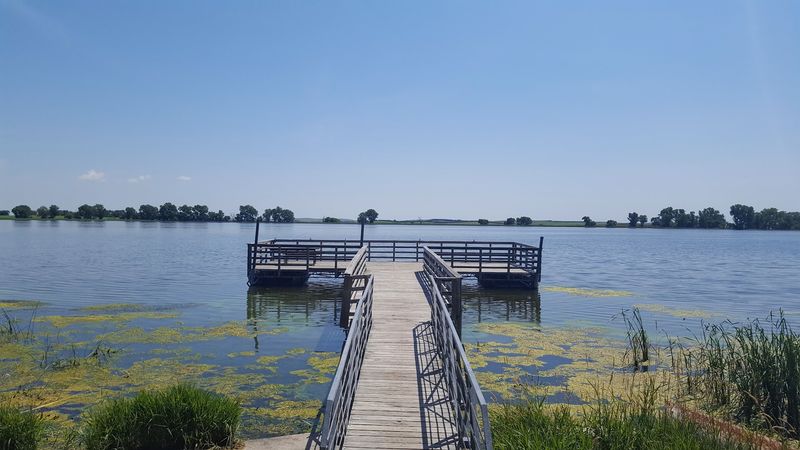
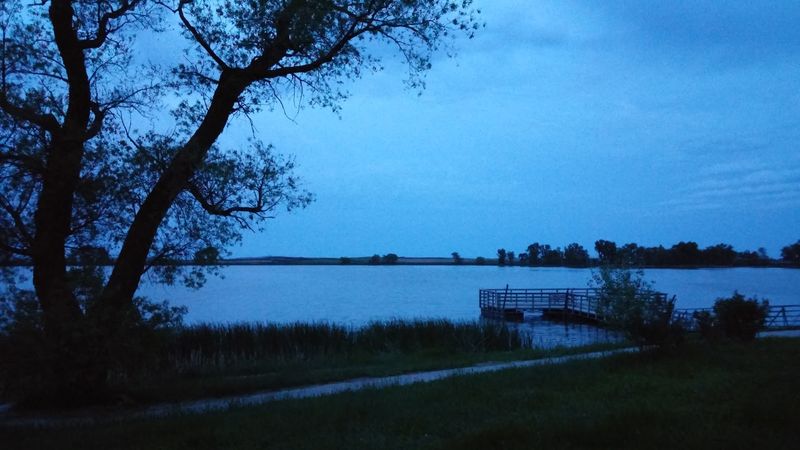
A handicapped-accessible fishing pier makes the water reachable for more people, which is a genuinely nice touch at a remote spot like this one.
Seasonal Birdwatching Highlights In The Nebraska Lake Area
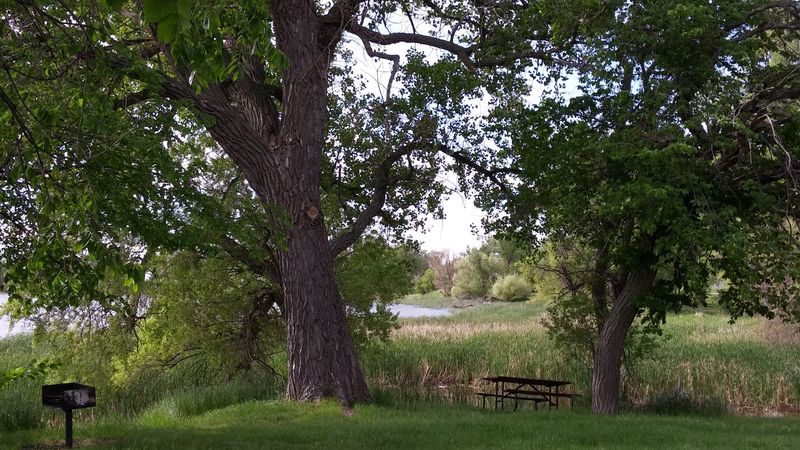
May is officially Bird Month in Nebraska, and the Sandhills take that seriously. Walgren Lake sits inside one of the better birding regions in the state, which explains why binoculars outnumber fishing rods on certain mornings.
Late spring through early fall is the prime window. Water levels, insect activity, and migration patterns all line up to make the shoreline busy with feathered traffic.
Great blue herons are the reliable headliner, stalking the shallows with that slow, deliberate walk. Beyond them, expect geese, assorted ducks, shorebirds, and wading birds working the edges.
The wider region regularly produces swans, white-faced ibis, curlews, avocets, grebes, and additional heron species. Not every visit delivers all of them, but the variety keeps a life list growing.
Events like the Nebraska Birding Bowl encourage people to log what they see, turning a quiet morning into a friendly competition. Plenty of visitors join without ever calling themselves serious birders.
Practical tip: arrive early and stay low-key. Birds scatter fast when someone marches down the bank talking loudly about breakfast.
A field guide or a bird ID app helps enormously, because prairie waterfowl can look frustratingly similar at a distance. Patience pays off more than fancy equipment ever will.
Best Camping Spots Near The Secluded Water Body
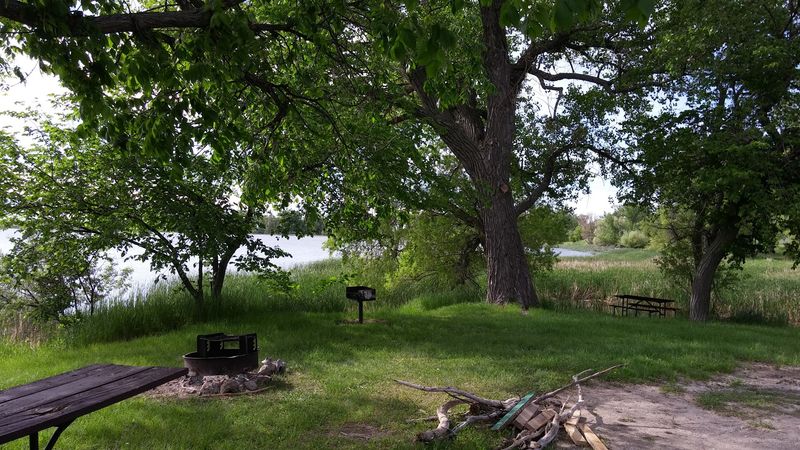
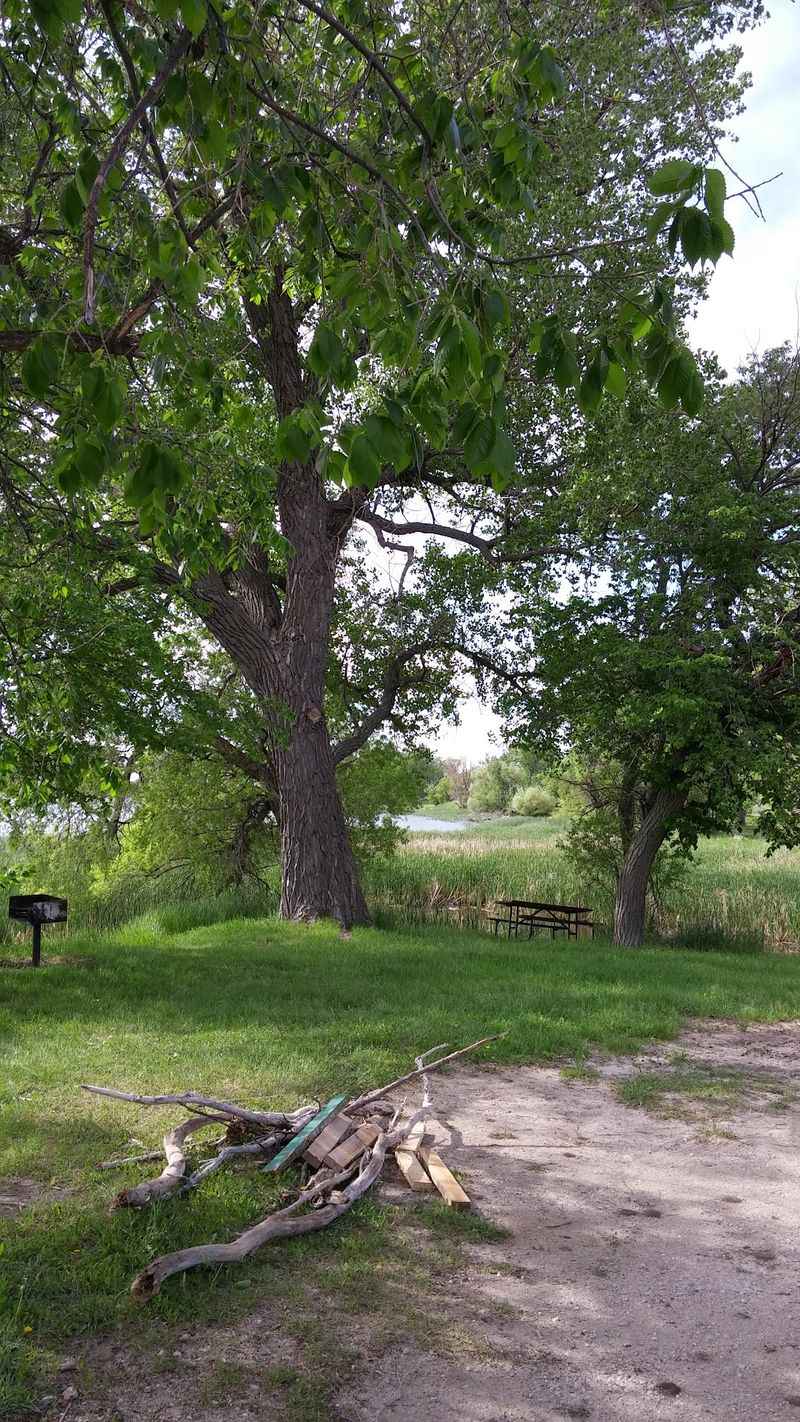
Forty primitive campsites sit under mature cottonwood trees, and those trees earn their keep once July heat rolls in. Shade out here is not a luxury; it is a survival strategy.
Amenities stay simple on purpose. Vault latrines and drinking water are available, and most sites come with fire rings for evening campfires under an absurdly large sky.
No electricity hookups exist, so plan for lanterns, headlamps, and charged power banks. Trash service is not provided either, meaning everything packed in needs to leave with you.
RV travelers can bring rigs up to fifty feet, though some sites have uneven ground. Leveling blocks belong on the packing list unless you enjoy sleeping at a slant.
Sites work on a first-come, first-served basis. Showing up earlier in the day improves your odds, especially on holiday weekends when word gets around.
Nights get genuinely quiet, broken mostly by coyotes tuning up somewhere out on the prairie. Some campers find that eerie; others find it the whole point of driving this far.
Late spring through early fall offers the most comfortable weather for overnight stays. Bring layers regardless, because Sandhills temperatures can swing hard between afternoon and 3 a.m.
Kayaking And Canoeing Experiences In The Remote Lake
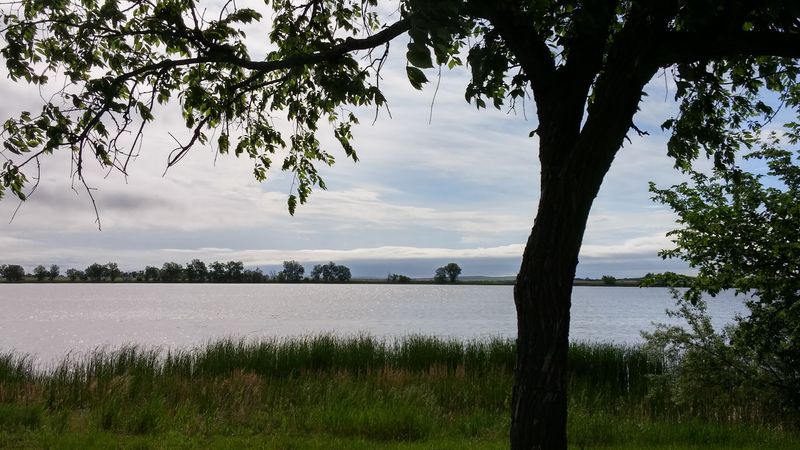
Fifty acres of calm water when the lake is full. That is small enough to feel manageable and big enough that paddling around the whole thing counts as an actual outing.
A five-mile-per-hour speed limit keeps things peaceful. No roaring engines, no wake tossing your canoe sideways, just flat water and the sound of your own paddle.
Boat ramps make launching straightforward, whether you brought a kayak, a canoe, or a small boat on a trailer. Setup takes minutes rather than a whole morning.
Families and first-time paddlers do especially well here. Sheltered water and short distances mean nobody ends up stranded across the lake regretting their life choices.
Water levels do fluctuate, and low water has been known to make boat launching tricky in certain seasons. Checking conditions before loading the roof rack saves a long drive and a longer sulk.
Early morning paddling is the move if you want glassy water and heron sightings at eye level. Wind tends to pick up as the afternoon wears on.
Life jackets are non-negotiable, even on friendly water like this. And yes, someone in your group will absolutely joke about the lake monster within the first ten minutes.
Photography Tips For Capturing Nature In Nebraska
Sunrises over this lake rarely disappoint. Still water plus a wide Sandhills horizon equals reflections that make even phone cameras look competent.
Golden hour on both ends of the day does the heavy lifting. Midday light flattens the prairie and washes out the grass, so plan shoots around dawn and dusk instead.
Seasons change the whole mood. Autumn brings warm color to the cottonwoods, while winter turns the shoreline into a spare, snowy study in white and gray.
Wildlife gives you moving subjects. Herons in flight, ducks landing, and prairie birds perched on grass stems all reward a longer lens and a steady hand.
Do not overlook the small stuff. Close-ups of wildflowers, seed heads, and frost-edged grass often turn out more memorable than another wide lake shot.
A tripod helps enormously at low light, especially for those pre-dawn reflection frames. Wind is the real enemy here, so weigh things down or shoot when the air settles.
Sunsets deserve equal attention, painting the sky in colors that feel exaggerated until you see them yourself. Stick around after the sun drops, because the best light often shows up ten minutes later.
Flora And Plant Life Around The Remote Nebraska Lake
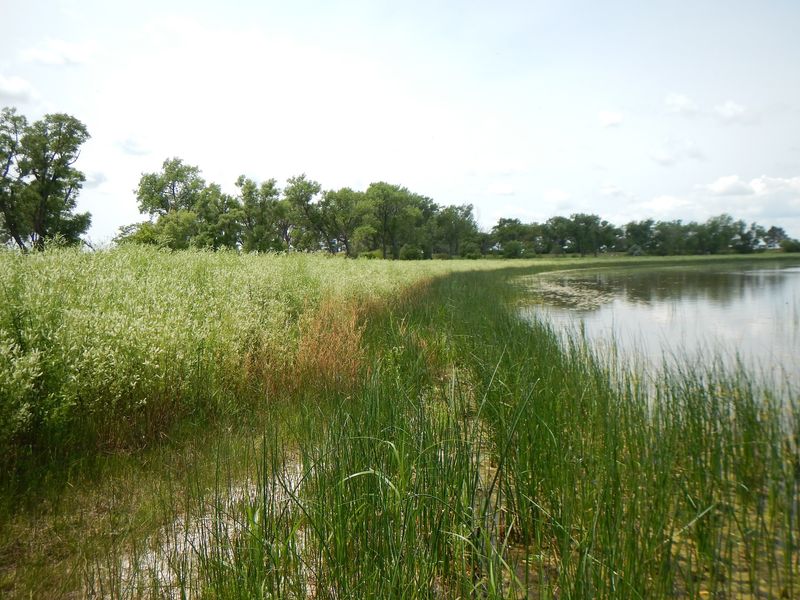
Here is a fun bit of history: this lake was once called Alkali Lake, a name that tells you plenty about its water chemistry. Higher alkaline content shapes what grows in and around it.
Mature cottonwoods dominate the camping areas, tall and shady and clearly there for the long haul. They are the closest thing the Sandhills have to a skyline.
Underwater, sago pondweed shows up regularly in alkaline Nebraska waters. Its fruits feed waterfowl, which partly explains all the duck traffic during migration.
Arrowheads and other emergent plants form colonies in the shallows. They provide cover for waterbirds and give the shoreline that soft, layered edge instead of a hard line.
Away from the water, native grasses take over. Little bluestem is a standout, shifting color through the season from blue-green to a rusty copper by fall.
Wildflowers scatter through the grassland for anyone paying attention. Dotted blazing star, Western wild rose, narrowleaf penstemon, blue lobelia, and white beardtongue all make appearances.
Stay on established paths where possible, since prairie plants recover slowly from trampling. Photographing rather than picking keeps the display intact for the next visitor who wanders through.