
These Spectacular Boardwalk Hikes In Mississippi That Are Perfect For Nature Lovers And Outdoor Adventures
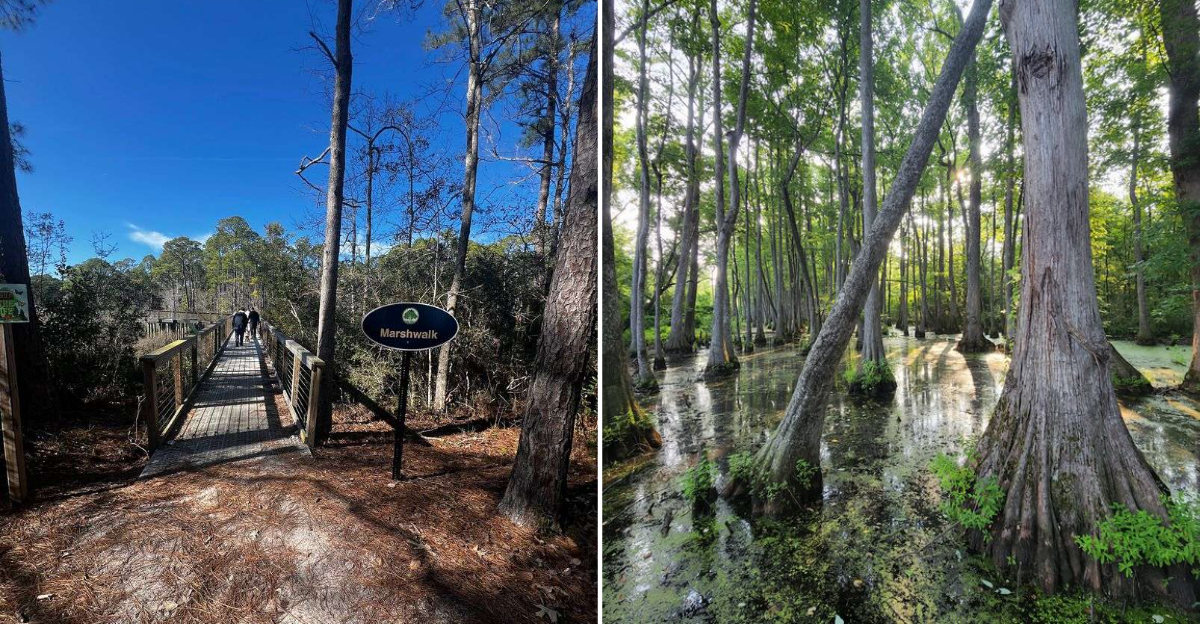
What stays with us in life are the pictures from our travels. That’s why every free moment should go toward building those memories, especially with someone to share them.
Mississippi holds a handful of scenic boardwalk trails winding through wetlands and forest. Wooden paths keep trails accessible without sacrificing the natural scenery around them.
Wildlife shows up regularly along these routes, adding another reason to slow down and pay attention. Nothing about these hikes feels overly difficult, making them suitable for hikers of most skill levels.
Photography opportunities exist around nearly every turn, especially where boardwalks cross open water. Families often turn these hikes into full day outings, exploring multiple trails in a single visit.
These boardwalk hikes proved that sometimes the best adventures require nothing more than sturdy shoes and curiosity.
1. Cypress Swamp
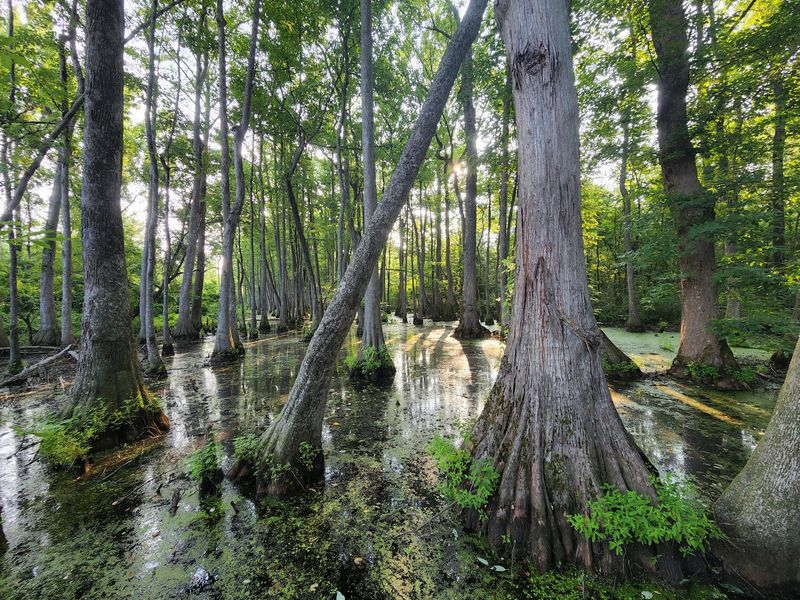
Milepost 122 on the Natchez Trace Parkway hides one of the most photographed half-mile walks in the state. The water sits so still it doubles every tree above it.
Bald cypress and water tupelo run the show here, and some of these trunks have been standing for centuries. A few stretch close to 120 feet tall, forming a leafy ceiling that filters sunlight into soft green patches.
The swamp itself has a backstory. Long ago the Pearl River flowed through this exact channel before shifting course and leaving behind the slow, dark water you see today.
Wildlife shows up without much effort on your part. Turtles line up on logs like they are waiting for a bus, wading birds pick through the shallows, and frogs provide an unpaid soundtrack.
Young alligators occasionally sun themselves near the edges. They are usually small and completely uninterested in hikers, but the boardwalk keeps a polite distance either way.
Interpretive signs along the path explain what you are looking at, which helps if you cannot tell a tupelo from a cypress. Kids tend to love the knobby cypress knees poking up out of the water.
Autumn changes the whole mood. The canopy turns rusty gold, the reflections get ridiculous, and camera phones come out nonstop.
Summer brings mosquitoes, so bug spray belongs in the car. Early morning visits are cooler, quieter, and far better for spotting birds.
The loop is short enough to finish in twenty minutes at a slow pace. That makes it a solid stretch-your-legs stop during a longer Parkway drive.
Hikers wanting more mileage can use this spot as a trailhead for the Yockanookany Section of the Natchez Trace National Scenic Trail. That route runs considerably longer and gets muddier.
Parking is right off the Parkway with no fee and no gate to worry about. The boardwalk surface stays flat the entire way, making it friendly for strollers and slower walkers alike.
Find it at Natchez Trace Pkwy, Canton, MS 39046.
2. Marshwalk Pier
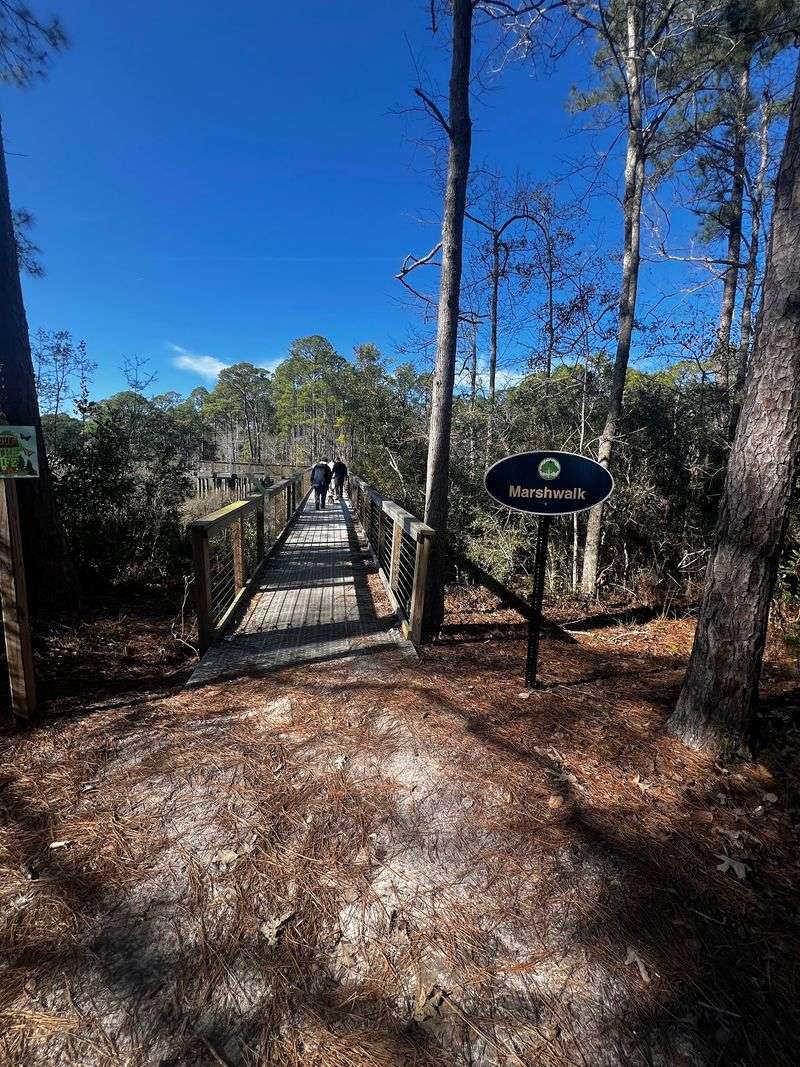
Opened in April 2021, this coastal boardwalk turned a quiet Gautier park into a destination. It runs somewhere between 1,005 and 1,100 feet, making it one of the longest structures of its kind around here.
Rather than shooting straight across the marsh, the pier zigzags. That design choice gives walkers constantly changing views of Lamotte Bayou and the grassy flats around it.
Interpretive panels break up the walk with information about marsh birds, sea grasses, crabs, shrimp, and yes, alligators. Reading them turns a fifteen-minute stroll into a decent nature lesson.
The decking deserves a mention because it is genuinely clever. Called Thruflow, it lets sunlight pass through to the water and vegetation underneath, so the plants below keep growing.
Marsh grass depends on that light. Traditional solid decking would have shaded out the very habitat people come here to admire.
Lighting runs along the structure too, which means evening walks are an actual option. Sunset over the bayou is the obvious draw, and the marsh gets noisy with insects and frogs afterward.
Fiddler crabs scurry across the mud in ridiculous numbers at low tide. Herons and egrets stalk the shallows nearby, seemingly unbothered by people twenty feet away.
The pier links two other hiking trails inside Shepard State Park, so a short walk can easily expand into a longer outing. The park also has campsites and picnic areas for anyone stretching the trip into a full day.
Binoculars pay off here. Distant birds along the far tree line are hard to identify with the naked eye.
Sun exposure is the main thing to plan around since there is almost no shade over open marsh. A hat and water bottle solve that problem quickly.
Wheelchairs and strollers roll along the flat surface without trouble. Photographers tend to show up in the last hour of daylight, when the grass turns copper, and the water goes glassy.
3. Tuxachanie Hiking Trail (West End Trailhead)
Twelve miles of trail sounds intimidating until you learn how flat it is. South Mississippi does not do steep, and hikers here benefit from that.
The main trailhead sits about 2.5 miles north of Saucier on the east side of US 49. Rows of live oaks planted back in 1935 greet arrivals, which is a pretty grand entrance for a forest path.
The first five miles, running from Highway 49 to Airey Campground, pack in an absurd amount of variety. Pine savannahs, swamps, creeks, ponds, and rare pitcher-plant bogs all appear along the way.
Those pitcher plants are carnivorous. They trap insects inside tube-shaped leaves, and bog sections along the trail are among the better places in the state to see them growing wild.
Roughly a mile in, a small beech-magnolia forest appears out of nowhere. The change in trees and light feels like walking into a different state entirely.
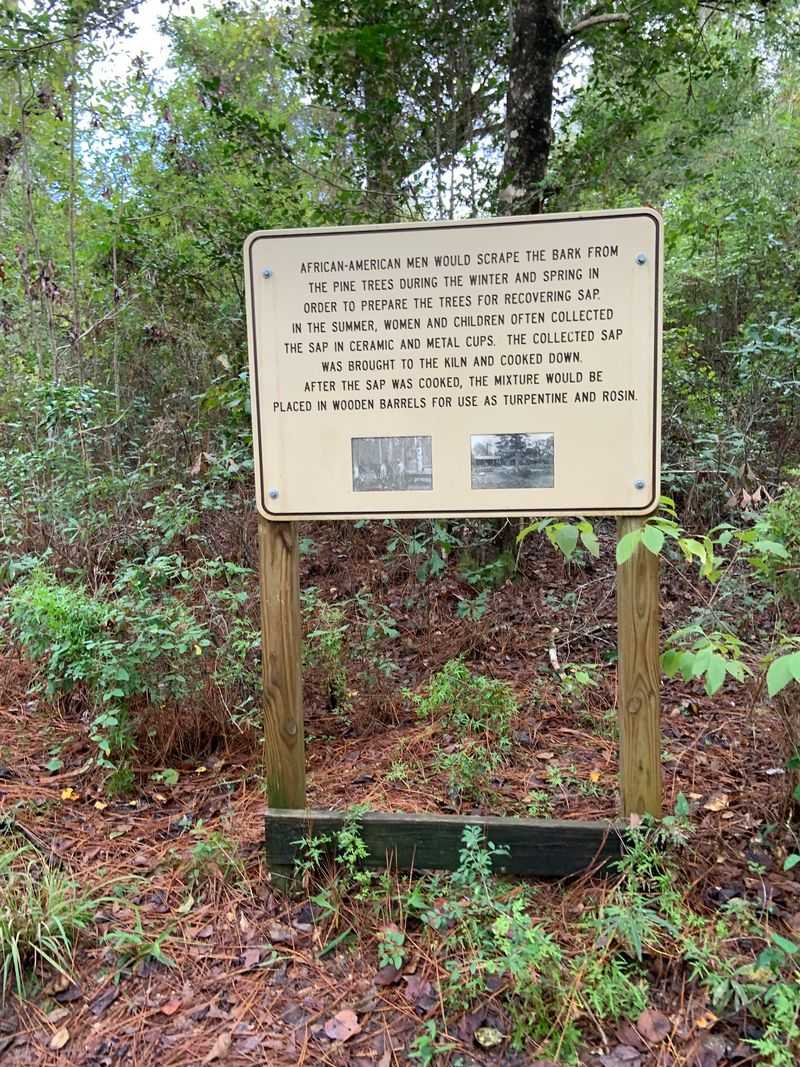
History runs underfoot too. Parts of the route follow an old logging railroad grade built by hand in the early 1900s, which explains why the path stays so level for so long.
Elevated wooden footbridges and boardwalks carry hikers over the soggy stretches. Without them, several sections would be a boot-sucking mess after rain.
Mid to late March is the showstopper season. Wild azaleas and yellow jessamine bloom along the corridor, adding pink and yellow to an otherwise green and brown palette.
Dogs are welcome, which makes this a favorite for hikers who refuse to leave the family retriever behind. Leashes still make sense given the wildlife around.
Out-and-back hiking works well since you control the turnaround point. Many people walk to the beech-magnolia grove and head back, logging about two easy miles.
Water is essential because there are no facilities along most of the route. Ticks are common in warmer months, so long socks earn their keep.
Visit it at 26204-26154 US-49, Saucier, MS 39574.
4. Clear Springs Nature Trail
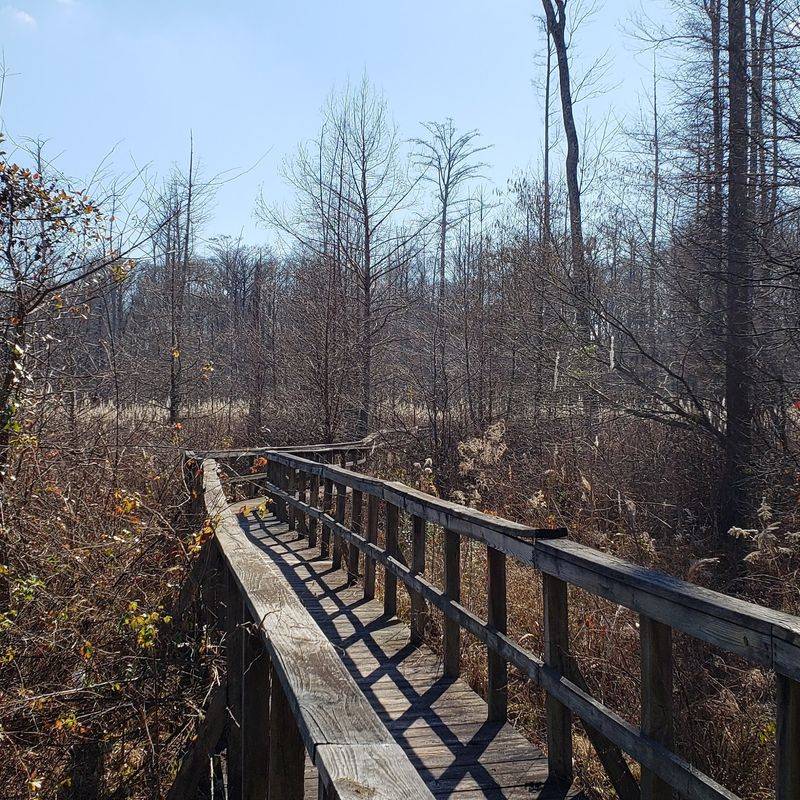
Short hikes get underrated. This 0.6-mile loop proves that a half-hour outside can still feel like a real escape.
The path threads through a cypress and tupelo gum bottomland swamp, one of the more photogenic wetland types in Mississippi. Water sits dark and quiet between the tree trunks.
River Road splits the trail into two halves with distinctly different personalities. The southern portion is mostly boardwalk, keeping feet dry and the swamp undisturbed.
Elevated decking does more than protect shoes. It keeps foot traffic off fragile wetland soil where plant roots and small creatures live.
Beavers are active in the area, and their chewed stumps give them away even when they stay hidden. Owls call from the surrounding woods, especially near dusk.
North of River Road, the terrain changes character. A few stairs and steeper sections appear, adding just enough effort to make the walk feel earned.
Families with young kids often stick to the boardwalk half and skip the climbs entirely. That works perfectly fine and still delivers the best swamp views.
The trail belongs to the Clear Springs Recreation Area, originally built by the Army Corps of Engineers. Recreation infrastructure around Sardis has a long history tied to the lake and dam projects nearby.
Spring brings green so vivid it looks filtered. Fall thins the canopy and opens up sight lines across the water.
Turtles, frogs, and wading birds show up regularly. Patience helps more than speed, so slowing down near the water usually pays off.
Sturdy shoes make sense if you plan to tackle the stairs on the northern half. Flip-flops will regret that decision.
The loop makes a natural add-on to a Sardis Lake day trip. Fishing, camping, and swimming areas sit close by, so the hike fits neatly into a bigger outdoor schedule.
Bug repellent belongs in your pocket from April through September. Swamps are wonderful and mosquitoes know it.
5. Lee Tartt Nature Preserve
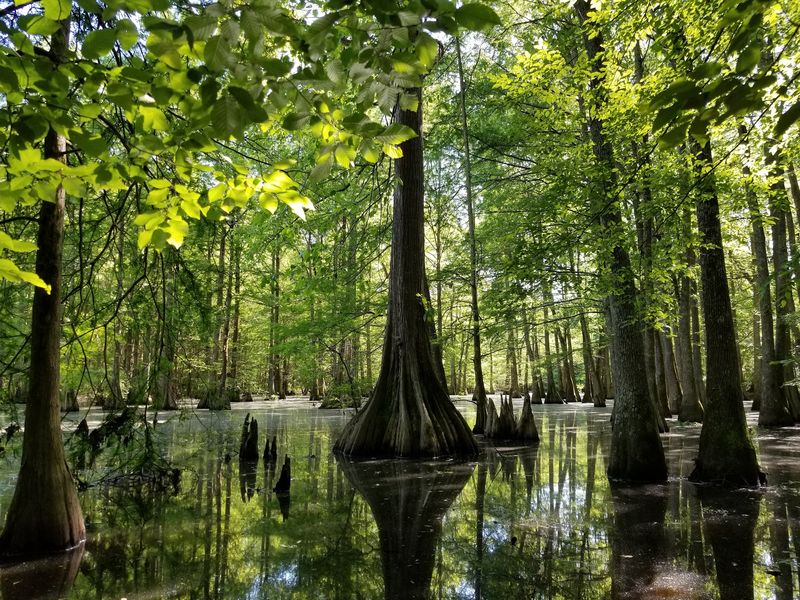
Three hundred acres of protected forest sitting inside a town is not something Mississippi hands out often. Grenada got lucky.
The preserve guards Chakchiuma Swamp, a bottomland hardwood forest laced with interconnected oxbow lakes. Those lakes formed when the Yalobusha River changed course and abandoned old bends.
Cut off from the main channel, the oxbows stay cool and unusually clear. Duckweed floats in bright green patches between bald cypress and water tupelo trunks.
Birders treat this place seriously. Prothonotary warblers flash yellow through the understory in summer, while summer tanagers and snowy egrets add red and white to the mix.
Migration seasons crank up the variety considerably. Spring mornings can produce a species list that surprises people who assumed north Mississippi was all farmland.
A boardwalk observation platform sits along the South Trail, lifting visitors above the swamp floor. The elevated view opens up sight lines across the water that ground-level paths cannot match.
Kayakers use the preserve too, paddling quietly among the cypress trunks. Gliding through a flooded forest ranks high on the list of things worth trying at least once.
Trail development and interpretive areas are still expanding, so the network keeps growing. That means repeat visits often reveal something new.
Being close to downtown Grenada makes logistics easy. Food and gas sit minutes away, which is not true of most swamps.
Morning light works best for photography since the water reflects the canopy before wind picks up. Afternoons get hot and buggy in summer.
Quiet matters here. Loud groups clear the birds out fast, while slow walkers get rewarded with woodpeckers and herons at close range.
Bring binoculars and something to swat with. The combination covers most situations.
The preserve doubles as an outdoor classroom for local schools, which speaks to how much natural variety is packed into one urban forest.
The address is 320 N Main St, Grenada, MS 38901.
6. Choctaw Lake
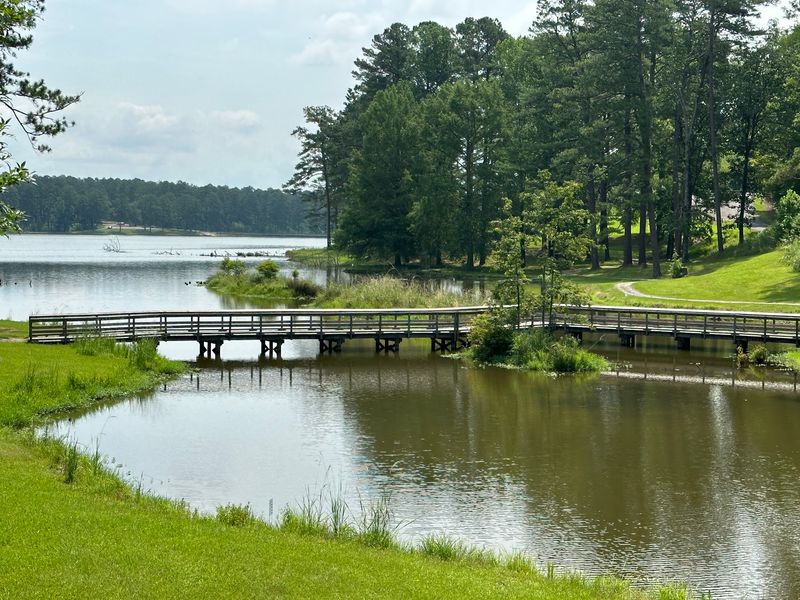
A hundred acres of calm water ringed by forest, with a trail that never makes you climb anything. That is the deal at Choctaw Lake.
The Lakeside Trail circles the entire reservoir over roughly 2.5 to 2.7 miles. Wide and flat the whole way, it works for casual walkers and runners alike.
Boardwalk sections carry the path right along and over parts of the shoreline. Those stretches put you close enough to the water to watch fish break the surface.
No-wake rules keep the lake quiet. Kayaks and canoes glide across without the roar of motorboats, which does wonders for wildlife viewing.
Woodpeckers hammer away in the hardwoods, and herons stake out the shallows. Turtles pile onto half-submerged logs whenever the sun cooperates.
Hikers wanting a harder workout can take a moderate three-mile trail leaving directly from the campground. It climbs a bit more and cuts deeper into the woods.
Ambitious visitors have the Noxubee Hills trail system nearby, adding roughly 26 more miles. Mountain bikers and horseback riders use those routes heavily.
Forest types shift as you move through the area, mixing hardwood, pine, and blended pine-hardwood stands. Each supports a slightly different cast of birds.
Camping, picnic tables, and a swimming area make this an easy full-day stop. Families often hike the loop in the morning and paddle in the afternoon.
Fall brings color to the hardwood sections and drops the humidity to bearable levels. Spring delivers wildflowers and a loud dawn chorus.
The flat loop suits strollers reasonably well, though a few spots get rooty. Nothing here requires serious gear.
Cell service can be spotty in the forest, so downloading a map beforehand is smart. A paper map from the campground host works just as well.
Sunrise over the lake is worth the early alarm, especially when mist hangs over the surface.
Find it at Forest Road 967, Ackerman, MS 39735.
7. Alligator Slough Nature Trail
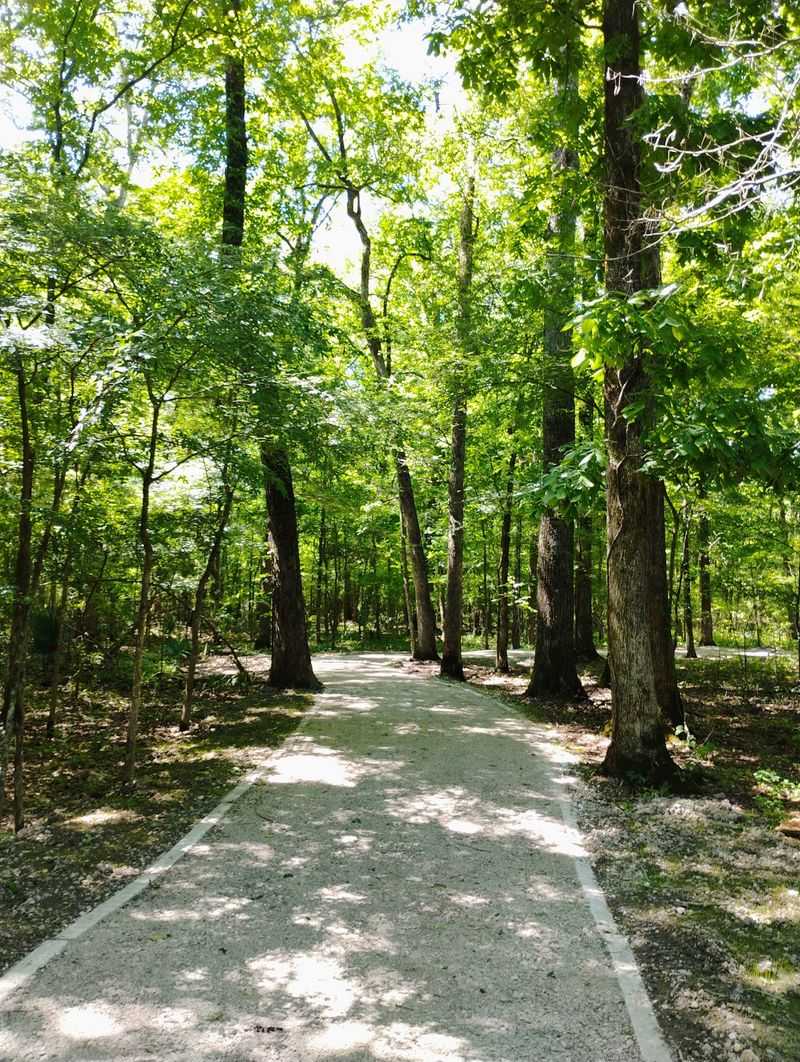
The name sets expectations, and the trail mostly delivers. Alligators do live here, though they keep their own schedule.
Located inside Hillside National Wildlife Refuge, the route is a doubletrack that pushes into a thick cypress swamp. Palmetto fronds crowd the edges, giving the whole place a jungly, prehistoric look.
A sturdy boardwalk handles the wettest stretches. Without it, this walk would involve wading, and nobody wants to wade in a swamp named after alligators.
Observation platforms give hikers places to stop and actually look around. Standing still for five minutes usually produces more wildlife than an hour of walking.
Red-headed woodpeckers work the timber with loud, unmistakable knocking. Cardinals flash red through the palmettos, and various reptiles sun themselves along the water.
Alligator sightings depend on temperature and luck. Warm afternoons improve the odds, and cool mornings usually mean the gators stay hidden.
Hillside is part of the Theodore Roosevelt National Wildlife Refuge Complex in the Mississippi Delta. The refuge protects bottomland hardwood habitat that once covered enormous stretches of this region.
Waterfowl numbers climb in winter when migrating ducks arrive. The scenery is barer then, but the birding gets excellent.
Summer visits mean heat, humidity, and mosquitoes with strong opinions. Long sleeves and repellent are not optional in July.
The trail keeps a wild feel without demanding much fitness. Terrain stays flat, and the boardwalk handles the tricky parts.
Bring water since there are no services out here. Facilities are minimal, and the nearest town is small.
Hunting seasons affect access on parts of the refuge, so checking regulations ahead of time avoids a wasted drive. Refuge websites post current dates.
Photographers love the light filtering through cypress and palmetto in the early morning. The mix of green undergrowth and gray trunks photographs beautifully.
For anyone wanting a Delta swamp experience without a boat, this is the accessible version.
Head to Alligator Slough Tra, Thornton, MS 39169.