
This Mississippi Ice Age Exhibit Lets Kids Stand Beside Animals That Vanished 10,000 Years Ago
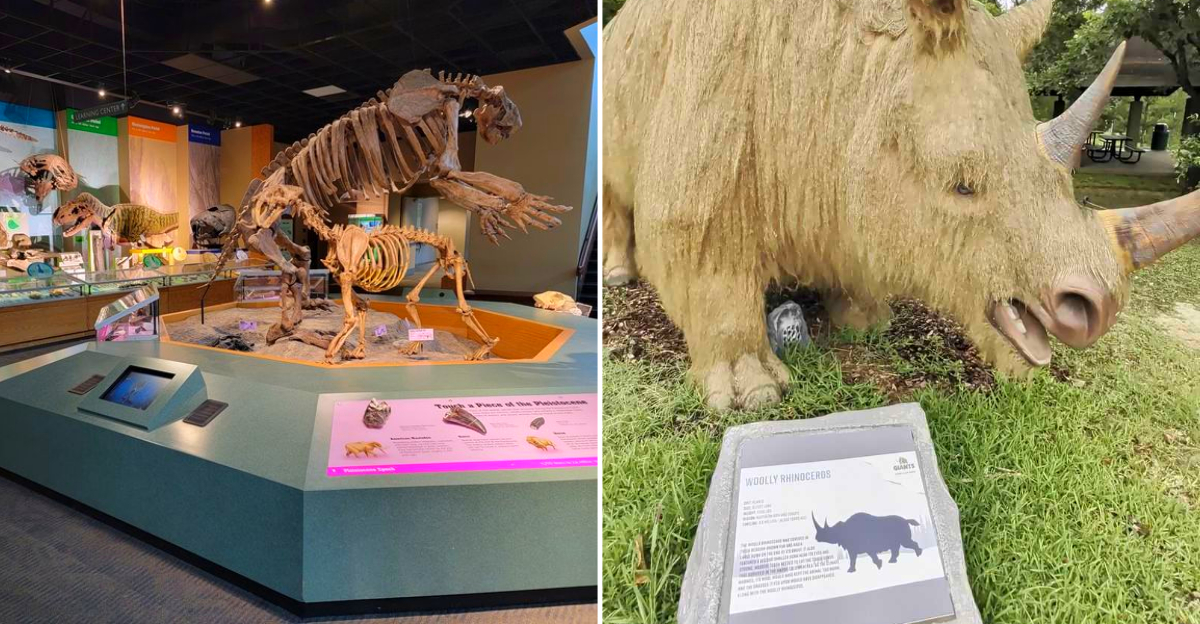
Bones are interesting. A giant animal that moves and growls right beside you is much harder to ignore. One traveling exhibit brings Ice Age creatures back at full size, with robotic bodies that breathe and react.
Mississippi gets wonderfully wild here. Kids can finally see how huge these animals really were instead of trying to guess from a skeleton behind glass.
The fun comes from scale more than anything else. Standing beside one of these creatures makes old history feel sudden and real. Parents get the facts, kids get the wow factor, and nobody has to pretend a dusty display case is thrilling.
The animals may belong to a world long gone, but the experience feels lively enough to keep young visitors looking twice.
A Prehistoric Roar Rolling Through A State Park
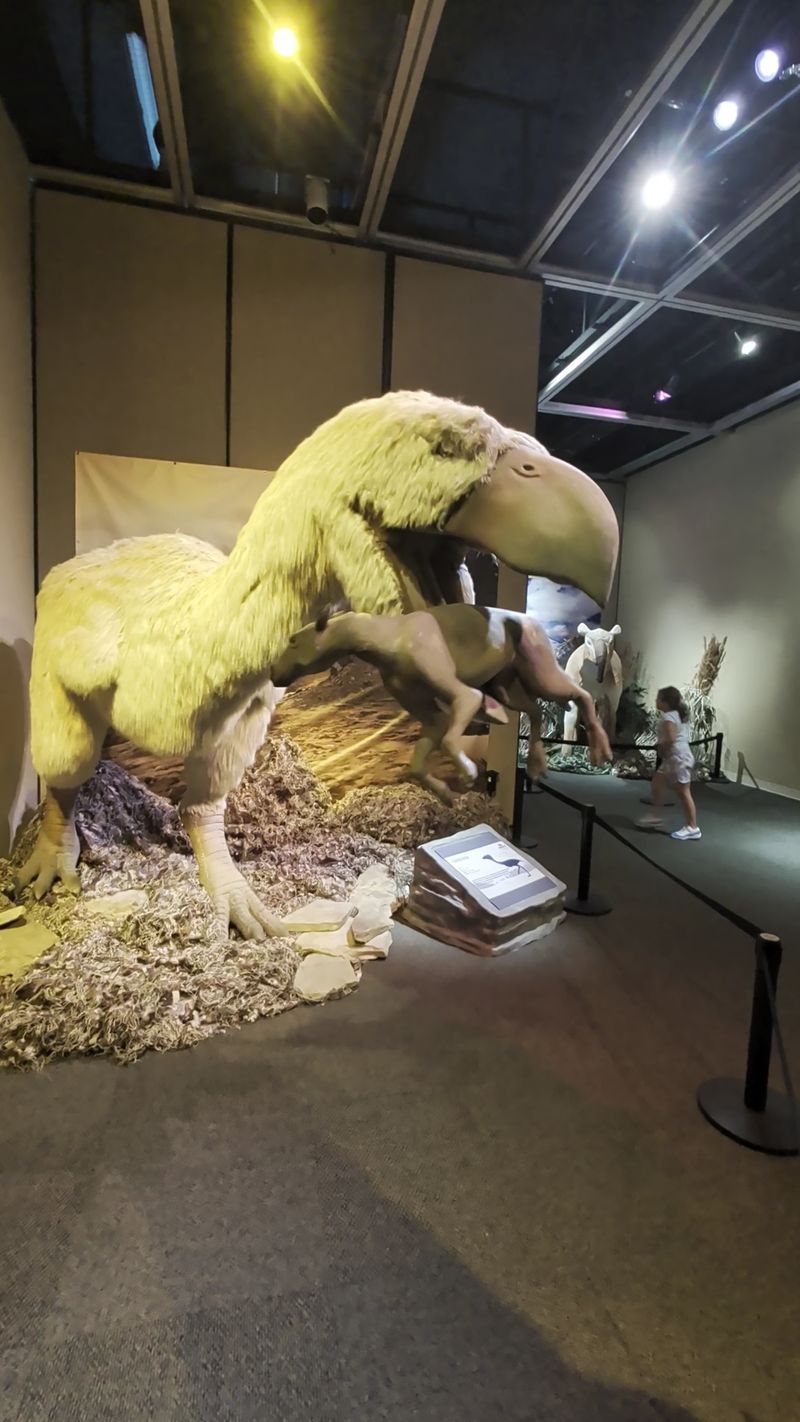
Sound reaches you before anything else does. Somewhere past the lobby, a low rumble rolls out, and children start walking faster without being told to.
What waits around the corner is a herd of animals that have not existed for about 10,000 years, rebuilt at full size and wired to move. Heads swing. Ribcages rise and fall like real breathing.
Eyes track slowly across the room.
The effect on kids is immediate and honest. A child who has flipped past mammoth pictures in a book suddenly understands scale in a way no page can teach.
Twelve creatures make up the roster, and each one was built with scientific accuracy in mind rather than movie drama. Fur texture, tusk curve, shoulder height, all of it follows the fossil record.
Adults tend to hang back at first, then quietly move closer. There is something humbling about standing beside an animal that once walked a colder version of this planet.
Mississippi is not the first place people expect an Ice Age reunion. That surprise is exactly what makes the visit stick.
Where To Find The Mississippi Museum Of Natural Science

Riverside Drive carries you past oaks and water before the building shows itself. The Mississippi Museum of Natural Science sits at 2148 Riverside Drive in Jackson, MS 39202, inside LeFleur’s Bluff State Park.
Parking is generous, which matters when a school bus and three minivans arrive at once. The approach feels more like a park visit than a museum errand, and that sets a good mood for everyone.
Inside, the facility spreads across 73,000 square feet with a 300-acre natural area wrapped around it. That is a lot of room for giants to stretch out.
The museum began its work in 1932 and was formally established the following year, so it has been telling Mississippi’s natural story for a very long time. It moved to this park setting around the year 2000.
Operations fall under the Mississippi Department of Wildlife, Fisheries and Parks. Staff know the collections well and answer questions without rushing anyone along.
Give yourself a full morning at minimum. Between the animatronics, the aquariums, and the trails, a quick stop turns into a long, happy afternoon.
Meet The Short Faced Bear, A True Heavyweight
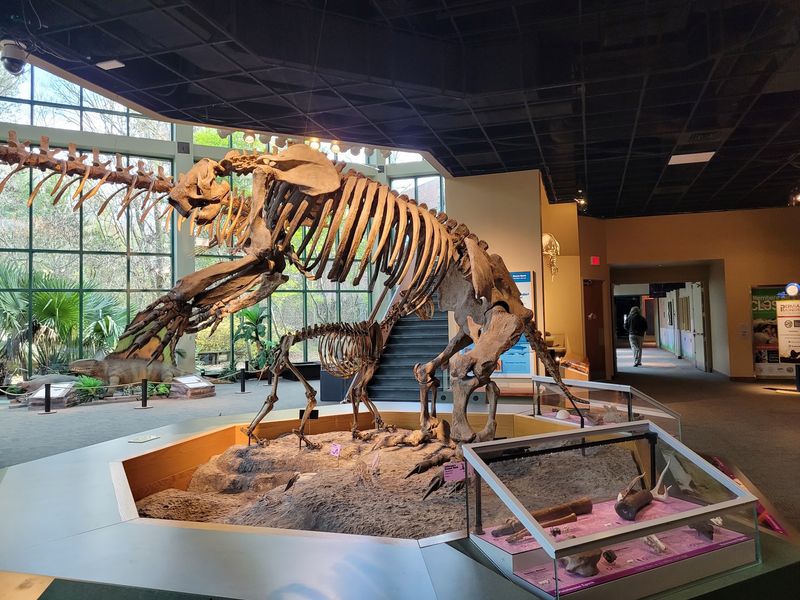
Bears usually feel familiar. This one does not.
The short-faced bear had long legs, a broad chest, and a muzzle that sat closer to its face than a modern grizzly’s. Standing upright, it towered well above any person in the room.
Its build suggests speed rather than lumbering. Scientists think those legs helped it cover open ground efficiently across ancient North America.
Kids often react to it more strongly than the mammoth. Something about a bear reaching that height makes the Ice Age feel less like a cartoon and more like a real, wild place.
The robotics give it a slow head sway and a rumbling growl. Younger visitors sometimes take one step back, then immediately step forward again to look harder.
Interpretive panels nearby explain what it likely ate and how it shared territory with other large predators. The information is written plainly enough for elementary readers.
Bring curious questions with you. Museum staff genuinely enjoy explaining how researchers figure out an animal’s diet from tooth wear and bone chemistry.
It is a memorable stop and a fine lesson in respect for size.
Dire Wolves Step Out Of Legend And Into The Room
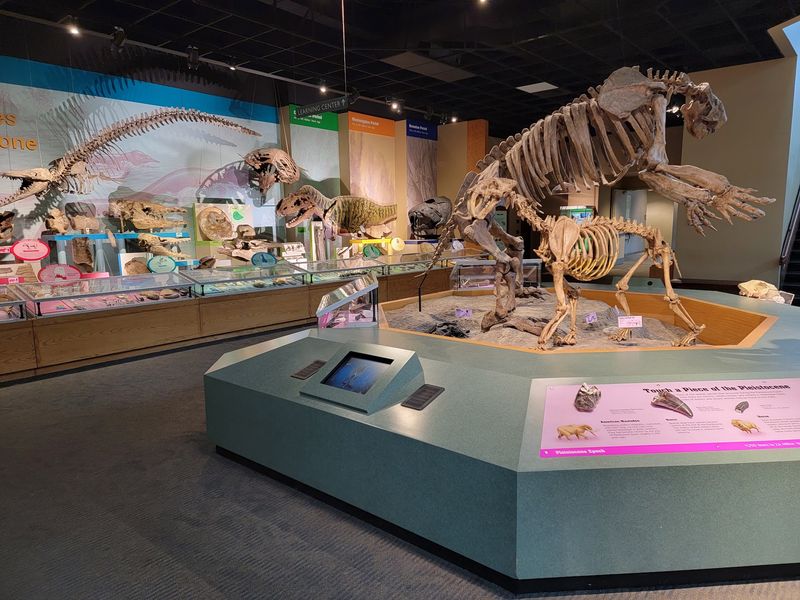
Pop culture borrowed this animal and never gave it back. The dire wolf has starred in television and games, but the real creature deserves the spotlight more than any fictional version.
Heavier than a gray wolf and built with stronger jaws, it hunted large prey across the Americas. Fossil sites have produced thousands of dire wolf remains, making it one of the better documented Ice Age predators.
The animatronic version holds a low, alert posture. Its head turns, its ribs move, and the growl carries just far enough to catch attention from across the hall.
Teenagers who arrived acting too cool for a museum tend to soften right here. Recognition does that.
A neat detail worth pointing out to kids is the skull shape. Dire wolves had broader heads and more powerful bite force than wolves living today.
Research published in recent years also showed they were not simply larger gray wolves but a separate lineage entirely. That kind of scientific plot twist makes for great car ride conversation.
Spend a minute reading the panel. The story behind the science is worth it.
Woolly Rhinoceros Brings The Horn Power
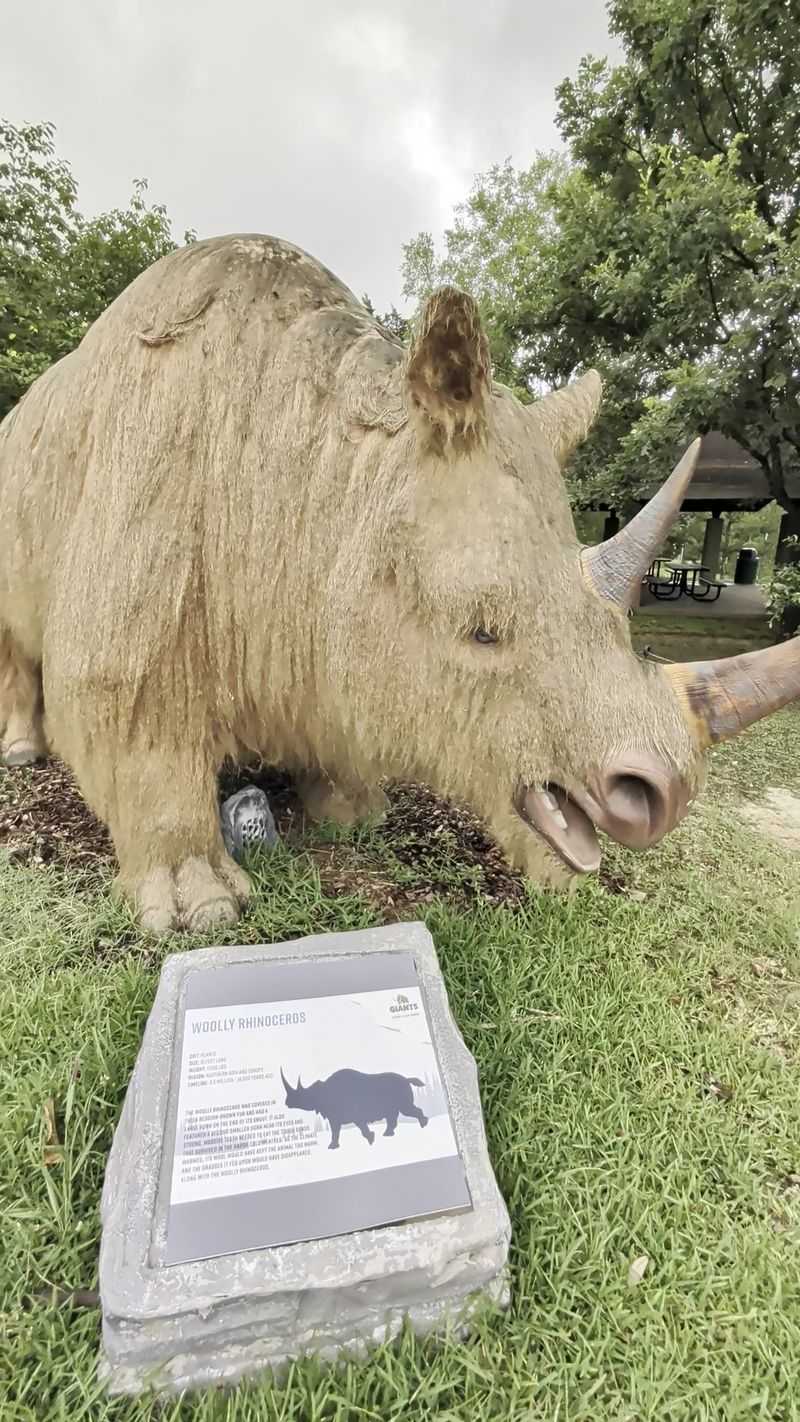
Rhinos already look prehistoric. Add a heavy winter coat and a horn longer than a baseball bat, and you get something remarkable.
The woolly rhinoceros roamed cold northern regions and used that front horn to sweep snow off buried vegetation. Practical tool, impressive weapon, all in one.
Its coat hangs thick and coarse in the model here, and the shoulder hump gives it a stocky, low-slung look. The animatronic shifts its weight and lets out a snort that surprises first-time visitors.
Children like this one because it seems both familiar and completely strange. They know what a rhino is, then they see the fur and the wheels start turning.
Cave paintings in Europe show this exact animal, drawn by people who watched it walk past. Ancient artists captured the hump and the horn with real accuracy.
That connection between prehistoric art and modern robotics is a fun thing to mention out loud. It shows how humans have always wanted to record what they saw.
Take your time. The details on this build reward a slow look.
Macrauchenia And The Irish Elk Round Out The Herd
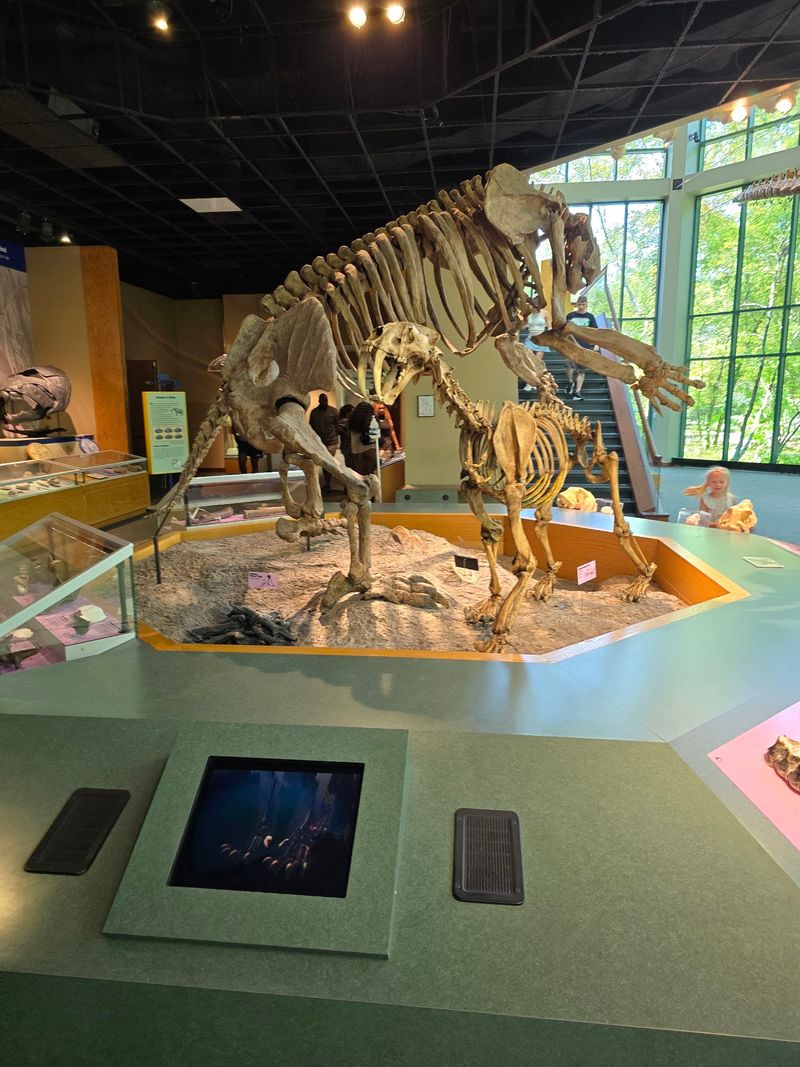
Two of the strangest silhouettes in the exhibit share this corner of the story. Macrauchenia had a camel-like body, a long neck, and a nose structure that scientists still debate.
Some reconstructions give it a short trunk. Others suggest a flexible snout used for grabbing leaves.
Nearby, the Irish elk carries antlers that spread up to twelve feet across. That headgear ranks among the largest ever grown by any deer.
Kids do a double take at the antler width. Stretch both arms out and you still fall short by several feet.
Despite its name, the Irish elk was neither exclusively Irish nor technically an elk. It ranged widely across Europe and Asia, and many well-preserved specimens came from Irish peat bogs, which is how the misleading name stuck.
Macrauchenia lived in South America and had nostrils set high on its skull. That detail alone has fueled decades of scientific back and forth.
Both animals make the point beautifully. The Ice Age produced shapes that no modern zoo can match, and seeing them at full size beats any illustration.
Indoor Halls And Outdoor Paths Both Hold Surprises
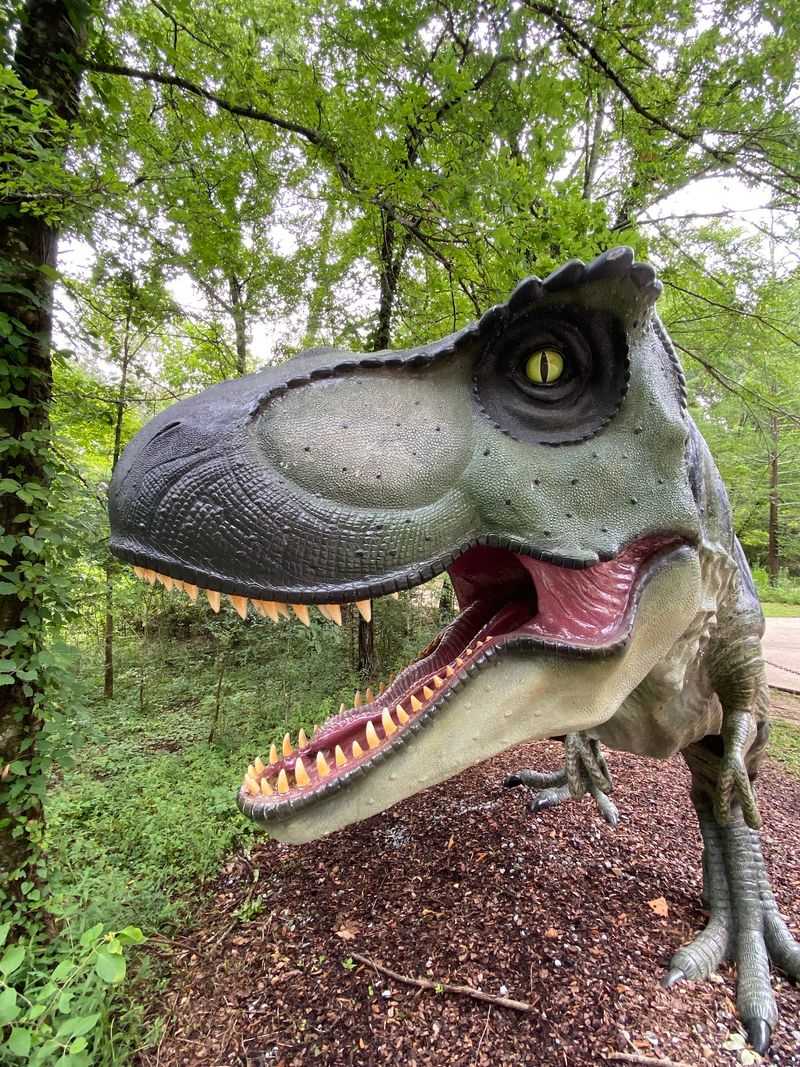
Half the fun happens outside the building. The Giants of the Ice Age display extends into outdoor areas, so the adventure continues past the exit doors.
Trails wind through the park for about two and a half miles, crossing boardwalks and cypress swamp before reaching the Pearl River. Kids burn energy while parents catch their breath.
The museum also keeps life-sized prehistoric figures along an outdoor trail, which turns a simple walk into a scavenger hunt. Nobody complains about hiking when there are creatures to find.
Bring bug spray during warm months. The swamp is beautiful and the mosquitoes agree.
Comfortable shoes matter more than you think. Trail surfaces vary, and a few loops involve gentle climbs.
Weather plays a role in how much outdoor time makes sense. Cooler seasons in Mississippi make the full loop far more pleasant for younger legs.
Plan the indoor portion first, then head outside. The contrast between robotic giants and living cypress trees gives the whole visit a satisfying rhythm.
Trails close before the museum does, so check posted return times at the trailhead.
Timing Your Visit Before The Giants Head Home
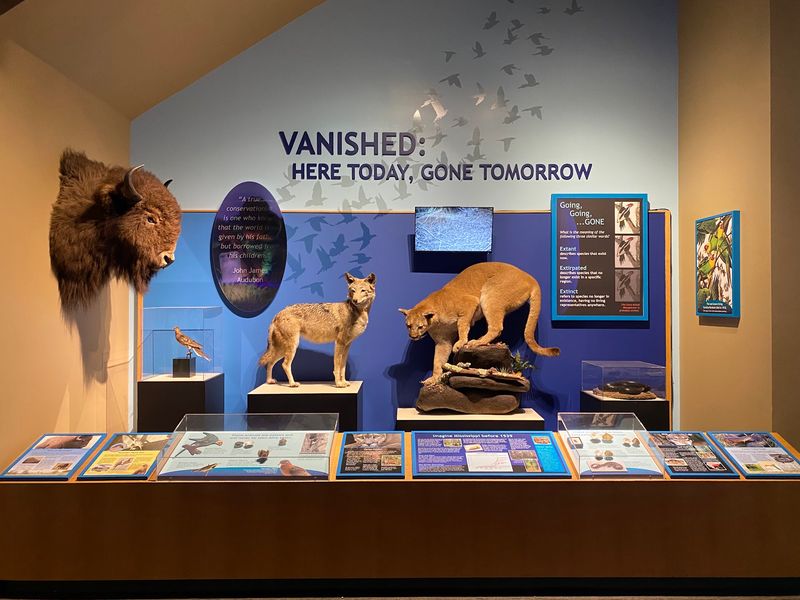
Traveling exhibits do exactly that. They travel.
Giants of the Ice Age opened on January 31, 2026 and wraps up on August 23, 2026. After that, the herd moves on to another city.
Admission to the exhibit comes included with regular museum entry, so there is no separate ticket to sort out. That is a rare and welcome arrangement for families watching a budget.
Hours run Monday through Friday from 8:00 AM to 5:00 PM, Saturday from 9:00 AM to 5:00 PM, and Sunday from 1:00 PM to 5:00 PM. Major holidays bring closures, so plan around those.
Mornings tend to be quieter, especially on weekdays before school groups arrive. Weekend afternoons draw bigger crowds.
The exhibit came from Dino Don, Inc., a company known for building scientifically grounded animatronics for museums and studios. That pedigree shows in the craftsmanship.
Set aside two to three hours for everything. Between the giants, the 100,000-gallon aquarium network, and the greenhouse swamp, rushing would be a shame.
Go while the mammoths are still in town.