
8 Scenic Mississippi Day Trips Under Two Hours With Walkable Towns And Plenty To Explore
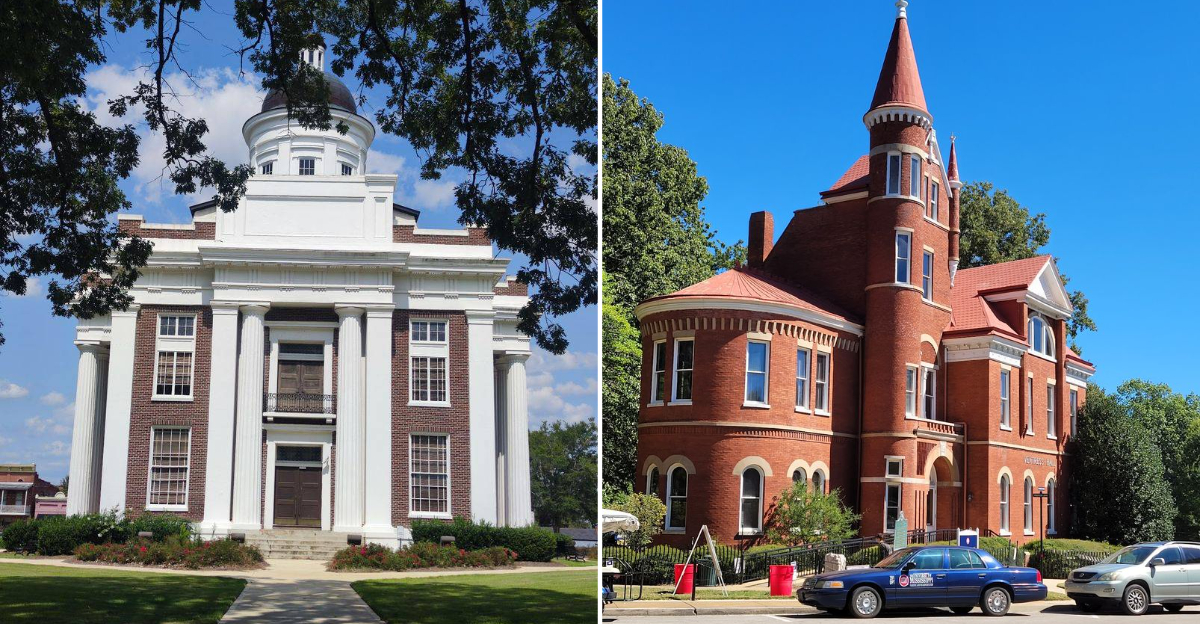
Vacation days and time off are the perfect opportunity to explore these Mississippi towns. Each destination sits within two hours, close enough for an easy day trip without much planning.
Streets stay walkable enough that a single stop covers most of what each town has to offer. Restaurants, shops, and scenic spots all sit within easy reach of each other.
Nothing about these towns feels rushed or overwhelming for a short visit. Families especially benefit from the walkability, moving between stops without needing the car constantly.
Regulars know which towns pair well for a combined trip covering more ground. These day trips proved that sometimes the best adventures don’t require going very far at all.
1. Vicksburg
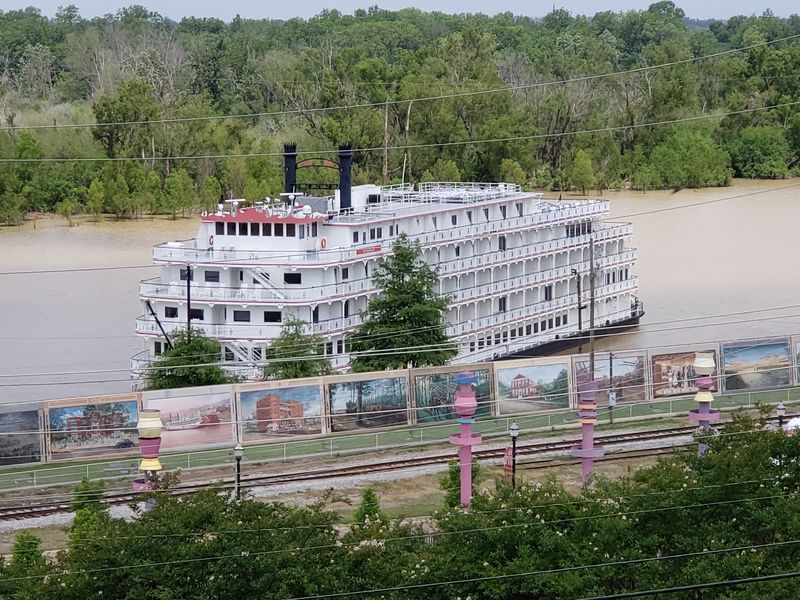
Few towns in Mississippi make gravity part of the experience. Vicksburg sits on bluffs high above the Mississippi River, and its downtown streets tilt in ways that surprise first-time walkers.
Washington Street has been the commercial spine since the 1830s. Storefronts, galleries, and coffee shops line the stretch, and the whole thing is short enough to cover on foot without hunting for a second parking spot.
The floodwall along Levee Street doubles as an outdoor gallery. Painted murals stretch panel after panel, walking through steamboat days, floods, and the people who shaped the city.
Then there is the siege. For 47 days in 1863, Vicksburg held out, and the Vicksburg National Military Park preserves what happened here with more than 1,400 monuments spread across miles of driving routes.
Reconstructed trenches still cut through the hillsides. The USS Cairo, a Union gunboat pulled from the mud of the Yazoo River, sits under a canopy beside its museum, hull ribs exposed like a whale skeleton.
Here is the fun twist in the town’s resume. Coca-Cola was first bottled in Vicksburg, and the Biedenharn Coca-Cola Museum tells that whole story in the building where it happened.
History buffs get more options than one day allows. The Old Court House Museum, the Catfish Row Museum, and tour homes like McRaven and Anchuca Mansion each pull from a different corner of the city’s past.
Catfish Row leans into art, music, and Delta culture rather than battles, which makes it a nice palate cleanser after a morning of cannons. Kids tend to gravitate there.
Sunset over the river from the bluffs is the unofficial closing act. Bring a camera and expect to stay longer than planned.
2. Canton
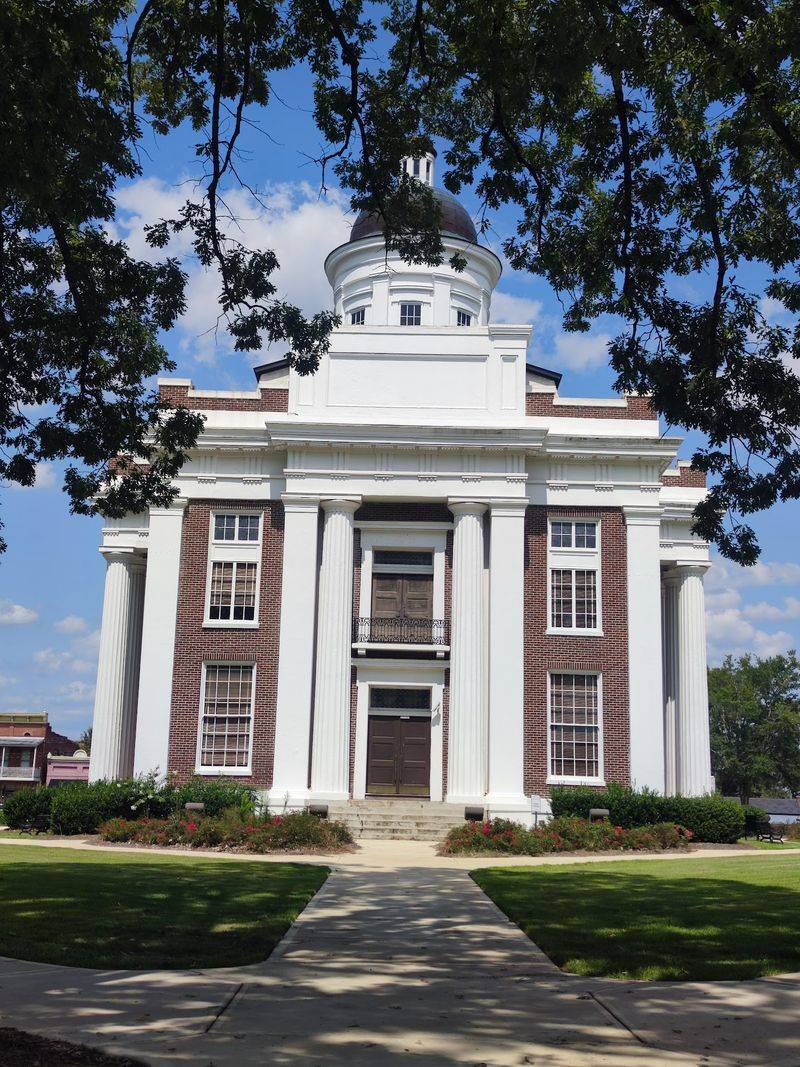
Hollywood found Canton before most Mississippians did. Films like My Dog Skip and O Brother, Where Art Thou? used these streets as scenery, making the square look familiar even to first-time visitors.
At the center stands a Greek Revival courthouse from 1855, framed by oaks that have watched a lot of history roll past. Brick storefronts wrap the square on all four sides.
The Courthouse Square District carries a National Register listing, and the layout has been called one of the most beautiful town squares in the country. Walking the perimeter takes minutes.
Getting distracted takes hours.
Movie fans should head straight for the Canton Movie Museums. Costumes, props, and preserved sets from those productions are kept on display, including pieces most towns would have hauled to a dumpster years ago.
History runs deeper than film reels. The Canton Museum of History and the Old Jail Museum cover Civil War events, the Civil Rights Movement, and the town’s odd Hollywood chapter side by side.
The Multicultural Center and Museum focuses on African American family life, schools, and voting rights, with exhibits honoring Sister Thea Bowman, an educator and singer whose influence reached far beyond Mississippi.
Twice a year, the square fills up completely. The Canton Flea Market Arts and Crafts Show brings artisans from across the region, and the crowd numbers climb into the tens of thousands.
Outside of market weekends, the pace stays slow in the best way. Shop owners chat, benches sit empty under the oaks. Anyone hunting for a low-effort day trip with a strong photo return will do well here.
3. Yazoo City
A ghost story keeps this town on the map. Legend says the Witch of Yazoo City promised to return and burn the place down, and locals still connect that tale to a fire that swept through in 1904.
Whether anyone believes it hardly matters. The story gets told, the grave gets pointed out, and visitors keep asking about it.
Geography gives Yazoo City an unusual identity. Hills roll in from one direction while flat Delta farmland stretches out in the other, and the Yazoo River curves along the edge of town.
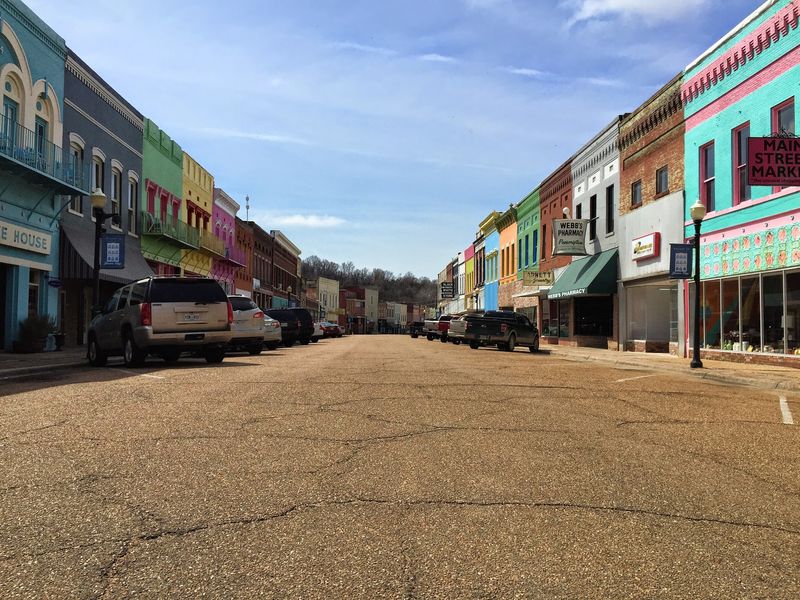
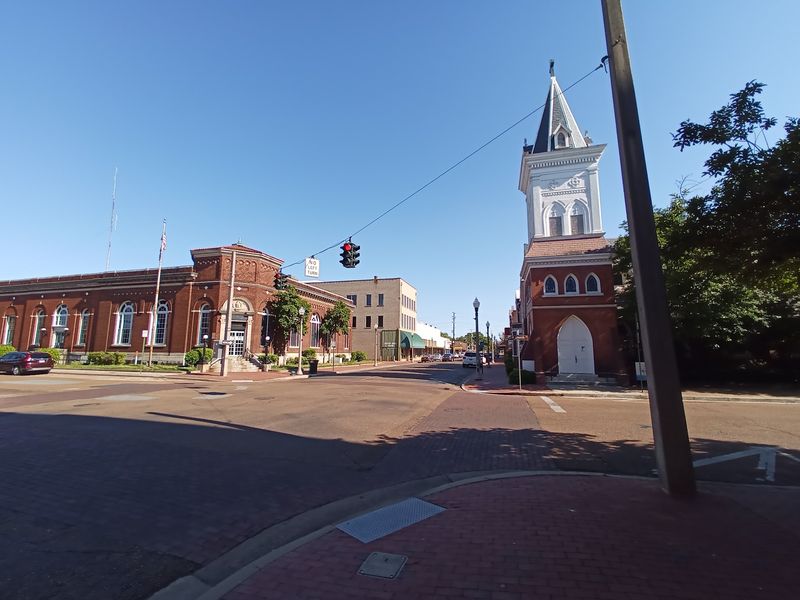
Main Street is where the day happens. The stretch is walkable, lined with historic buildings, and painted in colors bold enough to make the whole block look like a set piece.
The Main Street Market draws antique hunters looking for collectibles, furniture, and gifts. Browsing here is a contact sport for anyone who enjoys digging through old things.
Overnight visitors sometimes book the Main Street Hotel, housed in a historic building with antique furnishings and balconies that overlook the action below. Sitting up there with coffee is a genuinely pleasant way to spend a morning.
The town started life as Manchester in 1824 and took the Yazoo City name in 1839. That history shows up in the older residential streets, where architecture shifts from block to block.
Local landmarks worth a slow drive include the area around Grady Avenue and the 1926 Satartia River Bridge, a steel span with plenty of character.
Photographers do well in the surrounding countryside too. Cotton fields, bayous, and long flat horizons sit just outside city limits.
4. Port Gibson
Ulysses S. Grant reportedly called it too beautiful to burn. That single sentence saved a town, and it is still the first thing anyone mentions about Port Gibson.
Chartered in 1803, this is Mississippi’s third-oldest settlement. Nineteenth-century homes line shaded streets, and the historic district works well as a self-guided walking route.
The Civil War came through hard during the Vicksburg Campaign. The Battle of Port Gibson unfolded nearby, and the A.K.
Shaifer House still stands with the fighting’s story attached to it.
Grand Gulf Military Park sits a short drive away, with original fortifications, a museum, and a battleground that has been left in a condition worth seeing. Plan extra time.
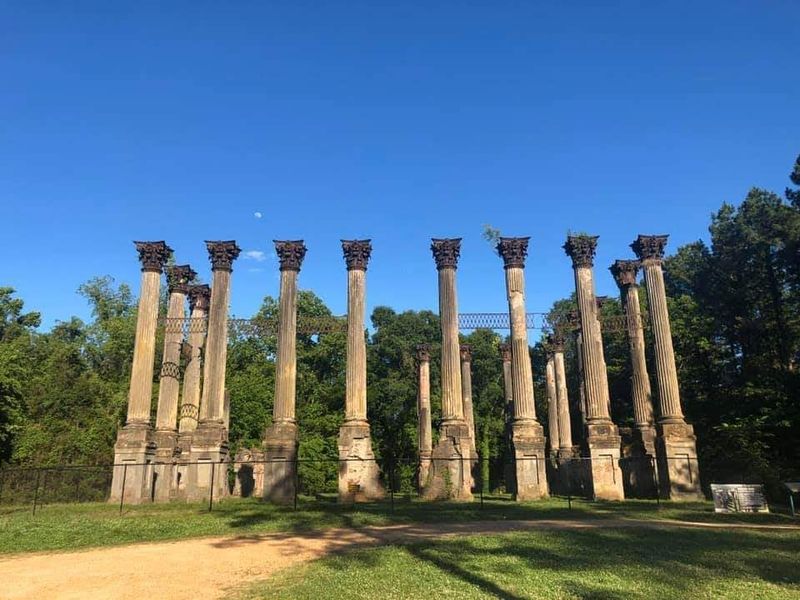
Then there are the Windsor Ruins. Twenty-three Corinthian columns stand alone in a field, all that remains of a mansion destroyed by fire in 1890, and the sight is genuinely startling in person.
Architecture fans should look at the Claiborne County Courthouse and Port Gibson City Hall, both solid examples of the building styles that survived thanks to that famous decision not to torch the place.
Music history threads through too. A Mississippi Blues Trail marker recognizes the Rabbit Foot Minstrels, a traveling show once headquartered here that helped launch performers who shaped early blues.
The overall mood runs quiet. Traffic is light, sidewalks are shaded, and conversations happen at a volume that suggests nobody is in a rush.
Bring water and a hat during warm months since shade comes and goes. Sturdy shoes help at the ruins and the battlefield.
For travelers who like history without crowds, few Mississippi towns deliver more per square block.
5. Natchez
Over 1,000 pre-Civil War structures still stand here. That is the largest collection of antebellum homes anywhere in the United States, packed into a town small enough to cross on foot.
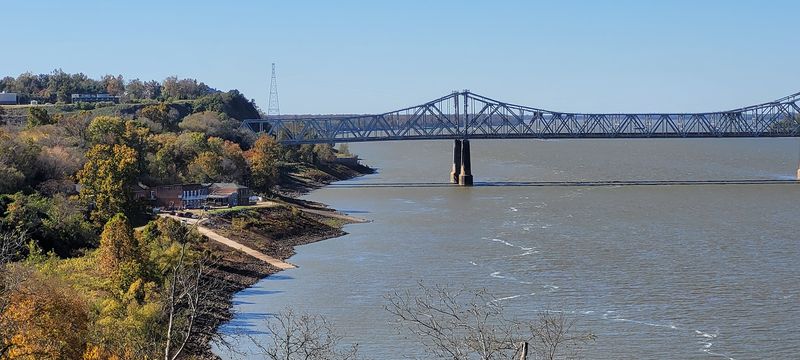
Natchez sits on bluffs above the Mississippi River, and the bluff-top gazebo offers one of the best river views in the state. Sunsets there attract a small crowd every clear evening.
Founded long before most of its neighbors, Natchez holds the title of oldest continuous settlement in the lower Mississippi Valley. French, Spanish, British, and American flags have all flown over the place.
The downtown ranks among the most pedestrian-friendly in the South. Self-guided walking tours cover the historic district, plus a nature trail and a separate bluff trail for anyone wanting greenery.
Mansions like Melrose Estate and Stanton Hall open their doors for tours. Ceilings, staircases, and furnishings inside look like museum pieces because, functionally, they are.
Older history waits at the Grand Village of the Natchez Indians, where ceremonial mounds and a reconstructed Native American house preserve the culture that shaped this land centuries before European ships showed up.
Down at the water, the Under-the-Hill district once served as a rowdy river port packed with boat crews and traders. Buildings from that era still cling to Silver Street.
The Natchez City Cemetery holds the Turning Angel, a statue that appears to shift its gaze as headlights pass. Local lore explains it.
The Natchez Trace, an ancient travel corridor turned scenic parkway, begins right here and makes an easy add-on drive.
Wear shoes built for hills and brick sidewalks.
6. Greenwood
One woman planted a street that outlived her by a century. Sally Humphreys Gwin pushed for hundreds of oaks along Grand Boulevard, and those trees now arch over the road like a green tunnel.
The street earned recognition as one of America’s most beautiful, and the surrounding Grand Boulevard Historic District is packed with architecture worth slowing down for.
Greenwood sits where the Tallahatchie and Yalobusha rivers meet, deep in the Delta. Cypress swamps, cotton fields, and slow river bends define the countryside just past the city limits.
Downtown handles a walking tour nicely. Cotton Row, the Leflore County Courthouse, and the Carnegie Library anchor the historic core, and Cotton Row once served as a major hub of the cotton trade.
Blues history runs through everything here. Mississippi Blues Trail markers mark spots connected to legendary musicians, and one of the three claimed gravesites of Robert Johnson sits nearby.
Johnson’s story, complete with a crossroads deal that almost certainly did not happen, remains one of American music’s favorite mysteries. Fans still leave guitar picks at the marker.
The Museum of the Mississippi Delta covers a wide range, from local art and natural history to military and agricultural exhibits. It works well as a rainy-day stop.
Civil rights history is documented too, with Mississippi Freedom Trail sites recognizing organizing work that took place in and around Greenwood during the 1960s.
Photographers should aim for late afternoon on Grand Boulevard when light filters through the oak canopy. The effect is hard to beat.
Anyone wanting the sound and feel of the Delta condensed into one walkable town will find it here.
7. Columbus
Memorial Day may have started in a cemetery here. Friendship Cemetery is widely credited as the birthplace of the tradition, after women decorated the graves of both Union and Confederate soldiers in 1866.
More than 2,000 Civil War soldiers rest on those grounds. The gesture that happened there rippled outward into a national holiday.
Columbus goes by the Friendly City, and the downtown backs it up with shops, boutiques, and a compact layout built for wandering.
Much of the commercial district was rebuilt after fires in 1854, so the buildings date from the mid-1850s through 1910. Italianate details and Greek Revival townhouses appear on street after street.
Over 650 historic properties fill the town, which is a staggering number for a place this size. Driving tours exist for people who cannot cover it all on foot.
Tennessee Williams was born here, and his early childhood home now operates as the city’s Welcome Center. Starting a visit there feels appropriately literary.
Outdoor time is easy to work in. The Columbus Riverwalk runs 4.4 miles along the Tombigbee River, beginning downtown, and accommodates both walkers and cyclists.
Plymouth Bluff adds four more miles of trails above the river channel, with wildlife sightings and views that make the drive worthwhile.
Music history shows up at Catfish Alley, marked on the Mississippi Blues Trail. The alley served as a center for blues, jazz, and soul, plus Black-owned businesses.
Between the waterway, the architecture, and the arts scene, a single day here fills up fast. Two trips might be smarter.
8. Oxford
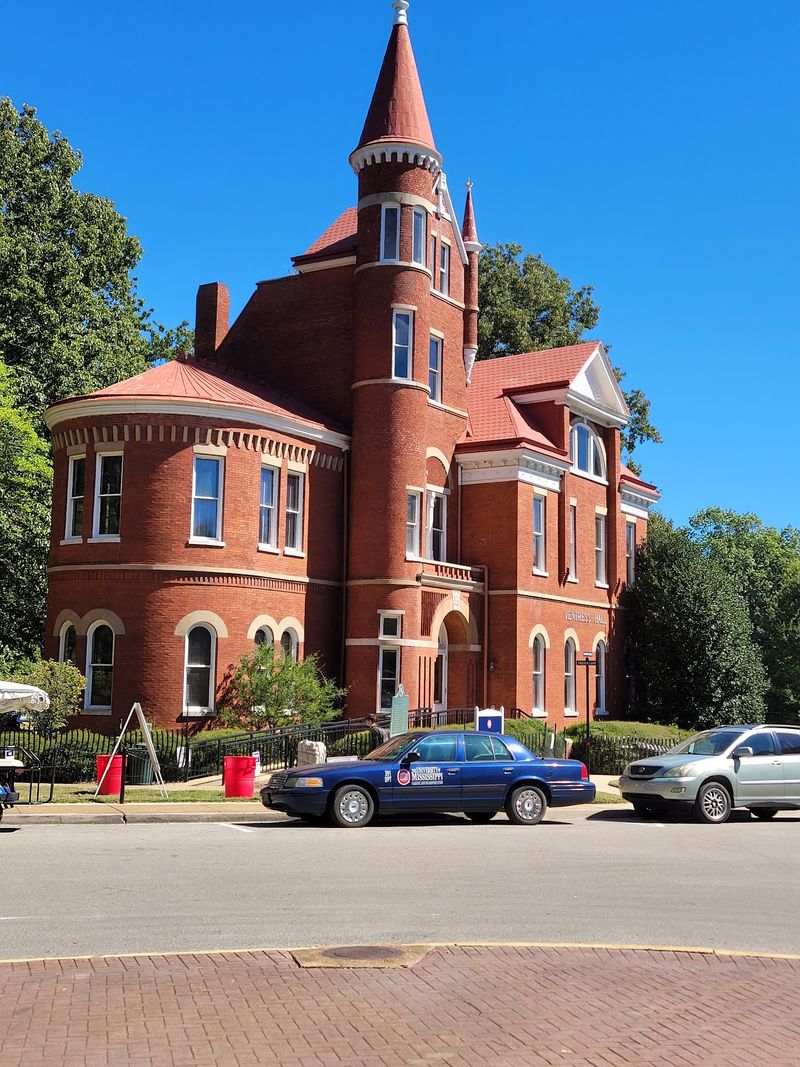
A Nobel Prize winner used to walk these sidewalks in dirty boots. William Faulkner lived at Rowan Oak, a white-columned house down a wooded trail near the university, and the estate is preserved almost exactly as he left it.
The Oxford Square works as the town’s living room. A courthouse anchors the middle, and boutiques, galleries, and specialty shops circle around it.
Square Books is the beating heart of the place. The independent bookstore hosts signings and readings, and the radio show Thacker Mountain records there, which means live music and authors on the same stage.
The University of Mississippi sits a short walk away, and Ole Miss keeps the whole town buzzing with students, lectures, and game-day chaos every fall.
Football Saturdays transform Oxford completely. The Grove fills with tents, and the population swells to numbers the sidewalks were never designed for.
On a normal weekday, though, the square stays relaxed. Benches, balconies, and coffee make people-watching a legitimate activity.
City Grocery has built a reputation on Southern cooking, and the Historic Oxford Courthouse gives the square its postcard silhouette.
Literary pilgrims can extend the day at St. Peter’s Cemetery, where Faulkner is buried, or wander the trails around Bailey’s Woods connecting Rowan Oak to the university museum.
Parking near the square gets competitive, so arriving before noon saves frustration. Comfortable shoes handle the brick sidewalks better than anything fancy.
Bookstores, campus energy, and a walkable square make this an easy sell for a day away.