
The Mississippi Tree Tunnel That Runs 15 Miles Through A National Forest
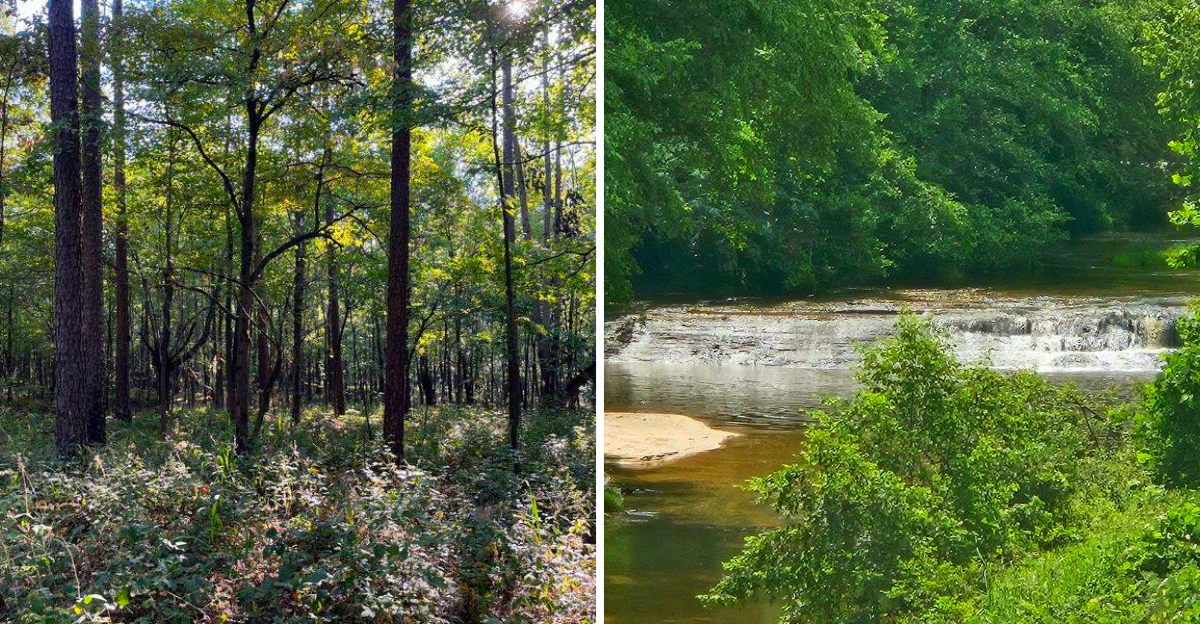
Mississippi gets wonderfully green here. The route stays almost entirely within national forest land, where traffic thins out and the urge to hurry starts fading pretty fast.
Fifteen miles is a long time for a road to keep showing off. Hardwood branches lean over the pavement so closely that shade follows the car for much of the drive.
Its famous literary name adds a curious bit of history, but the scenery does most of the talking. Quiet lakes appear beside the route, and old homesteads hint at lives lived here long before weekend drives became a thing.
Fishing turnoffs give curious travelers an excuse to stop instead of simply passing through.
Best of all, the pavement costs nothing to enjoy. The hardest part may be resisting every side road that suddenly looks interesting.
A Green Corridor Most Drivers Never Find
Roads like this are usually rumors. Someone mentions a leafy stretch of highway out in the countryside, and you assume the story grew taller with each telling. Then you actually drive it.
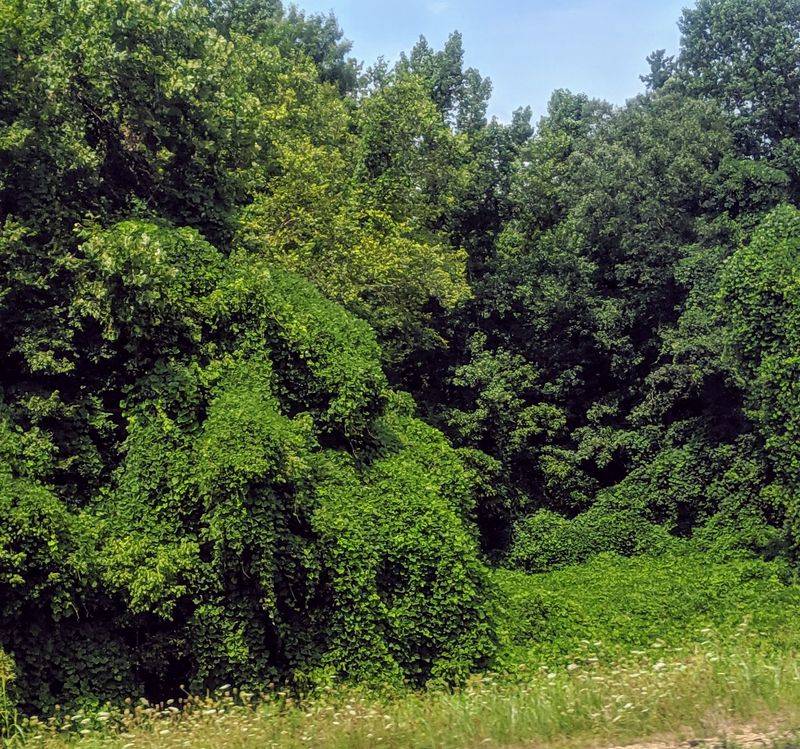
Hardwoods crowd both sides of the asphalt here, and their limbs stretch across the centerline until the canopy closes overhead. Sunlight comes through in coins and patches. The effect lasts mile after mile rather than for a photogenic quarter mile.
What makes the drive unusual is the setting. Nearly the whole route sits inside a national forest, so there are no strip malls interrupting the rhythm and no billboards competing for your attention.
Gentle hills roll under the wheels, and the road rises and dips just enough to keep things interesting.
Spring brings pale blossoms along the shoulders. Autumn turns the same trees a deep amber that photographs beautifully around four in the afternoon. Summer offers shade so thick the temperature seems to drop a few degrees.
Traffic stays light most of the time, which means you can actually enjoy the view instead of watching a bumper. Bring a camera. Bring patience.
The road does the rest of the work.
Meet The William Faulkner Scenic Byway
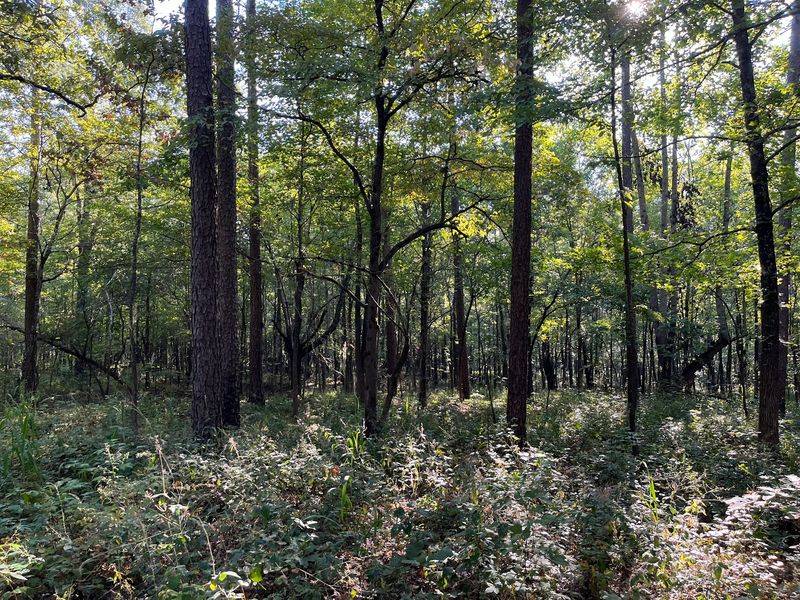
Officially, the route goes by Mississippi Highway 30, and it carries the designation of William Faulkner Scenic Byway. The name honors the Nobel winning author whose fiction turned this corner of the state into literary geography.
The byway travels roughly 15 miles between the vicinity of New Albany and the vicinity of Oxford, threading through Holly Springs National Forest for nearly its entire length.
Faulkner was born in New Albany and spent most of his life in Oxford, which makes the two endpoints feel deliberate rather than accidental.
For navigation purposes, the forest’s administrative address is 1046 Bethany Road in Potts Camp, MS 38659, and mapping apps respond well to Holly Springs National Forest as a search term.
Mississippi recognizes the route as a State Scenic Byway, a designation reserved for roads with genuine visual and cultural value. The pavement is in solid shape, so any passenger car handles it comfortably.
There is no gate, no ticket booth, and no admission fee. A public road stays open around the clock, which means sunrise drives and evening returns are both fair game. Fill the tank first, though. Services thin out quickly.
Holly Springs National Forest, Big And Beautifully Unhurried
Around 155,000 acres of national forest land surround this drive, and that scale surprises first time visitors. Established in 1936, the forest came about during an era when the federal government purchased worn out farmland and let the trees come back.
Nine decades later, the results speak clearly. Upland hardwoods share space with pine stands, and low bottomlands hold their own distinct plant communities.
Forest managers keep busy work going here. Crews encourage native plant communities, remove non native invasive species, and work to restore shortleaf pine ecosystems that once covered much of the region.
The forest spreads across several counties in north Mississippi, including Marshall, Lafayette, and Union. Private land sits mixed among the public parcels, so pay attention to signage before wandering off a marked route.
More than thirty ponds and lakes dot the larger forest, giving anglers plenty of choices. Recreation areas near the water tend to be well maintained, with clean sites and helpful hosts during camping season.
Come prepared for real woods rather than a manicured park. Sturdy shoes, water, and a paper map earn their keep. The reward is quiet on a scale that city drivers forget exists.
Puskus Lake Rewards The Detour
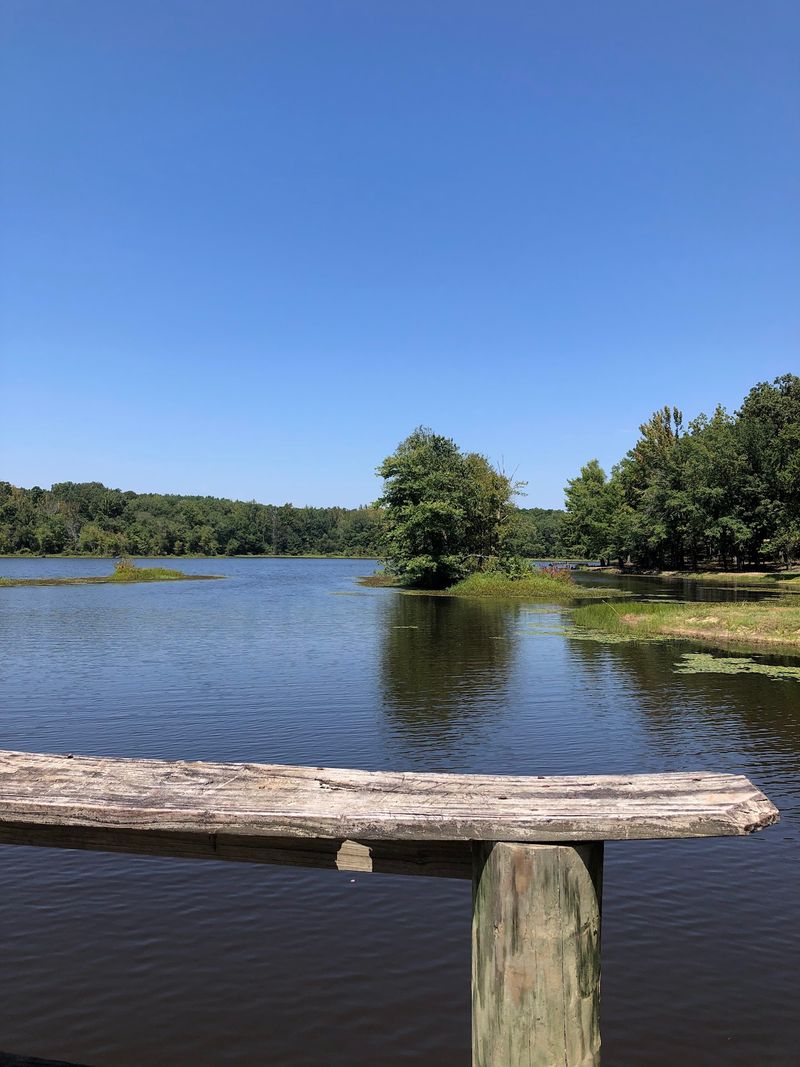
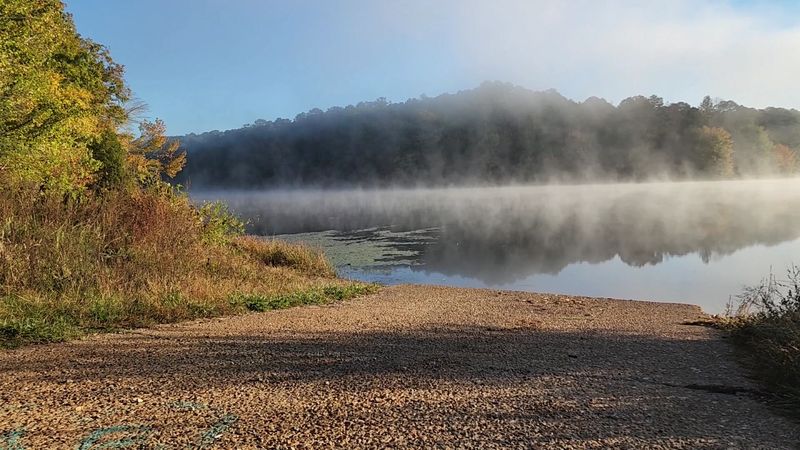
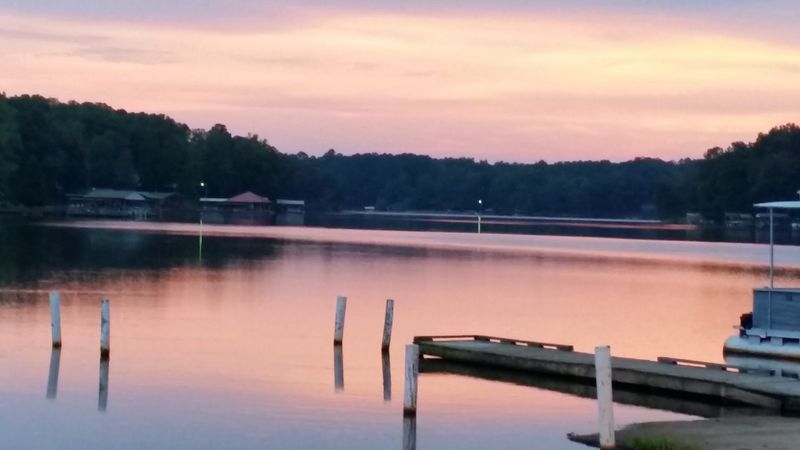
Turn off the byway toward Puskus Lake and the noise level drops to almost nothing. The water sits in a bowl of hardwoods, and on still mornings the reflections look painted on.
The recreation area offers a boat ramp, picnic spots, and camping, which makes it a natural anchor for a day trip rather than a quick photo stop.
Anglers come for bass, bream, and catfish. Small boats and paddle craft work well on a lake this size, and electric motors keep the peace intact.
Picnickers get the better end of the deal in my opinion. Tables under mature trees, breeze off the water, and no crowds to negotiate. Pack a cooler in town before you head out, because there is no store waiting at the lake.
Camping here leans rustic. Expect basic facilities and plenty of shade rather than resort comforts.
Wildlife shows up regularly along the shoreline. Wading birds work the shallows, squirrels rattle through the leaf litter, and turtles line up on any log catching sun.
Bring bug spray during warm months and check for ticks afterward. That small habit keeps a good day from turning itchy.
The Tanglefoot Trail Connection
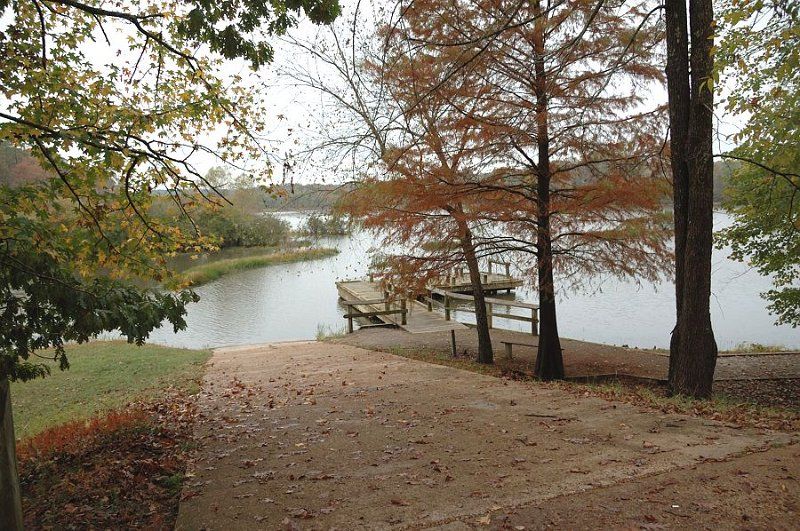
Cyclists have a strong reason to build a weekend around this byway. The Tanglefoot Trail runs nearby, and access points make it easy to swap four wheels for two.
Built on a former railroad corridor, the trail delivers a gentle grade that suits families, casual riders, and anyone who prefers scenery over suffering. Pavement stays smooth and the route is well signed.
Farmland, woods, and small towns take turns along the way. Trailside pavilions offer shade, water, and a place to stretch your legs without leaving the path.
Pairing the byway drive with a trail ride works especially well in spring and fall, when temperatures cooperate and the tree cover shows off. Summer riders should start early, since Mississippi humidity does not negotiate.
Bring a helmet, a tire pump, and more water than you think you need. Cell service can be spotty in stretches, so download maps ahead of time.
Walkers and runners use the trail too, and the surface handles strollers without complaint. Local shops in nearby towns rent bikes, which helps if you did not travel with your own.
Few places let you combine a forest drive and a rail trail ride this easily.
Little Tallahatchie River Crossings
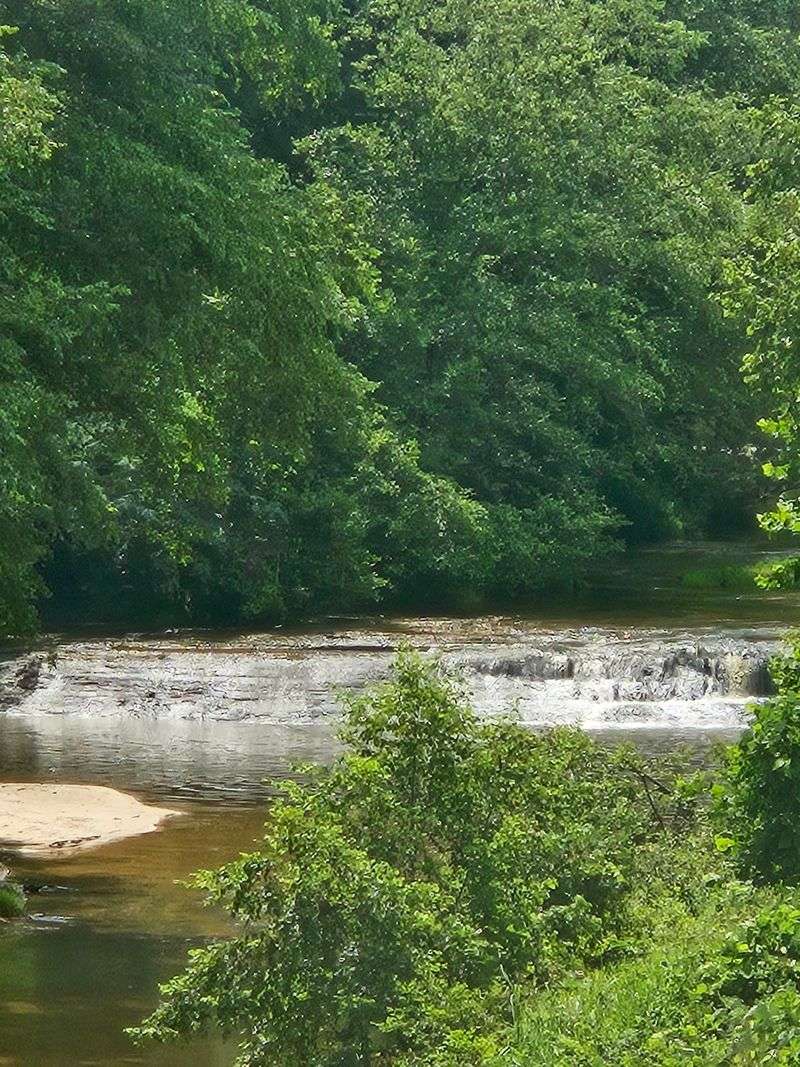
Water shows up more than once along this route, and the Little Tallahatchie River is the name worth knowing. The river winds through the region and gives the landscape its low, green character.
Faulkner readers will recognize the Tallahatchie system from his fiction, where rivers and bottomlands carry as much weight as the characters themselves.
Access points near the byway let you get down to the bank for fishing or simply for the sound of moving water. Catfish and bream draw regular attention from local anglers.
Bottomland forest along the river supports different trees than the upland hills, and the shift is easy to spot once you know to look. Bigger leaves, softer ground, more vines.
Footing near the water can be slick, so watch your steps and keep an eye on children. Waterproof shoes make the experience far more pleasant.
Early morning is the best window. Mist hangs over the surface, birds are loud, and the light turns soft gold through the trees.
Take a folding chair and a thermos of coffee. Sitting still by a slow southern river is an underrated way to spend an hour.
Wildlife That Actually Shows Up
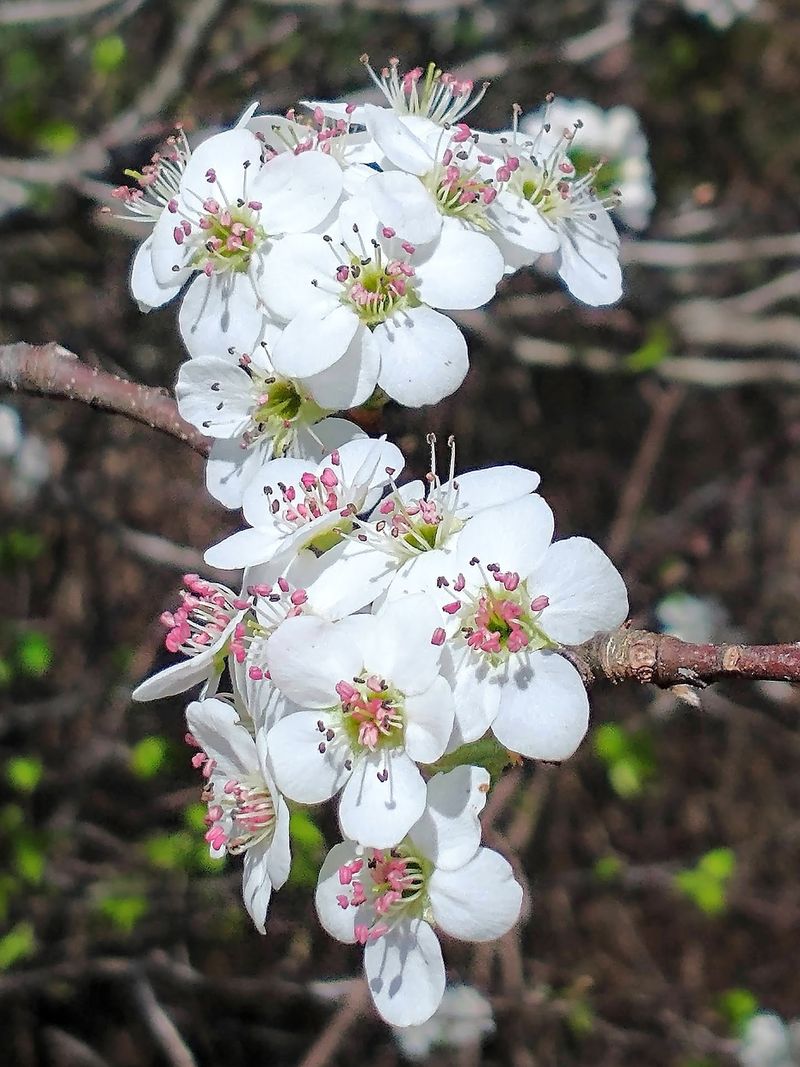
Plenty of scenic drives promise wildlife and deliver squirrels. This one delivers squirrels and a good deal more.
White tailed deer are common along the forest edges, especially near dawn and dusk. Fox squirrels, raccoons, and wild turkeys all live here in healthy numbers.
Turkeys are the crowd pleaser. A group crossing the road ahead of you tends to move with total disregard for your schedule, and honestly they have earned that confidence.
Birders do well in this forest. Woodpeckers work the hardwoods, hawks ride the thermals above open patches, and songbirds fill the understory during migration.
Drive carefully at low light hours. Deer move fast and appear from the shoulder with no warning, so keeping your speed reasonable protects everyone involved.
Binoculars belong in the passenger seat. A pair of compact ones costs little and completely changes what you notice from a pull off.
Hunting is permitted in the national forest during established seasons, so wearing bright colors is smart if you plan to walk trails in fall and winter.
Give animals distance and never feed them. The wildness is exactly what makes the encounter memorable.
Small Farms And Old Homesteads Along The Shoulder
Between the wooded stretches, the forest opens and farmland appears. Small fields, weathered barns, and homesteads that have watched a lot of decades pass.
The contrast keeps the drive from feeling monotonous. Shade, then sunlight, then shade again, with a hay field or a row of fence posts breaking up the green.
Cotton grows in the region, and seeing a field in bloom or ready for harvest is a genuine first for many visitors. The white rows against dark soil are hard to forget.
Respect matters here. These are working properties and private homes, so admire from the road and keep gates and driveways clear.
The agricultural rhythm connects directly to Faulkner’s writing. His fiction lived among rural landowners, tenant farmers, and land that shaped every decision a family made.
Photographers should watch for late day light on barn wood. That silvery gray takes on a warmth that midday sun flattens out.
Traffic stays light through these open sections, which makes for relaxed cruising. Wave at oncoming drivers. Around here that is standard practice, not a novelty.
Simple scenery, honestly earned, and completely free to enjoy.
How To Do This Drive Right
Fifteen miles sounds like twenty minutes. Treat it that way and you will miss everything worth seeing.
Budget half a day at minimum. Better yet, give it a full one and add a lake stop, a short walk, and a picnic.
Fuel up in New Albany, Oxford, or Holly Springs before you start. Services inside the forest are limited, and that includes food, water, and restrooms.
Download offline maps ahead of time. Cell coverage comes and goes, and some mapping pins for the forest are unreliable, so having the route saved prevents frustration.
Start early if wildlife or photography is your goal. Morning light and morning animals both cooperate before the day heats up.
Watch for logging trucks and farm equipment sharing the road. Slow down on blind curves and use the pull offs rather than stopping in a lane.
Pack a cooler, sunscreen, insect repellent, and closed toe shoes. Add a trash bag, since carrying out your own waste keeps these places worth returning to.
Then put the phone down and enjoy the green tunnel. Mississippi does not hand out roads like this very often.