
8 New York Lakes Where Toxic Algae Blooms Have Been Reported This Summer
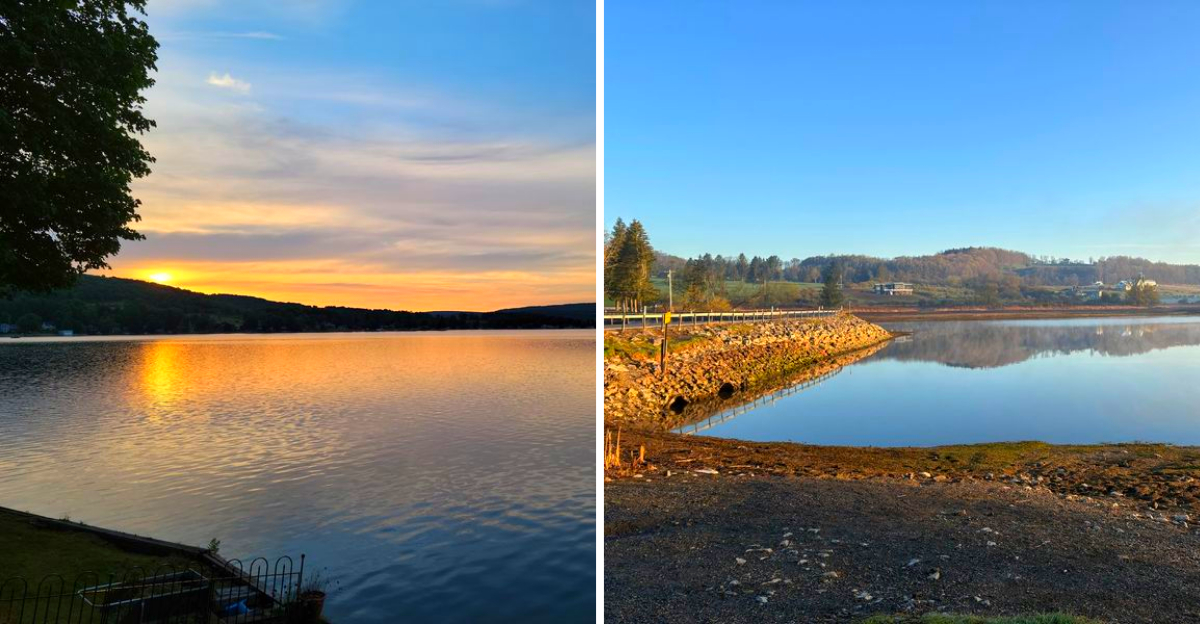
Green does not always mean healthy. Eight lakes in New York picked up a strange coat this summer, and it is not pond scum minding its own business. Harmful algal blooms, or HABs, can make people and dogs sick.
State trackers log every confirmed sighting for exactly that reason. Somebody has the job of writing these down, which tells you something.
Swimsuits and paddleboards still belong in the car. So does that first cold jump off a dock. My advice is just to look before you leap, which sounds like a fortune cookie but happens to be the whole strategy here.
Water that looks like spilled paint deserves a second thought. Water that looks fine usually is. Eight lakes made the reported list this season, and a few smart habits will keep your day on the water exactly what you wanted it to be.
1. Agawam Lake – Suffolk County
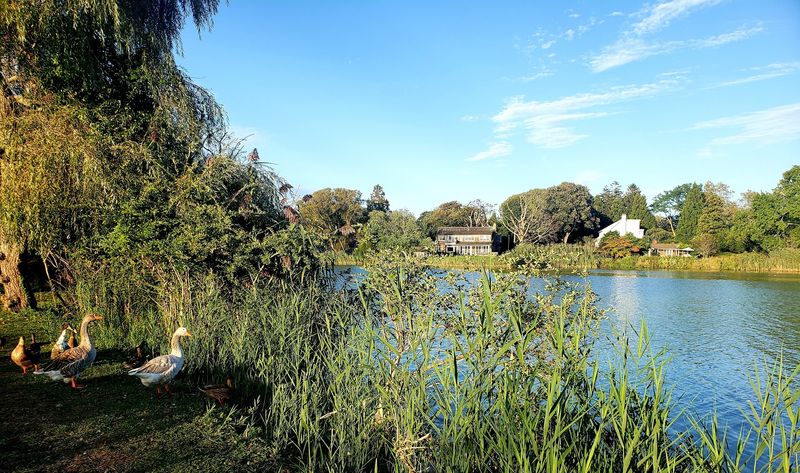
Long Island has plenty of pretty water, and Agawam Lake sits right in the middle of Southampton village life. Joggers loop it. Kids feed the geese.
Then the water turns pea soup green and the mood shifts fast.
State monitors confirmed an active harmful algal bloom here as of July 17, 2026. Agawam Lake borders Pond Lane and Jobs Lane in Southampton, New York, with easy views from the Agawam Park area at 25 Pond Lane.
The lake is shallow and warm, which algae absolutely adore. Add nutrient runoff from lawns and roads and you get a bloom recipe nobody ordered.
Practical move: treat any bright green streaks or floating paint-like scum as a hard no. Keep dogs leashed and away from the edge, since pups lap up water without asking questions.
If you or your pet touch bloom water, rinse with clean water quickly. Report what you see to the New York State Department of Environmental Conservation, because their bloom map only works when people speak up.
Good news? Blooms come and go. A breezy, cooler week can clear things right up.
Southampton village sits within walking distance, so a bloom day still works as a stroll day. The park itself stays pleasant year round, with benches and shade trees that make watching the water perfectly enjoyable from dry ground.
Waterfowl on this lake create a second nutrient source that gets less attention than lawn runoff.
Feeding the geese adds to the load, however innocent the habit seems. Small changes along a shoreline this developed add up over a season.
2. Canadarago Lake – Otsego County
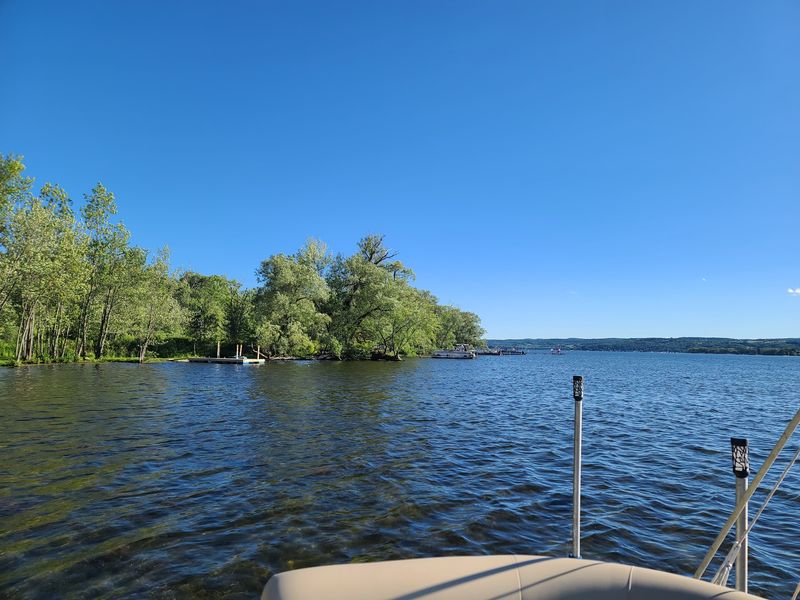
Otsego County keeps its treasures quiet, and Canadarago Lake is one of them. Fishing boats drift out early. Herons stalk the shallows.
The lake looks like a postcard until the algae crashes the party.
Confirmed active blooms showed up here through the summer of 2026, with reports logged as recently as July 17. Public access sits at the state boat launch off County Highway 22 in Richfield Springs, New York 13439.
Farm country surrounds much of the shoreline, and rain washes nutrients downhill into the water. Warm, still stretches of July let cyanobacteria multiply into thick green mats.
Anglers, take note. Fish caught in bloom areas should be cleaned carefully, and toss the guts. Never rinse fillets in green water, which defeats the whole purpose.
Boaters can still enjoy open water, though running a motor through scum sends spray into the air. Breathing that mist can irritate your throat and eyes.
The smart plan is simple. Check the state bloom notifications before you hitch the trailer, then pick a clear cove and enjoy the afternoon. Richfield Springs sits close by with places to eat and stretch your legs.
Autumn cools the water considerably, which usually ends bloom season, so a September fishing trip often finds clearer conditions than midsummer ever offers.
Depth here averages modest for a lake this size, which limits how much cold water sits below to slow warming. Late summer heat compounds that.
Anglers who fish early morning often find calmer, clearer water before the day builds.
3. Cayuga Lake – Cayuga County
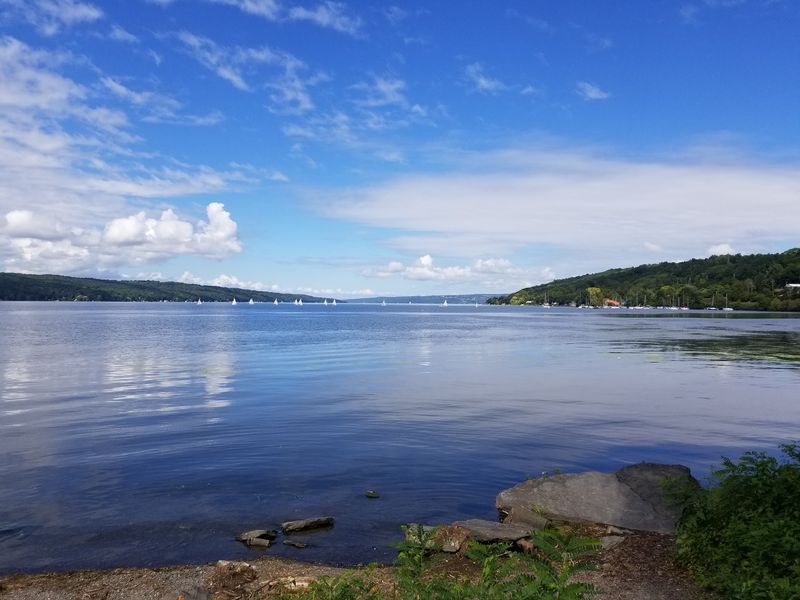
Cayuga Lake earned the season’s dubious record. The first confirmed bloom hit on April 23, 2026, which is shockingly early for a Finger Lake, and blooms kept popping through July 17.
Nearly forty miles long and famously deep, Cayuga still gets shallow, sun-warmed corners where algae throw a rager. Both the north and south ends have seen repeat reports.
Beach lovers can check conditions before heading to Cayuga Lake State Park at 2678 Lower Lake Road, Seneca Falls, New York 13148. Lifeguards and park staff post closures when scum arrives.
Here is a trick worth learning. Scoop a little water into a clear jar and let it sit. Bloom material often floats to the top in green specks or forms a paint-like layer.
Drinking water plants along the lake test regularly, so tap water stays monitored. Swimming, though, is your own judgment call.
Wind matters more than you think on a lake this narrow. A bloom can pile up on one shore in the morning and vanish by dinner. Stay flexible and stay dry when it looks green.
Seneca Falls and Ithaca both sit within easy reach for a backup plan. The state park keeps trails and picnic areas open regardless of water conditions, so a green swim beach does not end the day. An April bloom is genuinely unusual and points to a longer warm season overall.
Researchers at Cornell track conditions on this lake closely, and the data helps explain why the northern shallow end reports more often than the deep middle.
4. Chautauqua Lake – Chautauqua County
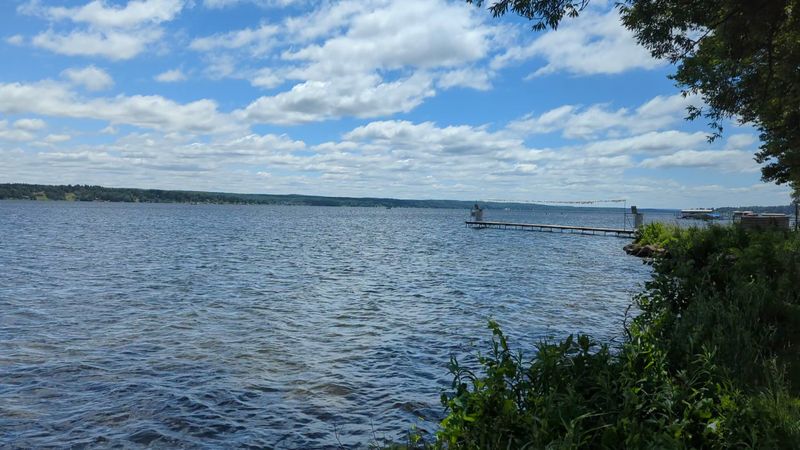
Six active blooms at once is not a friendly number. Chautauqua Lake in far western New York carried that count as of July 17, 2026, spread across several bays and shorelines.
Locals know the lake runs shallow at the northern basin, sometimes only a handful of feet deep. Sunlight reaches the bottom, the water heats quickly, and cyanobacteria seize the opportunity.
Long Point State Park on Chautauqua Lake gives visitors a solid vantage point at 4459 Route 430, Bemus Point, New York 14712. Rangers there watch water conditions closely during bloom season.
If you paddle, wear water shoes and rinse your gear afterward. Algae residue on a kayak seat is nobody’s idea of a souvenir.
Pet owners should be extra cautious. Dogs that swim through scum then groom themselves swallow a concentrated dose, and small bodies react quickly. Fresh water in a travel bowl solves half the problem.
Local groups run weekly water sampling and post results online, which makes planning easy. A quick phone check before loading the cooler saves the whole trip. Bemus Point and Chautauqua Institution offer plenty to do away from the shoreline.
The southern basin runs deeper than the north, which sometimes means clearer water when the shallow end turns green.
5. Cuba Lake – Allegany County
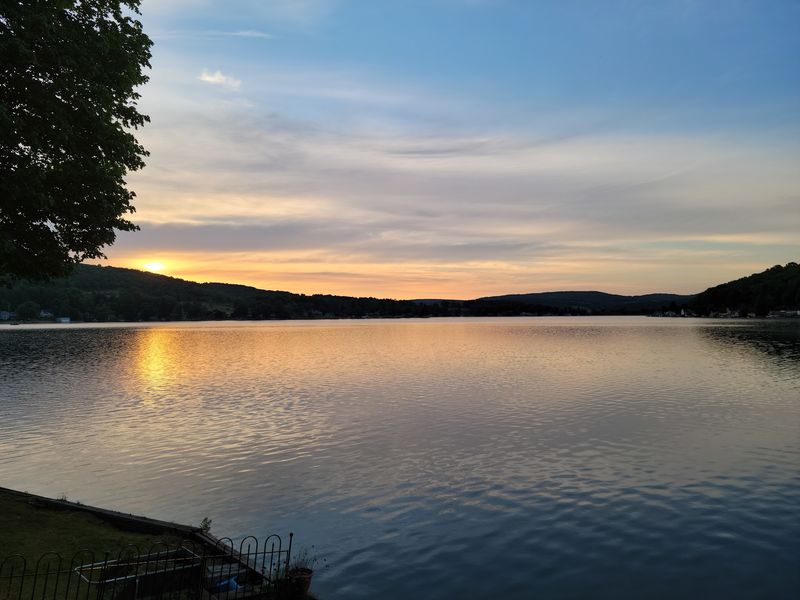
Cuba Lake started life as a reservoir for the old Genesee Valley Canal, making it one of the oldest artificial lakes in the state. History buffs love that. Algae, unfortunately, love the shallow water even more.
Two active blooms were confirmed here as of July 17, 2026. Cottage owners along the ring road spotted the telltale green swirls hugging calmer bays.
Visitors can reach the public beach and boat launch area off Lake Street in Cuba, New York 14727, where the town keeps signage updated during bloom advisories.
Something useful to remember: not every green patch is dangerous, but you cannot tell by looking. Duckweed floats as tiny leaves. Blooms look more like spilled paint or grass clippings suspended in the water.
When in doubt, skip the swim and grab the fishing rod from shore instead. Allegany County has plenty of scenery worth soaking in without soaking yourself.
Rinse off after any contact and wash swimsuits. Small habits keep summer smooth, and honestly, they take about ninety seconds. Allegany County backroads make a genuinely pretty drive, and the surrounding hills offer trails for anyone rerouting a beach day.
The lake ring road circles the whole shoreline, giving you several vantage points to assess conditions.
6. Honeoye Lake – Ontario County
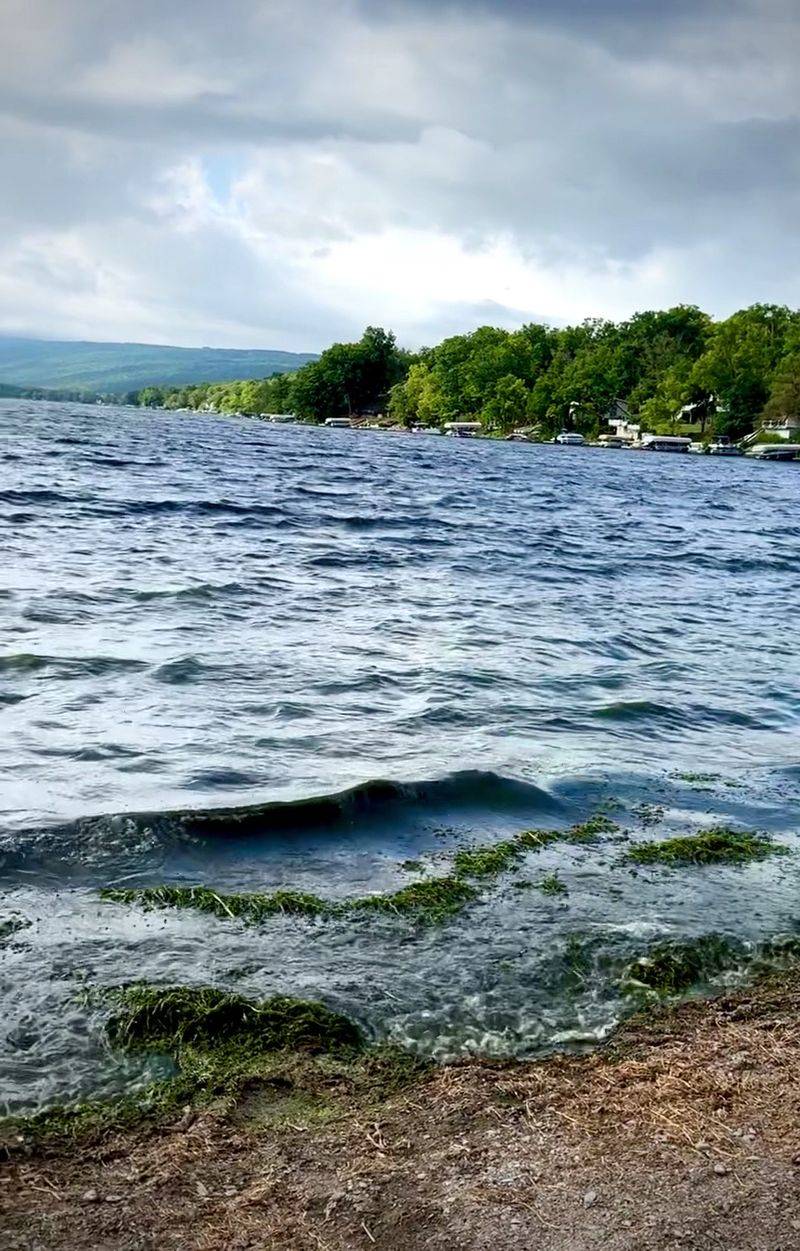
Among the Finger Lakes, Honeoye is the shallow sibling, averaging only about eleven feet deep. Warmth builds fast in that kind of basin. Algae rarely miss the invitation.
Confirmed active harmful algal blooms were reported on the lake on July 17, 2026, continuing a pattern residents have watched for years.
Sandy Bottom Park sits at 8290 Sandy Bottom Road in Honeoye, New York 14471, with a beach, pavilion, and clear signs posted whenever the water gets questionable.
Water clarity here shifts by the hour. A calm morning can bring a green sheen right up to the swim ropes, while an afternoon breeze pushes it out again.
Watershed volunteers have spent years planting buffers and reducing runoff, and that work matters. Nutrients feed blooms, so cutting the supply is the long game.
For visitors, the checklist stays short. Look before you leap, keep pets out of scum, and never drink or cook with untreated lake water.
Honeoye still delivers gorgeous sunsets and terrific bass fishing. Just let the water tell you what kind of day it is. Harriet Hollister Spencer State Recreation Area sits nearby with overlooks across the valley.
Canandaigua Lake is a short drive west if Honeoye looks questionable, which gives Ontario County visitors a second option without much backtracking.
7. Lake Moraine – Madison County
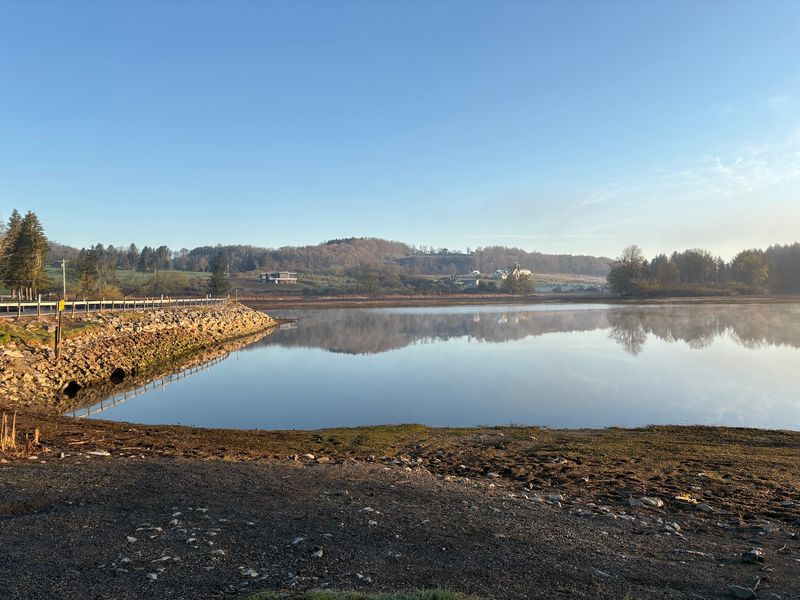
Colgate University students know Lake Moraine as the peaceful spot just uphill from campus. Quiet, glassy, ringed with trees. Then July arrives and the green shows up uninvited.
Three active blooms were confirmed on the lake as of July 17, 2026. For a waterbody this modest in size, that count carries real weight.
Access runs along Moraine Road in Hamilton, New York 13346, where the lake association posts updates and keeps an eye on conditions all season.
Glacial history gave the lake its name and its shape, with sediment left behind by retreating ice. Shallow shelves along the edges warm quickly, which is exactly where blooms gather.
Sharp advice for anyone visiting: watch the downwind shore. Scum drifts and collects there, so the far side may look pristine while one cove looks like split pea soup.
Skip the swim if you spot floating green streaks, and rinse dogs thoroughly if they wade in anyway.
Madison County still offers plenty of dry fun nearby. Bring hiking shoes and make it a trail day instead. Hamilton village makes a pleasant afternoon on its own, with shops and cafes around the green.
The Chenango Canal towpath trail runs nearby for anyone trading a swim for a walk in the Madison County hills.
8. Lake Tonetta – Putnam County
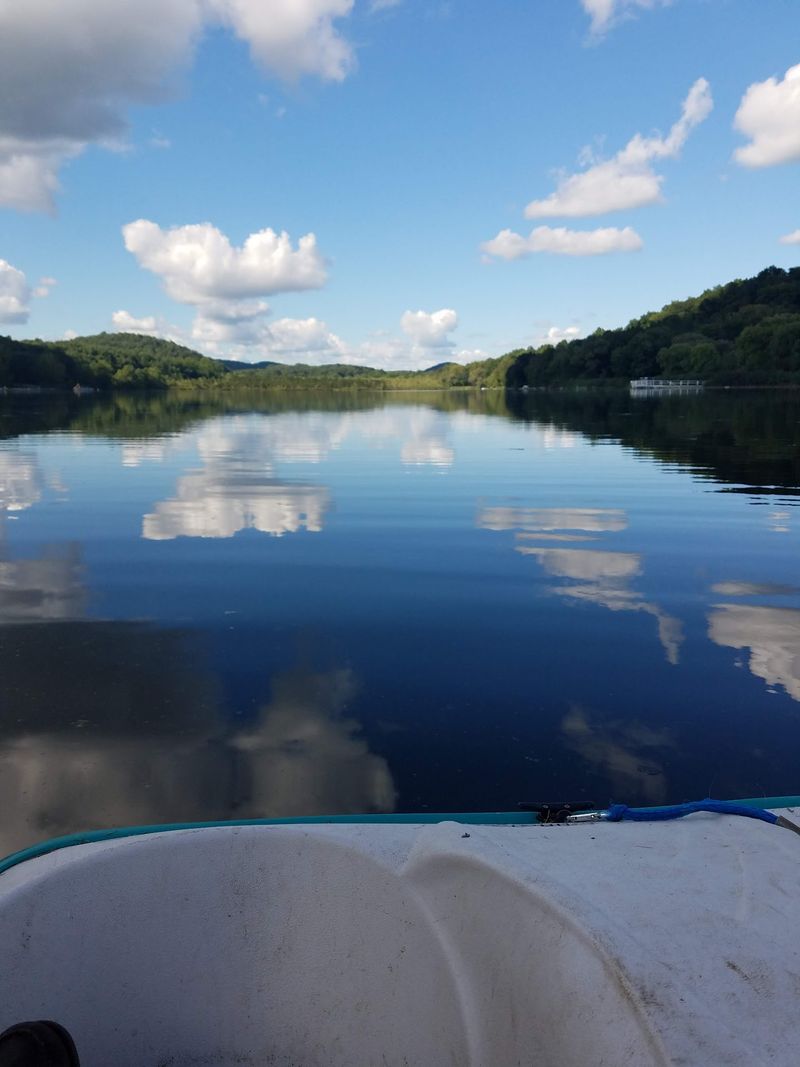
Downstate lakes get busy in July, and Lake Tonetta in Putnam County is a neighborhood favorite for cooling off. Small, friendly, close to home. Also home to three confirmed active blooms by July 17, 2026.
The lake sits in the Town of Southeast near Brewster, New York 10509, with the Tonetta Lake beach area off Foggintown Road serving local swimmers each season.
Being compact and shallow, the lake heats up in a hurry once the humidity settles in. Nutrients from surrounding land give algae the fuel they need.
Families should know the warning signs. Green, blue-green, or brownish scum, water that looks like spilled paint, or a musty smell all mean stay out.
Symptoms after contact can include stomach upset, skin rash, or irritated eyes. Rinsing quickly with clean water helps a lot, and a call to your doctor is smart if anything lingers.
Putnam County health officials post beach closures promptly, so a quick check saves a wasted drive.
Blooms fade. Patience pays. The lake usually gets its sparkle back before summer wraps.
Brewster sits minutes away, and the Croton watershed offers trails for a dry alternative. Metro North reaches the area from the city, though a car helps considerably for getting between the lake and other Putnam County stops.