
The Affordable California Amish Furniture Barn That Locals Have Trusted For Decades
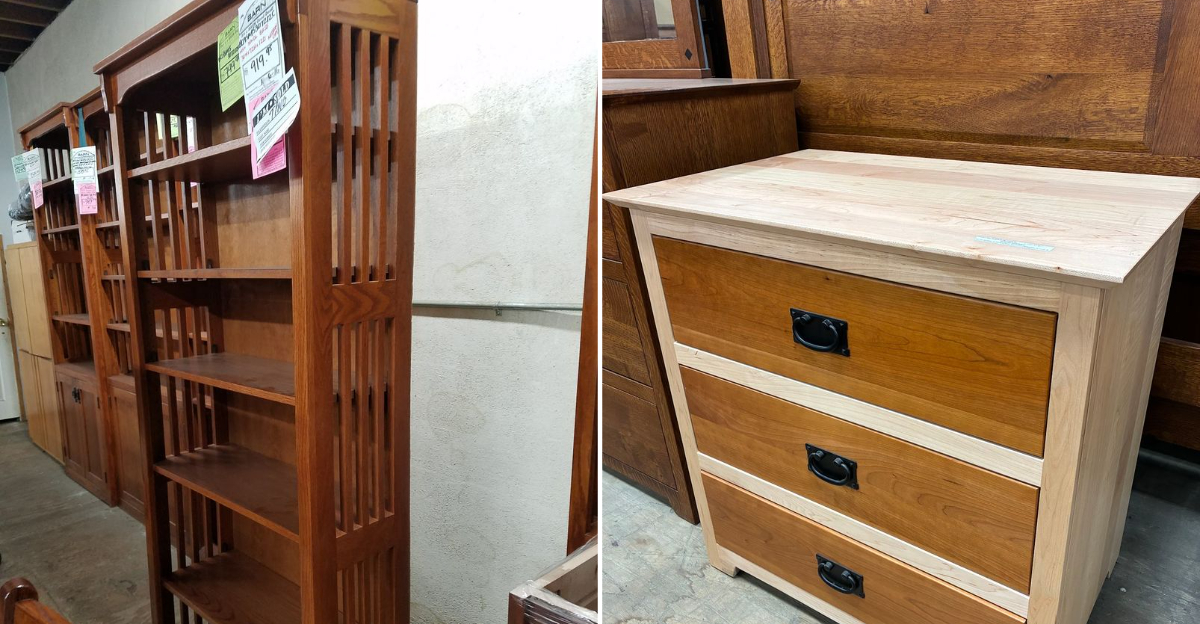
Furniture that lasts for generations feels like an unaffordable luxury today, but this California barn proves that assumption wrong. Locals have trusted this Amish furniture barn for decades, drawn by quality most modern stores simply can’t match.
Pieces here get built by hand, without shortcuts or mass production anywhere in the process. Nothing about the craftsmanship feels rushed, since each item takes real time to construct properly.
Regulars return for specific styles they know will last far longer than typical store-bought alternatives. Prices stay reasonable despite the quality and labor behind every handmade piece.
Visitors often plan for more time than expected once they see the full range of what’s available. This barn proved that lasting furniture doesn’t have to come with a lasting price tag.
Craftsmanship Techniques Behind Amish Furniture
Nails and screws are the shortcuts of the furniture world, and Amish builders mostly skip them. Drawers get dovetail joints instead those interlocking wedges that grip tighter the more you pull.
Open a drawer at a store like this a thousand times, and it still glides. That is not luck, that is geometry doing its job quietly for decades.
Frames rely on mortise-and-tenon joinery, where one piece of wood slides snugly into a carved pocket in another. Wood breathes, swelling in humid months and shrinking in dry ones, and this kind of joint moves with it instead of fighting it.
Cracked table legs and wobbly chairs usually come from construction that refuses to flex. Traditional joinery avoids that whole headache.
Every board gets picked by hand before it becomes anything. Craftsmen look at grain direction, color, and how a plank will age next to its neighbors on the same panel.
Sanding happens by hand too, sometimes through several grits, until the surface feels closer to stone than lumber. You can run a palm along an edge and feel where somebody paid attention.
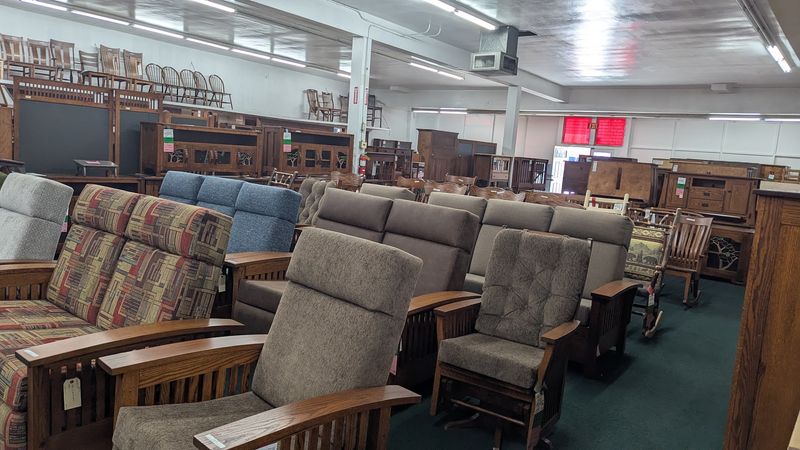
The pieces sold here come out of small family workshops, not assembly lines pumping out identical boxes. That difference shows up in the seams, the corners, and the way a hutch door closes with a soft, satisfying thunk.
Barn Furniture Mart sits at 6206 Sepulveda Blvd, Van Nuys, CA 91411.
Types Of Woods Used In Amish Production
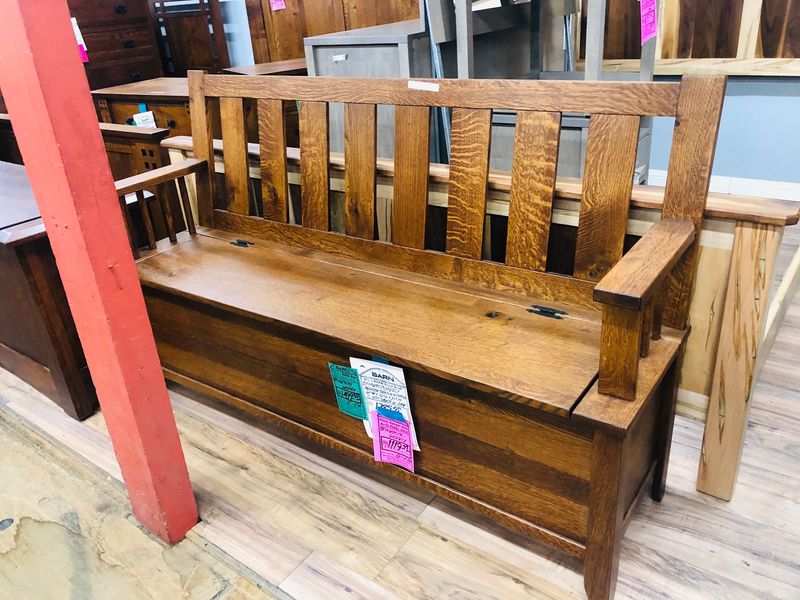
Oak runs this place. Roughly speaking, it is the backbone of the showroom, prized for its muscle and those bold grain lines that look almost drawn on.
Red oak leans from cream to warm brown with reddish streaks running through it. White oak carries a subtler tone, sometimes with a faint greenish cast before finishing.
Cherry is the wood that plays the long game. Fresh from the shop, it looks light and pinkish, then over a few years it deepens into a rich reddish brown that no stain can fake.
People who buy cherry tables often say the piece looks better at year ten than year one. Sunlight does most of that work.
Maple takes the opposite approach with a pale, creamy surface and a grain so fine it almost disappears. It sands to a glassy smoothness, which makes it a favorite for bedroom sets and desks where you want calm rather than drama.
Walnut is the showoff. Chocolate tones, swirling figure, occasional streaks of lighter sapwood that make each board a one-off.
Walnut dining tables and chairs move steadily out the door here, and slab pieces get customized on the spot.
What you will not find anywhere in the building is particleboard, veneer over sawdust, or anything that starts falling apart when a glass tips over. Solid hardwood only, straight through.
Benefits Of Choosing Locally Made Amish Pieces
Buying furniture twice costs more than buying it once. That simple math explains why families in the San Fernando Valley keep coming back to the same store for thirty-plus years.
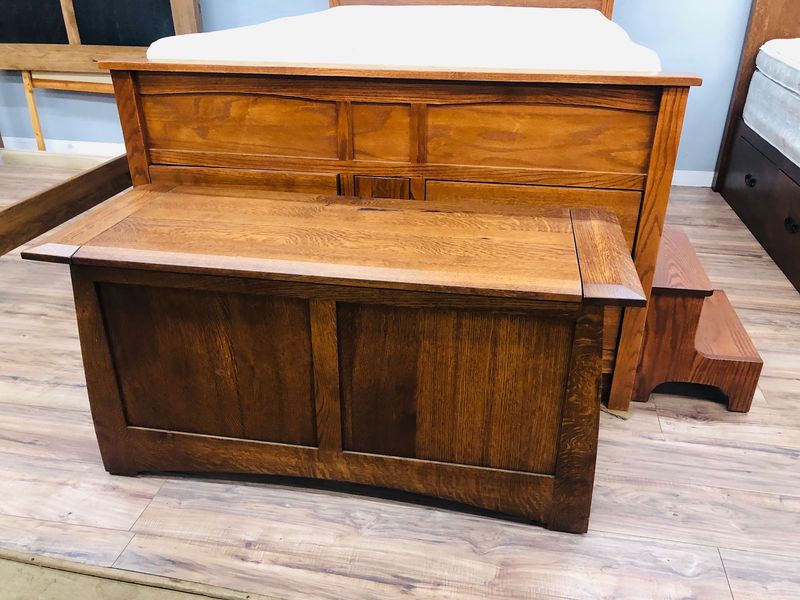
A dining table bought here tends to outlast the dining room it was bought for. Kids grow up around it, then inherit it.
Supporting a shop that sources from Amish workshops keeps small family operations alive. Those workshops train the next generation of woodworkers, and skills like hand-cut joinery only survive if somebody is still paying for them.
The store itself has been family-run since 1945, so the whole chain stays personal from the workshop bench to the showroom floor.
Sustainability sneaks in as a bonus. Hardwood from managed forests, pieces that never hit a landfill, and finishes that tend to be natural and low in harsh chemicals.
Fewer replacement cycles means fewer trucks, fewer boxes, and fewer sad curbside dressers with one broken leg.
There is also the service side, which matters more than people expect with furniture this size. Staff here walk customers through wood choices, stain samples, and photos of their actual rooms before anything gets ordered.
Delivery crews wrap pieces in moving blankets and plastic, then navigate stairwells and tight corners without leaving marks. American-made, hand-built, and backed by people who answer the phone.
Care Tips To Maintain Amish Wood
Good news for anyone who hates chores. Keeping solid hardwood looking sharp takes almost no effort, just consistency.
Dust with a soft cloth, slightly damp if you like. Dust is basically fine grit, and dragging it around dry is how hairline scratches appear over the years.
Spills need speed, not scrubbing. Wipe them up right away with a soft cloth, especially anything acidic or solvent-based, since those can dull or cloud a hand-applied finish.
Skip the ammonia, skip silicone polishes, and skip anything that promises a mirror shine in one wipe. Mild soap and water, or a cleaner made for wood, handles almost everything.
Coasters, placemats, and felt pads are the unglamorous heroes here. A sweating glass left overnight can leave a white ring that takes real work to remove.
Hot dishes need trivets, always. Heat and finish do not negotiate.
Placement matters more than most people realize. Direct afternoon sun will fade one side of a table while the shaded half stays dark, and Southern California delivers plenty of that light.
Keep pieces away from heaters, fireplaces, and drafty vents, since swings in temperature and humidity can make wood split over time.
Rotate table leaves and centerpieces occasionally so aging stays even. Do that much, and a piece from this Van Nuys shop can look nearly new fifteen years later.
Popular Styles In Amish Traditions
Say Amish furniture, and most people picture one thing, probably a plain oak rocker. The actual range is way wider than that.
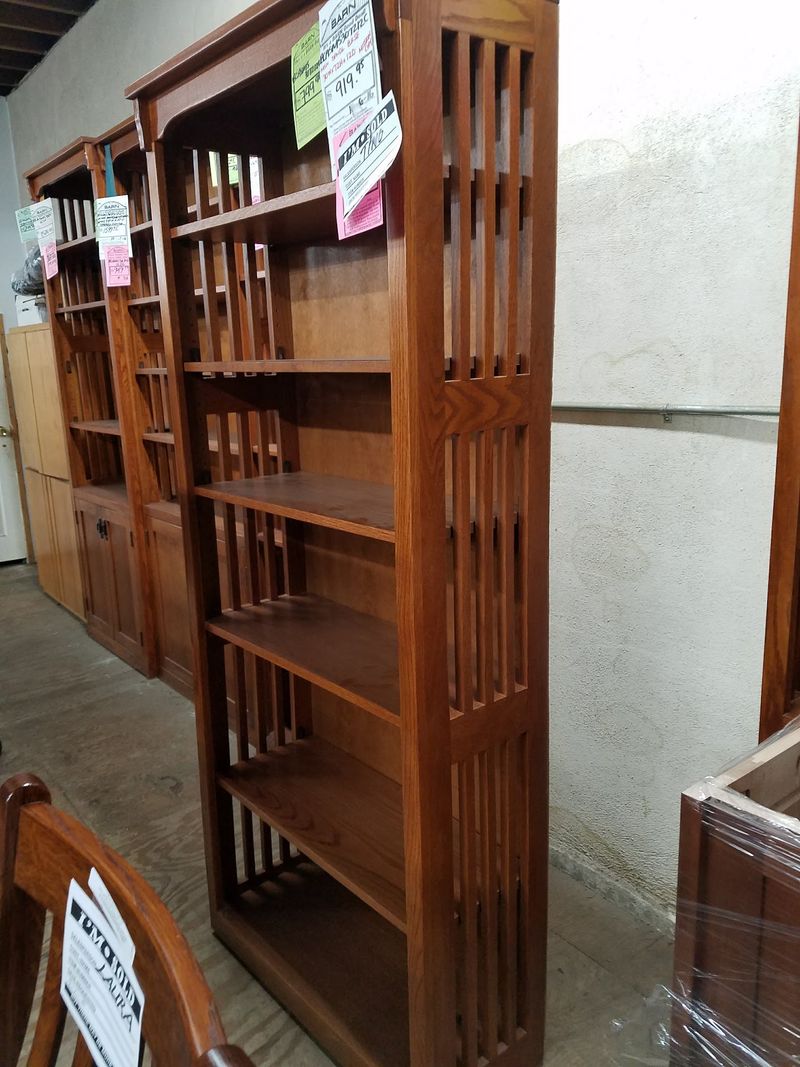
Mission style leads the pack with straight lines, flat panels, and joinery left visible on purpose. Nothing hides, which is sort of the point.
Shaker pieces take simplicity even further. Tapered legs, clean surfaces, zero ornamentation, built around the idea that usefulness is its own kind of beauty.
Traditional designs swing the other direction with curved aprons, carved details, and deeper stains that suit formal dining rooms.
Farmhouse and rustic looks bring rougher textures, chunky trestle bases, and live-edge slabs that keep the tree’s original outline. Mid-century modern shows up too, with tapered legs and low profiles, and industrial pieces mix hardwood tops with black metal frames.
Transitional designs split the difference for people who cannot commit.
This Van Nuys showroom leans heavily into Arts and Crafts territory, carrying Craftsman, Stickley-inspired, and Greene and Greene designs alongside traditional and transitional collections.
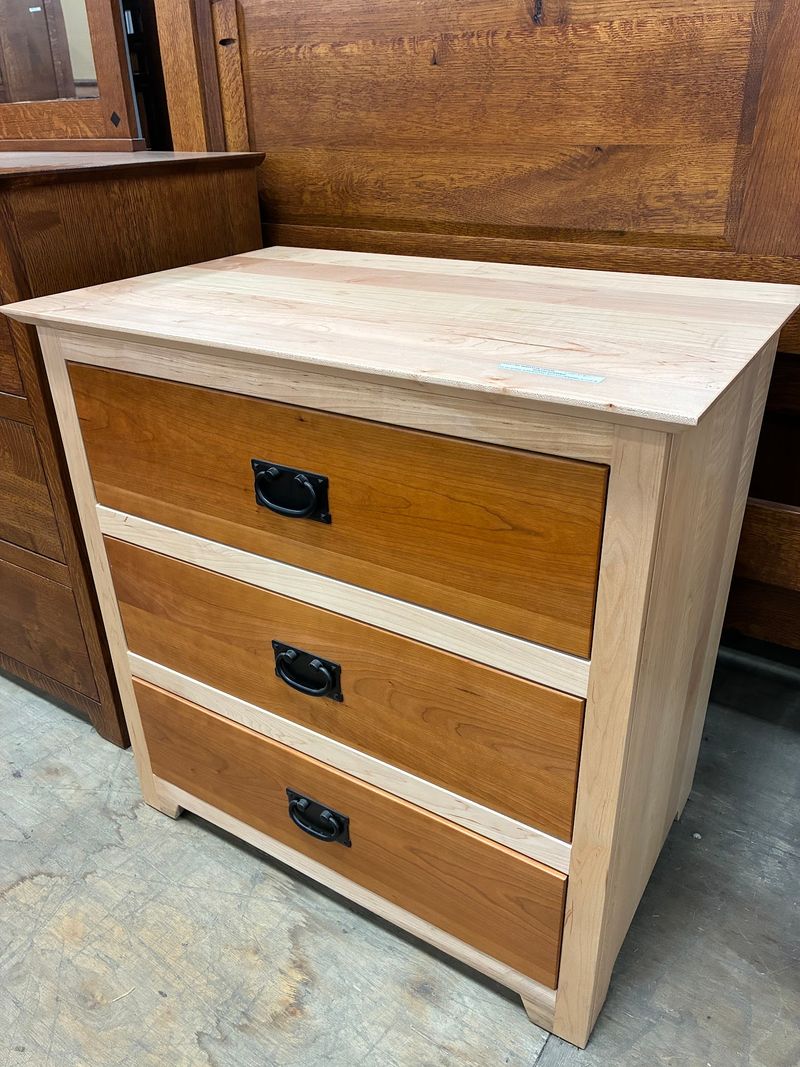
Greene and Greene nightstands have shipped from here as far as Atlanta.
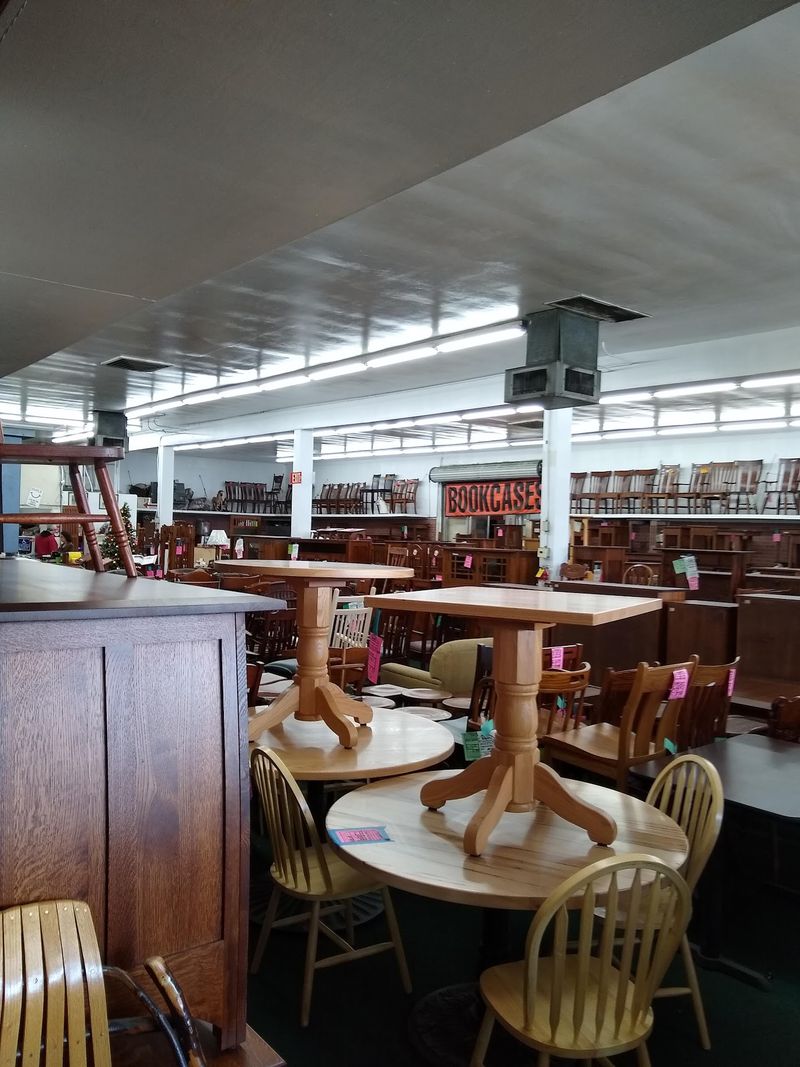
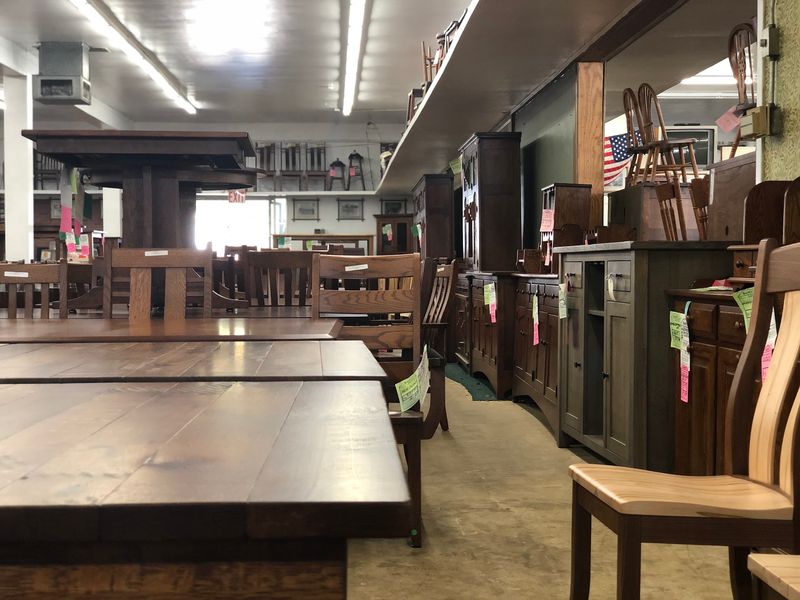
Bookcases, hutches, bedroom sets, dining tables, love seats, and recliners all get the same treatment. Walk the floor, and you will spot several eras of American design sharing space, which makes picking one genuinely difficult in the best possible way.
How Amish Furniture Balances Durability And Design
Strong and pretty usually pull in opposite directions. Amish building somehow gets both out of the same set of decisions.
Solid hardwood starts it off, shrugging off dents and dings that would wreck laminate or engineered panels. Density does the heavy lifting.
Then the joinery pulls double duty. Dovetails and mortise-and-tenon connections hold everything together while also creating crisp, clean lines with no visible screw heads or plastic caps.
What makes a piece last is the same thing that makes it look expensive. Efficient, honestly.
Finishes go on by hand, layer by layer, rubbed in rather than sprayed on and rushed out. That process protects the surface while pulling out the grain, the figure, and the little color shifts that make one board different from the next.
Two walnut tables from the same shop will never look identical.
Hand sanding between coats is where the texture comes from that smooth feel that makes people touch a tabletop without thinking about it. Small detail, big impression.
Because the design language stays fairly restrained, these pieces age well across changing decor trends. A Craftsman-style bookcase looked right in 1975 and still looks right now.
Buy a hutch or a bedroom set from this Sepulveda Boulevard barn, and the odds are good it will still be earning compliments long after the paint colors around it have changed three times.
Customizing To Match Home Aesthetics
Ever measured a wall, fallen in love with a dresser, and discovered it misses by four inches? Custom ordering solves that problem permanently.
Here, the sizing is negotiable. Dining tables get built to specific lengths, dressers get sized for awkward nooks, and bookcases get adjusted for ceiling height.
Wood species is your first call, then stain color, then hardware. The same design in white oak with a light finish reads completely different from walnut with a dark rub.
Staff pulls sample boards and stain chips so nobody has to guess from a screen. Customers bring in photos of their rooms and get honest feedback about what will actually work.
Leg styles, edge profiles, upholstery fabrics, and soft-close drawer glides all get chosen individually. Slab tables get selected piece by piece, since no two slabs share the same edge or figure.
Custom bathroom vanities are part of the lineup as well.
Handcrafted work takes time, and lead times for custom orders often run a couple of months or longer depending on the shop’s queue. Anyone expecting same-week delivery should plan accordingly.
The tradeoff is a piece nobody else owns, sized exactly for the space it lives in. Floor models are available too, for people whose patience has limits and whose measurements happen to cooperate.
The History Of Amish Furniture In California
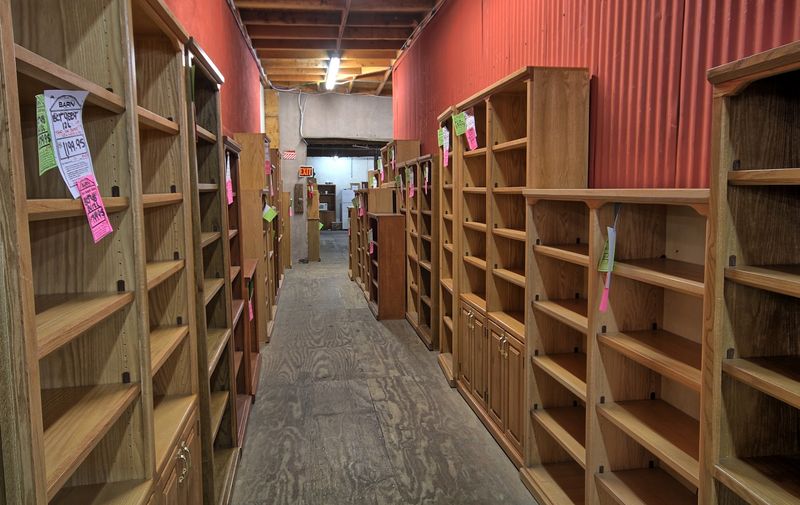
Here is a plot twist. California has essentially no Amish community, aside from one short-lived settlement near Salinas that started in 1913 and dissolved within about a year.
So the furniture travels. Most of it is built in Pennsylvania, Ohio, and Indiana workshops, then shipped west to retailers who know what they are looking at.
The Van Nuys building itself has a longer local backstory than the Amish connection. It opened in 1890 as Whittler’s Barn, selling unfinished furniture to farmers working the surrounding valley land.
Phil Tuberman bought the operation in 1945. For a stretch, he sold bicycles alongside the unfinished pieces, then dropped the bikes entirely by 1949.
From there it became a furniture destination and never looked back. The company expanded to seven Southern California stores by 1996 and has specialized in Arts and Crafts Amish furniture for close to six decades.
Leon Tuberman runs things now, keeping the family thread intact across three generations of ownership.
Nationally, Amish furniture caught mainstream attention back in the 1920s as machine-made goods flooded the market and people started missing the real thing. Van Nuys got its own pipeline to that tradition well before most of the country did.
More than seventy years later, orders still ship from this barn to homes across America.