
Families Have Ordered All-You-Can-Eat Catfish At This Tennessee Restaurant For Nearly A Century
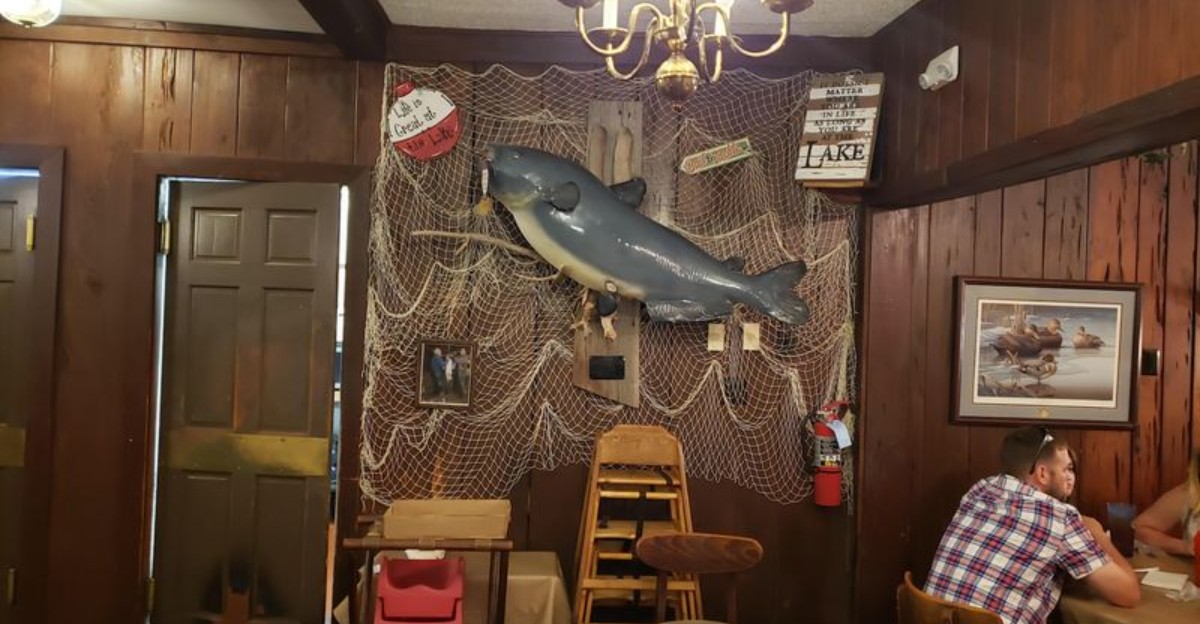
Somewhere out in the flat, quiet farmland of northwest Tennessee, past cotton fields and cypress trees, there is a dining room that has been frying catfish since 1921. It does not look like much from the road, and that is part of the fun.
Inside, platters of hot fish keep coming until you wave the white flag, and the sides show up family-style like Sunday dinner at your grandmother’s house. Some families have been showing up for four and five generations, which tells you more than any menu could.
A Century-Old Dining Room Across From Tennessee’s Only Natural Lake
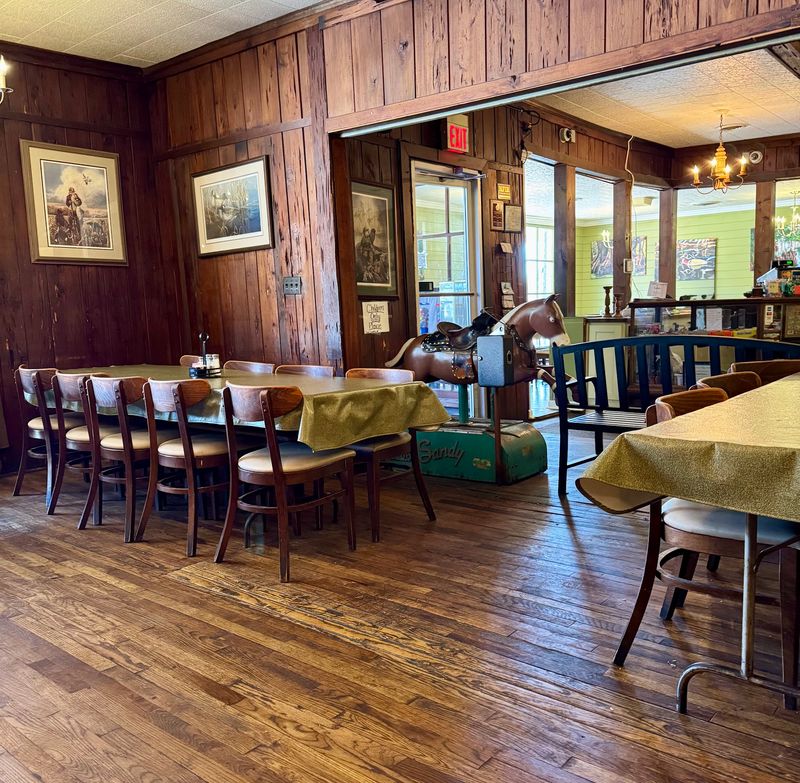
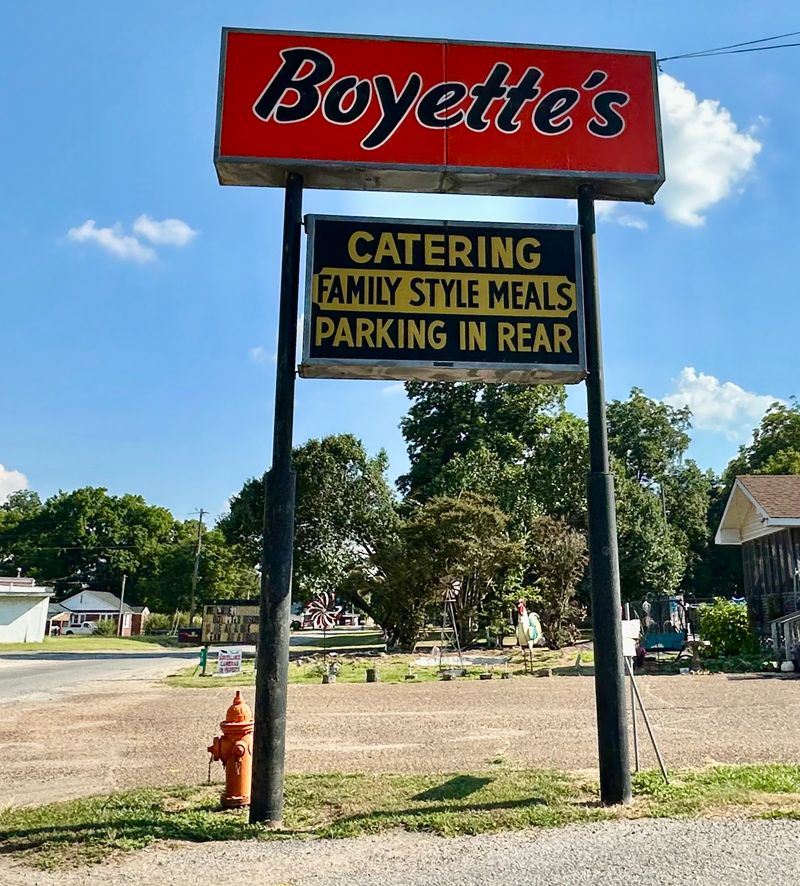
Pull up at 10 Boyette Rd in Tiptonville and the first thing you notice is how ordinary the building looks. Low, wide, plain, sitting almost directly across the road from the Reelfoot Lake State Park visitor center in the far northwest corner of Tennessee.
Boyette’s Dining Room opened in 1921, first as a small grocery store, and grew into a fish restaurant that now seats more than 300 people under cypress-paneled walls. Nannie Boyette and her husband, Red, started the whole thing.
The business later passed down through the family to sisters Jan Boyd and Fran Hearn.
Reelfoot Lake itself is the reason a restaurant this size exists in a town this small. The lake formed after the New Madrid earthquakes of 1812 and remains the only natural lake in Tennessee, drawing anglers, birders, hikers and duck hunters year-round.
Those visitors need feeding, and for more than a hundred years this is where they have gone. Google reviewers give the place 4.6 stars across more than a thousand ratings, which is a lot of agreement for a spot this far off the interstate.
From Nannie and Red’s Grocery Counter to Four Generations of Owners
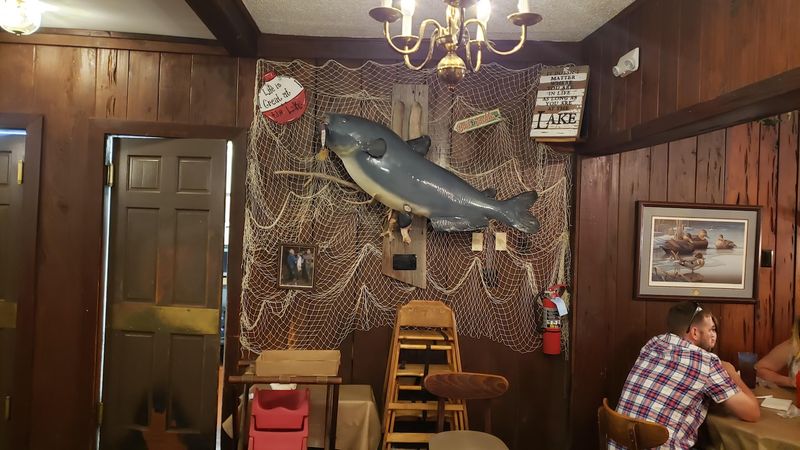
Picture 1921 in rural Lake County: dirt roads, farm wagons, and a little grocery store where you could buy flour, tobacco and a plate of fried fish. That store belonged to Nannie Boyette and her husband, Red, and the fish part slowly took over everything else.
Cooking for hunters and fishermen who came out to Reelfoot Lake turned into a full dining room. Then the dining room grew again, and again, until the family was seating hundreds of people at a time.
Ownership eventually landed with sisters Jan Boyd and Fran Hearn, keeping the operation in the same family line rather than selling it off to a chain or a developer.
What strikes longtime customers is how little has shifted. Regulars talk about eating here with grandparents forty and fifty years ago and finding the same catfish, the same slaw, the same unhurried rhythm on their most recent visit.
Restaurants that survive a century usually do it by changing constantly. Boyette’s seems to have managed the opposite trick, and diners clearly reward it for that stubbornness.
The All-You-Can-Eat Catfish That Built the Reputation
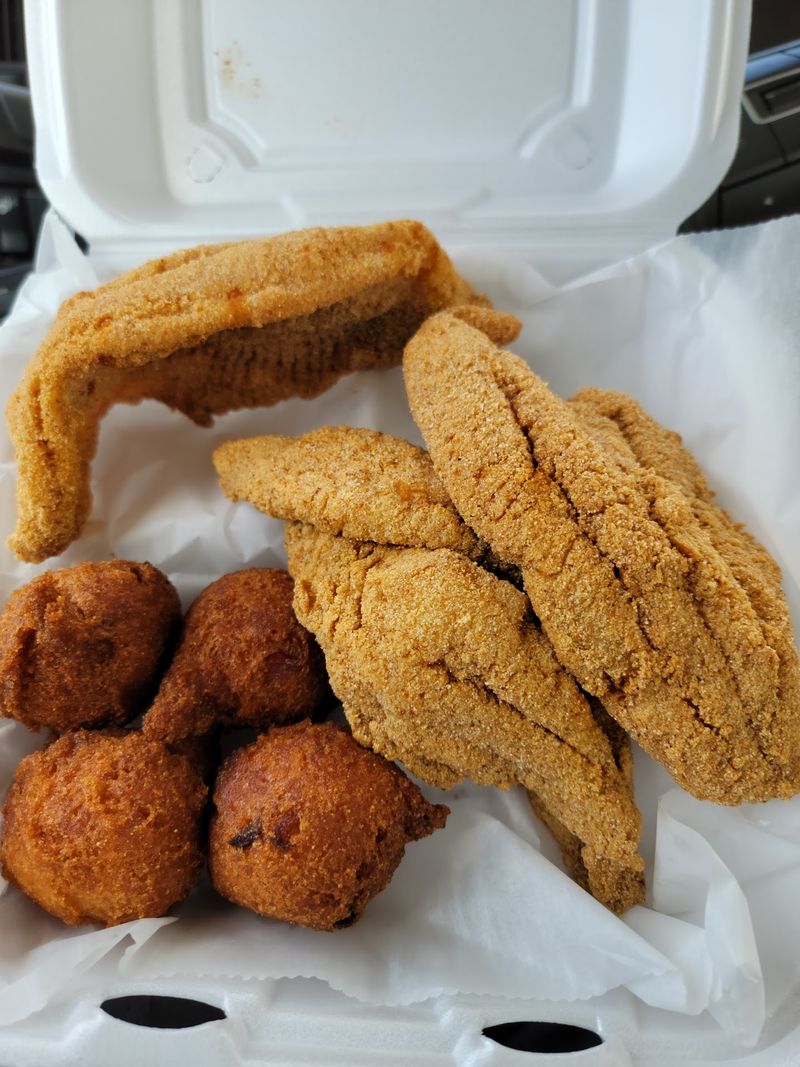
Order the catfish and a platter arrives hot, golden, and heavier than you expect. Finish it, and another one shows up.
That is the whole arrangement, and it has been the draw here for generations.
The fish is U.S. farm-raised, cornmeal-crusted, and fried so the outside crackles while the middle stays moist and flaky. Catfish is mentioned in guest reviews more than any other item, by a wide margin, which is not surprising given the sign out front.
In 2025 the all-you-can-eat fried catfish ran around $16, and the restaurant’s overall price range sits in the $10 to $20 window. For a full plate plus refills plus family-style sides, that math works out well for most families.
Not every plate lands perfectly. A few diners have mentioned fish that came out overcooked around the edges, or portions that felt smaller than they hoped on a busy day.
Far more, though, describe leaving with a to-go box and no room for dessert. Prices and menu details can change, so confirm before you commit to the drive.
Hush Puppies, Onion Rings, and the Tartar Sauce People Talk About
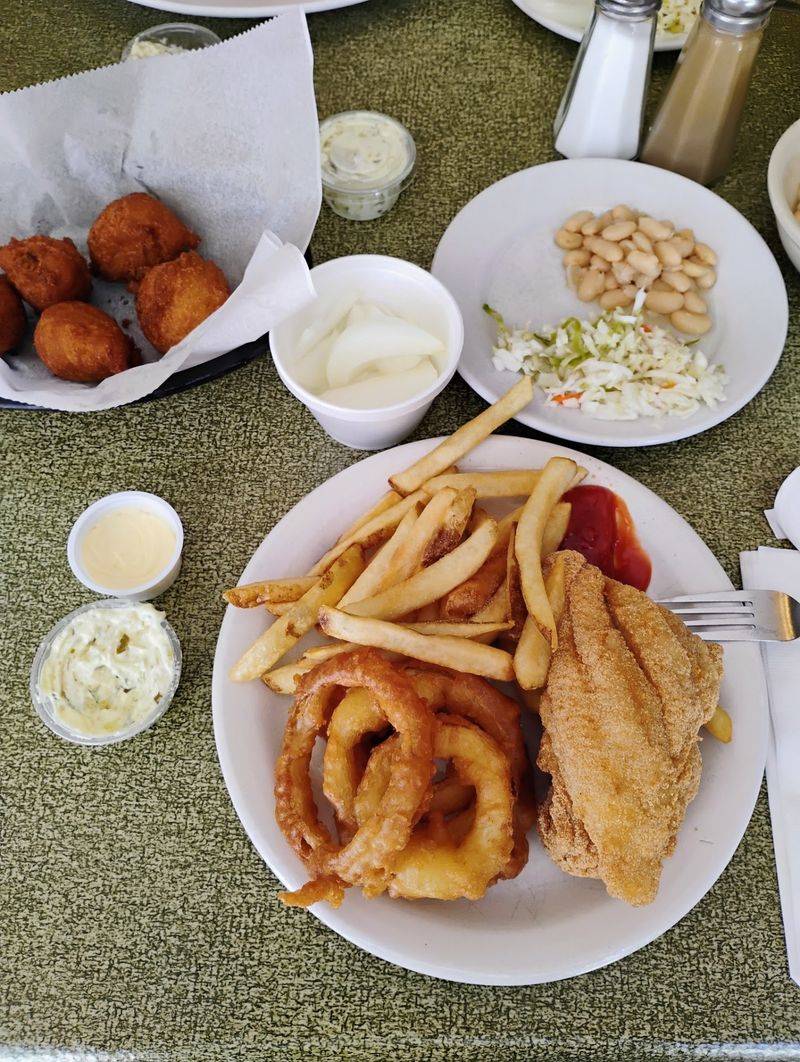
Ask around about what to order beyond the fish and two answers come back fast: onion rings and hush puppies. The rings are homemade and thick, and they get named in guest comments almost as often as the catfish itself.
Hush puppies here lean oniony and come out hot enough to steam when you break one open. Regulars say they disappear from the basket before the main platters even reach the table.
Then there is the tartar sauce. Made in-house and loaded with onion, it has its own small fan club, and people mention it specifically when describing what they miss between visits.
Sides arrive family-style, which means bowls in the middle of the table rather than a scoop on your plate. Expect creamy coleslaw, green beans, white beans, and French fries that visitors frequently single out as excellent.
Fried green tomatoes turn up as an appetizer and have won over more than a few first-timers. Between the passed bowls and the refilled platters, the table fills up quickly, so pace yourself early.
Frog Legs, Country Ham, and the Rest of the Menu
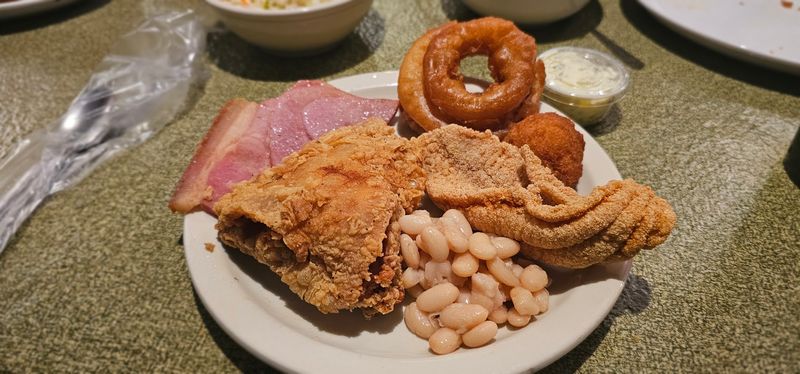
Frog legs on a menu tend to divide a table into the curious and the cautious. At Boyette’s they come out large and battered, and plenty of first-timers who tried them on a dare have reported becoming converts.
Country ham is another old-school pick, salty and sliced thick, and it turns out to be the item some longtime guests drive in for specifically. One family recently celebrated a 93rd birthday here because ham was the guest of honor’s favorite.
Quail appears on the menu too, along with Certified Angus Beef steaks for anyone at the table who simply does not want fish. Fried chicken and cheeseburgers cover the picky-eater contingent, though opinions on the chicken run more mixed than on the catfish.
Grilled options exist as well, but the kitchen’s strongest work clearly happens in the fryer.
Think of the wider menu as insurance. In a group of eight, someone always wants a burger, and nobody has to be dragged along unhappily just so the rest of the party can eat fish.
Cypress Walls, Long Tables, and Room for 300
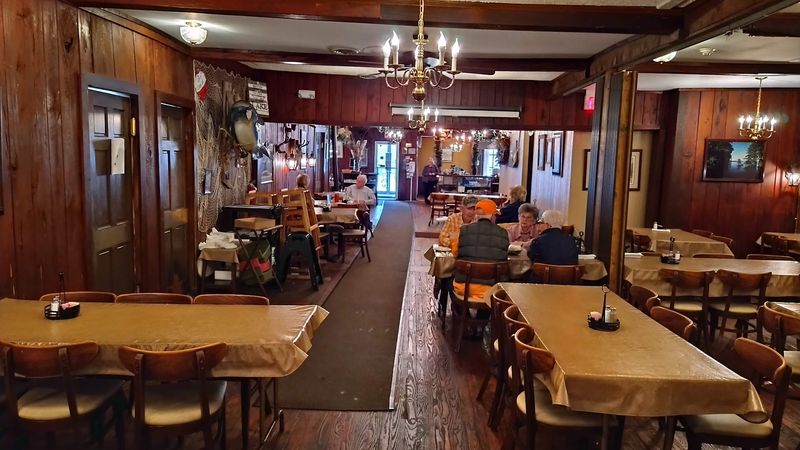
Step inside and the room opens up further than the exterior suggests. Cypress paneling covers the walls, tables stretch back in rows, and the whole space can hold more than 300 diners at once.
Noise is part of the deal. Silverware, conversation, servers carrying platters, kids in booths, a hunting party at a long table in the corner.
Guests often describe it as small-town atmosphere with big energy.
Nobody dresses up. You will see camouflage jackets next to church clothes on a Sunday afternoon, and neither group looks out of place.
Families with young children fit in easily here, which matters when your five-year-old decides mid-meal that the floor is more interesting than the chair. Service moves fast, and food generally arrives hot and quickly even when the room is full.
Weekend lunches around noon can mean a wait of twenty minutes or so, especially in warmer months when the state park is busy. Weekday visits and early evenings tend to be calmer if you prefer elbow room and a shorter line at the door.
Getting There From Memphis, Nashville, and Points Between
Distance is the main hurdle. Tiptonville sits about 101 miles from Memphis, roughly 2 hours and 10 minutes of driving, with the last stretch running through flat farmland and small towns.
From Nashville the trip is longer, close to 181 miles and about 4 hours each way, which pushes it into overnight territory unless you are a committed early riser. Jackson and Dyersburg are considerably closer if you happen to live in West Tennessee.
Gas plus a catfish plate for two still keeps a day trip from Memphis well under what a nice dinner in the city would run.
Nobody drives four hours purely for fried fish, and honestly, nobody should. The smart plan pairs the meal with Reelfoot Lake State Park directly across the road, turning a long haul into a genuine day out.
Cell service can thin out in spots along the way, so download directions before you leave. Roads are easy and mostly two-lane once you get past Dyersburg, with almost no traffic to speak of.
Pairing Lunch With Reelfoot Lake for a Full Day Out
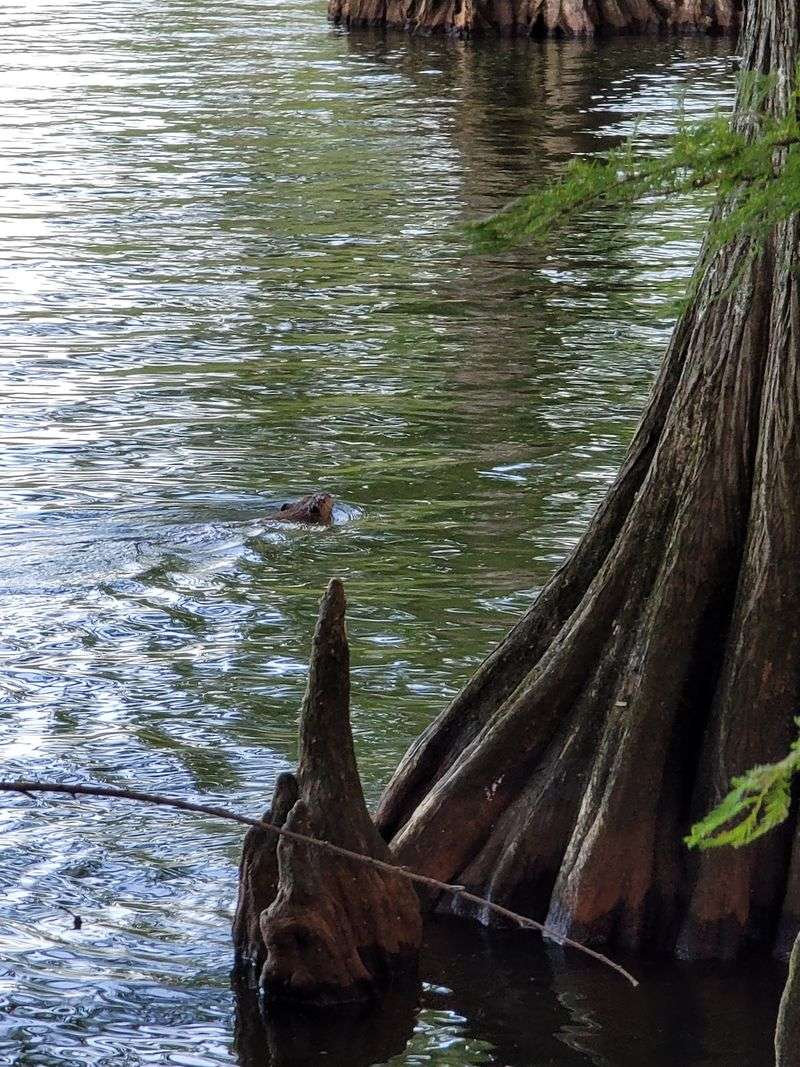
Cypress trees standing in open water, knees poking up everywhere, herons stalking the shallows. Reelfoot Lake looks like nowhere else in Tennessee, and it is a two-minute walk from the table where you just ate.
The lake formed when the New Madrid earthquakes of 1812 reshaped the land, and the state park now offers boating, fishing, hiking trails and some of the best birding in the region.
Winter is the standout season. Bald eagles gather here in numbers between roughly December and February, and spotting one from a boardwalk is the kind of thing a kid remembers for years.
Fall brings cooler walking weather and thinner crowds, making it a strong window for a combined trip. The visitor center sits directly across from the restaurant, so the logistics could hardly be simpler.
Put it together and you get a full Tennessee Saturday for modest money: a hundred-year-old fish house, free park admission, and scenery nobody expects out of the northwest corner of the state. Confirm park programs and restaurant hours before you set out, since both shift with the seasons.