
8 Nevada Areas Where Black Bears Can Show Up In Early Fall
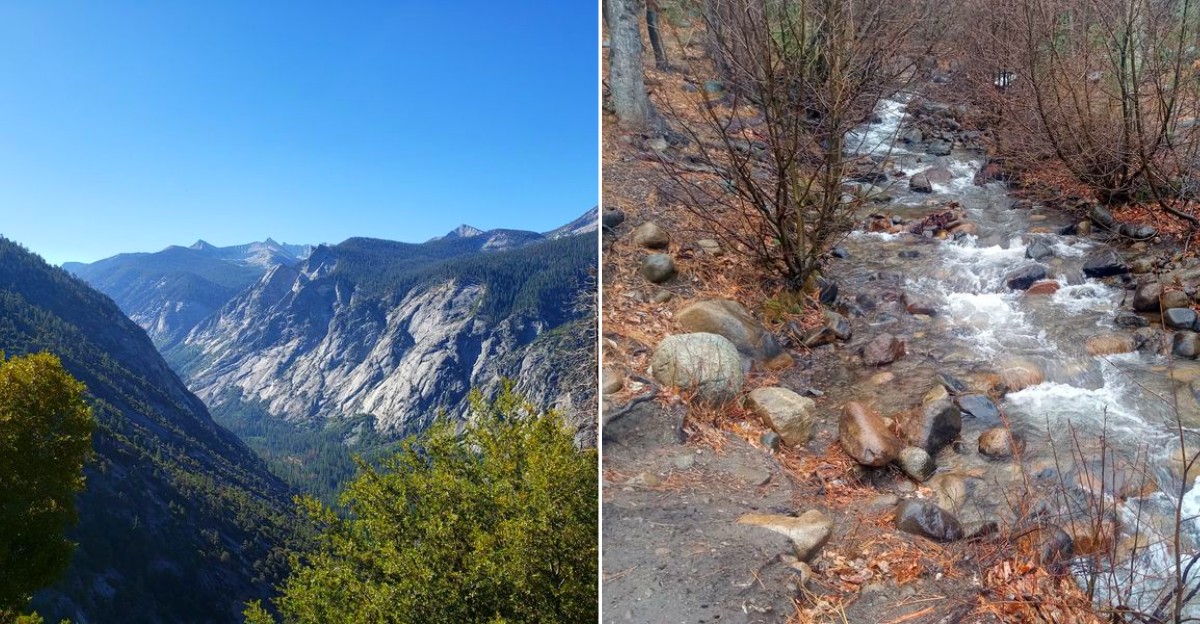
Early fall changes the rhythm of bear country. Black bears spend much of this season searching for enough calories to prepare for winter, which means you may notice more movement near roads, neighborhoods, recreation areas, and other developed spaces.
That seasonal activity matters in Nevada, especially where communities meet forests and mountain habitat. I am looking at eight areas where you should be particularly aware of black bears and the conditions that can bring them closer to people.
You do not need to treat every outdoor stop like a bear encounter is waiting around the corner. You simply need to know where you are, pay attention, and remove the things that encourage bears to linger.
Trash, pet food, birdseed, fallen fruit, and other scented items can all attract attention. A few careful habits give you a much better chance of seeing these landscapes without creating problems for the wildlife that shares them.
1. Lake Edge Awareness In Incline Village And Crystal Bay
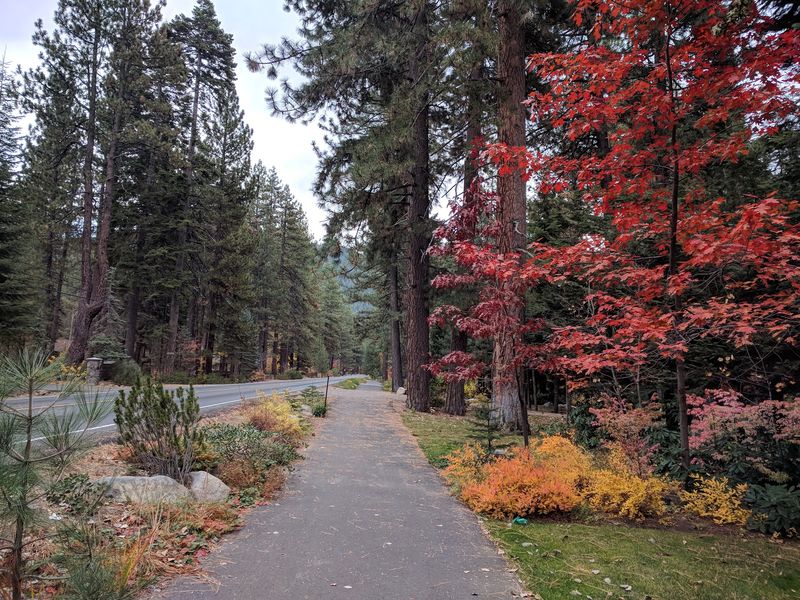
Incline Village and Crystal Bay put you directly in Lake Tahoe bear country, where developed neighborhoods meet thick Sierra forest. That combination gives black bears plenty of natural habitat while also placing human food, garbage, vehicles, and homes within easy reach.
You should expect bear awareness to be part of everyday life here rather than something reserved for remote trails.
A useful reference point for the area is 969 Tahoe Blvd, Incline Village, NV 89451, but bear movement is not confined to one street or neighborhood.
The surrounding community extends into wooded terrain, and bears can move between developed and natural areas with little warning.
Recent activity reinforces the point. In April 2026, authorities responded after a bear became trapped inside a vehicle in Incline Village. Officials again reminded residents and visitors to remove food, trash, and scented items and keep vehicle doors locked.
Washoe County also provides bear-awareness information specifically for Incline Village and Crystal Bay. Early fall gives you another reason to pay attention. Bears enter a period called hyperphagia as winter approaches, increasing their focus on calorie-rich food.
You can help by securing garbage, removing pet food, dealing with fallen fruit, and keeping scented items out of vehicles.
If you see a bear, give it room and resist the urge to move closer for a photo. Tahoe wildlife officials repeatedly emphasize that allowing bears space to remain wild is better for people and animals alike.
2. Bear Country Climbs Kingsbury Grade Near Stateline
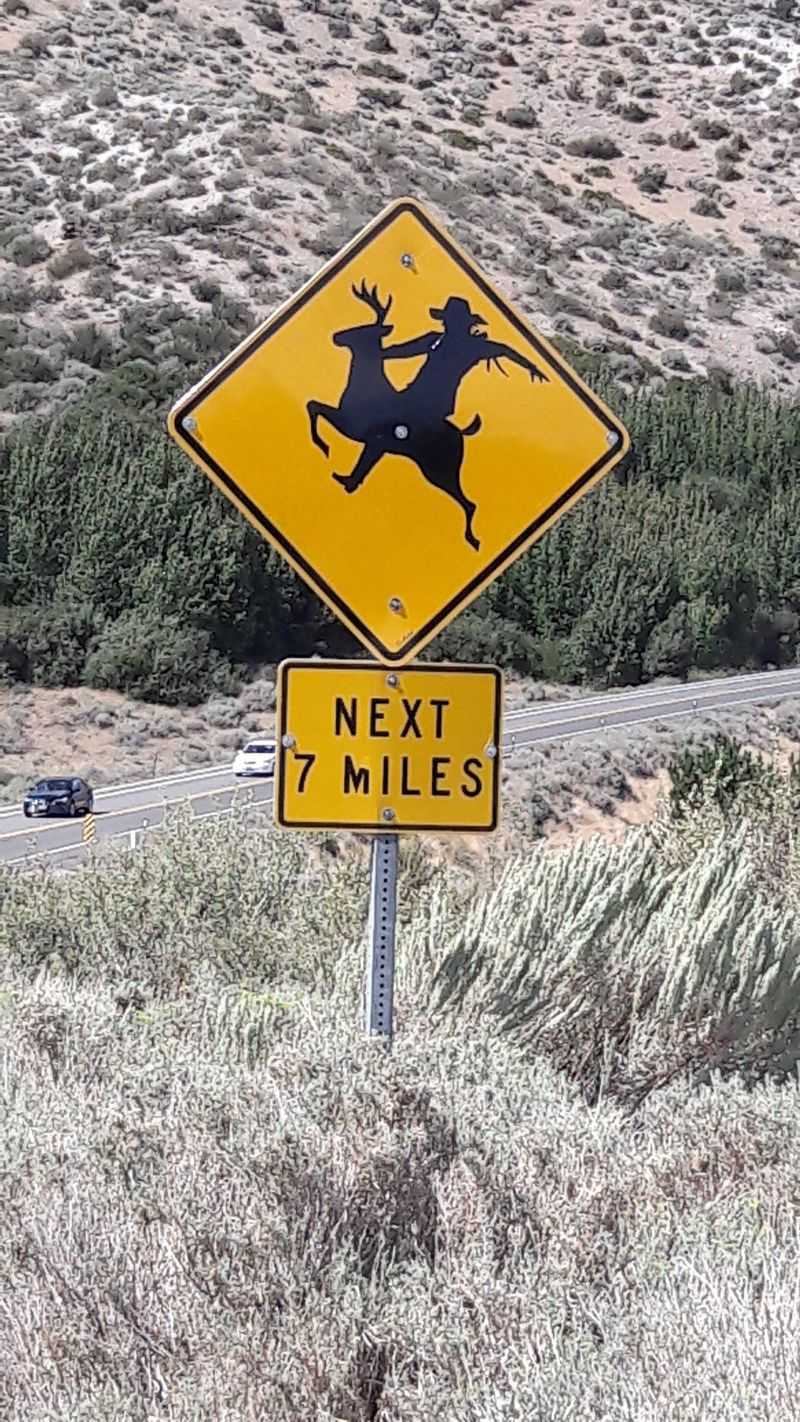
Kingsbury Grade rises quickly away from the developed Stateline area and into wooded mountain terrain. You can see why bears use this landscape once you notice how closely homes, roads, forest, and drainage corridors overlap.
The setting gives wildlife several routes through an area that also carries regular residential and visitor traffic.
Use 169 US-50, Stateline, NV 89449 as a geographic reference for the Stateline side, then remember that bear activity extends well beyond that single point. Kingsbury Grade itself climbs west of the Carson Valley and connects developed areas with Sierra habitat.
This is not simply theoretical bear country. Nevada wildlife officials responded to a bear incident off Kingsbury Grade in November 2025. They noted that bears were still in hyperphagia, actively searching for calories before denning.
The agency specifically pointed to unsecured garbage, pet food, birdseed, grills, and other scented items as attractants that should be removed.
Transportation research also identifies part of the Kingsbury Grade and Foothill Road area as a black bear wildlife-vehicle collision hotspot. That makes road awareness just as important as household food storage.
If you are driving here early or late in the day, keep your attention on the road and shoulders. You should slow appropriately if wildlife appears, but never stop in the roadway simply to watch a bear.
Nevada wildlife officials advise drivers to continue cautiously and remain alert for additional animals nearby.
3. Forest And Shoreline Meet Around Glenbrook And Cave Rock
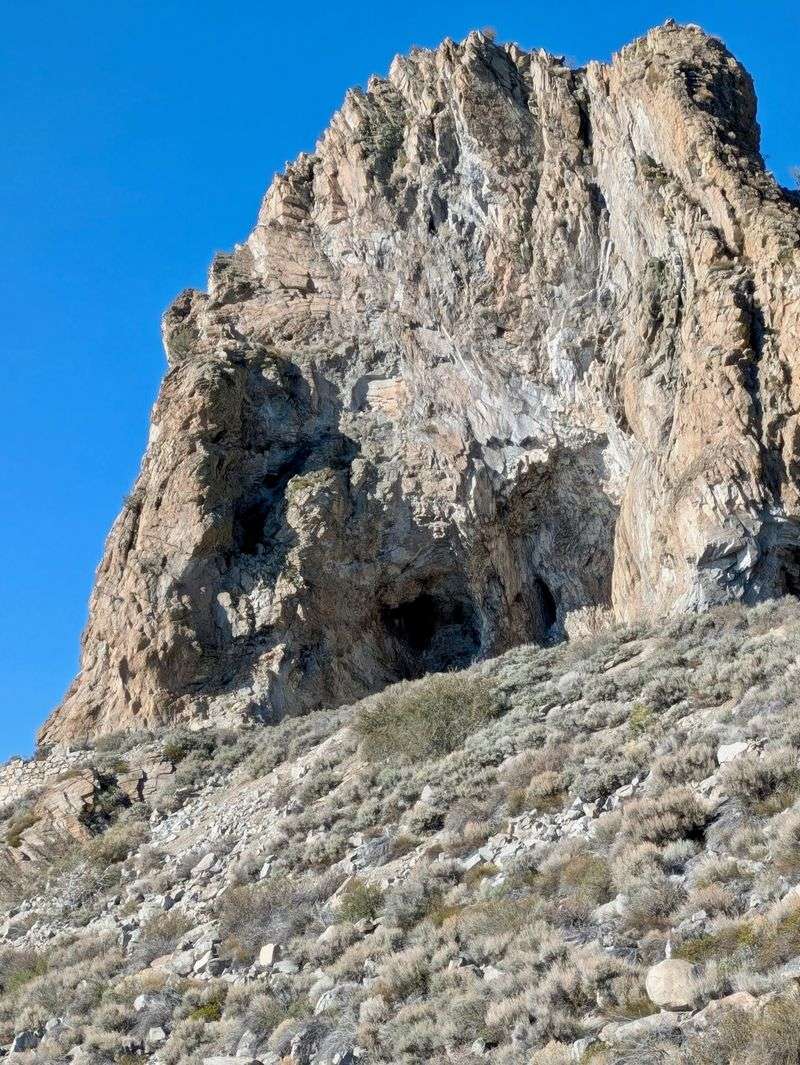
Glenbrook and Cave Rock occupy another stretch of Nevada’s Lake Tahoe shoreline where developed areas sit beside forested slopes. You get houses, roads, recreation access, rocky terrain, and dense cover within a relatively compact area.
For a black bear moving through the Tahoe Basin, those landscape connections matter more than neighborhood boundaries.
A practical landmark is 1430 US-50, Glenbrook, NV 89413, near the Cave Rock area. You should treat the broader shoreline and surrounding forest as bear country rather than expecting activity at one exact address.
Glenbrook’s community information even directs residents with bear issues toward wildlife resources, reflecting the reality of living beside Tahoe habitat. Historical Nevada wildlife records also place black bears around Glenbrook.
Tahoe agencies still advise residents and visitors across the Basin to manage bear attractants carefully.
Food storage matters if you stop for outdoor recreation. Snacks, garbage, coolers, pet food, and other scented items should remain secured instead of being left where an animal can investigate them.
Tahoe bear experts note that repeated access to human food can teach bears to return to developed places.
You should also keep vehicle doors locked and windows closed when food or scented items have been inside. Bears in the Tahoe Basin can become accustomed to human environments, so the goal is to make developed areas unrewarding.
That simple approach lets you enjoy one of the lake’s dramatic stretches while giving local wildlife fewer reasons to linger near people.
4. Caughlin Ranch Brings Bear Country To Reno’s Edge
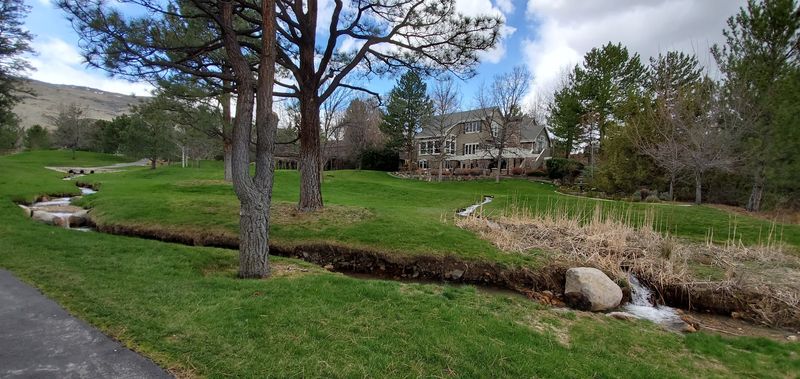
Caughlin Ranch can feel fully suburban, but its geography tells a more complicated story. The community stretches across a large area near Reno’s western foothills and includes natural open spaces, an extensive trail system, ponds, and the Alum Creek corridor.
Forest and mountain country are also close enough to give wildlife pathways toward developed neighborhoods.
You can use 3851 Cashill Blvd, Reno, NV 89509 as a central reference point while remembering that bear movement can occur across the wider community.
There is recent evidence to support keeping this area on your radar. A home camera captured a bear near Caughlin Ranch in August 2026, showing that black bears still appear along Reno’s developed western edge.
Fall can make those appearances easier to understand. Nevada wildlife officials have reported more bear calls around Reno during hyperphagia.
Bears move into valleys in search of berries, insects, and other food. Human attractants can add an easier option if residents leave them accessible.
You can make your property less interesting to a passing bear by collecting fallen fruit, securing garbage, removing pet food, and managing bird feeders carefully. Keep garage doors closed when they are not being used, especially if food, trash, or other scented material is stored inside.
If you are using neighborhood paths near sunrise or later in the day, stay aware of your surroundings. Seeing a bear does not mean something has gone wrong. Giving it plenty of space and making sure it finds no food reward helps keep the encounter brief.
5. Reno’s Western Corridors Keep Wildlife Close
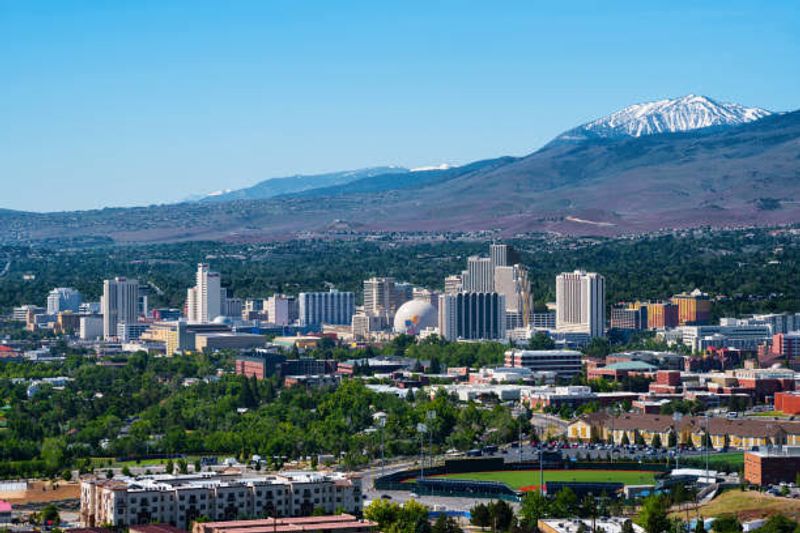
Reno is a city, but its western side remains closely connected to the Truckee River, foothills, drainage corridors, and Sierra habitat.
Black bears do not recognize the line where a natural area ends and a neighborhood begins, so you can occasionally see them surprisingly far inside developed parts of the city.
One especially useful reference point is Oxbow Nature Study Area, 3100 Dickerson Rd, Reno, NV 89503. The Nevada Department of Wildlife lists black bears among the wildlife found in this Truckee River nature area.
That makes it a stronger example than treating all of South Reno as one sighting zone.
The larger Reno pattern becomes more noticeable in fall. NDOW has reported an increase in bear-related calls as the animals prepare for winter. Sightings can occur across a broad stretch of western Nevada during this period.
You should not interpret that as a reason to expect a bear every time you follow a river path. It simply means the habitat is connected enough that wildlife can appear.
Keep food with you instead of leaving it unattended, dispose of trash properly, and give any bear you encounter a clear route away. If you see one near a road, do not stop traffic for a closer look.
Places such as Oxbow also show why urban wildlife awareness matters. You can be only minutes from busy Reno streets and still share space with animals that move along the river and nearby natural corridors.
6. Mt. Rose Highway And Galena Creek Stay Deep In Bear Habitat
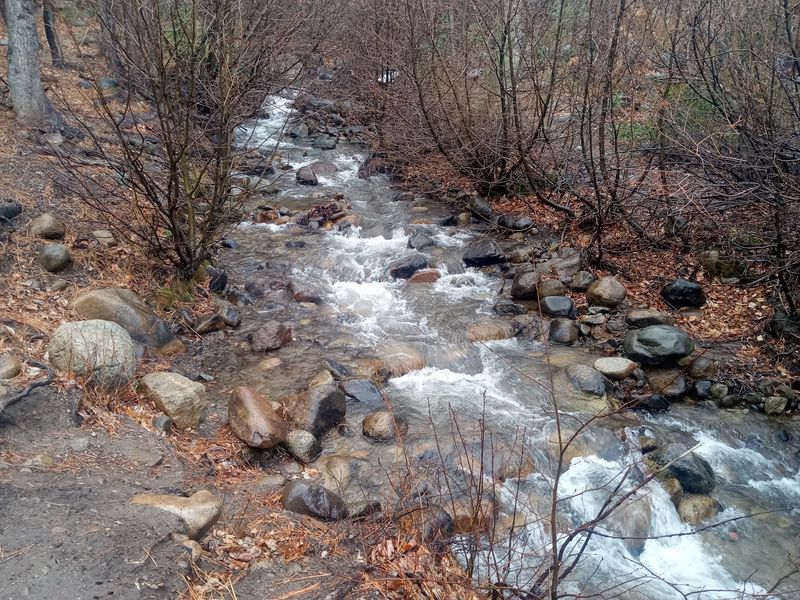
Mt. Rose Highway gives you a much more obvious transition into bear country.
The road climbs through forested Sierra terrain, while Galena Creek adds water, tree cover, trails, and recreation areas that support a range of wildlife. You are no longer dealing only with animals occasionally reaching a neighborhood. You are spending time inside suitable mountain habitat.
The Galena Creek Visitor Center at 18250 Mt. Rose Hwy, Reno, NV 89511 works well as a clear reference point for this section. Nevada’s black bear management boundaries include extensive habitat around Mount Rose. That puts this corridor firmly within established bear range.
You should handle food carefully during any stop here. Secure snacks and scented items, use proper trash containers, and never leave leftovers near picnic areas or trail access points.
Bear awareness becomes especially relevant during early fall because animals are focused heavily on feeding before winter. NDOW describes hyperphagia as a period that can run through much of autumn, with bears putting significant energy into finding calories.
If a bear appears near the road, keep your distance and stay inside your vehicle when that is the safest choice. Do not create a traffic problem by stopping in the travel lane.
The best approach is simple. You are visiting habitat already used by wildlife, so behave as though a bear could be nearby even when you cannot see one. That means clean stops, secured food, controlled pets, and enough distance for an animal to continue on its way.
7. Bear Country Reaches Carson City’s Kings Canyon
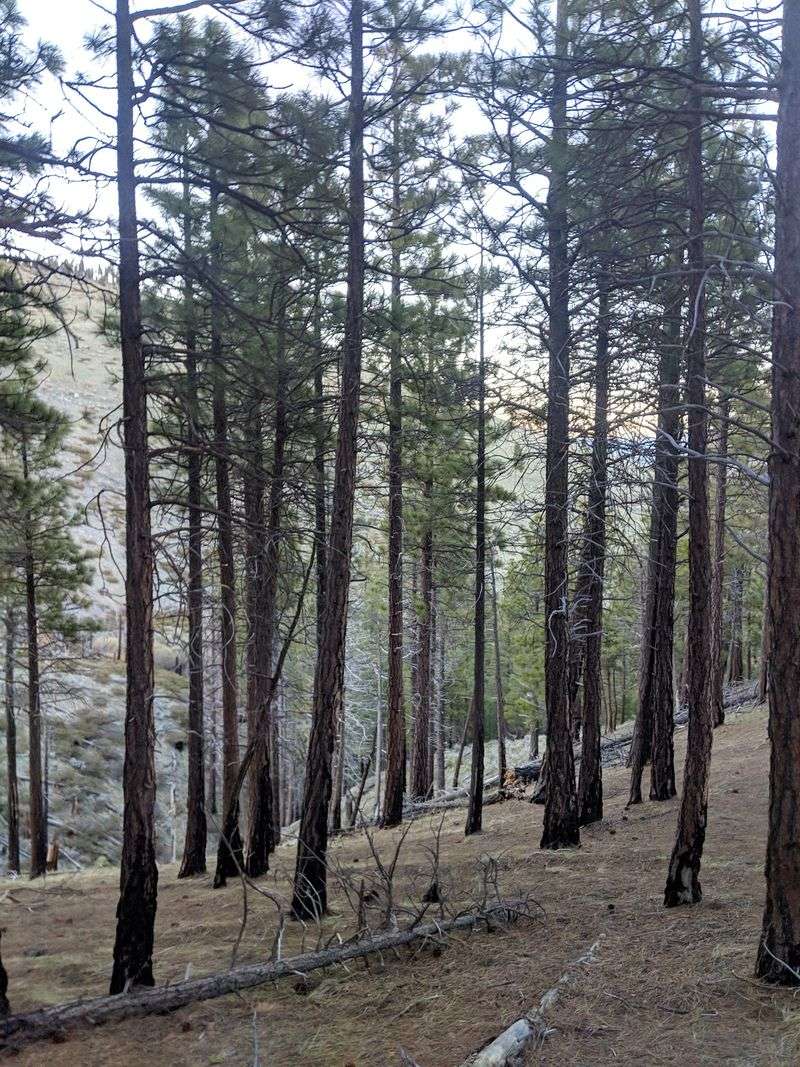
Carson City’s western edge rises quickly toward the Sierra foothills, and Kings Canyon is one of the clearest places to see that transition. Neighborhoods and city streets sit below rugged slopes, drainage routes, and open land.
Bears moving through the mountains can therefore reach developed areas without crossing huge stretches of unsuitable habitat.
Kings Canyon Road, Carson City, NV 89703 is the most useful location reference, although there is no single numbered address that represents the entire canyon. The city itself identifies the Kings Canyon trail system as black bear and mountain lion habitat.
There is also documented fall activity here. In September 2022, bears were reported around Kings Canyon Road and near Long Ranch Park, including a mother with cubs. The sightings occurred as bears were actively seeking food before winter.
That makes household habits particularly important along the foothill edge. You should keep garbage secured until collection time, collect ripe or fallen fruit, and avoid leaving pet food or other scented material outside overnight.
The same awareness applies if you are hiking. Give bears a generous amount of space, keep pets controlled, and allow wildlife an open path away rather than trying to approach.
Carson City falls within Nevada’s established black bear range. Occasional sightings near the western foothills are not unexpected. You get a better experience here when you remember that the canyon is both a recreation area and functioning wildlife habitat.
8. Carson Valley Sightings Reach Minden And Gardnerville
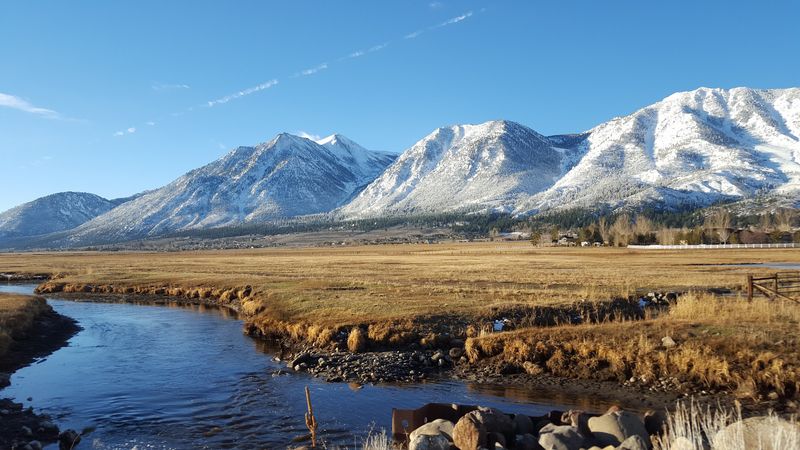
Carson Valley looks more open than the heavily forested Tahoe Basin, but the Sierra rises immediately along its western side. That gives black bears access to foothills, mountain habitat, creeks, agricultural land, neighborhoods, and communities such as Minden and Gardnerville.
You may therefore see bear activity well below the tree-covered slopes.
Use 1604 Esmeralda Ave, Minden, NV 89423 as a central Minden reference point rather than a specific bear-viewing destination. The important feature is the surrounding Carson Valley landscape, which places Minden, Gardnerville, and Genoa close to the base of the Sierra.
Black bears have been documented in this valley. University of Nevada, Reno Extension specifically notes sightings in Gardnerville and nearby Genoa, illustrating how far animals can move beyond heavily wooded mountain terrain.
Local services also continue to treat bear activity as a practical concern. Douglas Disposal currently warns residents about increased bear activity throughout Douglas County, and Gardnerville offers bear-resistant trash containers to residents upon request.
You can reduce the chance of attracting a bear by securing household garbage and keeping pet food, birdseed, compost, and fallen fruit under control. Those precautions become even more useful as autumn progresses.
Carson Valley also proves why you should not assume bears stay high in the mountains. Connected habitat lets them travel considerable distances while searching for natural food.
A little awareness goes a long way here. Give wildlife room, remove easy food rewards, and you can enjoy Nevada’s fall landscape while helping black bears continue moving through it naturally.
Early fall is one of the most interesting times to see how closely Nevada’s communities connect with wild country. Black bears are active, food matters more than ever, and the boundary between mountain habitat and developed areas can be surprisingly thin.
You cannot control where a bear travels, but you can control what it finds when it gets there. Secure food and trash, keep your distance, stay alert on roads and trails, and leave wildlife with every reason to keep moving.
That balance makes these eight areas worth understanding. A sighting is never guaranteed, but knowing how to share bear country can help you enjoy the season with more confidence and respect for the wildlife around you.