
The Mississippi Fall Forest Spot Where The Ghost Stories Have Been Repeated For Over A Century
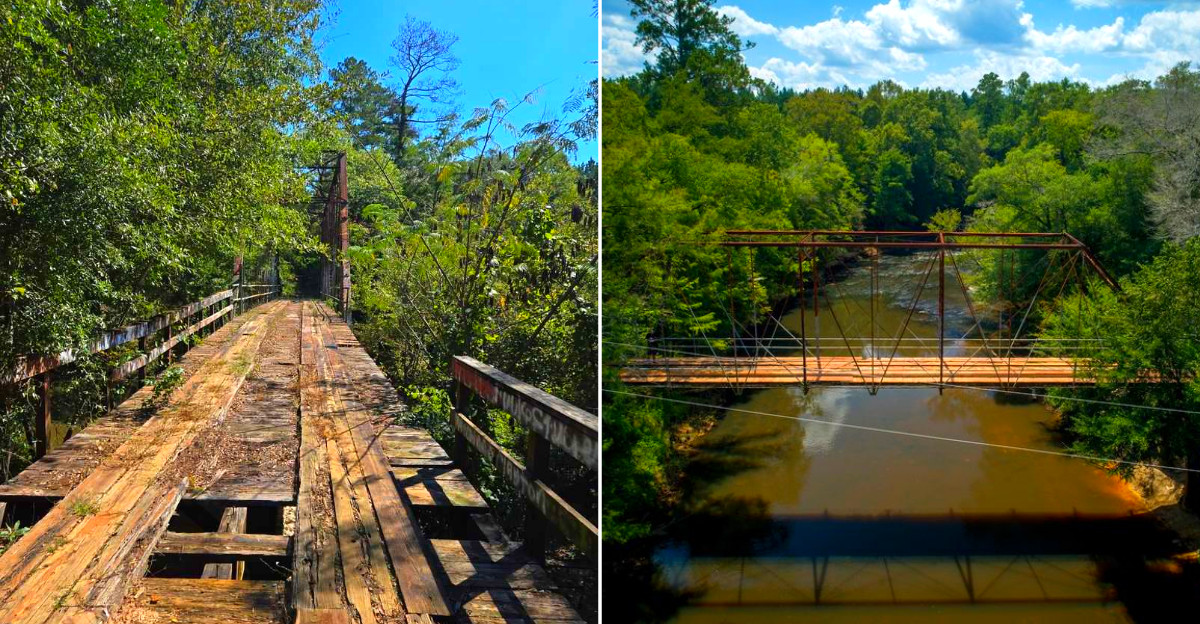
Certain places in Mississippi hold onto their stories the way old iron holds onto rust. A narrow bridge crosses a river out this way, and the tales attached to it have been passed along for more than a hundred years without anybody bothering to check them.
Autumn gives the scene a golden hush. Sweetgum leaves drift down toward the water and gravel crunches underfoot, which is the kind of quiet that makes a story easier to believe than it would be in July.
The legend may be tall. The history behind it is not, and standing there with both in mind is a different experience than reading either one somewhere else.
A Century Of Whispers Above Slow Brown Water
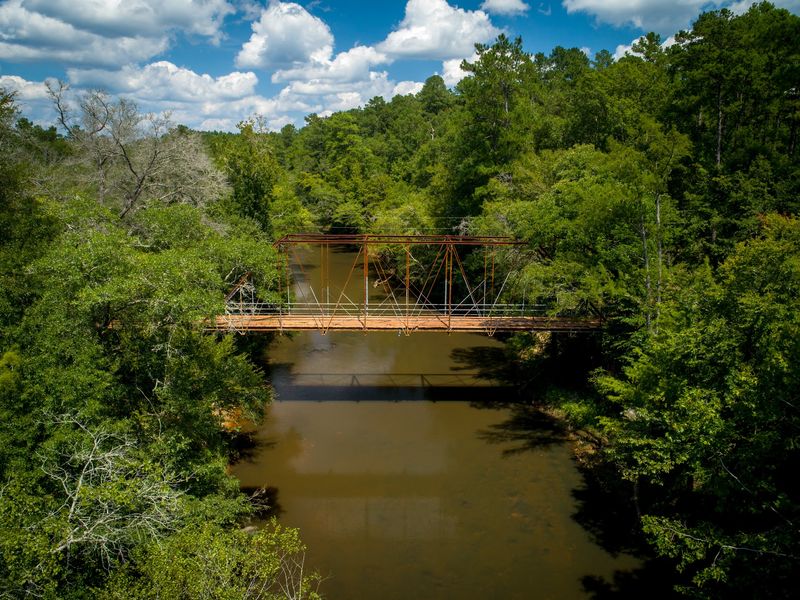
Folklore travels fast in small counties, and this one has been traveling since the 1800s. The story centers on a figure locals call Old Man Stuckey, said to have run an inn beside the river and robbed the travelers who stopped there.
When the community caught on, the tale says he was hanged from the very bridge that carries his name.
Historians will tell you the documentation is thin. There is no solid record proving Old Man Stuckey existed at all, and researchers believe the legend grew from mixed-up local gossip and sensational newspaper reports.
That gap between fact and fable is exactly what keeps people coming. Visitors describe a lantern light moving along the deck after sundown, faint cries in the trees, and splashing in the water when nothing is there to splash.
Most folks who make the trip see none of it, and they still leave grinning. The quiet does something to you out here. Cicadas taper off, the river murmurs, and your imagination fills in the rest.
Mississippi has plenty of pretty overlooks. Few of them come with a hundred years of storytelling attached. The lantern is the detail every version keeps.
Stuckey is said to have stood at the middle of the span and signaled boatmen on the river below, waving them in toward his inn for the night. Later tellings add that when crews came to build the 1901 bridge, they turned up bodies along the riverbank.
Finding Stuckey’s Bridge Down The Gravel
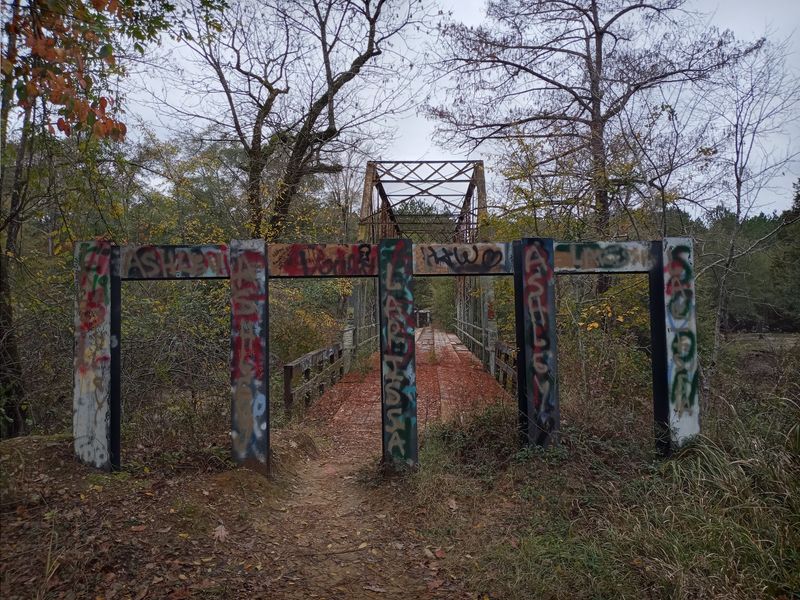
Now for the practical part. The landmark is Stuckey’s Bridge, and it sits along 6170 Stuckey Bridge Road, Enterprise, MS 39330, deep in Lauderdale County about ten to twelve miles southwest of Meridian near the little community of Meehan.
Getting there takes a bit of patience. Travelers usually leave Interstate 59 at exit 142, then follow Meehan-Savoy Road until the pavement gives way to gravel.
Mapping apps have a habit of overshooting the turn, so watch your route carefully and slow down when the road narrows. After rain, that last stretch turns slick and soupy, which is not ideal for motorcycles or low-clearance cars.
Plenty of visitors park short of the bridge and walk the final half mile. Honestly, the walk is a treat, with pine straw underfoot and hardwoods showing off their October colors.
Bring water and a packed lunch, because there are no shops, no restrooms, and no vending machines out here. The nearest supplies are back toward town.
Cell service can wobble, so screenshot your directions before you leave the interstate. Old-fashioned preparation suits an old-fashioned road.
Iron, Rivets, And The Class Of 1901
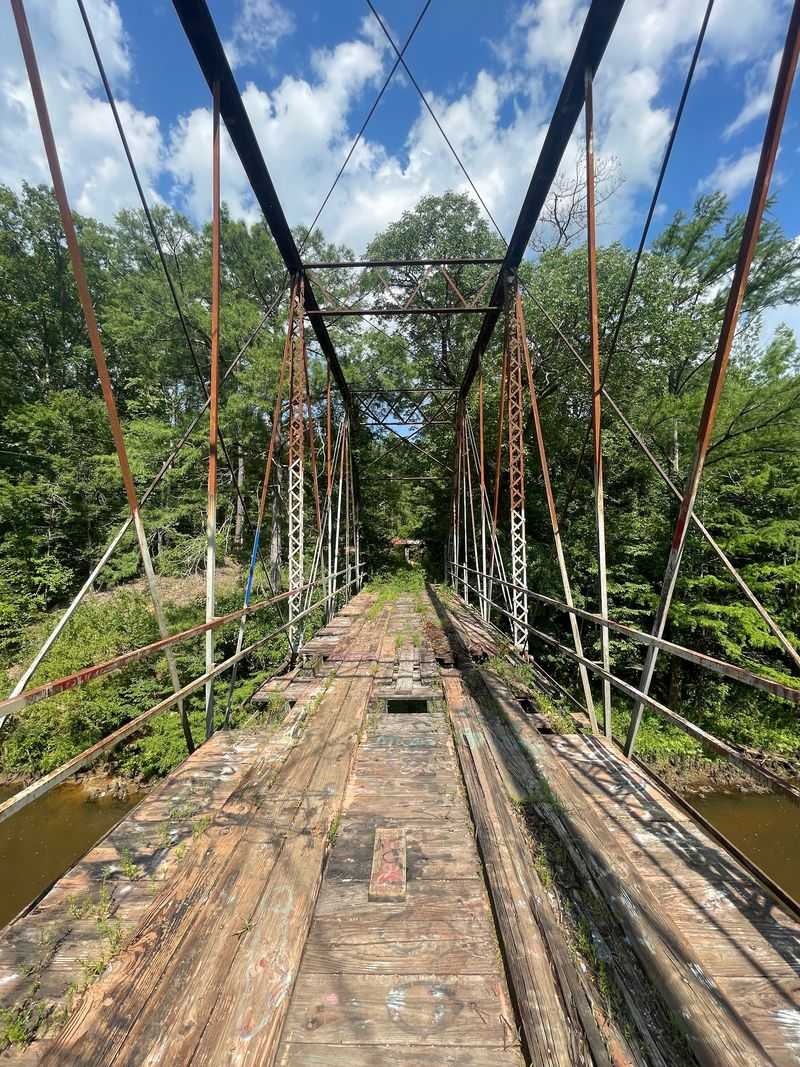
Engineering fans, this one is for you. The span you walk today was built in 1901 by the Virginia Bridge and Iron Company of Roanoke, Virginia, which cast its components at a foundry in Memphis and shipped them south to be assembled on site.
Measurements are modest by modern standards. The bridge runs 112 feet long and 13.6 feet wide built for a single lane of traffic riding over a wooden deck.
A wooden bridge stood here long before the iron one arrived. Lauderdale County Archives hold a construction contract written in 1847, and the earlier crossing was likely finished around 1850.
Both structures existed for a plain reason. Mississippi wanted rural communities linked up, and the Chunky River was a stubborn obstacle for farmers hauling goods.
Look closely at the rivets and the lattice work. Nothing here was welded in a factory to modern tolerances, and you can see the handiwork in every joint.
Recognition came eventually. The bridge became a Mississippi Landmark on August 4, 1984, and joined the National Register of Historic Places on November 16, 1988.
Concrete crossings do their job. Iron ones have personality.
Autumn Turns The Chunky Into A Postcard
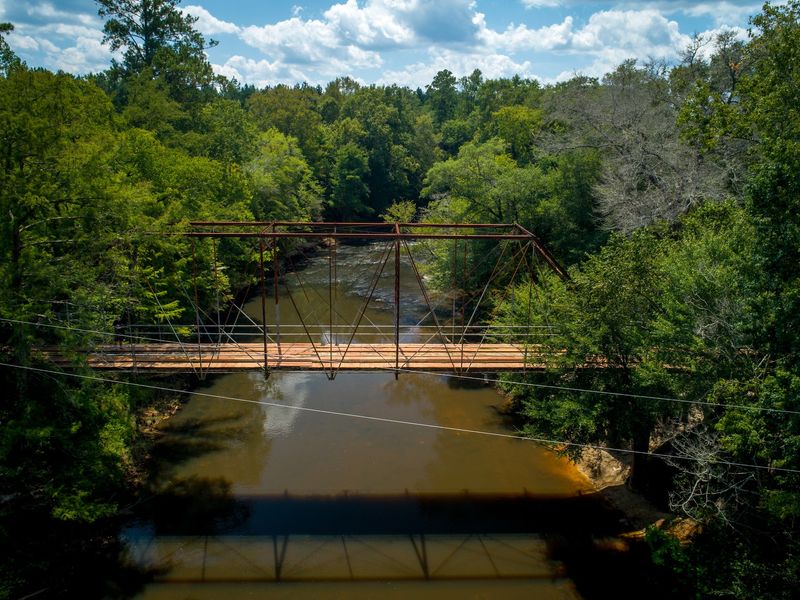
Fall is when this corner of the state earns its keep. Sweetgum, oak, and hickory crowd the riverbanks, and by late October the canopy turns amber, russet, and a deep burnt orange.
The Chunky River below runs shallow and unhurried through most of autumn. Sandbars appear along the bends, and the water takes on a tea-colored tint from fallen leaves.
Standing at the middle of the span gives you the finest view. Look upstream and the river bends out of sight beneath overhanging branches.
Photographers get spoiled here. Early morning brings mist off the water, while the hour before sunset paints the rusted iron a warm copper shade.
Wildlife makes appearances too. Herons stalk the shallows, turtles sun themselves on logs, and hawks circle above the treeline looking for supper.
Cooler weather brings another gift, which is fewer mosquitoes and no summer humidity pressing down on you. A light jacket usually does the trick.
Paddlers sometimes use the area as a launch point, hauling kayaks down the bank for a float. It takes muscle, but the reward is a quiet river all to yourself.
Watch Your Footing On Those Boards
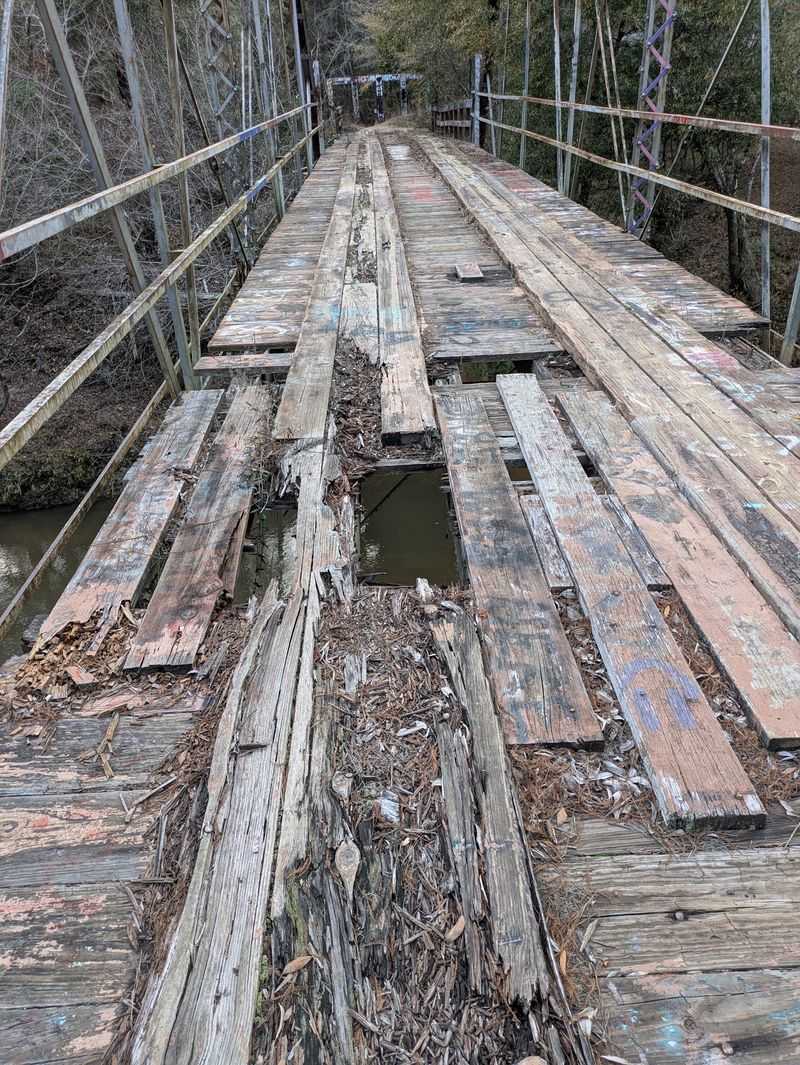
Safety talk, plainly said. Vehicles were barred from the bridge in the early 1990s after inspectors found it unfit for traffic, and the deck has weathered plenty since then.
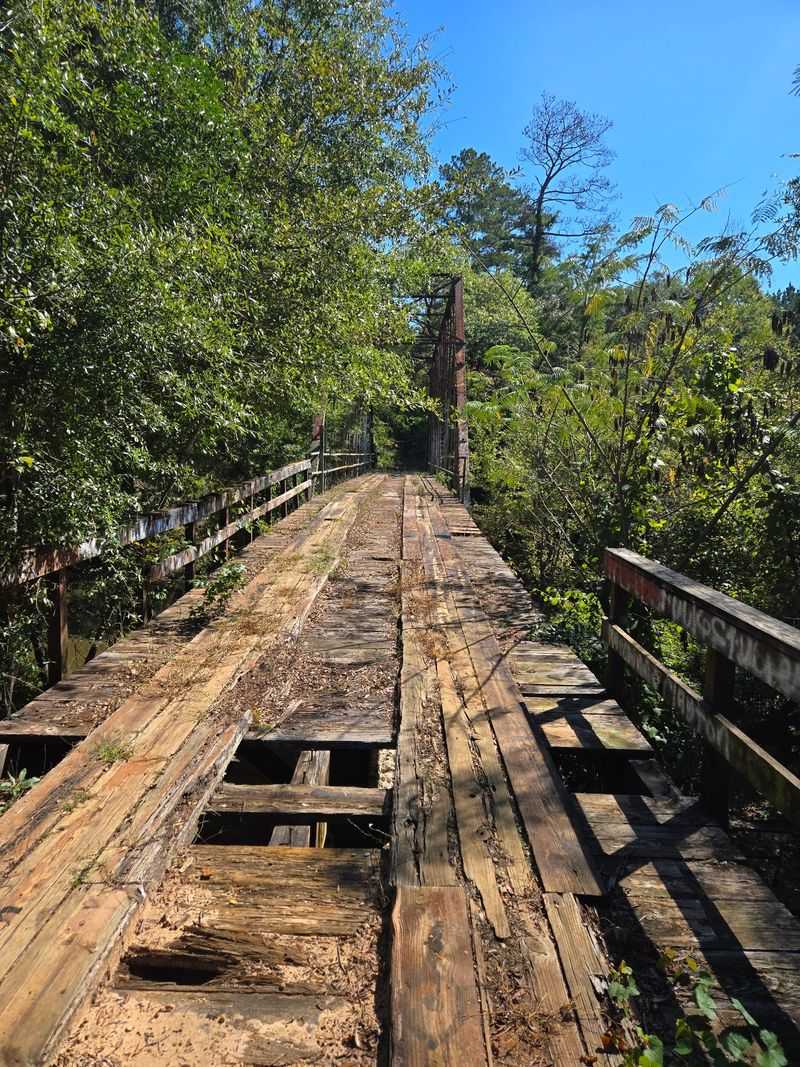
Foot traffic is still welcome, but the boards deserve respect. Several planks have rotted through, leaving gaps and holes wide enough to swallow a leg.
Regular visitors offer the same advice. Stay on the sturdy center runners, test each step, and keep a hand near the truss framing for balance.
Footwear matters more than you might think. Sneakers with grip or hiking boots beat sandals every single time on splintered wood and gravel.
Children need close supervision here. The drop to the riverbed is significant, and the water below is shallow rather than cushioning.
If you visit after dark, bring two light sources rather than relying on a phone. Headlamps free up your hands, which you will appreciate.
Skip the visit entirely during heavy rain. Wet boards turn slippery, and the access road becomes a muddy mess that traps tires.
Common sense keeps the adventure fun. The bridge has stood for well over a century, and careful visitors help it stand longer.
Sorting The Real Stuckeys From The Storybook One
Here is where the legend gets interesting. Local research points to a real family behind the name, and their story has nothing sinister in it.
John Stuckey owned the land where the original bridge and roadbed were built, which is how the crossing got its title. The family lived in the area only a few years before heading west toward Arkansas and Texas.
One relative stayed behind. Simon William Stuckey remained in the region and rests in Meehan Cemetery, having passed in 1911.
Compare that to the folk tale, where Stuckey is described as a former Dalton Gang member who preyed on travelers. The Dalton Gang connection alone raises eyebrows among historians, since the timeline is shaky.
Storytellers also disagree on details. Some accounts place the hanging on the 1901 iron bridge, while others insist it happened on the wooden crossing from the 1850s.
Knowing the documented history does not spoil the fun. It adds a second layer, letting you appreciate both the folklore and the county records that quietly contradict it.
Read up before you go. Context makes the walk far richer.
Graffiti, Volunteers, And A Second Coat Of Paint
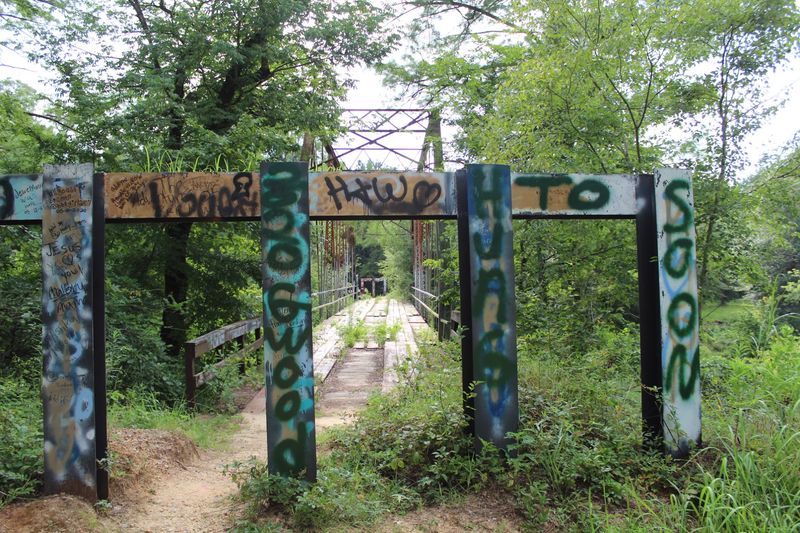
Spray paint has left its mark all over the ironwork. Names, dates, band logos, and various scribbles cover the trusses, layered on across decades of visits.
Preservation efforts have pushed back. Volunteers organized a repainting project in 2016, working to restore the bridge closer to its historical appearance.
Weather and new tagging keep the work ongoing. The metal shows plenty of rust, and some sections have grown structurally weak over the years.
Vegetation adds another wrinkle. Visitors sometimes find brush and vines crowding the approaches, which softens the view but makes access trickier.
Doing your part is easy enough. Leave the paint cans at home, pack out any trash, and resist carving into the wood or metal.
Photographs last longer than graffiti anyway, and they do not cost volunteers a weekend of scrubbing.
The site has no gate, no admission booth, and no staff on hand. Care falls to the people who show up.
Treat it like a borrowed heirloom. A bridge that survived from 1901 into the present deserves gentle handling from everybody who wanders out to see it.