
Ever Held A Hand-Carved Dulcimer? An East Tennessee Museum Fills A Log Barn With Them
I pulled off a Tennessee exit ramp expecting a quick stretch of the legs and maybe a sandwich. Three hours later I was still walking a gravel path between log cabins, stepping around a peacock, and staring at shelves of hand-carved instruments made by people whose names nobody outside their holler ever knew.
There are more than 250,000 artifacts spread across 70 acres here, and somehow the whole place feels like a neighbor’s farm rather than a museum. If you have ever wondered what Appalachian life actually looked like, this is where the objects do the talking.
A Living History Village Twenty Minutes North of Knoxville
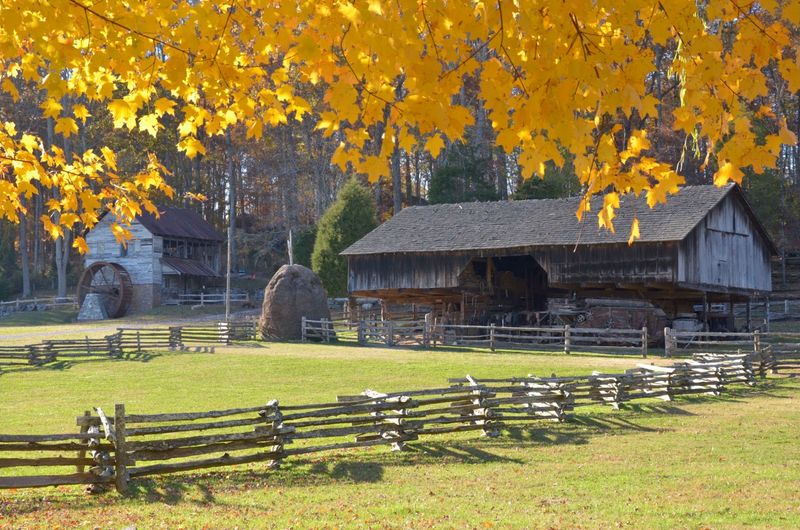
Off Andersonville Highway in Clinton, Tennessee, a 70-acre farm has been quietly turned into one of the most complete portraits of mountain life anywhere in the country. The Museum of Appalachia is a Smithsonian-affiliated institution, though it looks nothing like a marble-columned museum.
Picture instead a working homestead: more than 30 authentic log structures, split-rail fences, pastures, and a gravel path that loops past cabins, a chapel, a schoolhouse, and barns.
Roughly 20 minutes north of Knoxville, it sits close enough to the interstate that visitors regularly mention how easy it is to find and navigate. From Nashville, figure about three hours east on I-40.
The collection tops 250,000 pioneer relics, gathered largely because one man spent decades saving the tools, instruments, and stories of his friends and neighbors before they disappeared.
What surprises most first-timers is the scale. People arrive planning on an hour and end up staying three or four, which is worth knowing before you schedule anything else that afternoon.
Hours shift by season, so a quick check before you drive saves disappointment.
The Barn Full of Hand-Carved Dulcimers
Hold a mountain dulcimer once and you understand why Appalachian families built them. Light as a cutting board, narrow as a fence picket, and tuned so that almost anyone can pick out a tune within minutes, the dulcimer was the instrument of people who had wood, a knife, and long winter evenings.
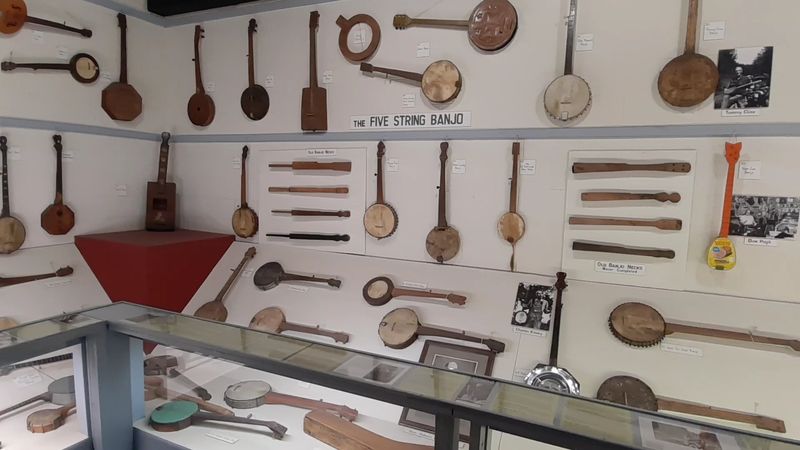
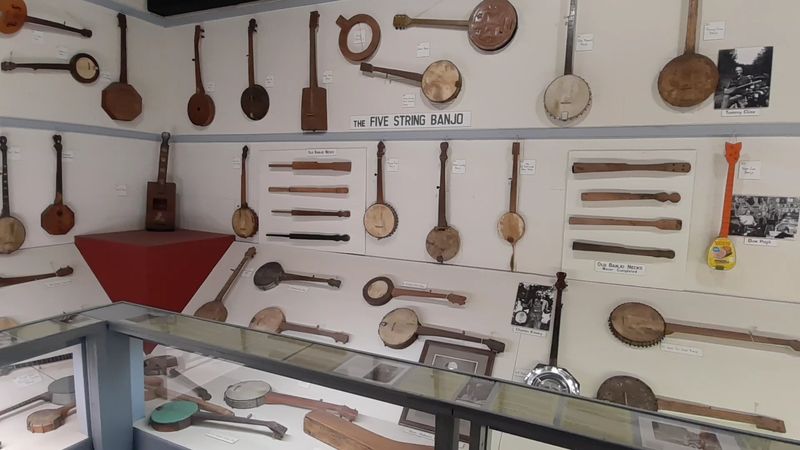
The museum’s musical holdings run deep, with dulcimers displayed alongside fiddles, banjos, and other homemade instruments in the village’s log structures and exhibit halls.
Many were carved by hand from whatever the maker had nearby: walnut, cherry, poplar. No two share exactly the same shape, and a few carry carved initials or dates scratched into the soundboard by the person who built them.
Here is the part regulars know and drop-in visitors miss entirely. A dulcimer group plays in the Visitor Center on most Mondays, filling the room with the same drone-and-melody sound these instruments made a century ago.
Schedules can change, so if the music is your main reason for coming, confirm ahead rather than gambling on a Monday drive.
One Man’s Obsession With Saving His Neighbors’ Stories
Most museum collections begin with money. This one began with stubbornness.
The founder spent years driving mountain roads, knocking on doors, and asking families whether he could take the spinning wheel in the shed or the fiddle in the attic before it was hauled off. He wrote down who made each piece, who used it, and what happened to them.
That habit is why the labels here read differently than at other historic sites. Instead of a card saying wooden bowl, circa 1880, you get a paragraph about the man who carved it and the farm where he lived.
Visitors often point out that the founder’s daughter hand-wrote many of the relic descriptions herself, which gives the exhibits a personal, almost handwritten-letter quality that printed placards never achieve.
One visitor described bringing a teenager who wanted to read every story and asked why school history classes never felt this alive. That reaction comes up again and again.
The result is a museum where ordinary farmers, weavers, and instrument makers get the same wall space as famous names, which is precisely the point.
Log Cabins, Cantilever Barns, and Thirty-Plus Structures
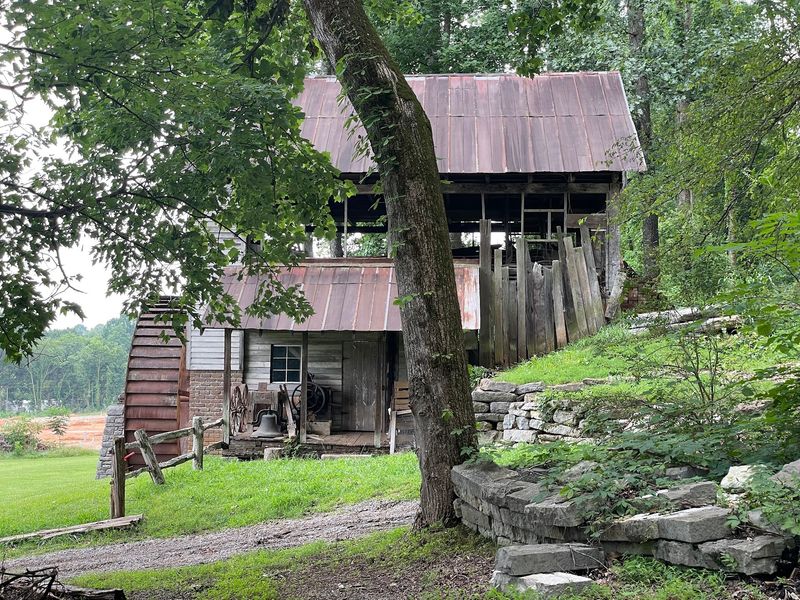
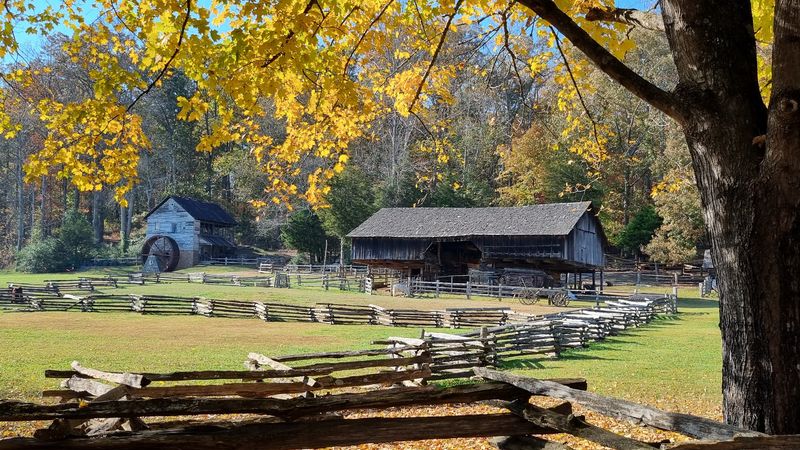
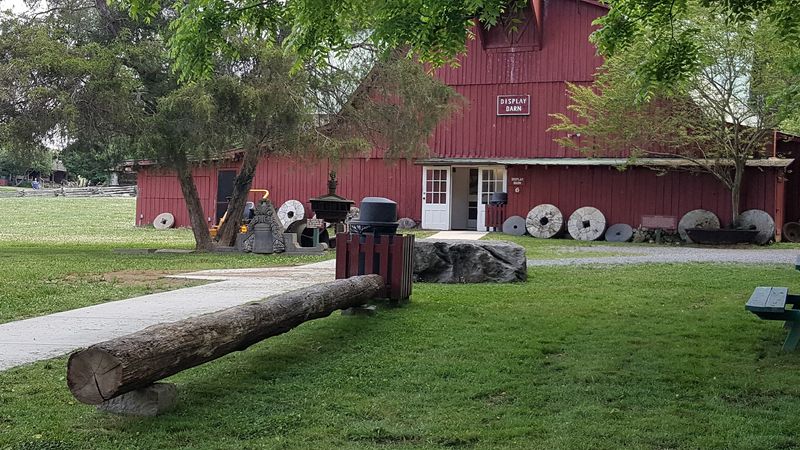
Cantilever barns are an East Tennessee signature, and there are few better places to see one up close. The design lets the upper level jut out well past the stone or log base, creating sheltered work space underneath without extra posts.
Farmers built them this way for practical reasons, but the effect is oddly dramatic.
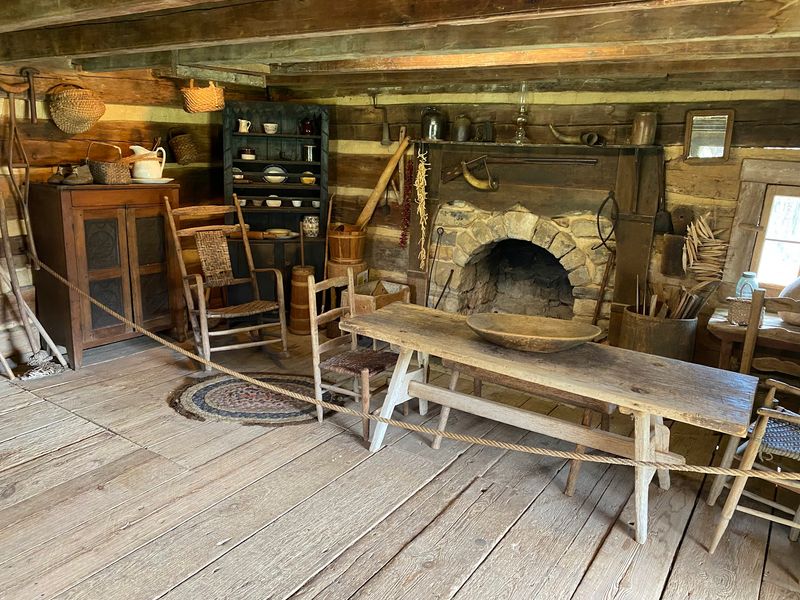
More than 30 authentic log structures stand on the grounds, some moved here piece by piece and rebuilt. Among them are a chapel, a one-room schoolhouse, a large mill, cabins, corn cribs, and the barns themselves.
Several buildings carry famous associations. Visitors mention a cabin tied to Daniel Boone history and a small structure linked to the family of Mark Twain, both of which draw plenty of attention.
The layout follows a one-way path, numbered on the map you receive at the gift shop counter, so you can move building to building without backtracking or wondering what you skipped.
Interiors vary. Some hold tidy, well-labeled displays while others are packed floor to rafter with tools and household goods, which some guests find overwhelming and others find fascinating.
The Hall of Fame Building That Swallows Whole Afternoons
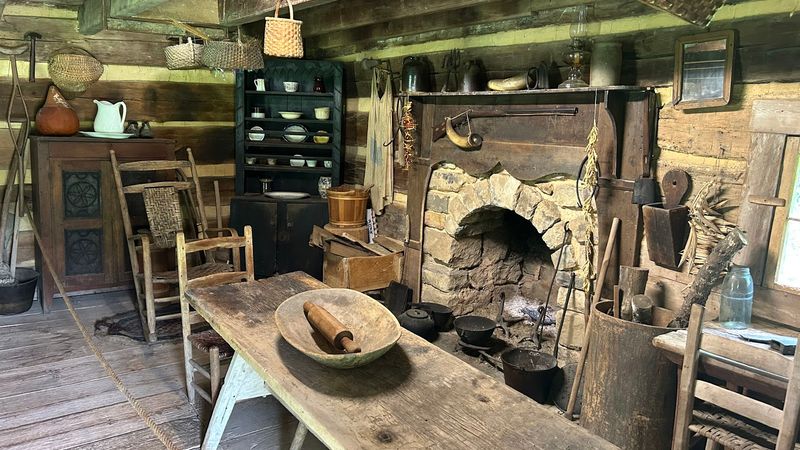
Budget more time than you think for the first building you enter.
The Hall of Fame spreads across two floors and holds the densest concentration of stories on the property. Craftsmen, musicians, wood carvers, quilters, soldiers, and statesmen all share the space, arranged so that a self-taught banjo maker gets the same respect as a nationally known figure.
One family reported spending three full hours in this building alone and had to leave the rest of the village for another trip. That is not an exaggeration; there is genuinely more text here than most people can finish in a single visit.
Tennessee residents in particular tend to linger, since the displays are seasoned with state history and local pride that hits close to home.
Displays are organized clearly, with information broken into readable chunks rather than scattered randomly, which makes it workable even for kids who are still building reading stamina.
A practical tip: if you have limited time and want the village too, walk the Hall of Fame quickly first, then return at the end if your legs hold out.
Peacocks, Goats, and the Free-Range Welcoming Committee
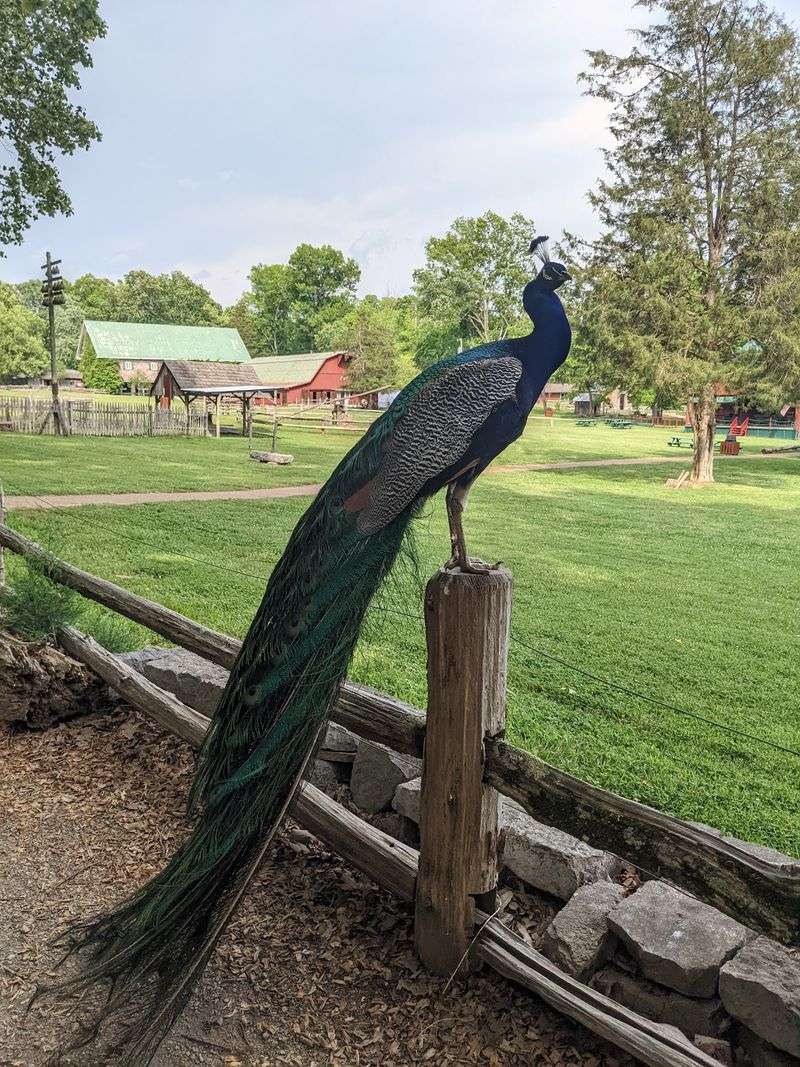
Nobody warns you about the peacocks. You round a corner near a log cabin and there one stands, tail dragging in the dust, entirely unbothered by your presence.
Peacocks are the single most mentioned feature in visitor comments, showing up around fifty times, which says something about what people actually remember from the day.
They share the grounds with free-ranging chickens and roosters, geese, ducks, goats, sheep, miniature horses, pigs, and a few opportunistic cats. The animals roam rather than sitting behind fences, so encounters happen on their schedule, not yours.
Guests repeatedly say the critters keep the place from feeling like an empty preserved site. A homestead with animals moving through it reads as lived-in rather than staged.
For kids, this is the hook. A child who has zero interest in nineteenth-century farm implements will happily follow a goat across a pasture and absorb the scenery by accident.
Bring a camera and a little patience. Peacocks fan their tails when they feel like it, and no amount of coaxing hurries them along.
Southern Cooking at the On-Site Cafe
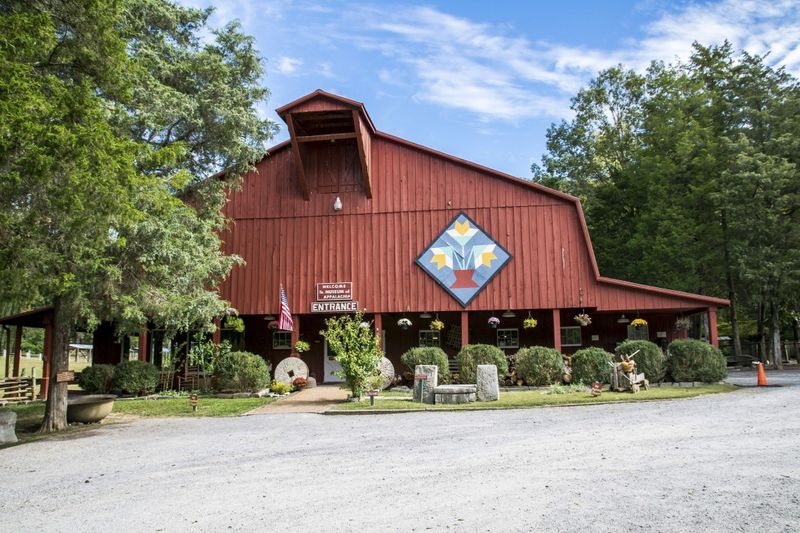
Fried chicken pulled one traveler in before the history did, and that happens more often than the museum probably expects.
The on-site restaurant serves Southern Appalachian home cooking in a casual, order-at-the-counter setup. You take your tray to a table with a view of the grounds, which beats most museum dining by a wide margin.
Daily lunch specials run roughly 11:00 AM to 2:00 PM, with soups, sandwiches, and desserts available until about 3:00 PM. Regulars say to arrive early, because the cafe draws locals who come strictly to eat.
Expect plates like chicken and dressing with two sides, a wedge of cornbread, and homemade cake. Sourdough bread and layer cakes get repeat mentions, and food comes out fast.
One visitor put a full plate, cornbread, and dessert at close to eighteen dollars, so it is not a bargain buffet, though several guests call the soups and sandwiches reasonably priced.
Worth knowing: hours can vary and the kitchen is not always running a full menu midweek, so have a backup lunch plan if eating here matters.
A Gift Shop With a Whole Wall of Jelly
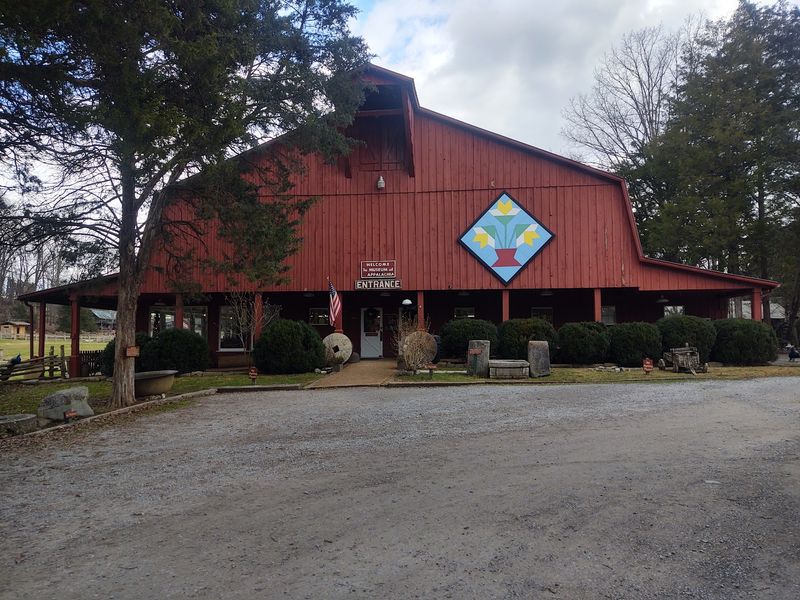
Tickets are sold inside the gift shop, which is a clever trap because you walk through the merchandise twice, coming and going.
The shop earns more mentions from visitors than almost anything except the peacocks. Shelves hold jars of jelly and fruit butter lined up wall to wall, alongside T-shirts, scarves, handmade crafts, and antiques.
Several guests specifically recommend bringing a few extra dollars for the jelly, calling it well priced for the quality and the size of the jars. That is the sort of souvenir that actually gets used rather than shoved in a drawer.
The space doubles as a music venue. On most Mondays a dulcimer group sets up in the Visitor Center area, and guests have described stumbling into a live performance of Appalachian instruments as the highlight of their entire visit.
Browsing here is free, which matters if someone in your group would rather sit out the walking portion.
Prices vary by item and stock changes, so treat any specific find as luck rather than a guarantee.
Festival Days, Anvil Shoots, and Heritage Weekends
An anvil shoot is exactly what it sounds like, and the museum has staged one as part of an Independence Day celebration. Loud, startling, and thoroughly old-fashioned.
Special events reshape the whole property. Heritage Days brings craft demonstrations, music, and enough activity that one couple who nearly turned around at the sight of 1,200 visiting schoolchildren ended up staying three hours anyway.
Live music appears at various points during event days, and more than one guest has arrived too late in the afternoon and missed both the performance and the food.
Guided tours of the Pioneer Village happen occasionally rather than daily. Announcements go out on the museum’s social media pages the weekend beforehand, so following along is the only reliable way to catch one.
Admission prices can differ during special events, which is worth confirming before you load the car.
For calendar planners, fall is the sweet spot in East Tennessee. Cooler walking weather, harvest-season programming, and foliage on the surrounding hills make September and October strong months for a visit here.
Ticket Prices Broken Down by Age
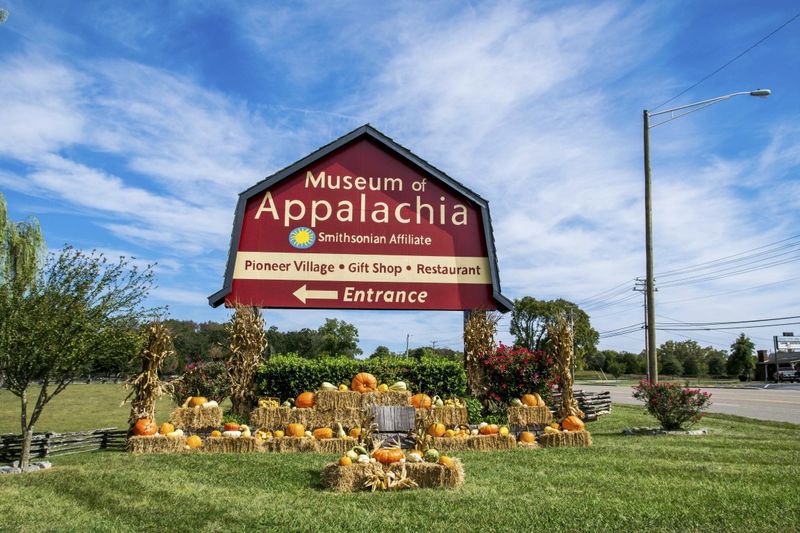
Straight numbers, since that is what decides whether a Saturday happens.
Adult admission for ages 18 through 64 runs $20.00. Seniors 65 and older pay $18.00, and the same rate applies to military and first responders.
Youth tickets for ages 6 through 17 are $10.00, and children under six get in free when a parent is along.
The family rate is the one to note: $50.00 covers two adults and up to six children aged 6 through 17. For a household of five, that turns a $60 outing into a $50 one.
Parking is free, which removes a cost that eats into budgets at bigger attractions.
Some visitors do call the admission steep, while others counter that maintaining dozens of historic buildings, a huge collection, and a barnyard of animals is not cheap. Museum staff have said the fee supports preservation, educational programming, maintenance, and animal care.
Given that most people stay three or four hours, the per-hour math lands reasonably. Prices may change during special events, so verify before driving.
Seasonal Hours and the Best Time to Show Up
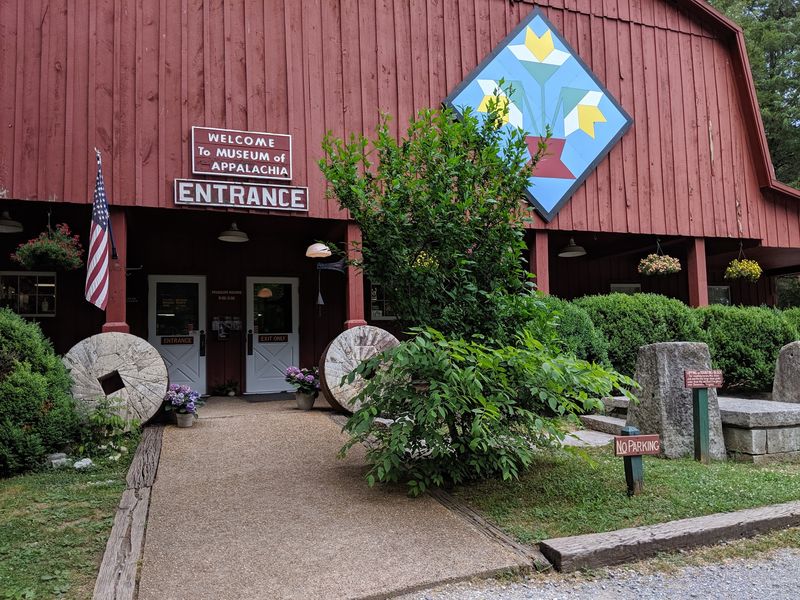
Hours here shift with the calendar, so a quick check beats an unhappy surprise at the gate.
March through May, doors open 9:00 AM to 5:00 PM on weekdays and 9:00 AM to 6:00 PM on weekends. June through August holds steady at 9:00 AM to 6:00 PM.
September and October return to weekday 9:00 to 5:00 with weekends running until 6:00.
November and December operate 9:00 AM to 5:00 PM, while January and February shorten to 10:00 AM to 4:00 PM. The museum, restaurant, and gift shop typically close on Thanksgiving Day, Christmas Day, and New Year’s Day.
Weekday mornings tend to be quieter, which helps if you want unhurried reading time in the Hall of Fame.
Weather matters more than at an indoor museum. One group cut a visit short when rain moved in, since much of the experience happens outdoors between buildings.
Arrive by mid-morning if lunch is part of the plan. That gives you the village before the cafe closes its kitchen window.
Walking the Grounds With Kids, Strollers, and Tired Knees
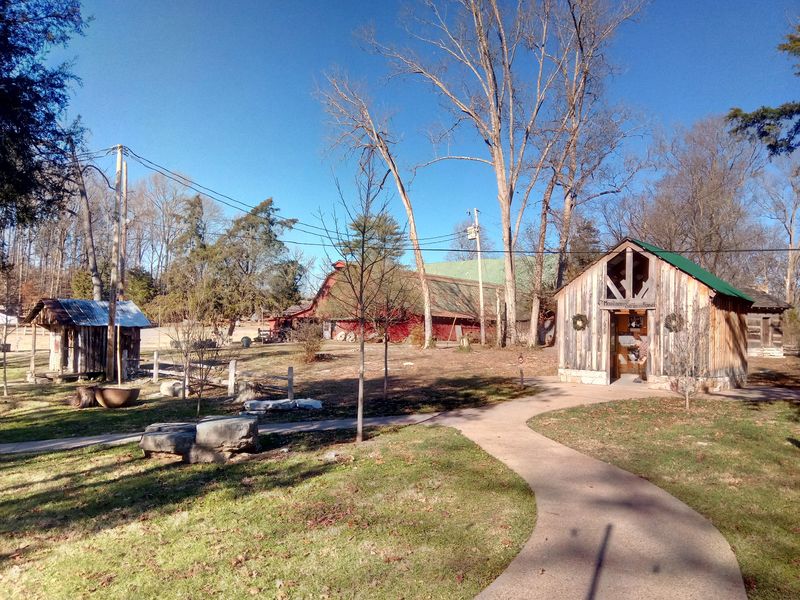
Terrain is the honest variable. The village spreads across 70 acres of farm ground with gravel paths, grass, and gentle slopes, so strollers work but require some muscle in spots.
Restrooms are on site, clean, and easy to reach, which parents and retirees both tend to appreciate more than they admit.
Kids get a small map at check-in with stamps to collect as they move building to building, earning a prize at the end. It is a simple idea that keeps young walkers moving without complaint.
Open space is plentiful, and families mention that children can roam safely rather than being held by the wrist through narrow galleries.
Sunscreen and bug spray belong in the bag. Much of the route sits out in the open, and shade comes and goes.
Wear shoes you would wear to a farm, not sandals. Comfortable footwear turns a three-hour walk into an easy one.
Benches and the cafe give anyone needing a rest a place to land partway through the loop, which makes multigenerational visits genuinely workable.
Why the Drive Pays Off
Some places reward planning. This one rewards curiosity and a willingness to read.
If you want a polished, air-conditioned museum with tidy signage on every object, parts of the village will frustrate you, since several buildings hold more artifacts than labels. Guests have said as much plainly.
But if the idea of holding, or at least standing inches from, a dulcimer someone carved by hand in a mountain cabin gives you a small thrill, the $20 adult ticket buys three or four hours of that feeling.
Families with children under six pay even less, and the $50 family rate makes a five-person Saturday cheaper than most restaurant dinners once you add parking, which is free.
People who have passed the exit for years on their way to the Smokies routinely say afterward that they regret every drive-by.
Go on a Monday if the dulcimer players are your draw, go in autumn for the walking weather, and go hungry before 2:30. Then let a peacock lead you toward the barns.