
This Wisconsin Gorge Hides A Dramatic Waterfall Between Towering Rock Walls
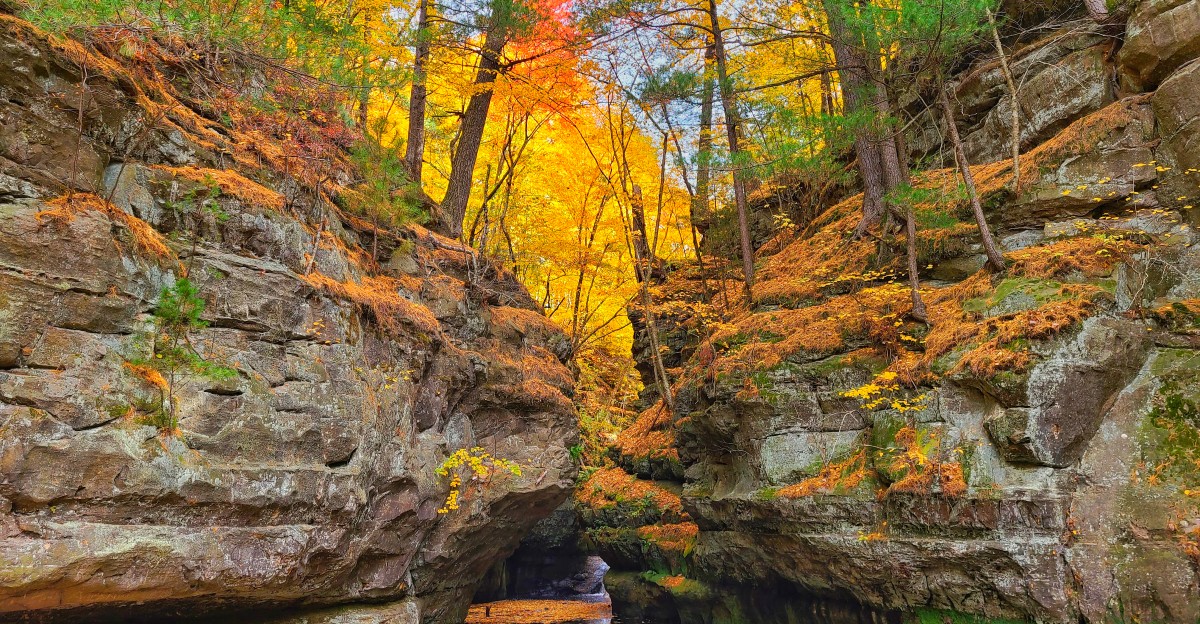
The best little adventures sometimes start with almost nothing to announce them. Just a gravel pull-off. A narrow path. A few quiet steps beneath the trees. Then the landscape suddenly changes.
Within minutes, you are looking into a slim sandstone canyon where cold water slips between rock walls before spilling into a clear pool below. You may hear it before you see it, with the sound bouncing through the stone and pulling you farther along the trail.
That quick reveal is what makes this Wisconsin stop so memorable. The walk is short, but the scenery feels far removed from the road you just left behind.
Smooth rock, moving water, deep shade, and a compact canyon all fit into one surprisingly dramatic scene. It feels wild without requiring a major hike, which makes the payoff seem even bigger.
A Canyon Carved By Meltwater, Not Machines
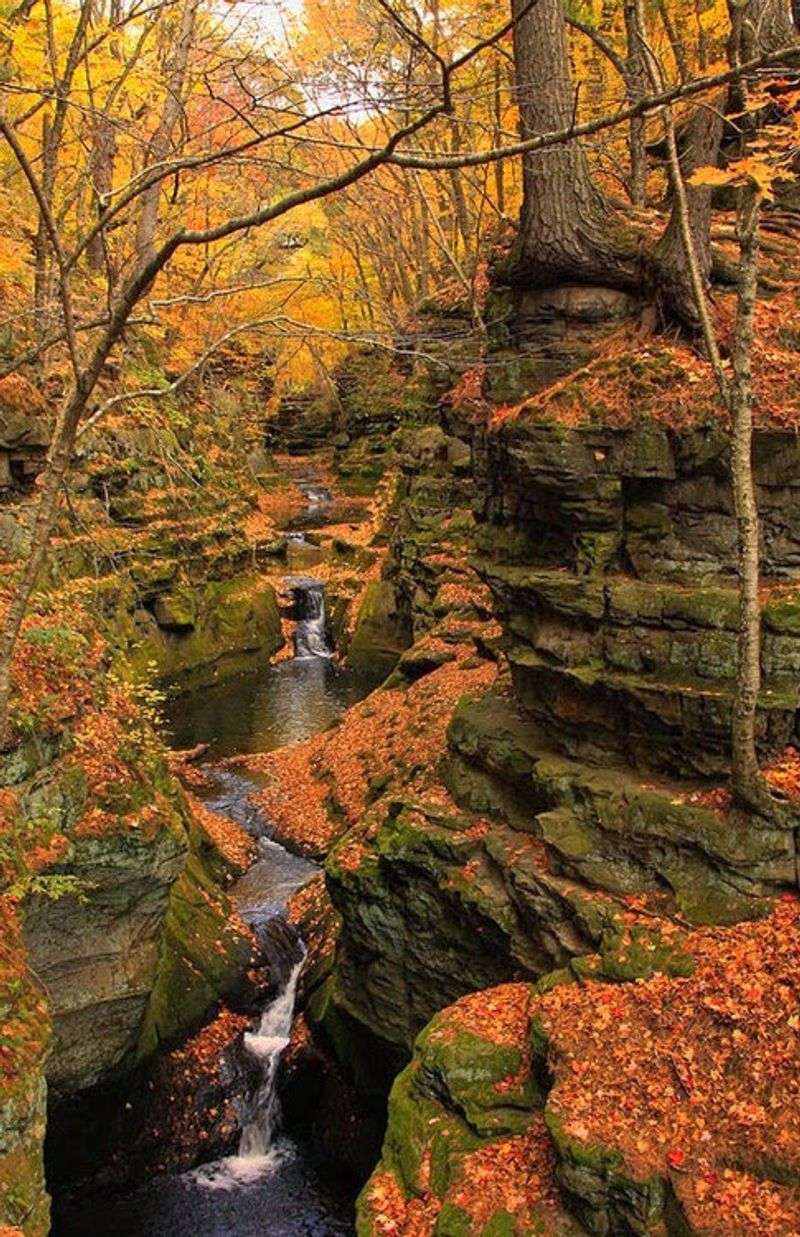
Water did all the heavy lifting here. As the last glaciers retreated, Glacial Lake Baraboo drained and Skillet Creek cut through the soft Cambrian sandstone, creating the narrow gorge seen today.
What remains at Pewit’s Nest is a gorge with walls that rise sharply on both sides, smoothed and swirled by centuries of rushing current. The rock has a soft, wavy texture that looks almost sculpted by hand.
You can see the layers stacked one on top of another, each one a record of ancient sand and sediment. Skillet Creek still runs through the bottom, doing the same slow work it has always done.
The gorge reaches roughly thirty to forty feet deep in the tightest sections, which feels surprisingly dramatic for a spot this small. Cool air settles down inside the walls, so the temperature drops noticeably as you get closer to the water.
Ferns, moss, and tree roots cling to the ledges, adding green against the tan stone. It is a geology lesson you can hear, feel, and stand inside, and that combination is rare in the southern half of the state.
The Waterfall That Hides Around A Bend
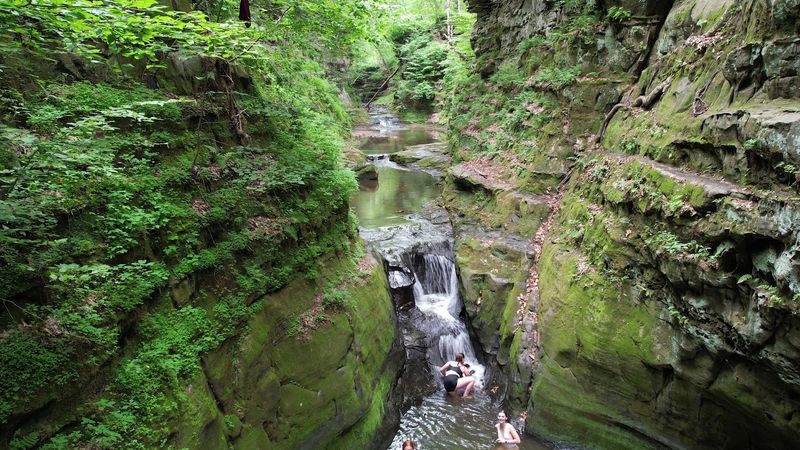
Here is the twist that catches many first-time visitors off guard. The waterfall at Pewit’s Nest does not sit in plain view at the end of the trail.
Instead, the gorge narrows around the water, with sandstone walls creating a more enclosed scene than you might expect from such a short walk.
You may hear the rushing water before you get the clearest view of it. The sound carries through the canyon and bounces off the rock, making the setting feel even more dramatic.
The main trail leads toward the mouth of the gorge, while a separate short spur climbs to an overlook above the canyon. Staying on the designated paths and behind barriers is important, since some sections are protected for both visitor safety and erosion control.
The falls themselves are modest in height, but the narrow rock walls make the scene feel much larger. Light filters through the trees and reaches the water at different angles throughout the day, creating changing reflections along the sandstone.
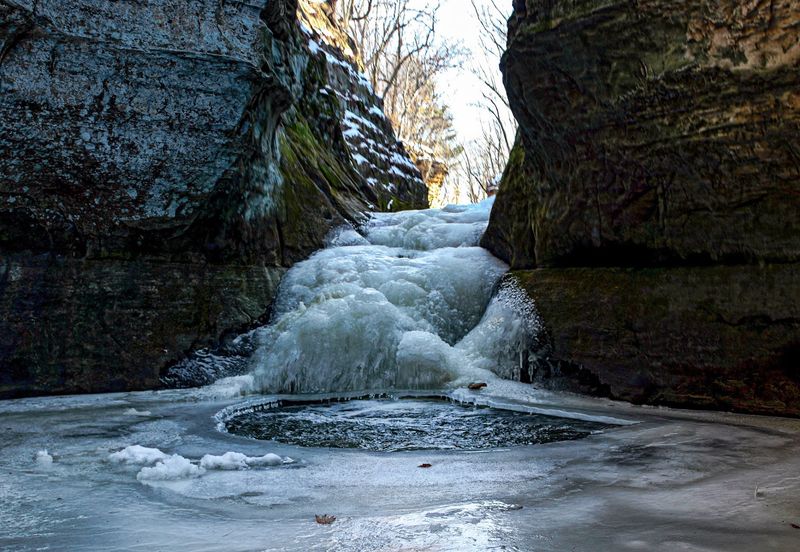
Winter gives the gorge another look entirely, with ice sometimes forming along the rock and around the moving water. Conditions can become slippery, so extra caution is necessary during colder months.
Finding The Trailhead Without Driving Past It Twice
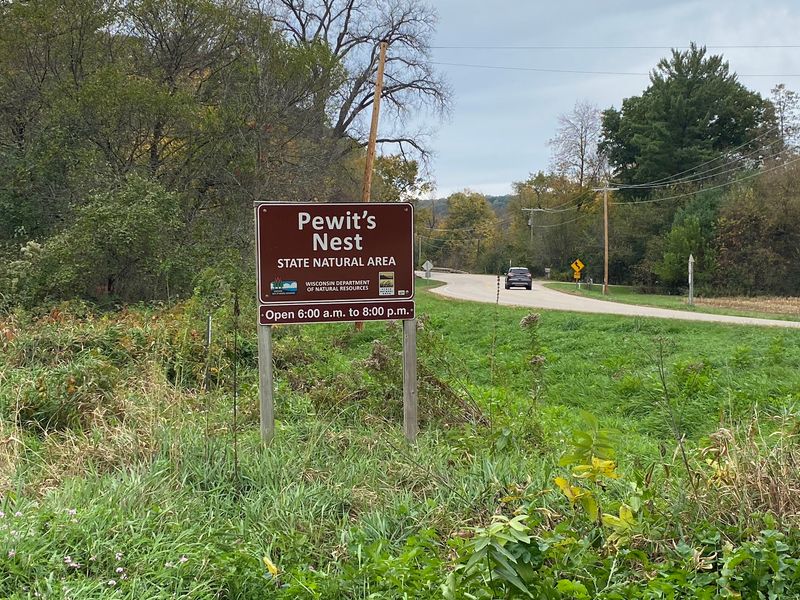
Plenty of drivers sail right by on their first attempt. The entrance is easy to miss, marked mainly by a gravel lot and a simple sign rather than anything flashy.
You will find Pewit’s Nest at County Rd W, Baraboo, WI 53913, just a few minutes southwest of downtown Baraboo. Punch the address into your phone before you leave town.
The small lot holds roughly twenty vehicles, and on warm weekend afternoons it fills quickly. Arriving early can improve your chances of finding a space on busy summer weekends. Vehicles parked here must display a valid Wisconsin State Park admission sticker.
Parking along the shoulder is not allowed, so if the lot is full, your best move is to continue on and circle back later. Many people pair the stop with Devil’s Lake State Park, which sits close by and makes for an easy double header.
The gates open at 6 AM and close at 8 PM daily, giving you a generous window. Early light and late afternoon both work beautifully for photos, and you will share the trail with far fewer people at either end of the day.
A Walk So Short You Will Wish It Were Longer
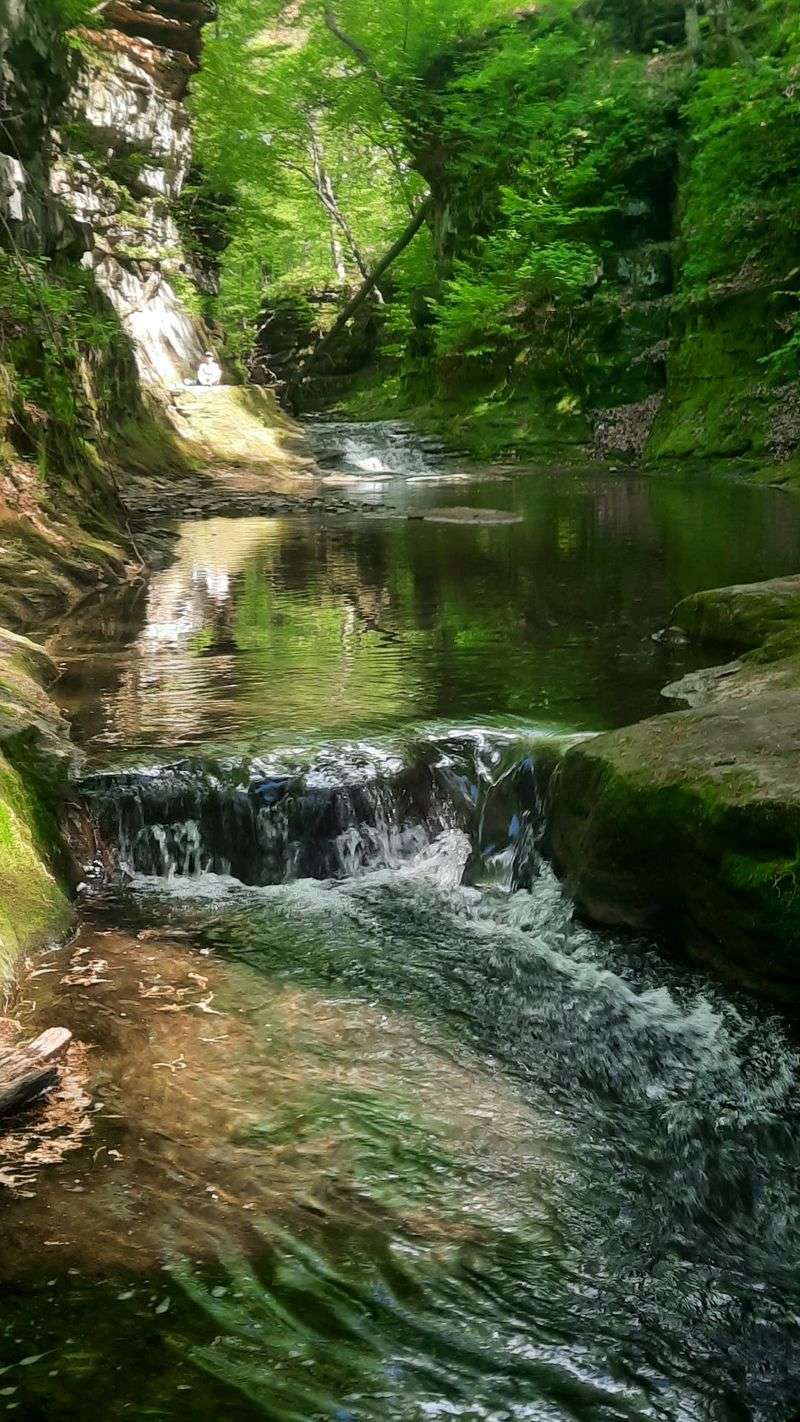
Do not expect a big trek. The main trail runs well under a mile round trip, and most people can reach the gorge quickly from the parking area.
The main trail at Pewit’s Nest is roughly 0.21 mile one way and leads toward the mouth of the gorge. A separate short spur climbs more steeply to an overlook above the canyon.
The route stays fairly compact, but roots, uneven ground, and steeper sections can still make sturdy shoes a smart choice, especially after rain. Views from the overlook can be partly screened by leaves during summer, while fall and early spring often open up clearer looks into the gorge.
Because the walk is so short, you can spend more of your visit slowing down near the water and taking in the sandstone walls rather than covering miles of trail.
An hour is plenty for an unhurried stop, though it is easy to linger longer once you reach the gorge and settle into the quieter pace of the place.
Enjoying The Gorge While Following Current Safety Rules
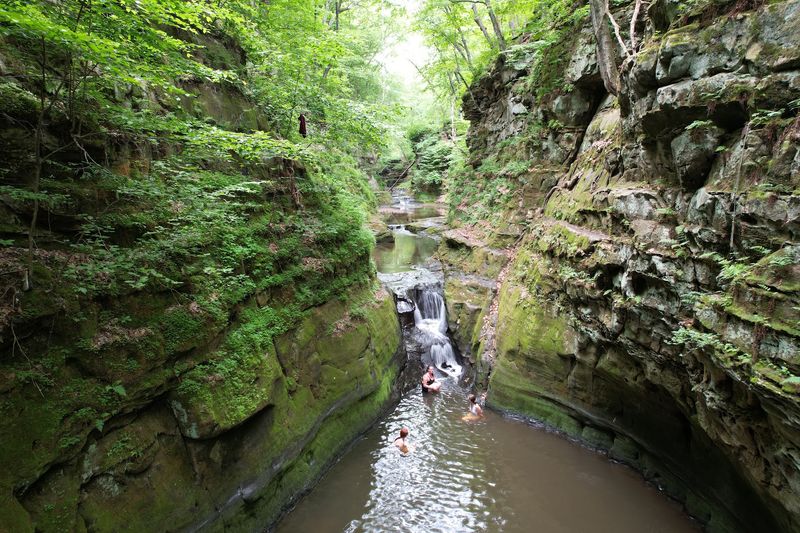
During warmer months, the shaded gorge can feel noticeably cooler than the open areas around it. Clear water moves through the narrow sandstone channel, while the surrounding rock walls create one of the most dramatic views at Pewit’s Nest.
The safest way to experience the area is to stay on the designated trails and respect fences, signs, and closed sections. Some parts of the gorge have steep drops, slippery rock, and fragile sandstone that can crumble under repeated foot traffic.
Cliff jumping and rock climbing are prohibited, and barriers keep visitors away from upper ledges where safety and erosion have been concerns.
Conditions can also change quickly after heavy rain. Higher water levels, slick surfaces, and stronger currents can make the gorge more hazardous than it appears from the trail.
Keep children close near overlooks and steep sections, wear sturdy shoes with good traction, and avoid crossing fences for a better photo or closer view.
You can still appreciate the moving water, narrow canyon, and sculpted rock walls without leaving the marked route. Following the posted rules protects visitors while helping preserve the sandstone gorge that makes Pewit’s Nest so distinctive.
Why Fences And Rules Protect What You Came To See
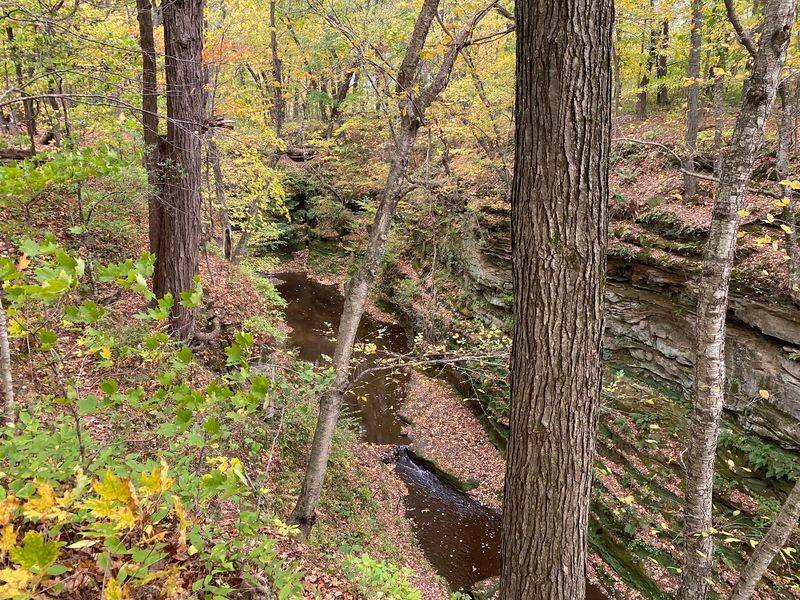
Some visitors are surprised to find barriers along the rim. There is a good reason behind them, and understanding it changes how the place feels.
Pewit’s Nest carries an official State Natural Area designation from the Wisconsin DNR, which means the priority is preservation rather than development. Sandstone is soft, and thousands of feet scrambling along the edges wore away the very ledges people came to admire.
Fencing keeps the rim intact and keeps visitors away from steep drops that give no second chances. Staying on marked trails is the simplest way to help.
You will also notice there are no restrooms, no concession stands, and no paved walkways. That bare bones setup is intentional, keeping the site as close to natural as possible.
Do not bring food or beverages into the natural area, and carry out any other trash you create. Leaving the plants and rocks where they are helps the next group get the same view you did.
Little details like these keep this corner of Wisconsin worth protecting. The rules are not there to spoil the fun, they are there so the gorge still looks like this decades from now.
Four Seasons, Four Completely Different Visits
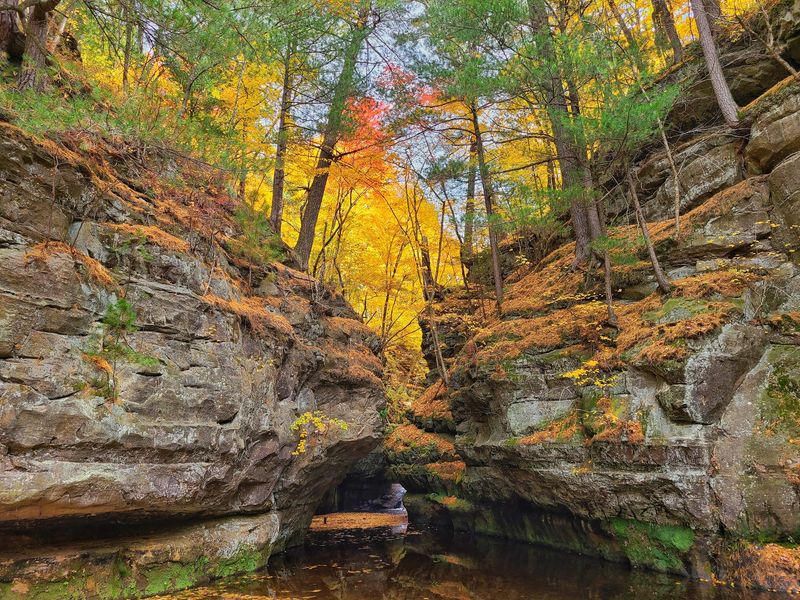
Timing changes everything here. Spring brings the strongest flow, when snowmelt and rain push extra water through the narrow channel and the falls sound their loudest.
Wildflowers appear along the trail during those early months, adding color to the forest floor. Summer brings deep shade to the gorge, making the short walk feel cooler than many exposed trails nearby.
Autumn might be the prettiest window of all. Maples and oaks above the gorge turn gold and red, and the reflections in the creek make for excellent photographs. Winter delivers the biggest transformation of all, freezing the falls into ice formations that hang between the rock walls.
Footing gets tricky then, so traction cleats are worth tossing in your trunk if you make a cold weather trip. Occasional trail or bridge closures happen after storms, so checking the Wisconsin DNR page before driving out saves you a wasted trip.
Visiting twice in one year, once warm and once cold, shows you two entirely different versions of the same small canyon.
Worth The Detour On Your Next Baraboo Trip
Big attractions get all the attention around Baraboo, and they earn it. Still, there is something satisfying about a stop that takes twenty minutes to reach and sticks with you longer than places three times its size.
Pewit’s Nest rewards curiosity more than endurance. You do not need special hiking gear or a full day to appreciate it, though vehicles must display a valid Wisconsin State Park admission sticker.
The name itself comes from local history, tied to a craftsman who once built a workshop into the rock face beside the creek. That small human story layered onto ancient geology gives the site an extra spark.
Pair it with a morning at Devil’s Lake, a drive through the Baraboo bluffs, or a stop in town, and you have a full day in one of the prettiest corners of Wisconsin.
Go early, tread lightly, and give yourself time to sit beside the water instead of rushing back to the car. Places shaped this slowly deserve to be experienced the same way, and you will leave understanding why locals keep coming back season after season.