
Visitors Walk Among Real Fossils, Rocks, And Minerals At This Little Mississippi Geology Museum
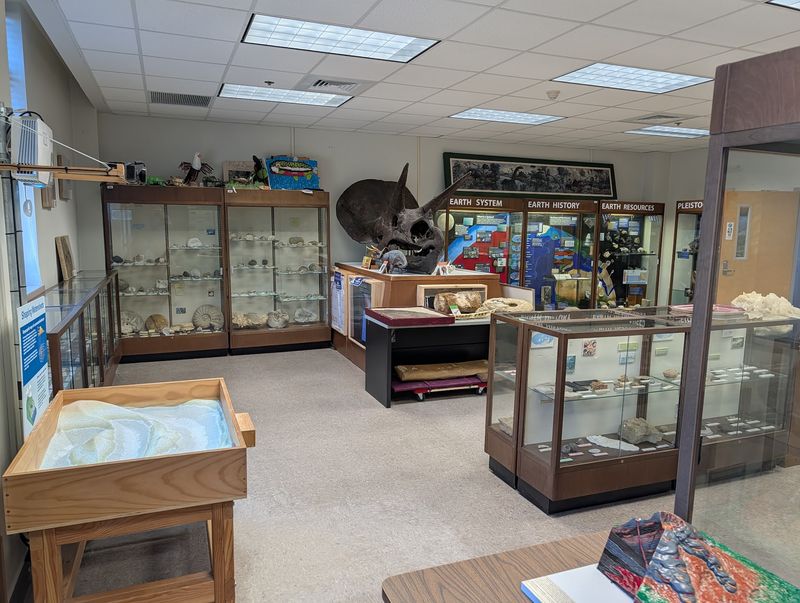
I only meant to kill a spare hour on a college campus in Mississippi, and I ended up nose to nose with a Triceratops skull. The room was small and the hallway outside looked like any other school building.
Inside sat billions of years of Earth’s story, packed into glass cases full of fossils, crystals, and space rocks. For families who love a low-key outing with a real wow moment, this little spot deserves a place on the list.
A Geology Museum Hiding In Room 112
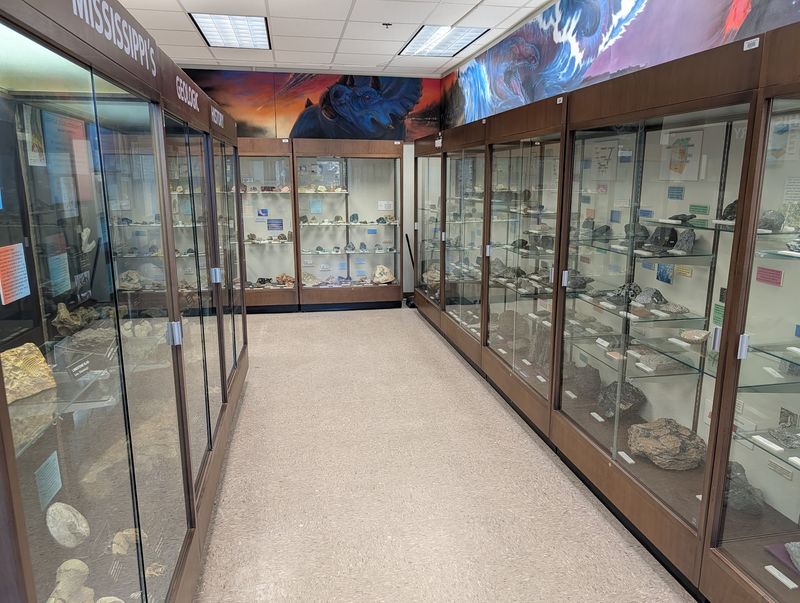
Room 112 of Hilbun Hall does not look like a tourist stop from the hallway. Step inside, though, and the Dunn-Seiler Geology Museum opens up as a room lined with cases of minerals, rocks, and fossils.
It belongs to the Department of Geosciences at Mississippi State University, just outside Starkville in northeast Mississippi.
Starkville sits in Oktibbeha County, part of the area Mississippians call the Golden Triangle, along with Columbus and West Point. Families coming from Columbus can often arrive in well under an hour.
Tupelo is a little over an hour away, while Jackson runs roughly two hours by car, which makes a school-break day trip very doable.
Why does the setting matter so much? Rather than a stand-alone building with a big lobby, the museum feels like a well-stocked classroom that happens to open its doors to everyone.
That scale is part of the charm, since nobody gets worn out walking miles of galleries.
Kids can see nearly everything in one loop, and grandparents can find a spot to pause without losing the group. The whole visit can fit neatly into a morning, leaving time for lunch in town or a stroll around the campus grounds afterward.
Small rooms, it turns out, can hold very large stories.
Collections With Roots In The Late 1800s
Long before anyone snapped a phone photo in Hilbun Hall, people were already gathering the specimens that fill these cases. Some of the earliest collections in the museum date back to the late 1800s.
That makes parts of the display older than most of the buildings on campus.
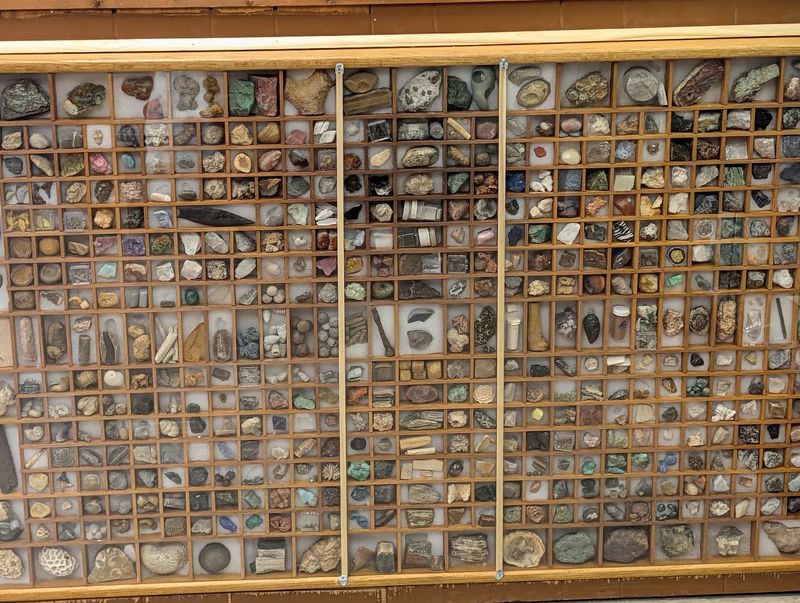
Picture a professor more than a century ago, carefully labeling a rock by hand and tucking it into a drawer. Those early efforts slowly grew into a teaching collection, and today the museum holds roughly 50,000 specimens.
Vertebrate fossils, invertebrate fossils, and plant fossils all share space with minerals and rocks.
Not every piece sits out on display, of course. Much of a collection that size supports research and teaching behind the scenes, while the public cases show off a thoughtful selection.
Still, knowing how deep the holdings run gives each case a little extra weight.
For grandparents who enjoy a sense of history, this detail often lands well. Families who love old things, whether antique shops or family heirlooms, may find the same pleasure here.
The difference is that these heirlooms were formed by the planet itself, then saved and studied by generations of curious Mississippians who wanted the next group of students to see them up close.
Earth’s 4.6 Billion Year Timeline
Four point six billion years is a hard number to wrap your head around. The exhibits here are designed to help with exactly that, walking visitors through Earth’s long history in a way that makes sense.
Each case becomes a chapter, and the chapters add up to the story of the whole planet.
Early rocks set the scene. From there, the displays move toward the first signs of life, ancient seas, and the giant reptiles most kids come hoping to see.
Along the way, big turning points in the history of life, including the great upheavals caused by asteroids, get explained in plain terms.
Here is where the museum shines for mixed ages. A second grader might simply enjoy spotting shells and bones, while an older sibling starts connecting those finds to a timeline.
Adults often find themselves reading labels longer than planned, realizing how much school science has faded since their own classroom days.
A helpful trick for families is to pick one question before walking in. Ask something like, which is older, the rocks or the fossils?
Then hunt for the answer together. Turning the timeline into a small scavenger game can keep younger visitors engaged from the first case to the last.
The Triceratops Skull And Its Cretaceous Neighbor
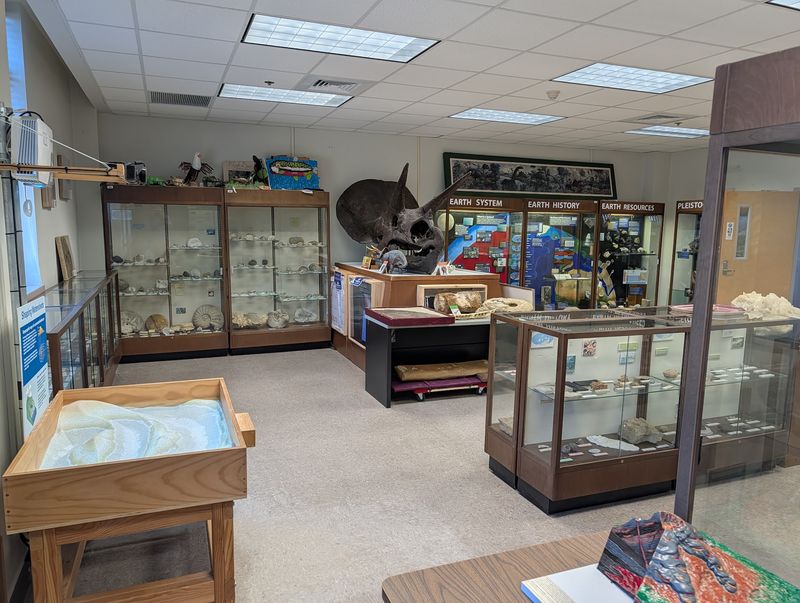
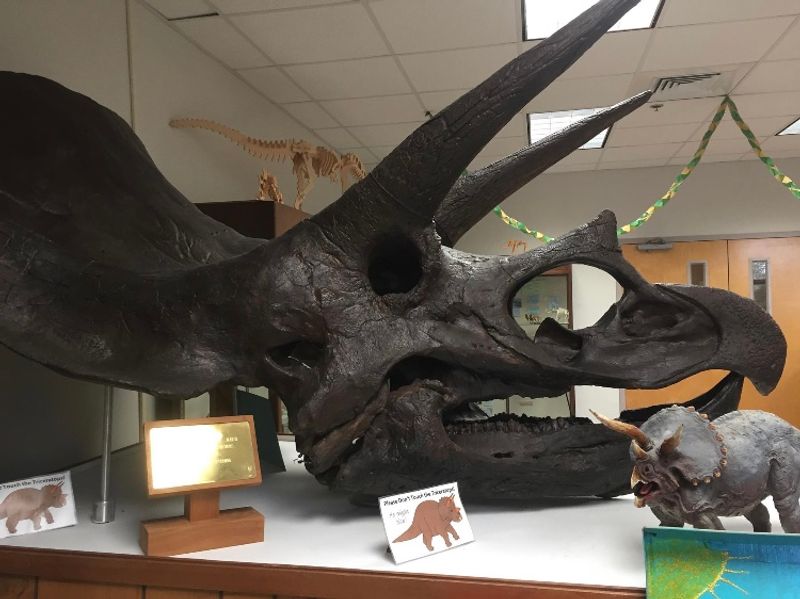
Three horns and a massive bony frill tend to stop visitors in their tracks. A cast of a Triceratops skull is one of the headline pieces in the collection, and it gives kids a real sense of how big these animals were.
Seeing it in person beats any cartoon or picture book.
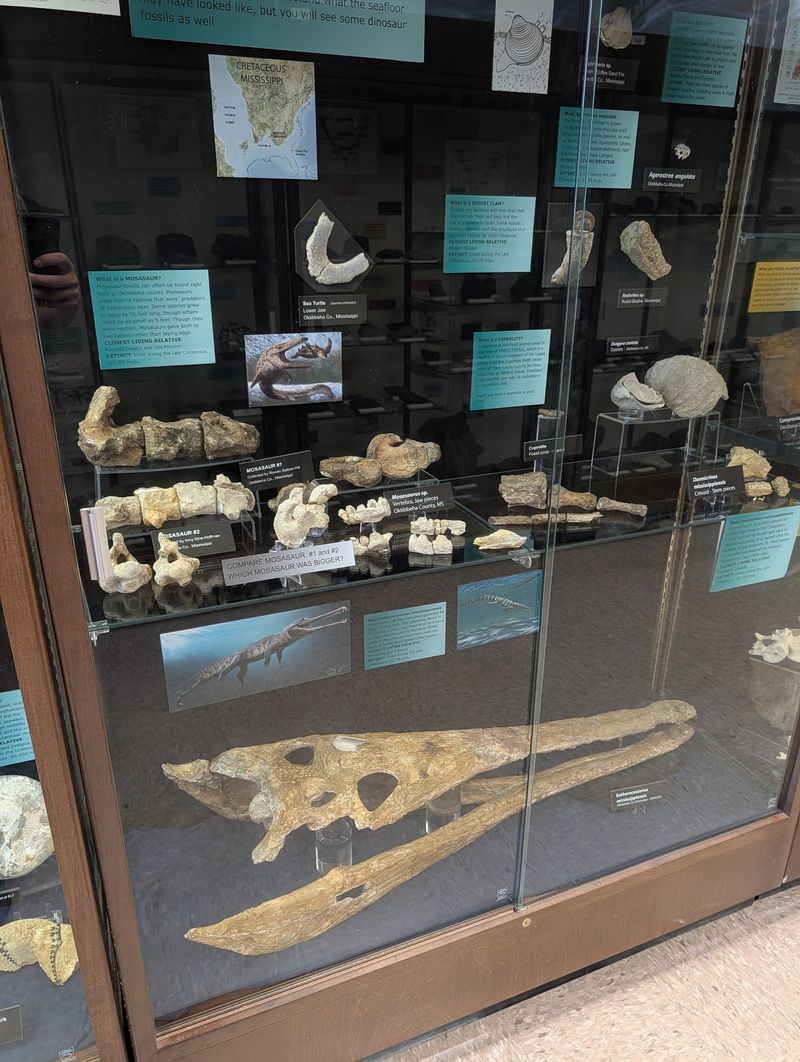
Right nearby, a Cretaceous crocodile skull offers a different kind of thrill. Long jaws and rows of teeth show off a reptile that shared the ancient world with dinosaurs.
Placing the two side by side sparks natural questions about who lived where and when.
Think of these pieces as the doorway into the rest of the museum. Young dinosaur fans often charge straight to them, then slowly drift toward the smaller fossils once their curiosity is fired up.
That flow works nicely in a compact room where everything is close.
Fun fact for the car ride home: the Cretaceous Period is the same stretch of time when much of what is now Mississippi sat under shallow seawater. That means ancient crocodiles and marine creatures once swam across land where families now drive to work and school.
Kids tend to find that idea both strange and thrilling.
Mississippi’s Own Buried Treasures
Plenty of museums show fossils from faraway places. What sets this collection apart is its strong focus on finds from Mississippi and the wider Southeast, alongside specimens from around the globe.
Visitors get to see what once lived right under their own feet.
Ancient seas covered much of the state for long stretches of time, leaving behind shells, marine creatures, and other traces in the ground. Those local layers show up in the cases, connecting world history to familiar Mississippi places.
For a child from Tupelo, Meridian, or the Delta, that link can feel personal.
Families who enjoy creek walks or gravel bars might suddenly look at those outings differently. A shiny shell shape in a rock could be millions of years old.
The museum helps visitors understand what they are looking at, which may turn an ordinary hike into a small fossil hunt.
Everything here is framed within Mississippi’s unique geological past, so the displays never feel generic. Parents and grandparents often appreciate that hometown angle as much as the kids do.
After all, it is one thing to read about ancient oceans in a book and quite another to realize one used to stretch across your county.
Crystals, Mineral Families, And Three Kinds Of Rock
Sparkle draws the crowd first. Glittering crystals and colorful minerals catch the eye of every age, from toddlers pressing close to the glass to grandparents admiring the deep colors.
Beyond the shine, though, the displays quietly teach how minerals are grouped into families.
Visitors can explore these mineral families and learn what makes each one different. Shape, color, and the way a crystal grows all offer clues.
Kids who collect pretty rocks from the driveway may leave with new words for what they have been picking up for years.
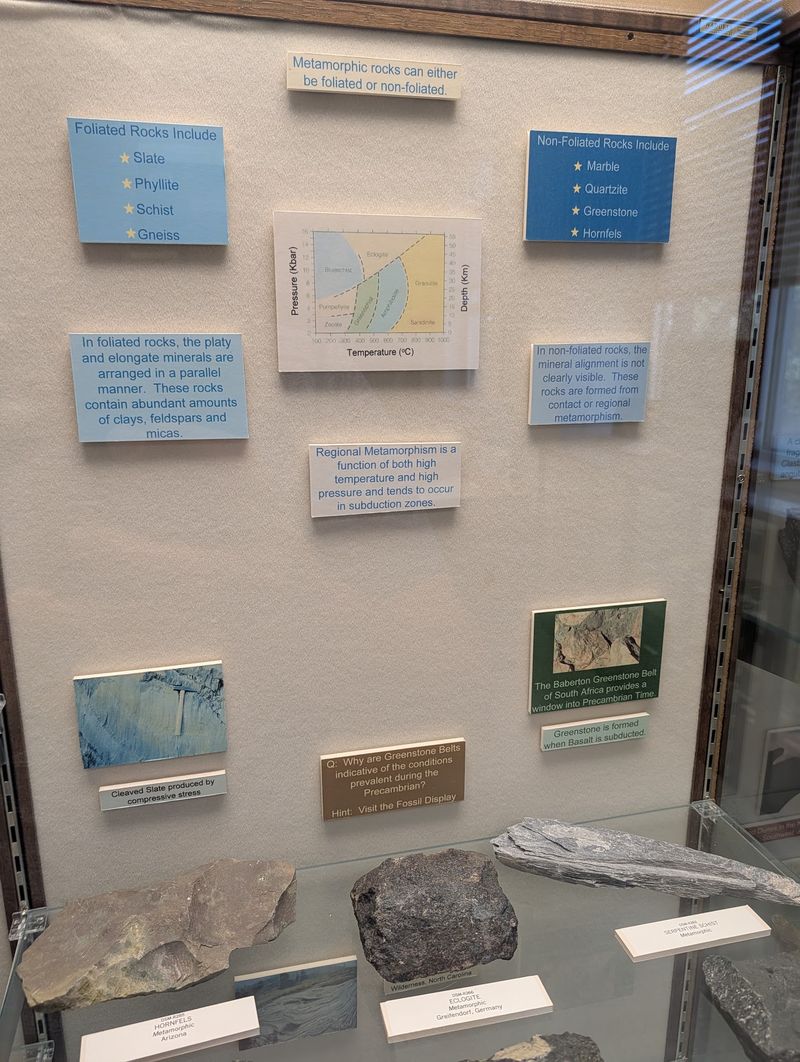
Rocks get their own lesson too. The museum explains how igneous, sedimentary, and metamorphic rocks form, a topic that shows up in many school science units.
Seeing real examples next to each other makes the difference easier to understand than any worksheet.
Here is a simple way to remember it on the drive home. Igneous rocks cool from melted material, sedimentary rocks build up in layers, and metamorphic rocks get squeezed and heated into something new.
Ask the kids to sort a handful of backyard stones into those three groups later that week, and the museum visit keeps teaching long after the car pulls back into the driveway.
Space Rocks, Sinkholes, And Shifting Plates
Not every rock in the building came from Earth. Meteorites are part of the collection, and holding the idea that a chunk of stone traveled through space before landing here tends to delight curious minds.
Few objects spark as many questions from children.
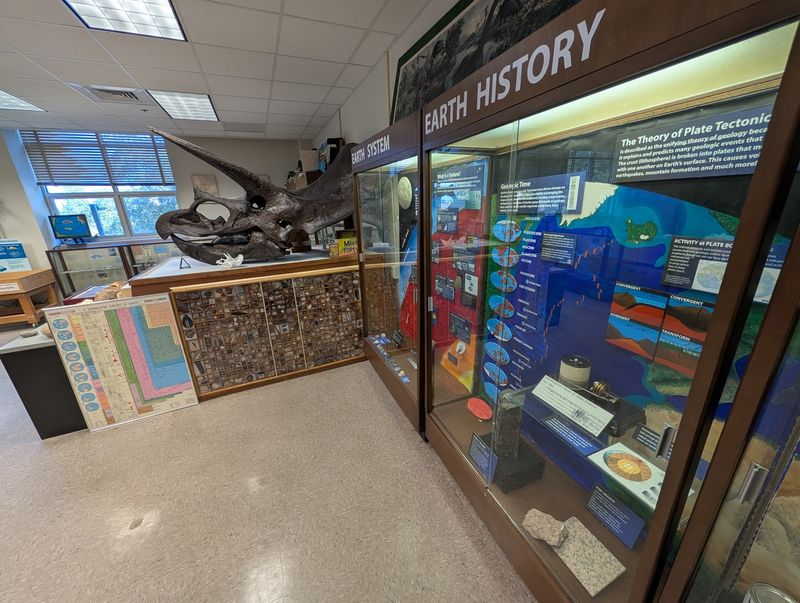
Nearby topics widen the view even more. Asteroids, plate tectonics, and karst topography all get attention, each explained within the story of Mississippi’s past.
These subjects can sound complicated, yet the displays break them into manageable pieces.
Karst might be the least familiar word on that list. It describes landscapes shaped when water slowly dissolves rock, forming features like caves and sinkholes.
Plate tectonics, meanwhile, explains how giant pieces of Earth’s crust drift over time, moving continents and building mountains.
For older kids, this section often becomes the most memorable part of the trip. It connects to things they see in the news and in science class, from asteroid headlines to earthquake reports.
Younger visitors may simply enjoy the idea of a rock from outer space, and that is plenty. Either way, the conversation usually continues in the parking lot, which is a pretty good sign that a museum did its job well.