
This Grand Old Mississippi Church In Port Gibson Wears A Golden Hand Pointing Straight To Heaven
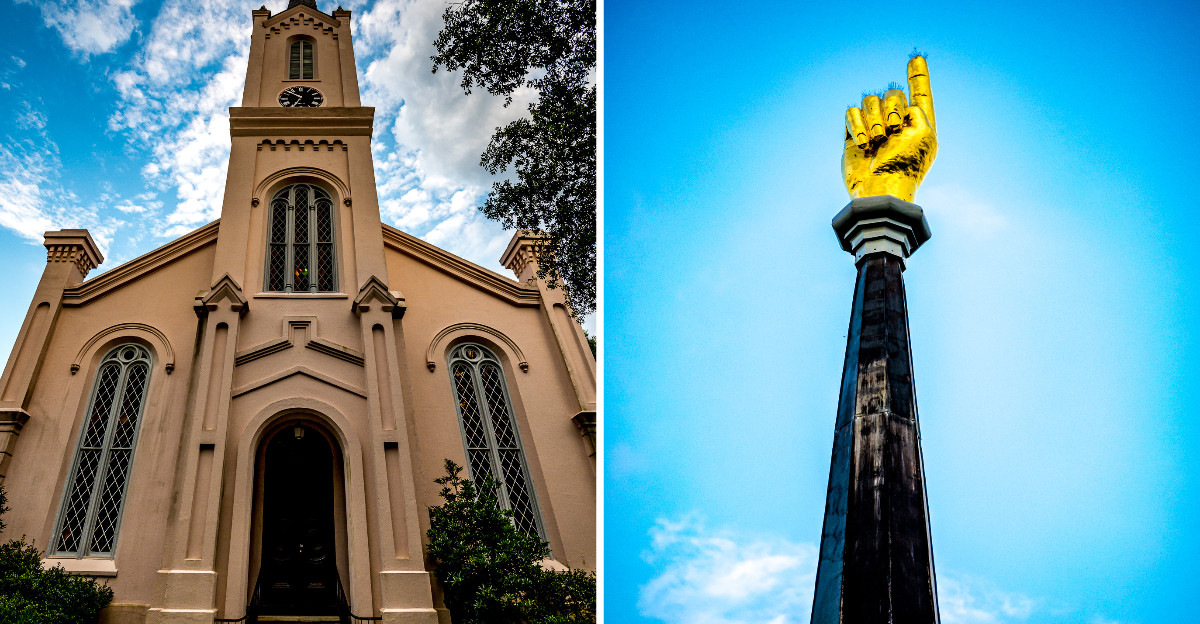
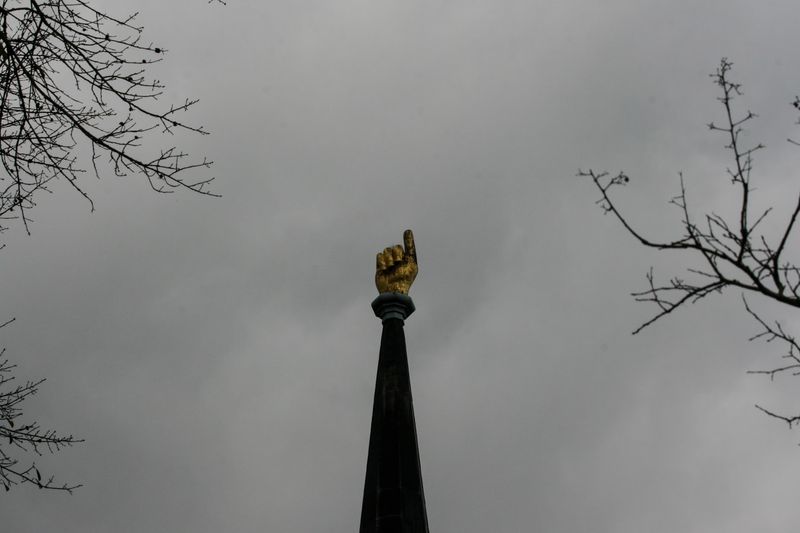
I only pulled over because I needed a snack and a stretch, and then I looked up. A giant golden hand was pointing at the sky from the top of an old brick church, like it was telling the whole state of Mississippi where to look.
It turns out that shiny finger has a story going back more than 160 years, full of preachers, carvers, and steamboat treasures. If you love free stops that make kids and grandparents gasp at the same time, keep reading.
A Brick Landmark On Church Street
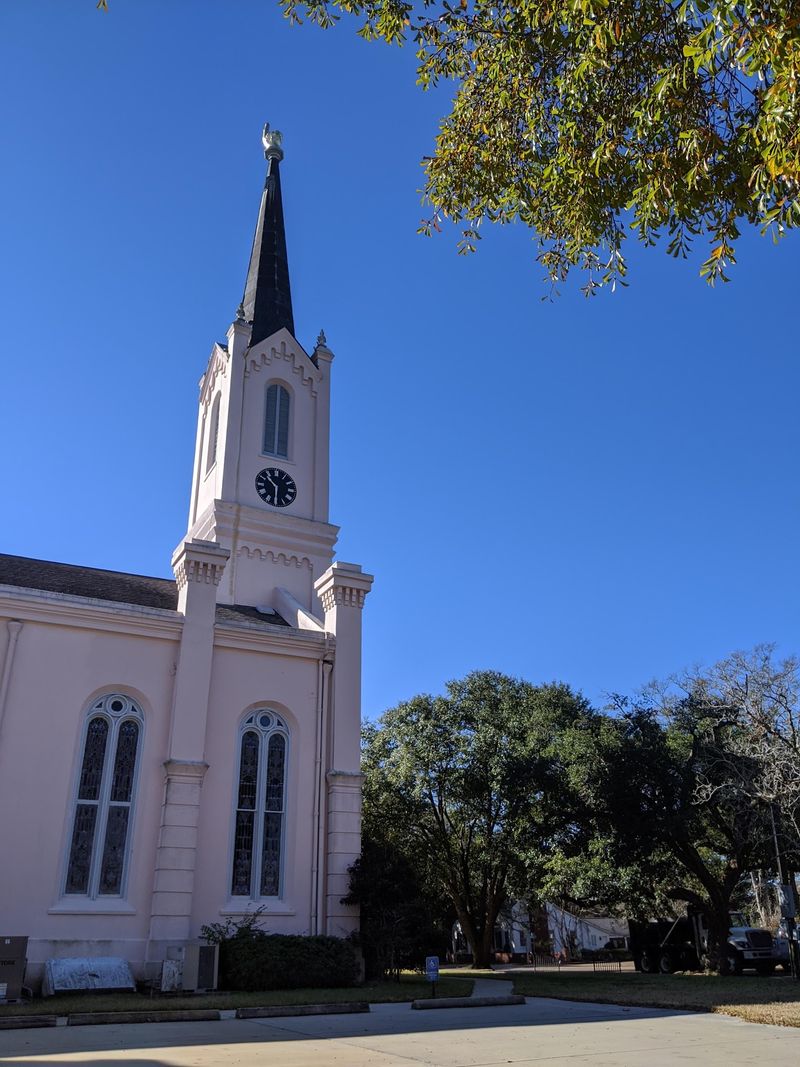
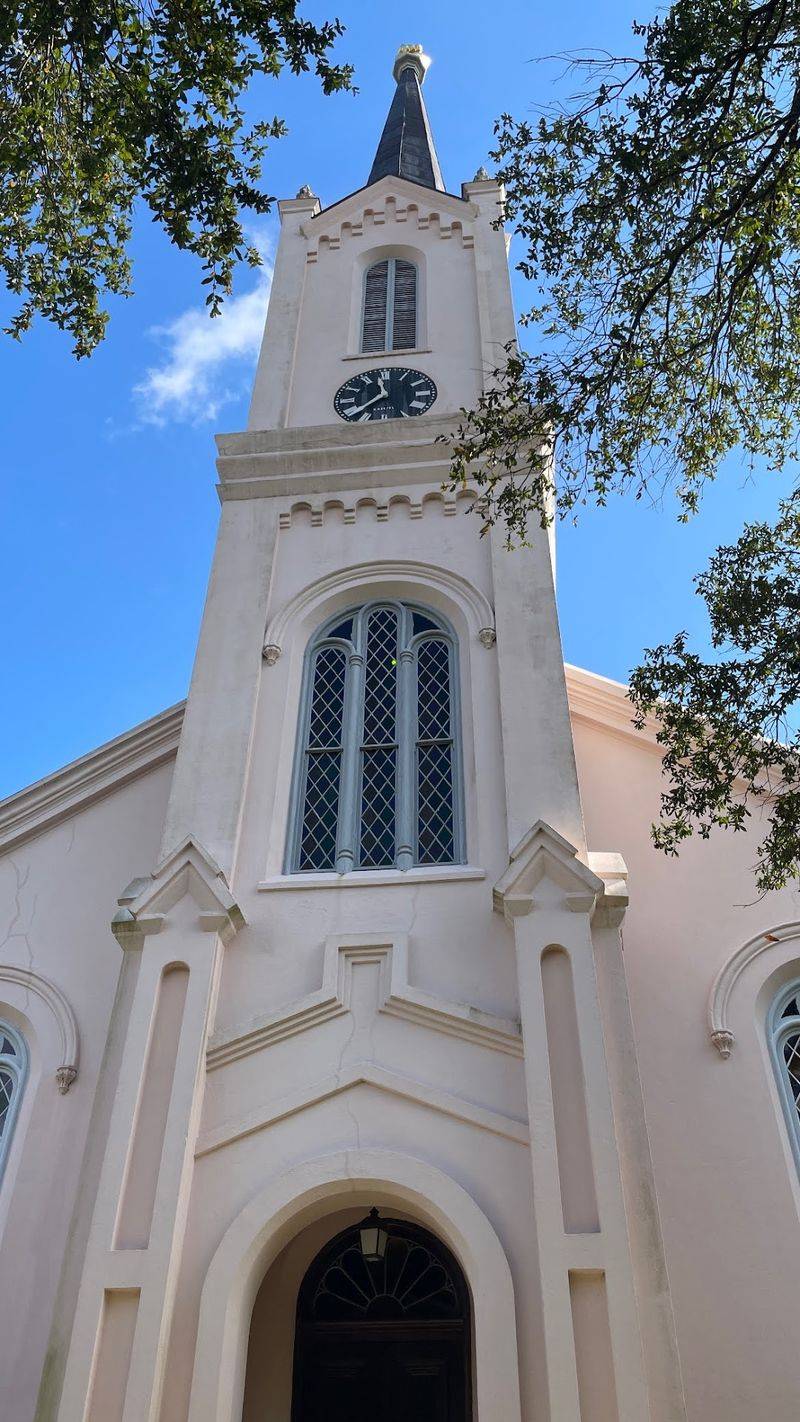
Right along U.S. Highway 61, where it doubles as Church Street, stands First Presbyterian Church at 605 Church St in Port Gibson.
The building is a working Presbyterian congregation, not a museum, yet travelers stop here all the time just to stare upward.
Port Gibson sits in Claiborne County in southwest Mississippi. It is a small, quiet town, and the church steeple is the tallest thing around, so you will likely spot it before you even park.
The golden hand on top makes it impossible to confuse with any other church in the state.
What makes the stop so easy for families is the price tag. There is no admission fee to visit, which means the whole outing can cost little more than the gas to get there.
That matters when you are loading up a minivan with grandparents, cousins, and a cooler of sandwiches.
Picture the scene on a clear morning. Old brick walls glow warm red, the steeple climbs high, and that gleaming finger catches the sunlight like a lighthouse beam.
Even kids who usually groan at the words historic church tend to perk up once they notice a hand pointing at the clouds.
The Preacher Who Pointed Skyward
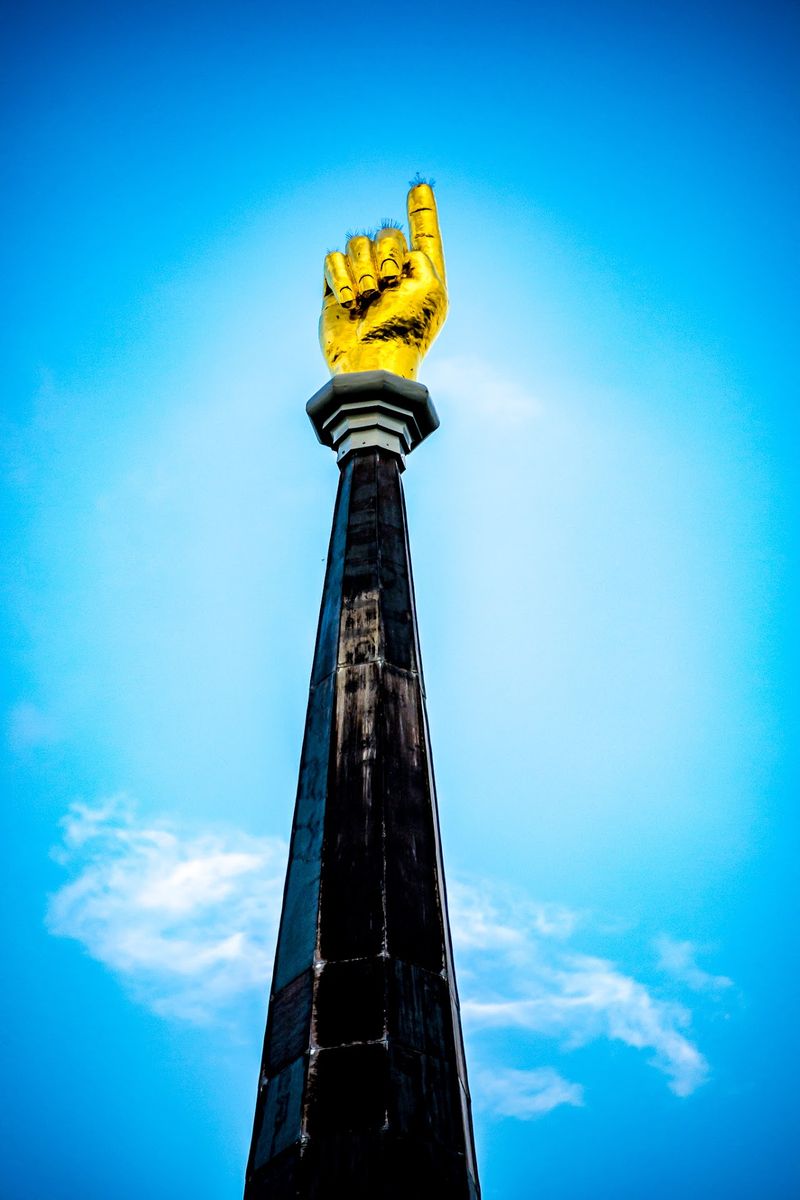
Ever wonder why anyone would put a hand on a steeple? The answer goes back to Zebulun Butler, the church’s first full-time pastor.
During his sermons, he had a habit of pointing toward heaven to make his point.
Local artist Daniel Foley carved the original hand out of wood around 1859 or 1860. It was a way of honoring the pastor and keeping his famous gesture alive for everyone passing through town.
Imagine how that must have looked to folks riding in on horseback, seeing a wooden finger rising above the rooftops.
Wood does not last forever in Mississippi weather, though. Heat, humidity, and storms took their toll, so the wooden hand was replaced with a metal one in 1901 or 1903.
The idea stayed exactly the same, only sturdier.
Kids usually love this part of the story because it feels so personal. One preacher’s everyday habit became a symbol that has outlasted generations.
It makes a nice car-ride conversation, too: ask the little ones what gesture they would want carved on top of a building to remember them by. The answers can get pretty silly.
Ten Feet Of Gleaming Gold
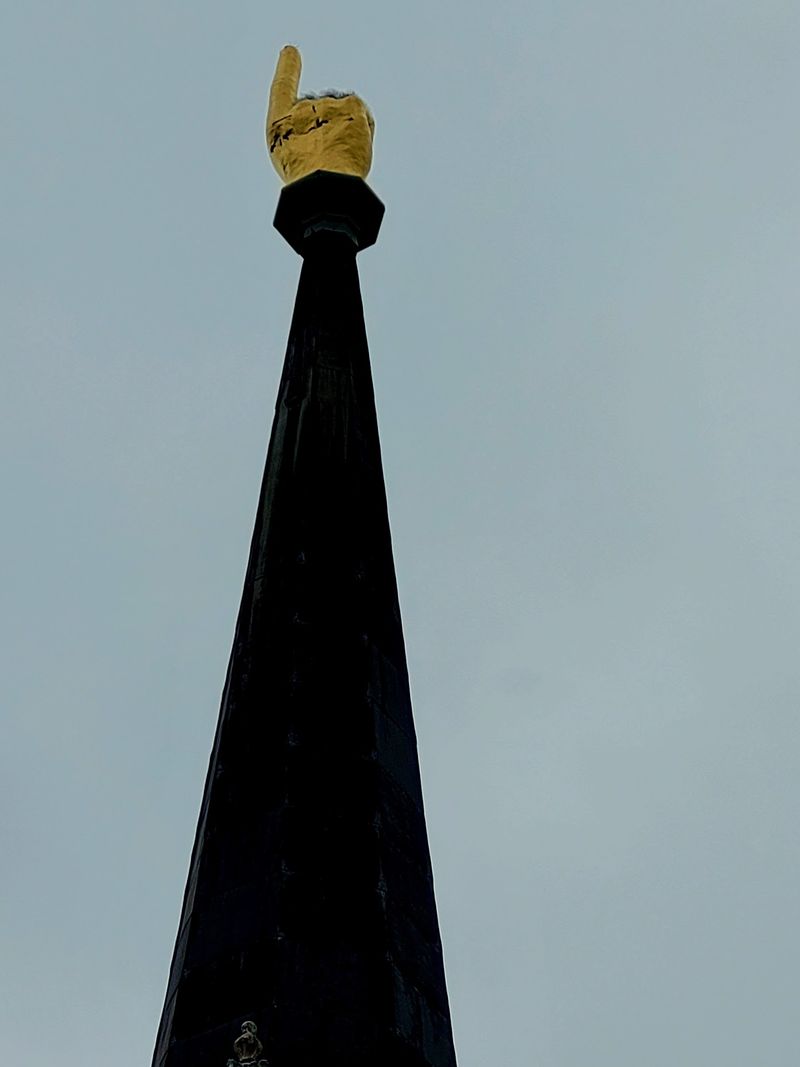
Numbers help this hand really sink in. The current version measures 10 feet 4 inches tall and weighs about 250 pounds.
It sits roughly 147 feet above the ground, perched at the very tip of the steeple.
From the sidewalk, it does not look nearly that big, which is part of the fun. Try telling your grandkids the hand is taller than a basketball hoop and heavier than most grown-ups.
Watching them squint up and try to picture it can be half the entertainment.
The hand received its latest makeover in 2017, when it was refurbished and regilded with real gold plate. That fresh coating is why it shines so brightly on sunny afternoons.
Morning and late-day light often make the gold look especially warm, so plan photos around those hours if you can.
Visitors often mention how the steeple feels unlike anything else they have seen, and families say the grandchildren were delighted by the golden finger. A pair of binoculars in the glove box can make the moment even better.
Little eyes can pick out the curve of the knuckles and the careful shape of the fingernail from far below.
Romanesque Revival Walls From 1860
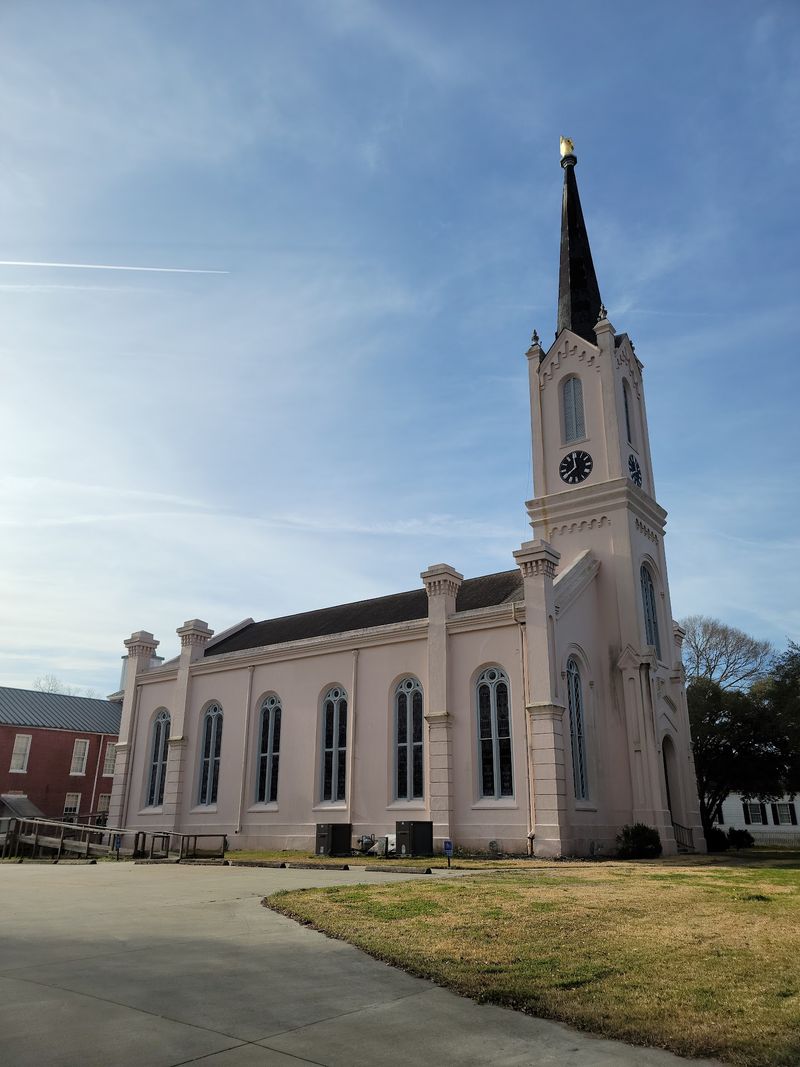
Long before anyone called Port Gibson a road-trip stop, this congregation was already meeting. Its roots stretch back to 1807, and the current building was finished in 1860, right on the edge of the Civil War years.
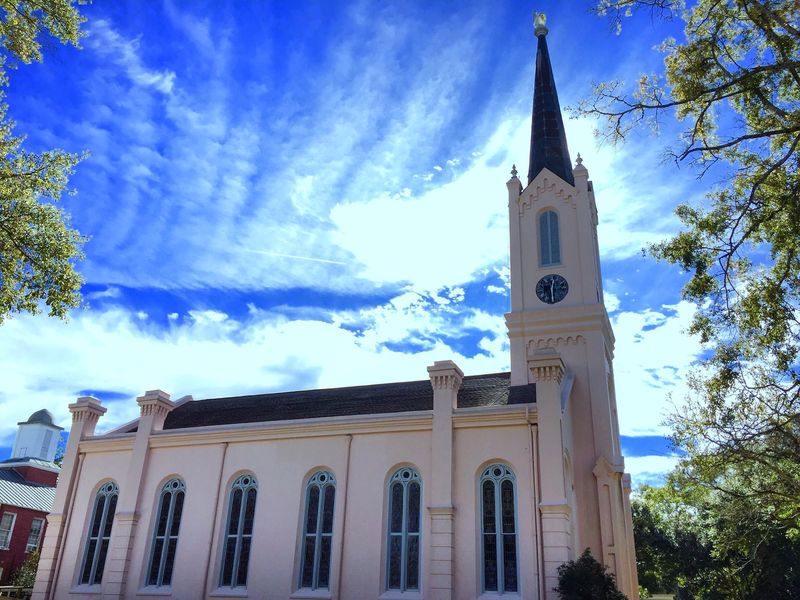
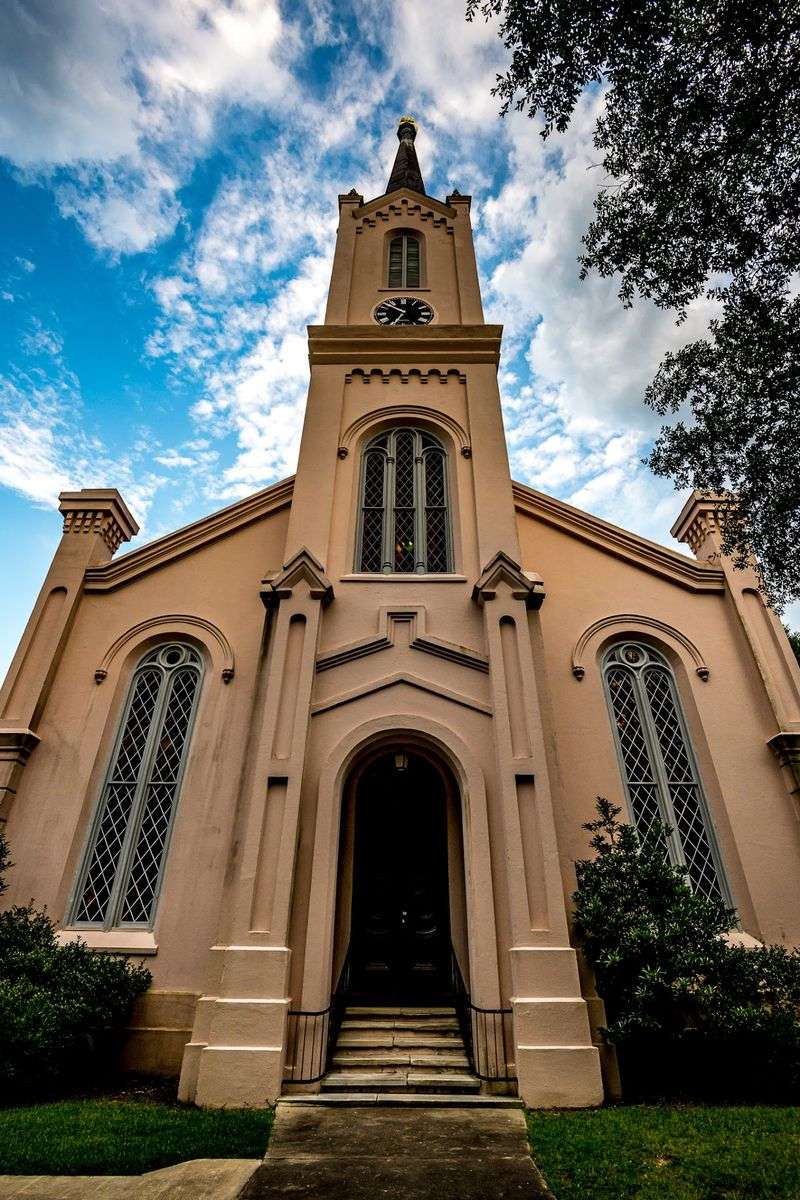
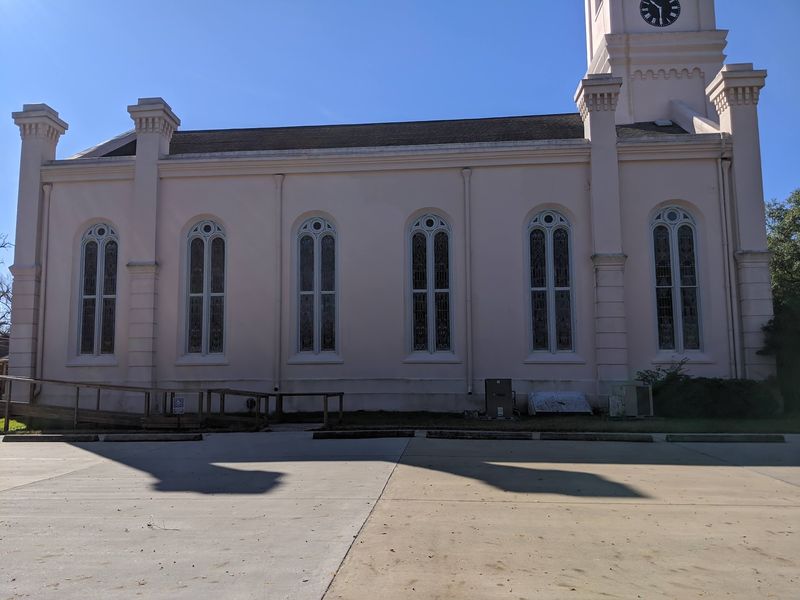
The style is called Romanesque Revival. In plain words, that means rounded arches, solid brick, and a strong, sturdy look that feels built to last.
Walk slowly around the outside and you will notice how the arches repeat along the walls, giving the whole building a steady rhythm.
Standing in front of it, you can almost feel the years stacked up. Families who worshipped here in the 1800s saw the same bricks you are touching today.
For grandparents who grew up in small Mississippi churches, the shape and scale may bring back memories of their own childhood Sundays.
A fun game for kids is an arch hunt. Have them count every rounded window or doorway they can find from the sidewalk, then compare totals.
It keeps restless feet busy while adults admire the craftsmanship, and it quietly teaches them to look closer at old buildings wherever they travel next.
Steamboat Chandeliers And Stained Glass
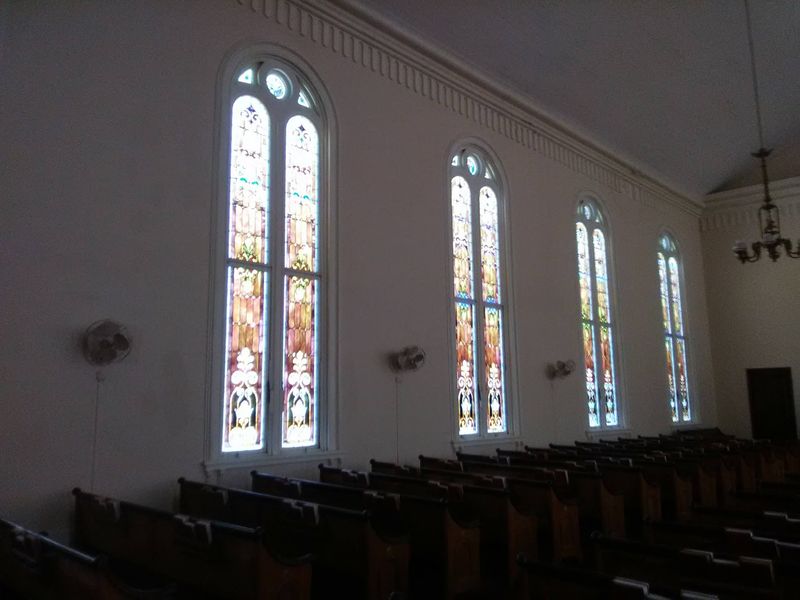
Step inside, if the doors are open, and look up again. Three chandeliers hang in the sanctuary, and they once lit the rooms of the steamboat Robert E.
Lee, a famous vessel from the days when paddlewheelers ruled the Mississippi River.
That detail tends to surprise people. Kids who have only seen steamboats in picture books can suddenly connect the river stories to something real hanging right above their heads.
It turns a quiet sanctuary into a small treasure chest of river history.
Then there are the windows. Visitors have said the stained glass is so lovely they forgot to photograph anything else.
When sunlight pours through, colored patterns may spill across the pews and floor, and younger children often enjoy spotting the shifting shapes.
A gentle reminder: this is a living church, so the interior is not always unlocked. Some travelers have arrived to find the doors closed and had to settle for the outside view.
Calling ahead through the church office or planning around service times can improve your chances of seeing the chandeliers and glass in person. Either way, the exterior alone still delivers a memorable stop.
The Town Too Beautiful To Burn
Few small towns can claim a Civil War legend quite like this one. General Ulysses S.
Grant reportedly spared Port Gibson, calling it too beautiful to burn. Whether you take the story as fact or folklore, it explains why so many old buildings still stand.
Port Gibson is also Mississippi’s third-oldest European-American settlement, chartered in 1803. Strolling Church Street, you pass old homes and churches that give the whole town a storybook feel.
The golden hand acts like a compass point, pulling your eye back toward the center of town.
History buffs have noted how the area ties into the long saga of the Natchez Trace. A few miles west, the Windsor Ruins make a natural add-on, with towering columns standing in the woods.
Pairing the two creates an easy half-day loop without spending much money.
For grandparents, this is the kind of place where stories flow naturally. For kids, the idea that a whole town was saved because it looked pretty can spark plenty of questions.
Bring along a simple notebook and let them sketch the steeple, the houses, or anything that catches their imagination along the way.
Welcoming Families Of Every Age
Grandkids loved seeing the golden hand, one family shared, and that sums up the appeal nicely. The steeple offers an instant payoff for little ones, while older visitors appreciate the history and quiet beauty.
If you visit on a Sunday morning, the church has thoughtful options for families. A nursery is available during morning worship.
Children in second grade and younger are invited up for a special lesson at the front pew, then head off to Children’s Church and playtime in the Annex.
Beyond Sundays, the congregation offers Sunday School classes for kids, hosts a Christmas Pageant each year, and teams up with other local churches for a summer Vacation Bible School. Visitors have described the church family as kind, and one traveler praised the pastor as knowledgeable and hospitable.
The pace here suits mixed-age groups. Nobody has to rush, and there are no lines or loud crowds competing for attention.
A six-year-old can gawk at the golden finger while grandma reads about the 1860 building, and both walk away feeling like the trip was made for them. That balance is hard to find on a budget.
Service Times And Tour Hours
Timing can make or break this stop, so plan ahead a little. Sunday School starts at 9:45 AM, and worship services begin at 11:00 AM on Sundays.
An adult Bible study meets on Wednesday evenings at 7:00 PM.
The church does not post regular daily hours for sightseers, although tours are generally available. The Port Gibson Chamber of Commerce and Tourism suggests area tour hours of Monday through Thursday, 10:00 AM to 3:00 PM.
Expect holiday closures from December 25 through January 1.
Here is the best part for budget-minded families: admission is free. That leaves room in the wallet for lunch or a snack stop somewhere along Highway 61.
A free landmark plus a picnic can easily become a full, happy day.
Summer in southwest Mississippi can be steamy, so earlier weekday mornings often feel more comfortable for walking around the outside. Pack water, hats, and sunscreen, since you will spend time standing and looking up.
In cooler months, midday light makes the gold especially bright. Because interior access can vary, reaching out to the church office before driving a long way may save some disappointment.
Parking, Access, And Drive Times
Getting here from Jackson takes about 1 hour and 27 minutes, covering roughly 60 miles. From Hattiesburg, plan on around 2 hours 30 minutes, and Meridian is close to 2 hours 15 minutes away.
Families in the Delta can reach Port Gibson from Greenville in about 2 hours 20 minutes. From Tupelo, the drive stretches to roughly 4 hours 15 minutes, and Gulfport travelers should expect around 4 hours 31 minutes and about 190 miles.
Those longer trips work well paired with Natchez or Vicksburg.
Parking is simple. Curbside spots line the street near the church, and extra parking is available in the Firestone and Lack’s lots nearby.
You will not need to circle the block or pay a meter.
Accessibility is another plus for grandparents and anyone using a stroller or wheelchair. The main floor is easy to navigate, and the church provides a golf cart service to help visitors get from their vehicles to the entrance when needed.
That kind of care makes a real difference on a hot afternoon, and it means everyone in the family can enjoy the visit together.
Why The Golden Finger Stays With You
Long after the drive home, it is usually the hand people remember. Something about a giant golden finger pointing upward sticks in the mind, especially for kids who spot it first from the back seat.
Consider what you get for a free stop: a steeple story rooted in the 1850s, Romanesque Revival brickwork, steamboat chandeliers, glowing stained glass, and a town with a legendary Civil War past. Add easy parking, a golf cart for anyone who needs help walking, and friendly church folks, and the value is hard to argue with.
Is it an all-day destination on its own? Probably not.
It works best as the heart of a small-town loop, combined with the Windsor Ruins or a longer ramble along the Natchez Trace. Many families may find an hour here is plenty, and that is perfectly fine.
Still, there is something sweet about a place built around one preacher’s habit of pointing toward heaven. It invites everyone, young and old, to stop, tilt their heads back, and look up for a moment.
On a busy Saturday, that small pause might turn out to be the best part of your trip.