
The 8 Wisconsin Towns Where Fall Colors Can Look Like A Painting
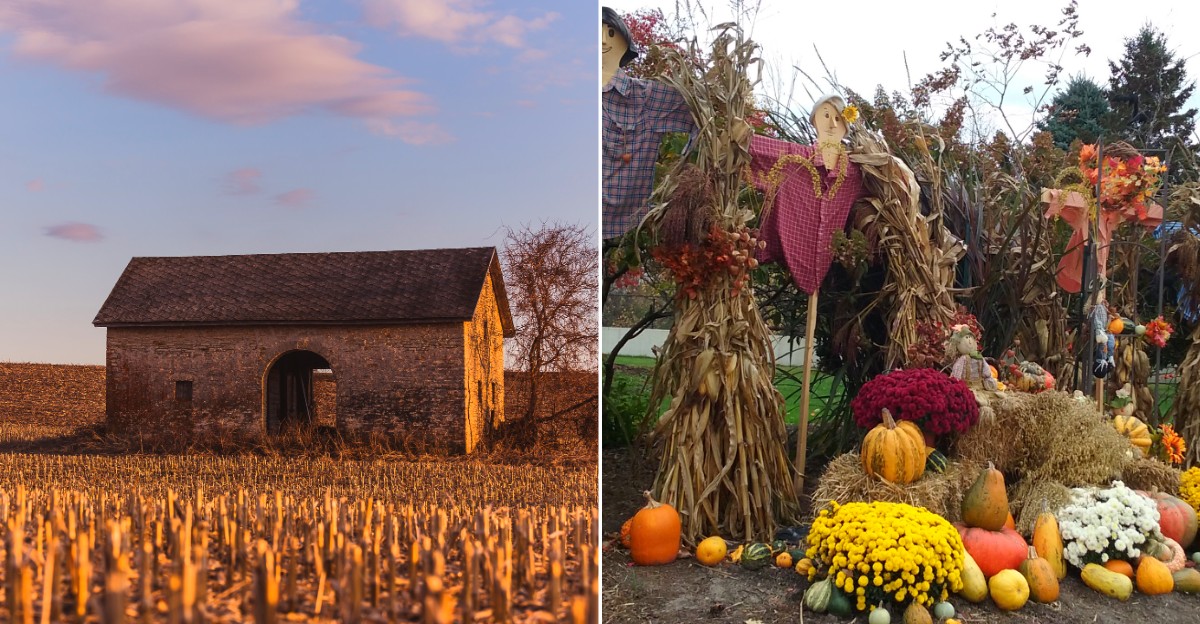
For a few short weeks each year, ordinary streets turn cinematic. Trees flare gold, orange, crimson, and copper, and even a quick drive can feel like a front-row seat to the season.
Wisconsin puts on this show especially well. Small towns gain a whole new personality when the leaves peak, with reflections on the water, bright hillsides, quiet trails, and scenic roads doing most of the work.
The trick is knowing where the color feels biggest. Some stops are made for a long drive with frequent pull-offs. Others reward a slower afternoon near the shoreline or under a canopy of changing leaves.
This list focuses on towns where fall does more than add a little color. It changes the entire view. Timing can be brief, but catch the right week and the scenery looks almost unreal.
1. River Bluffs And Red Maples In Menomonie
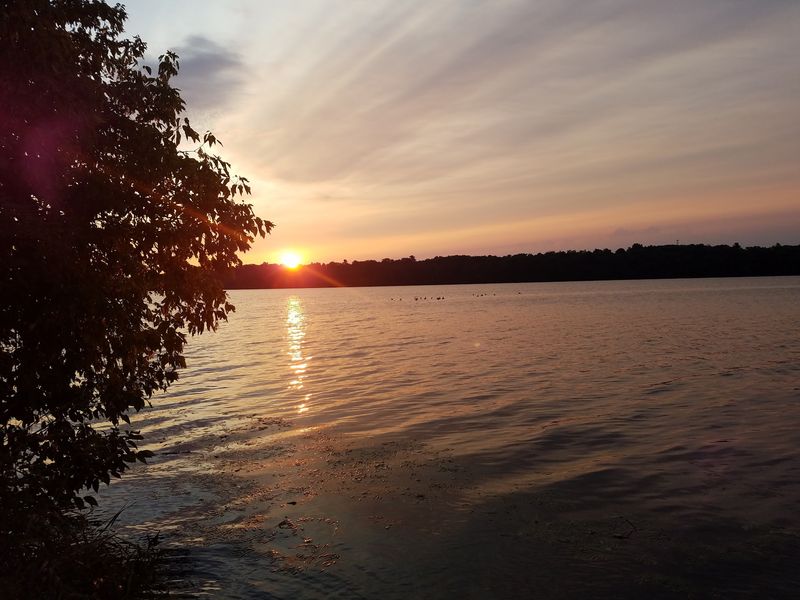
Picture a calm lake circled by trees that look like they caught fire overnight. That is the scene waiting for you in Menomonie each October. The town sits along the Red Cedar River, and the water makes every color look twice as bright.
You should start your visit around Lake Menomin, where paved trails and sidewalks create an 8.3-mile loop through lakeside, urban, and rural scenery. Early morning light makes the reflections look almost like glass.
For a longer outing, the Red Cedar State Trail begins right in town. It follows the river for about 14 miles on a crushed limestone path. You can bike, walk, or jog while oaks and maples lean over the water beside you.
Downtown is worth a stop once you finish exploring. The Mabel Tainter Memorial Building, found at 205 Main Street East, Menomonie, WI 54751, is a historic theater built in 1889. Its stone walls and old windows look lovely with golden trees framing the street.
Did you know? The Mabel Tainter was built as a memorial to a young woman who loved music and books. Today it still hosts concerts and events, so you might catch a show during your trip.
Menomonie is also home to the University of Wisconsin-Stout. The campus has tall trees and old brick buildings that make a nice backdrop for photos. You can stroll through without any trouble on a weekend afternoon.
Timing matters here, since peak color typically arrives sometime in October. You should check a Wisconsin fall color report before you go. Bring layers, because mornings near the river can feel chilly even on sunny days.
Plan for at least half a day so you can enjoy the lake, the trail, and the historic streets without rushing.
2. City Parks That Glow Along The Fox River
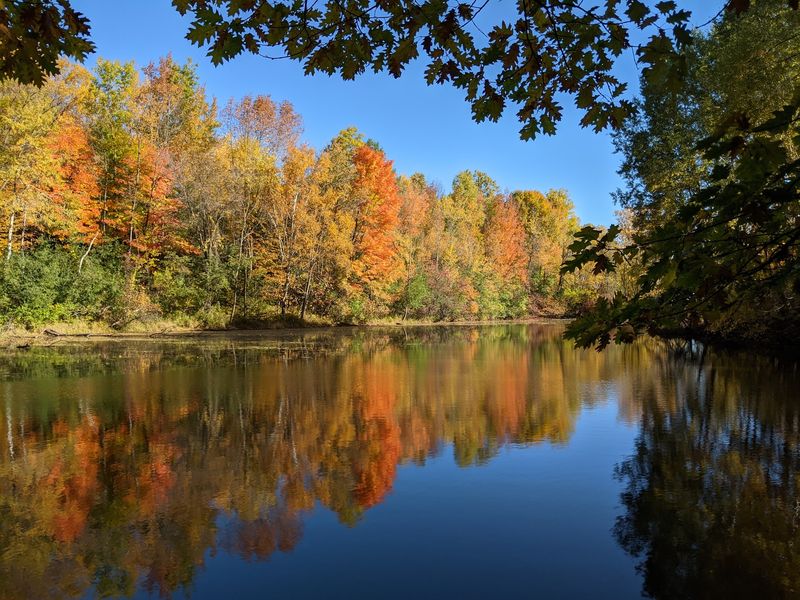
Big city energy and small town leaf views rarely go together, but Appleton pulls it off. The Fox River cuts right through the middle of town, and the trees along its banks turn bright each fall. You get color without driving far from coffee shops and museums.
One easy place to begin is the Trout Museum area downtown, then head toward the river trails. The Fox Cities Trestle Trail is a great pick. It stretches over the water on an old railroad bridge, giving you wide views of trees on both shores.
You should also save time for Telulah Park and Jones Park. Both have paths shaded by maples that turn orange and red. They work well for a quick picnic or a short family walk.
Garden lovers can also visit the Scheig Center Gardens at Appleton Memorial Park. The former Gardens of the Fox Cities now operates as the Scheig Center Gardens, with walking paths, perennial gardens, native plantings, and other landscaped areas that change with the seasons.
For a bigger view, drive about 20 minutes to High Cliff State Park. Tall limestone cliffs rise above Lake Winnebago, the largest inland lake in Wisconsin. From the top, you can see treetops rolling out in every direction.
Appleton was one of the first cities in the country to use hydroelectric power, back in 1882. The Fox River powered a home and a paper mill, and some old mill buildings still stand today.
Weekends in October can get busy, so you should arrive early at popular parks. Weekday afternoons tend to feel calmer. Pack comfortable shoes, since you will likely walk more than you plan once the colors pull you along.
3. A Lakeside Stroll Through Colorful Lake Mills
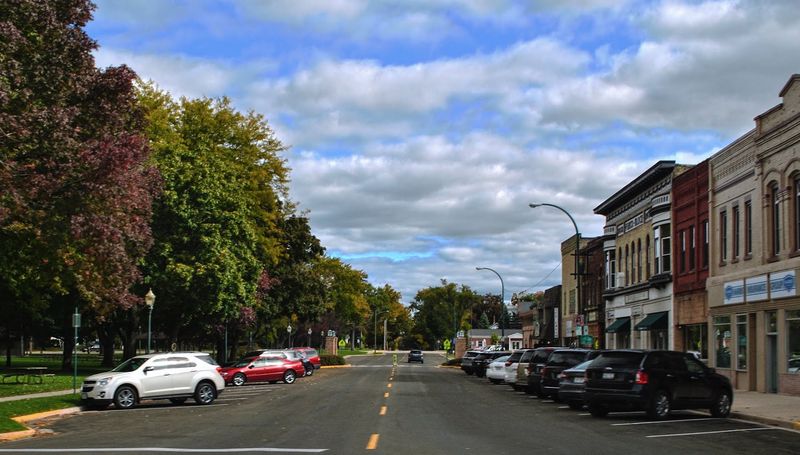
Some towns feel like a warm cup of cider, and Lake Mills is one of them. It is small, friendly, and wrapped around sparkling Rock Lake. In fall, the shoreline turns into a ring of gold and copper.
You should begin at Commons Park, the heart of downtown. The park has a gazebo, big shade trees, and benches where you can rest and watch leaves drift down. Shops and cafes circle the square, so it is easy to grab a snack.
Next, head to Sandy Beach Park on the edge of Rock Lake. The water reflects the trees on calm days, which makes for great photos. You can walk the shore or simply sit and enjoy the quiet.
History fans will want to visit Aztalan State Park, just a few miles east of town. The park sits at N6200 County Road Q, Jefferson, WI 53549. It holds ancient earthen mounds built by people who lived here almost 1,000 years ago, and the grassy hills look beautiful framed by fall trees.
Here is a fun story to share on your drive. Locals have long told tales of hidden stone pyramids resting under Rock Lake. Divers have searched for years, and the legend still sparks curiosity today.
Biking is another great option. The Glacial Drumlin State Trail passes right through Lake Mills and runs for over 50 miles. You can ride a short section and enjoy farm fields, woods, and wetlands in full color.
Peak color here generally arrives sometime in October, a bit later than northern towns. You should plan a slow afternoon, since this town rewards people who take their time. Bring a camera and a light jacket for breezy lakeside walks.
4. Northwoods Magic Around Hayward
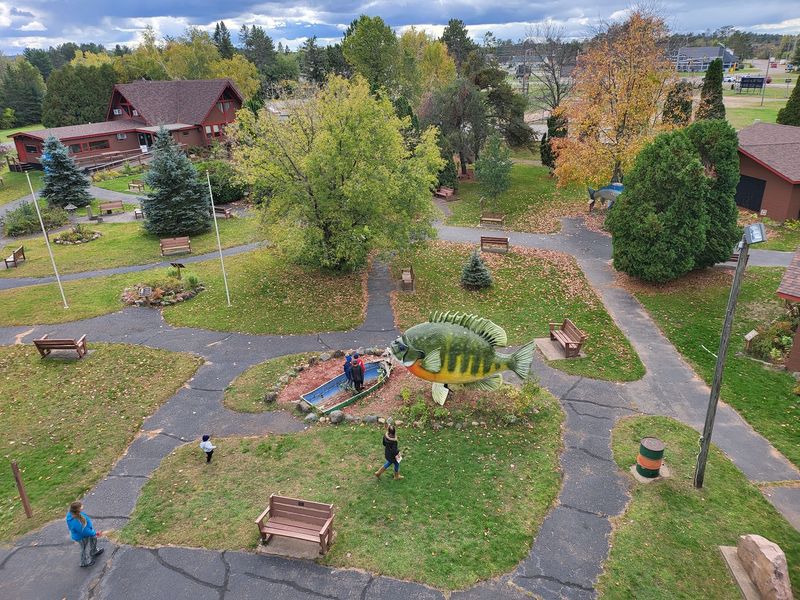
Deep in the Northwoods, Hayward shows off some of the earliest fall colors in the state. Birch trees turn bright yellow while maples blaze red against dark green pines. The mix feels wild, fresh, and wide open.
You should plan your trip for late September or the first week of October. Colors up north change faster than in southern towns. Waiting too long could mean you miss the best days.
Driving is one of the easiest ways to enjoy the view. Country roads around Hayward wind past lakes, forests, and small resorts. Pull over safely at overlooks and take a moment to breathe in the cool pine air.
The Chequamegon-Nicolet National Forest surrounds much of the area. Hiking trails lead through quiet woods where leaves crunch under every step. You might even spot deer, eagles, or a curious fox along the way.
Here is a fun bit of trivia. Hayward is home to the National Fresh Water Fishing Hall of Fame, located at 10360 Hall of Fame Drive, Hayward, WI 54843.
The museum features a giant muskie structure that stands about four and a half stories tall, and you can climb up into its open mouth for a lookout. Standing inside that fish gives you a fun view of treetops in full color. Kids usually laugh about it for days.
It makes a great photo stop on any fall trip.
Downtown Hayward also has cozy shops and places to grab a warm lunch. You should dress in layers, since northern mornings can be frosty. Afternoons often warm up nicely under sunny skies.
If you enjoy peaceful nature and a slower pace, this town is worth the drive. It feels like a true escape into the woods.
5. Riverside Gold In Southern Beloit
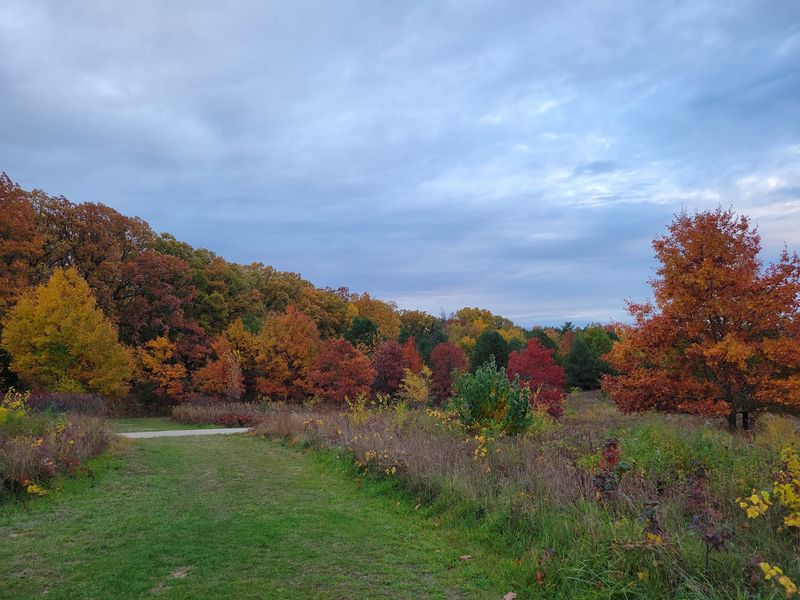
Right near the Illinois border, Beloit saves its color show for later in the season. That makes it a smart pick if you missed the peak up north. Leaves here often stay bright into late October.
You should head first to Riverside Park, which hugs the Rock River. A long paved path lets you walk or bike beside the water. Tall trees line the route, and their colors reflect across the slow current.
Families will enjoy the open lawns and lagoons in the park. You can toss a frisbee, watch ducks, or enjoy a simple picnic. It feels relaxed and welcoming for all ages.
Next, take a walk through the Beloit College campus. The school was founded in 1846, making it one of the oldest colleges in the state. Old stone buildings and big shade trees create a classic autumn scene.
While on campus, stop by the Logan Museum of Anthropology at 700 College Street, Beloit, WI 53511. It holds artifacts from cultures all over the world.
The campus also has ancient effigy mounds shaped like animals, and the leaves around them look lovely in fall.
One of the mounds on campus is shaped like a turtle, and it became a symbol for the college. Students and visitors often stop to see it.
Downtown Beloit has a friendly riverfront with shops and places to eat. On Saturday mornings, the local farmers market brings apples, pumpkins, and fresh treats. You should bring a bag for snacks.
Beloit is easy to reach from Madison or Rockford, so it works well for a day trip. Plan your visit for mid to late October. You will enjoy color without the big crowds found farther north.
6. Big Bluffs And Bold Colors At Black River Falls

Tall sandstone bluffs rise from the forest here, and they give you views that feel huge. Black River Falls sits in west central Wisconsin, where hills and woods meet. Each fall, the landscape turns into a quilt of reds, oranges, and yellows.
You should start at Castle Mound, part of the Black River State Forest. A short trail climbs to the top of a rocky bluff. From there, you can see treetops stretching far into the distance. The climb is steep in spots, so wear sturdy shoes. Take your time and stop to catch your breath.
The view at the top makes every step worth it.
For something different, visit Perkinstown Road and other forest drives in the area. You might also try the Wazee Lake Recreation Area. Its deep, clear water sits inside an old mine pit, and the trees around it glow in autumn.
Downtown, the Jackson County Historical Society Museum is located at 321 Main Street, Black River Falls, WI 54615. You can learn about logging days, early settlers, and the Ho-Chunk Nation, whose people have deep roots here. It is a nice stop between outdoor adventures.
Fun fact: The Black River gets its dark color from natural tannins in the water. These come from plants and soil in nearby wetlands, not from pollution. Paddling is another great way to see the leaves. You can rent a kayak or canoe from local outfitters and float down the river.
The banks glow with color as you glide past.
Peak color typically arrives sometime in October. You should check trail conditions before you go. Pack water and snacks, since some trails sit far from town.
7. An Island Escape In La Pointe
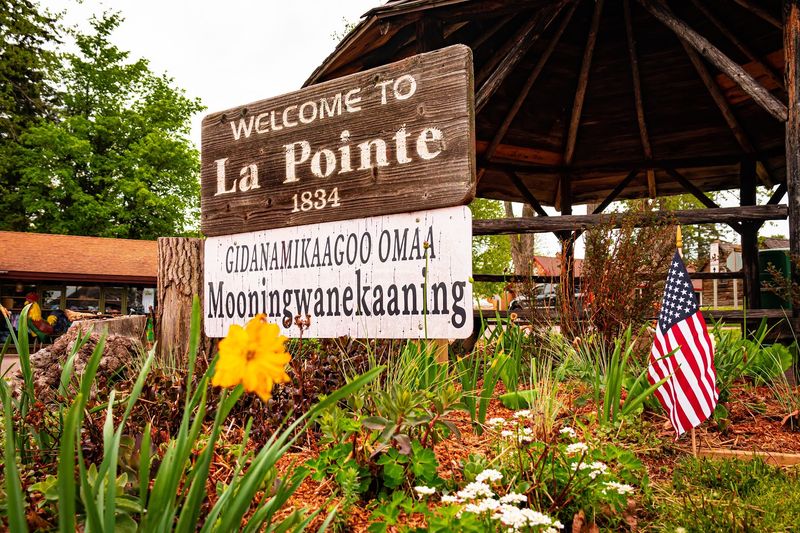
Getting here means taking a ferry, and that ride alone feels like an adventure. La Pointe is the only town on Madeline Island, the largest of the Apostle Islands in Lake Superior. In fall, the island glows with gold birches and bright maples beside deep blue water.
You should catch the Madeline Island Ferry from Bayfield. The trip takes about 25 minutes. Grab a spot on the deck to watch the island colors grow closer. Once you land, Big Bay State Park is a must. It sits at 2402 Hagen Road, La Pointe, WI 54850.
Boardwalks, sandy beaches, and rocky cliffs make it one of the most scenic places on the island. Keep in mind that construction is affecting parts of the park in fall 2026, including the campground and beach parking lot, so check current access details before visiting.
The trails at Big Bay wind through forest and along the shore. You can hear waves splashing against sandstone below. Leaves above you shift from yellow to orange as the wind moves through.
Biking is a popular way to explore the island. Roads are quiet, and you can rent bikes near the ferry dock. Pedaling past fields and woods lets you enjoy the scenery at an easy pace.
History lovers should visit the Madeline Island Museum near the dock. It shares stories of the Ojibwe people, fur traders, and early settlers.
Did you know? The Ojibwe consider Madeline Island a sacred place and a spiritual home.
Colors on the island typically build through October, so check the current fall color report before making the ferry trip. You should check the ferry schedule before your trip, since it changes after summer. Some shops close for the season, so pack snacks just in case.
Bring a warm jacket, because Lake Superior winds can feel cold. The island rewards anyone willing to take the ferry and slow down for a day.
8. Deep Blue Water Framed By Autumn In Green Lake
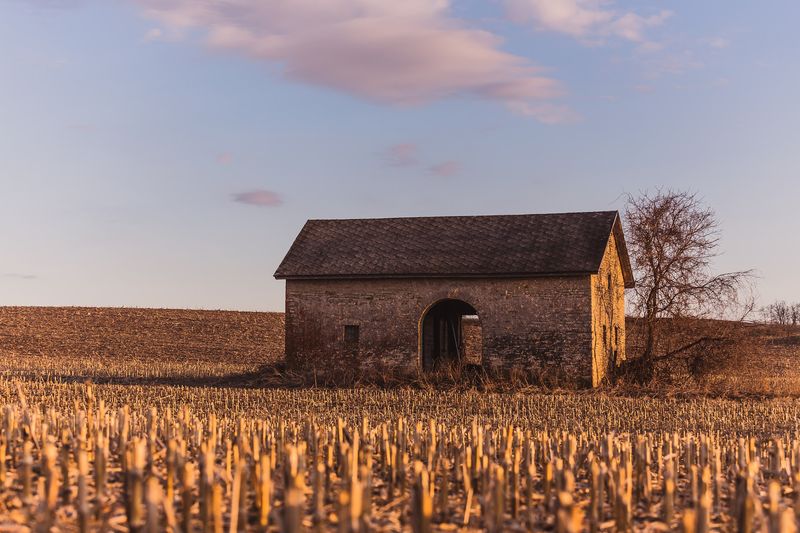
Crystal clear water meets fiery trees in this peaceful town. Green Lake is the deepest natural inland lake in Wisconsin, reaching about 236 feet deep. When fall arrives, that deep blue water makes every leaf pop.
You should begin at Dodge Memorial Park, which sits right on the shore. It offers a beach, picnic tables, and wide views of the lake. The trees around the park turn bright orange in October.
Downtown Green Lake is small and easy to walk. You can browse shops, grab a warm snack, and watch sailboats glide by. The town has a calm, old fashioned feel that fits the season well.
For a bigger outdoor trip, visit Green Lake Conference Center at W2511 State Road 23, Green Lake, WI 54941. The large grounds include walking paths, open fields, and a tall lookout tower called Judson Tower. Climbing it gives you a sweeping view of forests and water.
Driving around the lake is another great choice. A popular route circles the lake for about 23 miles through wooded roads, farmland, and lakeside scenery. You should stop at scenic pull offs to snap photos along the way.
Green Lake is often called the oldest resort community west of Niagara Falls. Visitors have been coming here for vacations since the 1860s. Some historic homes still line the shore today.
Paddling is a wonderful way to see the colors up close. You can rent a kayak or paddleboard during warm fall days. The quiet water makes it easy for beginners.
Peak color typically arrives later in October, so check current conditions before planning your day. You should plan a full day to enjoy the lake, the tower, and the drive.
With so much natural beauty packed into one town, it makes a perfect final stop on your fall color journey across the state.