
A Sunday Service In 1863 Is Why This Mississippi Ghost Town Church Has A Cannonball In Its Wall
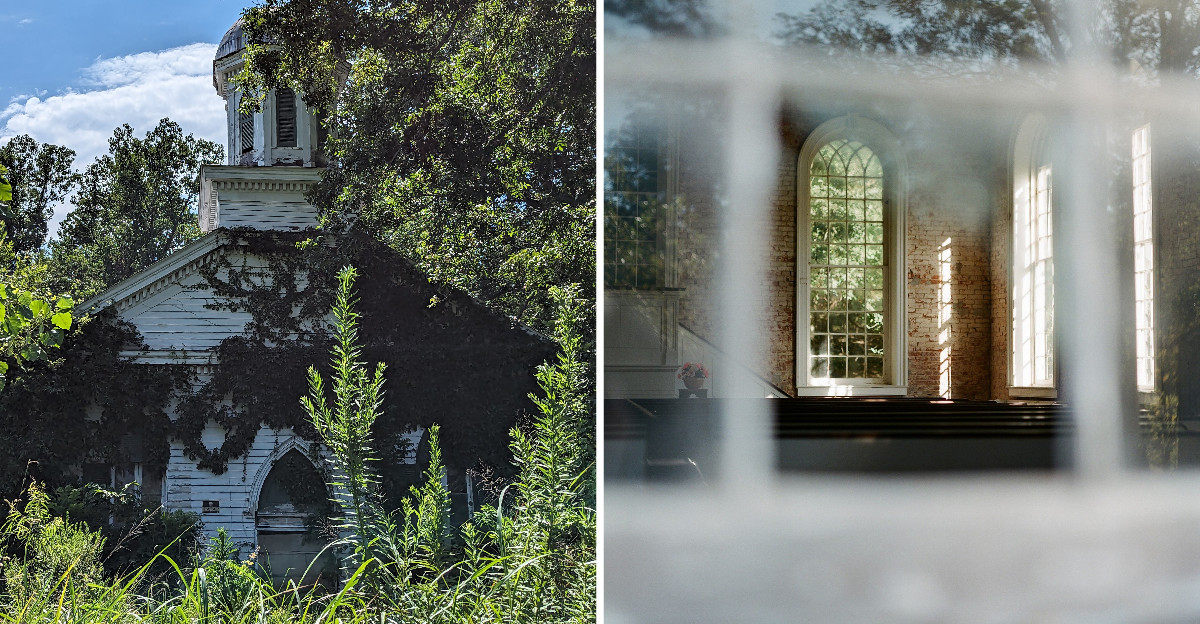
Fifteen minutes of gravel and dust in rural Mississippi do not usually end with a jaw-dropping surprise. Out past the bluffs, though, the trees open up and a tall red brick church appears like a page torn from an old textbook.
Look closely at its front wall and you will spot an iron cannonball sitting right in the bricks. Curious travelers, history fans, and anyone who loves a good story will want to hear how it got there.
A Brick Church At The End Of The Gravel
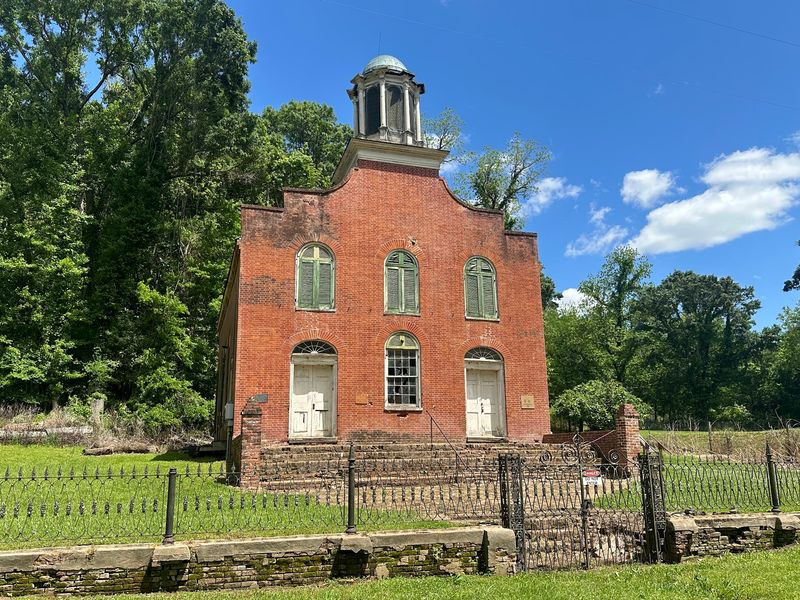
Picture a church built for a busy river town, now standing almost alone in the Mississippi woods. That is the scene waiting at Old Rodney Presbyterian Church, the best-known landmark of the ghost town of Rodney in Jefferson County.
The building rises from the loess bluffs, the soft, wind-blown soil hills that line this stretch of the state. Rodney sits roughly 32 miles northeast of Natchez, though it feels much farther once the pavement ends.
Very few people live here now, and the quiet is the first thing most travelers notice.
Why does it matter? The church is more than a pretty old building.
It holds a real reminder of the Civil War right in its brick face, plus a story about a town that once had big dreams. Visitors often describe the trip as a history lesson you can actually walk around in.
Inside the old town limits you will also find leftover storefronts, a hillside cemetery, and traces of wartime earthworks. Together they paint a picture of a community that was once lively and important.
The church, though, is the heart of it all, and it is the reason most people make the long drive.
Finding Lorman’s Lonely Landmark
Officially, the address reads Lorman, MS 39096, United States. Don’t let that simple line fool you, because reaching the church takes some patience and a sturdy set of wheels.
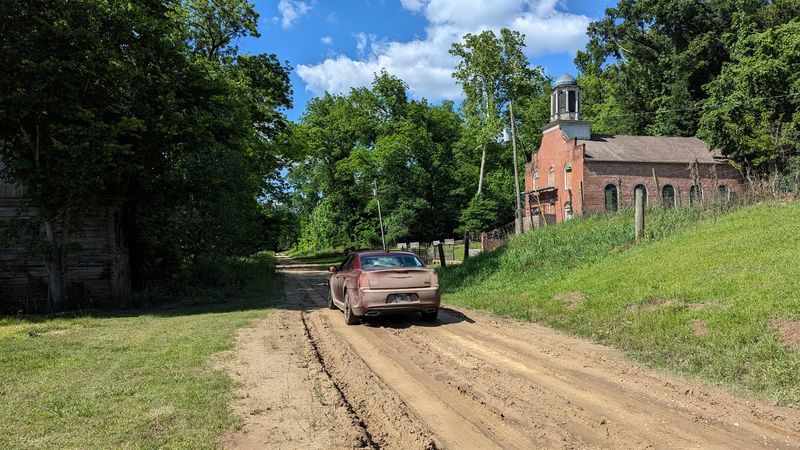
Most of the trip runs along a long gravel and dirt road through thick woods. One visitor mentioned driving about 15 minutes on dirt, cresting a hill, and suddenly rolling onto a short paved street with curbs.
That strange stretch lasts only around 200 yards before the dirt picks back up again, a quirky leftover from the town’s busier days.
Road conditions can be rough. Some travelers have gone with a tour guide because parts of the route felt almost impassable, especially for anyone driving an RV.
A higher-clearance vehicle makes life easier, and dry weather helps a lot.
GPS can get you close, using coordinates near 31.8628, -91.1998 if your app struggles with the address. Download maps ahead of time, since cell service may fade in the woods.
Plenty of guests say the drive is half the fun. Treat it like a small adventure, take it slow, and enjoy the scenery while the forest closes in around you.
From Petit Gulf To Rodney
Long before anyone called it Rodney, French settlers set up a community here around 1763. They named the spot Petit Gulf, a nod to its place along the Mississippi River.
The town became Rodney when it officially incorporated in 1828. Its new name honored Judge Thomas Rodney.
Over the next few decades, the riverfront filled with steamboats, merchants, and families, and the town grew into a real center for trade and culture.
Here is a fun fact that surprises most people. Back in 1817, Rodney came within just three votes of becoming the capital of Mississippi.
Imagine how different this quiet clearing might look if a few lawmakers had voted the other way.
By the 1850s, Rodney was at its peak. Stores, banks, a post office, and churches lined the streets, and the river kept bringing new business to its docks.
Life here moved to the rhythm of steamboat whistles.
Knowing this backstory changes how the empty streets feel. Every crumbling wall once belonged to a shop or home in a town that people truly expected to keep growing.
Why The Town Faded Away
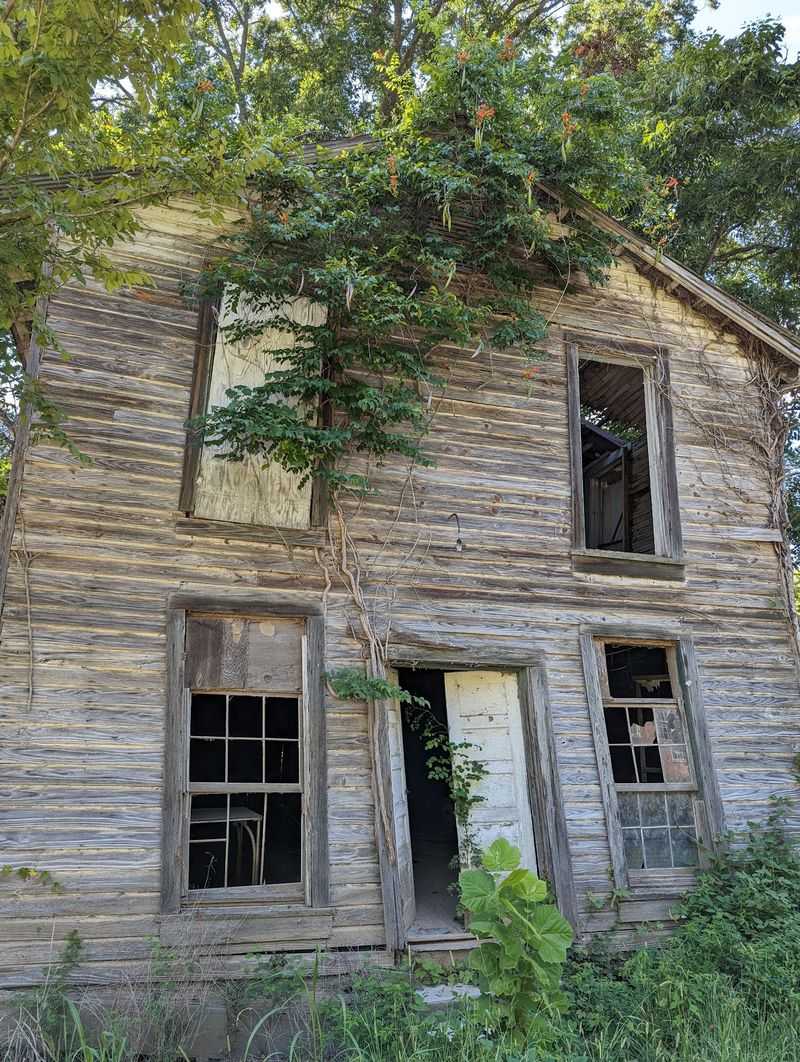
Few towns vanish because of one bad break. Rodney faced a whole string of them.
Yellow fever outbreaks swept through the area and hit the community hard. Large fires in 1852 and 1869 burned through parts of town.
Then, around 1870, the Mississippi River shifted its course and moved away from Rodney, leaving the once-busy port without its watery highway.
The railroad delivered the final blow. When tracks were laid, they bypassed the town completely.
Without the river or the railway, trade dried up, and families slowly packed up and moved to places with better chances.
Rodney was officially disincorporated in 1930. By 2010, only a handful of residents remained.
Flooding still visits the area regularly, and many leftover buildings show the wear of high water over the years.
Still, the story did not end in total silence. The Rodney Center Historic District is now listed on the National Register of Historic Places, which recognizes how important the town was.
Walking past its faded storefronts, you can almost hear echoes of the busy days when Rodney seemed destined for something big.
Federal-Style Brickwork With Staying Power
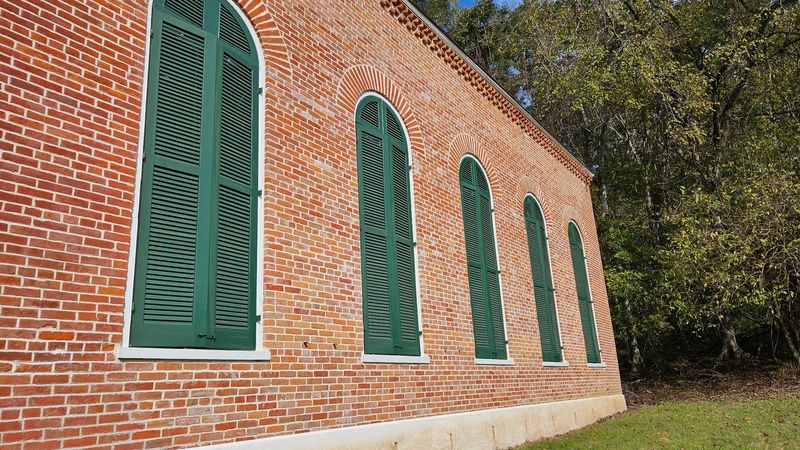
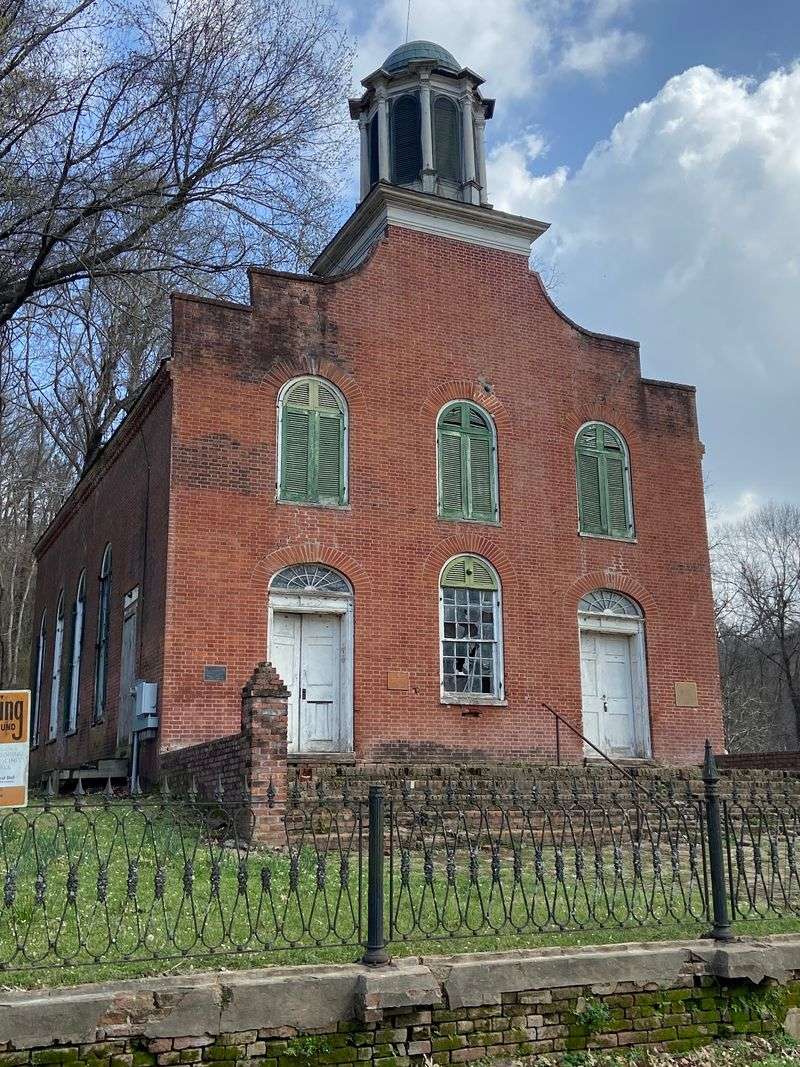
Builders started on the church in 1829 and finished in 1832. It was dedicated on January 1, 1832, which makes it nearly two centuries old.
The Mississippi Department of Archives and History considers it the most unique surviving example of Federal-style church architecture in the state. That is high praise for a building tucked away down a dirt road.
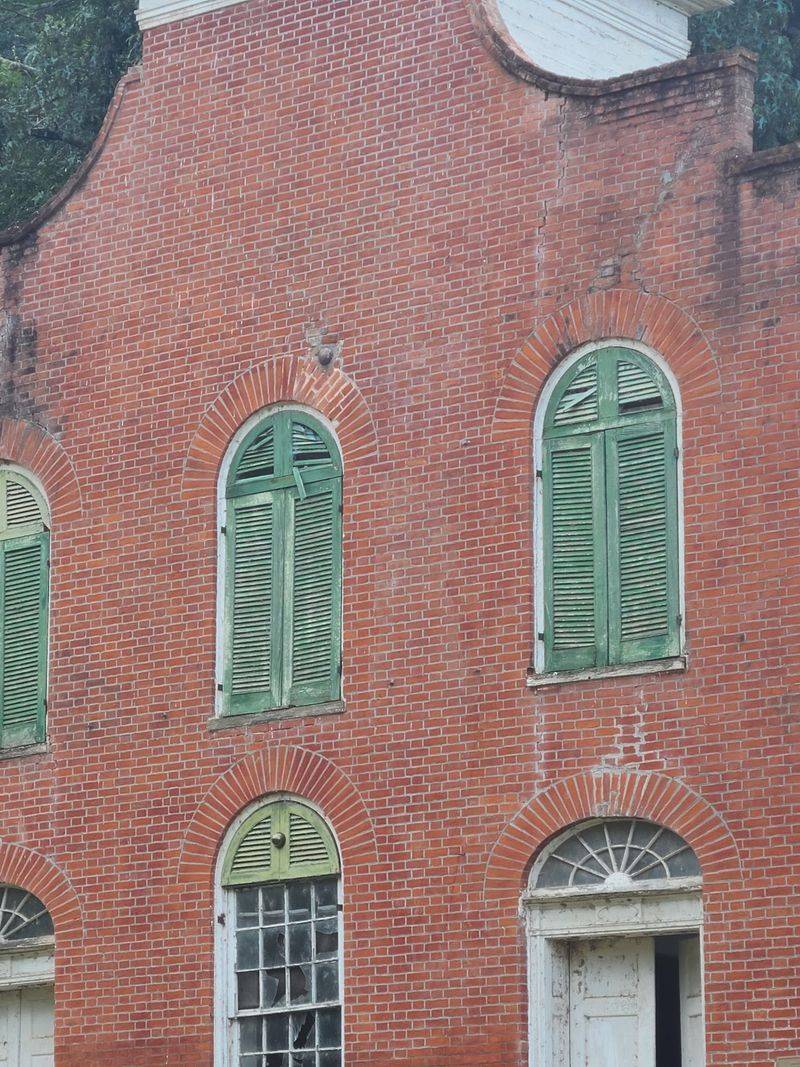
Federal style is known for balance, clean lines, and neat symmetry, and you can see those ideas in the tidy rows of windows and the strong brick front.
The warm red brick stands out against the green woods around it. Up close, the walls show their age in a way that feels honest rather than worn out.
Each brick was laid long before the Civil War, when Rodney was still a growing river town.
Visitors who love older architecture often linger here longer than planned. Take a slow walk around all four sides.
The details, from the window shapes to the roofline, reward anyone who looks carefully.
For photographers, morning and late afternoon light make the brick glow a deep, rich color.
The Cannonball Above The Balcony Windows
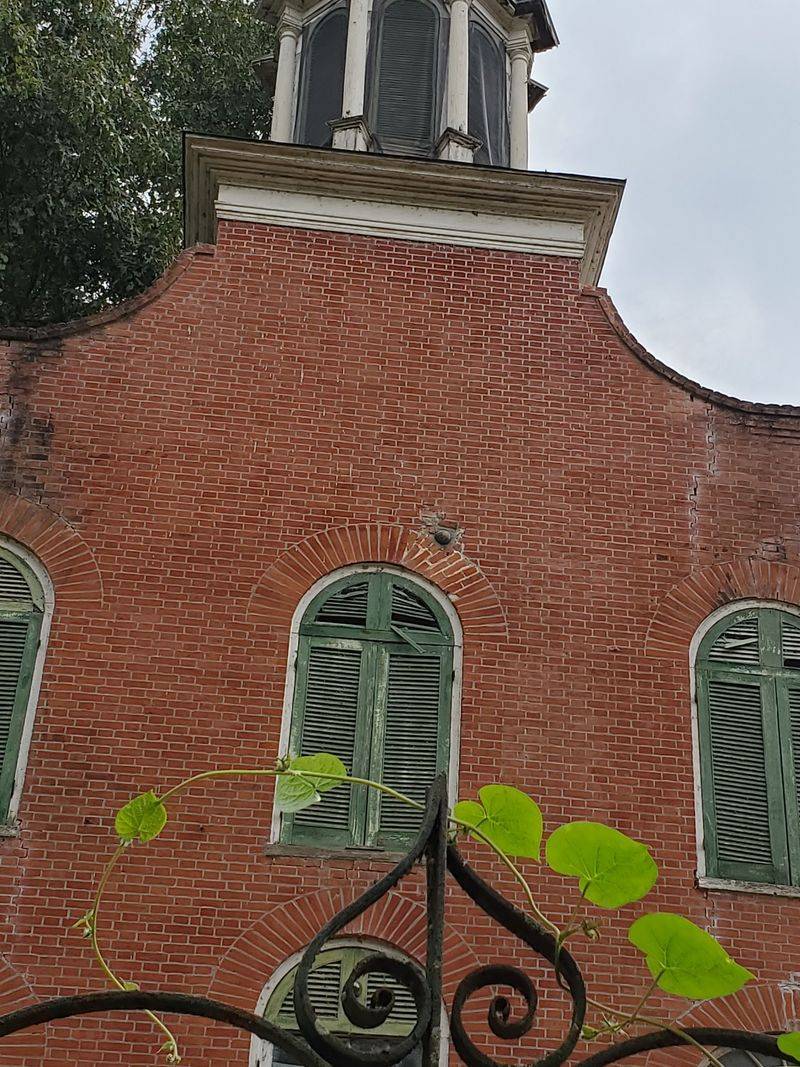
Look up. Just above the balcony windows on the front of the church, a round iron cannonball sits snug in the brickwork.
It is the detail everyone comes to see, and it rarely disappoints. One family shared that their grandkids loved spotting it on the church front.
Another traveler simply could not believe a piece of Civil War history was still right there in plain view.
Here is a twist many people do not know. The original cannonball that hit the church eventually fell out of the wall over time.
To keep the story alive, a genuine Civil War-era cannonball was placed back in the exact spot where the first one struck. So while it is not the very same ball, it marks the true point of impact.
Bring binoculars or a camera with good zoom if you want a closer look. The cannonball sits fairly high on the wall, and seeing the texture of the iron against the old brick makes the moment feel real.
Kids especially enjoy trying to picture how it got there. That leads straight into one of the most unusual stories of the war.
A Sunday Service In 1863
September 13, 1863, started like an ordinary Sunday. People gathered in the church for services, and among them were Union sailors from the USS Rattler, a gunboat on the nearby river.
Then the mood changed quickly. Confederate cavalry rode into town, entered the church, and captured the Union men right there during the service.
It is hard to imagine a stranger setting for a wartime standoff.
When word reached the USS Rattler, the crew responded by firing on the town and the church from the river. That shelling is how the brick front earned its famous mark.
The barrage stopped only after the Confederate soldiers warned that the captured sailors would be harmed if it continued.
The whole episode lasted a short time, yet it left a lasting scar on the building. Today, informational signs around the church help explain what happened that day.
Standing in front of the church, it is easy to picture the horses, the river, and the confused worshippers. Few Civil War sites mix the everyday and the dramatic quite like this one, which is why the story sticks with people long after they leave.
Old Pews Seen Through Window Glass
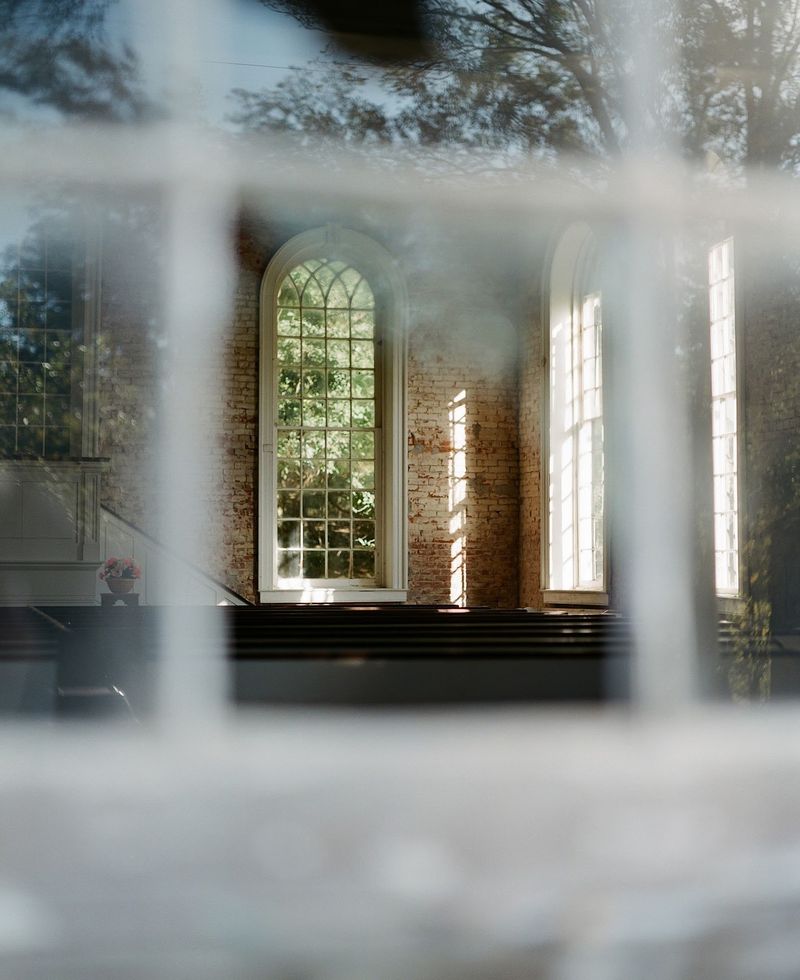
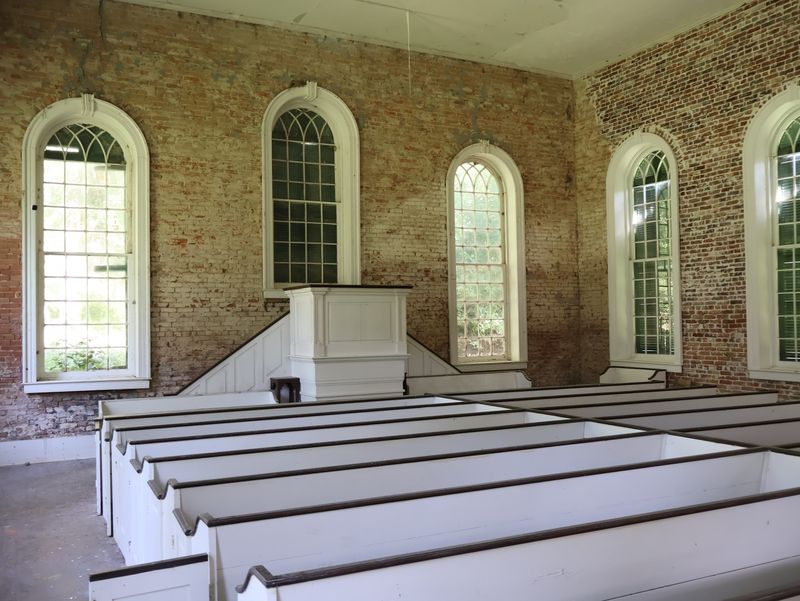
Peek through a window and time seems to slip backward. The church is no longer used for regular services, but visitors report that the old pews still sit in their original places inside.
The sight is simple and powerful. Rows of wooden seats face the front, just as they did when townspeople filled them on Sunday mornings.
Some guests who have stepped inside describe the room as eerie, but in an awesome way, the kind of feeling that gives you goosebumps for good reasons.
Access to the interior can vary, especially with restoration work going on. Plan to enjoy what you can see from outside, and treat any chance to look inside as a bonus.
Tour guides in the area have shared detailed history about the building for those who book with them.
Notice how light falls through the tall windows. Dust floats in the beams, and the quiet feels heavy in a peaceful way.
It is a reminder that this was once a community gathering place, full of songs, conversations, and Sunday best clothes.
Take a moment here before moving on. The stillness is part of the experience.
Hilltop Graves Behind The Sanctuary
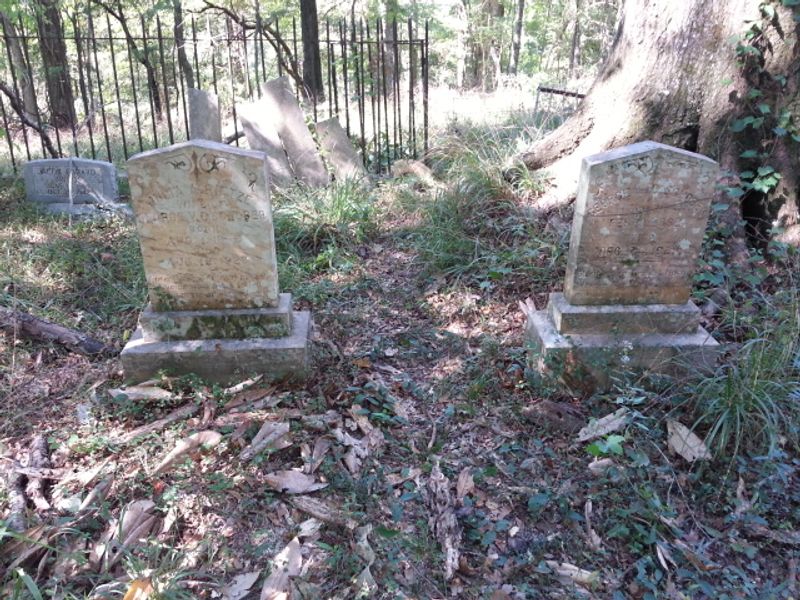
Behind the brick church, a steep path climbs up a hill toward the Rodney Town Cemetery. The walk is short but takes some effort, so wear good shoes.
One traveler described the cemetery as massive, and that surprise is part of its charm. Gravestones here date back to 1828, the year the town incorporated.
Reading the old names and dates offers a quiet window into the families who built Rodney and called it home.
Many markers are weathered and softened by time. Some lean slightly, and moss covers others.
The trees overhead create a shaded, calm space that feels very different from the open clearing below.
Please move gently here. Stay on paths when you can, avoid touching fragile stones, and keep voices low.
Visitors who care about the site often remind others to treat it with care and dignity, and that advice fits the cemetery most of all.
From the hilltop, glimpses of the town below help you understand how the community was laid out. It is one of the most thoughtful stops in Rodney and a place many people remember most.
Storefronts, Earthworks, And A Missing Church
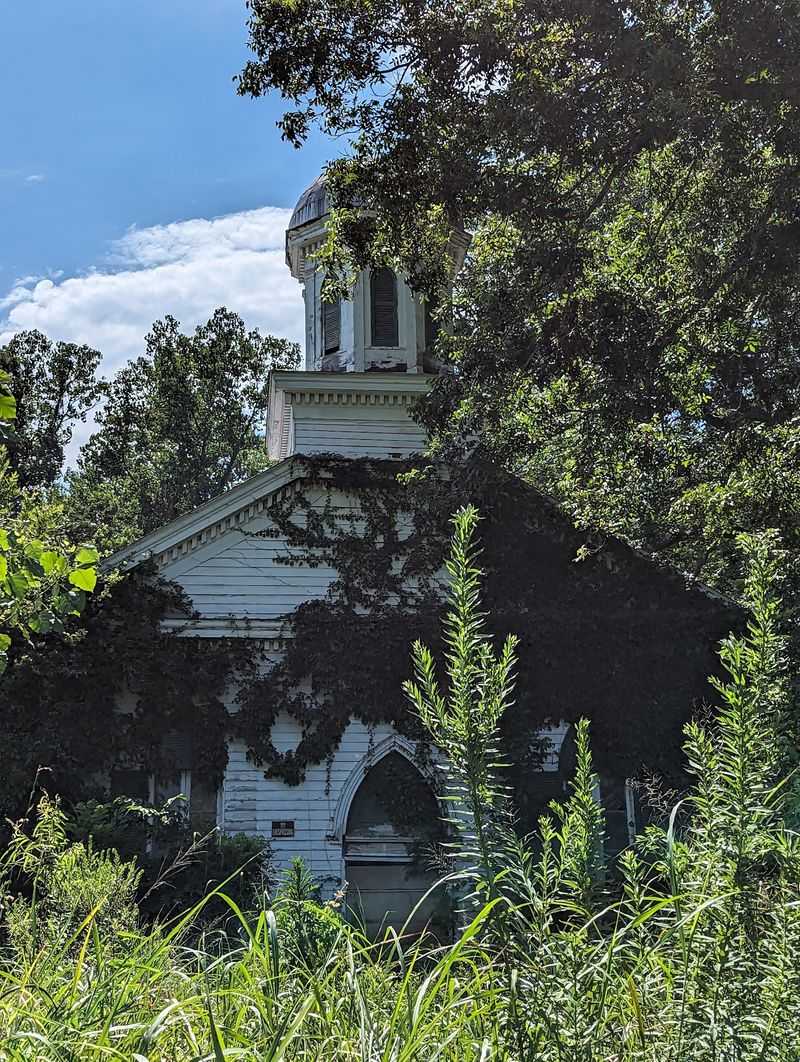
Plenty of people expect to find just a church. They leave realizing Rodney is a whole town, even if most of it is quiet now.
Along the old dirt main street, you can spot remains of buildings that once served as stores, a post office, and banks. Flood damage has marked many of them, but their shapes still hint at busy shopping days.
It takes only a little imagination to fill the street with wagons and shoppers.
Out in the trees, remnants of Confederate earthworks from the Civil War can still be seen. These low ridges of earth are easy to miss, so look carefully as you explore.
Fun fact for history buffs: Rodney once had a second notable church, Sacred Heart Catholic Church. In 1983, it was moved to Grand Gulf Military State Park, where it still stands today.
If you have extra time, a visit there makes a neat companion stop.
Exploring all these pieces helps the story come together. Each ruin adds a new chapter, turning a quick church visit into a small history walk.
Restoration Work And Ways To Help
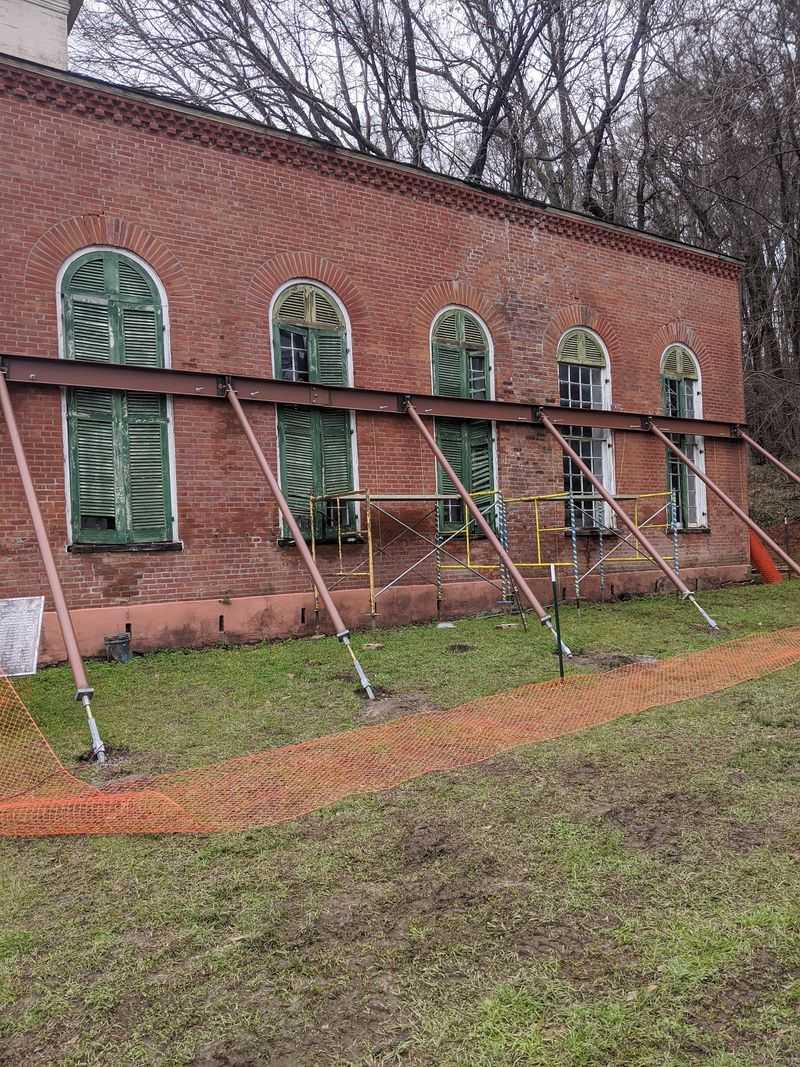
Old brick needs friends. Luckily, this church has a dedicated group in its corner.
The Rodney History and Preservation Society is actively working to restore the building and protect its future. Travelers over the years have noticed signs of this effort, and several were pleased to hear plans were underway.
One guide-led group even received detailed history about the church while restoration was in progress.
Why does it matter so much? Flooding, weather, and time are tough on any structure, especially one from the 1830s.
Without care, landmarks like this can slowly slip away. Several visitors have said the church deserves restoration before it is too late, and the society is helping make that happen.
Want to pitch in? Many guests suggest donating to the preservation society as a way to say thank you for the experience.
Even small gifts can help with repairs and upkeep.
Respect counts too. Leave everything as you found it, take only photos, and carry out any trash.
Helping keep Rodney clean and safe means future families can stand in the same spot, look up at the cannonball, and feel that same spark of wonder.
Is The Long Drive Your Kind Of Trip
Some places shout for attention. Rodney waits patiently at the end of a gravel road for anyone willing to find it.
Visitors almost always use the same idea when describing it: a step back in time. The brick church, the cannonball above the windows, the hillside graves, and the fading storefronts all work together to tell one big story.
It is a story of hope, war, bad luck, and a stubborn building that refused to disappear.
The trip is best for people who enjoy a bit of adventure. Rough roads, limited services, and wildlife mean you should plan ahead.
In return, you get a calm, uncrowded setting where history feels close enough to touch.
There are no hours or ticket prices listed for the site, so check with local tour guides or the preservation society for current access details before heading out.
If quiet history and unusual stories speak to you, Rodney is likely to stay in your memory for a long time. Bring curiosity, treat the town kindly, and maybe leave a donation.
That cannonball has been waiting since 1863, and it still has plenty to say.