
7 Natchez Trace Stops In Mississippi Where Families Walk Through Thousands Of Years Of History
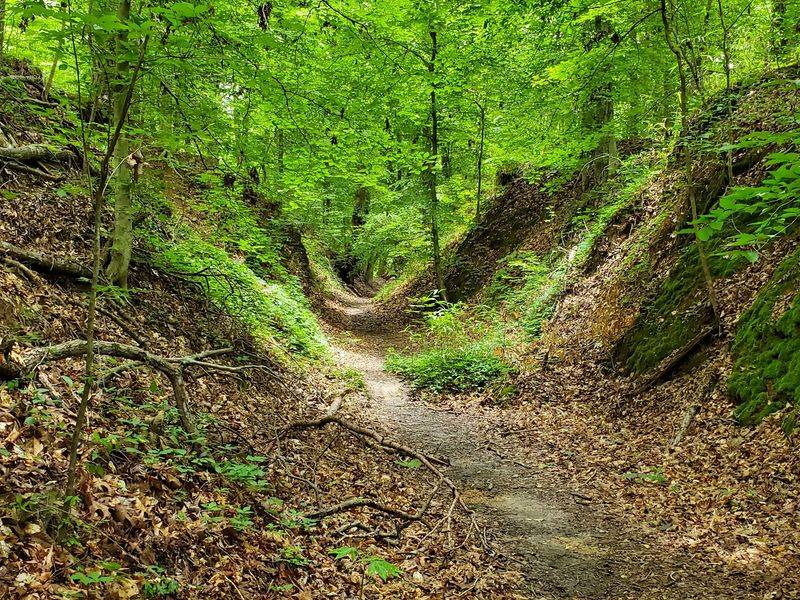
Most people think of the Natchez Trace as a slow, pretty drive with no billboards and lots of trees. Then you pull off at a quiet sign in Mississippi, climb a grassy hill, and realize people stood on that same spot a thousand years ago.
The old road is packed with ancient mounds, worn footpaths, and village sites that turn a car ride into a time machine. Here are seven stops where your family can stretch their legs and step right into the past.
1. Emerald Mound
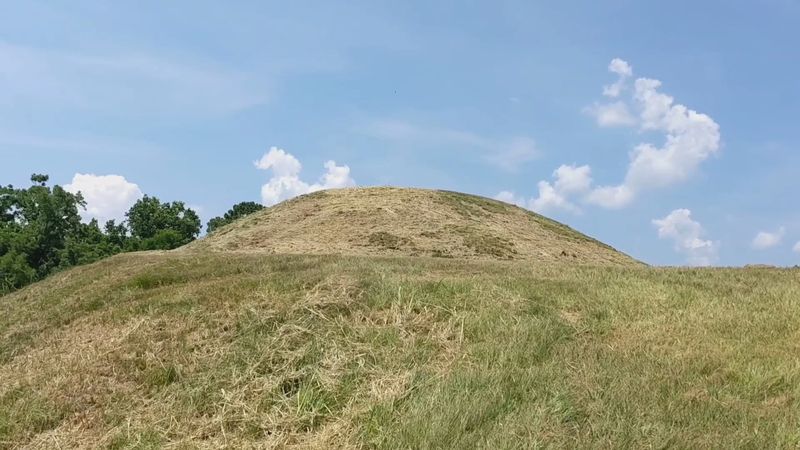
Picture a hill so big it covers eight acres, then remember that people built it by hand, one basket of earth at a time. That is the jaw-dropping scale waiting just off the parkway near Milepost 10.3.
It ranks as the second-largest ancient mound in the United States.
Ancestors of the Natchez people raised it roughly between 1250 and 1600 A.D. The base stretches about 770 by 435 feet, and the main platform stands 35 feet tall.
Two smaller mounds sit on top, pushing the full height to around 60 feet.
Getting there means a short ride down a country backroad, and the free parking lot sits right beside the mound. Clear signs explain the history before you start walking.
A path leads up to the higher level, where the grassy summit offers plenty of safe space to roam.
From up top, the rolling Adams County land spreads out in every direction. Before 1680, this was the main town of the Natchez Nation, a busy center of ceremony and daily life.
The National Park Service restored the platform in 1955, so it still looks remarkably solid today. The site is open daily from 8 AM to 5 PM, and weekday mornings tend to be quieter.
2. Sunken Trace
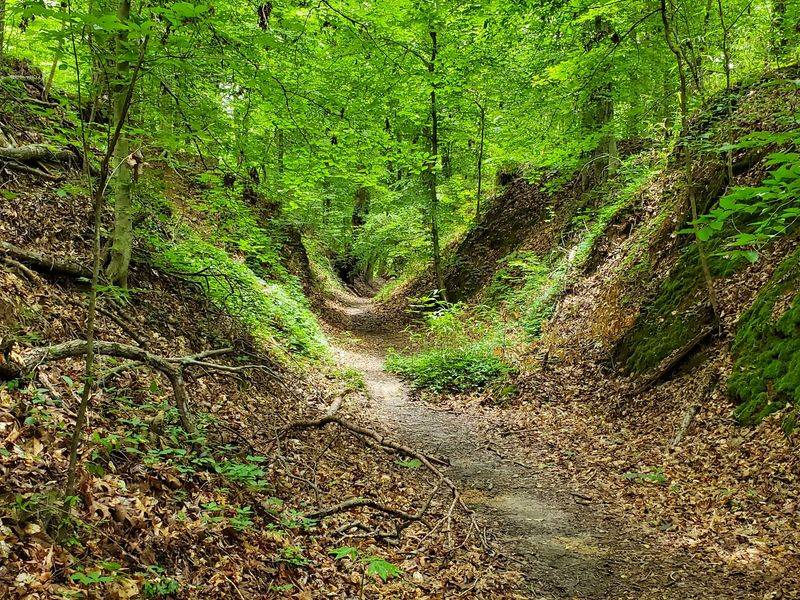
What happens when thousands of feet follow the same path for hundreds of years? At Milepost 41.5, the answer is carved right into the ground.
The trail here sinks well below the forest floor, with tall earthen walls rising on either side.
The soil in this part of Claiborne County is loess, a fine, wind-blown dirt that wears away easily. Animals, early peoples, traders, boatmen walking home, and settlers all tramped through over the centuries.
Rain and mud did the rest, slowly deepening the path into the shady trench you see now.
Families will appreciate how easy this one is. A short walk from the parking area, including handicap spaces, puts you right onto an original section of the Old Natchez Trace.
Signs along the way explain how travelers once slogged through mud and rocks on this stretch.
Kids tend to love the feeling of walking inside the earth, with roots twisting out of the walls overhead. It also happens to be one of the most photographed spots on the entire parkway, so bring a camera.
Sunday afternoons draw the biggest crowds, while weekday visits usually feel calm and hushed under the trees.
3. Boyd Site, Natchez Trace Parkway
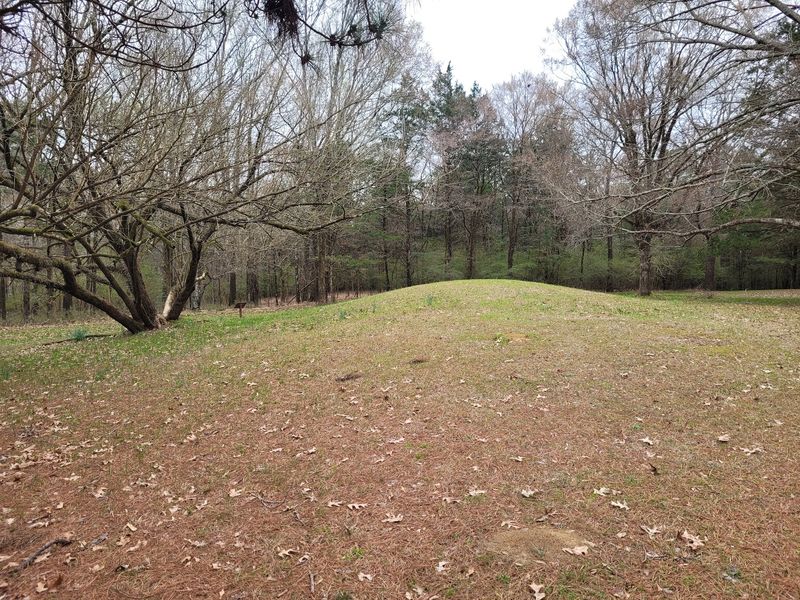
Close to the Jackson area, where traffic and shopping centers are only minutes away, sits a quiet patch of history most commuters zoom right past. Pull over at Milepost 106.9 in Madison County and the modern world fades fast.
Here rests a small protected group of prehistoric burial mounds.
Native peoples built these low earthen mounds between about 800 and 1100 A.D. They are much smaller than the giant at Emerald Mound, and that contrast is part of the lesson.
Not every ancient site was a grand capital, and places like this show how ordinary communities honored their own.
Practical details make it an easy stop with little ones. The entrance is wheelchair accessible, so strollers roll along without trouble.
Dogs are allowed too, which helps if the family pup is riding along on the road trip.
Plan on a short, relaxed visit rather than a long hike. Read the marker, walk the grounds, and talk about what life looked like here more than a thousand years ago.
Evenings early in the week can get a bit busier, while late-week mornings are often peaceful. It works nicely as a breather between bigger stops farther north or south.
4. Bynum Mounds
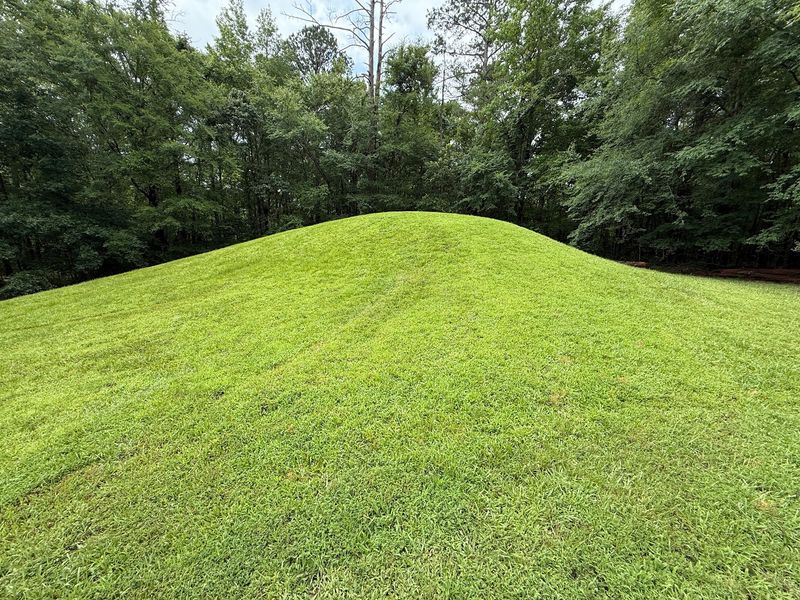
Older than the Roman Colosseum is still standing in one piece? Not quite, but the mounds near Milepost 232.4 in Chickasaw County come close in age.
Built roughly 1,800 to 2,000 years ago, they rank among the most ancient mounds you can view along the parkway.
Rolling farmland surrounds the site, giving it a wide-open, peaceful feel. The mounds themselves are well preserved, rising gently from the grass.
Their age places them in a much earlier chapter than the busy Mississippian towns found down near Natchez.
Here is a tip worth passing along: stop at the kiosk and listen to the audio. The recorded story fills in details about the people who built these mounds and the role Native Americans have played in the region’s past.
Kids who might skim a sign often pay closer attention to a voice telling the story.
After that, simply wander and soak it in. Birds, wind in the grass, and the occasional passing car are about the only sounds.
Many travelers find it one of the most soothing pauses on the whole drive. It is a lovely place to stretch cramped legs and let the past sink in slowly.
5. Chickasaw Village Site
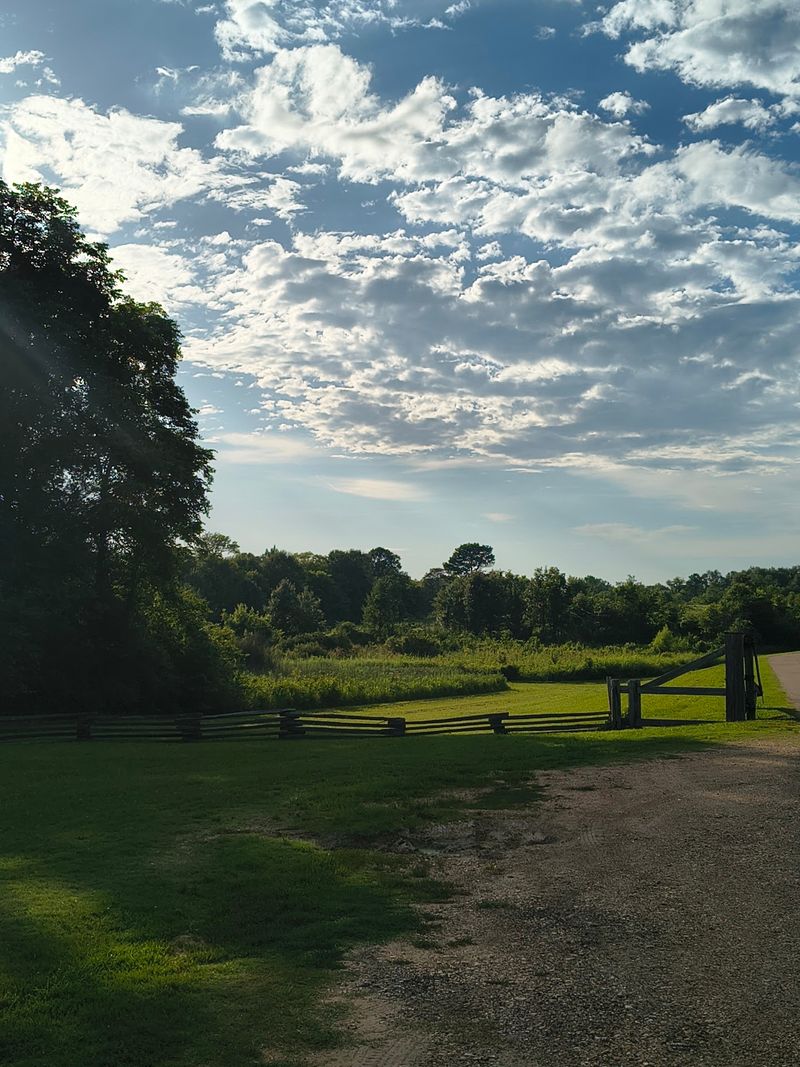
Wildflowers sway beside the path, clouds drift overhead, and a swampy edge hums with life. Then you notice the panels telling the story of a people who called this land home.
Near Tupelo at Milepost 261.8, the Chickasaw Village Site mixes nature with deep cultural history.
Unlike the mound stops, this site focuses on a living nation. The Chickasaw people made their homeland across this part of Mississippi, and the exhibits share how they lived, farmed, and shaped the land.
Interpretive displays lay out a timeline of their ancestral homeland and the many contributions they made.
Trails lead through the quiet grounds, so families can learn while they walk. The signs are packed with facts, which makes it a natural outdoor classroom for curious kids.
Older children might enjoy reading ahead and quizzing parents along the way.
Small comforts help too, including a clean restroom, always a win on a long drive. Spring brings especially pretty blooms, though the setting feels calm in any season.
Give yourself enough time to slow down here. It is less about one dramatic sight and more about understanding the people whose story runs beneath the whole Trace.
6. Pharr Mounds
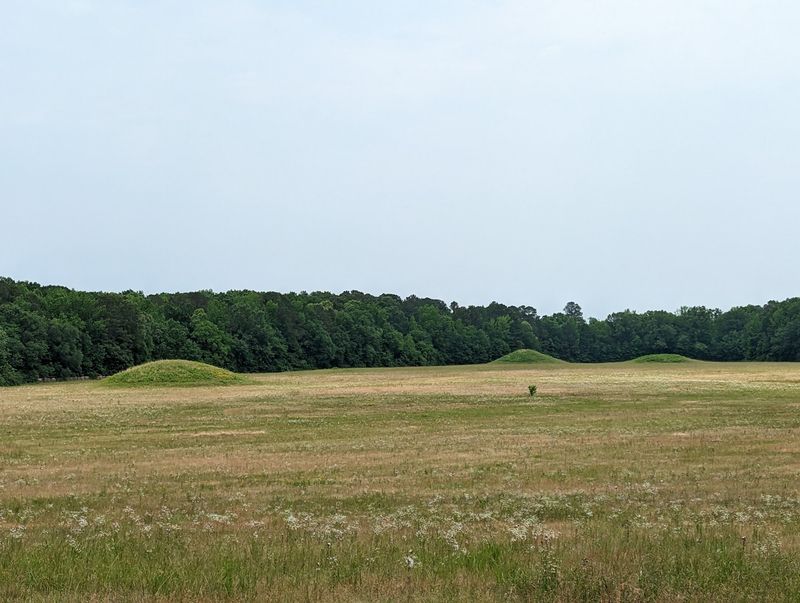
Eight mounds, 90 acres, and about 2,000 years of history. Those numbers make Pharr Mounds at Milepost 286.7 the largest archaeological site in northern Mississippi.
It is also counted among the most important ancient sites in the Southeast.
The builders were hunters and gatherers of the Middle Woodland period, living around 1 to 200 A.D. They traveled widely but returned here again and again to honor their loved ones with dome-shaped burial mounds.
That pattern of coming back says a lot about how meaningful this ground was to them.
Digging in 1966 uncovered fire pits, clay platforms, and ceremonial items. Among the finds were copper tools and decorated pottery made from materials that came from far away.
Those objects show that these early people were connected to trade routes stretching across much of the continent.
Visiting is simple and rewarding. The pull-off opens onto a broad, walkable landscape in rural Prentiss County, and you can see nearly all the mounds from the viewing area.
Interpretive exhibits help explain what you are looking at. Ask kids to count the mounds and guess how long each one took to build.
7. Bear Creek Mound
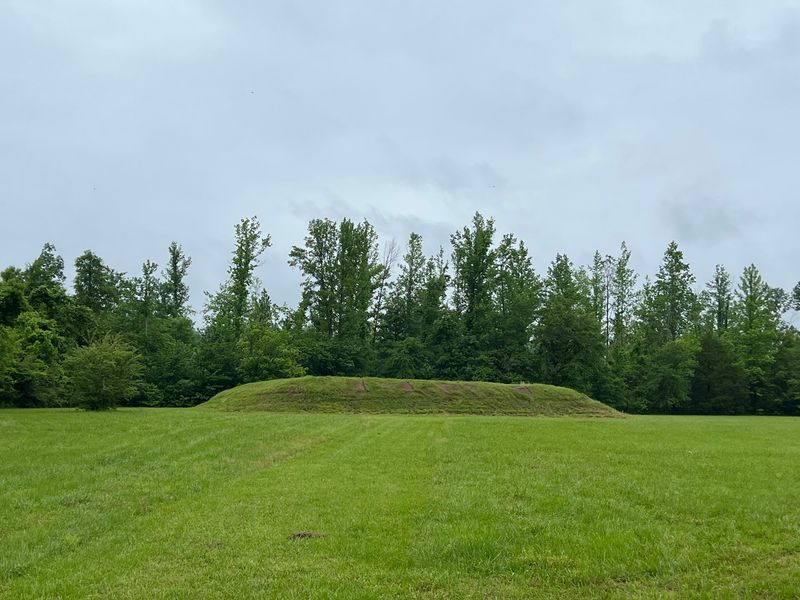
Just before the parkway crosses out of Mississippi, one last ancient site waits to close out the journey. Bear Creek Mound sits at Milepost 308.8 in Tishomingo County, close to the northern state line.
It marks the oldest archaeological site along the entire Trace.
People first lived on this spot thousands of years ago, long before the mound itself rose. Later, the Mississippian culture shaped it into a ceremonial platform, likely topped by a temple or important building.
In other words, one small hill holds several layers of history stacked on top of each other.
The setting has a different personality than the stops farther south. Tishomingo County is rocky and hilly, with woods that feel almost mountain-like compared to the flat Delta.
That change in landscape is fun to point out to kids watching from the back seat.
Best of all, the mound sits only a few steps from the parkway, so even tired travelers can manage it. Hop out, walk over, and take a final look at the ancient past before heading on.
Finishing here gives your family a neat bookend, starting and ending the Mississippi drive with earthen monuments built by the region’s first people.