
This Mississippi Drive-Through Safari Park Feels Less Like A Day Out And More Like A Wildlife Expedition
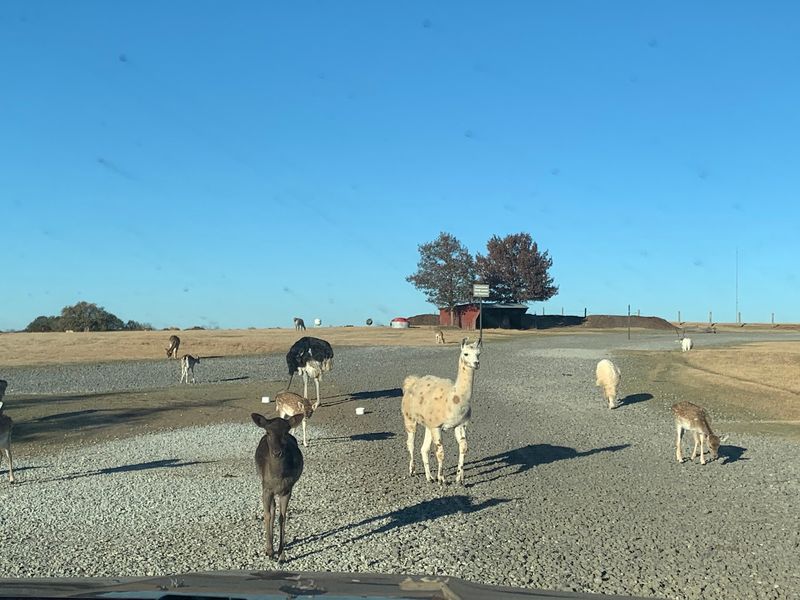
A long, quiet country road in northern Mississippi does not look like the start of an adventure. Then a llama plants itself in front of your car and refuses to move until you hand over a snack.
Somewhere between the zebras and the giraffes, a simple afternoon drive turns into something closer to a wildlife expedition. If you want a day that feels wild without leaving the state, this is the kind of place that sticks with you.
A Farm-Sized Safari in North Mississippi
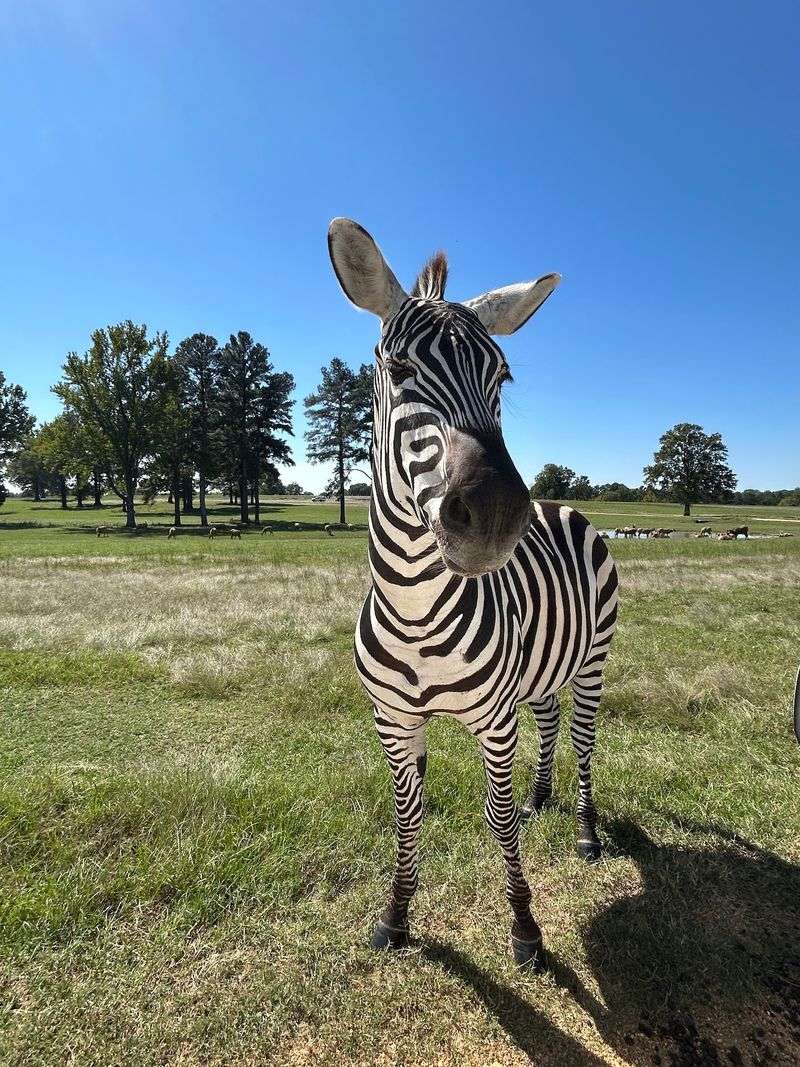
Picture a big working farm, then swap the cows for zebras, camels, and ostriches. That is roughly what waits on Rooks Road in Como, a small town in the northern part of Mississippi.
The park is a drive-through wildlife attraction where you stay in your own car and the animals come to you.
Unlike a typical zoo with paths and glass windows, the main event here is a slow road trip across wide pastures. Visitors describe it as a relaxing drive through a huge farm, with herds wandering freely and plenty of open space between them.
Families mention that it never feels crowded with animals, which gives the land a calm, natural look.
Beyond the safari loop, the grounds hold a petting zoo, a bird house, a giraffe feeding deck, and even camel rides. A gift shop sits near the entrance, and there is a pond with a picnic area for slowing down after the drive.
Admission covers the drive-through and the petting zoo. Most other extras, like feeding the giraffes or the birds, cost a little more.
Put together, the setup works less like a quick stop and more like a full day of exploring, which is exactly why so many people plan return trips.
From Quiet Countryside to Exotic Neighbors
Como is the sort of place where you expect pine trees, open fields, and maybe a few horses. Locals who grew up there say they never imagined a giraffe would one day call their hometown home.
That surprise is part of the fun.
Getting there takes a little effort, which adds to the feeling of heading somewhere special. Guests note that the park sits about 15 minutes off the interstate, not right beside it.
The winding country roads leading in build a nice sense of anticipation, a bit like driving toward a remote outpost.
Once you arrive, the contrast hits right away. Rural Mississippi scenery stretches all around, yet the pastures are filled with animals from Africa, South America, and Australia.
Llamas graze not far from bison, and emus strut past camels as if this were completely normal.
The owner has shared plans with guests about growing the park and adding more animals over time. That steady growth gives the place a homegrown, passionate feel rather than a polished corporate one.
Visitors often point out how clean the land is and how much care seems to go into every pasture. It reads like a family dream that kept getting bigger, one species at a time.
Rolling Through the Drive-Through Trail
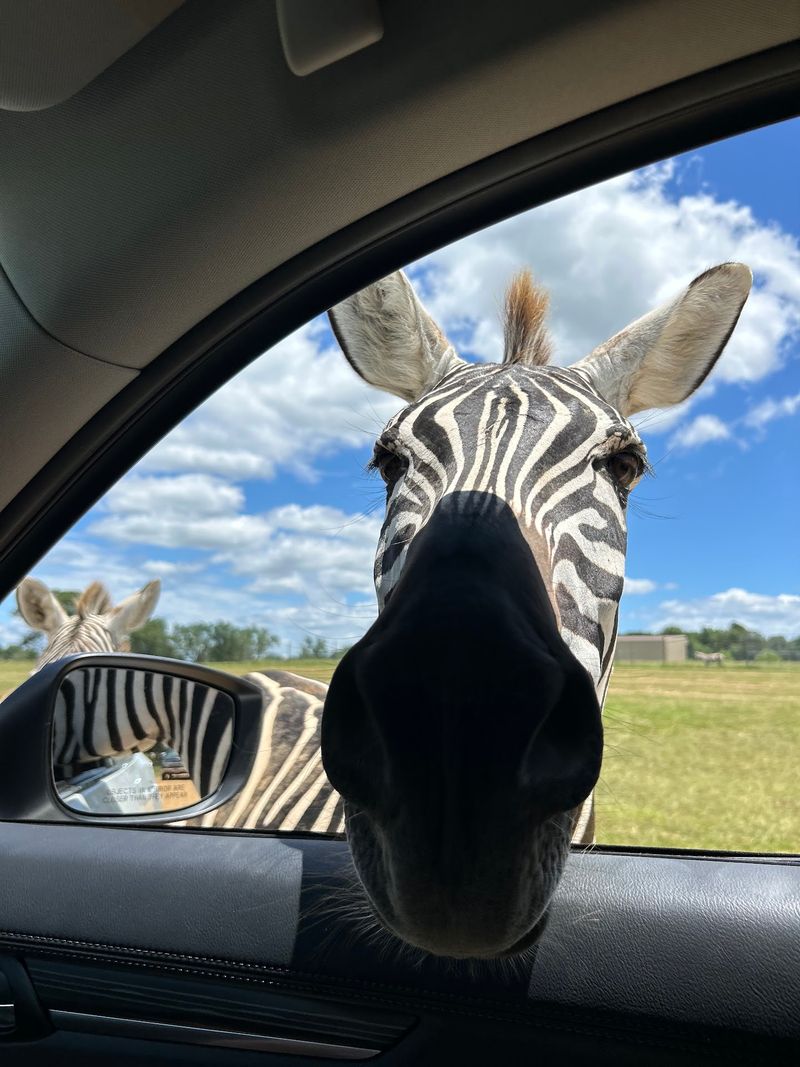
Windows down, feed bag in hand, foot barely touching the gas. That is how most people tackle the safari trail, and it is the heart of the whole experience.
The route winds across open land on an unpaved road, so a gentle pace is a must. Some guests warn about rough holes along the way, which is one more reason to take it slow.
Any car can handle the trail, though a truck or SUV makes the ride a bit easier.
How long does it take? Plan on 30 minutes to an hour, depending on how often you stop.
Staff have told visitors it can take up to an hour to finish the course, and nobody seems in a hurry. Better yet, you can drive the loop as many times as you like until 4 p.m., so a second lap is always an option.
A few practical tips come up again and again. Leave the brand-new car at home, since animals may press against doors and stray pellets end up everywhere.
Some families bring a bucket for feed so bags do not rip. Pets are not allowed, which keeps both animals and guests safe.
Llamas, Ostriches, and Other Roadblocks
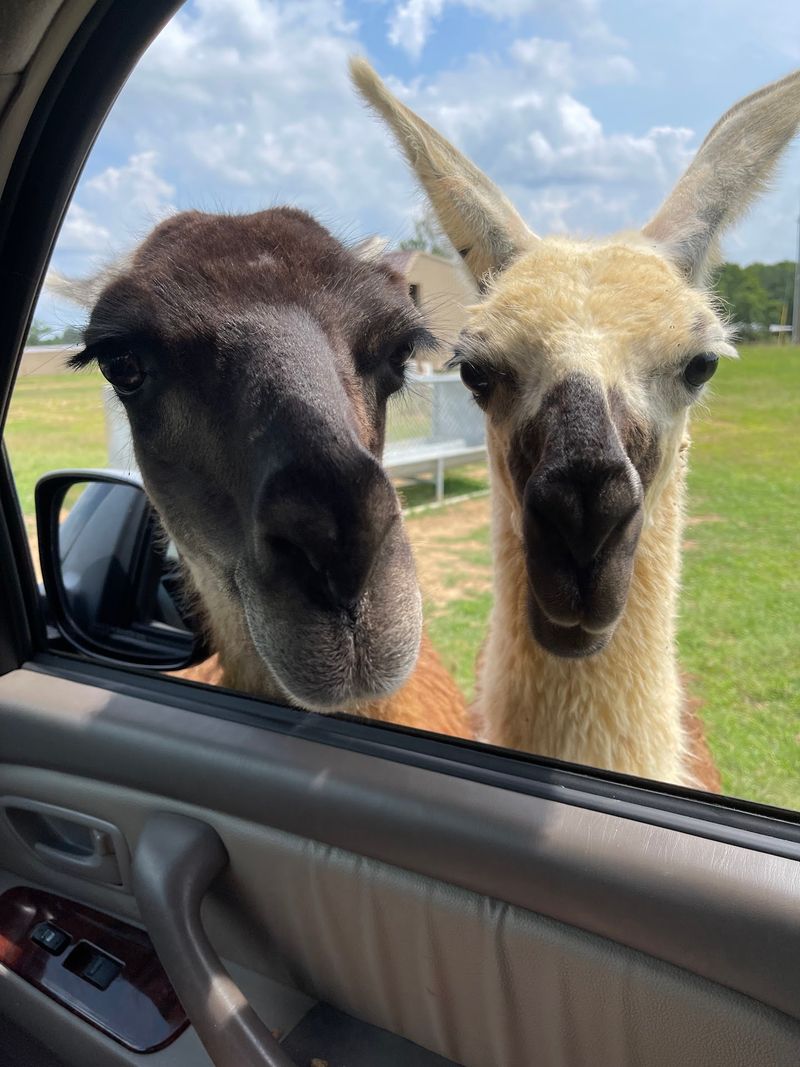
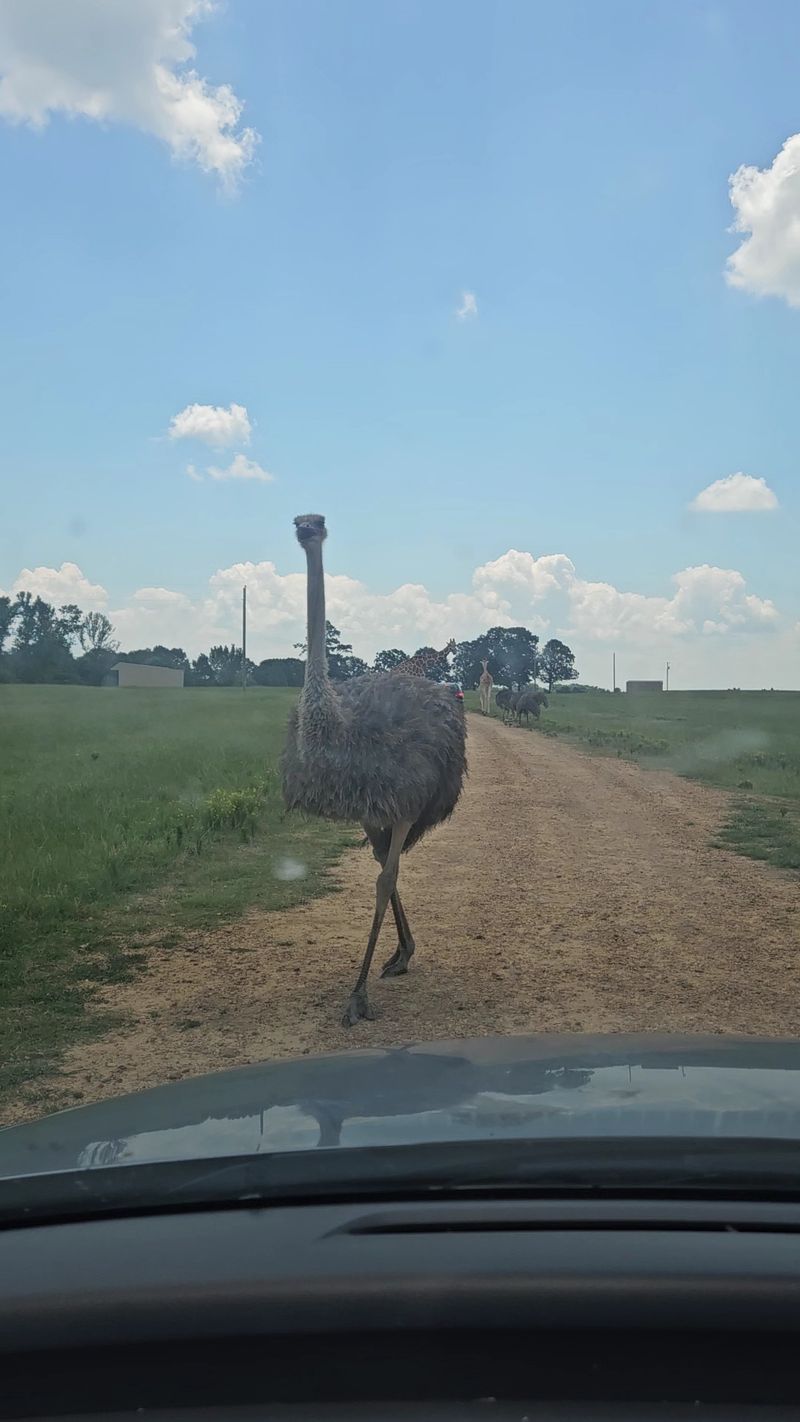
Nobody warns you that the traffic jams will have feathers. Ostriches tap on windows, and llamas happily block the road until they decide you have shared enough food.
Adults and children alike end up laughing through most of the drive.
Ostriches are the boldest characters on the trail. Their beaks are big and hard, and a peck on an open palm can actually sting.
Experienced visitors suggest dropping food on the ground for the large birds instead of holding it out. They have even been seen nudging other animals away to claim the best spot by your car.
Llamas are a crowd favorite, curious and fluffy and completely unbothered by personal space. Emus add their own goofy energy, and many guests say those odd birds were the funniest part of the trip.
Zebras are striking up close, though some people advise against hand-feeding them too.
Here is a smart strategy from repeat guests: buy extra feed and ration it. Some animals are clever enough to grab an entire bag if you are not careful.
Keeping a firm grip turns a messy moment into a good story instead of an empty bag halfway through the trail.
Gentle Giants Waiting at the Finish Line
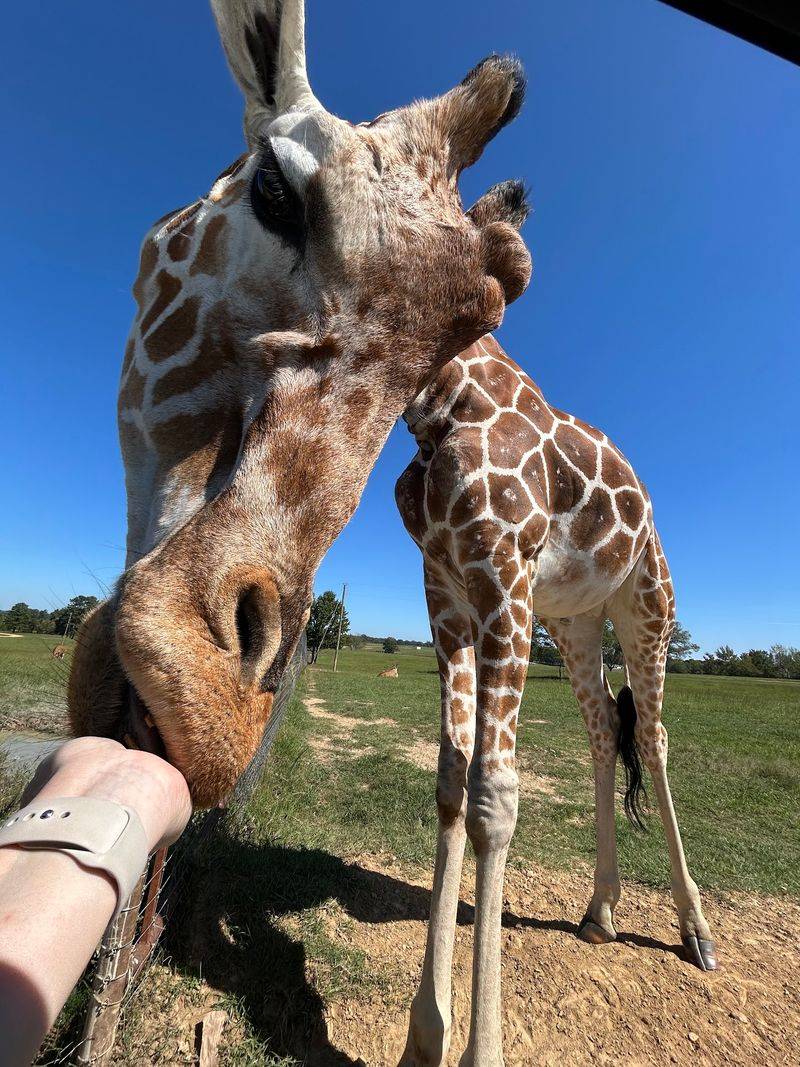
Save some food. That advice gets repeated by nearly every regular, and the reason is tall, spotted, and waiting near the end of the trail.
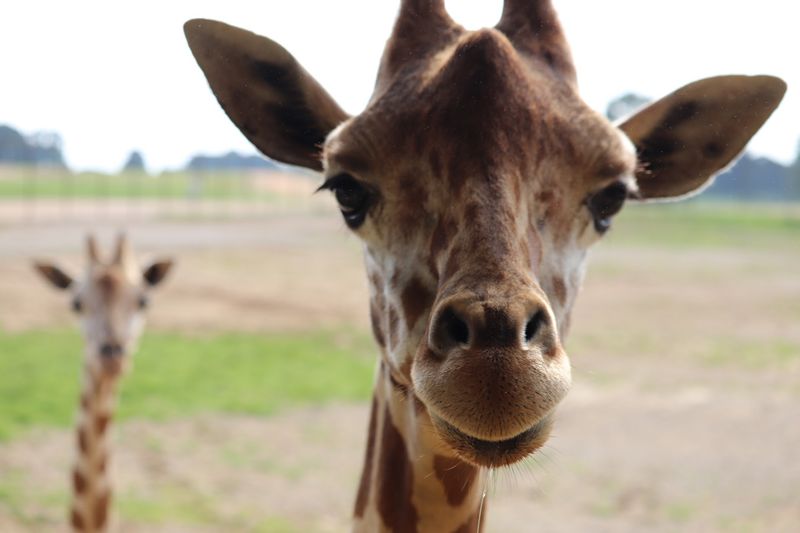
Giraffes are one of the most talked-about animals at the park. On the drive-through, they sometimes stand on both sides of a car, heads lowered and ready for treats.
Some guests describe getting what they happily call giraffe cuddles as they finish the loop. It is hard to stay calm when a face that large appears at your window.
For an even closer meeting, the park has a giraffe feeding deck. A cup of lettuce costs around five dollars, and it puts you face to face with these towering animals.
Staff on the deck get praised for being friendly and helpful, making the experience easy for first-timers.
Did you know a giraffe’s tongue is dark and can stretch quite far? You will likely see it in action as it wraps around a leaf of lettuce.
Children often name the giraffes as the best part of the day.
Keep in mind that the giraffes are occasionally kept in a separate area. Timing can change what you see.
Bison, Watusi, and the Big Hoofed Crowd
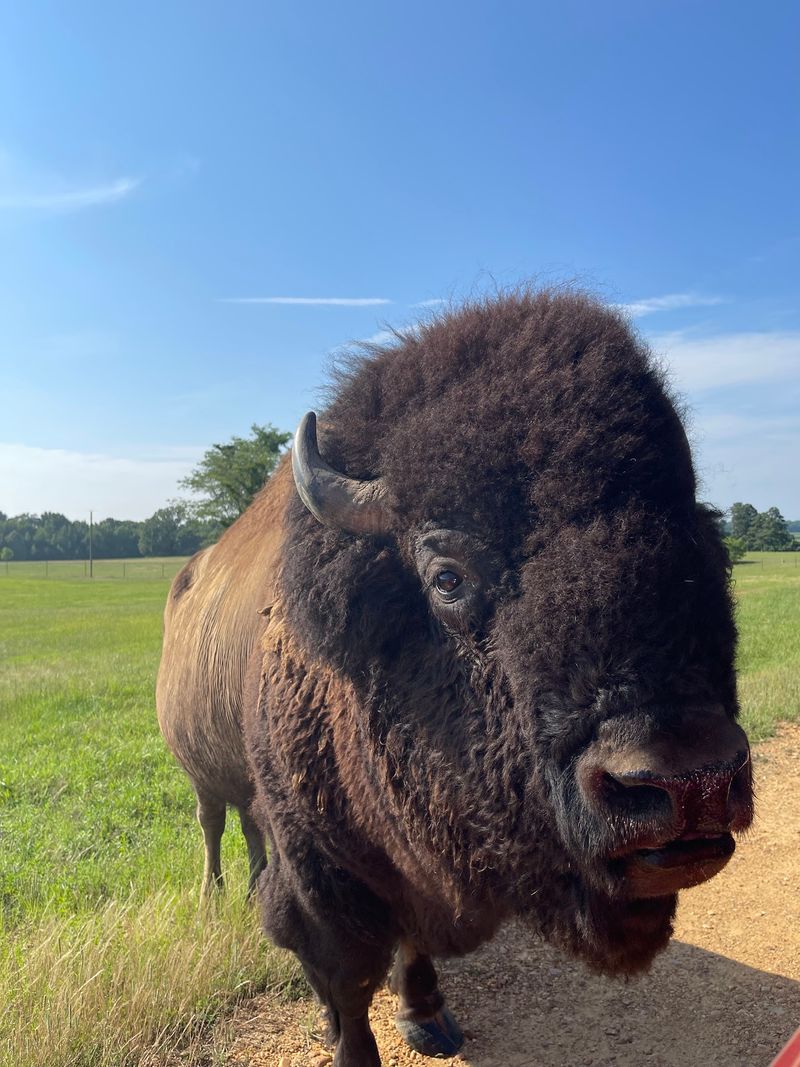
Not every animal comes rushing over. Some of the biggest residents prefer to lounge, and getting their attention becomes a small game of its own.
Take the bison. If he is lying down, regulars say a quick shake of the feed bag usually gets him on his feet.
Watching a massive animal like that lumber toward your car is a moment that feels straight out of a nature documentary. It reminds you how powerful these creatures really are.
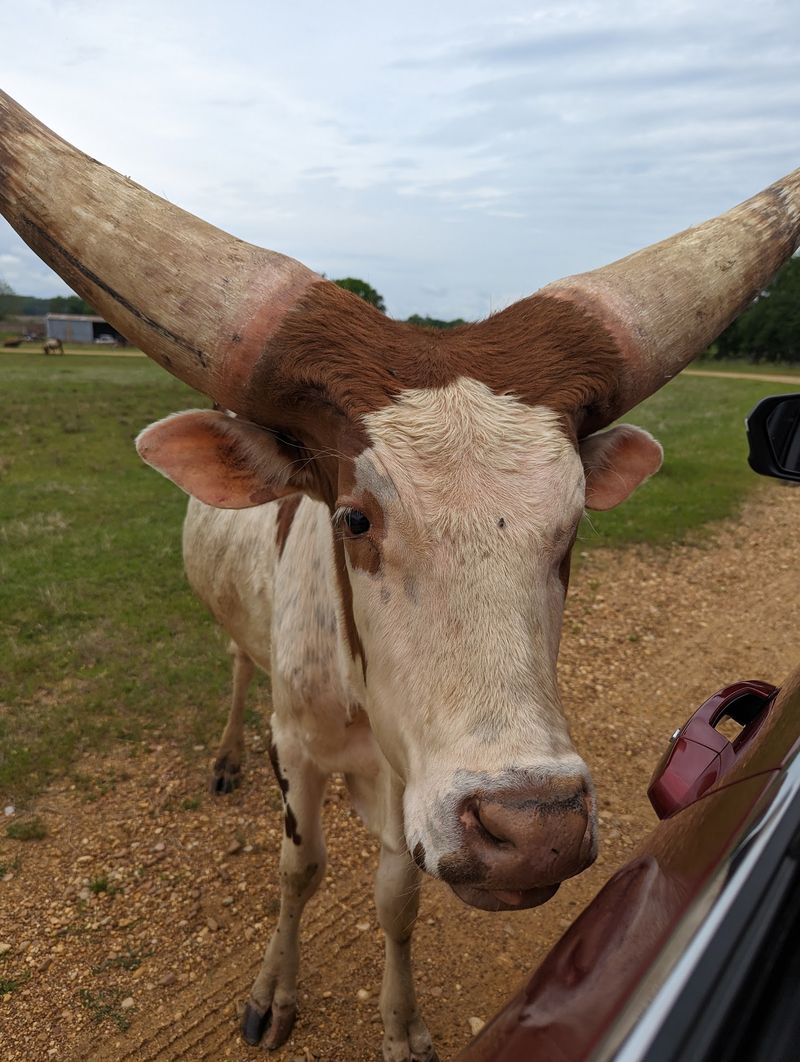
Watusi cattle add another dramatic sight. Their enormous curved horns look almost unreal, yet some of them turn out to be surprisingly friendly.
Guests have described a Watusi following their car, hoping for a few more scratches. Camels also wander the land, adding to the mix of shapes and sizes.
What stands out is how much room these herds have. Visitors note spacious paddocks and pastures, with water and shelter available for every group.
The animals look healthy and calm, and their living areas are kept impressively clean.
The overall effect is less like peering into an enclosure and more like visiting a ranch where the livestock happens to come from around the world.
Lorikeets, Lemurs, and the Petting Barn
Six birds at once, perched on arms, shoulders, and even a head. That is the kind of scene that unfolds inside the lorikeet enclosure, where bright little parrots swoop in for nectar.
Two small cups of nectar run about five dollars. The birds are not shy, so expect wings fluttering around you within seconds.
Many families call it the most fun stop of the day, especially for younger visitors who cannot stop giggling.
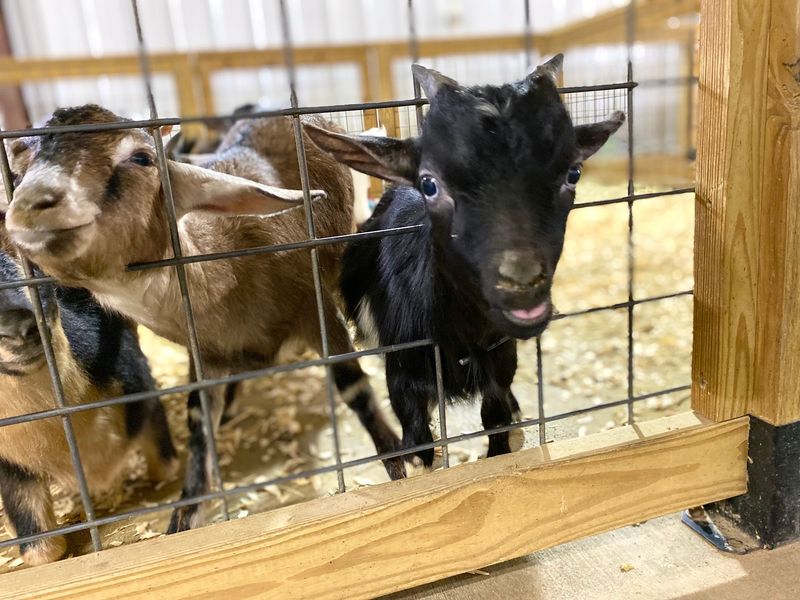
Next door, the petting zoo offers a slower pace. Goats and sheep take center stage, and bags of feed for them cost around four to five dollars.
There is also a turtle enclosure and a group of ring-tailed lemurs, whose striped tails make them easy to spot.
Leftover safari feed works here too. If your bag survived the drive, the goats will be happy to finish it.
Some guests suggest doing the safari first and the petting barn after, since you can wash your hands there and then browse the gift shop.
Restrooms near this area are portable toilets, so plan accordingly. Overall, this section of the park feels hands-on and cheerful, a nice change from watching animals through a windshield.
Camel Rides and Lakeside Picnics
After all that driving, it feels good to get out and stretch. The park offers a couple of ways to do that, and both help turn a short visit into a full outing.
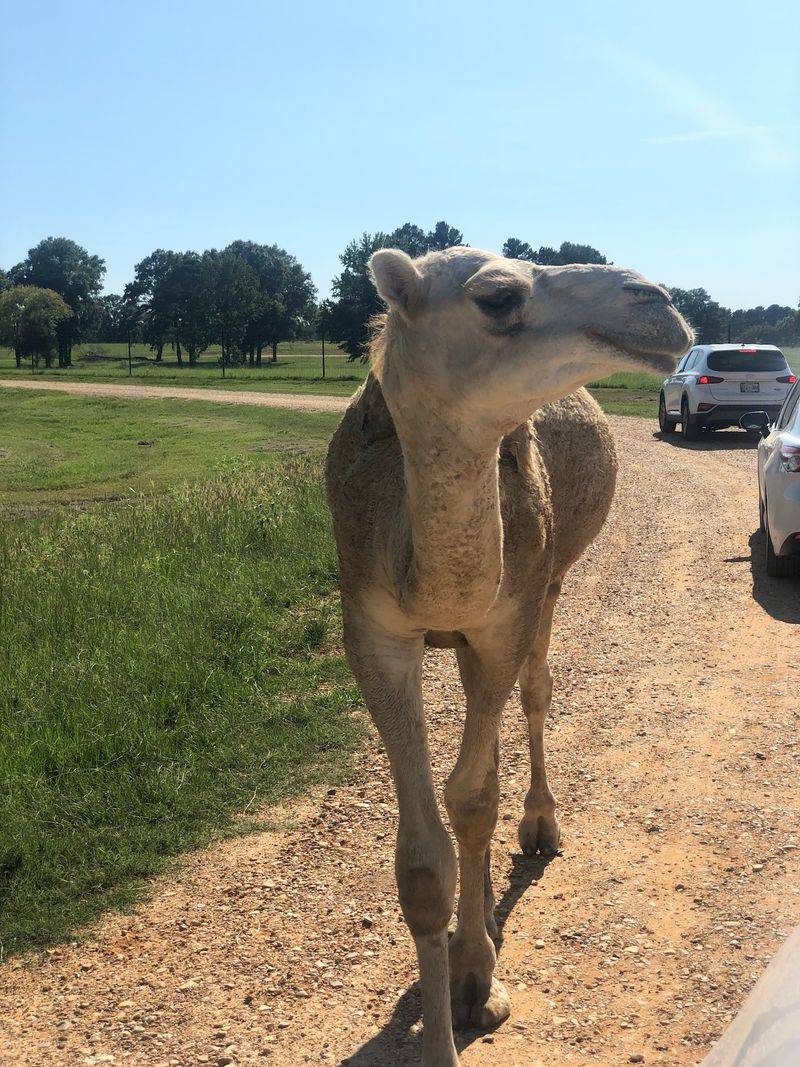
Camel rides cost around ten dollars. Guests mention that the handler is friendly and shares facts about the camel during the ride, so it doubles as a mini lesson.
There is also plenty of time to snap photos from high up on the camel’s back.
Fun fact: a camel’s hump stores fat, not water. Kids usually love learning that one while swaying along on top of the animal.
Near the petting zoo, a pond sets the scene for a relaxed lunch. Families bring picnics and eat by the water, while a swing set gives restless kids somewhere to burn off energy.
It is an easy spot to rest before heading back out for another lap of the safari.
Sweet treats are available too, with some visitors ending their day with Dippin Dots and a trip through the gift shop. Between the ride, the picnic, and the snacks, the park makes it simple to stay for hours without feeling rushed.
Timing, Costs, and Smart Planning
Mid-morning on a weekday tends to be the sweet spot. The animals are hungry and eager, and there are fewer cars on the trail.
Others have found quiet times on Sunday afternoons, a few hours before closing.
Crowds matter here because the road is narrow. Getting stuck behind several slow cars can drag out the drive, and some guests have wished for more monitoring of speedy drivers.
Going during calmer hours makes the trip safer and more relaxed for everyone, including the animals.
As for money, gate admission includes the drive-through and petting zoo. Extras like the giraffe deck, bird house, camel rides, and feed are paid separately.
One family of four reported spending around 60 dollars, while a parent and child who did every attraction spent close to 80. Many visitors still feel the price is fair, and some compare it favorably with larger safari parks nearby.
Five bags of feed usually covers a small group. Plan on two to four hours for the full experience.
Bring wipes, a bucket for feed, and a car you do not mind getting a little messy.
Why the Trip Feels Like an Expedition
Some outings fade from memory by dinnertime. The ones built on surprise, laughter, and a llama refusing to let you leave tend to stay put.
What makes this park special is how it mixes freedom with closeness. You set your own pace, choose where to stop, and meet animals on their terms.
A giraffe at your window or a curious Watusi trailing your bumper feels less scripted than a zoo visit, and that is where the expedition feeling comes from.
It also works for nearly every age. Groups of grown adults report laughing nonstop, and families with teenagers and grandparents describe sharing the same wide-eyed moments.
Some visitors even travel from out of state and make it a yearly tradition.
The care behind the scenes adds to the appeal. Clean pastures, roomy spaces, and friendly staff come up again and again in what people share afterward.
Bring patience, extra feed, and a sense of humor. Leave the spotless car at home.
If you go in ready for a little chaos, northern Mississippi might just hand you one of the most memorable drives you have ever taken.